Get EnterpriseAM daily

Available in your choice of English or Arabic

Inflation cools to 12% in August

1

What We're Tracking Today

No electricity price hikes this month -Madbouly confirms

Good morning, all. We’re wrapping up what has been a pretty eventful week with a brisk issue led by the latest inflation data — annual urban inflation cooled again in August to 12%, its lowest ready since March 2022, and some are optimistic it will dip even further as we approach year end.

We also have some good news on the auto localization front: Chinese giant Sailun broke ground on its USD 1 bn tire plant in Sokhna in the latest sign that our automotive localization efforts are gaining steam.


You asked, and we listened.

Introducing Morning Drive: your daily 10-minute audio download of the essential business headlines shaping Egypt.

Hosted by ‘Synthetic Salma’ — an AI-powered version of our Executive Editor Salma El-Saeed — you get our rigorous journalism that’s always on point, delivered on time in a consistent voice every morning.

Stay tuned for the first episode drop on 14 September.

Follow EnterpriseAM Egypt on your favorite podcast app to be the first to listen.


PSA-

WEATHER- It looks like the scorching heat is behind us with Cairo in for another cooler-than-usual Thursday. The capital will be looking at a high of 33°C and a low of 23°C today, according to our favorite weather app.

It’s more or less the same in Alexandria, which is in for a high of 31°C and a low of 22°C.

WATCH THIS SPACE-

#1- MADBOULY CONFIRMS IT- No electricity price hikes this month. Prime Minister Moustafa Madbouly said that the government will not hike electricity prices this month during his weekly presser (watch, runtime: 45:37). “We look at electricity prices as part of the wider economy and their impact on inflation,” he said.

You heard it here first: EnterpriseAM reported earlier this week that the government will push back expected electricity price hikes until the end of the year. The payoff of lowering inflation — and in turn allowing the central bank to continue cutting interest rates — outweighs the revenue from price hikes, a senior government source told us.


#2- Incoming LNG shipments are set to fall by a third in the last quarter of the year, with the country expected to receive around 40 shipments in the post-peak summer period, a government source told EnterpriseAM.

But we may not need to follow through on all these shipments, as the contracted shipments have flexible terms in the event of fluctuating local production and demand, our source told us. Winter could also see Eni and Shell portioning out a share of production for export as LNG.

Whether it's 40 or 60 shipments a month, Egypt is ready, with three operational regasification vessels ready to process the shipments and a fourth that will join them this month to bring total daily capacity to 2.7 bn cubic feet of gas, we were told.

HAPPENING TODAY-

#1- It’s the fourth and final day of EFG Hermes’ Annual London Investor Conference, which is being held at Emirates Stadium under the theme Investing Right in MENA. The gathering brings together 710 participants from around the world, including 285 investors from 146 global institutions, alongside 131 companies. This year’s edition spotlights Saudi Arabia, with 82 Tadawul-listed firms in attendance. We’ll have the rundown of the highlights in the news well, below.


#2- Orascom Construction will start trading on the ADX today under the ticker ORAS, moving its primary listing from Nasdaq Dubai to the Abu Dhabi bourse, it said in a statement (pdf). At the opening bell, the contractor’s shares will be dually traded on the ADX and the EGX. Orascom’s ADX debut price was pegged to yesterday’s EGX close of EGP 394.5 per share, or AED 30.15.

REMEMBER- Orascom is the first Egyptian contractor to pursue a dual-listing in Abu Dhabi and Cairo, a move that underscores the ADX’s growing pull as a regional liquidity center. For the contractor, the shift away from Nasdaq Dubai opens access to deeper institutional flows, while for other Egyptian corporates it could set a precedent on where to anchor secondary listings.


#3- Today is the last day for investors to apply for the latest industrial land offering through the digital platform Made in Egypt, according to an Industry Ministry statement. The offering includes around 1.4k serviced plots across 23 governorates, covering 6.8 mn sqm, with unit sizes ranging from 240 sqm to 500k sqm.

FROM THE BOURSE-

Ferchem Misr for Fertilizers & Chemicals saw its shares jump 20% on its first day of trading on the EGX main market, after completing its transfer from the small-cap Nilex. The stock closed at EGP 54.73, up from a previous close of EGP 45.61, with trading capped at the maximum daily allowable limit. The session saw 6k shares change hands in three trades, generating a total turnover of EGP 330k. At its closing price, Ferchem’s market capitalization stood at EGP 21.9 bn.

DATA POINT-

The total value of mobile wallet transactions grew 72% y-o-y to EGP 943 bn in 2Q 2025, as the number of wallets rose 29% y-o-y to 46.3 mn and transactions jumped 80% y-o-y to 718 mn, according to a statement (pdf) from the National Telecom Regulatory Authority. VodafoneCash led in the number of e-wallets, transactions, and value, followed by e&Cash, OrangeCash, and WePay.

CIRCLE YOUR CALENDAR-

Foreigners get more time to sort out residency permits: The cabinet yesterday extended the period for foreign residents who do not have residency permits to legalize their stay in the country, granting them another year to sort their documentation out.

REMEMBER- This is the fourth time the cabinet pushed back the deadline to settle the USD 1k fine and arrange an Egyptian host — it was initially set for December 2023, before being pushed time and time again.

Check out our full calendar on the web for a comprehensive listing of upcoming news events, national holidays and news triggers.


** DID YOU KNOW that we cover Saudi Arabia and the UAE?

** Were you forwarded this email? Tap or click here to get your own copy delivered every weekday before 7am Cairo time — without charge.

THE BIG STORY ABROAD-

There’s only one story leading the conversation in the international press this morning: Prominent pro-Trump conservative influencer and co-founder of Turning Point USA Charlie Kirk was assassinated last night — shot dead while speaking at a Utah university. The 31-year-old, credited with mobilizing youth and minority voters for President Donald Trump’s second-term victory, was struck in the neck moments after taking a question on gun violence.

The killing — the latest in a string of violent attacks on US political figures — sent shockwaves through Washington. (Reuters | BBC | Associated Press | Financial Times | New York Times | The Guardian | Axios | Bloomberg)

ON THE MARKETS FRONT- Oracle’s blowout quarter briefly made chairman Larry Ellison the world’s richest person yesterday, overtaking Elon Musk after the software giant’s shares jumped 36%. Ellison’s net worth hit a peak of USD 386 bn before easing back by market close, while Oracle’s market value surged to USD 922 bn on the back of huge cloud contracts tied to OpenAI and other AI leaders. (Financial Times | Bloomberg | The Guardian | BBC | Axios | Washington Post | Reuters)

CLOSER TO HOME- Israel launched airstrikes on Yemen — killing 35 and injuring over 100 — after the Houthis launched a drone attack that hit an Israeli airport. The attack comes one day after Israel launched an attack on Qatar. (AP | New York Times | Reuters | Bloomberg)

ALSO WORTH NOTING THIS MORNING-

#1- Poland has become the first NATO member to fire on suspected Russian drones during the war in Ukraine, after 19 objects crossed into its airspace overnight during a Russian air attack on Ukraine. Prime Minister Donald Tusk called the incident a “large-scale provocation” and activated Article 4 of the NATO treaty, requesting emergency consultation with allies. (Reuters | Associated Press | The Guardian | BBC | New York Times)

#2- Life on Mars? NASA scientists say new rock samples collected from an ancient riverbed on Mars could hold the strongest evidence so far of ancient microbial life — though they stress much more analysis is needed. (Associated Press | CNN)

As the Sahel summer winds down, the Red Sea is just getting started. Say hello to Somabay, a year-round seaside escape where tranquil waters, world-class diving, kitesurfing, golf, and wellness come together in one breathtaking destination. This September, it also hosts the ITF World Tennis Tour, bringing world-class tennis to the coast. Somabay is the perfect next stop, a place where the season never ends, and every day feels like the first day of summer.

2

Economy

Egypt’s inflation eases for third straight month to 12.0% in August

Annual headline urban inflation eased again in August by nearly two percentage points, falling to 12.0%, according to data from state statistics agency Capmas seen by EnterpriseAM. The 1.9 percentage point fall from July brings the country’s headline figure to its lowest reading since March 2022 and marks the third consecutive month of easing price growth.

(Tap or click the headline above to read this story with all of the links to our background as well as external sources.)

Pretty much all analysts saw headline inflation falling in August, but few saw it falling sodrastically, with a Reuters poll of 13 analysts producing a median forecast of 12.7%.

Driving the decline was an easing in food and beverages prices — the largest component of the basket of goods and services used to calculate headline inflation — with food prices increasing only 2.1% y-o-y for the month. The 1.3 percentage point drop in the rate of food inflation was backed by slowing fish, dairy, and vegetable prices. The figure marks the third monthly deceleration in food price increases and a four-year low.

Non-food inflation also dropped 2.2 percentage points to 16.8% y-o-y, driven by transport inflation falling a whole 14.8 percentage points to 26.7% y-o-y on the back of a base effect from transport and fuel price hikes last year, Capital Economics’ James Swanston wrote in a recent research note seen by EnterpriseAM. Alongside this, healthcare price inflation eased 4.5 percentage points to 33.9% y-o-y, and restaurant and hotel price inflation eased 1.4 percentage points to 13.8% y-o-y. But prices didn’t decrease across the board, with tobacco and alcohol, energy, and furnishings notching small upticks.

But it’s a different story on a monthly basis, with headline inflation back in the red after two months in the green. Monthly inflation came in at 0.4%, driven by a 3.5 percentage point jump in food price inflation to 0.5% on the back of higher fruit and vegetable prices.

What about core inflation? Annual core inflation — which excludes volatile items like food and fuel — fell 0.9 percentage points from July to 10.7% y-o-y, according to data from the Central Bank of Egypt. On a monthly basis, core inflation came in at 0.1%, after falling 0.3% a month earlier.

Looking ahead, confidence is growing that the Central Bank of Egypt (CBE) will meet its upcoming inflation targets, with Capital Economics thinking that the country will hit its 7% y-o-y (± 2 percentage points) target for 4Q 2026. Leading up to this, the firm sees gradual cooling continuing throughout the year.

Another vote for inflation dipping: Al Ahly Pharos’ Hany Genena expects inflation to stay on its downward trajectory in September, to come in at 10% y-o-y, citing the delay in implementing electricity price hikes, exchange rate stability, and government efforts to keep prices low. “In this case, the CBE will have ample room to cut interest rates by 2 percentage points in October,” he wrote.

But some expect an uptick in inflation toward the end of the year, including CI Capital, which sees inflation falling again in September on a favorable base effect before climbing in October in both annual and monthly turns, according to a research note from the financial services group seen by EnterpriseAM. CI Capital sees upcoming fuel price hikes in October pushing up headline inflation to around 14% by the end of the year. Beltone Holding Head of Research Ahmed Hafez sees inflation creeping back up towards the end of the year to around the 13% mark due to changes to the Old Rent Law, upcoming fuel price hikes next month, and the potential for cigarette price hikes.

The drop in inflation will embolden the CBE to carry on with rapid rate cuts for the rest of the year, several analysts told EnterpriseAM. On the dovish side is Capital Economics, which sees the bank cutting rates by an additional 400 bps by the end of the year to bring the deposit rate to 18.00%. Hafez also sees room for further easing by the end of the year despite his expectation of an uptick in inflation, pointing to a real interest rate of 9% on both a trailing and forward-looking basis. Beltone’s more hawkish forecast sees a further 200-250 bps worth of cuts by year-end.

The drop in inflation also got ink in some corners of the global business press: Reuters.

This publication is proudly sponsored by

3

Manufacturing

Sailun breaks ground on USD 1 bn Sokhna tire plant

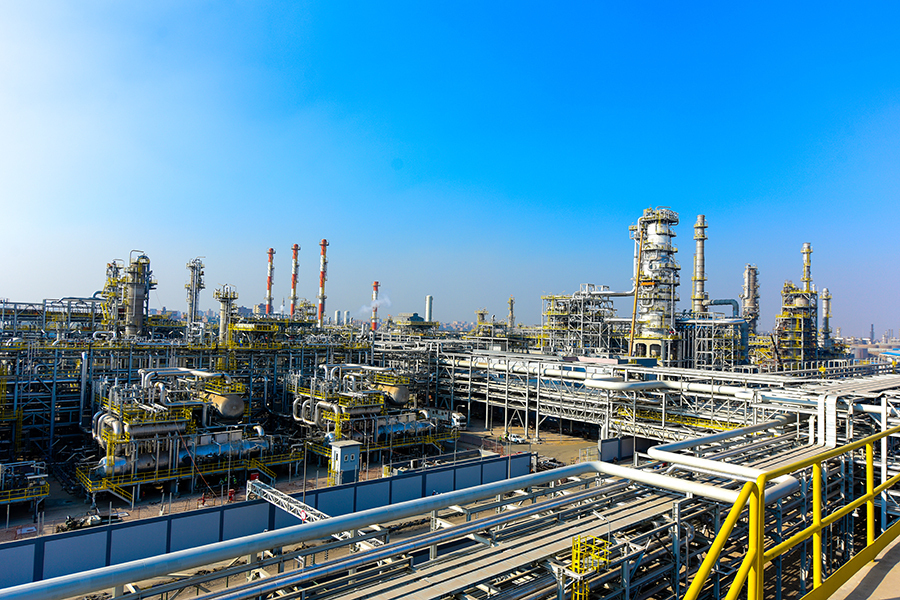
Chinese tiremaker Sailun Group broke ground on its USD 1 bn automotive tire plant in the China-Egypt Teda industrial zone within the Sokhna Industrial Zone, according to a statement. The 350k sqm facility will be developed over three years in three phases.

(Tap or click the headline above to read this story with all of the links to our background as well as external sources.)

The details: The first phase is set to come online in 2026, producing 3 mn passenger car tires and 600k truck and bus tires annually, and creating around 1.5k jobs. Once fully operational, the factory will churn out more than 10 mn tires a year for both the local and export markets.

Sailun’s USD 1 bn factory isn’t the only local tire project in the works — and it’s not even the most expensive. Organi Group acquired 50% of Rolling Plus Chemical Industries in March to revive its EUR 1 bn tire factory project in the SCZone in partnership with Concrete Plus. In addition to this, an unnamed Chinese company is reportedly looking to set up a USD 360 mn tire factory in the SCZone in partnership with the state-owned Arab Organization for Industrialization.

** Read more about our fledgling domestic tire industry — and the challenges it’s facing — in this Inside Industry two-parter we published in 2023 (Part I | Part II).

4

Spotlight

Lessons learned from Saudi’s capital market growth at EFG Hermes’ London conferences

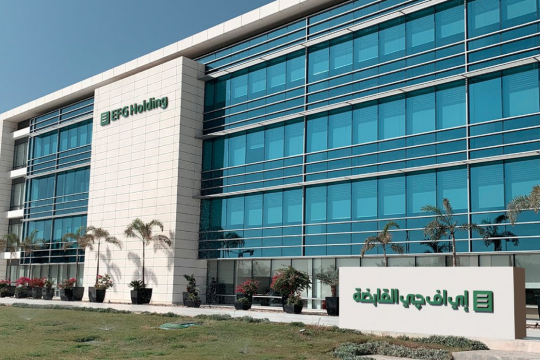
MENA capital market growth in focus at EFG Hermes London conference: Capital markets across the region — from Egypt to the UAE to Oman — are continuing to evolve, giving plenty of reason for optimism despite challenging regional dynamics, EFG Holding Group CEO Karim Awad said at the EFG Hermes Annual Conference in London earlier this week. “We believe Egypt has turned the corner with a stable monetary policy that warrants a closer look at the capital markets that have long been neglected by the foreign investor base,” Awad said.

Oman and Kuwait are becoming “impressively more active participants,” while Saudi Arabia and the UAE continue to lead the way regionally. “MENA capital markets are entering a new growth phase, with investment opportunities diversifying beyond traditional industries,” said Mohamed Ebeid, co-CEO of EFG Hermes. This year’s edition of EFG Hermes’ conference, which is running under the theme “Investing Right in MENA,” zoned in on the growth story in Saudi Arabia, including the country’s booming equity and debt capital markets.

“A story of transformation, innovation, and confidence.” That’s how Capital Market Authority (CMA) Board Commissioner Abdulaziz Abdulmohsen bin Hassan described Saudi’s capital markets journey over the past decade. Bin Hassan pointed out that, along with strong growth in several sectors of the economy including tourism, technology, and renewable energy, Saudi Arabia’s capital markets have also developed to foster a “thriving” environment for IPOs. “Today, Saudi Arabia’s capital market is the largest in MENA with a market cap exceeding USD 2.7 tn, representing 62% of the MENA region’s capitalization. But what sets us apart is not size — it’s our scale, liquidity, governance, and ambition.”

The IPO market speaks for itself: Saudi Arabia now sees an average of 40-50 IPOs each year, rising dramatically from an annual average of five to six debuts five years ago, CMA Deputy of Market Institution Raed Al Humaid said in a panel on the Kingdom’s growth story. This volume has positioned Saudi Arabia’s capital markets among the “top 10 [globally] when it comes to the number of IPOs,” supported by the introduction of key reforms such as streamlined listing regulations, Al Humaid said. Also expected to support the market’s growth is forthcoming SPAC regulations, which Al Humaid notes will provide “additional flexibility for issuances to go into the market.”

The country’s debt markets are also booming, doubling in value in five years to reach SAR 864 bn, compared to SAR 348 bn in 2019, according to Al Humaid. DCM fundraising — which currently stands at SAR 131 bn — has now surpassed the value of IPO equity fundraising, Al Humaid said. Saudi has already seen two public debt offerings this year, with another two expected by the end of 2025, Saudi Exchange CEO Mohammed Al Rumaih said. Next year, the exchange expects the number of debt offerings to hit the double digits, according to Al Rumaih.

What’s next? “Our next chapter is about deepening global connectivity,” bin Hassan said. “The CMA is introducing offshore business security licensing, enabling global institutions to serve their clients and key funds and sovereigns from Riyadh,” bin Hassan said, noting that this direction will help Riyadh take shape as “a preferred global capital hub” over the next few years.

ALSO- Keep an eye on the derivatives market, which the Saudi Exchange and CMA are working on revamping, after recently-launched futures and options trading “did not reach our targets,” Al Rumaih said. After working with international market makers to redesign these products’ specifications, the Saudi Exchange expects “this market to be very active,” which will bring in more liquidity and attract more investors in 2026.

5

FINANCIAL SERVICES

Cash still popular in MEA, but digital payments are catching up — BCG

Cash remains a preferred payment method for more than a third of consumers in the Middle East and Africa, even as electronic alternatives rapidly gain ground, according to Boston Consulting Group’s (BCG) latest study, titled ‘The Cost of Electronic Payments and Cash’ (pdf). The report — which for the first time includes Egypt among four Middle East and Africa countries — says the region’s reliance on cash continues to set it apart from Europe and other developed markets, though its share has been shrinking in recent years.

(Tap or click the headline above to read this story with all of the links to our background as well as external sources.)

Cash still accounts for around 35% of transactions in the Middle East and Africa, compared to roughly 20% in Europe. But the report — which based its findings on surveys of 100 merchants in each of Egypt, Saudi Arabia, the UAE, and South Africa, along with additional surveys of consumers and merchants conducted in December 2024 — argues that the decline has been sharp, with government-led digitization drives and changing consumer habits pushing adoption of cards, digital wallets, and other electronic payment methods.

The true cost of payments goes beyond fees: Even though merchants usually think of payment costs as the fees they pay banks or processors, the BCG report makes clear that’s only part of the picture. “Payment instruments, including cash, come with multiple direct fees, associated services, and a broad range of indirect costs,” the report notes.

Cash isn’t free: Merchants in Egypt usually prefer cash, as the common perception is that cash is free, but that’s not the case. Our analysis shows the cost of cash in Egypt is about 1.8%. That’s still lower than other methods, but not zero, BCG Cairo’s partner and managing director Bassem Fayek tells us. “A full end-to-end analysis reveals that the cost of accepting cash ranges from 1.3% to 3.0% in Middle East and Africa markets,” the report said. In Egypt, the end-to-end cost of handling cash averages 1.8% of transaction value, made up of 0.1% in direct costs, 1.2% in indirect expenses such as equipment and shrinkage (money damage or loss), and 0.5% in back-office reconciliation. Saudi Arabia (1.6%) and the UAE (1.3%) follow a similar pattern, while South Africa is the outlier at 3.0% due to elevated crime that pushes up secure transport costs. Even where direct costs are low, reconciliation and shrinkage drive the bill.

Cash costs will rise as usage falls: The BCG report warns that the cost of handling cash in Egypt and other MEA markets is likely to increase as usage declines, mirroring trends in Europe and the Nordics. Egypt already sees cash acceptance costs ranging from 1.8% to 2.4%, broadly in line with regional peers but higher than some international benchmarks. In more advanced markets, as cash usage declines, the per-transaction cost actually increases because banks lose economies of scale to maintain ATMs and other infrastructure, Fayek says.

APMs start free, then add fees: BCG notes that alternative payment methods (APMs), such as digital wallets and account-to-account transfers, can be cost-competitive with cards when they reach sufficient scale, citing South Africa where in-store APM acceptance costs 2.7% versus 2.6% for debit cards and 3% for cash. In markets like Saudi Arabia, where government policy actively promotes adoption, costs are even lower (0.3% versus 1% for debit cards).

Egypt, however, was still an outlier at the time of the survey: APMs carried negligible costs because no merchant fees were applied and transactions were largely treated as free peer-to-peer transfers. But the report flags that transaction fees have since been introduced by Egypt’s main APM provider — mirroring a global trend where free P2P services begin charging merchants once they scale.

REMEMBER- In April, state-backed digital payments platform Instapay introduced transfer fees of 0.1% per transaction, with charges ranging between EGP 0.50 and EGP 20. That move followed a record 1.5 bn transactions processed on the app in 2024, worth EGP 2.9 tn. Instapay’s evolution highlights how APMs often launch as free services to drive adoption, before shifting to a fee-based model once they become integral to the payments ecosystem.

Credit vs. non-credit: Credit-based instruments — including credit cards and BNPL schemes — remain more expensive than debit and APMs, with merchants covering higher direct costs tied to providing credit. Across the region, buy-now-pay-later (BNPL) carries the steepest cost: in-store acceptance fees hit 5.6% in Saudi Arabia, 5.9% in the UAE, and 6.3% in South Africa. Online BNPL is even pricier, running 0.3-0.6 percentage points higher. Across markets, BNPL is more than twice as expensive as credit cards, primarily due to significantly higher direct costs resulting from financing and default risk.

Egypt bucks the trend: Here, BNPL acceptance costs are just 2.4% — broadly in line with credit cards at 2.1% — because interest charges are borne by consumers, not merchants. BCG notes this defrays the merchant service fee, making BNPL far cheaper for Egyptian retailers than in neighboring markets. In Egypt, BNPL costs are relatively close to credit cards, but the model is different. Credit cards are usually secured by deposits, while BNPL does not require that, which makes the default risk higher and gives consumers higher short-term purchasing power, Fayek notes.

Egyptian consumers are still cash-heavy: The report also underlines that in Egypt, cash on delivery (COD) remains significantly more expensive for merchants than APMs, debit, or credit cards . Yet COD continues to hold a strong consumer appeal, as many shoppers prefer to inspect goods before payment — a dynamic BCG says mirrors the “pay-after” appeal of credit-based products like BNPL.

Access to customers outweighs cost considerations: More options mean access to a broader customer base. For example, a dentist may accept BNPL, even if it’s more expensive, because it allows patients who otherwise couldn’t afford treatment to pay, Fayek says. BCG notes that merchants in Egypt and across MEA do not choose payment methods solely based on cost — the overriding factor is access to different customer groups. Cards, especially those tied to international schemes, give access to wealthier and business clients, while cash is still seen as the channel to reach more local consumers. BNPL and APMs, meanwhile, are carving out a niche among younger, tech-savvy shoppers. For higher-value sectors like hotels and home furnishings, cards are more heavily favored, whereas food stores and restaurants rely more on cash and APMs. For merchants, the decision to accept new payment methods is less about transaction costs and more about market outreach.

Consumers, on the other side of the equation, put a premium on security and fraud protection — The survey found that “75% of consumers feel very protected when using credit cards, followed by 64% for debit cards, 61% for APMs, and 56% for BNPL.” BCG adds that nearly a third of consumers would cut their spending if these protections were not in place, underlining the role of security in sustaining transaction volumes.

Small merchants bear higher cash costs: The report also shows that merchant size is a major determinant of cost. “The cost of cash acceptance is between two and a half times to four times greater for small and medium-sized merchants compared to large merchants,” as they cannot benefit from economies of scale in handling and transporting cash. By contrast, large retailers not only negotiate lower card acceptance fees — roughly 30% lower than small merchants — but also integrate registers and payment terminals to cut down on indirect costs such as miskeying.

In Egypt, this means the smaller end of the retail market continues to shoulder a disproportionate burden when serving cash-preferring customers, while larger merchants are better placed to absorb the costs of digital transactions thanks to scale discounts and stronger bargaining power with payment providers.

Providers hold the key: The report stresses that payment service providers will play a central role in helping merchants navigate rising indirect and back-office costs. By integrating payments into business processes and advising on the right mix of methods, providers can ensure merchants balance cost with customer reach. This creates opportunities for fintechs and P2P solutions to design offerings tailored to SMEs. No one has really solved the SME payment space yet — it’s an area to watch, Fayek says.

6

Also on our Radar

Spain’s Hydroo to set up a USD 60 mn water pump factory in Egypt?

MANUFACTURING-

#1- Spanish water pump manufacturing firm Hydroo is mulling setting up its first water pump factory in the country under a USD 60 mn partnership agreement with the Housing Ministry, Asharq Business reports, citing an unnamed official. The plant will supply pumps for the Hayah Karima rural development program and seawater desalination plants. The government is considering New Alamein or Ain Sokhna as potential sites, with more details expected soon.

(Tap or click the headline above to read this story with all of the links to our background as well as external sources.)


#2- The government is studying a temporary 200-day safeguard tariff on hot-rolled steel imports, Asharq Business reports, citing an unspecified government document. The proposed 13.6% tariff is meant to address the damage caused by a recent glut of these imports that undercut local producers.


#3- Chemical industries and fertilizer manufacturer Polyserve Group is considering investments of up to USD 500 mn in new projects, Hapi Journal reports, citing Vice Chairman Abdelsalam El Gabaly.

Planned projects: The company is studying the production of phosphate fertilizers from sulfuric and phosphoric acids with investments of USD 400-500 mn and a USD 40 mn potassium production project. Both projects are expected to be implemented over 24-30 months.

DIPLOMACY-

Tunisia’s PM was in town: President Abdel Fattah El Sisi met yesterday with Tunisian Prime Minister Sarah Zafrani to discuss boosting relations ahead of the upcoming Egypt–Tunisia Joint Higher Committee meeting in Cairo, according to an Ittihadiya statement.

DATA POINT- The two countries are looking to double trade volumes to USD 1 bn within the next two years, Prime Minister Moustafa Madbouly said during his weekly presser yesterday (watch, runtime: 45:37).

SPORTS-

Mo Salah’s museum will finally see the light: The Sports Ministry will partner up with sports investment firm Estadat to build the long-delayed Mohamed Salah Museum in Cairo’s Gezira Youth Center, with investments of EGP 300 mn, Sports Minister Ashraf Sobhy told Al Borsa. The project — first announced in 2019 — is now slated to break ground in January 2026, with the total cost split equally between the ministry and Estadat. The museum, which will celebrate Salah’s career, will charge an entry fee starting at EGP 250.

7

PLANET FINANCE

Fitch lifts 2025 global growth forecast as China and eurozone improve, but warns of US slowdown

Fitch Ratings revised upward its 2025 world growth forecasts to 2.4% from 2.2% in June, citing stronger 2Q data in China and the eurozone, according to its global economic output report (pdf). However, the agency warned that global activity is still set to slow sharply from 2.9% in 2024, with evidence of a US deceleration now emerging in hard data.

China’s growth projection was raised to 4.7% from 4.2%, helped by a weaker exchange rate, falling export prices, and fiscal easing that has cushioned exports from the US tariff shock. However, Fitch warned that domestic demand is softening and deflation is “increasingly entrenched.”

The eurozone outlook was also upgraded to 1.1% from 0.8% after better-than-expected 1H trade data, though Fitch cautioned that much of the strength reflected front-running US tariffs. With consumer momentum fading, the bloc is unlikely to expand in 2H, though German fiscal support should add some cushion in 2026.

While the US’ growth forecast was lifted slightly to 1.6% from 1.5%, this is still below trend and significantly below the 2.8% growth rate recorded last year. Fitch flagged weaker consumption and hiring as tariffs, rising inflation, and tighter immigration squeeze growth. Consumer spending has already slowed, job growth has decelerated, and more inflationary pressure is likely to kick in soon. Fitch expects the Fed to respond with two more cuts this year and three in 2026.

Tariffs are set to weigh on near-term growth…: Fitch estimates the average US effective tariff rate at 16% — among the highest in the world. While pass-through CPI has so far been modest, inflationary effects are expected to intensify later this year, further weighing on household incomes. “Greater clarity about US tariff hikes does not alter the fact that they are huge and will reduce global growth,” said Brian Coulton, Fitch’s chief economist.

… and into 2026: The agency sees global growth slowing to 2.3% in 2026, well below trend. Long-term bond yields in the US, UK, Germany, and Japan remain under upward pressure, reflecting concerns about supply and fiscal sustainability, while the European Central Bank is unlikely to cut rates further, limiting chances of a near-term USD rebound.

MARKETS THIS MORNING-

Early morning trading is mixed in Asia-Pacific markets today, with Japan’s Nikkei hitting a fresh high on the back of tech investment group Softbank’s shares rising nearly 10% since markets opened. South Korea’s Kospi is also in the green, but Hong Kong’s HSI and mainland China’s CSI are both trading down. Meanwhile, Wall Street futures are trading mostly flat, after the S&P 500 hit another all-time high at market close yesterday, while the Dow Jones closed down.

EGX30

34,670

+0.8% (YTD: +16.6%)

USD (CBE)

Buy 48.07

Sell 48.21

USD (CIB)

Buy 48.08

Sell 48.18

Interest rates (CBE)

22.00% deposit

23.00% lending

Tadawul

10,498

-0.3% (YTD: -12.8%)

ADX

9,927

-0.3% (YTD: +5.4%)

DFM

5,923

-0.6% (YTD: +14.8%)

S&P 500

6,532

+0.3% (YTD: +11.1%)

FTSE 100

9,225

-0.2% (YTD: +12.9%)

Euro Stoxx 50

5,361

-0.1% (YTD: +9.5%)

Brent crude

USD 67.58

+0.1%

Natural gas (Nymex)

USD 3.03

-0.1%

Gold

USD 3,682

0.0%

BTC

USD 113,954

+2.1% (YTD: +21.8%)

S&P Egypt Sovereign Bond Index

916.86

+0.1% (YTD: +17.9%)

S&P MENA Bond & Sukuk

149.77

-0.1% (YTD: +7.0%)

VIX (Volatility Index)

15.35

+2.1% (YTD: -11.5%)

THE CLOSING BELL-

The EGX30 rose 0.8% at yesterday’s close on turnover of EGP 3.3 bn (25.5% below the 90-day average). International investors were the sole net sellers. The index is up 16.6% YTD.

In the green: EFG Holding (+2.8%), Raya Holding (+2.6%), and Ibnsina Pharma (+2.4%).

In the red: Eastern Company (-1.3%), Oriental Weavers (-1.0%), and Orascom Development (-0.9%).

8

My Morning Routine

My Morning Routine: Ahmed Shehab, Egypt country head and managing director at Deutsche Bank

Ahmed Shehab, Egypt country head and managing director at Deutsche Bank: Each week, My Morning Routine looks at how a successful member of the community starts their day — and then throws in a couple of random business questions just for fun. Speaking to us this week is Deutsche Bank’s Egypt Country Head and Managing Director Ahmed Shehab (LinkedIn). Edited excerpts from our conversation:

(Tap or click the headline above to read this story with all of the links to our background as well as external sources.)

My name is Ahmed Shehab, and I am, most importantly, a dedicated family man. I have three children. I wouldn’t call them kids anymore — at least not two of them. My son Shehab is an architect, and my daughter Jana studied international politics at Florida State University and now works with the UNHCR in Egypt. Then, there’s a big gap before Tamara, who’s now in grade 9. My wife is also an architect, which is where Shehab got most of his DNA from.

On the professional side, I’ve been in banking for almost 30 years, 19 of which with Deutsche Bank. My roles at the bank have expanded over time, and, currently, I’m covering two roles. I co-head CEEMEA — that’s Central and Eastern Europe, the Middle East, and Africa — for institutional liquidity and trade. Basically, I’m responsible for trade finance and liquidity management business with banks, steering strategy, and driving growth across the region. My second role is being the country head of Egypt, overseeing all Deutsche Bank activities here. That means I’m the focal point for Deutsche Bank’s business pillars and stakeholders in the country, covering all Deutsche Bank activities — from corporate banking to investment banking.

My responsibilities are a bit broad. Within the institutional liquidity and trade business, I cover around 60 countries in CEEMEA — one of the most active regions globally for trade finance, given its emerging markets profile and growth potential. We handle both trade flows and accounts for major banks across the region. My teams are based in Dubai, Cairo, Istanbul, Lagos, Frankfurt, and Madrid. Because of the region’s size and complexity, we divide it into six subregions. This helps us stay close to developments, especially given the political and economic challenges that can arise daily.

Deutsche Bank has been present in Egypt since 1959, under a representative office license. This was one of the earlier examples of international banking in the country. I’ve been the country head for the office since 2007. The office was initially focused on transaction banking, but, over the past decade, our activities have expanded into debt capital markets, structured trade, export finance, and investment banking. We’ve been part of many of Egypt’s megaprojects, including the high-speed rail and the Siemens power plants, as well as the country’s Eurobond issuances and its maiden sovereign green bond. Even though the rep office is small, we work with dedicated hubs, including Dubai for the Middle East and Africa, in addition to other hubs in Frankfurt and London.

There are constant changes in the industry. On the payments side, which is half of my role, the industry is evolving rapidly. The focus is on speed, cost efficiency, and seamless customer experience. Advances in digital infrastructure and cross-border solutions are reducing transaction costs and enabling near-instant processing. We’re at the heart of that shift, and we need to keep up with it. On the trade side, technology is reshaping global commerce. Digitalization and blockchain are streamlining documentation and reducing bottlenecks. We also follow shifts in trade corridors. For example, trade flows between Asia and the Middle East and Africa are growing, and we’re stepping in to provide support.

I’ve spent my whole career in trade, and I still find it the most interesting product. Years ago, people said trade finance was dying, but it has proven to be one of the most resilient and dynamic businesses. Every day brings a new story. Take Egypt as an example, 12% of global trade passes through the Red Sea and the Suez Canal; that’s massive. When disruptions like those in Yemen occur, trade routes shift overnight, and innovative solutions are needed to keep supply chains running. That constant evolution is what makes trade so interesting.

My morning routine is very structured — German culture has rubbed off on me after so many years at Deutsche Bank. I wake up at 6:30am, work out at 7:15am, finish by 8:15am, and I’m in the office by 8:30am or 8:45am. On the way, I check EnterpriseAM in the car and flag what I need to read thoroughly when I arrive. Weekends are different. I start my day a bit later, around 8:00am or 8:30am, and I make sure to have some “me time.”

No day at work passes without client interactions. With coverage spanning almost 60 countries, something is always happening. I could be working on a new transaction, following up on a previous one, or having a relationship call. Internal meetings with my subregional teams are also a daily fixture.

There are three constants in my day. The first is reading the news in the morning, the second is a call with my wife at some point throughout the day, and finally wrapping up by preparing a to-do list for the next day.

Time management and a very structured agenda help me stay organized. My trips across the region are scheduled months in advance. I also do weekly recaps with my teams and stakeholders. It’s part of the culture at Deutsche Bank — very German, very planned — but it allows us to adapt quickly when things change.

Work-life balance is easier said than done, but I believe in making time for myself. Sooner or later, the professional journey ends. We dedicate 70-80% of our time to work. So, if you don’t prepare for when that ends, you’ll be left with a big gap. I try to balance as much as possible. I work out in the mornings, I ride motorbikes on weekends — which I try to do for at least an hour every Friday — and I scuba dive a few times a year. These activities help me reset and stay grounded.

Personally, I’m focused on supporting my children as they transition from education to their careers. I don’t give unsolicited advice, but I make sure I’m always there when they need me. I try to be close to them and guide them as much as I can. Professionally, I have recently expanded my coverage beyond the Middle East and Africa to include Central and Eastern Europe. We built a strong success story in MEA, and my goal is to replicate that across the wider CEEMEA region.

On weekends, my Friday bike ride is essential. During the week, in the evenings, I enjoy reading about the universe or watching documentaries on topics like ancient Egypt. If there’s a good series, I’ll watch it — the last one I loved was Breaking Bad.

I don’t read as much outside of work as I should. The last book I read was StarTalk by Neil deGrasse Tyson a while back. My fascination with the universe has been ongoing for a while.

The best advice I received was from one of my early managers. I used to take things too seriously and get emotional. He told me that there’s always a silver lining. Even in tough situations, don’t focus only on the downside. Look for the upside, however small — it keeps you positive and moving forward. I try to live by this advice and pass it on to my colleagues and children.


SEPTEMBER

8-11 September (Monday-Thursday): The Egyptian-Tunisian Joint High Committee will take place.

8-11 September (Monday-Thursday): EFG Hermes London Conference takes place in the British capital.

9-11 September (Tuesday-Thursday): The International Exhibition for Paper, Corrugated Board, Paperboard and Tissue Paper Industries — PAPER-ME — takes place at the Egypt International Exhibition Center.

11 September (Thursday): Orascom Construction lists on ADX.

15 September (Monday): IMF to hold its combined fifth and sixth reviews of Egypt’s USD 8 bn EFF arrangement.

17-18 September (Wednesday-Friday): The 2025 Cairo Regional Forum on Financing Renewables, Green Hydrogen and Green Ammonia, Nile University, Cairo.

24-27 September (Wednesday-Saturday): Cityscape Egypt 2025, Egypt International Exhibition Center

29-30 September-6 October (Monday-Tuesday):Techne Summit Cairo, Sultan Hussein Kamel Palace, Cairo

29 September-6 October (Monday-Monday): Egypt Innovation Week

30 September (Tuesday): The Egypt-South Korea Economic Cooperation and Partnership Forum.

The Egyptian-Moroccan Business Council to send a delegation of 23 local companies to Rabat.

The Engineering Export Council of Egypt will ship a commercial delegation to Russia to ramp up exports to European markets.

Egypt Education Platform (EEP) to launch two new schools in Alexandria and Somabay.

Egypt Otsuka’s nutritional products factory in Tenth of Ramadan to begin operations, with exports to Gulf countries expected by January 2026.

OCTOBER

1 October (Wednesday): Applications for alternative housing for old rent tenants will open through an online platform or at post offices nationwide.

2 October (Thursday): Monetary Policy Committee’s sixth meeting.

4-6 October (Saturday-Monday):Techne Summit Alexandria, Alexandria Bibliotheca, Alexandria

7 October (Tuesday): The 2025 EnterpriseAM Egypt Forum.

7-8 October (Tuesday-Wednesday): HACE-Hotel Expo, Egypt International Exhibitions Center.

7-9 October (Tuesday-Thursday): EgyMedica Exhibition, Cairo International Convention Center.

12-16 October (Sunday-Thursday): Cairo Water Week, Cairo.

19-20 October (Sunday-Monday): Egypt to host the fifth edition of the Aswan Forum.

19-22 October (Sunday-Wednesday): Arab African Investment and International Cooperation Summit.

23-25 October (Thursday-Saturday): Stone Africa Expo, Cairo International Conference Center.

October: The third iteration of the Export Smart Exhibition and Conference.

Mid-October: Capmas to publish the findings of its 2023-2024 income and expenditure survey.

NOVEMBER

1 November (Saturday): The official opening of the Grand Egyptian Museum.

16-19 November (Sunday-Wednesday): Cairo ICT 2025, Egypt International Exhibition Center

20 November (Thursday): Monetary Policy Committee meeting.

23-25 November (Sunday-Tuesday): NEBU Expo 2025 gold and jewelry exhibition, Egypt International Exhibitions Center, New Cairo.

November: Egypt to join the EU’s Horizon Europe research and innovation program.

DECEMBER

1-4 December: Egypt Defence Expo (EDEX), Egypt International Exhibition Center.

25 December: (Thursday): Monetary Policy Committee meeting.

EVENTS WITH NO SET DATE

Mid-2025: EGX launches sustainability index.

3Q 2025: Nasr Automotive begins locally manufacturing passenger cars.

3Q 2025: Polaris Parks to finalize contracts for two new industrial zones in the new capital and Sadat City.

Mid-2025: The Administrative Capital for Urban Developments to roll out the second phase of offering industrial plots to investors

2H 2025: Potential visit by Chinese President Xi Jinping to Egypt

4Q 2025: The beginning of construction works on China’s State Grid two solar projects.

4Q 2025: GB Auto starts assembling one of China’s Great Wall Motor models in 4Q 2025.

4Q 2025-1Q 2026: Kasrawy Group to launch first Avatr EV models in Egypt.

2025: The InterAcademy Partnership assembly.

2025: Nile Basin States Summit, Cairo, Egypt.

2025: Release of the government’s Startup Charter document.

Before 2025-end: The government will launch two ro-ro shipping lines with Saudi Arabia and Turkey.

2026

Early 2026: Passenger operations on the New Administrative Capital–Nasr City monorail scheduled to begin.

1Q 2026: Trial operations for the Ain Sokhna–Sixth of October section of Egypt’s first high-speed rail line scheduled to begin.

1 January: European Union’s Carbon Border Adjustment Mechanism (CBAM) to fully come into effect.

10-12 February (Tuesday-Thursday): Gitex Global’s AI Everything Middle East & Africa Summit

15 March 2026: IMF to hold its seventh review of Egypt’s USD 8 bn EFF arrangement.

May 2026: End of extension for developers on 15% interest rates for land installment payments

15 September 2026: IMF to hold its eighth review of Egypt’s USD 8 bn EFF arrangement.

2H 2026: Operations at Deli Glass Co’s new USD 70 mn glassware factory kick off.

2027

20 January-7 February: Egypt to host the African Games.

April 2027: Tenth of Ramadan dry port and logistics hub to begin operations.

EVENTS WITH NO SET DATE

2027: Egypt to host EBRD’s annual meetings for 2027.

End of 2027: Trial operations at the Dabaa nuclear power plant expected to take place.

September 2028: First unit of the Dabaa nuclear power plant begins operations.

Now Playing
Now Playing
00:00
00:00