IMF praises subsidy reforms, calls for more monetary tightening in third review: Egypt has passed the IMF’s third review of the economic reform agenda with flying colors. The institution singled out recent fuel subsidy cuts for particular praise: “The continued fuel subsidy reform contributes to reducing the budget deficit and makes available more resources for social programs to support the most vulnerable,” the IMF said in a statement yesterday. The IMF said Egypt’s reform program has helped accelerate growth, cut inflation and unemployment, and narrow external and fiscal deficits. The positive review will unlock the next USD 2 bn disbursement of the USD 12 bn extended fund facility. Egypt expects to receive the transder this week, Finance Minister Mohamed Maait said over the weekend.
The IMF warned that the CBE needs to continue tightening monetary policy in the wake of the latest subsidy cuts. “The Central Bank of Egypt should maintain its restrictive stance to contain second‑round effects of fuel and electricity price increases, with future policy changes guided by inflation expectations and demand pressures,” IMF First Deputy Managing Director and Acting Chair David Lipton said yesterday.
Global Emerging Markets Zombie Apocalypse is the biggest threat to Egypt’s reform drive, IMF says: Remember the days when domestic foot-dragging was the biggest problem we faced? No more: Political risk has been supplanted by the turbulent global economy as the biggest risk to the continued implementations of reforms, the IMF says. It sees outflows of global capital from emerging markets as particularly concerning. The good news is that Egypt is well equipped to adapt. “The healthy level of foreign reserves and flexible exchange rate leaves Egypt well positioned to manage any acceleration in outflows, but this reinforces the importance of a sound macroeconomic framework and consistent policy implementation,” said Lipton.
The IMF now sees Egypt’s economy growing at a 5.5% clip by the end of FY2018-19, up from a projected 5.2% in FY2017-18. The IMF also expects inflation to reach 13.1% by the end of the fiscal year, and average out at 14.4%.
Related
World Bank loves our progress as well: World Bank Executive Director Merza Hasan met with Prime Minister Mostafa Madbouly yesterday. Hasan praised progress on the economic reform front, saying, “Egypt’s reform program is a success story” as demonstrated by improving economic indicators, according to a cabinet statement.
WB also wants to help us reach our goal of becoming an energy hub: Hasan also met with Oil Minister Tarek El Molla, expressing support for Egypt’s strategy to transform into a global energy hub, according to an Oil Ministry statement. The pair discussed developments in ongoing World Bank-funded oil and gas projects in Egypt and prospects for further cooperation.
Related
EARNINGS WATCH- Qalaa Holdings revenues rise 48%, losses narrow 54% y-o-y in 1Q2018: Qalaa Holdings’ revenues rose 48% y-o-y in 1Q2018 to EGP 3.1 bn “due to stellar performance of its key segments, broad-based economic recovery, and a favorable regulatory environment,” the company said in a regulatory filing (pdf). The company’s losses during the period narrowed by 54% y-o-y to EGP 186.7 mn, coming in part from lower losses from discontinued operations (down 89% y-o-y) as a result of the sale of Designopolis Mall. “Qalaa is off to a strong start in 2018 with all key metrics delivering solid double-digit growth while our bottom-line losses have narrowed significantly in the first quarter of the year,” said Chairman and Founder Ahmed Heikal.
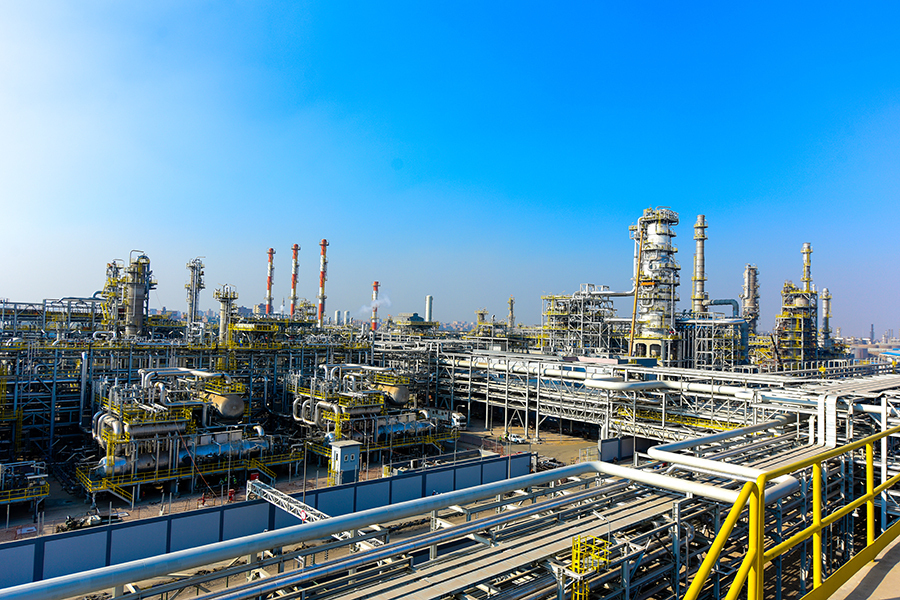
Looking ahead: Operations at the nearly USD 4 bn Egyptian Refining Company are set to start in 2019 and Qalaa is looking to “explore options to increase [its] ownership in this mega project that will further solidify our position as a leading energy and infrastructure company,” said Heikal. The company is also “particularly bullish on growth prospects for our mining and transportation platforms,” said Co-Founder and Managing Director Hisham El Khazindar.
Related
Carbon Holdings could break ground on its USD 10.9 bn Tahrir Petrochemicals Corporation (TPC) by year’s end, CEO Basil El Baz is quoted in the domestic press as having said. The company issued a statement yesterday (pdf) with a full rundown on a Saturday evening ceremony that saw it sign some 48 key project documents on a world-scale petrochemicals facility that will deliver some USD 8 bn in projected annual exports and produce raw materials that will “make it possible for Egyptian manufacturers to make and export products including plastics and packaging, paints and solvents, adhesives, floor coverings, and more,” El Baz said.
Key economic benefits to Egypt include the creation of 20k direct jobs and 15k indirect jobs during the construction phase. TPC will buy some USD 1.5 bn worth of goods and services in Egypt during construction and will employ more than 3k skilled workers in the heartland of the nation’s oil and gas industry when operational. El Baz estimates that the company could create more than 200k jobs in downstream sectors when domestic industry starts using its products to manufacture other goods.
TPC’s financing will include a USD 5.4 bn debt package for which the company and Carbon Holdings are in advanced talks with institutions including UK Export Finance, Germany’s Euler Hermes, and the US Overseas Private Investment Corporation.
Who’s working on it? Key EPC contracts are now in place with our friends at Hassan Allam as well as Linde, Bechtel, Archirodon, Maire Tecnimont and Consolidated Contractors Group, among others.
What’s the timeline? Look for TPC to reach financial close in the third quarter of this year. Principal construction will take about four years from the initial drawdown of funds.
Related
IPO WATCH- Egyptian electronics manufacturer SICO is planning to list shares on the EGX within three years, CEO Mohamed Salem tells Reuters’ Arabic service, without providing any further details on the potential share sale. The company had denied reports back in February that it was eyeing an IPO, but Salem tells the newswire that the step is “necessary.” SICO also plans to capture a 17% market share, up from a current 2.7%, and double its capex and production output, he said. The company launched the first Egyptian-assembled tablet last week, around four months after it began selling its locally assembled smartphone, Nile X. SICO’s expansion plans will also see the company exporting 60% of its output by focusing on Gulf and African markets. Nile X is currently sold in the UAE and will debut in Saudi Arabia, Kuwait, and Oman over the coming few months.
Related
EXCLUSIVE- Futures contracts could debut on the EGX in early 2019: We could be seeing trading in futures contracts on the EGX in 2019, EGX sources told Enterprise. The bourse is will begin working on setting up the infrastructure and operating mechanisms for these contracts next year. The Federation of Egyptian Chambers of Commerce is backing the measure, which would create a marketplace for oil, gas, wheat and fertilizers futures. EGX head Mohamed Farid is currently in Sweden to speak with top executives at Nasdaq and other exchanges on mechanisms to bring about futures exchanges. Regulations on futures were introduced as part of amendments to the Capital Markets Act.
What about sukuks? Asked when we might see sukuks on the EGX, our source was non-committal, saying the introduction of shariah-compliant debt products would require signoff from the Finance Ministry and the Central Bank of Egypt. Sukuks would require new legislation be issued, we were told, despite provisions authorizing them in the amended Capital Markets Act. The EGX is also looking at what it can do to accelerate the growth of a market for corporate bonds.
Related
Gov’t to meet next week to set final lineup of the state privatization program: The Finance Ministry-led committee tapped to pull together the state privatization program will meet next week to decide on the final lineup of companies that will go out in the first wave of the program, minister Mohamed Maait tells Al Shorouk. We noted yesterday that Public Enterprises Minister Hisham Tawfik ordered state holding companies to expedite procedures to ready their companies for the program, setting a deadline of three weeks to complete their report on which companies are ready.
Related
Eni denies that it has made a massive gas discovery in Egypt: Eni denied much-hyped reports that it made a massive discovery at the Noor gas field off the coast of North Sinai, Reuters reports. “There are prospects and new (geological) structures in Egypt but we still haven’t discovered anything,” Eni CEO Claudio Descalzi told reporters on Monday. News reports last week had suggested that Eni could unlock as much as 90 tcf of natural gas reserves from the Noor field, a figure that would make it about 3x the size of the supergiant Zohr gas field. Oil Minister Tarek El Molla had downplayed the reports, stating that seismic studies had not yet been completed.
The warnings have done little to dampen the hype, with trade publication Petroleum Economist noting yesterday that Eni is hoping for a “second bonanza” when it came to Noor. “Eni is hoping that a good proportion of that so-far elusive gas will be in the Noor field off North Sinai. The Egyptian cabinet in March approved exploration plans, and Eni is to start preliminary drilling this summer. Only then will it become clear whether rumours that Noor holds even larger gas deposits than Zohr are true or false.”
In other Eni news, Descalzi pledged that the company will make a binding commitment to becoming carbon neutral, according to Reuters.
Related
Egypt to pay USD 200-500 mn in arrears to oil companies by the end of September: EGPC plans on paying USD 200-500 mn in arrears to oil producers by the end of September, EGPC sources say. EGPC is in talks with the government to arrange the financing, according to the sources. The Finance Ministry had reportedly agreed back in May to issue letters of assurance for two loans to the EGPC worth a combined USD 850 mn to repay IOCs. Sources had also previously said that a USD 200 mn payment would be made to IOCs in June. Egypt’s total arrears had been brought down to USD 2.1 bn as of February.
Will smaller players get any of it? Our friends in the industry noted that while the state’s backlog of payments to the industry is declining, that’s because large players including the global majors have been paid out at the expense of smaller local and regional fish.
Related
EGX-listed companies rush to declare “we have no ties to Abraaj”: In a string of some 73 disclosures last week, companies rushed to meet an EGX requirement that they disclose any business or investment ties to embattled private equity firm Abraaj in the wake of the company’s collapse and liquidation, Youm7 reports. Yesterday saw six companies issuing disclosures declaring that they have no ties with Abraaj, Al Mal reports.
Meanwhile, the Abraaj saga continues as six firms are said to be bidding to run Abraaj’s USD 1 bn healthcare fund — the same fund which drew accusations of misuse of funds that led to the firm’s collapse. Colony Capital, TPG and Cerberus Capital Management were among the firms vying to manage the fund, sources familiar with the matter tell Reuters. “Deloitte, the provisional liquidators of Abraaj, and investors in its healthcare funds are weighing these inquiries, which could pave the way for the healthcare fund to separate from the rest of Abraaj,” they added.
Two notes of relevance here: First, Colony didn’t pick up the healthcare fund when it recently entered an agreement to acquire other key Abraaj funds. Second, Egypt’s Cleopatra Hospitals group is not controlled by the embattled healthcare fund, but rather a separate North Africa fund that will belong to Colony, provided the transaction goes through.)
And so the vultures circle: UAE-based education- and healthcare-focused private equity outfit Amanat Holdings is eyeing opportunities in Egypt, the GCC, and India as part of a plan to “capitalize on the collapse of Dubai-based Abraaj Group,” Managing Director Shamsheer Vayalil told Bloomberg in an interview. The company is “well poised to lead the healthcare and education space in the region and abroad in the incumbent era,” he said, adding that Amanat is looking for a “couple more” agreements in either sectors as it pursues regional expansion plans with Abraaj on the verge of collapse. You can check out Amanat’s corporate presentation here (pdf).
Background: Abraaj has agreed to sell key funds and its principal stakes in them to Colony Capital after a scandal on misuse of funds. “Most private equity [transactions] and fundraising in the region [came] to a halt” after the news was made public, Bloomberg notes. The company’s chairman, Sean Cleary, resigned last week.
Related
INVESTMENT WATCH- Cargill and Archer Daniels Midland (ADM) have formally launched their joint venture, SoyVen, which will own and operate Cargill’s soy crushing facility in Borg El Arab, Cargill announced yesterday. “The joint venture consists of ADM and Cargill each holding a 50% interest, with the management team reporting to a board of directors appointed by the two parent companies. The joint venture’s assets do not include Cargill’s grain business and port terminal in Dekheila, or the ADM-Medsofts joint venture at the Port of Alexandria.” Cargill and ADM had reached the agreement to launch the JV back in February. The firm had said back in 2015 that it would invest USD 100 mn.
Related
LEGISLATION WATCH- Proposed law will regulate e-commerce: As we suggested last month would be the case, the Madbouly government is moving to regulate e-commerce, with the ICT Ministry currently drafting a law for the sector, said MP Mohamed Hegazi, chair of the House ICT Committee, according to AMAY. Hegazi, who spoke during a conference on internet user data privacy, gave no meaningful detail on the law, but it’s not the first time we’ve heard of it. House Industry Committee member Ali El Kayal presented a draft law on the subject to the House of Representatives last December. We assume this is the very same act, with the ministry tweaking some aspects of it. It was noted in the local press back then that the law was primarily concerned with establishing a tax framework for the industry. Government sources told us last month that the Finance Ministry was looking to impose a VAT on e-commerce.
Online retailer are lining up to influence the drafting of the rules. Some of the largest e-commerce platforms operating in Egypt, among them Jumia and Amazon subsidiary Souq.com have (at least publicly) expressed support for the tax grab.
Related
LEGISLATION WATCH- Parliament signs off on amendments to Customs Act: The House of Representatives approved yesterday amendments to the Customs Act, El Watan reports. The amendments would slash customs duties on capital goods and expand temporary exemptions for production inputs and packaging equipment, in addition to introducing provisions that aim to curb customs evasion.
A massive overhaul of the Customs Act still to come: Parliament’s sign-off came as the Finance Ministry finalized a new, long-planned draft Customs Act, which will be presented to the House at the start of the next legislative session, Minister Mohamed Maait said, according to Youm7. The amendments that just passed the House only affect two articles of the law, Maait said. From what we’re seeing, these amendments were only fillers before the wider law comes into effect. Sources had told us previously that the new legislation also includes a host of measures that would facilitate the flow of goods through Egypt’s ports, including establishing a “white list” of importers who will benefit from expedited clearance of goods.
Related
LEGISLATION WATCH- Tenders and Auctions Act gets renamed as Public Contracts Act, gets preliminary nod from House GA: Parliament preliminarily approved the Tenders and Auctions Act during a plenary session yesterday, Al Shorouk reports. Discussion of the law quickly hit a snag, however, after the general assembly decided to rename the bill to become the Public Contracts Act, Youm7 reports. The change required the general assembly to send the legislation back to the Planning and Budgeting Committee to be reworded accordingly before returning to the general assembly for a final debate and vote, according to the newspaper.
Amendments to the tax code on affecting real estate also got initial approval yesterday, Youm7 reports. The amendments would impose a 2.5% levy on the disposition or quick sale value of real estate assets — whether in the form of a building or unoccupied land. Under the new stipulations, property owners would not have access to basic services such as power and water until they are able to present proof that they have paid the necessary taxes.
Meanwhile, the final vote on the second part of the Press and Media Act has been pushed to October, when the House convenes for its next legislative session, Ahram Gate reports. The legislation will likely breeze through the vote, House Culture and Media Committee member Nader Mostafa said yesterday. Parliament had sent the legislation back to Maglis El Dawla last month after deciding to split the act into three separate bills that would each regulate work at different types of media organizations.
Finally, three pieces of law with implications for the war on terror got preliminary approval yesterday, Al Mal reports, including amendments to the recently passed Anti-Terrorism Act that toughen penalties for harboring suspected terrorists. An article of the Tourism and Hotel Facilities Act requiring hotels to provide up-to-date information on their guests also got an update.
The third piece? You will almost certainly need a GPS tracker installed on your 4x4 if you want to license it after the House gave an initial nod to amendments to the Traffic Act. Other amendments to the traffic law will include new rules for licensing and fines, according to Rep. Khaled Hanafi, who said the act will come up for a vote this fall. The GPS requirement was first proposed by the Ismail cabinet back in February.
Related
MOVES- Mohamed Abdel Kader has been appointed as Citigroup’s Egypt country officer, Reuters reports. Abdel Kader “has been serving as country treasurer since 2008” and will retain his position as head of markets for Egypt, according to the newswire.
MOVES- Gen. Mohsen Abdel-Naby has been appointed as Director of the Office of President Abdel Fattah El Sisi, effectively becoming the president’s chief of staff. Abdel-Naby replaces Gen. Abbas Kamel, who was recently appointed head of the General Intelligence Service
Related


 Egypt Edition
  UAE
UAE  Saudi Edition
  MENA <> India Corridor
  Logistics (MENA)
  Climate (MENA)


 Share Issue