Get EnterpriseAM daily

Available in your choice of English or Arabic

Gov’t to offer a piece of Gabal El Zeit on the EGX this year

1

WHAT WE’RE TRACKING TODAY

Egypt wants to develop more hospitality projects through PPPs

Good morning, friends and happy Monday to you all. We have another busy issue for you this morning, led by some much-welcome updates on our privatization efforts, with sources telling us the state could list the Gabal El Zeit wind farm on the EGX before January. We also got word that our first ever local sovereign sukuk could hit the market this month.

PSA-

#1- The International Finance Corporation is inviting startups in Africa to take part in its Connecting Africa’s Entrepreneurs study, which will help it “better understand the needs and preferences of entrepreneurs, and how these align with investors and accelerators in the ecosystem.” Entrepreneurs who complete the 30-minute survey will get their hands on a tailored market insights report from the IFC that compares their company with similar startups and investor preferences and be invited to webinars led by IFC officials and sector leaders.

#2- Your regular dose of diplomacy news now in audio form: The Foreign Ministry has launched its very own podcast dubbed Diplocast, where it plans to shed light on various aspects of diplomatic and consular works, according to a statement from the ministry. The platform gives voice to ministry officials and Egyptian diplomats to share their personal and professional experiences in the field.

Keep an eye out for episode 1, where media personality Ramy Radwan interviews Foreign Minister Badr Abdelatty.

#3- The new GEM website is live: The Tourism Ministry launched the Grand Egyptian Museum’s (GEM) new website ahead of its grand opening on 1 November. The website allows visitors to purchase tickets online, and access information on events, services, visiting details and hours.


WEATHER- It’s another sunny day in Cairo, with a high of 31°C and a low of 18°C, according to our favorite weather app.

It’s more or less the same in Alexandria, which is looking at a high of 30°C and a low of 19°C.

WATCH THIS SPACE-

#1- Could we see more hospitality and tourism projects developed under the PPP framework? Prime Minister Moustafa Madbouly and Public Enterprises Minister Mohamed El Shimi met with the heads of the government’s Holding Company for Tourism and Hotels (HOTAC) and Emaar Misr to explore bringing in private players onboard to develop state-owned assets into tourism projects through the public-private partnership (PPP) framework, according to a statement. This comes as Egypt works to expand its hotel room capacity and double its number of annual tourists to 30 mn, in addition to boosting private sector involvement.

The meeting highlighted several historic buildings and other state-owned assets that could be developed under PPPs, including the Cosmopolitan Hotel in Downtown Cairo, the Omar Effendi buildings across Cairo, and buildings in Alexandria’s Saad Zaghloul square. The plan also includes a number of hotels ready for a revamp, land plots ready to host hotels, and Carnelia Beach in Marsa Alam.

The Public Enterprises Ministry has already presented these investment opportunities to a list of local and foreign investors.

ALSO- El Shimi met with Talaat Moustafa Group CEO Hisham Talaat Moustafa, where they discussed efforts to enhance cooperation in the hospitality sector. Talks touched on boosting partnership between the ministry’s HOTAC and TMG, as part of state efforts to enhance public-private partnerships in the sector.


#2- The Madbouly government is currently working to overhaul the export framework in a bid to develop an integrated export system in line with international best practices, the finance and investment ministries said in a joint statement. The move aims to streamline export procedures and increase the competitiveness of Egyptian products globally.

Under the plan, efforts are underway to enhance the efficiency of export procedures at ports by setting up advanced inspection and detection units. These units — operating at export ports — are slated to streamline operational and logistics services. The ministries will also work to digitize export procedures to speed up the documentation process and cut costs, the statement read. AI will be utilized to streamline customs workflow.

EGX WATCH-

EGX hits fresh all-time high: The Egyptian exchange hit new record highs during Sunday’s session, driven by strong demand from local institutions and “liquidity rotation” between EGX30 and mid-cap stocks, Al Borsa reports.

Also driving the momentum: Strong institutional buying continues to drive the market toward new record levels, Arabeya Online’s Bassem Abou Ghanima told the news outlet. Money flew from stocks that saw great purchasing momentum in past periods into the chemicals and real estate sectors.

The breakdown: The EGX30 rose 0.6% to 37,910 points at yesterday’s close, led by a 5.1% jump in EgyptAlum’s stock, Mopco rising 3.7%, and Palm Hills up 3.1%.

Looking forward: Traders anticipate that the market’s upward momentum will persist in the coming session, although some investors may eye partial profit-taking to realize gains. However, this move is unlikely to disrupt the broader trend.

HAPPENING TODAY-

#1- It’s the final day for investors to bid for 386 ready-to-deliver industrial units across the country offered up on the Egypt Industrial Digital Platform, spread across 12 industrial complexes in 11 governorates, according to an Industry Ministry statement.

The offering includes units ranging between 48-792 sqm for engineering, chemicals, food, textiles, ready-made garments, metals, plastics, and pharma activities. It includes facilities in Beni Suef, Sohag, Red Sea, Qena, Assiut, Minya, Fayoum, Luxor, Alexandria, Aswan, and Gharbia. Applicants can own or lease the units.

The government is also offering a 5% declining interest rate on loans and bank financing covering up to 100% of the unit’s value, along with financing for equipment and machinery, and the provision of technical and marketing support through the MSME Development Agency.


#2- It’s day two of the Arab-African Investment & International Cooperationsummit. The four-day event, organized by the Arab Women Investors Union in Cairo, focuses on sustainable development, international partnerships, and capital pathways for this year’s edition.


#3- The Aswan Forum is in its second and final day. Under this year’s theme of A World in Flux, A Continent in Motion: Navigating Africa’s Progress Amid Global Shifts, the event is gathering leaders from Africa and further afield to discuss “African-led solutions that reflect the continent’s aspirations for peace, development, and prosperity.”

What went down during day one? Foreign Minister Badr Abdelatty had a busy day yesterday, delivering the keynote opening speech — which was followed by recorded messages from President Abdel Fattah El Sisi and UN Secretary General Antonio Guterres, where they highlighted the timeliness of this year’s forum. The minister also took part in a number of panels alongside his African peers; the panels covered development in Sudan, the Red Sea and how it could help Arab-African economic integration, and restoring trust in international order.

During one of the panels, Abdelatty unveiled the Suez and Red Sea Initiative for Economic and Maritime Development, aimed at strengthening economic integration among countries bordering the Red Sea. The initiative stands as a roadmap to promote sustainable development in the region through four main pillars: the blue economy, infrastructure and port development, environmental protection, and deepening economic integration.

** DID YOU KNOW that we cover Saudi Arabia and the UAE?

** Were you forwarded this email? Tap or click here to get your own copy delivered every weekday before 7am Cairo time — without charge.

ICYMI- Missed this week’s Inside Industry? In our weekly vertical exploring all things industry and manufacturing, we looked at Egypt’s rapidly growing cement industry. Check out the story here.

THE BIG STORY ABROAD-

Israel has reinstated a ceasefire in Gaza after airstrikes killed 26 people in Gaza yesterday, prompted by an attack in Rafah that killed two Israeli soldiers. Israel had briefly halted the truce and stopped aid entry into Gaza, accusing Hamas of a “blatant” violation. Following US pressure, the Israeli side announced that aid will once again start entering Gaza. (Reuters | BBC | AP | The Guardian)

ELSEWHERE IN THE WORLD- Eight crown jewels were stolen from the Louvre Museum in Paris after four thieves broke into the museum during opening hours and robbed it. The thieves had targeted nine objects but dropped the ninth one during their escape. A specialized French police unit is currently investigating the robbery. (Reuters | AP | NYT | CNN | BBC)

*** It’s Blackboard day: We have our weekly look at the business of education in Egypt, from pre-K through the highest reaches of higher ed.

In today’s issue: We look at how educational facilities are becoming an integral part of real estate developments.

From October 12–16, Somabay hosted the Somabay World Cup for the first time in Egypt, welcoming 173 participants from 19 countries to its signature Red Sea course. The tournament spotlighted Egypt’s growing presence on the global golf map, set against Somabay’s year-round sunshine, luxury resorts, and world-class sports and leisure scene.

2

Privatization

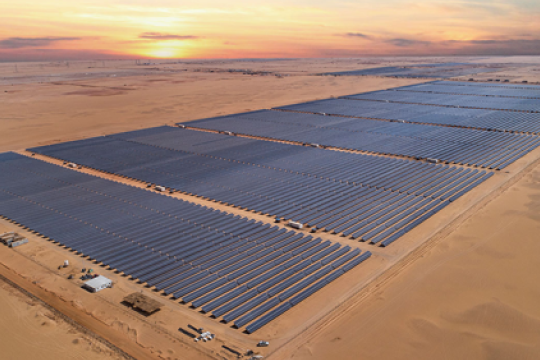
Egypt’s Gabal El Zeit wind farm to hit EGX before year-end

The government is moving ahead with plans to list the Gabal El Zeit wind farm on the EGX before year-end, likely by November or December, two government sources told EnterpriseAM. Procedures are already in motion to float 30-40% of the farm in a sale that could raise between USD 300-400 mn, we were told.

(Tap or click the headline above to read this story with all of the links to our background as well as external sources.)

But the government is still open to offers from a strategic investor — assuming they can meet the new valuation. A previous acquisition bid for the station by UK-based private equity giant Actis fell apart after the government pushed to increase the value of the sale from USD 300 mn to USD 350-400 mn. The government is now looking to raise roughly USD 600-800 mn from a majority stake sale to a strategic investor.

GCC and British investors are said to be circling the Red Sea wind farm, which would mark one of the first major listings under the government’s revived privatization drive as it seeks to draw foreign capital, the sources said.

What’s next? Advisors are preparing to market both the IPO and the potential strategic sale, depending on investor appetite.

IN CONTEXT- The move comes shortly after authorities finalized a census of 561 state-ownedcompanies to anchor the updated State Ownership Policy. The government is also working on a package of tax and regulatory incentives that would exempt IPO proceeds from taxes and expand breaks for investment funds to boost liquidity on the EGX.

Also in the pipeline: The government is preparing to list at least two other companies affiliated with the military’s National Service Projects Organization (NSPO), one of the sources said.

REFRESHER- Gabal El Zeit is among 10 companies for which the government tapped investment banks and counsels as part of efforts to fast-track its privatization program. The list also includes Safi, Wataneya, Silo Foods, Chill Out, Midor, Alamal Alsharif Plastics, and HoldiPharma subsidiaries CID Pharma and Misr Pharm.

3

DEBT WATCH

Egypt to issue its first ever EGP-denominated sukuk this month

The Madbouly government is preparing to issue its first ever local sovereign sukuk this month — the EGP 3 bn three-year instrument is set to hit the market on Tuesday, 28 October, a senior government official told EnterpriseAM.

(Tap or click the headline above to read this story with all of the links to our background as well as external sources.)

The upcoming issuance is part of a wider sukuk program worth EGP 50 bn — double the initial target planned for the fiscal year, according to our source. The Finance Ministry is holding meetings with representatives from 15 banks in a bid to further increase the program to EGP 200 bn by next June, the source added.

We had an idea this was coming: We were previously told that the first two tranches of the program will be valued at EGP 3-4 bn, and that they will be offered before the end of this year..

The issuance is expected to lure more investors to our local debt instruments, which will likely be reflected in the yields offered for such instruments.

To back the sukuk: The issuance will be backed by a new Ras Shukeir project involving one of the Gulf’s sovereign wealth funds, with proceeds earmarked for reducing public debt.

The government wants to diversify its debt instruments and attract more investors to the local debt market with lower interest payments and borrowing costs, sources previously told us.

REMEMBER- The Finance Ministry is planning to unveil its new public debt strategy this December, which will feature social and sustainability bond issuances. The strategy aims to bring public debt down to below 75% of GDP within three years, from 85% in the last fiscal year, while cutting debt servicing costs to 7% of GDP and extending debt maturity to five years.

This publication is proudly sponsored by

4

Manufacturing

Siemens to set up high-speed train car factory in Egypt?

Localizing the manufacture of high-speed train cars: The Madbouly government is hoping to see Germany’s Siemens set up a factory for manufacturing high-speed train cars, Transport Minister Kamel El Wazir said during a presser last week (watch, runtime: 58:28).

(Tap or click the headline above to read this story with all of the links to our background as well as external sources.)

Speaking of high-speed trains: The first phase of the Sokhna-Matrouh high-speed rail line — which links New Alamein and Ain Sokhna — will kick off trial operations on 9 November, El Wazir said. The date coincides with day one of the transport and logistics exhibition TransMEA. The line will run 660 km and include 22 stations. Once fully operational, it is expected to transport 1 mn passengers and 8.5k tons of goods per day.

Part of a bigger project: The line is part of a 2k-km high-speed rail network linking Cairo, Aswan, the North Coast, and the Red Sea across 3 main lines. The project has been on our radar for years.

Who’s involved? A joint venture between Siemens and two local firms — Arab Contractors Company and Orascom Construction — is behind the first phase of the project.

That’s not all: French rolling stock company Alstom wants to set up its second factory in the country dedicated to manufacturing high-speed trains, El Wazir said, adding that a land plot has already been designated for the factory.

BACKGROUND- Alstom inked a land usufruct agreement with the General Authority for Land and Dry Ports for its EUR 80 mn Borg El Arab railway manufacturing complex back in April. The first phase of the project’s development will see a components factory built on 13 feddans, producing signaling systems and electrical circuits.

ALSO- The Arab Organization for Industrialization’s Semaf railway factory is gearing up to launch the production of high-speed trains at its factory soon, El Wazir noted.

…and Spain’s Colway: Spanish manufacturer Colway Ferroviaria will set up a bus manufacturing factory, El Wazir said. The company already produces equipment for railway and metro cars.

IN OTHER MANUFACTURING NEWS-

Leading local baker RichBake plans to invest around USD 60 mn in a new factory in New October City, CEO Gilbert Hobeika‏ told Al Mal. The company has already received the land for the facility and started preparing for construction. The new facility will more than double RichBake’s production capacity, according to Hobeika, who added that the company is studying an IPO as one of several options to finance its expansion.

5

Startup watch

Egypt’s Sehatech raises USD 1.1 mn in seed round

Homegrown insurtech startup Sehatech closed a USD 1.1 mn seed round led by Ingressive Capital, with participation from Plus VC, strategic angel investors, and existing backers A15, Beltone Venture Capital, and an undisclosed industry expert, the company said in a statement (pdf) yesterday. The new round brings Sehatech’s total funding to USD 2.0 mn, after it raised USD 850k two years ago.

(Tap or click the headline above to read this story with all of the links to our background as well as external sources.)

Sehatech? The company specializes in third-party administration of health ins. claims and provides AI-powered digital solutions that help ins. players cut costs from manual errors and reduce fraud, waste, and abuse by digitalizing interactions between them and healthcare providers.

Where is the money going? The company plans to use the new funds to expand its team and technical capacity, grow operations in Egypt and abroad, and further develop its platform with advanced AI capabilities and more efficient automation tools, according to the statement.

What they said: “This funding will help us continue building the tools needed to reduce friction between insurers and providers — and ultimately make health ins. more available to the mns who are underserved today,” Sehatech Founder and CEO Mohamed Elshabrawy said.

Tackling a challenging market: Egypt’s health ins. sector faces several challenges, including limited coverage — particularly in areas with weak infrastructure — which restricts access to quality healthcare, Elshabrawy told EnterpriseAM. Sehatech’s mission is to expand access to ins. coverage and make it more inclusive and efficient, ensuring broader, more affordable coverage for citizens.

The solution: Sehatech is digitalizing and automating ins. operations to address inefficiencies, cut administrative complexity, and save time, Elshabrawy told us. Its digital tools also accelerate pricing, claims management, and payment processes, improving efficiency and user experience for patients, providers, and ins. players alike.

And the company is going regional: Sehatech plans to enter Gulf and North African markets over the next two years as part of its expansion plan while forming strategic partnerships with key players to accelerate growth and strengthen its position as a leading insurtech platform in the region, Elshabrawy added.

6

ALSO ON OUR RADAR

Visa to expand operations in Cairo

PAYMENT SERVICES-

Global payment services giant Visa plans to expand its operations in Cairo on the back of the country’s competitive advantages in operational costs, efficiency, and technical infrastructure, company representatives said during a meeting with Investment Minister Hassan El Khatib. Visa aims to develop new government payments and e-commerce solutions in the country, the statement noted. The company has already quadrupled its workforce at its Cairo office to around 120 employees and views Egypt as one of its “core markets” for its global strategy, alongside Japan, Germany, Brazil, Mexico, Saudi Arabia, and South Africa.

Editor’s note: The story has been amended on 22 October 2025, to clarify that Visa will not relocate its digital sales center from Dubai to Cairo, based on the Investment Ministry’s revised statement.

(Tap or click the headline above to read this story with all of the links to our background as well as external sources.)

CAPITAL MARKETS-

Post for Investment subsidiary PFI Asset Management launched its first sponsored mutual fund — the PFI Money Market Fund, aka PFI Cashi — it said in a statement (pdf). The fund joins three others managed by the company, including HDBank’s Mawared fund and two for GIG Ins. Egypt.

What they said: “This launch affirms PFI Asset Management’s commitment to expanding its footprint in Egyptian asset management and delivering innovative investment solutions to its clients,” said CEO Ghada Alkady.

HOSPITALITY-

Orascom Development Egypt plans to gradually reopen five hotels in Taba that had been closed during the Gaza war, Investor Relations Group Head Ahmed Abou El Ella told Asharq Business.

MINING-

Egypt’s Afaq Mining made a commercial gold discovery in West Gabal Elba with reserves worth over USD 800 mn at current prices, Asharq Business reports, citing two unnamed sources. Initial reserves are estimated at 200k ounces.

The company will submit a commercial exploration study to the Egyptian Mineral Resources Authority this week ahead of forming a joint venture with Shalateen Mineral Resource Company to start work on the find. Afaq has funneled over USD 20 mn into exploration efforts and plans to increase spending while also holding talks with the government to build a USD 50 mn gold production plant.

REAL ESTATE-

Real estate developer Palm Hills Developments is looking to acquire new plots along the Red Sea coast, Group CEO Yasseen Mansour told Asharq Business. The announcement follows a government push to catalogue plots suitable for investments along the coastal strip ahead of marketing them to investors.

DIPLOMACY-

Foreign Minister Badr Abdelatty held calls with his Italian, Spanish, German and Canadian counterparts to discuss ongoing preparations ahead of the International Conference on Early Recovery, Reconstruction, and Development in Gaza set to be held in Cairo in the second half of November. Abdelatty stressed the “urgent need” to begin implementing early recovery and reconstruction plans for the strip, while his counterparts reaffirmed their readiness to maintain close coordination with Cairo on Gaza’s recovery and reconstruction efforts.

7

PLANET FINANCE

First Brands’ bankruptcy signals early signs of trouble for leveraged loan market investors

The recent fallout of US-based autoparts maker First Brands Group has sent alarm bells ringing across the USD 2 tn leveraged loan market, the Financial Times reported on Friday. Investors warn that the sudden fallout is part of a broader pattern of stress, marking an early warning sign for a market where hasty dealmaking and rushed due diligence have become the norm.

The shockwaves have spread well beyond the loan market. Investment bank Jefferies saw its share drop by nearly 20% after disclosing losses tied to First Brands, while hedge fund Millennium is also said to have suffered losses of around USD 100 mn from financing the company’s inventory, The Economist reports. The fallout illustrates how risk tied to a single borrower has reached across banks, hedge funds, and trade-finance lenders alike.

Jefferies’ CEO Rich Handler told investors the bank “believes it was defrauded” by First Brands, joining a chorus of firms alleging misconduct, Reuters reports. Jefferies said its exposure — about USD 715 mn in receivables — is largely contained, with estimated losses of under USD 100 mn after recoveries, Morningstar analyst Sean Dunlop said. Handler’s remarks reflect rising friction between banks and private lenders — each blaming the other for letting risky credit swell unchecked.

The problem stems from the “almost unquenchable demand” for collateralized loan obligations (CLO) — investment vehicles that buy and bundle hundreds of risky corporate loans, according to the salmon-colored paper. These loans are sliced into tranches and sold to major investors such as ins. companies and pension funds, which bet on diversification as a safeguard against defaults in individual companies.

The strong demand seems to have eroded the incentive to conduct proper credit checks. With CLO investors eager to fill their portfolios, transactions have often been pushed through in days rather than weeks, leaving little time to assess borrowers’ financial health. “You’re not paid to do due diligence in this market,” an executive at a former lender to First Brands told the FT.

The episode also exposes how difficult it has become to track risk across modern credit markets, as lending has shifted since the 2008 crisis away from banks into a web of private credit funds, business development companies, and securitized vehicles such as CLOs and collateralized fund obligations. The US Department of Justice is now investigating First Brands’ accounts to determine whether the company misrepresented its borrowing and collateral, including potential multiple pledges against the same assets, The Economist reported.

The lack of scrutiny allowed red flags to slip through. First Brands raised more than USD 750 mn in March 2024 via a loan announced on Monday and finalized by Friday, according to the salmon-colored paper. Investors who avoided the debt said the company’s “adjusted” earnings were nearly impossible to tie back to its actual cashflow, raising doubts about the business’s true financial strength.

First Brands had issued more than USD 5 bn in loans, which are now trading at cents on the USD, implying losses of roughly USD 4 bn. Most CLOs managed by major asset firms — including PGIM, Franklin Templeton, Blackstone, CIFC, Oaktree, and Wellington — had exposure to First Brand’s debt, according to an analysis by Morgan Stanley. These losses are set to wipe out the CLO equity tranches, the high-risk cushions meant to absorb the first wave of defaults.

Back-to-back bankruptcies: The bankruptcies of First Brands and subprime lender Tricolor — the latter amid fraud allegations — have triggered a sell-off in corporate debt that is now weighing on the broader leveraged loan market, which is on track for its biggest monthly loss since 2022, the FT cites data from PitchBook LCD.

MARKETS THIS MORNING-

Hong Kong’s Hang Seng is leading the gains among Asian markets this morning, rising 2.1% in early trading after China held lending rates steady. The Shanghai Composite is up 0.6%, while Japan’s Nikkei remains unchanged. Meanwhile, Wall Street futures are in the green as investors await a busy earnings week ahead.

EGX30

37,910

+0.6% (YTD: +27.5%)

USD (CBE)

Buy 47.49

Sell 47.63

USD (CIB)

Buy 47.50

Sell 47.60

Interest rates (CBE)

21.00% deposit

22.00% lending

Tadawul

11,691

-0.1% (YTD: -2.9%)

ADX

10,124

-0.2% (YTD: +7.5%)

DFM

5,992

-0.6% (YTD: +16.2%)

S&P 500

6,664

+0.5% (YTD: +13.3%)

FTSE 100

9,355

-0.9% (YTD: +14.5%)

Euro Stoxx 50

5,607

-0.8% (YTD: +14.5%)

Brent crude

USD 61.09

-0.3%

Natural gas (Nymex)

USD 3.15

+4.8%

Gold

USD 4,257

+1.1%

BTC

USD 108,845

+1.5%(YTD: +16.4%)

S&P Egypt Sovereign Bond Index

947.01

+0.1% (YTD: 21.8%)

S&P MENA Bond & Sukuk

151.76

+0.1% (YTD: +8.4%)

VIX (Volatility Index)

20.78

-17.9% (YTD: +19.8%)

THE CLOSING BELL-

The EGX30 rose 0.6% at yesterday’s close on turnover of EGP 5.2 bn (14.9% above the 90-day average). Regional investors were the sole net sellers. The index is up 27.5% YTD.

In the green: Egypt Aluminum (+5.1%), Mopco (+3.7%), and Palm Hills Developments (+3.1%).

In the red: Arabian Cement (-1.1%), Misr Cement (-0.8%), and Juhayna (-0.4%).

8

BLACKBOARD

Are schools becoming the new selling point in Egypt’s real estate market?

Educational facilities are becoming an integral part of new real estate developments as demand grows for integrated communities that combine housing, services, and lifestyle. Schools have shifted from being a secondary amenity to a central pillar of project design, directly influencing buyer decisions and property values, Savills Egypt Strategic Consultancy head Rania Nazmi told EnterpriseAM. Developers now see educational components as critical to both sales performance and long-term community appeal.

(Tap or click the headline above to read this story with all of the links to our background as well as external sources.)

Quality, rather than proximity, is what ultimately shapes decisions for families buying into new developments, Knight Frank Egypt Partner and Country Head Zeinab Adel told us. For the majority of homebuyers, the choice of compound follows the choice of school, not the other way around. A good school within a compound has become one of the most powerful differentiators for developers looking to stand out — and a key reason for buyers to commit, she added.

Families are willing to pay a premium rate to live near respected schools, turning educational facilities into a strategic driver of demand and a central part of modern masterplans, Adel told us. However, a gap persists, particularly in new areas like the new capital, where projects are still in planning and schools lag behind housing supply, she added.

Real estate developers are increasingly viewing schools as an anchor for residential projects. A reputable school can raise unit prices by 15-25% due to the increased convenience, safety, and lifestyle benefits families associate with having a high-quality institution nearby, Uptown 6th of October CEO Moataz Shaarawy told EnterpriseAM. Buyers perceive these schools as core assets that deliver both lifestyle convenience and long-term investment value. As a result, schools have evolved from being an optional extra to a defining feature that drives sales performance and project differentiation, he added.

The presence of schools in compounds not only boosts sales but also strengthens community ties, Shaarawy said. Developers are increasingly incorporating schools into their master plans from the earliest stages of design. Leading developers now view education as central to community-building, with the “integrated community” model — combining residential, educational, healthcare, and recreational services — becoming the standard, Shaarawy said.

Industry players agree on this: Madinet Masr CEO Abdallah Sallam echoed the sentiment, noting that his company places education at the heart of its developments as part of a holistic vision to create sustainable communities that combine learning, wellbeing, and quality of life. This community dynamic supports sustained occupancy and helps preserve property values over time, he explained.

Integrating schools into real estate projects requires carefully balanced investment models that spread risk and ensure sustainability. The ideal structure sees the developer owning the land and managing the initial construction, followed by a long-term investor acquiring the educational asset and appointing an experienced operator, Nazmi said. This three-way model allows developers to generate returns more quickly, while investors and operators handle the longer payback cycle typical of educational ventures.

Developers often offer strong incentives to secure top-tier educational partners, as schools are capital-intensive and take years to reach full capacity, Shaarawy said, adding that these can include preferential land rates, contributions to construction costs, or guaranteed student enrollment from within the compound. Similarly, Sallam explained that developers typically provide land and infrastructure while the school partner handles development and operations, creating a mutually beneficial relationship that aligns both parties’ goals.

A well-known school brand adds significant prestige and marketing power to a residential project. International operators play a vital role in attracting reputable educational names, which enhances both investor confidence and the overall reputation of the development, Nazmi said. The tier of a compound is now largely determined by the kind of school brand it hosts — whether mid-tier or premium — as it directly reflects the project’s positioning and target market, CIRA Education Chief Communications Officer Alyaa Said told EnterpriseAM.

Partnerships between schools and developers often follow long-term contractual arrangements — sometimes lasting up to 90 years — to secure investment stability, Said told us. Schools may rent land from developers or share earnings, with most revenues going to the education operator, while developers benefit from higher property values and increased demand. This approach ensures that both sides see the collaboration as a strategic investment rather than a short-term transaction.

These partnerships offer mutual benefits, where developers gain a valuable anchor amenity that enhances sales, while schools enjoy access to a built-in population base and modern infrastructure. For developers, the integration of a reputable educational institution helps sustain property values and community appeal. For schools, location within a large, secure residential compound guarantees a consistent pool of potential students. As Said noted, even before the school year began, CIRA’s newly launched national school in Gardenia compound reached full capacity within months — underscoring the strong demand from residents seeking convenience and lower transport costs.

While schools inside compounds are often more exclusive, developers and operators agree that maintaining openness to the surrounding community is crucial for long-term success. Sallam said that Madinet Masr’s schools in Taj City and Sarai welcome students from across New Cairo, emphasizing that education should serve the wider community. Shaarawy made a similar point, explaining that while children of residents often receive enrollment priority, sustainable schools maintain a balance by reserving seats for students from nearby areas to ensure diversity and full capacity.

How do schools remain competitive? Said and other industry insiders noted that true competitiveness comes not from having multiple schools in one compound, but from offering a range of educational systems — British, American, German, or national — catering to different preferences. This variety ensures that parents retain real choice even within a single development. Some worry that having only one school in a compound could create a captive market, but developers insist that reputational and contractual mechanisms keep standards high. Shaarawy said developers include performance indicators and joint monitoring committees in agreements, since poor school performance would reflect negatively on the entire project. Sallam added that partnering with well-established brands with strong academic track records ensures that quality and innovation remain central.

Despite growing demand, educational projects remain capital-heavy, with high construction and operational costs limiting new openings. Savills’ Cairo Property Report 2025 found that demand still outpaces supply, particularly for mid-priced schools, while only around 7% of Greater Cairo households can afford current private school fees. Nazmi said the financing gap between land-owning developers and investors willing to fund schools continues to slow implementation, despite clear market appetite.

To address this, new financing models — including phased construction and hybrid investment frameworks — could help make educational projects more financially viable while ensuring social impact, Savills Egypt Operations Head Sherine Badreldine told EnterpriseAM. These structures would allow developers to integrate schools earlier in their project lifecycles, accelerating both community development and occupancy rates.


Your top education stories for the week:

  • Fourteen new Egyptian-Japanese schools will be opened this academic year, bringing the total number to 69. (Statement)
  • Egypt and France signed 52 agreements to strengthen academic cooperation. The latest step saw ten Egyptian universities sign letters of intent with French hospitality school Vatel to expand programs in hospitality and management. (Statement)

OCTOBER

19-20 October (Sunday-Monday): Egypt to host the fifth edition of the Aswan Forum.

19-22 October (Sunday-Wednesday): Arab African Investment and International Cooperation Summit.

22 October (Wednesday): Egypt-EU Summit, Brussels, Belgium.

23-25 October (Thursday-Saturday): Stone Africa Expo, Cairo International Conference Center.

28 October (Tuesday): BEBA’s working dinner with Finance Minister Ahmed Kouchouk and Investment Minister Hassan El Khatib.

October: The third iteration of the Export Smart Exhibition and Conference.

October: The tenth session of the Egyptian-Lebanese Joint Higher Committee.

Mid-October: Capmas to publish the findings of its 2023-2024 income and expenditure survey.

NOVEMBER

1 November (Saturday): The official opening of the Grand Egyptian Museum.

3 November (Monday): S&P Global to release PMI data for September.

9-11 November (Sunday-Tuesday): The sixth edition of the TransMEA 2025 forum and exhibition, Egypt International Exhibition Center.

10 November (Monday): Capmas expected to release inflation data for October.

16-19 November (Sunday-Wednesday): Cairo ICT 2025, Egypt International Exhibition Center.

20 November (Thursday): Monetary Policy Committee meeting.

23-25 November (Sunday-Tuesday): NEBU Expo 2025 gold and jewelry exhibition, Egypt International Exhibitions Center, New Cairo.

November: Egypt to join the EU’s Horizon Europe research and innovation program.

November: The Conference on Early Recovery, Reconstruction, and Development in Gaza.

DECEMBER

1-4 December: Egypt Defence Expo (Monday-Thursday), Egypt International Exhibition Center.

4-7 December (Thursday-Sunday): Egy Stitch & Tex Expo 2025, Cairo International Conference Center.

15 December (Monday): Neo Gen PropTech and Sustainable Smart Cities Conference, The St. Regis Hotel New Capital

25 December: (Thursday): Monetary Policy Committee meeting.

EVENTS WITH NO SET DATE

Mid-2025: EGX launches sustainability index.

December: Germany’s North Rhine-Westphala business delegation to land in Egypt.

3Q 2025: Nasr Automotive begins locally manufacturing passenger cars.

3Q 2025: Polaris Parks to finalize contracts for two new industrial zones in the new capital and Sadat City.

Mid-2025: The Administrative Capital for Urban Developments to roll out the second phase of offering industrial plots to investors

2H 2025: Potential visit by Chinese President Xi Jinping to Egypt

4Q 2025: The beginning of construction works on China’s State Grid two solar projects.

4Q 2025: GB Auto starts assembling one of China’s Great Wall Motor models in 4Q 2025.

4Q 2025-1Q 2026: Kasrawy Group to launch first Avatr EV models in Egypt.

2025: The InterAcademy Partnership assembly.

2025: Nile Basin States Summit, Cairo, Egypt.

2025: Release of the government’s Startup Charter document.

Before 2025-end: The government will launch two ro-ro shipping lines with Saudi Arabia and Turkey.

2026

Early 2026: Passenger operations on the New Administrative Capital–Nasr City monorail scheduled to begin.

1Q 2026: Trial operations for the Ain Sokhna–Sixth of October section of Egypt’s first high-speed rail line scheduled to begin.

1 January: European Union’s Carbon Border Adjustment Mechanism (CBAM) to fully come into effect.

10-12 February (Tuesday-Thursday): Gitex Global’s AI Everything Middle East & Africa Summit

15 March 2026: IMF to hold its seventh review of Egypt’s USD 8 bn EFF arrangement.

May 2026: End of extension for developers on 15% interest rates for land installment payments

15 September 2026: IMF to hold its eighth review of Egypt’s USD 8 bn EFF arrangement.

2H 2026: Operations at Deli Glass Co’s new USD 70 mn glassware factory kick off.

2027

20 January-7 February: Egypt to host the African Games.

April 2027: Tenth of Ramadan dry port and logistics hub to begin operations.

EVENTS WITH NO SET DATE

2027: Egypt to host EBRD’s annual meetings for 2027.

End of 2027: Trial operations at the Dabaa nuclear power plant expected to take place.

September 2028: First unit of the Dabaa nuclear power plant begins operations.

Now Playing
Now Playing
00:00
00:00