Get EnterpriseAM daily

Available in your choice of English or Arabic

Gov’t postpones local sukuk issuance to next week

1

What We're Tracking Today

State Ownership Policy 2.0?

Good morning, friends and a happy Tuesday to you all. It’s another busy morning here in Egypt, with debt and energy news leading the news well — our maiden EGP sukuk issuance got pushed back again and QatarEnergy snapped up 40% of the Med’s North Rafah offshore gas concession.

BEFORE WE DIVE IN- Who might be interested in acquiring HSBC Egypt’s retail business — if, indeed, it’s for sale? The parlour game has begun in Cairo banking circles and so, too, has the posturing. Case in point: Al Mal reported yesterday that Emirates NBD is interested, quoting an unnamed source as saying the UAE-based lender was running “preliminary studies on the portfolio.”

That’s premature: HSBC isn’t yet accepting expressions of interest and won’t unless the review process it announced last week points in that direction. As it is, the review is just getting underway and the bank hasn’t made any decisions.

BACKGROUND- It’s still business-as-usual at HSBC Egypt after HSBC Group said last Thursday that it was putting the retail business here in review. That’s C-suite speak for “we’re looking at options,” which range from solicit offers for the business as part of a potential sale process to keep it as it is. HSBC hasn’t said how long the review would take and there are no changes for retail customers now.

HSBC Egypt, meanwhile, is there to stay — along with its commercial and institutional banking units. “Egypt is an important market for HSBC and has strong potential for growth. HSBC will continue to focus on driving two-way trade and investment flows to support multinational clients operating in Egypt and enable domestic wholesale clients to achieve their international ambitions,” the bank said last Thursday.

So who might be interested in HSBC Egypt’s retail portfolio? We’d absolutely expect Emirates NBD to be interested — a smart institution that is pushing now into India with a high-profile acquisition. We believe HSBC Egypt’s retail portfolio is disproportionately weighted toward high-value clients attracted to its Premier proposition. We would be surprised if market heavyweight CIB isn’t interested in having a look, as would QNB Al Ahly — if, indeed, HSBC Group decides the retail portfolio is up for grabs.

PSA-

We’re less than five days away from the Grand Egyptian Museum’s grand opening, with festivities kicking off on Saturday, 1 November at 5pm.

Want to visit the museum yourself? The museum will be officially open to the public starting Tuesday, 4 November. You can purchase your admission and guided tour ticket through the museum’s website.

Want a look behind the curtains? EnterpriseAM has you covered. The first of four weekly special issues about the GEM will land in your inbox this Wednesday, charting the museum’s journey from the launch of a record-breaking international design competition to the final stages of completion and capturing the challenges, milestones, and unwavering ambition that brought it to life.


WEATHER- It’s another sunny day in Cairo, with a high of 29°C and a low of 20°C, according to our favorite weather app.

It’s more or less the same in Alexandria, with a high of 29°C and a low of 19°C.

WATCH THIS SPACE-

The government is mulling revising the State Ownership Policy — the updated version of the policy will prioritize private sector investments in state-owned companies over asset sales in a move that is expected to increase returns from state-owned assets. This came during a meeting of the committee in charge of the policy, headed by Prime Minister Moustafa Madbouly.

What we can expect: The revised policy will focus on placing restrictions on the establishment of new state-owned enterprises, setting clear boundaries between the state’s roles as owner, regulator, and policymaker, enhancing state-owned companies' boards' independence, diversity, and quality, and finally developing a clear dividend distribution policy to improve public asset management efficiency.

IN CONTEXT- The government brought to light the State Ownership Policy over three years ago and while some sales did go through, progress on the privatization front has been less than ideal and a constant sticking point during discussions with the IMF over our loan program. The state raised 48% of its USD 12.2 bn privatization target for March 2022-July 2025. During the period, the state sold stakes in 19 companies through direct stake sales and IPOs, raising some USD 5.9 bn.

ENTERPRISEAM HAD THE STORY FIRST- Sources told us in August that the state had become more interested in offering minority stakes in state-owned companies on the EGX than in selling stakes to strategic investors. At the time we were told that the state is putting the final touches on listing 10-40% stakes in a number of companies on EGX.

HAPPENING TODAY-

#1- Hungry for insights from the cabinet’s economic team? BEBA will host Finance Minister Ahmed Kouchouk and Investment Minister Hassan El Khatib today for a working early dinner at Sheraton Cairo Hotel. The conversation with the two senior cabinet members will be followed by a Q&A session.

#2- The US Federal Reserve is expected to cut interest rates for the second time after its September cut at its Federal Open Market Committee today. Softer US inflation figures that came out last week put the Fed on course to make another small 25 basis point cut, analysts say.

Speaking of the Fed, Treasury Secretary Scott Bessent said the Fed’s next heir will likely be named by the end of the year, after whittling down the shortlist of candidates to just five, CNBC reports. The names potentially replacing current Fed chair Jerome Powell are: Fed Governors Christopher Waller and Michelle Bowman, National Economic Council Director Kevin Hassett, former Fed Governor Kevin Warsh, and BlackRock executive Rick Rieder.

HAPPENING TOMORROW-

The Industry Ministry will start offering up 1.1k industrial land plots across 16 governorates tomorrow on the Made in Egypt platform, according to a statement from the ministry. The plots — ranging from 190k-500k sqm — are designated for projects in the food, engineering, chemical, pharma, textile, and building materials sectors. Investors will have until 6 November to apply.

SUKUK WATCH-

The yield to maturity on our sovereign sukuk rose to 6.32% last Friday, up from 6.25% the week before, according to the Egyptian Financial Company for Sovereign Taskeek’s weekly report (pdf). Egyptian sovereign sukuk prices fell to USD 101.47, compared to USD 101.58 a week earlier.

CIRCLE YOUR CALENDAR-

#1- Egypt and the UK will hold the Egypt-UK Investment Conference on 8 December to showcase Egypt’s economic reforms and explore new prospects for bilateral cooperation, according to an Investment Ministry statement. The event will bring together officials and investors from both countries to discuss cooperation in sectors like renewable energy, fintech, trade, and agriculture.

#2- The Digital Payments and Financial Inclusion Exhibition and Forum (PAFIX 2025) will run from 16-19 November at the Egypt International Exhibition Center in New Cairo. The event will gather over 1k organizations and 200 exhibitors from Egypt, the Middle East, and Africa to discuss how emerging technologies, especially AI, are transforming financial services.

Check out our full calendar on the web for a comprehensive listing of upcoming news events, national holidays and news triggers.


** DID YOU KNOW that we cover Saudi Arabia and the UAE?

** Were you forwarded this email? Tap or click here to get your own copy delivered every weekday before 7am Cairo time — without charge.

THE BIG STORY ABROAD-

It’s a mixed bag in the international business press this morning, though mostly quiet as we await the US Federal Reserve’s interest rate decision tomorrow and Big Tech’s earnings later this week.

One story getting attention is Amazon’s plans to cut some 30k corporate jobs, its largest cut yet, slashing around 10% of its corporate workforce. The move comes as the firm looks to cut expenses and trim back its team after an overhiring wave during peak demand in the pandemic. Another reason could potentially be productivity gains from the use of AI which have removed the need for some corporate jobs, and a need for less bureaucracy. (Reuters | Wall Street Journal | CNBC)

Also from the world of Big Tech: Qualcomm will start producing semiconductor chips, entering a market that’s already dominated by US chipmaker Nvidia, which also includes players like Advanced Micro Devices. It previously produced chips for wireless connectivity and mobile devices. Its shares jumped 11% on the news. (CNBC | WSJ | Financial Times)

Over in Russia, its second-largest oil producer Lukoil is selling its international assets following the sanctions introduced against it by the US last week. (Reuters | FT | Bloomberg)

*** It’s Going Green day — your weekly briefing of all things green in Egypt: EnterpriseAM’s green economy vertical focuses each Tuesday on the business of renewable energy and sustainable practices in Egypt, everything from solar and wind energy through to water, waste management, sustainable building practices and how you can make your business greener, whatever the sector.

In today’s issue: We take a look at what manufacturers are doing to prepare for the EU’s incoming Carbon Border Adjustment Mechanism — and what will happen if they don’t.

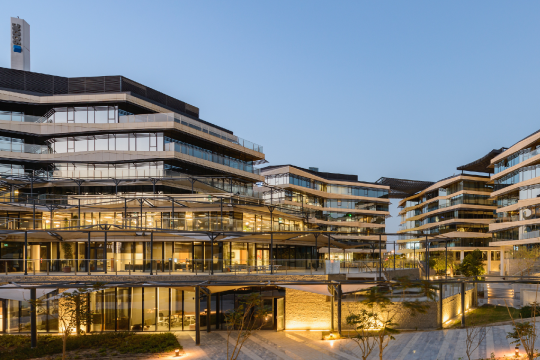
The Opening of The Kaktus Hotel marks a new destination in Somabay, inspired by active lifestyle and culinary destination offerings. The Kaktus has finally bloomed on the Red Sea.

#Lovesomalivekaktus

2

DEBT WATCH

Egypt’s first ever first-ever EGP-denominated sukuk issuance postponed to next week

The Madbouly government postponed its first-ever local sukuk issuance to next Monday, with settlement scheduled for the following day, after originally being pencilled in for this week, a senior government official told EnterpriseAM. The move marks the third time the shariah-compliant issuance has been postponed.

(Tap or click the headline above to read this story with all of the links to our background as well as external sources.)

What is behind the delay? Officials in charge of arranging the issuance need more time to align and connect the technical systems of the Central Bank of Egypt, the Finance Ministry, and other involved entities so they can carry on with weekly issuances following the maiden issuance next week.

The forthcoming issuance is part of a wider sukuk program valued at EGP 50 bndouble the initial target planned for the fiscal year, a government official told us last week. The first EGP 3 bn, three-year tranche of the program will be an ijara issuance — a leasing-based Islamic security — linked to assets owned by the Finance Ministry in the Red Sea’s Ras Shukeir area, our source from yesterday told us.

Several banks are interested in subscribing to the first-of-its-kind issuance in the local market, according to our source from last week. The Finance Ministry had been holding meetings with representatives from 15 banks in an attempt to further raise the program to EGP 200 bn by next June, they added.

The issuance is expected to boost investments in local debt instruments and attract a new segment of investors eyeing shariah-compliant securities, with the aim of diversifying the country’s range of debt offerings, we were told.

This program comes within the public debt strategy framework set to launch nextDecember, which will feature social and sustainability bond issuances. The strategy aims to reduce public debt to below 75% of total GDP in three years, down from 85% in the previous fiscal year, while reducing debt servicing costs to 7% of GDP and extending the debt maturity to five years.

3

Energy

QatarEnergy doubles down on the Med

QatarEnergy acquired a 40% stake in the North Rafah offshore gas concession in the Mediterranean from Italy’s Eni, it said in a statement. Eni will remain the operator with a 60% stake in the block, which spans roughly 3k sq km in waters reaching depths of around 450 meters. The value of the transaction wasn’t disclosed.

(Tap or click the headline above to read this story with all of the links to our background as well as external sources.)

Doubling down on the Med: QatarEnergy acquired a 27% stake in the North Cleopatra offshore concession in the Med earlier this month. It’s also on track to acquire a 40% working interest in ExxonMobil’s Cairo and Masry offshore concessions under a farm-in agreement inked last year, and it bagged a 23% operational stake from Chevron in the Med’s North El Dabaa Block. QatarEnergy also holds 40% of the Mediterranean’s North Marakia offshore concession.

…while dialing back from the Red Sea: The company — alongside its partners — exited blocks three and four in the Red Sea — where it held 17% in each — in March.

IN OTHER ENERGY NEWS-

Eni to set up biogas production complex? The Environment Ministry’s Biogas Energy Foundation for Sustainable Development inked a cooperation agreement with Eni to prepare a feasibility study for the establishment of a biogas production complex in Port Said, according to a statement. The facility will use animal and agricultural waste to produce biogas. No additional information was disclosed on the investment costs and timeline of the project.

We heard this before: A government source told EnterpriseAM in April that Eni is working with Egyptian authorities to prepare studies for a project to produce up to 4.7 cbm per day of biogas.

The move comes as part of the government’s push to roll out a series of agriwasterecycling and biogas projects, as well as advance the transition to clean energy.

This publication is proudly sponsored by

4

Coffee With

Al Tamimi’s Ayman Nour on the ways AI is reshaping the legal sector

Coffee with: Ayman Nour, partner at Al Tamimi: EnterpriseAM sat down with Ayman Nour (LinkedIn), partner and head of office and corporate structuring at Al Tamimi & Company ’s Egypt office, to mark the firm’s first ten years in the country. As the Dubai-headquartered law firm looks ahead to ten more successful years in Egypt — and hopefully many more — we got Nour’s insights on how AI is shaking up the industry, challenges weighing on businesses, and more. Edited excerpts from our conversation:

EnterpriseAM: You're celebrating 10 years since Al Tamimi opened its first office in Egypt. How has the legal sector changed over the past decade?

Ayman Nour: The biggest change over the past 10 years has been the introduction of artificial intelligence. When I graduated in 1995, a good lawyer was someone who, of course, understood the law well and knew how to draft well. Now, AI has become better than the best lawyer when it comes to drafting — and that’s the biggest thing that has changed the business.

Al Tamimi is one of the very few firms in Egypt — you can count them on one hand — that are using Harvey, which is widely considered the best AI platform in the legal world. The adoption of this highly confidential AI platform has allowed Al Tamimi to greatly perfect its services.

EnterpriseAM: But we’re still in the drafting stage only, or does AI go further than that?

AN: It helps in drafting, due diligence reports, comparisons, narratives, conclusions, and summaries — it's extensive. That’s the kind of work that would take an associate with three years’ experience two days to do — and Harvey produces it in minutes.

EnterpriseAM: What will the lawyer of the future look like? And how do you see the career path for young lawyers changing?

AN: Just like we all learned multiplication tables and manual calculations — now everything is done with a calculator. It’s the same thing with AI. You don’t need to memorize every law, but you need to understand it. The young lawyer entering the field must have strong language, strong soft skills — AI will never replace your soft skills.

You must be able to understand the client and their business and figure out how to help them even if there are legal obstacles. A young lawyer entering the profession today still needs the same important qualities that a lawyer needed 30 or 100 years ago. He or she has to expose themselves to all kinds of experiences in all legal fields — nothing should be off-limits.

You just become more selective in choosing young lawyers, but we haven’t reduced our numbers. We’re still hiring — AI doesn’t replace people. It makes associates more productive so we can provide more services, generate more revenue, and fulfill our social responsibility by not cutting jobs.

But the lawyer’s skill set must adapt to AI. I don’t want someone mechanical. I want someone with soft skills, who understands the business, understands what the client wants, who can reassure the client, who can do public speaking, who can write articles — while using AI as a tool.

This is what differentiates an exceptional lawyer from the rest. Everyone in our firm knows the law — if you ask any of them a legal question, they’ll answer perfectly. But the cherry on top is the one who knows how to get clients, how to present himself well, how to moderate a panel in his field, how to speak to the business community — those soft skills are what make all the difference.

EnterpriseAM: You have two offices in Egypt — Cairo and Port Said. Why Port Said?

AN: Port Said is a center of shipping, and we have a very strong practice in shipping, ins., and maritime law. So Port Said was an obvious choice, because most agents of these companies are based there.

EnterpriseAM: When you deal with foreign investors before they enter Egypt, what’s the first question they ask?

AN: Foreign investors usually come after already doing their due diligence on their business model. What really comforts them is that they can do their business without a local partner — they can have 100% foreign capital and shareholders. That gives them a lot of reassurance.

In terms of entry and company establishment, I see Egypt as one of the best and most advanced countries in this area. There are no real obstacles.

The issue is when you want to exit. Liquidation takes a very long time because you need to close your tax and social ins. files. It’s not about the financial situation of the country, but about bureaucracy. If the state uses AI in this area, what takes months could be done in hours.

The second challenge isn’t legal, but practical — the repatriation of funds abroad. Companies in Egypt make earnings in EGP, but they can’t convert them into foreign currency for offshore transfer. Many investors, especially from the UAE, are frustrated. They’re investing heavily in Egypt but can’t get their proceeds out.

EnterpriseAM: What should policymakers do to improve the business environment?

AN: There’s been progress — especially from Investment Minister Hassan El Khatib and Finance Minister Ahmed Kouchouk — along two parallel routes. First, they’re facilitating imports and shipping, reducing time and logistics costs. Second, they’re trying to reduce the number of revenue-collecting agencies in Egypt.

When a client asks about corporate tax, we say 25%, but they don’t realize how many other levies there are — social ins., VAT, fees — so the effective tax rate is much higher.

The ministers want to unify all of this under the Tax Authority, making it the single channel for everything — and that’s very important.

The mindset is key. Either you have a mindset that’s rewarded for success and achievements — for bringing in business — or you have a mindset that’s driven by fear of oversight, fear of being accused of wrongdoing. That mindset needs to change.

EnterpriseAM: How are client expectations evolving today?

AN: The client wants to do business, succeed, and make bank — whether it’s the investor, the lender, or the community benefiting from the project. Our core focus is removing obstacles. If there’s a legal or bureaucratic problem, we find a solution. Some lawyers stop at “this can’t be done.” We don’t. We think about how to make it work in the client’s best interest and for the benefit of the wider economy. That’s our edge. We don’t look for problems — we look for solutions.

EnterpriseAM: You have 17 offices in 10 countries. Any plans for expansion?

AN: Once there’s political and economic stability, we have our eyes on countries like Syria, Lebanon, Libya, Algeria, and Tunisia. Africa as well — but we haven’t yet seen the prospects that would pull us in.

Al Tamimi has 60 nationalities speaking 25 languages — Syrians, Lebanese, Algerians, Tunisians, South Africans, Latin Americans — so once we see a window, we’ll be ready to move.

EnterpriseAM: What are your focus areas right now?

AN: We cover all the practice areas that businesses need. The newest one we’re focusing on is energy — clean, green, and sustainable energy. Energy projects are very important, and our clients are investing in them. The technology keeps evolving — so as long as there’s innovation, there’s a need for legal services.

EnterpriseAM: And what do you think Al Tamimi will look like ten years from now?

AN: It will be bigger and more efficient. Honestly, we’ll see it together — because I might not even be around in ten years (laughs). Al Tamimi is a source of pride, because it’s the only Arab-founded law firm that competes directly with international firms that have been around for over a hundred years — and we do it with the most advanced skills, technology, infrastructure, and compliance.

5

Investment Watch

Egyptian-Chinese consortium to set up USD 75 mn worth of projects in Qantara

An Egyptian-Chinese consortium will invest over USD 75 mn across three new textile projects in Qantara West Industrial Zone, according to a statement. The projects, spanning 225k sqm, are expected to generate over USD 100 mn in annual exports and create around 3.6k jobs. The projects include:

(Tap or click the headline above to read this story with all of the links to our background as well as external sources.)

#1- A USD 29.2 mn home textiles and furnishing project with an annual capacity of 5.6 mn textile pieces and 3k tons of home furnishings. The 75k sqm facility will export its entire output and create 1.2k jobs.

#2- A USD 28.2 mn microfiber textiles and blankets factory with an annual production capacity of 21 mn pieces and 8k tons. The 75k sqm facility will export 70% of its output to international markets and is expected to create 1.3k jobs.

#3- A USD 17.6 mn electric blankets and polyester textiles factory. The 75k sqm facility will be established by the largest Chinese manufacturer and exporter of electric blankets, as the first of its kind in the Middle East and Africa. It will produce 5.6 mn electric blankets and 3k tons of heating textiles annually, creating 1.2k jobs and exporting 100% of its output.

DATA POINT- Qantara West currently hosts 44 projects worth USD 1.2 bn, set to generate over 60.1k jobs.

6

EXPANSION

KarmSolar to develop its first solar plant in Cyprus

KarmSolar expands into Cyprus: Cairo-based solar energy firm KarmSolar expanded its operations into Cyprus with a license to build and operate a 7.6 MW solar PV plant in Monagroulli, according to a press release (pdf). The move marks the company’s first international venture.

(Tap or click the headline above to read this story with all of the links to our background as well as external sources.)

Strong backing: The company invested some EUR 2 mn to set up KarmCyprus, backed by some EUR 8 mn raised from Egyptian and international investors. The company also secured EUR 5 mn in financing from Eurobank for the PV planet, which is set to be operational by September 2026.

The plan: The long-term plan for KarmCyprus is to be one of the top renewable energy utility companies in Cyprus in both power generation and distribution, KarmSolar CEO Ahmed Zahran told EnterpriseAM. The company aims to make the most of the energy produced and distributed from renewable sources.

But why Cyprus? “We are looking for energy markets in the region where we can transfer our knowledge as a renewable energy based power utility,” Zahran told us. Cyprus and Egypt also have similar energy laws and are closely aligning their policies and investment plans as part of broader East Mediterranean energy strategies.

ALSO IN EXPANSION-

Local e-mobility company BluEV plans to invest USD 25 mn to expand its operations in Egypt and Morocco next year, Asharq Business reports. The company is also looking to enter the Italian market.

Sounds familiar? Earlier this year, BluEV announced plans to enter the Moroccan market before the end of this year with a USD 100 mn investment to roll out its electric motorcycle conversion platform.

7

Trade

Following up on the awaited amendments to customs laws

Where are the awaited amendments related to customs facilitation measures? The draft amendments to the customs law will soon head to the House, a senior government official told EnterpriseAM. The Finance Ministry finalized the amendments over the summer, proposing changes to three customs laws, including 15 amended articles and 3 newly introduced articles.

The big picture: The move aims to improve the efficiency of the unified customs system to facilitate transactions, boost production and investment, and reduce the import bill by cutting costs.

The amendments include: Simplifying import procedures by limiting the amount of documents needed to import products to just the commercial invoice and the advance declaration in an effort to cut down on costs and time ; developing an electronic tracking system that follows shipments until cleared by authorities ; and expanding the risk management system.

Just the tip of the iceberg: We dive deeper into the proposed amendments in our coverage of the story earlier this year. You can check it out here.

More companies to join the AEO? The Madbouly government is also reviewing the prerequisites for companies joining the Authorized Economic Operator program (AEO) in a bid to increase the number of companies part of the program to 500, our source said.

More benefits up for grabs for companies that make it to the orange and blue lists: The government plans to introduce two new lists to accompany the white list, companies that make it to the orange list will have their imports subject to document inspection only, while those part of the blue list will have their imports subject to post-release verification only. .

REMEMBER- A survey is underway to identify companies and customs clients with no prior record of evasion or customs value manipulation to add them to the white list, which currently includes a limited number of entities. The list is expected to expand significantly upon completion of the survey, providing listed entities with the ability to benefit from expedited customs clearance and inspection, which will in turn support local investment.

8

Moves

23 new ambassadors officially take up their posts in Cairo

President Abdel Fattah El Sisi received the credentials of 23 new ambassadors to Egypt yesterday, officially marking the start of their diplomatic duties in Cairo, according to an Ittihadiya statement.

Representing Asia and the Pacific were Japan’s Fumio Iwai, India’s Suresh Reddy, Vietnam’s Nguyen Huy Dung, and New Zealand’s Louise Searle. From our region, the UAE’s Hamad Al Zaabi joined the diplomatic corps.

From Europe, the list included Hungary’s Rita Herencsar, Italy’s Agostino Palese, Denmark’s Lars Bo Møller, Poland’s Michal Murkocinski, Norway’s Erik Husem, Spain’s Sergio Forster, Ireland’s Aidan O’Hara, Georgia’s Nikoloz Apkhazava, Luxembourg’s Christian Muller, Belarus’s Evgueni Sobolevski, San Marino’s Daniela Rotondaro, and the UK’s Mark Bryson-Richardson.

Representing Africa were Angola’s Maquento Sebastiao Lopes and Guinea’s Mounir Cissi, while Liberia’s Henry Fahnbulleh also took up his post.

From Latin America, Colombia’s Luz Elena Martínez Cossab and Nicaragua’s Tatiana Daniela García Silva presented their credentials.

El Sisi welcomed the new ambassadors, reaffirming Egypt’s commitment to strengthening cooperation with their countries across political, economic, and cultural fronts.

9

Also on our Radar

Delemar Industrial to invest EGP 5 bn setting up industrial complexes

MANUFACTURING-

Delemar Industrial Group plans to invest EGP 5 bn to establish some of the largest industrial complexes in the region, according to a statement from the company. The company is expanding its operations in glass, cladding, and aluminum coatings to boost production capacity and is currently building the region’s largest aluminum coating factory with an annual capacity of 50k tons.

(Tap or click the headline above to read this story with all of the links to our background as well as external sources.)

What’s in the pipeline? The expansion plan includes launching automotive glass production for passenger cars, buses, and trucks with a capacity of 750k in two years and adding fire-resistant ACP cladding and coating lines with a combined capacity of 20k tons annually. Delemar will also build an architectural glass complex to double output to 2 mn sqm per year, a Double Booth aluminum coating plant expandable to 50k tons, and an anodizing line with a 15k-ton capacity.

REGULATION WATCH-

The Financial Regulatory Authority issued Egypt’s first binding corporate governance rules for ins. and reins. companies, according to a statement from the authority. The new framework aims to boost transparency, accountability, and risk management in the sector.

Among the rules is the prohibition of board members “engaging in brokerage activity on their own behalf” to ward off any conflicts of interest that may arise. Board members now need to disclose any personal interest they may have in contracts the company enters into and obtain the general assembly’s approval for any of these contracts. Members deemed to have a personal interest in the contract will be barred from voting on it and are not allowed to be in a position of competition with the company without the green light of the general assembly first.

The rules also require ins. players to establish internal governance charters detailing board and committee responsibilities, internal control systems, and policies on risk, compliance, investment, ethics, and sustainability. Companies must also appoint a governance officer, prepare annual governance reports, and form ten specialized board committees. The decision also mandates electronic documentation of board and general assembly meetings, clear separation of board and executive roles, cumulative voting for board elections, and full disclosure of ownership structures and related party transactions. Insurers have one year to meet the new requirements.

DEVELOPMENT FINANCE-

The European Bank for Reconstruction and Development (EBRD) approved a EGP 250 mn senior unsecured loan to Fawry under the lender’s Egypt Youth in Business program, according to its website. The program aims to support micro, small, and medium enterprises (MSMEs) owned or managed by young entrepreneurs nationwide, with a particular focus on remote areas.

There’s more to the funding: The package also includes technical support, risk coverage, and additional incentives funded by the EU and the EBRD through the EU-Egypt Micro and Small Inclusion Program. This is “aimed at strengthening the capabilities of Fawry MSME and the sub-borrowers while alleviating the impact of macroeconomic turbulences on end-beneficiaries”.

EARNINGS WATCH-

State-owned EgyptAlum saw its net income after tax drop 43% y-o-y to EGP 2.4 bn in 1Q FY 2025-2026, according to its latest earnings release (pdf). Meanwhile, revenues fell 0.1% y-o-y to EGP 11.3 bn during the quarter.

10

PLANET FINANCE

Forging expense reports is an AI risk few companies saw coming

A surge in expense fraud is the latest alarming AI-related trend, with new tech making the hustle accessible for many more employees and threatening to eat even more of earnings, the Financial Times reported.

AI is making the process too easy: Forgeries that used to require skillful photo editing or bribery in the past are now an AI prompt away through chatbots from OpenAI and Google. Image generation software can now easily produce realistic images of expense receipts, complete with signatures and wrinkled paper visuals, sometimes proving too realistic to detect by humans.

More prevalent than you think: Some 70% of surveyed chief financial officers think employees are already using AI to falsify expenses, while 10% are sure this is happening in their company, the salmon-colored paper cited research by SAP Concur. AI-faked receipts amounted to some 14% of fraudulent documents in September, according to AppZen data, while a new software by fintech Ramp caught over USD 1 mn in fake invoices within 90 days.

“This isn’t a future threat; it’s already happening,” expense management platform Rydoo’s Sebastien Marchon told the FT, noting that while the percentage of AI-generated receipts out of non-compliant filed receipts might be small now, “this is only going to grow.” A rise in faked expense reports can lead to a dramatic increase in expense fraud-related income loss, estimated in 2024 to cost US businesses a median of USD 50k a year.

Fighting fire with fire: Companies are now turning to — you guessed it — AI tools to detect fake receipts. Scanning for image metadata and analyzing contextual information, as well as comparing receipts to authentic ones from the same vendor to detect slight changes in font or spacing, can reveal an image was faked and by which tool.

BUT- There are ways to fly under the radar of these tools as well. “It’s a cat-and-mouse game,” AppZen’s CEO Anant Kale told the New York Times.

MARKETS THIS MORNING-

Asian markets are mostly in the red this morning, with Japan’s Nikkei inching down 0.4%, while Hong Kong’s Hang Seng is down 0.1% in early trading. Over on Wall Street, futures are unchanged following a day of record highs for major indexes.

EGX30

38,162

+0.2% (YTD: +28.3%)

USD (CBE)

Buy 47.37

Sell 47.50

USD (CIB)

Buy 47.40

Sell 47.50

Interest rates (CBE)

21.00% deposit

22.00% lending

Tadawul

11,620

+0.2% (YTD: -3.5%)

ADX

10,192

-0.1% (YTD: +8.2%)

DFM

6,041

-0.4% (YTD: +17.1%)

S&P 500

6,875

+1.2% (YTD: +16.9%)

FTSE 100

9,654

+0.1% (YTD: +18.1%)

Euro Stoxx 50

5,711

+0.6% (YTD: +16.7%)

Brent crude

USD 65.46

-0.2%

Natural gas (Nymex)

USD 3.37

-2.1

Gold

USD 4,009

-0.3%

BTC

USD 114,094

-0.5% (YTD: +22.1%)

S&P Egypt Sovereign Bond Index

950.90

+0.1% (YTD: +22.3%)

S&P MENA Bond & Sukuk

152.49

0.0% (YTD: +9.0%)

VIX (Volatility Index)

15.79

-3.5% (YTD: -9.0%)

THE CLOSING BELL-

The EGX30 rose 0.2% at yesterday’s close on turnover of EGP 5.9 bn (27.9% above the 90-day average). International investors were the sole net sellers. The index is up 28.3% YTD.

In the green: Raya Holding (+4.2%), Orascom Development (+2.9%), and Beltone Holding (+2.6%).

In the red: Egypt Aluminum (-5.9%), Misr Cement (-2.1%), and Arabian Cement (-1.9%).

CORPORATE ACTIONS-

Alexandria Container & Cargo Handling Company will distribute dividends of USD 0.0034 and EGP 1.81 for its FY 2024-2025 earnings, to be paid on 13 November.

11

Going Green

Egyptian manufacturers to face USD 317 mn a year in losses if exporters fail to comply with the EU’s Carbon Border Adjustment Mechanism

Many industrial players are racing to go green ahead of the implementation of the EU’s Carbon Border Adjustment Mechanism (CBAM), which will come into full effect at the start of 2026. Notoriously energy-intensive sectors like fertilizer, cement, steel, and aluminum production are especially vulnerable to the approaching carbon border tax that will require exporters to the EU to pay a carbon levy based on the un-taxed emissions embedded in their products.

(Tap or click the headline above to read this story with all of the links to our background as well as external sources.)

Often referred to as the carbon border tax, the CBAM is a carbon emission tax imposed on goods that are imported into the EU. It is designed to put a “fair price” on emissions from the production of carbon-intensive goods that are imported into EU member countries and aims to “encourage cleaner industrial production in non-EU countries,” according to the EU Commission. The carbon border tax will make up the difference between the local carbon price — if there is one — and the EU’s carbon price.

The measure is designed to prevent “carbon leakage,” or the offshoring of production to countries with lower environmental standards, but it has drawn criticism from developing economies for shifting the costs of climate action onto them. The EU program starting on 1 January will be followed by a similar program for exports to the UK at the start of 2027.

Egypt could lose USD 317 mn annually if exporters fail to comply with the new rules — losses that could climb further as exports expand without decarbonization, a senior government source told EnterpriseAM. Steel and iron exports would take the biggest hit, at roughly USD 236 mn, followed by aluminum at USD 43 mn.

But companies — private and public — are working to limit the impact by moving to align with the guidelines. The state has also been keeping a close eye on the CBAM implementation committee, where it holds observer status.

The Public Enterprises Ministry is helping to coordinate industrial decarbonization, giving oversight for state-owned companies as they cut emissions and prepare for CBAM compliance. The focus is on energy-intensive industries such as aluminum, fertilizers, and cement, where export competitiveness is at risk.

The ministry has rolled out a comprehensive plan to monitor emissions and improve environmental performance, according to Public Enterprises Minister Mohamed El Shimi. The plan includes periodic carbon assessments, energy efficiency upgrades, and the creation of specialized in-house teams to prepare carbon footprint reports in line with international standards. Workshops on carbon markets and green financing are also being organized to support Egypt’s broader green economy agenda.

Egyptian Chemical Industries — or Kima — in Aswan is among the industrial players investing heavily to curb emissions and boost energy efficiency. Kima is pushing ahead with its Kima 3 nitric acid and ammonium nitrate project, studying the establishment of a solar power plant to meet part of its electricity demand, and building a CO2 liquefaction unit to capture and reuse emissions for industrial purposes. A full carbon footprint assessment is also underway, alongside efforts to link older production lines to newer, more efficient systems.

Meanwhile, Egypt Aluminum is pursuing one of the industrial sector’s most ambitious decarbonization programs. The company signed a 25-year power purchase agreement with Norway’s Scatec in March to build a solar plant that will supply 1.1 GW of clean energy to its Naga Hammadi complex — one of the country’s largest renewable power projects for industry. Egypt Aluminum also secured the ASI Performance Standard V3 certification, confirming its adherence to top environmental, social, and governance benchmarks.

Despite progress, financing remains a major hurdle. While the government has made measurable strides in reducing industrial pollution — particularly in cement — further emissions reductions will require significant domestic and international funding, head of the Environment Ministry’s Central Department for Air Quality and UN environmental and energy expert Mostafa Murad told EnterpriseAM.

REMEMBER- Egypt obtained EUR 271 mn in funding for the Green Sustainable Industries (GSI) program last year, through soft loans from the European Investment Bank, the EU, and the French Development Agency, with German collaboration to assess CBAM’s impact on key export sectors like steel and cement. Egyptian banks are also offering green loans to help manufacturers upgrade their facilities and meet compliance requirements.

Still, Murad warned that green technologies remain prohibitively expensive for many local producers, driving up product costs and reducing competitiveness both locally and abroad. International financial support is still far below what’s needed to fund the industrial sector’s green transition, he said, calling for stronger global cooperation to finance climate action.

The private sector is also calling for more accessible financing mechanisms. Expanding revolving credit facilities and offering interest-free loans for new industrial equipment and renewable energy systems could help manufacturers comply with environmental standards while boosting exports, treasurer of the Federation of Egyptian Chambers of Commerce, Mohamed El Fayoumi, told EnterpriseAM. He stressed that the industrial sector — Egypt’s largest contributor to GDP — must be supported in its green transformation to remain competitive in global markets.

As CBAM’s start date approaches, the government is considering a domestic carbon tax to capture revenue that would otherwise flow abroad. A government source told EnterpriseAM that if the EU proceeds with implementation in early 2026, Egypt will move to collect carbon-related taxes from noncompliant companies domestically rather than allowing payments to the EU.

Although the policy has been under review for some time, the source said concerns over inflation and industrial costs have delayed its rollout. However, Egypt’s 2025-2030 Tax Policy Document, now in the final stages of review, already references the possible introduction of a carbon tax once EU requirements take effect. The EU’s carbon mechanism currently covers six commodities — four of which are major Egyptian exports. Once Brussels finalizes its implementation timeline, Cairo is expected to begin its own preparations for domestic adoption.


Your top green economy stories for the week:

  • Acwa Power is planning to manufacture water desalination components and establish desalination plants in partnership with the government, CEO Marco Arcelli said during a meeting with Prime Minister Moustafa Madbouly.
  • Arab Contractors subsidiary Nahdet Misr plans to build a USD 100 mn waste-to-energy plant in Qalyubia, which will generate 62 MW of power per hour. The facility will process 2k tons of waste daily and is set to be completed within three years in partnership with local and international firms.

OCTOBER

28 October (Tuesday): BEBA’s working dinner with Finance Minister Ahmed Kouchouk and Investment Minister Hassan El Khatib.

October: The third iteration of the Export Smart Exhibition and Conference.

October: The tenth session of the Egyptian-Lebanese Joint Higher Committee.

Mid-October: Capmas to publish the findings of its 2023-2024 income and expenditure survey.

NOVEMBER

1 November (Saturday): The official opening of the Grand Egyptian Museum.

3 November (Monday): S&P Global to release PMI data for September.

9-11 November (Sunday-Tuesday): The sixth edition of the TransMEA 2025 forum and exhibition, Egypt International Exhibition Center.

10 November (Monday): Capmas expected to release inflation data for October.

16-19 November (Sunday-Wednesday): Cairo ICT 2025, Egypt International Exhibition Center.

16-19 November (Sunday-Wednesday): The 12th edition of the Digital Payments and Financial Inclusion Exhibition and Forum (PAFIX 2025), Egypt International Exhibition Center.

20 November (Thursday): Monetary Policy Committee meeting.

23-25 November (Sunday-Tuesday): NEBU Expo 2025 gold and jewelry exhibition, Egypt International Exhibitions Center, New Cairo.

November: Egypt to join the EU’s Horizon Europe research and innovation program.

November: The Conference on Early Recovery, Reconstruction, and Development in Gaza.

DECEMBER

1-4 December: Egypt Defence Expo (Monday-Thursday), Egypt International Exhibition Center.

4-7 December (Thursday-Sunday): Egy Stitch & Tex Expo 2025, Cairo International Conference Center.

8 December (Monday): Egypt-UK Investment Conference, Cairo.

15 December (Monday): Neo Gen PropTech and Sustainable Smart Cities Conference, The St. Regis Hotel New Capital

25 December: (Thursday): Monetary Policy Committee meeting.

EVENTS WITH NO SET DATE

Mid-2025: EGX launches sustainability index.

December: Germany’s North Rhine-Westphala business delegation to land in Egypt.

3Q 2025: Nasr Automotive begins locally manufacturing passenger cars.

3Q 2025: Polaris Parks to finalize contracts for two new industrial zones in the new capital and Sadat City.

Mid-2025: The Administrative Capital for Urban Developments to roll out the second phase of offering industrial plots to investors

2H 2025: Potential visit by Chinese President Xi Jinping to Egypt

4Q 2025: The beginning of construction works on China’s State Grid two solar projects.

4Q 2025: GB Auto starts assembling one of China’s Great Wall Motor models in 4Q 2025.

4Q 2025-1Q 2026: Kasrawy Group to launch first Avatr EV models in Egypt.

2025: The InterAcademy Partnership assembly.

2025: Nile Basin States Summit, Cairo, Egypt.

2025: Release of the government’s Startup Charter document.

Before 2025-end: The government will launch two ro-ro shipping lines with Saudi Arabia and Turkey.

2026

Early 2026: Passenger operations on the New Administrative Capital–Nasr City monorail scheduled to begin.

1Q 2026: Trial operations for the Ain Sokhna–Sixth of October section of Egypt’s first high-speed rail line scheduled to begin.

1 January: European Union’s Carbon Border Adjustment Mechanism (CBAM) to fully come into effect.

10-12 February (Tuesday-Thursday): Gitex Global’s AI Everything Middle East & Africa Summit

15 March 2026: IMF to hold its seventh review of Egypt’s USD 8 bn EFF arrangement.

30 March - 1 April: Egypt International Energy Conference and Exhibition 2026 (EGYPES)

May 2026: End of extension for developers on 15% interest rates for land installment payments

15 September 2026: IMF to hold its eighth review of Egypt’s USD 8 bn EFF arrangement.

2H 2026: Operations at Deli Glass Co’s new USD 70 mn glassware factory kick off.

2027

20 January-7 February: Egypt to host the African Games.

April 2027: Tenth of Ramadan dry port and logistics hub to begin operations.

EVENTS WITH NO SET DATE

2027: Egypt to host EBRD’s annual meetings for 2027.

2027: Egypt-EU Summit 2027

End of 2027: Trial operations at the Dabaa nuclear power plant expected to take place.

September 2028: First unit of the Dabaa nuclear power plant begins operations.

Now Playing
Now Playing
00:00
00:00