Get EnterpriseAM daily

Available in your choice of English or Arabic

Gov’t has a EGP 25 bn sukuk program in the pipeline

1

What We're Tracking Today

Bahraini Crown Prince is in Egypt

Good morning, all. We end this shorter-than-usual work week with another packed issue, led by debt news, as the government gears up to issue its first-ever local sukuk as part of a wider EGP 25 bn program. The issuance has been long delayed and comes as part of wider efforts by the Madbouly government to diversify its debt instruments.

** A QUICK PROGRAMMING NOTE- EnterpriseAM Egypt will be joining the rest of you in taking tomorrow off in observance of the Prophet Muhammad’s birthday. We’ll be back in your inboxes bright and early on Sunday with everything you may have missed over the long weekend.


In the fourth issue of our Destination Sahel series, we're bringing you the latest updates on New Alamein City and a look at the best investments in Sahel today. We also investigate the growing issue of beach erosion and its impact on our shores.

Look for Destination Sahel, Issue IV, in your inbox today.

Missed the first three issues? Tap here to read the full series.


PSA-

WEATHER- It’s another sunny day in Cairo today, with a high of 35°C and a low of 24°C, according to our favorite weather app.

It’s not as hot in Alexandria, which is looking at a high of 32°C and a low of 24°C.

WATCH THIS SPACE-

#1- We could be in line for some fresh Gulf investments, with Bahraini Crown Prince Salman bin Hamad Al Khalifa in town, where he will partake in discussions alongside Prime Minister Moustafa Madbouly aimed at enhancing cooperation across sectors.

What to expect? Bahraini Sustainable Development Minister Nour Alkhulaif told AsharqBusiness that her country sees opportunities in Egypt’s tourism, industry, and financial services sectors, adding that she expects the two sides to ink several MoUs during Al Khalifa’s time in town. Egypt seeks to boost investments and non-oil trade with Bahrain, Investment Minister Hassan El Khatib told Asharq Business.

DATA POINT- Bahraini investments in Egypt stood at USD 470 mn by the end of 2024, mostly focused on financial services. Non-oil trade between the two nations currently stands at USD 35 mn.


#2- Egypt is aiming to attract some EGP 350 bn in pharma investments over the next five years, Federation of Egyptian Industries’ pharma division head Gamal El Leithy is quoted as saying by Al Arabiya. The plan would see the number of pharma factories increase to 250 from 180 by 2030, with half of the new investments expected to come from foreign players, thanks to rising interest in the sector from global investment funds. El Leithy penciled in an average investment of about EGP 5 bn per new factory.


#3- The gov’t’s National Narrative for Economic Development is days away: The Planning Ministry will launch the five-year National Narrative for Economic Development on Sunday, Planning Minister Rania Al Mashat revealed during the weekly cabinet meeting. The narrative will be open for public consultation and community dialogue over the next two months.

What to expect: The narrative will cover macroeconomic stability, foreign direct investment, industrial development, labor market efficiency, and regional economic planning, with the end goal of pushing Egypt to become a trade and export-oriented economy and enhance private sector participation in the economy.

HAPPENING TODAY-

#1- Could we see the non-oil private sector activity break a five-month contraction stretch? Policymakers and the business community are eagerly awaiting S&P Global’s PMI figures measuring non-oil private sector activity for August, due to be published later today. Last month’s report saw the country’s headline figure rise to 49.5, just short of the 50.0 neutral threshold that separates growth from contraction. Non-oil private sector activity has declined for five straight months and has only been in expansion territory for two months since November 2020.


#2- It’s the third and final day of the G20 meeting in Cairo on global and regional food security. The event marks not just Egypt’s first time to host a G20 gathering, but the first time a non-G20 member has done so. Egypt contributed to the discussion by arguing for greater international financing for sustainable agricultural investment and reforms to global financial structures to help developing and African countries cope with food price shocks, climate change, and fiscal strain.


#3- It’s the last day of the pharma manufacturing expo Pharmaconex at the Egypt International Exhibition Center. The three-day event highlights recent public and private sectors’ efforts to localize drug manufacturing and strengthen supply chains under the National Health Strategy 2024-2030. The exhibition hosts over 350 exhibitors from 40 countries and features some 70 conference sessions.

MARKET WATCH-

The gold rush persists: Gold prices continued to rise yesterday, with the price of 24-carat gold now standing at EGP 5,406 per gram, in response to a jump in global gold prices, which have been hitting record highs as investors flock to the safe-haven asset.

The jump in local prices was somewhat controlled in comparison to what global prices are seeing, the head of the gold division at the Federation of Egyptian Chambers of Commerce, Ehab Wassef, told us, attributing that to exchange rate stability and reduced local demand.

DATA POINT-

The Suez Canal Economic Zone (SCZone) has attracted USD 10.2 bn worth of investments over the past 38 months, spread across 311 agreements for logistics, services, and industrial projects, according to a SCZone statement.


** DID YOU KNOW that we cover Saudi Arabia and the UAE?

** Were you forwarded this email? Tap or click here to get your own copy delivered every weekday before 7am Cairo time — without charge.

THE BIG STORY ABROAD-

Google won’t have to sell Chrome after all: Tech giant Google will not be forced to sell Chrome or Android, according to the US Department of Justice ruling, instead it will be required to share more data with competitors and limit its exclusive distribution contracts — including its exclusive partnership with Apple for its Gemini chatbot. The ruling follows last year’s verdict that Google illegally monopolized the online search market.

Market reax: Google parent Alphabet’s shares rose over 8% in after hours trading, while Apple’s shares jumped 4.3% following the ruling, which was influenced by the rise of Gen-AI which is quickly becoming a threat to Google's dominance of the search engine market. (Financial Times | Bloomberg | Washington Post | Wall Street Journal | The Guardian)

AND- It was a bad day for US stocks, which continued their slide on the back of an increase in corporate debt sales and concerns surrounding global debt. The S&P 500 fell 0.7%, the Nasdaq was down 0.8%, and the Dow Jones fell 0.5%. Meanwhile, yields on 30-year treasuries are almost at 5%. (Financial Times | Bloomberg)

*** It’s Hardhat day — your weekly briefing of all things infrastructure in Egypt: EnterpriseAM’s industry vertical focuses each Wednesday on infrastructure, covering everything from energy, water, transportation, and urban development, as well as social infrastructure such as health and education.

In today’s issue: We dive into the world of cold storage and where it stands in the future of Egypt’s storage industry.

Whether you’re diving into turquoise waters, catching golden hour from your terrace, or just letting time drift by — Somabay is summer, redefined. Your ultimate escape, every single time.

2

DEBT WATCH

Egypt to take EGP 25 bn worth of local sukuk to market in FY 25-26

The Madbouly government plans to take EGP 25 bn worth of local sukuk to market this fiscal year, with the first issuance to take place before the end of 2025, a senior government official told EnterpriseAM.

(Tap or click the headline above to read this story with all of the links to our background as well as external sources.)

As things stand: The Finance Ministry has finalized the sukuk program’s schedule, the source said, adding that the issuances will come in the form of short- and medium-term tranches.

Tranche one: The first issuance, which would mark Egypt’s first-ever local sovereign sukuk issuance, might be small in size to assess investors’ appetite, the source said. The Finance Ministry is currently meeting with banks eligible for subscription to finetune the issuance plan. The issuance is almost ready to go, with around 90% of the required steps already completed, our source added.

REFRESHER- We were previously told that the first two tranches of the program will be valued at EGP 3-4 bn, and that they will be offered before the end of this year.

What are we waiting for? A pricing framework is currently being developed for the local sukuk, the source noted. At the same time, officials are identifying the assets that will be used as collateral for these sukuk, the source said, adding that the ownership of these assets will not be transferred.

To back the sukuk: A new Ras Shukeir project involving one of the Gulf’s sovereign wealth funds — the first in a series linked to the 174 sq km Ras Shukeir zone on the Red Sea — will back the local sukuk issued by the Finance Ministry, with proceeds earmarked for reducing public debt.

To sweeten the pot: The government plans to introduce incentives and mechanisms to create an open market and attract Islamic banks and investors from the Middle East and Asia to the issuance, the source noted.

The primary objective? The government wants to diversify its debt instruments and attract more investors to the local debt market with lower interest payments and borrowing costs, our source said.

REMEMBER- The government’s financing gap for the current fiscal year is expected to reach EGP 3.6 tn, marking a 25% y-o-y increase. The government plans to cover the budget deficit through issuing new local debt instruments worth EGP 2.2 tn in treasury bills and some EGP 928.9 bn in treasury bonds as part of the government's plan to raise spending on social welfare and fill the budget shortfall.

We’re awaiting the new debt strategy: The Finance Ministry is working on its new public debt strategy for 2025-2030, which government sources have previously told us could be released during 1Q FY 2025-2026. The strategy aims to diversify the country's public debt instruments and introduce new ones, seeking to secure funding with varied and more competitive interest rates.

This publication is proudly sponsored by

3

PHARMA

Egyptian pharma firms push for price hikes as shortages and black market resurface

Hundreds of local pharma companies are pushing for a 10% increase in med prices to offset rising costs, Egyptian Chambers of Commerce’s pharma division head Ali Auf told EnterpriseAM. Around 500 companies have formally submitted price adjustment requests to the Egyptian Drug Authority (EDA) due to major increases in production costs, wages, and ins.

(Tap or click the headline above to read this story with all of the links to our background as well as external sources.)

The EDA has so far rejected the requests, citing the appreciation of the EGP against the USD, Auf said. But he argued that meds aren't priced based solely on the cost of imported active ingredients, and that local production costs continue to surge.

Auf said the companies have proposed two options. They are calling for either a cut in EDA service fees by 75%, including slashing the drug registration fee — which recently rose from EGP 1 mn to EGP 5 mn — as well as licensing fees and fines that were imposed when companies were unable to meet production targets due to FX shortages. The second proposal is to approve the proposed 10% price hike to relieve mounting pressure on the sector.

Shortages persist — especially for critical meds. While the number of missing meds has declined from 3k in 2024 to just 200 in 2025, according to Auf, many of the remaining shortages relate to chronic diseases, and local alternatives are either ineffective or produced in insufficient volumes to meet demand. Auf warned of shortages in life-saving imported meds used to treat conditions like heart failure and cancer — a result of rigid pricing policies that fail to reflect real costs, he said.

The current environment is fueling a revival of the pharma black market, Auf told us. In one case, a British drug that retails for EGP 100 per pack was pulled from the market after EDA rejected a company request to raise the price to EGP 150. The UK manufacturer suspended exports to Egypt, and the drug is now reportedly being sold for EGP 1k on the black market.

Auf called on Prime Minister Moustafa Madbouly to step in, especially as the sector faces new regulatory burdens following the EDA’s recent Level 3 certification from the World Health Organization, which requires factories to upgrade production standards. He said the current price controls are incompatible with the costs of meeting these new requirements.

The government is stepping in with financial support, with the Finance Ministry disbursingEGP 11 bn last week to pharma companies as part of their total EGP 50 bn in outstanding dues, Auf confirmed. The move is expected to ease short-term liquidity pressures on the sector.

Sources previously told EnterpriseAM that the government is now looking to introduce more flexibility into its price control system. The new mechanism is expected to include updated benchmarks and pricing formulas that ensure fairness across the value chain.

The government has also approved raising the budget for the Unified Procurement Authority (UPA) to EGP 75.5 bn, up 92.4% y-o-y, medical supplies division head Mohamed Abdo told EnterpriseAM. Some EGP 14 bn have already been disbursed as a first tranche of dues owed to medical supplies firms.

4

FOREIGN EXCHANGE

CBE reveals new regulatory framework for foreign exchange bureaus to combat money laundering, other illicit activity

The Central Bank of Egypt (CBE) approved new regulatory guidelines for foreign exchange bureaus, aimed at combating money laundering, terrorist financing, and proliferation financing, according to a statement (pdf). The decision scraps the 2008 regulations and gives FX bureaus six months to comply with the new rules.

(Tap or click the headline above to read this story with all of the links to our background as well as external sources.)

But why? The new regulations aim to encourage compliance with amendments made to several legislative and regulatory frameworks, including changes to theAnti-Money Laundering Law and its executive regulations. “This framework comes as part of the central bank’s efforts to keep pace with international standards in combating money laundering, terrorist financing, and proliferation financing, while also consolidating and reinforcing existing best practices in this field,” the statement reads.

The new rules outline requirements for risk-based governance frameworks at exchange bureaus, with board oversight, internal audit mechanisms, and adequate resources to ensure compliance and effective risk management. This also includes appointing a dedicated compliance officer and their deputy.

New risk assessment frameworks are also in the cards: The framework mandates regular risk assessment for money laundering, terrorist financing, and proliferation financing, along with the development of policies, procedures, and internal controls to mitigate these risks.

Bureaus need to be properly assessing their clients: The new rules require detailed customer due diligence, continuously monitor transactions, and report suspicious activities both internally and to the relevant authorities.

How to identify suspicious activity? The framework provides guidance to help identify transactions that may involve illicit activity. It also entails strict recordkeeping and documentation requirements, including minimum retention standards.

Staff training is also on the agenda: Staff will need to receive training, at least once a year, covering anti-money laundering, counter-terrorist financing, and combating proliferation financing.

5

Startup watch

Intella raises USD 12.5 mn to scale its Arabic-first AI platform

Egypt-born AI firm Intella has closed a USD 12.5 mn oversubscribed Series A round led by Prosus, with participation from 500 Global, Wa’ed Ventures, Hala Ventures, Idrisi Ventures, and HearstLab, according to a company statement (pdf).

(Tap or click the headline above to read this story with all of the links to our background as well as external sources.)

Intella? Founded in 2021, the startup bills itself as the region’s “first real-time intelligence provider.” It provides a suite of AI-powered services, “offering enterprise-grade transcription, analytics, and AI-powered customer engagement tools tailored to more than 25 dialects.”

Where is the money going? The new capital will support the rollout of Ziila, Intella’s Arabic-first conversational AI agent, alongside its analytics platform intellaCX, creating an integrated product suite for customer engagement. It will also fund the expansion of commercial teams in Egypt and Saudi Arabia to meet rising demand from banks, telecom operators, and government agencies. A portion of the funding will be directed to research and development aimed at improving dialectal understanding and increasing Intella’s accuracy lead over global competitors.

What they said: “This round is a catalyst for our product roadmap. Our models already set the benchmark for Arabic accuracy. Now, we’re focused on building truly intelligent, Arabic-first conversational agents capable of multi-turn dialogue and contextual understanding — redefining how enterprises engage with their customers,” Co-Founder and CTO Omar Mansour said.

MUNIFY RAISES USD 3 MN TO EXPAND INTO NEW MARKETS-

Egyptian fintech Munify has raised USD 3 m in seed funding led by Y Combinator, with participation from BYLD and DCG, the startup said in a statement.

Munify? Founded in 2024, the startup enables instant, low-cost transfers to Egypt and provides freelancers, remote workers, and businesses with access to US bank accounts, debit cards, and tools to manage currency risk.

Where’s the money going? Munify will use the funds to build its cross-border digital bank for Egyptians abroad, scale its engineering and compliance teams, strengthen regulatory and banking partnerships, and expand into new markets.

What they said: “We’re building the infrastructure to make global banking and payments radically more accessible for Egyptians, wherever they live,” founder Khalid Ashmawy said.

6

DEBT WATCH

EFG Finance’s Bedaya issues EGP 1.6 bn in securitized bonds

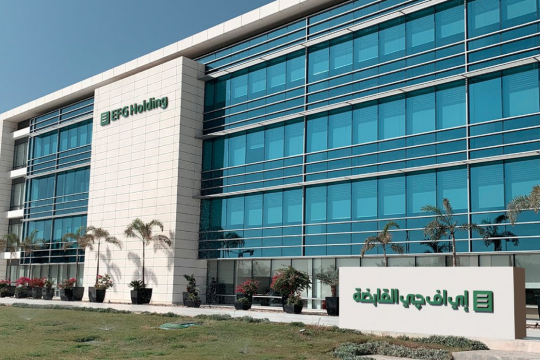
Bedaya closes EGP 1.6 bn securitization issuance: Bedaya Mortgage Finance, a subsidiary of EFG Holding’s NBFI arm EFG Finance, has completed an EGP 1.56 bn securitized bond issuance, according to a statement (pdf). The issuance is the company’s seventh overall, and fifth under a wider EGP 3 bn program.

(Tap or click the headline above to read this story with all of the links to our background as well as external sources.)

About the issuance: The issuance came in four tranches with tenors ranging from 13 to 82 months, which received ratings ranging between AA and A- from Middle East Rating and Investors Service (Meris). The issuance was backed by a receivables portfolio from GB Corp’s Capital for Securitization as the issuance’s special purpose vehicle.

Who bought in? Bank NXT and Bank ABC were among those who subscribed to the issuance.

What they said: “The seventh issuance for Bedaya reflects our steadfast commitment to expanding access to mortgage finance in Egypt. By working closely with EFG Hermes, we have been able to strengthen our securitization program. We look forward to continuing to develop dynamic financing solutions that reinforce our market leadership and support sustainable growth in the mortgage financing space,” said Bedaya CEO Tarek Abou Gendia.

ADVISORS- Our friends at EFG Hermes acted as the sole financial advisor, transaction manager, bookrunner, underwriter, and arranger on the transaction. The National Bank of Egypt was the placement agent and underwriter, alongside Al Baraka Bank and CIB. Meanwhile, Abu Dhabi Commercial Bank served as the custodian bank and Dreny & Partners provided counsel.

7

Moves

Tarek Fayed officially named CEO of United Bank

It’s official, Tarek Fayed (LinkedIn) will lead United Bank as its new CEO, according to an EGX disclosure (pdf). The announcement confirms earlier reports from mid-August that Fayed would take over from outgoing CEO Ashraf El Kady, who has led the bank since 2016. Fayed most recently served as the chairman and CEO of Banque du Caire for nearly eight years, prior to which he held positions at the Central Bank of Egypt and Citibank.

8

ALSO ON OUR RADAR

EONS unveils New Cairo development with initial investments of EGP 10 bn

REAL ESTATE-

EONS Developments is preparing to roll out its first project in Egypt with initial investments of over EGP 10 bn, utilizing its 35 years in the Swedish market, the developer said in a statement. The New Cairo development will feature modern design, sustainability measures, and smart-community components, and will involve partnerships aimed at delivering integrated urban developments in Egypt, according to the statement.

(Tap or click the headline above to read this story with all of the links to our background as well as external sources.)

What they said: “We consider Egypt a strategic market with significant growth opportunities, and it is well positioned to become one of the largest real estate markets regionally and globally. Through our projects, we aim to introduce an integrated urban concept that combines luxury, innovation, and sustainability, fulfilling our clients’ aspirations while delivering true investment value,” said CEO Sherif Taha.

INFRASTRUCTURE-

Is a fifth phase of the LRT on the horizon? The Transport Ministry and China’s AVIC International discussed the possibility of setting up a fifth phase to the light rail transit (LRT), which would run from Rehab to the new capital. This came during a meeting between Transport Minister Kamel El Wazir and AVIC representatives, which also touched on civil work on the third phase, which is expected to be completed by the end of this year, and installations on the fourth phase, which will begin this month.

BANKING-

The Central Bank of Egypt issued new regulations permitting banks to establish service units outside traditional branches to expand access to banking services nationwide, according to a statement (pdf). The new units — which can be mobile, fixed, or temporary — will handle services such as account openings, loans, card issuance, transfers, ATM withdrawals and deposits, and financial consultations, in addition to receiving customer complaints. They are designed to make banking more accessible to individuals and micro, small, and medium-sized enterprises across all governorates.

9

PLANET FINANCE

Yields soar amid global bond rout, as concerns mount over the UK and France’s debt

Government bond markets are in the midst of a global selloff amid rising government borrowing and debt levels and uncertainty over the trajectory of US tariffs. Yields — which reflect the level of risk investors demand to hold a country's debt — are rising to record levels. The bond rout also led to a selloff across equities — with the S&P 500, Nasdaq, FTSE 100, and Euro Stoxx 50 all down.

UK borrowing costs surged to their highest in nearly three decades, sending the GBP lower and piling pressure on Prime Minister Keir Starmer’s government ahead of its Autumn budget, the Financial Times and Bloomberg report. The yield on 30-year gilts climbed to 5.72% — a level last seen in 1998 — while the GBP fell as much as 1.3% to USD 1.3376, its sharpest one-day drop since April.

Meanwhile, US 30-year yields approached 5%, a level rarely surpassed since 2006, Barron’s reports. Over in Europe, 30-year German yields settled at 3.4%, while Dutch yields were at 3.57% — their highest levels since 2011 — and French 30-year debt rose to 4.49%, the most elevated since 2009. Japanese 30-year yields eased to 3.2% after hitting its highest level since at least 2006 last week.

Political volatility is part of the reason behind the turmoil — a surge in spending in Germany as well as political upheaval in France, the UK, and Japan are raising doubts about fiscal health and the governments’ ability to address their debt.

The UK is in a “dangerous” situation, Allianz CIO Ludovic Subran said, while Eurizon SLJ’s Stephen Jen warned of a potential situation reminiscent of the 2022 gilt crisis under former PM Liz Truss. Though today’s moves are slower and more orderly, the 30-year yield has risen more than 100 bps in the past year, outpacing US Treasuries and Bonds.

Weak demand from traditional buyers has compounded the sell-off. Defined-benefit pension funds have scaled back purchases, and the Debt Management Office has already slashed issuance of long gilts to a record low. The Bank of Japan is also cutting back, while the US Federal Reserve currently holds USD 3.6 tn in longer-term Treasuries, down from USD 4.9 tn in 2022.

Meanwhile, in France, the French government’s plan to tackle debt through massive spending cuts has triggered plans for a no-confidence vote on 8 September, which could potentially lead to French Prime Minister Francois Bayrou’s forced exit and putting the country in a dire position.

“Investors fear that more political paralysis will make fiscal tightening harder, which is worrying given France’s current deficit levels,” wrote Jim Reid, Deutsche Bank’s global head of economics and thematic research.

MARKETS THIS MORNING-

Asian markets are tracking global equity losses, with Japan’s Nikkei down 0.35% amid rising concerns over rising bond yields. Meanwhile, South Korea’s Kospi was flat, and Hong Kong’s Hang Seng is up marginally in early trade.

Over on Wall Street, futures point to a slightly better open after the US Department of Justice’s ruling offered Alphabet respite in its monopoly case.

EGX30

35,157

0.0% (YTD: +18.2%)

USD (CBE)

Buy 48.46

Sell 48.60

USD (CIB)

Buy 48.47

Sell 48.57

Interest rates (CBE)

22.00% deposit

23.00% lending

Tadawul

10,667

0.0% (YTD: -11.4%)

ADX

10,034

+0.2% (YTD: +6.5%)

DFM

6,011

+0.7% (YTD: +16.5%)

S&P 500

6,416

-0.7% (YTD: +9.1%)

FTSE 100

9,117

-0.9% (YTD: +11.6%)

Euro Stoxx 50

5,291

-1.4% (YTD: +8.1%)

Brent crude

USD 69.14

+1.5%

Natural gas (Nymex)

USD 2.99

-0.7%

Gold

USD 3,597

+0.1%

BTC

USD 111,023

+1.6% (YTD: +18.7%)

S&P Egypt Sovereign Bond Index

909.57

+0.3% (YTD: +17.0%)

S&P MENA Bond & Sukuk

148.55

+0.1% (YTD: +6.2%)

VIX (Volatility Index)

17.17

+6.5% (YTD: -1.0%)

THE CLOSING BELL-

The EGX30 was flat at yesterday’s close on turnover of EGP 4.0 bn (9.4% below the 90-day average). International investors were the sole net buyers. The index is up 18.2% YTD.

In the green: Abu Qir Fertilizers (+2.4%), Ibnsina Pharma (+1.8%), and Mopco (+1.7%).

In the red: Eastern Company (-2.1%), Orascom Construction (-2.1%), and Orascom Development (-1.8%).

10

HARDHAT

Could cold storage be the future of Egypt’s storage industry?

Unlike dry storage, Egypt’s lesser-known cold storage sector is largely untapped — but how lucrative is it, exactly? Cold storage involves warehousing any commodities that are temperature sensitive, such as meds and perishables. EnterpriseAM sat down with engineer Ibrahim Bakir (LinkedIn) to discuss his feasibility study comparing the prospects of cold and dry storage in Egypt.

(Tap or click the headline above to read this story with all of the links to our background as well as external sources.)

What makes cold storage special? Cold storage offers investors something dry storage does not: mild competition, Bakir said. The steep costs associated with acquiring refrigerative and fire safety equipment act as a high barrier, in addition to the reliance on skilled labor and on-call maintenance duties — which sends prices soaring. These circumstances severely limit entrants into cold storage in any market, and Egypt is no exception.

Fewer competitors allow cold storage lessors to charge suitable rent premiums, sufficiently offsetting the prodigious costs involved as well as yielding attractive bottom lines. Multinational corporations are among the clientele in cold storage, and tend to prefer leasing over owning warehousing facilities in Egypt, Bakir said. The resulting tenant pool is more than sufficient to reward investment in cold storage.

Investors looking at real estate often dismiss cold storage warehousing as a complex and daunting business — in other words, a “hassle,” Bakir said. Transforming an empty plot of land into a fully operational cold storage warehouse — and eventually into an Amazon-grade facility — could be accomplished in as little as two months with proper project management. Unlike other real estate options, cold storage need not be a long-term investment, yet retains its value.

Egyptians tend to consider residential and commercial real estate the wiser gambit, but cold storage warehousing requires lower square footage, making it the more cost-effective solution.

The proliferation of cold storage facilities in Egypt is inextricably linked to the nation’s export ambitions for meds and perishables. Even though Egypt’s exports in perishables are strong — growing 21% y-o-y in 2024 to a record USD 6.1 bn, it does not regularly welcome new players entering to the scene, the same goes for meds exports. Established giants in Egyptian exports of perishables and meds are not expanding enough annually to promote commensurate investment in cold storage, Bakir said. This state of affairs is consistent throughout the MENA region, with Egypt and Morocco being relatively ahead of the curve.

Where to invest? Bakir outlined that El Obour is by far the most suitable location, owing to its striking proximity to the fresh produce and fish retail market Souq el Obour — this facilitates connections between warehousing and clients. Other notable locations include Obour el Gedida, Tenth of Ramadan, Belbes, Sixth of October’s Industrial Zone, and New Cairo’s Industrial Zone.

Indian players are also eyeing the sector, including chemicals player TCI Sanmar Chemicals who said earlier this year that it is planning a USD 300 mn investment push in Egypt that will see the company invest in warehousing and cold storage projects among other things. In the same month, India’s Lulu Group said it was planning an expansion of cold storage facilities during a meeting with the Investment Minister Hassan El Khatib, the Middle East Observer reported.

ICYMI- Egypt-based cold chain developer Sullex announced it would develop the country’s firstintegrated city for logistics, chilled, and frozen food industrial services back in February 2024. The smart temperature-controlled logistics city, dubbed Sullex-TRC, is set to have a USD 150 mn investment ticket and cover 510k sqm at a site in Giza.


Your top infrastructure stories for the week:


SEPTEMBER

1-3 September (Monday-Wednesday): Pharmaconex Exhibition, Egypt International Exhibition Center.

3 September (Wednesday): S&P Global to release PMI figures for August.

6-8 September (Saturday-Monday): Metal and Steel Exhibition, Egypt International Exhibition Center.

8-11 September (Monday-Thursday): The Egyptian-Tunisian Joint High Committee will take place.

8-11 September (Monday-Thursday): EFG Hermes London Conference takes place in the British capital.

9-11 September (Tuesday-Thursday): The International Exhibition for Paper, Corrugated Board, Paperboard and Tissue Paper Industries — PAPER-ME — takes place at the Egypt International Exhibition Center.

10 September (Wednesday): Capmas and CBE to release inflation data for August.

11 September (Thursday): Orascom Construction lists on ADX.

15 September (Monday): IMF to hold its combined fifth and sixth reviews of Egypt’s USD 8 bn EFF arrangement.

24-27 September (Wednesday-Saturday): Cityscape Egypt 2025, Egypt International Exhibition Center.

30 September (Tuesday): The Egypt-South Korea Economic Cooperation and Partnership Forum.

The Egyptian-Moroccan Business Council to send a delegation of 23 local companies to Rabat.

The Engineering Export Council of Egypt will ship a commercial delegation to Russia to ramp up exports to European markets.

Egypt Education Platform (EEP) to launch two new schools in Alexandria and Somabay.

Egypt Otsuka’s nutritional products factory in Tenth of Ramadan to begin operations, with exports to Gulf countries expected by January 2026.

OCTOBER

1 October (Wednesday): Applications for alternative housing for old rent tenants will open through an online platform or at post offices nationwide.

2 October (Thursday): Monetary Policy Committee’s sixth meeting.

7 October (Tuesday): The 2025 EnterpriseAM Egypt Forum.

7-8 October (Tuesday-Wednesday): HACE-Hotel Expo, Egypt International Exhibitions Center.

7-9 October (Tuesday-Thursday): EgyMedica Exhibition, Cairo International Convention Center.

12-16 October (Sunday-Thursday): Cairo Water Week, Cairo.

19-20 October (Sunday-Monday): Egypt to host the fifth edition of the Aswan Forum.

19-22 October (Sunday-Wednesday): Arab African Investment and International Cooperation Summit.

23-25 October (Thursday-Saturday): Stone Africa Expo, Cairo International Conference Center.

October: The third iteration of the Export Smart Exhibition and Conference.

Mid-October: Capmas to publish the findings of its 2023-2024 income and expenditure survey.

NOVEMBER

16-19 November: Cairo ICT 2025, Egypt International Exhibition Center

20 November (Thursday): Monetary Policy Committee meeting.

23-25 November (Sunday-Tuesday): NEBU Expo 2025 gold and jewelry exhibition, Egypt International Exhibitions Center, New Cairo.

November: Egypt to join the EU’s Horizon Europe research and innovation program.

DECEMBER

1-4 December: Egypt Defence Expo (EDEX), Egypt International Exhibition Center.

25 December: (Thursday): Monetary Policy Committee meeting.

EVENTS WITH NO SET DATE

Mid-2025: EGX launches sustainability index.

3Q 2025: Nasr Automotive begins locally manufacturing passenger cars.

3Q 2025: Polaris Parks to finalize contracts for two new industrial zones in the new capital and Sadat City.

Mid-2025: The Administrative Capital for Urban Developments to roll out the second phase of offering industrial plots to investors

2H 2025: Potential visit by Chinese President Xi Jinping to Egypt

4Q 2025: The beginning of construction works on China’s State Grid two solar projects.

4Q 2025: GB Auto starts assembling one of China’s Great Wall Motor models in 4Q 2025.

4Q 2025-1Q 2026: Kasrawy Group to launch first Avatr EV models in Egypt.

2025: The InterAcademy Partnership assembly.

2025: Nile Basin States Summit, Cairo, Egypt.

2025: Release of the government’s Startup Charter document.

Before 2025-end: The government will launch two ro-ro shipping lines with Saudi Arabia and Turkey.

2026

Early 2026: Passenger operations on the New Administrative Capital–Nasr City monorail scheduled to begin.

1Q 2026: Trial operations for the Ain Sokhna–Sixth of October section of Egypt’s first high-speed rail line scheduled to begin.

1 January: European Union’s Carbon Border Adjustment Mechanism (CBAM) to fully come into effect.

10-12 February (Tuesday-Thursday): Gitex Global’s AI Everything Middle East & Africa Summit

15 March 2026: IMF to hold its seventh review of Egypt’s USD 8 bn EFF arrangement.

May 2026: End of extension for developers on 15% interest rates for land installment payments

15 September 2026: IMF to hold its eighth review of Egypt’s USD 8 bn EFF arrangement.

2H 2026: Operations at Deli Glass Co’s new USD 70 mn glassware factory kick off.

2027

20 January-7 February: Egypt to host the African Games.

April 2027: Tenth of Ramadan dry port and logistics hub to begin operations.

EVENTS WITH NO SET DATE

2027: Egypt to host EBRD’s annual meetings for 2027.

End of 2027: Trial operations at the Dabaa nuclear power plant expected to take place.

September 2028: First unit of the Dabaa nuclear power plant begins operations.

Now Playing
Now Playing
00:00
00:00