Get EnterpriseAM daily

Available in your choice of English or Arabic

Fuel prices could go up again in October

1

What We're Tracking Today

Egypt must “break free” from its crisis management approach -Mohieldin

Good morning, all. September is shaping up to be one busy month, with the newsflow picking up after the summer calm. Energy news leads today’s issue — we have word that fuel prices could increase for the second time this year in October as the government tries to phase out subsidies by year-end.

AND- Net foreign assets saw quite the jump in July, to hit a fresh peak of USD 18.5 bn, in the latest sign that the FX crunch is a thing of the past.


In the fourth issue of our Destination Sahel series, we're bringing you the latest updates on New Alamein City and a look at the best investments in Sahel today. We also investigate the growing issue of beach erosion and its impact on our shores.

Look for Destination Sahel, Issue IV, in your inbox tomorrow.

Missed the first three issues? Tap here to read the full series.


PSA-

Private-sector workers can also look forward to a paid day off on Thursday, 4 September for Prophet Muhammad’s birthday, the Labor Ministry announced in a statement. The announcement follows similar announcements for the public sector, banks, and the EGX.

And that includes us too at EnterpriseAM Egypt, as we will be taking a break from your inboxes for the long weekend. But worry not, we will be back bright and early on Sunday with all the most important updates you may have missed.

WEATHER- It’s another sunny day in Cairo, with the capital in for a high of 36°C and a low of 24°C, according to our favorite weather app.

It’s a little nicer in Alexandria, which will see a high of 32°C and a low of 24°C.

FROM THE SOAPBOX-

Egypt must “break free” from its crisis management approach after its macroeconomic stabilization program with the IMF comes to a close in November 2026, UN Special Envoy on Financing the 2030 Sustainable Development Agenda and former investment minister Mahmoud Mohieldin told Al Arabiya Business (watch, runtime: 5:22). While it made sense in the past to address previous financial and monetary imbalances, the country must now focus on “growth, competitiveness, increased exports, investment, restoring economic management to its natural state, and also re-empowering the middle class and addressing sustainable development challenges, most importantly treating issues of income distribution and extreme poverty,” he argued.

Mohieldin also brought receipts, highlighting that real GDP is at essentially the same place it was nearly ten years ago when the country’s program with the Fund started. He noted that the country represents 1.3% of the world’s population but less than 0.3% of global GDP.

** We sat down with Mohieldin earlier this year to discuss global economic uncertainty and what it means for Egypt. You can read our interview here.

SUKUK WATCH-

Weekly sukuk roundup: The yield to maturity on our sovereign sukuk fell to 7.71% last Friday, compared to 7.73% in the week before, according to the weekly report (pdf) about the performance of our sovereign sukuk. Egyptian sovereign sukuk prices also slightly decreased to USD 101.54, compared to USD 101.58 a week earlier.

MARKET WATCH-

Gold rush: Local gold prices rose around EGP 25 per gram across the board yesterday, following a surge in global gold prices. The price of 24-carat gold now stands at 5,389 per gram, up over 4.3% m-o-m.

WATCH THIS SPACE-

Americana Restaurants may soon be on the hunt to acquire homegrown chains in Egypt and other countries in the region, Chairman Mohamed Alabbar told the Financial Times. The Middle East’s largest fast-food franchise operator is looking to acquire and grow homegrown brands in the region in a bid to diversify away from a focus on Western brands amid local boycotts, he said.

In context: Americana’s US-linked chains have been hit by consumer boycotts after Israel’s war in Gaza, sending net income down nearly 40% y-o-y in 2024. Revenues rose 15.6% in 1H 2025, but remain below 2023 levels despite network expansion. The situation “strengthened our belief that we need to go and nurture and buy [...] Middle Eastern brands and grow them,” Alabbar said, adding that the group has “heavily” cut costs to absorb weaker margins.

The company is in talks with “a lot of” targets, he said without providing details, though he mentioned a lot of “beautiful brands” in Egypt, Kuwait, Saudi Arabia, the UAE, and Lebanon. Raising capital for the M&A push is also on the cards, thanks to its low leverage position, he added.

HAPPENING TODAY-

#1- It’s day two of the three-day G20 summit in Cairo, which focuses on global and regional food security challenges. On day one, Finance Minister Ahmed Kouchouk highlighted Egypt’s push to expand agricultural land, boost crop yields, and fund programs to support farmers, according to a ministry statement. He also stressed that food subsidies remain a core pillar of Egypt’s social safety net — with some EGP 165 bn allocated this year to benefit over 60 mn citizens.

Kouchouk called for greater international financing for sustainable agricultural investment and reforms to global financial structures to help developing and African countries cope with food price shocks, climate change, and fiscal strain. He also pressed for stronger private sector partnerships and backed deploying AI and digital tech to build more resilient food systems.


#2- It’s day two of the pharma manufacturing expo Pharmaconex at the Egypt International Exhibition Center, according to a statement (pdf) from the organizers. The three-day event highlights recent public and private sectors’ efforts to localize drug manufacturing and strengthen supply chains under the National Health Strategy 2024-2030. The exhibition hosts over 350 exhibitors from 40 countries and features some 70 conference sessions.

HAPPENING TOMORROW-

Policymakers and the business community are eagerly awaiting tomorrow’s release of S&P Global’s PMI figures for August, which measures non-oil private sector activity. Last month’s report saw the country’s headline figure rise to 49.5, just short of the 50.0 neutral threshold that separates growth from contraction. Non-oil private sector activity has declined for five straight months and has only been in expansion territory for two months since November 2020.

CIRCLE YOUR CALENDAR-

The NEBU Expo for Gold and Jewelry will take place from 23 to 25 November at the Egypt International Exhibitions Center, according to the expo’s website. The event will bring together more than 150 companies and over 200 local and international buyers to explore new investments, showcase the latest machinery, bullion, coins, and jewelry, and hold a specialized jewelry design competition. Entry will be free for visitors.

Check out our full calendar on the web for a comprehensive listing of upcoming news events, national holidays and news triggers.


** DID YOU KNOW that we cover Saudi Arabia and the UAE?

** Were you forwarded this email? Tap or click here to get your own copy delivered every weekday before 7am Cairo time — without charge.

THE BIG STORY ABROAD-

It’s an oddly quiet morning on the global business front pages, with a few stories worth noting.

#1- Gold prices rise to fresh highs as traders react to a weakening greenback and expectations of a Fed rate cut this month. The price of gold at the benchmark London Bullion Market Association hit a record USD USD 3,475 per ounce during an auction yesterday, while spot market prices are nearing their all-time high. Meanwhile, silver hit a 14-year high of USD 40.76 per ounce.

What’s driving the rally? Concerns over US inflation and the independence of the Fed, with US President Donald Trump pressuring Chair Jay Powell and firing governor Lisa Cook, have pushed traders towards the safe haven asset. Meanwhile, questions regarding the future of the USD in the financial system have pushed global central banks to purchase more gold in efforts to diversify their holdings. (Financial Times | Wall Street Journal)

#2- Nestle fired CEO Laurent Freixe after an investigation confirmed he breached the company’s code of conduct by engaging in an “undisclosed romantic relationship” with a direct subordinate. The move exactly a year after he took office. Head of Nespresso Philipp Navratil will replace him, effective immediately. (Financial Times | Reuters | AP | Bloomberg | CNN)

#3- British Prime Minister Keir Starmer appointed Egyptian-British economist Minouche Shafik (bio) as his chief economic adviser. Shafik, a former deputy governor of the Bank of England and ex-IMF deputy managing director, will help steer UK fiscal policy amid what is expected to be a tough end-of-year budget round. Her appointment has caught the attention of the international press, in no small part due to her recent resignation as Columbia University president over her handling of pro-Palestine protests. (Bloomberg | Reuters)

*** It’s Going Green day — your weekly briefing of all things green in Egypt: EnterpriseAM’s green economy vertical focuses each Tuesday on the business of renewable energy and sustainable practices in Egypt, everything from solar and wind energy through to water, waste management, sustainable building practices and how you can make your business greener, whatever the sector.

In today’s issue: We take a look at how the global cleantech industry is booming and how Egypt risks getting left behind if it doesn’t act fast.

Whether you’re diving into turquoise waters, catching golden hour from your terrace, or just letting time drift by — Somabay is summer, redefined. Your ultimate escape, every single time.

2

Energy

Egypt could raise fuel prices once again in October

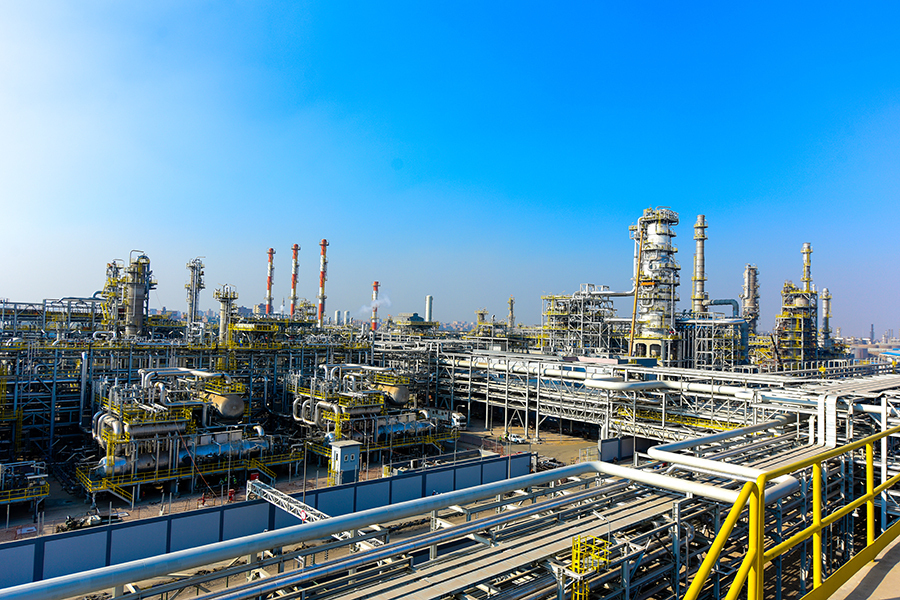
Start bracing for the second fuel price hike of the year, which a government source tells us could happen as soon as next month as the Madbouly government works to phase out fuel subsidies by the end of the year.

(Tap or click the headline above to read this story with all of the links to our background as well as external sources.)

The increase shouldn’t be too high, the source said, pointing to cooling inflation, exchange rate stability, and existing short- and medium-term oil import contracts, which are paving the way for reaching cost-recovery levels.

The anticipated hike should line up with the fifth and sixth reviews of the country’s USD 8 bn loan program, which we were told begins later this month with a visit from a team from the IMF.

REMEMBER- Prime Minister Moustafa Madbouly reiterated in March Egypt’s intention to have energy prices reach cost recovery levels by the end of the year by phasing out all fuel subsidies in line with its structural reform agenda with the IMF. Despite ongoing efforts to reform its subsidy system, the government still spends EGP 366 mn per day and EGP 11 bn a month on fuel subsidies, according to the Oil Ministry.

Despite fuel prices rising three times during the last fiscal year, spending on subsidies exceeded the EGP 154.5 bn allocated in the budget to EGP 155.6 bn, according to a government document seen by EnterpriseAM. The government plans to spend EGP 75 bn on fuel subsidies this fiscal year.

REMEMBER- The government last hiked fuel prices in April, raising them by 11.8-14.8%. Prior to that, officials increased fuel prices in July and October of 2024.

We had an idea this was coming: “[October is] when the government is set to deliver its final fuel price hike, which would take prices to cost-recovery levels,” EFG Hermes previously wrote in a note seen by EnterpriseAM.

This publication is proudly sponsored by

3

Banking

Egypt’s net foreign assets hit fresh high of USD 18.5 bn in July

Net foreign assets (NFAs) in Egypt’s banking sector jumped 23.7% m-o-m in July, reaching USD 18.5 bn, according to data from the Central Bank of Egypt. July’s figure represents a 39.7% y-o-y increase and surpasses the USD 15.4 bn high recorded in March.

(Tap or click the headline above to read this story with all of the links to our background as well as external sources.)

Why do NFAs matter? Think of NFAs as the banking system’s core financial buffer — the net difference between the foreign currency banks hold (assets like USD and EUR) and what they owe to entities abroad (liabilities). A positive and growing NFA signals health — a strong capacity to cover import bills. In that case, the EGP will generally hold steady or even appreciate. But when NFAs shrink or turn negative, it means we owe more FX than we hold — and that’s when the EGP tends to slide against key foreign currencies.

The numbers behind the surge: Commercial banks’ net foreign assets recorded a surplus of USD 7.99 bn in July, a significant increase from the USD 4.9 bn seen in June. Foreign assets in commercial banks increased to USD 39.4 bn, up from around USD 36.2 bn a month earlier, while liabilities inched up to USD 31.5 bn during the month, up from USD 31.3 bn in June.

This shows that the banking sector has sufficient FX reserves to meet external obligations — one of the most important measures reflecting the sector’s resilience in the face of challenges, banking expert Mohamed Abdel Aal told EnterpriseAM.

The central bank recorded a surplus of nearly USD 10.5 bn by the end of July, up from USD 10.1 bn in June. Net foreign assets reached USD 47.8 bn during the month, slightly up from June’s USD 47.4 bn, while liabilities held steady at USD 37.31 bn.

The increase came despite challenges: The improvement of our NFA position for the third consecutive month came despite Suez Canal revenues continuing to suffer and our fifth IMF review getting pushed back, delaying the disbursement of the fifth tranche initially expected in July, Abdel Aal said.

How did we do it? The dip in Suez Canal revenues, which costs Egypt around USD 5-6 bn every year, has been offset by a 24% y-o-y rise in tourist numbers in 1H 2025 and a jump in remittances from Egyptians abroad, Al Ahly Pharos Head of Research Hany Genena wrote in a Moharram & Partners report (pdf) diving into the state of the Egyptian economy. “Hence, Suez Canal revenue turned from a major source of foreign currency inflows into a mere option that could be exercised if military activity at the Strait of Bab El Mandab draws to a close” Genena wrote.

Abdel Aal agrees, telling us that the increase in NFAs can be attributed to rising FX inflows from both traditional and non-traditional sources — remittances, tourism, and exports, as well as increased hot money inflows. He explained that hot money inflows were driven by the real interest rate differential between the EGP and the USD, exchange rate stability, and a relative easing of geopolitical tensions.

ICYMI- Egypt recorded its highest-ever monthly USD inflows in July, reaching USD 8.5 bn, Prime Minister Moustafa Madbouly said last week. These inflows, which excluded hot money, came from all state sectors, including a historic surge in remittances.

Moving forward: Abdel Aal expects NFAs to continue their upward trajectory in the coming months and until the start of the new year. A USD 7.5 bn investment package from Qatar should help support the EGP and offset the inflationary pressures likely to arise from upcoming fiscal consolidation measures, Genena wrote.

4

INVESTMENT WATCH

Egypt is preparing a plan to boost investment in the Red Sea

Authorities are cataloging plots suitable for investment along the Red Sea, two government sources told EnterpriseAM. The move is part of a wider plan to update pricing policies and allocation mechanisms for new projects, with the aim of maximizing returns on state-owned assets.

The details: The plan calls for cataloging project land and identifying plots available for investment, while introducing new mechanisms, incentives, and support measures to accelerate development. In the Red Sea’s tourist areas, land has already been priced, with additional measures in place to fast-track projects and boost tourism in the area.

What’s next? Once the land cataloging process is complete, the Tourism Development Authority will market the investment opportunities available, while also assessing additional measures to attract investors and accelerate development.

Several GCC investors have already submitted offers to set up resorts on the Red Sea, one source told us. Last month, we reported that a Gulf sovereign fund will soon announce a new Ras Shukeir project that will focus on infrastructure and energy development — the first in a series tied to the 174 sq km Ras Shukeir zone on the Red Sea.

The move follows similar efforts on the North Coast, which saw the New Urban Communities Authority issue a new regulatory framework for real estate projects. The new rules included a flat USD 20 per sqm fee for projects developed by foreign developers and EGP 1k per sqm charge for local developers.

5

Capital markets

EGX30 ends August up 2.8%, outperforming regional peers

The EGX30 rose 2.8% last month, closing August at 35.1k points, according to the EGX’smonthly report (pdf). The benchmark index recorded a high of 36.3k points and a low of 34.1k during the month, while total market cap rose 2.7% to roughly EGP 2.5 tn. Meanwhile, the EGX33 Shariah Index underperformed the benchmark index, posting a modest 0.9% uptick.

(Tap or click the headline above to read this story with all of the links to our background as well as external sources.)

Trading value slips: Total value traded was down 11.5% last month, reaching EGP 1.5 tn across 2.5 mn transactions. Total equity trading accounted for 7.6% of the total value traded on the main market, while the remaining 92.4% was captured by bonds and bills.

Local institutions were the only bullish institutional segment on EGX-listed stocks with net purchases of EGP 4.6 bn (excluding block trades). Meanwhile, retail investors were bearish across the board. Local retail investors recorded net sales of EGP 1.2 bn, regional retail investors logged net sales of EGP 128.8 mn, and foreign retail investors posted EGP 2.7 mn in net sales.

Top-performing sectors in August: Education services led the EGX with a 16.2% gain, followed by construction and engineering, which rose 14%. Tourism and leisure advanced 9.5%, healthcare and pharma added 8.2%, and telecom, media, and IT climbed 7.2%.

On the flipside: Transportation & shipping fell 6.2%, textile & durables dropped 6.0%, while real estate and industrials & autos each slipped 0.9%. All other sectors ended the month in the green.

How the EGX fared against regional, int’l benchmarks: The EGX30 outperformed Saudi Arabia’s TASI,which shed 2% in August, the ADX (-2.7%), and the DFM (-4%). Globally, the S&P 500 advanced 1.9%, while Europe’s Euro Stoxx 50 gained 0.6%.

Brokerage league table: EFG’s brokerage arms retained the top spot YTD with a combined 21.2% market share, well ahead of Thndr (7.2%) and Mubasher (6.8%), according to the EGX brokerage league table (pdf) tracking firms’ performance between January and August. Meanwhile, Arqaam Securities Brokerage unseated longtime leader EFG Hermes to top the EGX brokerage league table (pdf) in August with a 14.3% market share. EFG’s brokerage arms slipped to second with a combined 11.3%, while Thndr ranked third at 8.9% and Mubasher followed with 7.1%.

ICYMI- Banque du Caire and military-owned Safi and Wataneya could be among the first to debut on theEGX as part of the next phase of the privatization program. Their debut could happen as early as this month and before the IMF concludes its combined fifth and sixth reviews under our USD 8 bn program.

6

Moves

Dalia Khorshid reappointed CEO of Beltone Holding for three more years

Our friends at Beltone Holding renewed the appointment of Dalia Khorshid (LinkedIn) as CEO and managing director for an additional three-year term, the company said in a statement (pdf). Khorshid has held the role since August 2022 and led the firm’s return to profitability, expanded its footprint in non-banking financial services, and steered its ongoing digital transformation.

(Tap or click the headline above to read this story with all of the links to our background as well as external sources.)

Khorshid and her team have turned Beltone around, delivering nearly 5x bottom linegrowth in 2024 at EGP 1.7 bn, while growing revenues 4x after a sustained turnaround driven by a deeper push into non-bank financial services and a refocusing of the investment bank.

Shareholders also elected a new board of directors for a three-year term, including Sayed Shoeib as non-executive chairman and Mohamed Hisham Abdel Moneim and Mirian Khalaf as non-executive board members representing Chimera’s investment vehicle Chimpe 1 Investment SPV, according to an EGX disclosure (pdf). Wael Mostafa and Marwa Kamal were also elected as independent non-executive board members.


PLUS- Giza Systems has a new country general manager for Egypt: Tech consultancy firm Giza Systems appointed Tarek Heiba (LinkedIn) as its new country general manager in Egypt, according to a statement. Heiba brings over 30 years of experience in the ICT sector, having held senior positions in global firms like Dell Technologies and Nokia Siemens Networks.

7

Also on our Radar

Egypt to carry out EGP 5 bn emergency rail maintenance

INFRASTRUCTURE-

Egypt will spend EGP 5 bn on emergency rail maintenance following the Matrouh train derailment over the weekend that killed three and injured over 90 people, Asharq Business reports, citing an unnamed government source. A supreme committee will conduct technical inspections of tracks and maintenance facilities to ensure safety measures are in place.

(Tap or click the headline above to read this story with all of the links to our background as well as external sources.)

ENERGY-

The government plans on giving Shell and Petronas the green light to export two LNG cargos from the Idku liquefaction plant this month and the next. Each cargo will carry about 165k cbm of LNG — roughly 3.5 bcf of gas.

But why? Despite local gas output falling to a nine-year low in 2Q 2025, the Madbouly government believes the move to resume LNG exports will encourage international firms to increase their investment in the sector, the source said.

REAL ESTATE-

Real estate developer Dar Al Alamia launched its EGP 7 bn residential project Acasa Alma, the company said in a statement(pdf). The New Cairo project is on a 16-feddan plot and will feature low-density residential units, a clubhouse, cycling and jogging tracks, a swimming pool, and service areas. Delivery is expected within four years.

NBFS-

Five NBFS players secure licenses: The Financial Regulatory Authority (FRA) granted licenses for five NBFS players to establish real estate and investment funds or begin non-banking financial services operations, according to a statement from the authority.

Who received the licenses? Bokra Holding secured its licenses to establish the Bokra Private Equity Investment Fund and the Bokra Venture Capital Investment Fund, as well as to begin operations on its Bokra Metals Investment Fund. Madinet Masr’s Safe got the green light to establish its Safe Real Estate Fund and a securities underwriting and promotion arm, while Sahl secured a license to offer SME financing. Finally, Act Financial got the green light to operate investment funds independently or with third parties, and Sadara Holding is now allowed to expand its services to include securities underwriting and promotion.

INS.-

EFG Finance and GB Corp joint venture Kaf Insurance launched a new digital pension platform targeting corporates and their employees, expanding its suite of benefits beyond health and life ins., the company said in a statement(pdf). The product allows employees to track contributions, investment returns, and savings across multiple asset classes — including equities, fixed income, USD-based funds, and gold — while offering HR departments real-time dashboards to manage pensions efficiently.

What they said: “For too long, employees have seen pensions as a negative (a deduction on their monthly payslip). Our tool, by applying some principles from gamification, turns this dynamic on its head and boosts employee engagement, motivation, and appreciation of this valuable benefit,” Kaf CEO Sohail Ali said.

8

PLANET FINANCE

Wealthy individuals drive record inflows into private credit as institutions pull back

Private credit funds are seeing record investments from wealthy investors, offsetting weaker demand from large institutions, the Financial Times reports. 1H 2025 saw US investors alone plow USD 48 bn into private credit funds, surpassing the FY total for 2023 and on track to beat the USD 83.4 bn record set in 2024, according to investment bank RA Stranger.

Policy tailwinds are reshaping the market: In August, US President Donald Trump signed an executive order allowing private equity and credit into 401k retirement plans. Managers had long lobbied for access to retirement savers, and are increasingly tailoring products for this retail base. Moody’s has called the shift “one of the biggest new growth frontiers in the industry.”

Blackstone remains the dominant player, with its Bcred fund drawing USD 6.5 bn YTD and USD 11.7 bn over the past 12 months. On average, more than USD 50 mn of fresh orders are placed daily, helping lift Bcred’s assets to USD 73 bn, up more than 50% in two years.

Rivals are closing in: Apollo Debt Solutions raised USD 6.4 bn over the past year, Blue Owl took in around USD 7 bn across two funds, and Ares collected USD 5 bn. Cliffwater, a smaller manager, has emerged as a major competitor, attracting nearly USD 11 bn to a fund now worth over USD 30 bn. That competition has chipped away at Blackstone’s dominance, with its share of the non-traded BDC market falling to 28%, compared to an almost 90% market share in 2021.

Europe is seeing similar momentum: Assets in evergreen private debt funds — vehicles that don’t wind down and allow continuous inflows — more than doubled y-o-y to EUR 24 bn by June, Novantigo data shows. The number of such funds has jumped from six in 2022 to 37 this year, with Blackstone, Ares, and HPS among those fundraising.

The boom comes as institutional appetite wanes. Preqin data shows commitments from pensions and endowments have declined each year since 2021, amid a broader downturn in the leveraged buyout industry as it struggles to return capital and generate fresh inflows.

Still, concerns linger that the flood of banknotes could weigh on returns. “It’s a tricky investment environment driven by the imbalance between supply and demand of capital,” Sixth Street’s Joshua Easterly said, adding, “[c]ompetition is elevated, and it’s increasingly difficult to generate outsized returns.”

MARKETS THIS MORNING-

Asian markets are once again trading mixed, with South Korea’s Kospi leading gains with a 0.7% rise following slower-than-expected inflation growth in August. Meanwhile, Japan’s Nikkei is also up 0.6%, while Hong Kong’s Hang Seng is flat and China’s CSI 300 is down 0.1%.

Over on Wall Street, futures are inching up after a losing session for all three indices yesterday, as we kick off what is known to be a seasonally weak month for stocks.

EGX30

35,159

0.0% (YTD: +18.2%)

USD (CBE)

Buy 48.49

Sell 48.63

USD (CIB)

Buy 48.50

Sell 48.60

Interest rates (CBE)

22.00% deposit

23.00% lending

Tadawul

10,671

-0.3% (YTD: -11.4%)

ADX

10,010

-0.8% (YTD: +6.3%)

DFM

5,969

-1.6% (YTD: +15.7%)

S&P 500

6,460

-0.6% (YTD: +9.8%)

FTSE 100

9,196

+0.1% (YTD: +11.3%)

Euro Stoxx 50

5,367

+0.3% (YTD: +9.6%)

Brent crude

USD 68.15

+1.0%

Natural gas (Nymex)

USD 2.97

-0.8%

Gold

USD 3,552

+1.0%

BTC

USD 108,791

+0.5% (YTD: +16.2%)

S&P Egypt Sovereign Bond Index

907.23

+0.2% (YTD: +16.7%)

S&P MENA Bond & Sukuk

148.41

-0.2% (YTD: +6.1%)

VIX (Volatility Index)

16.12

+5.0% (YTD: -7.1%)

THE CLOSING BELL-

The EGX30 was flat at yesterday’s close on turnover of EGP 4.4 bn (0.4% below the 90-day average). Local investors were the sole net buyers. The index is up 18.2% YTD.

In the green: Palm Hills Development (+3.8%), EFG Holding (+1.9%), and Orascom Development (+1.8%).

In the red: Rameda (-1.7%), CIB (-1.6%), and Credit Agricole (-0.8%).

CORPORATE ACTIONS-

#1- CIB’s general assembly will vote on raising the lender’s issued and paid-in capital by EGP 3.1 bn to EGP 33.8 bn when it meets on 25 September, according to an EGX disclosure(pdf). The move would see the country’s largest private sector lender by market cap issue 307.1 mn bonus shares at a ratio of one share for every ten held.

#2- A block transaction was executed on higher education outfit Taaleem’s shares yesterday involving the sale of 152 mn shares at EGP 1.6 bn, according to an EGX bulletin.

9

Going Green

What’s holding back Egypt’s cleantech sector?

The global cleantech industry is booming, but Egypt risks getting left behind if it doesn’t act — and fast. The sector is “one of the most competitive and strategically funded industries worldwide,” which has pushed counties in the region to focus on bolstering their cleantech sectors with better regulation, making capital available, and creating innovation hubs, according to the Planning and International Development Ministry and Entlaq Holding’s Cleantech and Energy in Egypt 2025 report. But the question is, what is Egypt doing? And is it enough?

(Tap or click the headline above to read this story with all of the links to our background as well as external sources.)

Cleantech? Cleantech — or clean technology — is a broad term for any technology, product, or service that improves environmental sustainability. Its main goal is to reduce negative environmental impacts, such as pollution and waste, while also making the use of natural resources more efficient. Cleantech isn't just about renewable energy, it also includes innovations — big and small — in sectors like transportation, water management, waste and recycling, agriculture, and manufacturing. The key idea behind it is to create solutions that are not only better for the planet, but also offer a competitive advantage through better performance or lower costs.

There’s few reasons why Egypt couldn’t be a leader in the field, argues the report.

Unlike other nations that have made more progress on the cleantech front, Egypt has huge renewables potential, an educated and skilled workforce, a promising startup sector, and its geographic position connecting Asia, Africa, and Europe.

BY THE NUMBERS- Infrastructure finance in the Middle East and Africa reached USD 152.3 bn in 2024, with clean energy projects alone attracting more than USD 21.5 bn, according to the report.

SO, WHAT ARE THE MAIN ROADBLOCKS?

Fragmented regulations are slowing growth: Egypt lacks a unified legal framework for cleantech ventures and entrepreneurs face licensing bottlenecks, slow industrial registration, and inconsistent net metering rules, which delay projects and raise costs, according to the report. While some coordination has improved — ministries now meet more often and regulators have clearer roles — projects still get stuck between agencies. By comparison, Saudi Arabia and Morocco have clearer, startup-friendly frameworks that make it easier to launch and grow.

Financing is also a major barrier: Egypt remains underrepresented in regional green finance flows, and the funding that is available often misses women-led or gender-diverse startups, the report argues. While the country has made some progress — like a USD 750 mn sovereign green bond in 2020 — there is still no green bank, no cleantech-specific credit guarantee system, and few blended finance or de-risking tools. SME lending for renewable projects accounts for less than 5% of all business credit.

Infrastructure gaps are making scaling difficult: Testing labs, grid integration facilities, and industrial zones designed for energy and water technology are scarce. Grid constraints, especially in transmission and load management, make it harder to integrate variable renewable energy sources and scale decentralized systems. Local manufacturing capacity in green technology is also limited, with most solar, wind, and storage components imported. In contrast, shared infrastructure overseas — like India’s Clean Energy Center — has helped entrepreneurs commercialize products faster. Without similar facilities, Egypt’s innovators face higher costs and longer timelines.

Adoption is slow in both the public and private sectors: Consumers and government agencies have been slow to adopt cleantech solutions, constrained by limited awareness, a lack of demonstration projects, and weak incentives in public tenders. That keeps solutions small and discourages private investors. The innovation ecosystem also faces commercialization bottlenecks, with fewer than 300 green patents filed in the past five years, and under 10% reaching the market — far behind India’s 2.3k cleantech patents in just last year alone.

Egypt’s advantages remain underused: The country has a strong, but underutilized, technical workforce, with over 200k STEM-educated graduates — of which, only 7% enter climate-related fields. Egypt has also emerged as Africa’s most ambitious hydrogen developer, with an announced pipeline of 18 mn tons per annum — the highest on the continent — spread across 38 MoUs and has impressive solar and wind projects. However, most of its hydrogen projects remain at the pre-commercial stage, with no final investment decisions secured. Egypt ranked 75th out of 120 countries on the World Economic Forum’s Energy Transition Index in 2024, highlighting implementation gaps that, without quicker permitting, better manufacturing incentives, and grid upgrades, could see it lose ground to faster-moving countries. By comparison, Morocco has built its own renewable manufacturing base and gender-inclusive training, South Africa leads in blended finance and SME procurement, and India has turned cleantech into both an industrial strategy and an export engine.

AND HOW SHOULD WE ADDRESS THIS?

Cleantech-specific legislation is a must: A single streamlined legal framework for cleantech is essential to reduce regulatory overlaps, provide a single predictable pathway for startups to launch and grow, and improve investor confidence, argues the report.

Targeted incentive schemes for energy and water innovation: Launching targeted incentive schemes for energy and water innovation would encourage entrepreneurs to focus on the areas where Egypt faces its most pressing challenges. Financial and non-financial incentives could stimulate pilot projects, make it easier for companies to scale solutions, and attract local and foreign investment to key problem areas.

Supporting public sector demand with procurement changes: Reforming public procurement to include cleantech would give startups early access to reliable demand. Government contracts could help de-risk new technologies, demonstrate their value in practice, and build trust among private-sector customers, speeding up adoption across industries.

Getting funds to a diverse set of early startups: Directing more capital to diverse early-stage innovators would help address one of the ecosystem’s most persistent gaps. Ensuring that funding reaches underrepresented founders, particularly women, would broaden the talent pipeline and make the sector more resilient, while increasing the likelihood of discovering high-impact solutions.

Using successful models overseas as a base to build on: Benchmarking Egypt’s policies and programs against global best practices would help the country avoid missteps and accelerate learning. By studying what has worked elsewhere, Egypt could focus its resources on proven models and adapt them to its own market, shortening the path to a competitive, scalable cleantech sector.


Your top green economy stories for the week:


SEPTEMBER

1-3 September (Monday-Wednesday): Pharmaconex Exhibition, Egypt International Exhibition Center.

3 September (Wednesday): S&P Global to release PMI figures for August.

6-8 September (Saturday-Monday): Metal and Steel Exhibition, Egypt International Exhibition Center.

8-11 September (Monday-Thursday): The Egyptian-Tunisian Joint High Committee will take place.

8-11 September (Monday-Thursday): EFG Hermes London Conference takes place in the British capital.

9-11 September (Tuesday-Thursday): The International Exhibition for Paper, Corrugated Board, Paperboard and Tissue Paper Industries — PAPER-ME — takes place at the Egypt International Exhibition Center.

10 September (Wednesday): Capmas and CBE to release inflation data for August.

11 September (Thursday): Orascom Construction lists on ADX.

15 September (Monday): IMF to hold its combined fifth and sixth reviews of Egypt’s USD 8 bn EFF arrangement.

24-27 September (Wednesday-Saturday): Cityscape Egypt 2025, Egypt International Exhibition Center.

30 September (Tuesday): The Egypt-South Korea Economic Cooperation and Partnership Forum.

The Egyptian-Moroccan Business Council to send a delegation of 23 local companies to Rabat.

The Engineering Export Council of Egypt will ship a commercial delegation to Russia to ramp up exports to European markets.

Egypt Education Platform (EEP) to launch two new schools in Alexandria and Somabay.

Egypt Otsuka’s nutritional products factory in Tenth of Ramadan to begin operations, with exports to Gulf countries expected by January 2026.

OCTOBER

1 October (Wednesday): Applications for alternative housing for old rent tenants will open through an online platform or at post offices nationwide.

2 October (Thursday): Monetary Policy Committee’s sixth meeting.

7 October (Tuesday): The 2025 EnterpriseAM Egypt Forum.

7-8 October (Tuesday-Wednesday): HACE-Hotel Expo, Egypt International Exhibitions Center.

7-9 October (Tuesday-Thursday): EgyMedica Exhibition, Cairo International Convention Center.

12-16 October (Sunday-Thursday): Cairo Water Week, Cairo.

19-20 October (Sunday-Monday): Egypt to host the fifth edition of the Aswan Forum.

19-22 October (Sunday-Wednesday): Arab African Investment and International Cooperation Summit.

23-25 October (Thursday-Saturday): Stone Africa Expo, Cairo International Conference Center.

October: The third iteration of the Export Smart Exhibition and Conference.

Mid-October: Capmas to publish the findings of its 2023-2024 income and expenditure survey.

NOVEMBER

16-19 November: Cairo ICT 2025, Egypt International Exhibition Center

20 November (Thursday): Monetary Policy Committee meeting.

23-25 November (Sunday-Tuesday): NEBU Expo 2025 gold and jewelry exhibition, Egypt International Exhibitions Center, New Cairo.

November: Egypt to join the EU’s Horizon Europe research and innovation program.

DECEMBER

1-4 December: Egypt Defence Expo (EDEX), Egypt International Exhibition Center.

25 December: (Thursday): Monetary Policy Committee meeting.

EVENTS WITH NO SET DATE

Mid-2025: EGX launches sustainability index.

3Q 2025: Nasr Automotive begins locally manufacturing passenger cars.

3Q 2025: Polaris Parks to finalize contracts for two new industrial zones in the new capital and Sadat City.

Mid-2025: The Administrative Capital for Urban Developments to roll out the second phase of offering industrial plots to investors

2H 2025: Potential visit by Chinese President Xi Jinping to Egypt

4Q 2025: The beginning of construction works on China’s State Grid two solar projects.

4Q 2025: GB Auto starts assembling one of China’s Great Wall Motor models in 4Q 2025.

4Q 2025-1Q 2026: Kasrawy Group to launch first Avatr EV models in Egypt.

2025: The InterAcademy Partnership assembly.

2025: Nile Basin States Summit, Cairo, Egypt.

2025: Release of the government’s Startup Charter document.

Before 2025-end: The government will launch two ro-ro shipping lines with Saudi Arabia and Turkey.

2026

Early 2026: Passenger operations on the New Administrative Capital–Nasr City monorail scheduled to begin.

1Q 2026: Trial operations for the Ain Sokhna–Sixth of October section of Egypt’s first high-speed rail line scheduled to begin.

1 January: European Union’s Carbon Border Adjustment Mechanism (CBAM) to fully come into effect.

10-12 February (Tuesday-Thursday): Gitex Global’s AI Everything Middle East & Africa Summit

15 March 2026: IMF to hold its seventh review of Egypt’s USD 8 bn EFF arrangement.

May 2026: End of extension for developers on 15% interest rates for land installment payments

15 September 2026: IMF to hold its eighth review of Egypt’s USD 8 bn EFF arrangement.

2H 2026: Operations at Deli Glass Co’s new USD 70 mn glassware factory kick off.

2027

20 January-7 February: Egypt to host the African Games.

April 2027: Tenth of Ramadan dry port and logistics hub to begin operations.

EVENTS WITH NO SET DATE

2027: Egypt to host EBRD’s annual meetings for 2027.

End of 2027: Trial operations at the Dabaa nuclear power plant expected to take place.

September 2028: First unit of the Dabaa nuclear power plant begins operations.

Now Playing
Now Playing
00:00
00:00