Get EnterpriseAM daily

Available in your choice of English or Arabic

Fertilizer players brace for a higher energy bill

1

WHAT WE’RE TRACKING TODAY

El Sisi urges Trump to put an end to the war

Good morning, all. It’s another morning with the regional war and its impact on us at home dominating the news cycle.

In today’s issue, we look at how fertilizer players are preparing for higher gas bills; yet another downgrade to our growth forecast, this time from S&P Global; and construction player CCC Egypt snapped up 99% of AluNile.

***

WISH THIS MORNING’S ISSUE was a podcast? We’ve got you. Tap or click here to listen to Morning Drive, a 10-minute version of today’s issue crafted for you to enjoy with your morning coffee, while getting the kids ready for school, or while stomping around the house wondering where the [redacted] you left your [redacted] reading glasses.
***

Watch this space

President Abdel Fattah El Sisi kicked off the Egypt Energy Show with a plea to Trump that “nobody can stop the war in our region in the Gulf but you,” adding that failure to contain the conflict could have severe global economic consequences (watch,runtime: 4:14.01). “The International Energy Agency said that this crisis may be the largest in the history of energy in the modern world,” he told the audience.

El Sisi also warned that oil prices could exceed USD 200 per barrel — a scenario he said is “not an exaggeration” if attacks on energy infrastructure continue. Disruptions to production and refining capacity could tighten global supply and push prices sharply higher.

The president also flagged risks to fertilizer exports, warning they could drive up global food prices. “Rich countries might absorb this, but countries with middle or fragile economies may see a very sharp impact on their stability.”


EDUCATION — The Education Ministry told international accreditation bodies to stop accrediting certificates and charging schools fees, according to a letter from the ministry seen by EnterpriseAM. This responsibility will now be localized and taken on solely by the ministry via a committee, a government official tells EnterpriseAM, with exam bodies directed to send test results to the ministry to be accredited.

The ministry-certified certificates will be accepted by private, public, and national universities without further accreditation from international bodies or external authentication needed, we’re told. But the outlook is far less certain for those looking to study at universities abroad, as these follow their own guidelines on accreditation and authentication, our source added, inevitably leading to parents and students alike asking if there’s still an avenue to study at respected institutions abroad.

Driving the decision is a push to curb FX outflows, with accreditation fees per certificate ranging from USD 700-950, and exam resit fees that, with other charges, can reach USD 7k-8k, a government official tells EnterpriseAM. This is also a strain on parents, with many unable to pay the fees, especially with the EGP weakening against the greenback. The new system will charge a fee of only EGP 6k.

We’re yet to fully know how the new system will work and what it means for students looking to study abroad — or if the move is a temporary fix to address regional tensions or a longer-term rethink of the education sector. We will be looking for answers to all these and more in the days ahead.

** DID YOU KNOW that we cover Saudi Arabia, the UAE and the MENA-IndiaCorridor?

** Were you forwarded this email? Tap or click here to get your own copy delivered every weekday before 7am Cairo time — without charge.

EGP Watch

The EGP hit another fresh all-time official low yesterday, sliding nearly EGP 1 against the greenback. By the end of trading, the USD was bought for EGP 54.50 and sold for EGP 54.60 at CIB, Banque Misr, and NBE.

Interbank transaction volumes increased 4x from the previous day, coming in at USD 1.1 bn, a source in the sector tells us.

“The depreciation of the EGP primarily reflects pressure on foreign currency supply,” former Banque Misr Deputy Chair Sahar El Damaty tells EnterpriseAM, pointing to “disruptions to key inflows such as tourism, investment, and Suez Canal revenues due to geopolitical tensions, alongside a widening trade deficit and rising import costs.” Under the current supply-and-demand-driven regime, these factors are inevitably “pushing the exchange rate higher,” she added.

Fears of further regional escalation have accelerated the EGP’s depreciation, as the USD increases in value due to its safe-haven status, new investments coming into the market are deterred, and hot money outflows that total some USD 5-6 bn since late February, the banking source tells us.

But don’t expect a quick rebound, as “the EGP is likely to remain under pressure in the near term due to ongoing geopolitical tensions and weak foreign currency inflows,” El Damaty added. However, there is the “potential for gradual stabilization if regional conditions improve and foreign currency sources return.”

Happening today

Today is the final day for individuals to file their 2025 income tax returns, the Egyptian Tax Authority said in a statement yesterday. To accommodate the last-minute rush of taxpayers looking to beat the cutoff, the authority has deployed support teams nationwide to assist filers, with all tax offices remaining open until 4pm today.


PSA-

The weekly work from home orders starting Sunday won’t get in the way of your plans at the bank, with branches, call centers, and other customer service channels to “continue to operate at full capacity,” the Central Bank of Egypt said in a statement.

Port operations will also “continue 24 hours a day, seven days a week without interruption,” according to a circular (pdf) from the Transport Ministry.


WEATHER- It’s heating up in Cairo today, with a high of 27°C and a low of 19°C, according to our favorite weather app.

But it’s cloudy and a little cooler in Alexandria, with a high of 24°C and a low of 14°C.

The big story abroad

It’s another morning with the regional war dominating global headlines: US President Donald Trump told aides he is “willing to end the US military campaign against Iran even if the Strait of Hormuz remains largely closed,” the Wall Street Journal reports. Trying to open up Hormuz would extend the war beyond his timeline, according to officials cited by the Wall Street Journal. This came shortly after he reiterated his threat to destroy Iran’s energy infrastructure if it does not open the strait.

Markets were quick to react to the news, with Asian markets trading higher after opening in the red, oil dipping slightly, and Wall Street likely opening up with futures in the green.

And while it’s shaping up to be a good day for equities, the damage has been done. What could’ve been a red-letter year for US equities has been overtaken by recession fears and soaring energy prices, as Wall Street wraps up its worst quarter in four years. Closer to home, emerging-market stocks also suffered — losing their 2026 gains with the US-Iran war poised to raise inflation and stall growth.

Dive deeper: The Wall Street Journal and Bloomberg have more.

A new food giant could soon enter the scene: UK-based consumer packaged goods giant Unilever is inching closer to merging its food business with US spice manufacturer McCormick, unnamed sources told the Wall Street Journal. The resulting entity would be valued at around USD 60 bn. Expect an official announcement as soon as later today.

Also receiving ink this morning: Israel’s parliament passed a law that makes execution the default sentence for Palestinians convicted of lethal terrorism. Human rights advocates have condemned the move, arguing that it contradicts the state’s longstanding freeze on capital punishment.

*** It’s Going Green day — your weekly briefing of all things green in Egypt: EnterpriseAM’s green economy vertical focuses each Tuesday on the business of renewable energy and sustainable practices in Egypt, everything from solar and wind energy through to water, waste management, sustainable building practices and how you can make your business greener, whatever the sector.

In today’s issue: We take a look at how Egypt appears to be making faster headway on the IMF’s climate-linked reform agenda under the Resilience and Sustainability Facility than on some of the Fund’s broader priorities.

A year defined by ambition, energy, and global connection.

From elite performance to community-driven experiences, we continue to shape environments where sport goes beyond competition.

Creating moments that inspire, connect, and endure at Somabay.

2

The Big Story Today

Fertilizer producers prepare for a floating gas bill

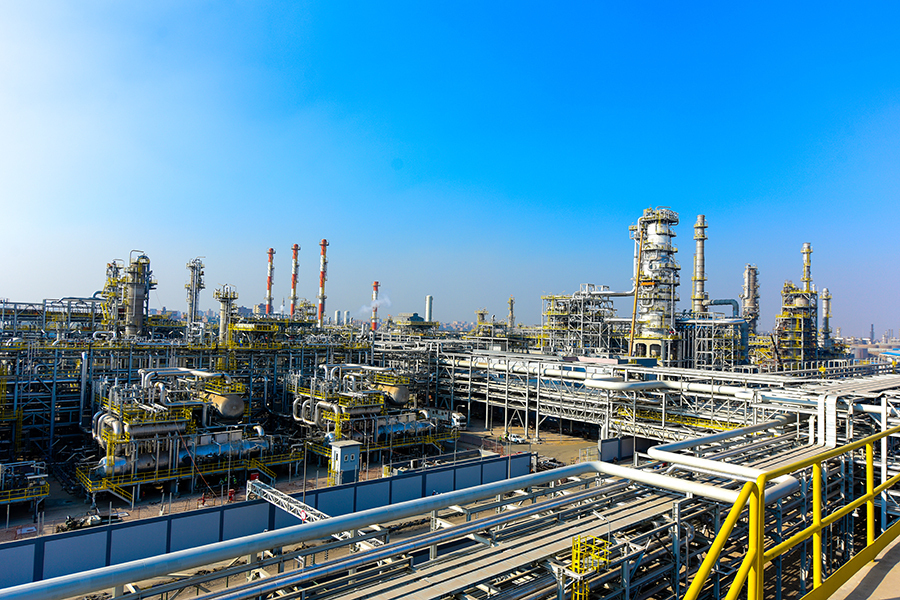
Fertilizer manufacturers are set to soon face higher gas prices as the government seeks to narrow the gap between the buying and selling prices, driven by the increase in global energy prices amid the war, Chemical and Fertilizers Export Council Chairman Khaled Abu Al Makarem tells EnterpriseAM.

Under the plan, natural gas sent to fertilizer producers will be priced based on the international going rate for fertilizers, with a flexible formula to be implemented that will see gas prices fluctuate in relation to export prices, Abu Al Makarem explained. Sharing the expense is intended to strike a balance between production costs and export returns, as Egyptian export prices have risen by around USD 125 per ton to USD 610-625.

Why this matters: For producers of nitrogen-based fertilizers like urea and ammonia in Egypt, natural gas accounts for roughly 70% of production costs, as it's the raw energy source used to power the process and the primary feedstock. The cost of gas — which in Egypt has been pretty competitive on a global scale — is what creates or reduces margins and makes or breaks the competitiveness of output on a global market.

No official decision has yet been received notifying producers of price hikes, but it is expected that the increase will be gradual, according to Abu Al Makarem. While many producers already hold sizable gas reserves to keep production ongoing, these reserves will not eliminate the impact of future price increases.

Cushioning the blow could be permission from the state to increase exports, as it balances between local market needs and the need to secure hard currency revenues, although no official decision has been issued in this regard, Al Makarem added. Local fertilizer producers are finding strong demand in international markets as the closure of the Strait of Hormuz shuts off exports from fertilizer producer heavyweights like Saudi Arabia, Qatar, and the UAE, along with export restrictions by other exporting nations like China.

Local farmers will also feel the impact with the expected gradual price increases, but the state is keen to maintain manageable prices in the local market to make sure domestic food production isn’t significantly impacted.

Markets were quick to react as the story was picked up by several local outlets yesterday. Abu Qir Fertilizers’ share shed 5.2% during the session, Kima lost 2.2%, and Valmore Holding fell 1.8% amid a broad sell-off that only saw two components of the EGX30 finish the day in the green.

This publication is proudly sponsored by

3

M&A WATCH

CCC Egypt secures 99% of facade specialist AluNile

Construction firm CCC Egypt acquired a 99% stake in Nile Aluminum and Metals Co. (AluNile), according to a joint statement (pdf). The transaction marks a strategic push into the building materials value chain as the Egypt unit of CCC International looks to vertically integrate beyond its core contracting business. No financial details were disclosed.

The acquisition brings back industry veteran Ahmed El Guindy as CEO and managing partner — a key condition tied to the transaction. The transaction reflects CCC’s view of AluNile as a high-growth industrial and construction platform with limited qualified competition in its niche, El Guindy — who acquired and led AluNile in 2017 before stepping down briefly from management in mid 2025 — tells EnterpriseAM.

AluNile enters the next phase with strong momentum: Leading facade contractor and glass manufacturer AluNile generated around EGP 1.5 bn in revenues in 2025, supported by a backlog of around EGP 3 bn, El Guindy tells us. The company is negotiating an additional EGP 4 bn in new awards in the Egyptian market, with a target to raise revenues by c. 40% in 2026, he added.

What changes operationally: The move gives CCC direct exposure to aluminum and glass facade systems — a critical input in large-scale construction. AluNile will continue operating as a standalone company, with its existing management team in place and serving a broad client base, including competitors, El Guindy confirmed.

AluNile is looking to expand and move up the value chain: AluNile plans to evolve into a “complete building envelope” provider, offering fully integrated facade solutions that combine glass, aluminum, stone, and other materials within a turnkey execution model, alongside developing sustainability-focused products such as facade-integrated solar solutions. The company will also tap into CCC’s regional footprint to expand beyond Egypt into the Gulf and Africa, El Guindy said.

4

Economy

Another downgrade for Egypt’s growth outlook

S&P Global Ratings now sees our GDP growing at a 4.7% y-o-y clip in the current fiscal year, down 0.1 percentage points from its previous forecast, it said in a report. The move makes S&P the latest body to give its projections a war-time reality check. Fitch Solutions’ research arm BMI has already loweredits growth forecast for the period by 0.3 percentage points to 4.9% y-o-y, while Oxford Economics has trimmed its 2026 forecast by 0.4 percentage points to 4.5% y-o-y, and the EBRD has warned of a similar move to come.

But unlike BMI, S&P sees the coming fiscal year as when the impact of the war on growth will be really felt, with its very moderate downward revision for the current fiscal year followed by a 0.5 percentage point cut to 4.2% y-o-y for the fiscal year 2026-27, representing a 0.4 percentage point slowdown in growth between the period. In contrast, despite BMI’s larger downward revision for the current fiscal year, it reduced its forecast for the following 12-month period by only 0.2 percentage points to 5.2%, representing a 0.3 percentage point acceleration starting in the fiscal year.

Why this matters: The consensus on a V-shaped recovery may be cracking. While others, for now at least, are pricing the war as a front-loaded shock followed by an acceleration, S&P is less optimistic in the longer term. If S&P’s right, the economic impact of the war could leave its mark on Egypt for much longer than markets are currently pricing in.

Despite our physical and political distance from the conflict, “the war in the Middle East has most affected Egypt among the key EM EMEA economies” as 20% of gas flows were cut off with the closure of Israeli exports and the EGP depreciating 8% since January.

S&P’s downward growth revisions were accompanied by upward revisions to its inflation forecasts. The rating agency now expects inflation to average 1.6 percentage points for the current fiscal year at 13.7%. But again, its inflation forecast shows the war really making its mark starting in the next fiscal year, with a 5.6 percentage point increase to its forecast to 15.8%. This suggests that the delayed impact of gas flow disruptions and currency depreciation will keep input costs elevated well into 2026, squeezing margins just as growth slows.

On the currency front, S&P sees the EGP finishing the current fiscal year at EGP 55.00 against the greenback, before slipping again a further EGP 5 to EGP 60.00 by the end of the following 12-month period. Looking further ahead, the rating agency sees the currency slipping a further EGP 3 for each of the two following fiscal years.

By forecasting a steady slide to EGP 60.00 and beyond, S&P is rejecting the idea of a post-war currency stabilization. This implies a more permanent shift in the country's risk premium and a long-term increase in the cost of servicing FX-denominated debt.

5

Tax

Why the solidarity contribution remains stuck in the drawer this tax season

Companies’ solidarity contribution will continue to be calculated on gross revenue at a rate of 0.025% for the current corporate tax season ending 30 April, a government official tells EnterpriseAM. Despite earlier pledges to overhaul the contribution, the decision to maintain the status quo reflects mounting regional geopolitical pressures that have effectively shelved the reform for this cycle.

REMEMBER- The government had been weighing a shift that would set the contribution at 0.5% to 1% of net income, payable alongside the annual corporate income tax return. This would have replaced the current top-line grab, which hits companies regardless of their profitability.

Why this matters: The contribution remains a primary pain point for some in the private sector, because companies have to pay up even if they’re making losses. While the cabinet had approved shifting the basis to 1% of net income in principle, the draft legislation remains “stuck in the drawer,” according to our source.

The delay is largely driven by concerns that it will create a funding gap for the Universal Health Ins. system, which relies on the contribution for roughly 60% of its revenues. With regional tensions already weighing on the state budget, officials are wary of absorbing any funding shortfalls, particularly as the plan for the next fiscal year involves expanding the system to Minya, one of Egypt’s most populous governorates, we were told.

Looking ahead: While the reform is on ice for this season, it remains on the agenda. The finance and investment ministries have identified 561 fees out of a total of 2.4k currently imposed on the private sector as part of a first-phase plan to unify and streamline costs. The goal remains to eventually link these levies — including the solidarity contribution — to net income once regional conditions stabilize and structural reforms resume.

6

Also on our Radar

Damietta targets the Europe to Gulf corridor

Damietta expands Ro-Ro service to route EU cargo to the Gulf

Damietta Port has launched a new service to handle refrigerated and dry cargo arriving from Europe on the Trieste-Damietta Ro-Ro line before forwarding shipments to Gulf markets through Safaga under an indirect transit model, according to a document seen by EnterpriseAM.

What changed? The service comes after transit cargo bound for Gulf countries was exempted from prior ACI registration, easing procedures at a time when regional shipping disruption is pushing cargo owners to look for faster and more predictable routing options. Damietta has already received the first indirect transit units on the Gallipoli Seaways.

Why it matters: This gives Egypt another live corridor to pitch to shippers moving perishables and other time-sensitive cargo between Europe and the Gulf. It also shows how Damietta’s digital systems, customs coordination, and the Damietta-Trieste Ro-Ro link are being used for more than bilateral trade with Europe — they are now being positioned as transit infrastructure for cargo flows trying to bypass friction elsewhere in the region.

More gas cooperation with Cyprus in the pipeline

Could we see more Cypriot gas coming our way? Egypt and Cyprus inked a framework agreement on the first day of the Egypt Energy Show, which a Cypriot spokesperson tells Reuters will set the stage for more agreements “for the exploitation of Cyprus’ reserves.” Another source told the newswire that the agreement allows for discussions over the sale of gas from the Cronos and Aphrodite fields to Egypt.

We should start receiving Cypriot gas by the end of the decade, under an agreement inked last year between the two nations. Cyprus will send gas from its Cronos and Aphrodite fields for us to liquefy and re-export. Gas from Cronos is expected to start flowing by 2028, and gas from Aphrodite will start heading our way by 2030, as we previously reported.

Gas from Aphrodite could come our way sooner than expected after the Oil Ministry and Chevron — one of the field’s developers — inked a host government agreement to expedite the development of the field.

BP to pump some USD 1.5 bn in Egypt in the upcoming fiscal year

Energy giant BP plans to invest USD 1.5 bn on exploration and gas field development projects in Egypt over the next fiscal year, according to a statement from the Oil Ministry. The move “supports the plan to gradually increase domestic output and ease pressures from the rising cost of gas imports,” Oil Minister Karim Badawi said, amid what could become the world’s most severe energy crisis.

7

PLANET FINANCE

Still writing checks

The conflict in the Gulf hasn’t yet killed investment momentum for private equity and venture capital in the Middle East and North Africa. However, if the conflict drags on much longer, it could reshape how and where the region’s PE and VC-backed companies find their way to market — and slow the pace at which earlier-stage companies are raising capital.

The trend on exits was already clear before the drones and F-35s started flying: Portfolio companies backed by private capital — the private equity and venture capital firms that invest in businesses with a view to eventually selling or listing them — were turning more and more frequently to local exchanges for exits rather than making what had been the traditional one-way flight to London or New York.

The numbers speak for themselves: Public-market exit values for PE and VC-backed companies globally hit USD 38.2 bn in 2025, up 21% y-o-y, according to a new report (pdf) by the Global Private Capital Association (GPCA). In the Middle East (excluding North Africa), those exits jumped 179% to USD 626 mn.

Here’s where things stand one month into the conflict:

#1- Investors are still writing checks. There’s no evidence (yet) of significant investor pullback from capital calls — the periodic capital transfers that PE and VC investors commit to sending when a fund they’ve backed needs the money. That suggests portfolio companies that have already raised capital aren’t in immediate danger of being starved of the funding they were promised. It also says something about sentiment — limited partners backing PE and VC firms aren’t tapping the brakes.

#2- Dealmaking by PE and VC firms is slowing. The conflict has brought a “pause or a slower pace in new investments,” GPCA Research Director Jeff Schlapinski tells EnterpriseAM. The war could change where investors write tickets, though: “Everyone will be closely looking at logistics, shipping developments, and energy markets as we progress through the year, but there is no evidence to suggest a pullback so far,” he added.

International investors will likely be the most cautious, regional startup information service Magnitt said in a recent report. Transaction timelines will also lengthen, as will exits, Shorooq founding partner Shane Shin tells us.

#3- Valuations will be under pressure. “The market is becoming more price-sensitive but also increasingly structured,” Shin said, while highlighting that this trend started even before the war. “Investors are asking for clearer milestones, better terms, and in some cases staging capital

more carefully,” he explained. Still, he argues that the “strongest businesses” are not necessarily seeing major valuation compression; rather, in uncertain markets, “capital tends to concentrate around category leaders with strong traction, solid governance, and clear revenue visibility, while others may struggle to sustain prior expectations.”

The most vulnerable companies are those that are capital-intensive, highly dependent on external financing, or have long payback cycles and heavier infrastructure dependencies, he added. Later-stage startups will also be exposed, given the already existing dearth in follow-on investments and late-stage capital, he noted.

#4- The strongest companies are still plotting local listings. Saudi quick-delivery unicorn Ninja is testing IPO waters despite the war, gauging investor appetite for a Tadawul main market listing in late 2026 or early 2027. Ninja is looking at Tadawul, not the NYSE, to open the exit gate for investors: The Saudi exchange has held up better than most regional bourses since the conflict started, with strong oil prices propping up energy heavyweights.

SOUND SMART- Morocco, not Tadawul or DFM, is the breakout story: The Casablanca Stock Exchange (CSE) has emerged as the biggest exit success for private capital in the MENA-Africa space. CSE is now the second-largest exchange in Africa with an aggregate market capitalization exceeding USD 106 bn, and in 2025, it hosted some of the region’s most successful PE-backed IPOs. Fintech outfit CashPlus was 65x oversubscribed, while Morocco’s largest private healthcare provider Akdital reached a EUR 2 bn valuation after listing.

“The CSE is entering a very promising phase supported by a strong and increasingly sophisticated ecosystem — including an active regulator, a growing institutional investor base, research coverage, and the increasing participation of private equity firms,” Albert Alsina, founder of Mediterrania Capital Partners, said in the GPCA report.

Why go local?

The economics are shifting. Western exchanges like the NYSE require massive enterprise value to justify a listing, Schlapinski tells us. The compliance burden alone can be punishing — a lesson the region learned the hard way with Swvl, the Egypt-born mobility startup that listed on Nasdaq via a SPAC at a USD 1.5 bn valuation in 2022 and promptly lost 99% of its value. Four years on, Swvl is still fighting delisting warnings. The Cairo-to-Dubai-to-New York path didn’t deliver.

And listing closer to home attracts a type of investor that already understands what it means to be an emerging-markets player. “The advantage of local listings like Casablanca is that investors there are more likely to understand the business story,” Schlapinski explains. Local investors know the market, the regulatory environment, and the competitive landscape in a way that generalist funds in New York simply don’t. EM specialists, simply put, don’t spook as easily.

Companies in Saudi and the UAE look likely to remain the prime targets for private capital this year. “When we look at the GCC and MENA specifically, the vast majority of targets for private capital are in Saudi Arabia and the UAE. We do see some investments in Oman, but it’s a relatively smaller scale of activity,” Schlapinski said.

What to watch

Markets around the world are focusing more and more on ‘local’ capital. “We see an increased focus on local capital investing at home and an increased focus on local resilience and independent means of production everywhere in the world,” Schlapinski says.

Markets with strong domestic investor bases, like India, are better positioned to maintain transaction momentum even as international capital turns cautious. “A lot of the strong public market activity in India is driven by local investors, not so much international capital, so it should remain relatively strong. In the near term, a cautious approach will prevail until energy markets stabilize again,” he notes.

The implication for MENA: The exchanges and markets that have built deep local investor pools — like Tadawul and Casablanca — are the ones most likely to see PE and VC-backed listings resume first when the war fog clears. The UAE could follow suit, but it will require significant liquidity injections (openly or not) by sovereign funds, we think.

BACKGROUND- The Global Private Capital Association, founded in 2004, is a nonprofit membership organization representing private investors managing portfolios of over USD 2 tn worldwide, with a focus on emerging markets.

EGX30

45,190

-2.6% (YTD: +8.0%)

USD (CBE)

Buy 54.51

Sell 54.65

USD (CIB)

Buy 54.50

Sell 54.60

Interest rates (CBE)

19.00% deposit

20.00% lending

Tadawul

11,167

+0.8% (YTD: +6.5%)

ADX

9,526

-0.7% (YTD: -4.7%)

DFM

5,443

-1.2% (YTD: -10.0%)

S&P 500

6,344

-0.4% (YTD: -7.3%)

FTSE 100

10,128

+1.6% (YTD: +2.0%)

Euro Stoxx 50

5,542

+0.7% (YTD: -4.3%)

Brent crude

USD 109.63

+2.1%

Natural gas (Nymex)

USD 2.89

+0.2%

Gold

USD 4,550

-0.2%

BTC

USD 66,789

+0.8% (YTD: -23.8%)

S&P Egypt Sovereign Bond Index

1,040

+0.1% (YTD: +4.7%)

S&P MENA Bond & Sukuk

148.74

-0.4% (YTD: -2.1%)

VIX (Volatility Index)

30.61

-1.4% (YTD: +102.9%)

THE CLOSING BELL-

The EGX30 fell 2.6% at yesterday’s close on turnover of EGP 6.6 bn (0.5% above the 90-day average). Local investors were the sole net buyers. The index is up 8.0% YTD.

In the green: Orascom Investment Holding (+2.2%) and GB Corp (+0.9%).

In the red: Edita (-5.2%), Abu Qir Fertilizers (-4.8%), and Amoc (-4.1%).

8

Going Green

Egypt’s climate-linked IMF reform track is moving faster than the rest

Egypt appears to be making faster headway on the IMF’s climate-linked reform agenda than on some of the Fund’s broader program priorities, with the latest country report saying “performance under the [Resilience and Sustainability Facility] RSF has been strong,” as Cairo moves ahead with the structural measures tied to the RSF, according to the IMF’s latest country report (pdf). The Fund said the authorities “completed all reform measures due by June 2025,” pointing to “strong implementation capacity, sustained commitment, and effective coordination” as Egypt advances the USD 1.3 bn program, which links disbursements to reforms in energy, climate-risk management, and resource governance.

Egypt has already unlocked the first SDR 200 mn under the RSF after completing the first two reform measures due under the program. Egypt is now looking to push the RSF’s timeline out to 15 December, and re-phase future access to keep it aligned with the revised IMF review schedule. The Fund staff backed the “request for extension and rephasing under the RSF to align the length and availability dates with EFF review schedule,” according to the report.

The remaining SDR 800 mn will be released in stages over the rest of 2026, with the next SDR 100 mn linked to the second review and the bulk of the financing — seven equal tranches totaling SDR 700 mn — set to follow the third review in November and the completion of further reform measures.

Why this matters: The RSF points to a different kind of IMF engagement — one that ties financing to longer-term reforms aimed at climate resilience, energy transition, and the state’s capacity to manage environmental risk. In Egypt’s case, that means the Fund is not just looking for macro stabilization, but for evidence that climate-related reform is being built into the way the government plans, finances, and regulates. That also means the remaining money will depend on whether we can keep the reform drive moving.

Energy reforms are at the heart of the program

Energy reforms sit at the core of Egypt’s RSF agenda, with the IMF explicitly listing “energy and electricity reforms” among the main areas covered by the facility.

The first major step on that front was a 2030 implementation plan for renewable energy. The IMF said the authorities “adopted and published a plan of renewable energy implementation by 2030, detailing the technology type, capacity, location, timeline, and funding source.” That gives the reform drive a much more concrete shape than broad commitments alone, laying out what will be built, where, and on what timetable.

Egypt has also paired that renewables roadmap with a plan to make room for the new capacity on the grid. Alongside the renewable energy strategy, the IMF said the authorities “submitted a budget plan for cabinet approval, outlining the annual investments needed in grid and network enhancement for 2026-2029 to support the renewable energy projects described in the plan.” That points to a parallel focus on electricity infrastructure rather than just generation targets.

The RSF also has its eyes on the banking sector

One clear sign of how the RSF is pushing climate policy into the financial system is the CBE’s June reporting directive. The IMF cited the CBE’s directive issued last year “mandating all banks to monitor and report their exposures to firms that may face material transition risks due to the Carbon Border Adjustment Mechanism (CBAM)” and that the same directive “also included provisions related to the United Kingdom’s CBAM, set to be implemented in 2027.”

The next step is to translate that directive into reporting and supervision. The report said that “by the end of first quarter of 2026, the necessary information about the directive that needs to be conveyed to the banks, including the supervisory implications of the directive, as well as the amended reporting template of CBAM directive, will be uploaded on CBE website to provide banks with the required data under the mentioned directive.” In the meantime, the CBE will also be monitoring banks’ questions on the new rules as it considers possible amendments by the end of 2026.

Water governance is next in line

The RSF reform agenda also stretches into water management. The report says the government remains committed to establishing the National Water Council (NWC), chaired by the prime minister and bringing together the main ministries and agencies involved in water allocation and use. The NWC will “issue a circular by June 2026 clarifying roles and responsibilities for generating, sharing, and publishing water supply and demand data to support allocation decisions.”

From there, the government is expected to “develop and publish the National Water Allocation Framework (NWAF) by August 2026,” setting “transparent prioritization criteria, processes, and rules for licensing, allocation, and monitoring under normal and drought conditions, aligned with international best practices and national needs.” The Fund said this would help close a long-standing institutional gap by putting water allocation under a unified, formally endorsed framework.

Climate risk is being built into state investment planning

Another big part of the RSF agenda is making climate risk a formal part of how the state evaluates investment projects. The IMF said the Planning Ministry “has updated climate-related criteria in the national project selection manual, circulated it to all ministries, and begun applying the new framework to all major FY2025/26 projects above EGP 500 mn.”

The report also highlights work underway to build the state’s climate-risk data infrastructure, including a “unified climate-risk data framework,” technical teams, and an upgraded “investment planning system to integrate climate risk assessments.” It is also “cataloguing new fixed assets, collecting risk data, coordinating with the Ministry of Environment, and preparing a December 2025 progress report outlining identified risks and mitigation measures.”

Some of the remaining pieces will depend on outside technical support. The IMF said that for the reform measures tied to the fiscal risk statement and disaster risk financing, “the authorities will rely on technical assistance from the IMF’s Fiscal Affairs Department,” while “the World Bank’s Environment Team is expected to support the implementation of the Measurement, Reporting, and Verification (MRV) system and the non-compliance framework” for the methane reduction reform measure.

The program will need closer tracking from here

The next phase of the RSF will hinge on whether the government can keep the reform process measurable and verifiable as implementation moves forward. That is likely to put more weight on how the program is tracked across institutions, especially as future disbursements remain tied to delivery rather than headline commitments alone.

The transparency push is also expected to extend to disclosure and reporting, with the government looking to shorten the reporting lag on the CBE’s net international reserves data to improve the timing and availability of information, according to the report. Together, that points to a more tightly monitored phase of the program as Egypt moves from early reform milestones into a longer implementation cycle.

Looking ahead: With the RSF structured around phased disbursements and reform milestones, 2026 will be a test of whether the Madbouly government can sustain implementation momentum in a tougher external environment, marked by geopolitical unrest, higher financing costs, and volatile energy markets.


2026

MARCH

30 March-1 April (Monday-Wednesday): Egypt International Energy Conference and Exhibition (EGYPES).

APRIL

2 April (Thursday): Monetary Policy Committee’s second meeting of 2026.

12 April (Sunday): Coptic Easter.

25 April (Saturday): Sinai Liberation Day.

MAY

1 May (Friday): Labor Day.

21 May (Thursday): Monetary Policy Committee’s third meeting of 2026.

27-29 May (Wednesday-Friday): Eid El Adha (TBC).

JUNE

15 June (Monday): Seventh review of the IMF’s Extended Fund Facility

30 June (Tuesday): National holiday in observance of the June 30 Revolution (TBC).

JULY

9 July (Thursday): Monetary Policy Committee’s fourth meeting of 2026.

23 July (Thursday): National holiday in observance of Revolution Day (TBC).

AUGUST

20 August (Thursday): Monetary Policy Committee’s fifth meeting of 2026.

26 August (Wednesday): National holiday in observance of Prophet Muhammad’s birthday (TBC).

SEPTEMBER

15 September (Tuesday): IMF to hold its eighth review of Egypt’s USD 8 bn EFF arrangement.

24 September (Thursday): Monetary Policy Committee’s sixth meeting of 2026.

27-29 September (Sunday-Tuesday): Global Conference on Population, Health, and Human Development.

OCTOBER

6 October (Tuesday): Armed Forces Day.

29 October (Thursday): Monetary Policy Committee’s seventh meeting of 2026.

DECEMBER

17 December (Thursday): Monetary Policy Committee’s eighth meeting of 2026.

EVENTS WITH NO SET DATE

Early 2026: Passenger operations on the New Administrative Capital-Nasr City monorail scheduled to begin.

1Q 2026: Trial operations for the Ain Sokhna-Sixth of October section of Egypt’s first high-speed rail line scheduled to begin.

May 2026: End of extension for developers on 15% interest rates for land installment payments.

July 2026: British Prime Minister Keir Starmer set to visit Egypt.

2H 2026: Operations at Deli Glass Co’s new USD 70 mn glassware factory kick off.

2027

20 January-7 February: Egypt to host the African Games.

April 2027: Tenth of Ramadan dry port and logistics hub to begin operations.

EVENTS WITH NO SET DATE

2027: Egypt to host EBRD’s annual meetings.

2027: Egypt-EU Summit 2027.

End of 2027: Trial operations at the Dabaa nuclear power plant expected to take place.

September 2028: First unit of the Dabaa nuclear power plant begins operations.

Now Playing
Now Playing
00:00
00:00