Get EnterpriseAM daily

Available in your choice of English or Arabic

Egypt’s flexible exchange rate is first line of defense against global shocks, Aboul Naga tells investors in Dubai

1

What We're Tracking Today

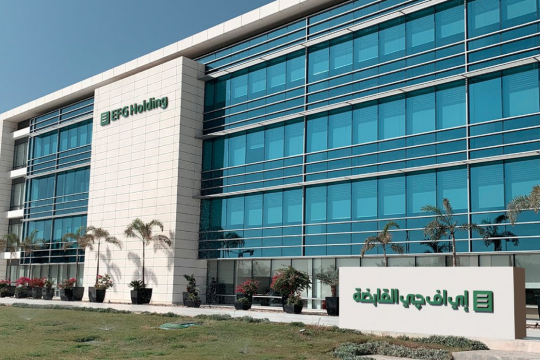
It’s day two of the EFG Hermes One on One in Dubai

Good morning, wonderful people. We have an absolutely packed issue for you this morning in which the big story remains the impact on the EGP of the Trump administration’s tariff war.

The message from the Central Bank of Egypt is clear: The floating FX regime is here to stay and we won’t be burning reserves to defend the EGP. CBE Deputy Governor Ramy Aboul Naga made that clear here in Dubai in on-stage remarks to an audience of hundreds of global fund and portfolio managers at the EFG Hermes One on One.

A floating currency is a “shock absorber” for the economy, Aboul Naga correctly said — one that prevents the buildup of imbalances of the type that eventually lead to crash devaluations.

The overall sentiment here among fund and portfolio managers, analysts, and corporates: What we’re seeing now with the EGP is natural and — yes — healthy. We should be worried when the dynamics *don’t* make sense. Had the EGP not weakened in response to what’s going on, it would have been a sign we were heading back to the “bad old days” before last year’s devaluation.

What should we expect next? Sentiment here at the One on One is that we’re looking at a period of adjustment, after which 10% tariffs (like those Egypt, the UAE, Saudi, and other major Mideast economies now face) are the “new 0%.” Businesses adapt, and we all move on.

How long will that adjustment period last? That’s the wildcard. In a dozen conversations yesterday, the answers ranged from “a couple of weeks, at least” to “up to six months.” Regional and global markets recover from crises (the global financial crisis, Covid-19, the invasion of Ukraine) recover and move on much, much faster than they did a generation ago.

And nobody is talking about “lost IPOs” just yet. There’s optimism that anything postponed from the spring window will be back on deck for execution this fall.

How bad is all of this for Egypt? Probably not at all. Two things factor into that thinking, folks here say:

  • Carry-trade investors who left Egypt the past couple of days will do so with a good taste in their mouths. They made money. And when the current turmoil settles, they’ll remember they got their USD and got out smoothly — a big vote of confidence in Egypt and the CBE.
  • If 10% is the “new zero,” our export competitiveness just got better relative to lots of people, suggesting a medium-term inflow of FDI is even more likely.

Read on for the blow-by-blow on how it’s all shaking out and drop us a note by hitting “reply” to this email if you have questions you want to explore.

PSA-

WEATHER- It’s set to be a hot and dusty day in Cairo today, with a high of 35°C and a low of 17°C, according to our favorite weather app.

The summery weather is yet to reach Alexandria, with a high of 26°C, a low of 15°C, and a chance of light rain.

** DID YOU KNOW that we now cover Saudi Arabia and the UAE?

** Were you forwarded this email? Tap or click here to get your own copy delivered every weekday before 7am Cairo time — without charge.

WATCH THIS SPACE-

Chevron to kick off surveying seabed for Egypt-Cyprus gas link: Energy giant Chevron will start surveying operations for the east Mediterranean seabed the upcoming summer, in preparation for the has pipeline connecting the two countries, according to a statement from the Cypriot government.

REMEMBER- The Oil Ministry kicked off the Egypt Energy Show in February by signing twoagreements with Cyprus to liquify and re-export Cypriot natural gas, following months of talk about an energy corridor connecting the two nations. Egypt will start receiving 400 mn cubic feet per day (mcf/d) from Cyprus’ Cronos gas field starting mid-2027 and another 500 mcf\d of gas from the country’s Aphrodite field by 2030, according to unconfirmed reports last month.

RESERVES WATCH-

Net foreign reserves rose to USD 47.8 bn at the end of March 2025, marking a USD 363 mn increase from February, according to data from the Central Bank of Egypt (CBE). The increase was driven by a jump in gold reserves that helped offset dips in FX reserves and special drawing rights. The country’s net foreign reserves have now increased month on month for the last 31 consecutive months.

DATA POINT-

Egypt's population growth dropped to historic low in 1Q 2025, coming in at 1.3%, down from 1.4% during the same period last year and 1.6% for the quarter in 2023, according to a statement from the Health Ministry. The decline in birth rate continues a downward trend that saw the country record fewer than two mn newborns in 2024 for the first time in 17 years, with the fertility rate falling to 2.41 per woman from 2.54 the year before, while remaining highly above the replacement rate of 2.1 per woman. As of yesterday noon, the country’s population stood at 107.5 mn.

THE BIG STORY ABROAD-

Tariffs — and the global market turmoil they have sparked — are still the dominant theme across global business pages, though we also have news of impending US-Iran nuclear talks getting attention.

Markets continued to reel yesterday from the uncertainty around tariffs, with the S&P 500 entering the bear market briefly as it fell 20% from its peak — though stocks later saw a seven-minute rally as rumors on social media of a potential 90-day pause on tariffs circulated. The story is everywhere in the global business press. (CNBC | Reuters | WSJ)

Trump threatened an additional 50% tariff on China after the country slapped a 34% retaliatory tariff on American imports, vowing to hike tariffs if they don’t backtrack on their countertariff by tomorrow midnight. The additional levy would bring total tariffs on Chinese imports to 120%. He also confirmed there would be no pause on tariffs, but said he would be open to negotiations with some countries. (FT | Bloomberg | Reuters)

AND- The European Commission is also considering a retaliatory tariff of 25% on a range of US goods.

*** It’s Going Green day — your weekly briefing of all things green in Egypt: Enterprise’s green economy vertical focuses each Tuesday on the business of renewable energy and sustainable practices in Egypt, everything from solar and wind energy through to water, waste management, sustainable building practices and how you can make your business greener, whatever the sector.

In today’s issue: We check in on the NWFE initiative to take a look at what the state has accomplished under the initiative and what it sets out to accomplish in the medium term.

Somabay; every reason to fall in love.

2

THE MACRO PICTURE

A flexible FX regime is key as Egypt faces Trump turmoil, Aboul Naga tells investors in Dubai

Egypt will continue to rely on a flexible exchange rate regime as a first line of defense against global shocks, central bank Deputy Governor Ramy Aboul Naga told global investors gathered in Dubai for the EFG Hermes One on One.

The FX market is now acting as a "shock absorber" for the economy, Aboul Naga said, helping prevent the build-up of structural imbalances and insulating Egypt from volatility in global trade and capital flows. Aboul Naga made the remarks in a wide-ranging conversation on monetary policy and the Madbouly government’s ongoing reform process.

More than 675 institutional investors and fund managers are at the EFG Hermes gathering as US President Donald Trump sets out to reshape the global economic order. Some 252 global institutions will meet through Thursday with top execs from more than 220 companies hailing from a dozen countries.

No guidance on interest rate decision next week: Aboul Naga signaled that the central bank will cut interest rates when it’s convinced inflation won’t pick up again. While the Central Bank of Egypt (CBE) is committed to its 7% (±2 percentage points) inflation target for 4Q 2026, the Trump turmoil adds uncertainty to the background when the bank’s monetary policy committee meets a week from Thursday to discuss rates. The bank has no interest in “choppy” policy shifts if it moves to cut too early.

KEY TAKEAWAYS-

  • Egypt's flexible exchange rate now serves as a built-in shock absorber — the EGP’s dip against the greenback this week is healthy and a sign the central bank is not defending the currency;
  • FX policy is no longer a crisis-management tool. A flexible rate will allow us to avoid building up imbalances like those that have plagued the system for the past decade;
  • If global uncertainty is here to stay for a while, the best way for Egypt to deal with exogenous shocks is to stay the course on economic reforms, the FX regime, and monetary policy;
  • Interest rate cuts are on the table provided the CBE is convinced of sustained disinflation and a stable macro backdrop;
  • Egypt's reform program has largely been institutionalized to protect against short-term policy shifts;
  • The UAE’s blockbuster Ras El Hekma transaction has reset how the government looks at FDI to help monetize and add value to investments;
  • NFAs and reserves are strong: Net foreign assets have swung from a USD 29 bn deficit a year ago to a USD 10 bn surplus; reserves are up to USD 47.8 bn;
  • Diversification is the name of the game: Egypt is seeking deeper integration with a broader range of trading partners beyond the US.

SOUND SMART- News follows the EFG Hermes One on One. Last year’s gathering coincided with the CBE devaluing the EGP and moving to a floating currency regime.

Select highlights from Aboul Naga’s on-stage remarks (lightly edited for clarity):

There’s a “new world order” taking shape that will definitely have wide-ranging implications, and it’s natural that this is accompanied by nervousness and uncertainty. The only way forward is to be well-prepared and well-buffered with the right policies. You have no control over when an external crisis hits, so the key is to be in a position in which you’re well-prepared when they hit. Egypt is at the center of a combustible region. We’ve learned that we need to adopt policies that give us shock absorbers so we can minimize the damage created by exogenous events.

What’s happening now may be best likened to when the pandemic broke: Something that none of us have seen in recent history. That’s why our focus is on maintaining policies that ensure we remain seen as investable and that we avoid a cacophony of policy changes that wouldn’t be well-received by the market. It’s about pressing forward with the right policies.

We’ve embarked on a reform program with a lot of conviction and believe firmly that the only way to immunize ourselves against what’s happening is to stay the course. Yes, there are risks to global growth. There is the risk of more inflation — globally. And Egypt is not immune. And, of course, a slowdown or changes in global trade patterns could have an impact on revenues at the Suez Canal.

Investor appetite may also be impacted, but I think the fact that Egypt has been in a reform mode for quite some time — and the fact that our economic performance has been improving — is key. Staying the course with our package of economic reforms is key to keeping ourselves on the radar with investors, whether they’re FDI or portfolio investors.

Our FX policy is not managed. Some countries may react to tariffs by devaluing, but we don’t wake up each morning and say, “You know, we’ll use FX as a tool.” We have a flexible policy that has become deeply entrenched in the economy. Simply put: The economy has been positioned in a way to allow the FX market to serve as a shock absorber.

We had some capital outflows overnight (Sunday night into Monday), and it was unsurprising given the global uncertainty that continues to linger. But our economy is now in a position that allows it to adjust on a real-time basis.

We saw how the market sold off yesterday, and the FX market’s reaction allows us to avoid the accumulation of the structural imbalances that we’ve previously suffered from. That kind of flexibility in the FX market is key, and what we’re seeing now is very healthy and very sustainable. It’s about not taking one-off hits going forward.

The market is adjusting and responding to real-time dynamics with no involvement from the central bank — we see no merit in doing that. I don’t make trade policy, but I don’t think retaliatory tariffs would be on the table. It’s important to keep things in perspective. Our trade with the US is about 7% of Egypt’s total trade by volume — our exports there are about 5.5% of total exports, and US imports to Egypt are about 11% of imports.

Strategically, it is important to maintain open channels with your major trading partners, and the US is clearly one of them. But it’s also important to remember that policymakers like diversification. From a macro point of view, we need to press for more integration with a wider variety of economic blocks. Our geographical location supports our ability to do that and there’s vested interest in other regional players and among global players in being involved with Egypt.

The central bank and cabinet have been focused on institutionalizing reform policies and ringfencing them from change so they’re not subject to transient changes in view. We’ve been put to the test more than once in the last year, and the market has been watching. We’ve proven that we’re staying the course. Again, the key here has been to allow the currency to act as a shock absorber rather than as something that amplifies the impact of events that are unfolding around us. Had we not pursued these kinds of policies and built these buffers to minimize the impact of shocks, we wouldn’t be speaking with this much confidence about the sustainability of our policies.

We looked at vulnerabilities in net foreign assets, in external debt, and at policy sustainability and then set out to address that. We’ve seen a complete turnaround in the NFA position over the past year. It has gone from negative USD 29 bn to a surplus of USD 10 bn. At the same time, we have seen reserves grow to more than USD 47 bn from USD 35 bn a year ago. Our nominal external debt stock has declined to a bit over USD 155 bn from USD 168 bn.

On the issue of asset monetization, Egypt has proven over the past decade that it is comfortable going to debt capital markets to address its financing needs, but the truth is that we can do a lot more, especially when it comes to FDI, where the numbers fall far short of what it could potentially be.

There has been a paradigm shift in how we think about this. Stakeholders at all levels have the conviction that FDI can unlock a lot of potential — it’s not only about money that’s going to come in. It’s about bringing in the private sector, it’s about improving governance, it’s about improving the marginal utility of assets and adding value in the process.

In that respect, Ras El Hekma was a landmark transaction, paving the way for others across a variety of sectors. The significance of that transaction was, yes, obviously it was quite sizeable, but more importantly it is the amount of attention the transaction got at different government and stakeholder levels. It sets a precedent that we can unlock a lot of potential in assets across sectors that can be brought to the surface and realized in a way that is not debt-accumulating. This will allow us to push forward with an aggressive reform program without accumulating new debt.

What we're seeing today is a new chapter in Egypt's history where FDI is taking a complete turn — the government is creating an investor-friendly environment that is attractive to both domestic and cross-border investors who want access to the type of significant potential that Egypt has.

Egypt will continue to be a player in global debt markets, sure. But we’re going to see a blend of FDI and debt being raised through a variety of vehicles, and I think concessional loans and concessional financing from our development partners will always be an important part of the mix.

Is Egypt still looking to raise USD 2 bn from the asset monetization program? We’ve reconfigured the program. Obviously, the circumstances in which we discussed it with the IMF two years ago were in a completely different environment and world than we see today. But there’s a two-way belief that we can achieve all of our targets, including our FDI target. We have a fifth review coming up, and the IMF has been very understanding that we’re navigating through unique global circumstances.

Short-term appetite on the part of investors will obviously be a factor and is impacted by global sentiment. Egypt will present itself as a very tangible investment environment for investors.

Look at what's happening at a structural reform level with, for example, the government’s emphasis on tax policies. It’s a determination to change not just perception, but to deliver a new experience. To widen the tax base, yes, but to make it easier to do business. And, of course, we want to level the playing field and see more private sector integration in the economy.

Will there be Saudi, Kuwaiti, or Qatari conversion of deposits to back investments? I don't have any information that I can share about potential transactions or transactions in the pipeline, but I think what matters is that the government is quite keen and that we have an Investment Ministry that is taking strides to enhance the overall investment environment. The message everyone has taken from Ras El Hekma is that we should pursue additional investment in local assets not just for the monetary value, but to unlock better governance and practice for those assets across a range of sectors. The modality and mix of those are yet to be seen.

Inflation is at the heart of everything we do as a central bank where our mandate is price sensitivity. The message is clear that we will do what needs to be done to bring down inflation that had previously soared to unprecedented levels. We’ve used both conventional and unorthodox policies to curb inflation, and we’ve started to see that bear fruit — February inflation figures surprised pleasantly to the downside, and we see inflation continuing to trend generally lower.

Our target of 7% (±200 bps) continues to be our target for the last quarter of 2026. But when we consider inflation dynamics, we do so on an ex-ante, not ex-post basis. We want to make sure that we have enough of a buffer to ensure that we continue to see disinflation on a forward-looking basis.

The policy rate needs to bring inflation down over the medium term. Nothing is keeping us from doing that except seeing more and more data points and numbers that would perhaps suggest we need to reverse that stance. There are more uncertainties now that are going to factor in the next meeting, which will take place in a couple of weeks. At the end of the day, it is a decision that is made collectively by both independent members and members from the central bank.

The important thing is that to make a decision to start unwinding, we need to have the conviction that whatever position we take can be sustained and won’t be reversed or put on hold as a result of recent events. We aim to see a measured pace of unwinding rather than choppy interactions that could confuse the market. We will be very vigilant on this as we navigate this new world order.

This publication is proudly sponsored by

3

EGP Watch

EGP slips further against the greenback as foreign investors continue to exit amid tariff uncertainty

The EGP continued to weaken against the USD in trading yesterday, slipping to fresh lows and ending the day at a selling price of around EGP 51.44-51.47 at public and private banks, marking the second consecutive day of an exodus of foreign investors from the local debt market. Interbank market transactions since trading began on Sunday are estimated to have reached a total of USD 1.5 bn, a banking source told EnterpriseAM.

Some analysts think the EGP could slide further, including Abu Dhabi Commercial Bank Chief Economist Monica Malik, who told Bloomberg that the national currency could end up trading at EGP 54 against the greenback.

REFRESHER- The EGP fell just over 1% against the greenback on Sunday, with the drop coming amid global uncertainty after US President Donald Trump’s tariffs came into effect over the weekend, which sent shockwaves across global markets. The day saw a significant exit of foreign investors from our local treasury market — an exit that came in tandem with the Madbouly government deploying more of its hard currency than usual to take advantage of the sharp decline in global commodity prices.

The estimated outflows over these past few days are over USD 1 bn, which included a number of foreign portfolio investors taking a step back from the country’s carry trade, Goldman Sachs and EFG Hermes economists told the business news information service. “The global risk-off triggered by Trump’s tariffs have led to a ‘flight to safety,’ with investors trimming their exposure to all risk assets, Egypt included,” said Goldman’s MENA economist Farouk Soussa. “Egypt is a relatively weak credit with large external-financing needs, and so is seen as vulnerable to a selloff,” he added.

But don’t panic, “we are still within safe limits, and once the wave of volatility calms, hot money will return to the Egyptian market,” our source told us, emphasizing that the scale of the outflows is not overly concerning. Meanwhile, demand for foreign currency may be lower than it was on Sunday due to a decline in executed transactions, our source suggested. Furthermore, Egypt is “relatively insulated from the direct impact of tariffs,” according to Soussa, who noted that exports are not a major driver of the country’s growth. “With an undervalued currency and IMF backing, Egypt is well-positioned to benefit from a redeployment of risk when that comes,” he added.

The current situation is being driven by a state of uncertainty in global markets at large, the source said, adding that they attribute the continued weakening of the EGP against the greenback to the flexibility of the exchange rate, with demand pressure mounting on the interbank market. “It is difficult to judge exchange rate developments at the moment, given the challenge of predicting how global markets will respond to the turbulence,” our source told us.

4

Capital markets

This is what global investors expect in 2025 as Trump's trade turmoil spreads

EFG Hermes Research’s annual One-on-One live poll — the largest we know of in frontier and emerging markets — could not have come at a more critical juncture this year. The poll this time around was accompanied by plenty of chatter — and audible gasps at most of the results — as attendees of the largest investor conference focused on emerging markets attempted to look through the crystal ball and make sense of the events of the past week and how they will impact key indicators of investor sentiment and economic growth. Over 400 attendees had ten seconds to respond to each of ten questions.

The topic on everyone’s minds — the US’ trade war — was clearly causing anxiety, with most of the attendees (58%) expecting the trade war to escalate further from here, while 42% expect no further escalation.

The impact of the trade war is already trickling down to oil prices, prompting nearly half (48%) of respondents to project an average price of USD 70 per bbl for oil this year. Some 38% were even more pessimistic, forecasting a price of USD 60 / bbl or less. Oil prices have taken a hit over the past week since the tariffs were announced, with Brent crude reaching a low of USD 63 at one point.

Gold prices, on the other hand, are expected to rise — 79% of attendees expect it to end the year higher, as investors rush to haven assets amid rising uncertainty.

The majority of respondents also expect the S&P 500 to have a correction year — understandable given the sell-off that has taken place since the announcement of the tariffs, wiping tns of USDs in stock value and bringing it dangerously close to bear market territory. The S&P 500 ended yesterday down 0.2%, and 17.6% below its February peak.

The one thing that hasn’t changed much since the tariffs — expectations of the US Federal Reserve’s interest rate cuts this year. The majority of respondents — 46% — still see two cuts of 25 bps taking place this year, in line with what most Fed policymakers had penciled in earlier.

Zooming in on the Middle East, most (39%) of the attendees still see the Saudi stock market delivering the best performance in USD terms — same as last year — while 22% chose Dubai. Egypt was third, with 18% of respondents optimistic about the stock exchange’s USD performance.

Geopolitics was identified as the biggest risk for MENA markets, with 55% of respondents choosing it over oil prices and reform fatigue. Oil prices came in at a close second, with 41% of respondents seeing it as a risky factor.

OTHER KEY TAKEAWAYS:

  • 28% of respondents see banks and financials performing the best among other sectors in the region;
  • The UAE and Saudi Arabia were very close in terms of expectations of strong future returns in the property market, with the former getting 41% of votes and the latter getting 39%;
  • Some 40% see Dubai real estate prices ending the year higher.

Tap or click here (pdf) to see the full results.

5

Diplomacy

Egypt, France elevate ties to a strategic partnership

Egypt and France inked a strategic partnership agreement that will focus on areas including railway industry localization, technical and vocational training, AI, cybersecurity, and green hydrogen, President Abdel Fattah El Sisi said in a joint press conference with French President Emmanuel Macron (watch, runtime; 23:46). The announcement followed a meeting between El Sisi and Emmanuel Macron, who is in town for a three-day official visit that will wrap today after Macron visits wounded Gazans in a hospital and warehouses stocking aid for Gaza, according to Reuters.

France is also putting its money where its mouth is, as Macron stating that the French Development Agency will ink EUR 260 mn worth of loans and grants for Egypt to support projects in transport, health, water, and energy. Macron emphasised France’s commitment to ensure Egypt’s stability, especially in light of ongoing regional instability.

The two sides inked a long list of MoUs, including an MoU to establish 100 French schools, an MoU to establish and develop the Gustave Roussy center for cancer treatment in Cairo, and an MoU to continue cooperating on Cairo Metro Line 6 — for which an action plan was signed last December. They also signed a joint declaration to move forward with four investment projects, and cooperation agreements between both countries’ health and higher education ministries.

As for the private sector, local and French private players signed 12 agreements during the Egypt-France Business Forum attended by EnterpriseAM, covering healthcare, transport, water, and renewables.

Gaza also placed high on the agenda, with both leaders emphasizing their support for an immediate ceasefire in Gaza and moving forward with reconstruction without displacing the Palestinian people. They also discussed Syria and Lebanon, emphasizing the importance of preserving Syria’s unity and ending the Israeli occupation of Syrian territories, while voicing support for Lebanon’s new president and government.

The two were also joined by Jordan’s King Abdullah for a tripartite summit on Israel’s bombardment of the enclave, which also touched on Israel’s aggression in the West Bank and East Jerusalem, according to an Ittihadeya statement. The three affirmed their support for Egypt’s reconstruction plan already adopted by the Arab Summit and Organization of Islamic Cooperation and for the plan to be advanced at the upcoming June conference co-chaired by France and Saudi Arabia and another to take place soon in Cairo.

Trump also made an appearance via telephone, joining the three leaders for a conversation on the sidelines of the summit, according to a separate Ittihadeya statement. Few details emerged from the call, except that Trump agreed to keep in close contact with the three leaders after they made their case for a ceasefire and full resumption of aid into Gaza.

News of Macron’s visit and the Gaza-focussed summit lit up television screens across the county last night, with almost all of the country’s talking heads giving their two cents on what the visit means for efforts to end the war in Gaza and Egypt’s relationship with France. Kelma Akhira’s Lamees El Hadidi had coverage (watch, runtime: 2:56, 6:52, 1:09:30), as did Al Hayah Al Youm’s Lobna Assal (watch, runtime: 1:15, 1:39) and Ala Masouleety’s Ahmed Moussa (watch, runtime: 6:24).

Macron’s visit and the call Trump also caught the attention of the international press: Reuters | Reuters.

6

Moves

Passant Fouad takes the reins as chief marketing and PR officer at Egypt Kuwait Holding

Egypt Kuwait Holding (EKH) has tapped Passant Fouad (LinkedIn) as its new chief marketing and public relations officer, she announced on LinkedIn. Fouad most recently served as director of external communications at Juhayna Food Industries, where she spent nearly a decade leading PR, CSR, media strategy, and stakeholder engagement. She previously held senior marketing and communications roles at JWT, Nokia, Motorola, and MediaCom, and brings over two decades of experience in building brands and shaping corporate narratives.

What she said: “After more than two decades of building stories, strategies, and brands that reflect purpose and progress — I’m thrilled to share my next professional leap,” Fouad wrote. “EKH is undergoing a major transformation…and I can already tell — we’re going to bring out the best in each other.”

7

LAST NIGHT’S TALK SHOWS

Mahmoud Mohieldin gave his two cents on the emerging new global economic order

“We are in a global trade war,” former Investment Minister and IMF Executive Director Mahmoud Mohieldin told Lamees El Hadidi on Kelma Akhira (watch, runtime: 5:13). “The system started eroding in 2008, but by 2025, we can say it’s gone,” Mohieldin said in reference to what he described as the collapse of the post-Second World War economic order.

The road ahead is far from clear as “we are awaiting a new global order whose contours have yet to take shape — and we don’t yet know which powers will hold the greatest sway, whether in size or influence,” Mohieldin said. New global economic realities could lead to growing joblessness, slowing growth, rising debt, and declining opportunity — particularly in developing countries in Egypt — Mohieldin warned.

But it’s not all doom and gloom, according to Mohieldin, who argued that the shifting landscape opens “major, meaningful” opportunities for Egyptian exports — whether to the US, the EU, or regionally. But to capitalize, Egypt must boost export competitiveness and draw in investment (watch, runtime: 2:04).

With Egypt’s IMF program set to wrap in November 2025, the country’s economic approach ahead could look pretty different. Mohieldin explained that he expects the government to put forward a more “ambitious and flexible” fiscal and spending strategy following the end of the program (watch, runtime: 4:10).

8

Also on our Radar

Thailand’s Hi-Tech Apparel breaks ground USD 20 mn sportswear factory

MANUFACTURING-

Thailand’s Hi-Tech Apparel began construction on its USD 20 mn sportswear factory in the Qantara West Industrial Zone, according to a statement. The factory will have an annual production capacity of 6 mn garments, which will be exported to markets including those in the Americas and Europe. It is expected to kick off production early next year.

The 64k sqm factory marks the company’s first project in the Middle East and Africa and adds to its portfolio of plans in Thailand, Vietnam, Cambodia, and Laos. The company produces over 60 mn garments every year and manufactures sportswear for companies including US legacy brand Nike.

ENERGY-

French electrical equipment manufacturer Schneider Electric will invest EGP 5 bn to set up four energy control centers under a recently-inked agreement with the Electricity Ministry, a government source told EnterpriseAM. The ministry will finance the centers, one of which will be located in southern Egypt and another in northern Egypt, while the locations of the remaining two were not disclosed. Construction is expected to kick off mid-2025, with operations set to start by the end of 2026.

9

PLANET FINANCE

Banks brace for recession, expect earlier Fed cuts as tariffs continue to shock markets

Goldman Sachs raised the probability of recession in the US economy to 45%, up from the 35% it penciled in just last week, Reuters reports. The second adjustment came after the sharper-than-expected tariffs implemented by US President Donald Trump triggered a major sell-off in global markets.

The outlook is turning bearish across the board: Other major investment banks have also revised their recession forecasts in the wake of the tariff-induced market turmoil, the newswire reported separately. JPMorgan now sees a 60% chance of a US recession by year-end. HSBC isn’t far behind, putting the odds at 40%, while S&P Global pegs the probability at 30-35%.

Federal Reserve Chair Jerome Powell had added to the panic earlier, labeling Trump’s tariffs as “larger than expected” and warning it could put the brakes on growth. He also flagged a “highly uncertain outlook,” noting the risk of both higher unemployment and price pressures.

Rate cuts to come sooner? Goldman now expects the Fed’s three interest rate cuts — by 25 basis points each — to start in June, revised from July. JPMorgan seconds the notion, while expecting the benchmark rate to fall to 3% by January of the next year.

Traders went all in on rate cuts in yesterday’s session, expecting the Fed to cut rates by an average of 116 basis points this year over four of the five remaining meetings, Reuters reported, citing data compiled by LSEG. The wager on “emergency” meetings — where rates are going to be cut further — remains far-fetched for now, with the unusual measures last used during the pandemic. Still, it remains to be seen how far the impact of the trade war on inflation will be, as stagflation is currently the best-case scenario for the US economy, Bill Dudley, former New York Fed president, told Bloomberg.

MARKETS THIS MORNING-

Asian markets are opening higher today, recouping some of yesterday’s steep losses. Japan’s Nikkei is up 6.2%, while Hong Kong’s Hang Seng is inching up 2.2%, and Korea’s Kospi is up 1.6%. Wall Street futures also indicate a slight recovery on market open.

EGX30

30,454

-0.6% (YTD: +2.4%)

USD (CBE)

Buy 51.33

Sell 51.47

USD (CIB)

Buy 51.34

Sell 51.44

Interest rates (CBE)

27.25% deposit

28.25% lending

Tadawul

11,194

+1.1% (YTD: -7.0%)

ADX

8949

-2.6% (YTD: -5.0%)

DFM

4799

-3.1% (YTD: -7.0%)

S&P 500

5062

-0.2% (YTD: -13.9%)

FTSE 100

7702

-4.4% (YTD: -5.8%)

Euro Stoxx 50

4656

-4.6% (YTD: -4.9%)

Brent crude

USD 64.21

-2.1%

Natural gas (Nymex)

USD 3.64

-0.3%

Gold

USD 2973.60

-2.0%

BTC

USD 79,239.70

+1.5% (YTD: -15.1%)

THE CLOSING BELL-

The EGX30 fell 0.6% at yesterday’s close on turnover of EGP 3.7 bn (6.4% above the 90-day average). Local investors were the sole net buyers. The index is up 2.4% YTD.

In the green: Alexandria Containers and Cargo Handling (+4.5%), Rameda (+3.6%), and Ibnsina Pharma (+2.3%).

In the red: Juhayna (-3.8%), TMG Holding (-3.2%) and Fawry (-2.9%).

CORPORATE ACTIONS-

Edita Food Industries will distribute a dividend of EGP 1.14 per share for its 2024 earnings, after its general assembly approved the move, according to a disclosure to the EGX (pdf).

10

Going Green

Checking in on Egypt's NWFE initiative

Pulse check on the NWFE initiative: The Planning and International Cooperation Ministry released its second progress report (pdf) on the government’s Nexus for Food, Water, and Energy initiative (NWFE), giving us a look at what the initiative has so far achieved and what it plans to achieve in the short and long term.

REFRESHER- The NWFE program — launched in 2022 — is the government’s flagship initiative aiming to raise blended finance for nine climate adaptation and renewables projects. The program aims to reduce Egypt’s emissions levels, improve air quality, and ensure access to reliable and clean energy sources, all in line with the country’s nationally determined contributions (NDCs).

The initiative has received a lot of backing from the international community, with lead partners including the European Bank for Reconstruction and Development (EBRD), the International Fund for Agricultural Development (IFAD), the African Development Bank (AfDB), and the European Investment Bank (EIB). It is also backed by the EU, the United Nations, the International Finance Corporation, and HSBC, to name a few.

Part of a wider plan: The initiative aims to feed into the country’s National Climate Change

Strategy for 2050, which was unveiled a couple of months before NWFE in August of 2022. EnterpriseAM spoke to Amr Abdel Aziz, chairman of the environmental consulting firm that helped craft the strategy, to learn more about it. Check out the full interview here.

So, what has the energy pillar achieved so far? Since the initiative’s launch, seven renewables projects have secured financial closure, with a combined investment cost of USD 4 bn. In addition, the Egyptian Electricity Transmission Company (EETC) inked long-term power purchase agreements for renewable energy with a long list of private players — including Acwa Power, Masdar, and Scatec — for a combined 4.2 GW capacity. The renewables projects have a combined investment cost of USD 3.9 bn.

And more to come: Several solar and wind energy projects with a combined capacity of 3.4 GW are expected to reach financial close this year — including Scatec’s 1.1 GW solar plant in Naga Hammadi, which will power EgyptAlum’s complex, AMEA’s Amunet wind project, and the first phase of Scatec’s USD 5.7 bn 5 GW wind farm in West Sohag.

Other efforts in the energy pillar worth noting: The state has decommissioned 1.2 GW of thermal stations that run on traditional energy sources since the initiative kicked off — the plan is to decommission stations producing a total of 5 GW.

We can’t talk about going green without mentioning green hydrogen: The report highlights efforts made in green hydrogen production, explaining that while efforts are yet to yield tangible results, “the country has seen notable improvements in international rankings, particularly among Arab and African nations.”

ICYMI- Egypt ranked 22nd on the Climate Change Performance Index (CCPI) in 2024, scoring 61.8 points and an overall “medium” rating, surpassed in the Mena region only by Morocco.

REMEMBER- The government in August launched the National Low-Carbon HydrogenStrategy, which targets 5-8% of the global hydrogen market by 2040. The strategy outlines two scenarios — a “central” scenario which sees the country producing 1.5 mn tons per annum of green hydrogen by 2030, with 1.4 mn tons pegged for export, and a more ambitious “green” scenario that sees the country producing 3.2 mn metric tons of green hydrogen annually by 2030, with 2.8 mn metric tons earmarked for export.

What’s next for the pillar? “Work will continue with development partners, building on the progress made over the past two years. The focus will be on leveraging innovative financing mechanisms, including debt swaps, utilizing available grants, and increasing private sector participation,” the report reads.

As for the food pillar, it includes projects such as the World Bank-backed climate-resilient agri-food transformation, which focuses on developing modern irrigation systems in the Delta and setting up an early warning system across the country. It also includes adaptation of the Northern Delta affected by sea level rise, which is being carried out alongside the EU and the EIB. The EU provided us with a EUR 125k grant, and the EIB allocated another EUR 300k for consultancy services for the project.

What about the water pillar? Egypt secured over EUR 500k from the AfDB’s African Water Facility, which will “fund the preparation of essential upstream technical studies for the development of five renewable energy-powered water desalination plants.” The plants will be built through public-private partnerships and aim to increase water supply by 525k cubic meters per day across Port Said, Alexandria, Matrouh, and the Red Sea.

Then there’s sustainable transport, under which a handful of projects fall, including the extensions of Cairo Metro 1, the Abu Qir Railway Line, and the construction of a couple of other railway lines. The EIB, EBRD, and French Development Agency (AFD) committed a combined EUR 3.5 bn in concessional loans to support the sustainable transport sector. “The EIB has played a central role not only in providing funding, but also in coordinating with other international partners to provide technical assistance grants. These grants are intended to fund the necessary studies for the implementation of sustainable transport projects,” the report reads.

Going electric: The Transport Ministry is prioritizing environmentally friendly public transport by introducing electric buses and trains, as well as green metro systems to reduce carbon emissions.

Looking ahead: The government plans to focus this year on completing the needed studies for upcoming sustainable transport projects. “This includes identifying additional funding sources to secure more grants for the preparation of technical, environmental, and social studies, which are necessary for the smooth execution of these projects.”

Expanding NWFE: Egypt is working with the African Development Bank to roll out a regional initiative “that seeks to leverage what has been achieved in the framework of the Country Platform for the NWFE program.” The first phase will see the initiative expand into Kenya, Senegal, and Zambia, with plans to eventually cover the entire continent.


APRIL

6-8 April (Monday-Tuesday): French President Emmanuel Macron's visit to Egypt.

7-9 April (Monday-Wednesday): Narrative PR Summit, Somabay

7-10 April (Monday-Thursday): EFG Hermes One on One conference, Dubai, UAE.

10 April (Thursday): Capmas expected to release inflation data for March.

17 April (Thursday): Monetary Policy Committee’s second meeting.

27 April (Sunday): Deadline for applications to MINT Incubator's 3-month equity-free startup program with Alex Angels.

28-30 April (Monday-Wednesday): FDC Regional Digital Industry Summit will launch cybersecurity index.

30 April (Wednesday): Deadline for Australia Awards Scholarships applications.

Mid-April: Egyptian trade delegation to promote investments during an official visit to Canada

Business-to-business forum of Egyptian and Moroccan companies to promote bilateral trade, Cairo, Egypt.

The Suez Canal Container Terminal will begin trial operations for its expanded East Port Said facilities.

Government begins talks with EU on the second tranche of the of the EUR 5 bn concessional loans package

Saxony Delegation visit to Egypt.

Arla Foods’ deadline for Domty acquisition offer.

Egypt to launch trial operations of the first phase of its USD 1.8 bn Egypt-Saudi electricity interconnection project, ahead of schedule

Tahya Misr 1 container terminal to begin operations, adding 3.5 mn container capacity to the port.

MAY

7-10 May (Tuesday-Saturday): Egypt hosts the 24th Pan Arab Junior and Ladies Golf Championship.

10 May (Saturday): Capmas expected to publish inflation data for April.

1 May-10 July (Thursday-Tuesday): 500 Global's Scale Up Program, Cairo

18-20 May (Sunday-Tuesday): First Arab International Exhibition for Sustainable Development.

22 May (Thursday): Monetary Policy Committee’s third meeting.

Egyptian Exporters Association (Expolink) exhibition, Italy

Egyptian-Russian Business Forum

May 2025: Egypt-Singapore Business Forum, Cairo.

JUNE

10 June (Tuesday): Capmas expected to publish inflation data for May.

MPs approveextension of tax dispute resolution window until 30 June 2025, with potential for further extension

Coficab to complete its USD 88 mn automotive cable and electrical factory in Tenth of Ramadan City

Realme to open smartphone factory

JULY

10 July 2025 (Thursday): Monetary Policy Committee’s fourth meeting.

15-16 July 2025 (Tuesday-Wednesday): Egypt Mining Forum.

July 2025: The first operational trail of Egypt-KSA electricity interconnection line.

Etihad Airways to launch twice-weekly flights to Alamein

AUGUST

28 August 2025 (Thursday): Monetary Policy Committee’s fifth meeting.

Tourism Development Authority to waive late payment penalties for land purchases if full installments are paid

SEPTEMBER

Egypt Education Platform (EEP) to launch two new schools in Alexandria and Somabay

Egypt Otsuka’s nutritional products factory in Tenth of Ramadan to begin operations, with exports to Gulf countries expected by January 2026

OCTOBER

2 October 2025 (Thursday): Monetary Policy Committee’s sixth meeting.

NOVEMBER

20 November 2025 (Thursday): Monetary Policy Committee’s seventh meeting.

DECEMBER

1-4 December: Egypt Defence Expo (EDEX), Egypt International Exhibition Centre.

25 December: (Thursday): Monetary Policy Committee’s eighth meeting.

EVENTS WITH NO SET DATE

1Q 2025: The Egyptian-Italian business forum

1Q 2025: Investment Minister Hassan El Khatib to visit Italy

1Q 2025: Eipico’s biopharma plant to begin operations

1Q 2025: Finance Ministry to launch public consultations on its tax policy document

Mid-2025: EGX launches sustainability index.

2Q 2025: Financial Regulatory Authority (FRA) to introduce derivatives on the EGX

2Q 2025: Safaga Terminal 2 to start operations

1H 2025: EGX launches a sharia-compliant sustainability index.

1H 2025: Digital Financial Identity Company will launch an electronic bank account opening service

1H 2025: The Egyptian-US Investment Forum.

1H 2025: The Egyptian Mineral Resources Authority will relaunch a global tender for gold exploration through Shalateen Mineral Resources company.

3Q 2025: Nasr Automotive begins locally manufacturing passenger cars.

Mid-2025: The Administrative Capital for Urban Developments to roll out the second phase of offering industrial plots to investors

2025: The InterAcademy Partnership assembly

2025: Nile Basin States Summit, Cairo, Egypt

2025: Release of the government’s Startup Charter document

2026

1 January: European Union’s Carbon Border Adjustment Mechanism (CBAM) to fully come into effect

May 2026: End of extension for developers on 15% interest rates for land installment payments

2027

20 January-7 February: Egypt to host the African Games

April 2027: Tenth of Ramadan dry port and logistics hub to begin operations.

EVENTS WITH NO SET DATE

2027: Egypt to host EBRD’s annual meetings for 2027.

End of 2027: Trial operations at the Dabaa nuclear power plant expected to take place

September 2028: First unit of the Dabaa nuclear power plant begins operations

Now Playing
Now Playing
00:00
00:00