Get EnterpriseAM daily

Available in your choice of English or Arabic

Egypt targets 1 bcf/d natural gas boost by year’s end with investment model shakeup

1

WHAT WE’RE TRACKING TODAY

A slow start for the EGP after Eid

Good morning, folks. It’s a good news / bad news kind of morning as we prepare for what is expected to be a rainy day.

The good news: The Madbouly government is looking to boost local natural gas output by 1 bcf/d by the end of 2026 by offering international oil companies better terms in a bid to boost investment in the sector.

The bad: Fitch Solutions sees our current account deficit widening this fiscal year and the one after it, citing the impact of the ongoing US-Iran conflict on our external position.

BUT FIRST- You might need to get on the phone to arrange childcare ASAP, with schools closed today and tomorrow in response to bad weather, the Education Ministry said in a statement. Putting our tinfoil hat on momentarily, the two-day closure, which many schools are choosing to replace with online lessons, serves as a trial run in the education sector for the state’s proposal to impose remote working one or two days a week across both the public and private sectors.

***

WISH THIS MORNING’S ISSUE was a podcast? We’ve got you. Tap or click here to listen to Morning Drive, a 10-minute version of today’s issue crafted for you to enjoy with your morning coffee, while getting the kids ready for school, or while stomping around the house wondering where the [redacted] you left your [redacted] reading glasses.***

EGP watch

The EGP depreciated against the greenback yesterday — the first day of trading following the Eid break — with the USD gaining EGP 0.34 against the national currency to sell at EGP 52.77 at the central bank and EGP 0.36 to sell at EGP 52.75 at CIB. The slide of the EGP can be explained by lingering investor concerns and foreign outflows from the secondary market, along with import financing and pending exit requests that had accumulated over the break, a banking source tells EnterpriseAM.

The movement follows interbank transactions reaching USD 1.6 bn last week — the lowest level since the start of the war, which can be attributed to significant inflows helping to reduce outward pressure, we were told.

Watch this space

AVIATION — The Iran war is driving tourists away from Eastern Mediterranean destinations like Egypt, with low-cost carrier EasyJet noting that travelers are opting for Western Mediterranean destinations like Spain over Egypt, Turkey, and Cyprus, Reuters reports, citing CEO Kenton Jarvis. The conflict is also threatening to drive up flight ticket prices to the region by late summer as airline fuel contracts expire, he added.

Why this matters: Egypt’s tourism sector is relying heavily on low-cost carriers to funnel tourists to South Sinai and the Red Sea to achieve its USD24.0 bn tourism target by the fiscal year 2028-29. If these carriers begin moving capacity away from the Eastern Mediterranean, Egypt risks losing many European tourists — and their spending.


CUSTOMS — Egypt slashes red tape for frustrated exporters. Egypt’s Finance Ministry has introduced temporary customs facilities to help exporters bring back shipments that can’t reach their final destinations due to the closure of the Strait of Hormuz and broader maritime instability in the Arabian Gulf. Finance Minister Ahmed Kouchouk confirmed that shipments forced to return without being unloaded — or those that never left territorial waters — will now be treated as “incomplete exports.”

The technical fix: These returned shipments are being reclassified as national goods that never officially left the country. Exporters are now exempt from the Advanced Cargo Information system for these goods, as they no longer carry foreign import status. The Customs Authority is also allowing these shipments to return to their original ports of entry and is canceling the impact of previously registered export data.

The fine print: These facilities apply to shipments returning within two months of their original export date. Clearing these returned shipments is now a top priority to reduce the financial burden on the private sector, Customs Authority head Ahmed Amwi said.


CUSTOMS — Egyptian expats now have a 120-day exemption from customs and fees associated with bringing in a phone from abroad — up from the previous 90-day grace period — effective 1 April, according to a statement. The move is designed to streamline connectivity for the Egyptian diaspora and enhance their access to digital services.

REMEMBER- The Madbouly government earlier this year ended the exemption that allowed us to bring in one phone from abroad without being charged customs or taxes every three years.

** DID YOU KNOW that we cover Saudi Arabia, the UAE, and the MENA-IndiaCorridor?

** Were you forwarded this email? Tap or click here to get your own copy delivered every weekday before 7am Cairo time — without charge.

From the debt markets

The Finance Ministry accepted bids for a three-year Treasury bond auction totaling only 1.6% of its EGP 25.0 bn target, according to data from the central bank. The Finance Ministry stood steady on a 21.22% yield — up only marginally from previous auctions — refusing to succumb to investor pressure for higher yields. The ministry also canceled a five-year EGP 10 bn Treasury bond auction after primary dealers requested yields reaching 30%.

Data point

USD 25.6 bn — that’s the value of remittances from Egyptians working abroad during the first seven months of FY 2025-26, up 28.4% from USD 20.0 bn in the same period last year, according to a statement from the Central Bank of Egypt. On a monthly basis, remittances rose 21.0% y-o-y to USD 3.5 bn in January 2026.

Why this matters:Remittances are now a key source of hard currency, with Suez Canal revenues still at a fraction of the levels they were at before Israel’s war on Gaza. While remittances have increased greatly since the float of the EGP, the jury is still out on what impact the war on Iran will have on flows — especially if the conflict continues for months.


PSA

President Abdel Fattah El Sisi has ratified amendments to the Military Service Law that significantly hike fines for draft evaders, with the new rules set to take effect today. Under the changes, anyone who avoids conscription until the age of 30 faces a prison sentence and/or a fine of EGP 20k-100k, while those who fail to report for reserve duty face imprisonment and/or fines of EGP 10k-20k. The amendments also expand exemptions to include the eldest eligible brother or son of individuals martyred, missing, or permanently disabled due to military, police, or terrorist operations.


WEATHER- Expect to dust off your umbrella in Cairo today, with showers and breezy winds expected in the capital, along with a high of 19°C and a low of 13°C, according to our favorite weather app.

But our friends in Alexandria will be in store for a much wetter day, with heavy showers in the morning and cloudy skies forecast, along with a high of 15°C and a low of 11°C.

The big story abroad

In what would be a major escalation, the Pentagon is reportedly expected to dispatch thousands of soldiers to the region and potentially inside Iranian territory. The number of troops reportedly ranges from 2k to 3k soldiers from the US Army’s Airborne Division.

Meanwhile, Iran says Strait of Hormuz is open: Tehran said that “non-hostile vessels” may transit the Strait of Hormuz “in coordination with Iranian authorities,” in a letter to International Maritime Organization members. That said, some 3.2k vessels remain stuck in the Arabian Gulf, seemingly unwilling to brave the waterway yet.

Mediators from Egypt, Turkey, and Pakistan want to set up talks between the US and Iran by Thursday, though a diplomatic divide remains between Washington and Tehran, the Wall Street Journal reports.

And in the world of AI: ChatGPT maker OpenAI is shuttering its video generation offering Sora just six months after its debut in a bid to streamline its products. The company positioned the program as a means to create lifelike AI-generated videos within a community-focused environment. Available on the Apple App Store without charge, Sora has seen its popularity decline since its debut.

*** It’s Hardhat day — your weekly briefing of all things infrastructure in Egypt: EnterpriseAM’s industry vertical focuses each Wednesday on infrastructure, covering everything from energy, water, transportation, and urban development, as well as social infrastructure such as health and education.

In today’s issue: We take a look at how Egypt’s real estate market has been cooling since even before the war on Iran and the reasons behind this.

Somabay becomes the stage for Egypt’s equestrian legacy.

From 26 to 29 March 2026, the Egyptian Equestrian Cup arrives on the Red Sea, uniting riders, horses, and elite competition in a setting defined by discipline, mastery, and place.

2

The Big Story Today

The end of the gas production slide starts with better terms

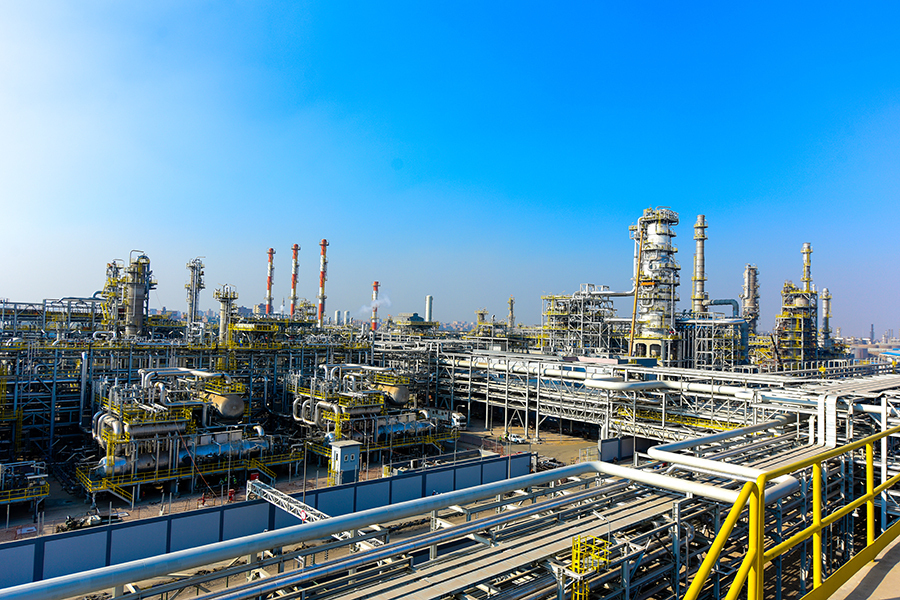
The Oil Ministry is overhauling the way it does business with international oil companies with a USD 5 bn push to reverse a sharp decline in domestic natural gas production. The ministry is targeting an additional 1 bcf/d of production by the end of this year, part of a larger roadmap to bring output to 6.6 bcf/d by 2027 from the current 3.9 bcf/d.

Why this matters: Recognizing that the old investment model has stalled, the ministry is amending concession agreements, revising production-sharing mechanisms, and rolling out additional incentives to lure foreign energy players back to the rig.

The game plan: The increase will come through intensified exploration activity, new bid rounds, and higher investment from international oil and gas companies, alongside a parallel push to boost crude oil output amid ongoing energy supply disruptions and strained global supply chains, we’re told.

The ministry has already moved forward with revising several agreements to increase competitiveness and support its goal of achieving self-sufficiency by 2030, according to a government document reviewed by EnterpriseAM.

Key amendments include:

  • Updated terms between the Egyptian Natural Gas Holding Company and Wintershall Dea for exploration in the Nile Delta’s Disouq area;
  • An agreement between the Egyptian General Petroleum Corporation (EGPC) and a consortium including Cheiron, Offshore Shukheir Oil Company, and Sahara Oil & Gas for operations in North Zafarana in the Gulf of Suez;
  • EGPC will directly oversee exploration and development in Ras Badran and Gebel El Zeit in the Gulf of Suez;
  • Another agreement between EGPC, Cheiron, and Capricorn Energy for the Badr El Din integrated area in the Western Desert.

On the operational front, drilling vessel Valaris DS-12 has arrived in Egyptian waters to begin work on four new wells for BP and Arcius Energy.

REMEMBER- The Oil Ministry says it will settle its remaining USD 1.3 bn in arrears to international oil and gas companies by 30 June, fully clearing a backlog that reached USD 6.1 bn in mid-2024, as it aims to attract more foreign investment to boost local production.

This publication is proudly sponsored by

3

Economy

Current account deficit seen ballooning to 3.4% of GDP in current FY

Egypt’s current account deficit is projected to widen by 2.2 percentage points to 3.4% of GDP this fiscal year and by 0.6 percentage points to 2.5% for the next fiscal year, according to a recent report from Fitch Solutions’ research unit BMI. The research firm pointed to a deteriorating external position amid the US-Iran conflict on the back of a triple threat of higher energy bills, a tourism slowdown, and a stalled recovery for the Suez Canal.

The headwinds: Disruptions to regional gas supplies are expected to add USD 2-4 bn to Egypt’s import bill, while Suez Canal transit tonnages remain standard at 30-35% of pre-crisis levels, and tourism arrivals from key European markets — which typically account for over half of all visitors — slow down.

The liquidity squeeze: The conflict has triggered USD 8-9 bn in foreign portfolio outflows since mid-February. These outflows, combined with a heavier debt maturity profile in March and April 2026, are intensifying external financial pressures. However, the Central Bank of Egypt is currently utilizing its USD 13.7 bn in FX deposits parked at commercial banks as a primary buffer to shield official state reserves.

The worst-case scenario: A prolonged conflict could push the deficit to 4.4% of GDP and force harsh domestic adjustments, although BMI’s baseline assumes a short-lived conflict with oil averaging USD 72 / bbl. However, if the war drags on and pushes oil prices to a high-case scenario of USD 110-130 / bbl, the intense financial strain would make domestic adjustments — including further subsidy rollbacks, fiscal measures, and potential return to rate hikes — inevitable.

4

Tourism

Tourism sector seeks gov’t loans

Tourism operators are urging the government to extend low-interest financing initiatives in response to the ongoing regional conflict, which has driven new bookings across the sector down by around 20% y-o-y, Jaz Hotel Group CEO Alaa Akel tells EnterpriseAM. The sector has formally requested that the state extend its tourism support initiative or introduce a new concessional lending program to help hotels expand capacity and absorb the shock, he added.

The drop in tourist footfall is most evident from tourists coming — or in this case not coming — from Arab and East Asian nations, which comes partly as the result of flight disruptions rather than just falling tourist appetite for Egypt, Egyptian Tourism Federation member Hossam Hazaa tells us. However, tourism numbers from Europe and the United States have remained relatively stable, he noted.

Margins are also being squeezed for tourism companies, who face not just the prospect of lower numbers of tourists, but also increased expenses. The industry is absorbing a roughly 10% increase in the price of services offered by tourism transport companies due to higher fuel costs in an attempt to remain competitively priced, Hazaa adds.

But despite everything, numbers are still strong, with Egypt maintaining occupancy rates of 70-80% since the start of the conflict, we were told. While Red Sea destinations have seen modest declines, demand for Cairo, Luxor, and Aswan has remained strong.

What’s next? A sizable number of foreign visitors have opted to postpone bookings by up to four months as they wait for a calmer regional picture to emerge, Hazaa tells us. As with almost every assessment of the implications of this war, how long the conflict lasts remains the key determining factor.

5

Also on our Radar

Israel’s Arkia Airlines moves flights to Taba International Airport

Israel’s Arkia shifts some flights to Egypt as airspace tightens

Israel’s second-largest airline Arkia Airlines is moving its operations to Egypt’s Taba and Jordan’s Aqaba as restrictions tighten at Ben Gurion Airport, including a 50-passenger per departure cap, effectively shutting down regular aviation activity, the airline said in a statement. To keep routes financially viable, the airline organizes bus shuttle services to Taba International Airport just across the border to continue its routes to Athens, Larnaca, and Batumi.

Apache hits gas in the Western Desert

US energy player Apache has made a new discovery in the Western Desert that would add 26 mmcf/d of gas and 2.7k bbl / d of condensate, according to a statement from the Oil Ministry.

Qalaa Holding sees recovery in revenues in 3Q 2025

Qalaa Holdings’ revenues inched up 2% y-o-y in 3Q 2025 to EGP 38.3 bn, according to the company’s latest earnings release (pdf). However, the company’s bottom line fell 29% y-o-y to EGP 81.4 mn as the company paid off interest from a 2024 debt restructuring agreement with local banks.

The revenue growth was driven by the Egyptian Refining Company (ERC) — which contributed 88% of Qalaa Holdings’ total revenue — as it recovered from a previous maintenance shutdown in 2Q 2025. While ERC’s revenue remained steady, its bottom line jumped 437% y-o-y to EGP 931.7 mn during the same period, thanks to higher refining margins.

When excluding ERC’s revenues, Qalaa’s top line grew 29% y-o-y to EGP 4.5 bn during the quarter, as the rest of its portfolio companies saw “solid growth.”

AAIB posts 20% y-o-y increase in net income in 2025

The Arab African International Bank (AAIB) saw its net income rise 20% y-o-y to USD 362.1 mn in 2025, according to the lender’s latest earnings release seen by EnterpriseAM. Meanwhile, net banking income inched up 2% y-o-y to USD 714.3 mn during the same period.

Lending remained solid, with loans up 27% y-o-y to USD 5.0 bn, with net interest income also up 4% y-o-y to USD 602 mn during the year. The bank’s deposits expanded by 9% y-o-y to USD 14.4 bn.

On a quarterly basis, the bank saw its net income surge 68% y-o-y to USD 106.7 mn, while revenue jumped 28% y-o-y to USD 189.0 mn.

6

PLANET FINANCE

War is casting a dark shadow over PMIs

The proof is in the PMI: Purchasing Managers’ Indexes across Europe and Asia for this month are the latest evidence of the global economic slowdown caused by the regional war, according to a spate of recent reports from across the world.

Private sector activity in the eurozone (pdf) dropped to a 10-month low in March, with the composite PMI falling to 50.5 from 51.9 in February, barely above the 50 threshold that separates growth from contraction. The reading fell short of economists polled by Reuters, who had penciled in 51.

A closer look: Manufacturing held up slightly better, but services are starting to stall. Some of the strength in manufacturing was chalked down to frontloading orders to beat future supply chain issues, which could lead to weaker data later on, Phil Smith, S&P director and economist, told Morningstar.

Results are similarly bleak elsewhere: Australia’s PMI saw a sudden contraction, while business confidence in Japan (pdf) dropped to its lowest level in nearly a year. India (pdf) registered its weakest growth since 2022 as war-driven inflation bites, and the UK’s (pdf) private sector activity came in at its lowest level in six months.

As expected, energy volatility is primarily behind the results. Companies are reporting the fastest rise in input costs in three years, as attacks on oil infrastructure and the Strait of Hormuz disruption propel the energy sector into panic. Rising oil prices are pushing up costs for businesses, disrupting supply chains, and feeding through into inflation, with supplier delays also increasing sharply due to shipping disruptions.

Yet again, it’s another symptom of stagflation as slow economic growth colludes with inflation. The phenomenon has already hit the bond market, wiping USD 2.5 tn off global bond values and making investors think twice about where to hedge theirbets.

Where do we go from here? In short, everything depends on how long the war lasts. While indicators pointed to global growth gathering momentum pre-war, the conflict has turned predictions on their head, Director of Global Economics at Bloomberg Jamie Rush said. Even if a ceasefire is agreed tomorrow, the damage is already done, with a European Central Bank statement pointing to higher inflation risks and slower economic growth.

MARKETS THIS MORNING-

Asia-Pacific markets are a sea of green in early trading this morning, with Japan’s Nikkei and South Korea’s Kospi leading gains — both are up around 2.5% — as hopes that the US-Iran war will soon conclude drive the rally.

EGX30

46,931

-1.4% (YTD: +12.2%)

USD (CBE)

Buy 52.63

Sell 52.77

USD (CIB)

Buy 52.65

Sell 52.75

Interest rates (CBE)

19.00% deposit

20.00% lending

Tadawul

10,949

0.0% (YTD: +4.4%)

ADX

9,524

+1.1% (YTD: -4.7%)

DFM

5,471

+1.6% (YTD: -9.5%)

S&P 500

6,556

-0.4% (YTD: -4.2%)

FTSE 100

9,965

+0.7% (YTD: +0.3%)

Euro Stoxx 50

5,581

+0.1% (YTD: -3.6%)

Brent crude

USD 104.49

+4.6%

Natural gas (Nymex)

USD 2.90

-1.3%

Gold

USD 4,514

+1.8%

BTC

USD 70,359

-0.6% (YTD: -19.7%)

S&P Egypt Sovereign Bond Index

1,038

+0.2% (YTD: +4.6%)

S&P MENA Bond & Sukuk

148.45

-0.5% (YTD: -2.3%)

VIX (Volatility Index)

26.95

+3.1% (YTD: +80.3%)

THE CLOSING BELL-

The EGX30 fell 1.4% at yesterday’s close on turnover of EGP 7.7 bn (17.5% above the 90-day average). International investors were the sole net sellers. The index is up 12.2% YTD.

In the green: Abu Qir Fertilizers (+8.1%), Valmore Holding -EGP (+4.2%), and Heliopolis Housing (+3.9%).

In the red: CIB (-4.3%), Egypt Aluminum (-3.3%), and Juhayna (-3.0%).

7

HARDHAT

The real estate market has been cooling even before the war on Iran

Egypt’s real estate market entered 2026 from a cooler place than the frenzy of the previous two years might suggest. The sector was already normalizing in 2025, with momentum easing even as developers largely held the line on prices, according to a year-end report (pdf) from The Board Consulting (TBC). That gives us a clearer read on where the market stood before the Iran war added a fresh layer of cost pressure, with some industry players warning earlier this month that the conflict could push prices up by as much as 20%.

The cooling showed up clearly in the year’s sales figures. The country’s top 20 developers booked some EGP 1.6 tn in contracted sales in 2025, up 10% y-o-y, even as sales volumes slipped 7% to around 68k units, while average ticket prices rose just 3%. In other words, developers still grew sales in value terms, but did so while moving fewer units in a market that had clearly lost much of its speculative momentum.

Developers kept prices intact by leaning on payment plans. Prices did not fall in 2025 despite softer volumes, according to TBC, which says developers preserved affordability through “extended payment plans” and “calculated NPV adjustments” rather than cutting prices outright. That could remain part of the response this year as well, with Maadar Development CEO Ahmed Ehab telling EnterpriseAM that the company expects payment plans to stay broadly intact, with some additional flexibility possible in selected projects if cost pressures persist.

The bigger shift was in who was buying. One of the clearest signals in the report is that speculative demand cooled sharply. “The investment intent has dropped in 2025,” TBC says, with the share of buyers purchasing primarily for investment falling to “less than 20% in 2025” from 55% in 2024. The firm ties that shift to the fact that “price escalations have almost disappeared completely,” weakening the short-term investment case that had helped drive the market in 2023 and 2024. In its place came longer payment plans, steep cash reductions, and shrinking built-up areas. That said, Ehab tells us some buyers could still move early to lock in prices if the current bout of regional tension starts feeding more clearly into costs in 2026.

The biggest developers pulled further ahead. The top 10 developers sold EGP 1.3 tn last year, up 12% from 2024, while the top 20 reached EGP 1.6 tn and the top 30 hit EGP 1.7 tn. The top 10 alone accounted for almost three-quarters of top-30 sales value, with TBC arguing that “the big fish no longer eats the small fish, it now eats the mid-sized fish.” In other words, a cooler market seems to have favored developers with stronger brands, broader land banks, and greater room to structure pricing and payment terms.

TMG, Palm Hills, and Emaar topped the leaderboard. TMG held onto the top spot with EGP 382.2 bn in contracted sales last year, followed by Palm Hills at EGP 207 bn and Emaar at EGP 179 bn, according to the report. Mountain View came next with EGP 104 bn, followed by Hyde Park and Founders at EGP 87.3 bn, Modon at EGP 79.0 bn, City Edge at EGP 61.3 bn, La Vista at EGP 55.2 bn, and Madinet Masr at EGP 52.1 bn. TBC says performance varied sharply across the top tier, with some developers posting major gains while others lagged or stagnated, adding that it is “still too early to judge” the year’s performance across the board.

This is a correction, not a collapse. “All indicators suggest that Egypt’s real estate sector is entering a phase of normalization,” the report says, adding that “this is not a bubble” but rather “a market correction.” In TBC’s view, buyers have grown more cautious, while years of premium launches have left the market crowded with high-end supply even as purchasing power has not kept pace.

That does not mean new risks are off the table. TBC says the current Iran war is now “the biggest determinant of the performance of all markets in 2026,” and warns that a fresh bout of regional volatility is beginning to feed into local costs. Ehab tells us any resulting price pressure is likely to be gradual rather than abrupt, and that a 20% rise would be on the high side, with increases more likely to be concentrated in new launches or premium units.

What happens next may come down to how long the shock lasts. Ehab says that some buyers could still move early to lock in prices before any new increases come through, especially if developers begin repricing fresh launches. But the bigger swing factor is duration: a quick end to the war could bring deferred demand back into the market, while a longer conflict would likely deepen cost pressures, put more strain on delivery schedules, and force tougher pricing decisions across the sector.


2026

MARCH

30 March - 1 April (Monday-Wednesday): Egypt International Energy Conference and Exhibition (EGYPES).

APRIL

2 April (Thursday): Monetary Policy Committee’s second meeting of 2026.

12 April (Sunday): Coptic Easter.

25 April (Saturday): Sinai Liberation Day.

MAY

1 May (Friday): Labor Day.

21 May (Thursday): Monetary Policy Committee’s third meeting of 2026.

27-29 May (Wednesday-Friday): Eid El Adha (TBC).

JUNE

30 June (Tuesday): National holiday in observance of the June 30 Revolution (TBC).

JULY

9 July (Thursday): Monetary Policy Committee’s fourth meeting of 2026.

23 July (Thursday): National holiday in observance of Revolution Day (TBC).

AUGUST

20 August (Thursday): Monetary Policy Committee’s fifth meeting of 2026.

26 August (Wednesday): National holiday in observance of Prophet Muhammad’s birthday (TBC).

SEPTEMBER

15 September (Tuesday): IMF to hold its eighth review of Egypt’s USD 8 bn EFF arrangement.

24 September (Thursday): Monetary Policy Committee’s sixth meeting of 2026.

27-29 September (Sunday-Tuesday): Global Conference on Population, Health, and Human Development.

OCTOBER

6 October (Tuesday): Armed Forces Day.

29 October (Thursday): Monetary Policy Committee’s seventh meeting of 2026.

DECEMBER

17 December (Thursday): Monetary Policy Committee’s eighth meeting of 2026.

EVENTS WITH NO SET DATE

Early 2026: Passenger operations on the New Administrative Capital-Nasr City monorail scheduled to begin.

1Q 2026: Trial operations for the Ain Sokhna-Sixth of October section of Egypt’s first high-speed rail line scheduled to begin.

May 2026: End of extension for developers on 15% interest rates for land installment payments.

2H 2026: Operations at Deli Glass Co’s new USD 70 mn glassware factory kick off.

2027

20 January-7 February: Egypt to host the African Games.

April 2027: Tenth of Ramadan dry port and logistics hub to begin operations.

EVENTS WITH NO SET DATE

2027: Egypt to host EBRD’s annual meetings.

2027: Egypt-EU Summit 2027.

End of 2027: Trial operations at the Dabaa nuclear power plant expected to take place.

September 2028: First unit of the Dabaa nuclear power plant begins operations.

Now Playing
Now Playing
00:00
00:00