Get EnterpriseAM daily

Available in your choice of English or Arabic

Egypt eyes USD 3-4 bn by year-end in renewed post-Eid privatization push

1

WHAT WE’RE TRACKING TODAY

Silicon Sinai?

Good morning, friends, and welcome to the last workday of Ramadan. While it remains unclear when Eid El Fitr begins — we’ll be waiting for the official announcement tomorrow night — we are all but ready for the festivities to kick off and the kahk to start flowing.

In today’s issue: The Madbouly government has big privatization plans for post-Eid, involving the exit or IPO of at least 20 state-owned enterprises. And in our latest efforts to hedge FX risk, the state wants to link development loans to the EGP.

**A QUICK PROGRAMMING NOTE- EnterpriseAM Egypt will join the rest of the country in taking a break from your inboxes starting tomorrow in celebration of Eid El Fitr. We’ll be back in your inboxes at the usual hour on Tuesday with everything you may have missed over the long weekend.

***

WISH THIS MORNING’S ISSUE was a podcast? We’ve got you. Tap or click here to listen to Morning Drive, a 10-minute version of today’s issue crafted for you to enjoy with your morning coffee, while getting the kids ready for school, or while stomping around the house wondering where the [redacted] you left your [redacted] reading glasses.***

Watch this space

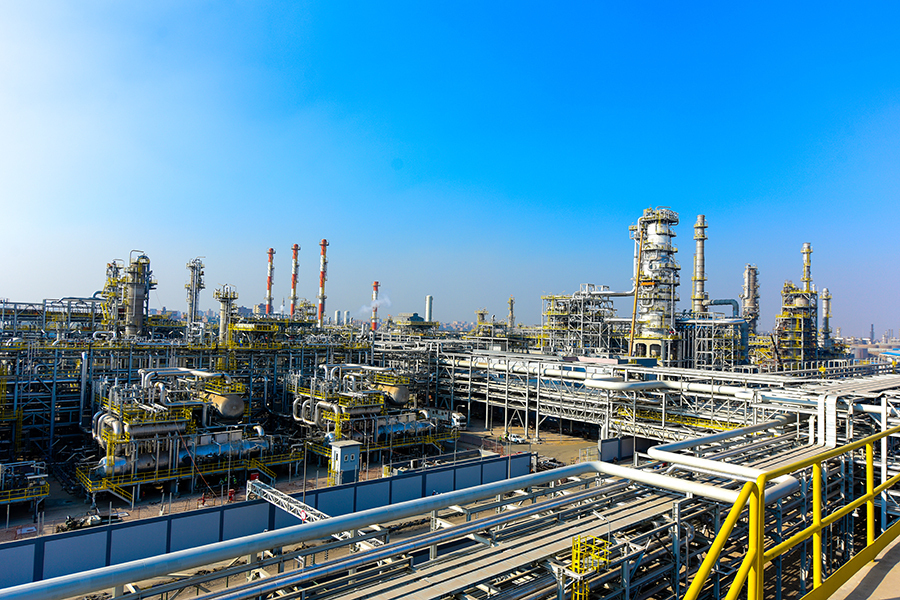
ENERGY — Renergy Group Partners are talking about establishing a USD 1 bn hyperscale green data center in Sinai’s El Tor, which would be part of and powered by the group’s proposed USD17bn hybrid renewables project, according to an Investment Ministry statement. The data center would start at 10k sqm with plans to expand to 500k sqm, using seawater for cooling and positioning Egypt as a hub for green data services for global tech giants, the company claims.


TELECOMS — The National Telecom Regulatory Authority debunked the social media chatter claiming a 30% spike is hitting our telecom bills. However, a hike isn’t entirely off the table, with the NTRA admitting it is studying potential price adjustments, following lobbying from telecom providers who say they are facing a significant margin squeeze on the back of fuel price hikes.

On the diplomatic front

Foreign Minister Badr Abdelatty wrapped up his Gulf tour yesterday with his fifth and final stop in Riyadh, where he once again “reiterated Egypt’s full solidarity” with the host nation in a meeting with his Saudi counterpart, according to a ministry statement. The minister also pointed to the stability and security of GCC nations as a “fundamental pillar and an integral part of Egyptian national security” in a meeting with GCC Secretary-General Jasem Al-Budaiwi, according to a separate statement from the ministry.

** DID YOU KNOW that we cover Saudi Arabia, the UAE, and the MENA-IndiaCorridor?

** Were you forwarded this email? Tap or click here to get your own copy delivered every weekday before 7am Cairo time — without charge.


PSA

WEATHER- It’s starting to feel like summer in Cairo today, with a high of 27°C and a low of 16°C, according to our favorite weather app.

It’s a cloudy day in Alexandria, with a high of 24°C and a low of 13°C.

And over the long weekend, expect to see temperatures jump from the low to mid 20s in the capital and hover around the 20°C mark for our friends on the Mediterranean.

The big story abroad

Major escalations have kept the regional war on the front pages, chief among them was the killing of Iran’s top security official Ali Larijani by an Israeli airstrike. Larijani — a longtime architect of Iran’s security policy — is the most senior regime member killed in the war after former supreme leader Ali Khamenei, to whom he was a close advisor.

Israel also killed General Gholam Reza Soleimani, the head of Iran’s Revolutionary Guard’s all-volunteer Basij — a paramilitary volunteer militia.

Meanwhile, a top US counterterrorism official resigned over Washington’s war on the Islamic Republic. Joe Kent — the director of the US National Counterterrorism Center — stepped down yesterday, claiming that “Iran posed no imminent threat to [the US]” and attributed the operation to “pressure from Israel and its powerful American lobby.”

The war has sent US gas prices beyond USD 3.75 a gallon for the first time since October 2023, Reuters reports, citing data by fuel price tracker GasBuddy.

PLUS- It’s interest rate day: The Fed will make its interest rate announcement later today — and tomorrow is equally big a day, with the ECB, Bank of England, and Bank of Japan doing the same.

The Fed is widely expected to keep rates unchanged as it takes stock of the economic fallout from the war. Policy decisions moving forward might prove tricky. The war’s pressure on oil prices threatens to spike inflation, while the US labor market is also looking weak, so the case for looser vs. tighter economic policy might be much less clear than before.

*** It’s Hardhat day — your weekly briefing of all things infrastructure in Egypt: EnterpriseAM’s industry vertical focuses each Wednesday on infrastructure, covering everything from energy, water, transportation, and urban development, as well as social infrastructure such as health and education.

In today’s issue: We look into why the global business press is forecasting double-digit real estate price falls in Dubai as a result of the war, while industry insiders in Egypt see prices going the other way.

Art. Sound. Movement.

This month, Somabay welcomes NoArt for a night where sound, art, and energy converge by the Red Sea.

With a global lineup featuring ANOTR, Bella, Chloé Caillet, Chris Stussy, Job Jobse, Palms Trax, and Misty, the Bay transforms into an open-air stage where music moves freely from sunset into the night.

A gathering of sound, movement, and creative expression set against one of the Red Sea’s most extraordinary landscapes.

22 March 2026 — Somabay Egypt

2

The Big Story Today

First kahk, then privatization

The government will finalize a timeline to exit or IPO at least 20 state-owned enterprises immediately after the Eid El Fitr break — in true Egyptian fashion — a senior government official tells EnterpriseAM. The goal is to generate USD 3-4 bn in immediate inflows by year-end, part of a larger USD 6 bn target for the upcoming fiscal year.

Why it matters: With Suez Canal revenues squeezed by regional tensions and hot money remaining flighty, the state needs these inflows to pad FX reserves and meet the final requirements of its IMF reform program, which wraps up in December.

The lineup: Included in the list of state-owned assets set to head to the privatization block are Banque du Caire and Alex Bank, along with the National Service Projects Organization’s Safi, Wataniya, Silo Foods, and Chillout. The program will also see stakes in Misr Pharma, CID, Midor, and Amal Alsharif Plastics offered up, while discussions are underway to pencil Egyptian Ferroalloys and El Nasr Mining in the planned lineup.

We’re seeing a tactical shift from strategic sales to public listings. The program now favors offering 10-40% stakes on the EGX, limiting the number of total buyouts by strategic investors. While listings are slated for 2Q, the actual go-signal for trading will be left to individual investment banks to time based on market appetite.

Policymakers are prioritizing companies with at least EGP 100 mn in paid-in capital, a 5% NP margin, and three years of audited growth, we’re told. By forgoing offering state-owned enterprises with little appeal and leading with already well-performing companies, the government is looking to offload assets only when it thinks they’re attractive enough to bring in meaningful returns.

This publication is proudly sponsored by

3

DEBT WATCH

Egypt looks to global lenders for an EGP-linked debt hedge

Egypt is in negotiations with several international financial institutions to link development loans to the EGP under a new pricing mechanism, a government official tells EnterpriseAM. The discussions with the World Bank, the International Finance Corporation, and the African Development Bank aim to agree on a new mechanism that will hedge against exchange rate volatility.

Why this matters: Exchange rate volatility alone added approximately USD 2 bn to Egypt’s external debt in 2025, effectively offsetting the state’s progress in the year to lower its debt service burden, our source tells us. By linking the amount of debt owed to the EGP, the government hopes to hedge against FX risks to ensure that long-term project repayments are not inflated by future devaluations.

The government is also in talks with international institutions to open concessional credit lines and accelerate disbursements to secure between USD 1-2 bn in urgent budget support, our source added.

These talks focused on navigating the “exceptional conditions” currently facing the region. According to the current debt strategy, concessional financing is expected to account for 60% of Egypt’s external financing needs through 2030, with commercial markets covering the remaining 40%.

4

A MESSAGE FROM AUC ONSI SAWIRIS SCHOOL OF BUSINESS EXECUTIVE EDUCATION

The great audit: why AI has become the ultimate stress test for management

The common narrative around AI focuses on job displacement, yet for C-suite leaders, the greater risk lies in AI exposing weaknesses in management systems. As AI embeds deeply into business operations, it acts as a diagnostic tool, surfacing informal processes and implicit practices. Leaders can no longer depend on unwritten rules or ambiguous oversight.

Global reports from the ILO and OECD highlight how AI adoption reveals organizational gaps, requiring structured data, defined workflows, and consistent rules. This process uncovers longstanding issues in ad hoc management practices. World Bank studies show that AI widens the divide between effective and ineffective leaders. While AI delivers data insights, it demands human judgment, accountability, and reasoning. Traditional supervisors lose ground, whereas those who design robust systems gain advantage.

The vulnerability of today's managers rarely lies in technical capability alone, but rather in limited analytical rigor and inconsistent decision-making frameworks. In an AI-enabled environment, leadership shifts from monitoring activity to orchestrating systems, where effectiveness is measured by coherence, resilience, and execution quality.

Closing this gap requires a fundamental shift in executive development: moving beyond mere technical literacy and toward a culture of systems thinking and disciplined, evidence-based leadership. AUC Onsi Sawiris School of Business ExecEd is leading this transformation through targeted programs, including AI in Financial Services, AI in Healthcare, AI for Marketers, and its flagship AI for Business program.

While McKinsey reports that 92% of companies are increasing AI investments, the fact that only 1% achieve true maturity reveals that the primary barrier is not technical execution but a fundamental gap in leadership readiness. Anyone can practice AI tools in isolation, but sustainable impact demands linking strategy to execution across maturity levels. ExecEd’s programs guide leaders from foundational deployment to advanced orchestration, ensuring AI drives strategic business transformation rather than siloed tactics.

Ultimately, AI is a mirror. If a managerial foundation is opaque or underdeveloped, the reflection can be unforgiving. AI does not lower the bar for entry; it raises the ceiling for managerial excellence. True competitive advantage will not come from the technology itself, but from the human capacity to provide the clarity and structure that technology requires to succeed.

5

Trade

Business as usual

No LC suspension here: Local banks have not suspended the issuance of letters of credit (LCs) for shipments across any regions, a senior banking source tells EnterpriseAM, fact-checking recent reports that claimed otherwise. While the escalating regional conflict has sent ins. premiums soaring and disrupted traditional shipping lanes, LCs continue to be processed — albeit after closer inspection to verify documentation in light of shifting routes.

What actually changed? Banks are not pulling the plug on credit, but they are tightening the documentation requirements. Because many global insurers are now refusing to cover the Red Sea or the Strait of Hormuz, banks require rigorous verification of revised shipping documents and route changes before approving applications. Required documentation for LC approval remains unchanged, with banks continuing to issue Form 4 to exporters, Ahmed Zaki, secretary-general of the Exporters Division at the Federation of Egyptian Chambers of Commerce, tells EnterpriseAM.

Machinery, equipment, and food commodities are processed on a shorter cycle than durable goods, automobiles, and other non-essential goods, our banking source told us. This follows central bank directives to prioritize essential and strategic goods to mitigate the impact of supply chain disruptions on global trade.

The export side: There are currently no issues with opening LCs to import goods and production inputs, particularly as demand for Egyptian exports continues to rise, Zaki told us. This is being driven in part by heightened demand from Gulf countries, with Egypt acting as a key access point via land routes.

The fact that Egyptian imports have not halted during this crisis suggests that the Central Bank of Egypt has successfully managed the current volatility, enabling local factories to operate at full capacity. This stands in contrast to the significant disruptions seen in 2022 following the outbreak of the Russia-Ukraine war. “We have not seen any restrictions on import operations whatsoever,” Zaki said.

Any decision to halt imports rests with the importer rather than the lender, Zaki said, noting that the recent spike in ins. and shipping costs is borne entirely by the importer. “As long as documentation is complete, banks proceed with opening LCs in line with priority of the goods,” he added.

Tags:
6

Industry

Gov’t considers three-year extension for steel anti-dumping duties

The government is weighing extending anti-dumping duties on imported billet and steel sheets for up to three more years, a government official tells EnterpriseAM. Originally introduced 200 days ago, these tariffs are designed to shield local producers, but they’ve sparked criticism from downstream industries due to increased costs.

Why this matters: Importing billet is a massive drain on the economy, costing Egypt roughly USD 1 bn annually in import costs, our source tells us. By keeping anti-dumping duties in place on the roughly 1 mn tons of billets imported annually, the government is looking to promote the local production of the materials with new billet production licenses to be offered soon.

Eight Egyptian and Chinese companies have already applied for new billet production licenses, which the state hopes will not only help meet domestic demand but also support the effort to increase exports to USD 145 bn by 2030. Factories are primed and ready to inject fresh capital as soon as the new licenses are officially issued, Chamber of Commerce head and El Ashry Steel Chairman Ayman El Ashry noted.

By the numbers: Currently, 26 steel plants face billet shortages, with only six noting sufficient feedstock input, according to former Metallurgical Industries Chamber head Mohamed Hanafy

But not everyone is on board, with downstream manufacturers arguing that duties raise production costs, especially for appliances, sources at the Federation of Egyptian Industries tell us. Manufacturers opposed to the move are working on preparing a statement to pass on to the prime minister and industry minister, calling on the government to rethink its decision.

They claim that local production only covers around 30% of the local market’s needs, compounded by the fact that much of this is directed to exports and not local manufacturers. This led to manufacturers calling for the duties to be lifted and imports reopened two months ago, citing rising steel prices and billet shortages in the local market, but the request was turned down.

What’s next? The plan to offer up additional billet production licenses was first pushed back with the recent cabinet reshuffle, and then again with the war on Iran, we were told. A firm timeline will likely be set out once stability and predictability return to the region, they added.

7

Industry

Engineering firms are trying to absorb the shock

Reserves absorb aluminum price shock, production remains steady: Local engineering factories are currently relying on their raw material inventories to absorb the recent jump in aluminum prices, which pushed them to record highs, Mohamed El Mohandes, chairman of the Chamber of Engineering Industries, tells EnterpriseAM. Production remains unaffected for now, he told us, ruling out supply shortages provided Egypt Aluminum continues meeting local demand.

Why this matters: Manufacturers face a turning point as low-cost inventories run dry, forcing them to purchase at new prices inflated by the prevailing shipping crisis and production disruptions at major smelters like Bahrain’s Alba. While the geographic route for importing aluminum from India and copper from Russia avoids the Strait of Hormuz, it is no longer cost-effective due to surging prices and logistics premiums.

Small businesses are in dire straits: The recent 9.5% price hike by Egypt Aluminum — to roughly EGP 14k per ton this March — is exerting significant pressure that could lead to partial production halts at SMEs. Unlike larger manufacturers, these firms lack the capacity to pass on price increases or secure raw materials in advance, Metallurgical Industries Chamber Director Mohamed Hanafi told EnterpriseAM.

Compromising on export quality isn’t even an option: The use of “scrap aluminum” is limited to local applications such as doors and windows, while export-oriented products continue to be manufactured from 100% virgin ore to maintain competitiveness, El Mohandes said.

The real hurdle? Shipping costs. Surging transport and ins. costs — which have quadrupled for some routes — represent the primary challenge to trade flows, according to Hanafi.

8

Moves

Hisham Ezz Al Arab extends his tenure at CIB till 2029

Hisham Ezz Al Arab (LinkedIn) is staying on as CEO of the country’s largest private lender CIB until March 2029, after the bank’s ordinary assembly approved the move, according to a disclosure (pdf) to EGX. The announcement reflects a vote of confidence in Ezz Al Arab, who took over the role back in September 2024.

Tags:

9

Also on our Radar

LVP Pharma becomes Rameda’s largest shareholder

LVP Pharma becomes Rameda’s largest shareholder with 23.2% share

LVP Pharma nearly doubled its holding in pharma giant Rameda in a single transaction, increasing its ownership to 23.2% from 12.0%, according to a bourse filing (pdf). The firm acquired 223 mn shares — of which 220 mn belonged to Equinox Pharma Holding, according to a separate filing (pdf) — at an average price of roughly EGP 5.1 apiece in a transaction valued at EGP 1.1 bn.

LVP is now the company’s largest shareholder, with this transaction marking the latest in a flurry of sizable share purchases by the company in the last few weeks.

What’s next for Rameda? “We remain actively engaged in evaluating value-accretive [prospects], whether through strategic molecule acquisitions or broader corporate transactions, as we continue to capitalize on the sector’s compelling growth dynamics,” COO & CFO Mahmoud Fayek tells us.

The local pharma sector continues to attract strong interest from both local and international investors, he said, adding that this is “supported by its inherently defensive nature, favorable demographics, and sustained demand growth.”

EU Commission earmarks EUR 8 mn for Egypt in wartime relief

The European Commission will channel EUR 8 mn in “multi-sectoral assistance to the most vulnerable,” the commission said in a statement. The statement highlights educating children not enrolled in schools and a region-wide disaster preparedness program as targets of the fund.

The tranche is part of a wider EUR 458 mn package for the region, with Syria (EUR 210 mn), Palestine (EUR 124 mn), and Lebanon (EUR 100 mn) receiving the vast bulk of the funding. By no coincidence, Egypt and Jordan (EUR 15.5 mn), which received much smaller tranches, are the only two countries on the list not currently being attacked, occupied, or invaded by Israel.

No sugar imports until May

Import ban on sugar extended: The Investment Ministry has extended the import ban on refined sugar until 30 April, according to a ministerial decree seen by EnterpriseAM. The move builds on a protectionist policy introduced last November aimed at regulating the local market in light of significant domestic stockpiles.

Why this matters: The decision aims to protect local factories from “high financial costs” caused by stockpiles accumulating as they struggle to compete with cheaper imports, former head of the Federation of Egyptian Industries’ Sugar Division Hassan El Fendi tells us. The local market currently retains a massive 1.3 mn ton surplus, which is enough to cover domestic consumption for around 10 months, he added.

What’s next? Any further extension of the ban will depend entirely on crop estimates for the current season, El Fendi says. The ministry faces a balancing act in protecting local factories while making sure sugar prices do not exacerbate inflationary pressures coinciding with the Ramadan consumption peak.

Private firms to run desalination across North Coast, Sinai, and the Red Sea

We could be in for a slew of PPPs on the desalination front, with the Housing Ministry pushing to tender the operation and maintenance of several large-scale seawater desalination plants to the Egyptian private sector, according to a statement from the ministry. The move targets plants with a daily production capacity exceeding 10k cbm in the North Coast’s Matrouh, Al Dabaa, and El Alamein, in addition to Sinai’s El Tor, Ras Sidr, Nuweiba, Dahab, Abu Zenima, Sharm El Sheikh, and Arish, and the Red Sea’s Hurghada.

10

PLANET FINANCE

The AI sector’s latest challenge? Ins.

Building out the AI boom is one thing, but insuring it is another — and it’s making lending in the sector more challenging. Lenders looking to fund multi-bn-USD, multi-GW AI projects are struggling to secure enough ins., the Financial Times reports. Blackstone and KKR are among those opting out of taking on AI-linked debt on the grounds of a lack of comprehensive coverage, the salmon-colored paper said.

The risks: Data centers are vulnerable to a host of events, from natural disasters to possible disruptions to water and energy supplies. A 45-minute power outage alone could wipe out half a year’s revenues, Parametrix’s Jonathan Hatzor said. This, coupled with a lack of ins. coverage, is positioning funding data centers at a level of exposure that many investors are wary of taking on, especially as the lack of full coverage may become an issue when construction loans are set to be refinanced.

Some developers have been trying to mitigate the risks, building out data centers in areas with more temperate weather patterns, but, as we’re all too aware in our neck of the woods, it’s hard to mitigate against geopolitical risks.

Hyperscalers aren’t helping, with huge investments and large-scale projects driving up ins. costs. Megaprojects are often some of the most underinsured, Kirkland & Ellis partner Kimberly McGrath said. Meanwhile, Marsh broker Kate Fairhead noted that these projects distort the market by taking on more risk on their balance sheet.

Current ins. mechanisms in place for under-construction projects are offering partial coverage. Meta’s USD 30 bn data center campus in Louisiana has about USD 4 bn worth of coverage, Clifford Chance’s Gianluca Bacchiocchi said. However, when it comes to high-profile projects with a lot of investor interest, potential backers have to accept a certain level of risk if they want to be involved.

The coverage conundrum isn’t the only worry plaguing the sector, with fears continuing to spiral around a possible AI bubble. Key AI firms have seen valuations surge, and investors have been throwing money at projects which have yet to deliver equivalent returns. Only 10% of agentic AI projects are seeing measurable returns, according to Deloitte. The IMF has also recently warned of growing AI investments, echoing the dot-com boom of the late 1990s. Despite this, Nvidia has recently posted revenues that beat expectations, assuaging doubts somewhat.

MARKETS THIS MORNING-

Asia-Pacific markets are mostly in the green in early trading this morning as investors await the Federal Reserve’s decision later today — the central bank is widely expected to leave interest rates as they are. Similarly, US stocks are set to open in the green later today, with futures a sea of green.

EGX30

46,055

+1.9% (YTD: +10.1%)

USD (CBE)

Buy 52.29

Sell 52.43

USD (CIB)

Buy 52.30

Sell 52.40

Interest rates (CBE)

19.00% deposit

20.00% lending

Tadawul

10,946

+0.6% (YTD: +4.3%)

ADX

9,556

+1.0% (YTD: -4.4%)

DFM

5,506

+4.1% (YTD: -9.0%)

S&P 500

6,716

+0.3% (YTD: -1.9%)

FTSE 100

10,404

+0.8% (YTD: +4.8%)

Euro Stoxx 50

5,769

+0.5% (YTD: -0.4%)

Brent crude

USD 103.42

+3.2%

Natural gas (Nymex)

USD 3.04

+0.2%

Gold

USD 5,003

-0.1%

BTC

USD 74,189

-0.9% (YTD: -15.3%)

S&P Egypt Sovereign Bond Index

1,035

+0.3% (YTD: +4.2%)

S&P MENA Bond & Sukuk

150.60

0.0% (YTD: -0.9%)

VIX (Volatility Index)

22.37

-4.9% (YTD: +50.3%)

THE CLOSING BELL-

The EGX30 rose 1.9% at yesterday’s close on turnover of EGP 5.0 bn (23.8% below the 90-day average). Local investors were the sole net buyers. The index is up 10.1% YTD.

In the green: ADIB (+6.1%), Fawry (+4.8%), and Heliopolis Housing (+4.0%).

In the red: Amoc (-2.2%), Valmore Holding -EGP (-2.0%), and Edita (-1.4%).

11

HARDHAT

Iran war sparks forecasts that real estate prices could rise 20%

While the global business press forecast double-digit real estate price falls in Dubai, industry insiders in Egypt see prices going the other way, with the local business press awash with news of an incoming 20% rise in prices. Whether these price rises will materialize or not, developers are already halting sales until they can work out a fair pricing structure and the impact of the war becomes clearer, industry insiders tell EnterpriseAM.

The price is right?

Predictions of an incoming 20% rise “cannot be considered exaggerated by any means,” but may instead be a “realistic and cautious estimate under current circumstances,” The Land Developers CEO and Eltayebi Real Estate Development Managing Director Omar El Tayebi tells us.

And a pre-existing slowdown in sales could limit developers’ ability to raise prices without triggering further stagnation, which may lead many developers to choose to absorb part of the cost increases to maintain sales momentum, New Cairo Developers Association Chairman Mohamed El Bostany tells us.

While increases are expected, determining the appropriate rise requires careful analysis to avoid negatively impacting the market, Real Estate Development Chamber Chairman Tarek Shoukry tells us. Developers will be cautious before deciding to increase prices due to the current “gap between prices and purchasing power,” which has been weighing on the market, Tatweer Misr CEO Ahmed Shalaby explained to us.

But some in the industry think real estate prices rising by a fifth may be an overestimation, with Shalaby arguing that “appropriate increases at this time should be limited and calculated, potentially ranging between 3% and 5%,” which should be seen as part of “natural annual increases linked to inflation, which typically range between 10% and 15%.” El Sayyad Group CEO Khaled El Sayyad similarly said that “talk of a 20% increase may be exaggerated at this time,” and argued that while construction costs, exchange rates, and financing are applying pressure, increases should be tied to actual cost developments rather than understood as a fixed, market-wide percentage.

What’s driving prices?

While the impacts of the war are still mostly unknown, price increases provide a “safety margin” for developers in case of “sudden and unexpected fluctuations in global supply chains,” El Tayebi adds. With developers already committed to delivering units, this measure is meant to help “ensure that construction operations do not halt and that final delivery dates are met.”

Project costs will feel the heat from the conflict in several ways, with spikes in the cost of steel and aluminum — driven by recent fuel price hikes adding to production and transport costs — pushing developers’ expenses higher, to the point where some aluminum manufacturers have suspended their own pricing, Shoukry tells us. Shalaby pointed to energy prices, and not the exchange rate, as the “real challenge” due to the knock-on impact of “increased costs for transporting raw materials, labor, and execution, in addition to its impact on the general cost of living.” El Sayyad also highlighted higher financing costs as an additional burden.

But forecasts can be wrong

It’s still too early to determine the scale of potential increases in property prices, Shoukry explained. The global rise in energy prices has disrupted confidence in future pricing, and developers should wait for a clearer reading of the market environment before announcing new rates, he added. While increases are expected, determining the appropriate percentage requires careful analysis to avoid negatively impacting the market, he explained.

If the war persists, companies that sold units at deep markdowns before the war to attract liquidity during construction may face severe financial pressure, Fathallah Fawzy, head of the Egyptian Businessmen Association’s Real Estate Investment Division, warned in comments to EnterpriseAM. The longer the war goes on, the more costs and, in turn, property prices are expected to increase, he added.

While rising costs will weigh on the entire sector, larger companies are likely to fare the turbulence better, and not face the risk of land withdrawal that smaller developers will. Developers’ ability to adhere to construction timelines and delivery schedules will largely depend on their financial strength and liquidity position, Shoukry similarly tells us.

But a quick end to the war is expected to result in a “a strong and accelerated V-shaped recovery,” as those who had deferred buying houses on account of the wartime uncertainty would immediately turn to the marker, according to El Tayebi. This uptick in interest will “inevitably lead to massive capital inflows, especially from Gulf and foreign investors who realize that real estate in Egypt is still valued below its true worth” compared to other nearby markets, he added.

“Should stability return quickly, the market is likely to return to its normal trajectory, especially since the genuine demand for real estate in Egypt remains strong,” Imkan Misr CEO Ahmed Aref said, pointing to the market’s fundamentals.

We’ve been in this situation before

The country’s real estate market has “absorbed similar and even larger increases in the past” because home buyers kept up demand in the belief that real estate remains a safe-haven asset and that “delaying a purchase decision today may mean bearing a much higher cost in the near future,” El Tayebi says.

Despite rising house prices, the EGP falling against the greenback could push some to return to real estate as home buyers look to the sector as a store of value during inflationary cycles, as they had done in previous economic squeezes, El Bostany says. “Previous experience indicates that real estate remains one of the most important savings and investment tools for Egyptians, especially during times of economic uncertainty,” Aref tells us.


2026

MARCH

19-23 March: (Thursday-Monday): Eid El Fitr public holiday.

30 March - 1 April (Monday-Wednesday): Egypt International Energy Conference and Exhibition (EGYPES).

APRIL

2 April (Thursday): Monetary Policy Committee’s second meeting of 2026.

12 April (Sunday): Coptic Easter.

25 April (Saturday): Sinai Liberation Day.

MAY

1 May (Friday): Labor Day.

21 May (Thursday): Monetary Policy Committee’s third meeting of 2026.

27-29 May (Wednesday-Friday): Eid El Adha (TBC).

JUNE

30 June (Tuesday): National holiday in observance of the June 30 Revolution (TBC).

JULY

9 July (Thursday): Monetary Policy Committee’s fourth meeting of 2026.

23 July (Thursday): National holiday in observance of Revolution Day (TBC).

AUGUST

20 August (Thursday): Monetary Policy Committee’s fifth meeting of 2026.

26 August (Wednesday): National holiday in observance of Prophet Muhammad’s birthday (TBC).

SEPTEMBER

15 September (Tuesday): IMF to hold its eighth review of Egypt’s USD 8 bn EFF arrangement.

24 September (Thursday): Monetary Policy Committee’s sixth meeting of 2026.

27-29 September (Sunday-Tuesday): Global Conference on Population, Health, and Human Development.

OCTOBER

6 October (Tuesday): Armed Forces Day.

29 October (Thursday): Monetary Policy Committee’s seventh meeting of 2026.

DECEMBER

17 December (Thursday): Monetary Policy Committee’s eighth meeting of 2026.

EVENTS WITH NO SET DATE

Early 2026: Passenger operations on the New Administrative Capital-Nasr City monorail scheduled to begin.

1Q 2026: Trial operations for the Ain Sokhna-Sixth of October section of Egypt’s first high-speed rail line scheduled to begin.

May 2026: End of extension for developers on 15% interest rates for land installment payments.

2H 2026: Operations at Deli Glass Co’s new USD 70 mn glassware factory kick off.

2027

20 January-7 February: Egypt to host the African Games.

April 2027: Tenth of Ramadan dry port and logistics hub to begin operations.

EVENTS WITH NO SET DATE

2027: Egypt to host EBRD’s annual meetings.

2027: Egypt-EU Summit 2027.

End of 2027: Trial operations at the Dabaa nuclear power plant expected to take place.

September 2028: First unit of the Dabaa nuclear power plant begins operations.

Now Playing
Now Playing
00:00
00:00