Get EnterpriseAM daily

Available in your choice of English or Arabic

EGX30 falls 4.6% as Israel-Iran conflict escalates

1

What We're Tracking Today

It’s day two of International Finance Corporation President Makhtar Diop’s two-day trip to Egypt

Good morning, friends. As the adage goes, there are decades where nothing happens, and there are weeks where decades happen — and we’re unmistakably in one of those weeks. Leading the issue today is coverage of the impact of Israel’s war with Iran on Egypt, news that the IMF may be a bit more lenient in our fifth review, the activation of the EU’s EUR 1.8 bn investment guarantee mechanism, and more. We’ve got a packed issue today, so let’s jump right in.


Mark your calendar for the 2025 EnterpriseAM Egypt Forum, our flagship forum and part of our must-attend series of invitation-only, C-suite-level gatherings. Tap to register your interest to attend. Want to partner with us? Reach out to Moustafa Taalab at mtaalab@enterpriseadvisory.com to explore sponsorship opportunities

PSA-

WEATHER- You’ll be glad to hear, it’s going to be a little cooler in Cairo today, with a high of 34°C, a low of 22°C, and partly cloudy skies, according to our favorite weather app.

The mercury is also falling over in Alexandria, with a high of 27°C, a low of 20°C, and cloud-spotted skies.


** DID YOU KNOW that we now cover Saudi Arabia and the UAE?

** Were you forwarded this email? Tap or click here to get your own copy delivered every weekday before 7am Cairo time — without charge.

ICYMI- Missed this week’s Inside Industry? In our weekly vertical exploring all things industry and manufacturing, we looked at how smart packaging and sustainability have become Egypt’s gateway to global markets. Check out the story here.

HAPPENING TODAY-

It’s day two of International Finance Corporation (IFC) President Makhtar Diop’s two-day trip to Egypt, during which he will continue to “advance [the corporation’s] mission: mobilize capital, create jobs, and deliver impact,” alongside newly appointed Vice President for Africa Ethiopis Tafara and their accompanying delegation.

Diop and Tafara were kept plenty busy on day one yesterday, having met with President Abdel Fattah El Sisi and Planning Minister Rania Al Mashat for a meeting centered around efforts to boost investment prospects and funding for private players. El Sisi also highlighted efforts to boost the private sector’s involvement in the local economy.

But day two could be even more eventful, with the IFC to release a strategy for offering local airports development to private players through public-private partnerships (PPPs) “soon,” Diop said during a meeting with Prime Minister Moustafa Madbouly. The first of the program’s tenders will launch before the end of the year, Madbouly said during the meeting.

REMEMBER- The IFC unveiled a list of 11 Egyptian airports slated for development through PPPs in March. Hurghada International Airport will serve as a pilot project for the program. The IFC will help the government launch a tender to select a strategic private partner for maintaining, operating, and upgrading the airport.

DATA POINT-

Egypt has mobilized USD 15.6 bn in concessional development finance for the private sector since 2020 — but bridging the country’s development finance gap will require nothing short of a shakeup in the global financial system, the Planning and International Cooperation Ministry argues in its latest report (pdf), unveiled yesterday by Minister Rania Al Mashat at the Development Finance to Foster Private Sector-Led Growth and Jobs conference. The event took place in the presence of senior officials from some of our development partners.

** It’s a hefty 52-page report that dives into all things development finance. We will dive into it in a later issue, so keep your eyes peeled.

HAPPENING TOMORROW-

AUC’s Onsi Sawiris School of Business will host its annual Business Forward event tomorrow under the theme Future Forward: Inspiring Business in 2025. The event will dive into how “businesses are navigating economic turbulence while driving innovation, exports and sustainable industrial growth,” according to a statement (pdf). Panels will include insights from leading private sector players, including Travco General Manager Moataz Sedky, Edita CEO Alfred Younan, Talabat Egypt Managing Director Hadeer Shalaby — to name but a few, according to the event’s agenda (pdf).

CORRECTION- We incorrectly reported that the event will be held on Thursday in yesterday’s issue. We have since amended the story on our website.

THE BIG STORY ABROAD-

Once again, the international press is zeroing in our part of the world as Israel’s war with Iran enters its fourth day, with reports coming out overnight about the US vetoing Israeli plans to kill Iran’s supreme leader and continuing strikes that have now pushed the death toll to at least 244 in Iran and 10 in Israel.

US President Donald Trump allegedly vetoed Israel’s plan to kill Iranian Supreme Leader Ayatollah Ali Khamenei, which it presented to the US in recent days amid the ongoing escalations between Iran and Israel. The Trump administration reportedly rejected the plan as it saw it as “as a move that would enflame the conflict and potentially destabilize the region,” an unnamed US official said. Israeli Prime Minister Benjamin Netanyahu in response to the news seemed to refuse to put regime change off the table, telling Fox News that “we do what we need to do.” (Associated Press | Reuters | Financial Times | Guardian | New York Times)

The war is also expected to top the agenda of the G7 Leaders Summit kicking off in Canada. Differences between the US and the six other nations over trade tariffs and Russia’s war on Ukraine are also being painted as potential flashpoints. (Reuters | Financial Times | Bloomberg)

While over in the business papers, Renault CEO Luca de Meo has stepped down to pursue a new position as CEO of French luxury group and Gucci owner Kering. Kering shareholders will be hoping that de Meo will be able to turn around the company like he did with the previously struggling French automaker, with shares in the luxury brand having lost 60% of their value in the last two years. (Financial Times | Reuters | Bloomberg)

*** It’s Blackboard day: We have our weekly look at the business of education in Egypt, from pre-K through the highest reaches of higher ed.

In today’s issue: We take a look at the state’s push to level up agricultural vocational education.

Whether you’re diving into turquoise waters, catching golden hour from your terrace, or just letting time drift by — Somabay is summer, redefined. Your ultimate escape, every single time.

2

Capital markets

EGX30 falls 4.6% amid regional tensions

The EGX30 fell as much as 7.5% during the first few minutes of trading yesterday, before paring back losses to end the day down 4.6%, as regional tensions due to the worsening conflict between Israel and Iran led to market jitters. All indices were in the red at market close, with the EGX losing EGP 94 bn of its market value by the closing bell. Retail investors were net buyers, with Egyptian individuals being the top buyers at EGP 170.6 mn, while institutions were net sellers, with foreign institutions being the biggest sellers at EGP 142.3 mn.

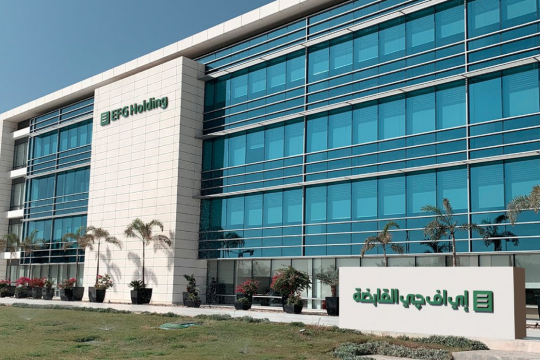
All EGX30 constituents ended the session in the red, with the benchmark index’s biggest losers including EFG Holding (12.4%), Orascom Development Egypt (11.1%), and GB Corp (9.4%), while the smallest declines included Alexandria Containers and Cargo Handling (-0.04%), Fawry (-0.9%), and Telecom Egypt (-1.6%).

Foreign investors drove capital market outflows as the day’s net sellers, selling some EGP 140.4 mn-worth of equity holdings, according to market data. Investors are looking to mitigate risk and hedge against the impact of a potential escalation into a full-out war on their investments, and are looking to withdraw liquidity from high-risk financial instruments to be redirected into safer investments, head of trading at Arabiya Online Mona Mostafa told EnterpriseAM.

Déjà vu? Yesterday’s market performance was an expected outcome, with markets expected to react to external developments, as was the case following the outbreak of the Russia-Ukraine war, for example, Mostafa noted.

But remember, this is an expected part of the script — and is not yet reason to panic. HC Securities’ Nemat Choucri and Al Ahly Pharos’ Hany Genena both told us earlier this week that a partial exit and “some panic selling” from foreign investors is to be expected because of concerns related to FX stability, but a full-blown exit isn’t in the cards just yet. Foreign investors would have to begin seeing warning signals for “a full halt in tourism revenues, remittances, or other inflows” to begin truly exiting the market — which as it stands seems incredibly unlikely.

The sectors that were hardest hit by yesterday’s market decline included non-bank financial services, banking, real estate, and petrochemicals. These are typical showings, since they’re heavily affected by the value of the currency, which affects their price fluctuations, Mostafa explained. Industrial stocks — particularly those in the fertilizer industry — also took a hit as a result of cuts in natural gas supplies to some industrial activities following the halt in supplies from Israel’s Leviathan field, Pioneers Holding’s head of brokerage Amer Abdel Kader told EnterpriseAM. Abou Kir Fertilizers, Mopco, and the International Company for Fertilizers and Chemicals were all down at the end of trading yesterday, while EgyFert bucked the trend to close up 16.9%.

Natural gas supply cuts cast their shadow, but it’s not a new challenge. With natural gas shortages previously bringing fertilizer players face-to-face with operational disruptions — including some companies temporarily closing down operations — several companies in the industry have already worked on tapping alternative energy sources to ensure operational continuity, Mostafa said. The repetition of these natural gas supply cuts has essentially normalized their effect on the market, meaning most stocks are unlikely to have a significant negative reaction. However, a protracted conflict will cause the country to be increasingly exposed to industrial, economic, and social risks as fuel and energy prices rise, impacting industry and driving inflation to accelerate, Mostafa noted.

The EGX was also not alone in having a tough day, with indexes in the region also ending the day in the red, albeit with smaller drops. The Dubai Financial Market benchmark fell 1.9%, the Abu Dhabi Securities Exchange benchmark was down 1.3%, and the KSA’s Tawadul benchmark finished 1.0% lower at the end of trading. We will also soon get an insight into conflict’s effect on regions outside of the Middle East set to begin trading today, as investors assess certain companies' exposure and weigh up the impact of the recent rush into energy futures and safe-haven assets like gold.

How much longer can we expect the market to be in the red? Most analysts we spoke with don’t expect the volatility to last beyond a few days, with the duration of the impact entirely dependent on how quickly Israel and Iran will come to the negotiating table. The EGX could recover as early as today if the trading session progresses without a fresh round of attacks or any significant escalation in the conflict, Genena said, pointing to several equities that pared back intraday losses yesterday. On the more pessimistic side, Mostafa expects the market recovery to take a bit longer, penciling in more declines before the curve gradually begins to reverse upwards.

This publication is proudly sponsored by

3

EGP Watch

EGP dips below the EGP 51 mark in trading against the greenback as Israel-Iran conflict escalates

After weeks of strengthening against the greenback, the EGP saw a sharp dip yesterday — the first day of trading since Israel and Iran started trading attacks. The USD crossed the EGP 51 mark for the first time since April during trading, before being sold for around EGP 50.66-50.69 at state-owned and private banks by the end of trading yesterday. The dip was the result of foreign investors exiting our local debt market in favor of safer havens, three sources in the banking sector told EnterpriseAM.

The exit requests were carried out through the interbank market, whose trading volume ended the day at around USD 800 mn — significantly above the usual daily volumes ranging between USD 100-150 mn before the regional escalations. The large number of exit requests from foreign investors pressured Egypt’s currency, as the Central Bank of Egypt remains committed to a flexible exchange rate, the sources said.

The CBE ended up accepting t-bill bids totalling only 3.4% of the auction’s target yesterday, with the average yield of submitted bids for nine-month bills hitting 30.044% with some bids as high as 31.750%. The CBE only accepted EGP 1.3 bn of its EGP 40.0 bn target with an average yield of 27.021 — a more than 3.0 percentage point gap from the average yield of submitted bids and a 0.280% increase from the last auction for the same length bills earlier this month. The central bank’s three-month bills auction brought in nearly double its EGP 20.0 bn target, with an average yield of 28.629 — up 0.741% on the last time the bills went to auction.

The depths of the escalation in the coming days will be critical, both in terms of the exchange rate and foreign investment in public debt instruments, the sources concluded. “The exchange rate is the government’s top concern,” one of the sources said, as it will raise the cost of imports and deepen the trade deficit, affecting growth forecasts.

“Any potential fluctuations in the value of the EGP are likely to be driven by the balance of inflows and outflows of foreign portfolio investments — hot money — or in response to upcoming announcements of FDI inflows,” said banking expert Mohamed Abdel Aal. “However, based on both local and global historical experiences, the EGP may come under pressure for a limited and temporary period, after which it would recover under the positive influence of other supportive factors,” he added.

The market is reliant on what happens between Israel and Iran — for better or worse. “If no additional escalation happens later in the night, the conflict could begin to calm in the next few days and the parties involved could start sitting on the negotiating table. Foreign investors are currently following a wait and see approach, testing the market to see how the market reacts to the circumstances,” Ahly Pharos’ Head of Research Hany Genena told EnterpriseAM. “I believe that if nothing else happens tonight, we will see stability in the debt market tomorrow.”

4

Economy

IMF considers easing fifth review conditions for Egypt in light of Israel-Iran war

To keep the International Monetary Fund’s fifth loan disbursed on schedule in early July, the fund is open to relaxing some of its conditions, a senior government official told EnterpriseAM. With the international lender’s conditions for Egypt to pass its fifth review of the Extended Fund Facility Arrangement agreed way before the war between Israel and Iran, they are considering easing certain requirements in light of a more unpredictable and challenging economic climate for us to unlock the USD 1.3 bn tranche.

REMEMBER- An IMF mission wrapped up a two-week visit to Egypt last month by stating that the country had made “good progress on the assessment of economic performance and implementation of policy commitments.” The two-sides have since continued their discussions regarding policies and reforms virtually, paving the way for the completion of the fifth review later down the line.

Our source told us that the rising cost of fuel imports could affect petroleum subsidies in both the current and upcoming fiscal budgets. They noted that it is still too early to predict the implications of the Israel-Iran escalations on the Middle East, but oil prices will undoubtedly have repercussions on the global economy as a whole. We may see oil prices surge to around USD 100 per barrel — which could drive petroleum subsidy allocations beyond the EGP 154 bn allocated in the government budget, possibly exceeding EGP 200 bn by the end of the fiscal year — especially with the added pressure of currency fluctuations, the source added.

The government has two options on the table to address rising energy prices, by either increasing petroleum product prices to help close the widening price parity gap between market prices and subsidized prices for consumers, or it will have to extend the timeline for phasing out subsidies — a scenario the IMF might oppose, the source said.

“There should be room to be flexible “as long as the program's fundamentals are adhered to,” Al Ahly Pharos’ head of research Hany Genena told EnterpriseAM. “Current events may support a potential Egyptian government negotiation with the International Monetary Fund to establish a more gradual schedule for raising gasoline, dollar, gas, and electricity prices,” he explained.

But previous falls in oil prices could help cushion the blow, with Brent crude still just about in the red both YTD and over the past 12-month period, the senior government source told us. This has bolstered expectations that any price hikes by the end of 2025 will remain limited.

The government’s timeline for its privatization program could also fall victim to regional escalations. Our source told us that they expect the Finance Ministry's plan to list 11 companies under the government’s privatization program to 2Q 2025 if regional escalations continue on the back of the effect it will have on investor sentiment — particularly from outside the country.

The crisis could also push up interest rates — and consequently public debt servicing costs, the government official added. If interest rates rise and foreign investors partially exit the domestic debt market, the state budget would come under further strain.

5

A MESSAGE FROM VISA

Tap. Pay. Done.

Visa’s Tap to Phone technology can turn your smartphone into a point-of-sale (POS) device.

How does it work? Businesses of all sizes can now accept payments without incurring any additional costs or overheads by simply using their smartphones. All you have to do is download an app and you can accept payment on your own device.

Who is using the technology? 30% of Tap merchants worldwide are new small businesses, which means that Visa is providing access to innovative tools that empower small and medium-sized businesses (SMBs) around the world to start accepting contactless payments by using their NFC-enabled smartphones.

Why is this a good thing? It’s not just good, it’s a game changer for both merchants and consumers. It eliminates the need for cash and money transfers, and it’s secure, cost-effective and convenient. Customers are given a more seamless and secure purchasing experience and, as a result, small business owners can operate more efficiently and grow their businesses faster. The acceptance of digital payments has significantly reduced transaction costs and enhancing operational efficiency for SMBs.

Consider this: SMBs report that digital payments cost 57% less than traditional payment methods like cash and checks. Processing USD 100,000 in digital payments takes only 189 hours compared to 542 hours for non-digital payments. This efficiency translates into increased revenue, with SMBs experiencing an average sales boost of 8%, and medium-sized businesses seeing up to 17%.

How is this playing out worldwide? India's Unified Payment Interface (UPI) has revolutionized transactions by enabling real-time payments, while Brazil's Pix system has similarly transformed the financial landscape. In China, digital wallets like AliPay and WeChat Pay dominate, offering seamless QR code payments. These innovations not only streamline operations but also enhance customer experience, driving loyalty and repeat business.

Learn more

6

Energy

Egypt turns to mazut to fill energy supply gap following Leviathan field shut-off

The government has given the green light for a tender to import mazut shipments to operate power stations until regasification vessels are fully operational, to ensure continued electricity supply, a senior government source told EnterpriseAM.

The initial cost is expected to reach USD 1 bn to import mazut shipments that may reach up to 1 mn tons, with the possibility of using a deferred payment mechanism for additional shipments if the situation persists for a longer period and natural gas suppliers are further impacted, according to our source. To keep the lights on and factories running, the government wants to build a six-month strategic reserve of petroleum products to help cushion us from ongoing geopolitical tensions, our source added.

We’re also prioritizing the grid for our mazut and diesel supplies over energy intensive industries — think cement and fertilizers — an unnamed government source told Asharq Business. The two petroleum products will be diverted away from the factories for 14 days until incoming energy imports help fill the fap, saving around 8k tons of mazut a day and in turn helping raising total daily deliveries to power generation plants to 38k tons. Authorities have also suspended 900 mn cf/d of natural gas to energy-intensive industries and cut flows to steel producers to free up supply for the grid.

Industry is already feeling the pinch, with Abu Qir Fertilizers and embarking on an intensive maintenance plan for its plants until an improvement in operating conditions, it said in a EGX disclosure (pdf). Misr Fertilizer Production Company is also implementing an intensive maintenance plan for its factories “as a result of the repercussions of the war in the Middle East and the impact on natural gas supplies to the factories,” according to its own EGX disclosure (pdf).

Upping our shipments scheduled for summer is also part of the plan, with the government looking to increase its targeted spot LNG shipments through the summer from a previously targeted 60 shipments to 80, our source told us. This is in addition to recently secured agreements for 80–100 LNG shipments annually, with the option to ramp up to 120 cargoes per year if needed at a then USD 0.70 premium over international prices before the recent uptick in global oil energy prices.

Four of these additional LNG shipments should be arriving in the next two weeks, after the Egyptian Natural Gas Holding Company secured four additional shipments that will provide some 12 bn cubic feet of gas over a month at a rate of 400 mn cf/d, an unnamed government source told Al Arabiya Business.

7

Logistics

What could regional escalations mean for the Suez Canal?

What do broader regional tensions following Israel and Iran trading airstrikes mean for Egypt’s Suez Canal? While the Suez Canal has not seen disruptions so far from the most recent escalation, Banking expert Hany Abou El Fotouh cautioned in comments to EnterpriseAM that “disruptions in regional maritime security or significant rises in ins. costs could temporarily prompt shipping lines to reconsider their routes.”

The disruptions could derail efforts to bring back global shipping lines to the waterway. Transit receipts from the Suez Canal dropped 62.3% y-o-y to USD 1.8 bn in 1H FY 2024-2025 on the back of Red Sea disruptions that pushed ships to reroute away from the canal. Tonnage through the canal was down some 70% y-o-y at 117.5 mn tons in 2Q of this year — despite the Suez Canal Authority offering a 15% discount in containership fees.

Greece and the UK have already advised shipping firms to avoid sailing through the Gulf of Aden — which acts as the southern gateway to the Suez Canal — and to log any and all movements through the Hormuz Strait, according to documents seen by Reuters. “A large-scale return of container ships to the Red Sea seems less likely, a situation which continues to have a major impact on ocean container shipping rates 18 months after” the Houthi’s began their attacks on vessels transiting the region, Xeneta’s Chief Shipping Analyst Peter Sand told CNBC on Friday.

But for many, the real concern is that Iran follows through on its threats to close the Strait of Hormuz — potentially leading to the cutting off about 30% of the world’s daily oil supply and 20% of global LNG trade, according to a factsheet (pdf) by the International Energy Agency. Closing the strait and cutting off key energy exporters Iran, Iraq, Kuwait, Saudi Arabia, and the UAE from the global market has the potential to completely disrupt global energy supply chains and violently ramp up energy costs, making Egypt’s increased reliance on imported energy even more costly and increasing the risk of severe energy disruptions to the national grid.

“For now, this is a risk premium — owners will hold back from putting ships into the Gulf on a business-as-usual basis,” Oil Brokerage’s Global Head of Shipping Research Anoop Singh told the business news service. Several shipping carriers are expected to push for a “security surcharge” on ocean freight container shipping rates in the “coming days” amid “inevitable disruption and port congestion, as well as the potential for higher oil prices,” Sand said.

8

Development finance

EU’s EUR 1.8 bn investment guarantee mechanism to mobilize EUR 5 bn in investments through 2027 launched

Our EUR 1.8 bn investment guarantee mechanism with the European Union has officially launched, Planning and International Cooperation Minister Rania Al Mashat announced at the Development Finance to Foster the Private Sector conference, according to a ministry statement. The mechanism is now accessible via the Hafiz platform, which provides financial and technical support to private enterprises.

The facility is expected to mobilize up to EUR 5 bn in public and private investments between 2024 and 2027, according to European Commission Southern Mediterranean and Middle East Director General Stefano Sannino. The platform is set to help channel investments into clean energy, wastewater management, sustainable agriculture, digital transformation, and SMEs, according to a European Commission statement.

REMEMBER- Last year, the EU pledged a EUR 7.4 bn package of loans, grants, and investments through to 2027. The package included the EUR 1.8 bn investment guarantee mechanism, along with EUR 5 bn in concessional loans to provide macro-financial assistance, and EUR 600 mn in grants.

The conference also saw the signing of a EUR 21 mn investment grant for the GreenSustainable Industries (GSI) program, inked between European Investment Bank and Planning and International Cooperation Ministry, according to a cabinet statement. The recently launched program is set to run through 2030 and provide financial and technical assistance for renewable energy projects, circular economy initiatives, and carbon footprint reduction measures.

We also got word that Egypt will receive USD 40 mn in performance-linked grants from the European Bank for Reconstruction and Development (EBRD) to help decommission 5 GW of outdated fossil fuel-powered plants under the energy pillar of the Nexus for Food, Water, and Energy initiative (NWFE), according to a project document on the lender’s website. The funding — backed by the bank’s High-Impact for Climate Action Fund and other international donors — will be disbursed in tranches tied to Egypt meeting verified decommissioning milestones.

Egypt has decommissioned 1.2 GW of thermal capacity under NWFE as of December 2024, with the ultimate goal of phasing out a total of 5 GW. The decommissioning program is designed to make space on Egypt’s grid for 10 GW of new renewable capacity, replacing outdated and underutilized plants with resilient, high-performance facilities that enhance grid reliability and long-term energy security.

9

Energy

Scatec’s USD 600 mn Obelisk solar project reaches financial close

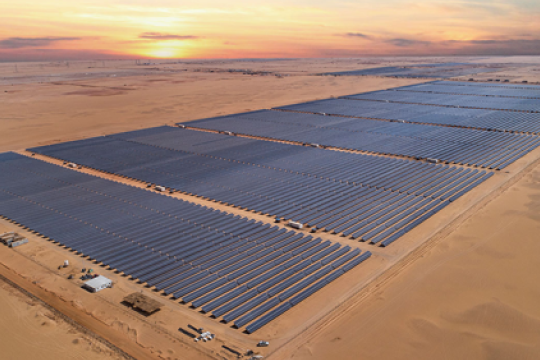
Norway’s Scatec signed a financial close agreement for its USD 600 mn Obelisk 1.1 GW solar and 200 MWh battery storage project, according to a cabinet statement. The agreement is one of several inked yesterday between the government, developing partners, and private-sector players at the Development Finance to Foster the Private Sector conference yesterday.

The project in Nagaa Hammadi holds the mantle of being Africa’s largest under-construction solar power plant. The first phase will bring 561 MW of solar energy and 200 MWh of battery storage online in the first half of 2026 and the second phase will add another 564 MW of solar power in the second half of 2026. Scatec will also handle engineering, procurement and construction, asset management, and operations & maintenance and has signed a USD-denominated, 25-year Power Purchase Agreement with the Egyptian Electricity Transmission Company.

The USD 600 mn project is being funded by an array of lenders and funds, including USD 184.1 mn from the African Development Bank, USD 173.5 mn from the European Bank of Reconstruction and Development (EBRD), USD 100 mn from British International Investment, according to a statement from the EBRD.

Scatec also inked a USD-denominated 25-year power purchase agreement for its Shadwan wind power project in Ras Shukeir with the Egyptian Electricity Transmission Company, according to a statement from the global renewables giant. The 900 MW capacity project will cost around USD 1 bn and is an important part of the state’s Nexus for Food, Water, and Energy initiative. Following the signing, the company will finalize its study of the area in 2H 2026 and proceed towards reaching financial close and kicking off construction.

What was not mentioned is if the project will use sukuk issuances as its source of funding under a new government initiative to attract investments to the 174 sq km Ras Shukeir zone on the Red Sea. The area — which is slightly larger than Ras El Hekma — was formally allocated to the Finance Ministry under a presidential decree published in the Official Gazette earlier this month for the expressed purpose of raising funds through sovereign sukuk issuances and debt reduction. A senior government source told us last week to be on the lookout for a big-ticket project under the initiative “in the coming days”.

The International Finance Corporation also put its financial weight behind the AMEA Power’s Abydos solar project, with a USD 72 mn package to finance the integration of a battery energy storage system (BESS) into its newly launched 500 MW solar plant in Kom Ombo, according to a statement from the international lender seen by EnterpriseAM. “Achieving financial close for Egypt’s first utility-scale BESS project — following the successful launch of our 500MW wind farm in Egypt—is a clear demonstration of our ability to deliver large scale renewable energy projects,” said AMEA Power Chairman Hussain Al Nowais.

10

Real estate

Emaar Misr to develop tourism project on the Red Sea alongside Saudi-owned Citystars Properties. PLUS: Madinet Masr inks KSA expansion MoU, Saudi investor eyes piece of Dreamland

It seems Saudi investors are increasingly looking to team up with Egyptian real estate players, as yesterday’s newscycle saw reports of a number of Saudi investors either involved or looking to get involved in fresh real estate projects in the local real estate market or in collaborating with Egyptian partners in the Kingdom.

EMAAR MISR IS DEVELOPING A RED SEA PROJECT-

Emaar is setting up a Red Sea project: Emaar Misr Properties is developing a 10 mn sqm integrated tourism project on Egypt’s Red Sea in collaboration with Saudi-owned real estate developer Citystars Properties, three anonymous sources told Asharq Business. Emaar will develop the project on a Citystars-owned land plot in exchange for a percentage of the revenues.

The details: The project will be rolled out in six phases, with the first covering 2 mn sqm and including residential units, four- and five-star hotels, a commercial complex, and entertainment facilities. The project is expected to generate over EGP 500 bn in revenues once it is completed.

ICYMI- Emaar has been keeping busy, having inked an agreement earlier this year with Midar Investment to establish the EGP 100 bn New Mivida residential project in New Cairo. Emaar has already invested an initial USD 80 mn in the project.

MADINET MASR TO PURSUE KSA EXPANSION WITH WAHEEJ REAL ESTATE-

Madinet Masr inked an MoU with Saudi developer Waheej Real Estate to help it expand regionally and explore new investment opportunities,” according to a statement (pdf) from the local real estate developer. The two will work towards collaborating on residential, commercial, and administrative projects in the Kingdom, potentially under a joint real estate company based in Saudi Arabia, according to the statement.

What they said: “This partnership marks an important milestone in our expansion strategy across regional markets — particularly in Saudi Arabia, which is witnessing remarkable urban and economic growth. We are proud to collaborate with Waheej for Real Estate and look forward to turning this agreement into tangible, successful projects on the ground,” said Madinet Masr CEO Abdallah Sallam.

SAUDI INVESTOR WANTS A PIECE OF DREAMLAND-

A Saudi investor is reportedly vying for a piece of Dreamland: State-owned lenders National Bank of Egypt and Banque Misr have received an offer from a Saudi investor to acquire 48 feddans in Sixth of October’s urban development Dreamland to set up a residential and entertainment development, unnamed sources told Al Shorouk. The offer is currently under review by the two banks, which took ownership of the 4 mn sqm plot following a decade-long legal dispute with the Bahgat Group.

What’s next? NBE and Banque Misr may opt to split the plot into two or three plots, or proceed with a unified development plan, depending on the financial and technical terms of incoming offers, according to the sources speaking to the outlet.

Competing bids have been circling the land for some time: Around 16 local and Gulf developers had reportedly submitted offers back in February to acquire an 800-feddan plot near Dreamland.

11

Also on our Radar

Beyti plans to raise its investments in Egypt by EGP 7 bn over the next three years

INVESTMENT-

Dairy and juice producer Beyti plans to raise its investments in Egypt by EGP 7 bn over the next three years, in addition to EGP 6 bn currently, General Manager Chris Abboud said, according to a cabinet statement. The Almarai-owned producer is looking to enter new export markets this year, including China, Ivory Coast, Morocco, and Uzbekistan. It’s also eyeing further growth in Sub-Saharan Africa, the Commonwealth of Independent States, and Asia.

REGULATION-

The Financial Regulatory Authority issued temporary license requirements for medical ins. players and healthcare program managers, according to a statement from the regulator. The temporary license aims to give firms the chance to comply with the new requirements set under the Unified Ins. Law, which came into force in July, introducing new, comprehensive rules for regulating the ins. industry. The temporary license will grant firms a one-year grace period to bring their operations into compliance with the new legislation.

To qualify for a temporary license, companies must meet several conditions, including being structured as joint stock companies, having a minimum capital of EGP 10 mn, and having an active ins. portfolio of more than EGP 100 mn.

12

PLANET FINANCE

MENA equities dive on war fears

Markets reel as Israel-Iran conflict escalates: Stock markets across the region tumbled yesterday as the deepening conflict between Israel and Iran triggered a regional sell-off and fresh fears over energy supply, Bloomberg reports.

Egypt’s EGX30 led the losses, falling as much as 7.7% in intraday trading on Sunday — its steepest decline in five years — before trimming losses to 4.6% at market close. The plunge came after Israel halted gas production from its largest offshore field, cutting off supplies to Egypt and stoking fears of a near-term energy crunch in the import-dependent economy. The EGP also weakened further on the parallel market, with local-bank quotes showing trades at around 50.70 per USD yesterday down from roughly 49.80 last week.

Oil cushions the blow for Aramco as TASI slides: In Saudi Arabia, the Tadawul All Share Index (TASI) plunged 3.6% at the open, with 243 of 253 stocks in the red, though losses were pared by state-owned oil giant Aramco, which gained 1.7% on the back of sharp rally in oil. TASI ended the day down 1% yesterday. Brent crude prices spiked by more than 7% to settle near USD 73 on Friday, as market prices in the risk of further disruption to Iranian exports.

UAE markets also priced in the risk on Friday: The UAE markets, which reopen today, had already closed down on Friday, with the DFM falling 1.9% and the ADX losing 1.3%, in anticipation of a wider fallout.

Also from the region: Kuwait’s main index closed down 3.9%, while the Muscat Stock Exchange lost 0.9% and Bahrain’s benchmark dropped 0.8%, respectively. In Tel Aviv, large-cap stocks opened 1.5% lower, though losses were partially offset by a rally in defense contractor Elbit Systems to close 0.5% higher.

Airlines and lenders were among the hardest hit across the Gulf, Reuters reports, with Qatar National Bank (QNB) opening down 3.3% on the Qatar Exchange yesterday, and Jazeera Airways shedding as much as 10% on the Boursa Kuwait amid widespread regional airspace avoidance. In the UAE, real estate companies were also impacted, with developers Emaar Properties and Union Properties closing down 3.5% and 6.9%, while Abu Dhabi's Aldar also dropped 3.9%.

Zooming out: The latest wave of volatility comes as MENA equities continue to underperform global peers this year, pressured by geopolitical overhang, oil-price swings, and mixed fiscal signals in large economies like Saudi Arabia.

MARKETS THIS MORNING-

Asian markets are bucking the trend today, with most of them in the green as investors await data out of China. Japan’s Nikkei is up 0.9%, while South Korea’s Kospi is up nearly 0.6%. Hong Kong’s Hang Seng futures indicate a weaker open. Over on Wall Street, futures point to a slightly stronger open after yesterday’s Iran-Israel conflict-triggered sell-off.

EGX30

31,016

-4.6% (YTD: +4.3%)

USD (CBE)

Buy 50.55

Sell 50.69

USD (CIB)

Buy 50.56

Sell 50.66

Interest rates (CBE)

24.00% deposit

25.00% lending

Tadawul

10,732

-1.0% (YTD: -10.8%)

ADX

9564

-1.3% (YTD: +1.5%)

DFM

5365

-1.9% (YTD: +4.0%)

S&P 500

5977

-1.1% (YTD: +1.6%)

FTSE 100

8851

-0.4% (YTD: +8.3%)

Euro Stoxx 50

5290

-1.3% (YTD: +8.1%)

Brent crude

USD 74.23

+7.0%

Natural gas (Nymex)

USD 3.58

+2.6%

Gold

USD 3452.80

+1.5%

BTC

USD 104,792.80

-0.5% (YTD: +12.0%)

S&P Egypt Sovereign Bond Index

877.27

+0.1% (YTD: +12.8%)

S&P MENA Bond & Sukuk

144.23

-0.1% (YTD: +3.1%)

VIX (Volatility Index)

15.54

+15.5% (YTD: +20.0%)

THE CLOSING BELL-

The EGX30 fell 4.6% at yesterday’s close on turnover of EGP 4.1 bn (14.3% below the 90-day average). Foreign investors were the sole net sellers. The index is up 4.3% YTD.

In the red: EFG Holding (-12.4%), Orascom Development Egypt (-11.1%), and GB Corp (-9.4%).

13

BLACKBOARD

A look at the state’s push to level up agricultural vocational education

The state is turning the spotlight on technical agricultural education: The Education Ministry is working to upgrade the agricultural vocational education system through a comprehensive national strategy as it looks to position agriculture as a key engine of economic growth. The plan, which involves deeper private sector involvement, a curriculum overhaul, and infrastructure upgrades, seeks to cater to the needs of the labor market as part of this push.

Agricultural schools are far outnumbered by their industrial peers: The country is home to 172 agricultural schools, compared to nearly 1k industrial and commercial technical schools, according to Education Ministry figures. Some 219.5k students are enrolled in agricultural schools, representing just 15% of all technical education students — including those in three-year programs, five-year schools, and the dual system Mubarak-Kohl schools. The country’s agricultural schools are staffed by around 11.6k teachers.

In addition to these schools, there are two specialized agricultural institutes, one with 28k students, Ain Shams University Faculty of Agriculture Dean Ahmed Galal told EnterpriseAM.

Private sector partnerships are a cornerstone of the strategy. The ministry is looking to partner with several private manufacturers within the sector to provide hands-on training to the students of agricultural schools, a source at the ministry told EnterpriseAM. The goal is to move beyond traditional academic instruction and offer on-site training at factories, where students can learn about production and processing as well as modern technologies such as smart agriculture systems.

ICYMI- The education and agriculture ministries in December agreed to partner with Heliopolis University and a private agricultural firm to jointly develop agricultural technical schools and train students in different agricultural specializations.

Private players are making headway: Elsewedy University of Technology (SUTech) and UAE-based Al Dahra’s local subsidiary Al Dahra Egypt are working on a joint initiative to train students enrolled in the university’s agricultural programs under an MoU inked by the pair last month. The partnership will see the two parties developing training programs, practical applications, and curricular and extracurricular activities.

Curriculum and infrastructure upgrades are in the works: The ministry is currently working with experts from the Agricultural Research Center to update the curricula of agricultural technical schools, said a source at the ministry’s agricultural extension sector, which works to disseminate agricultural information. The comprehensive plan also includes infrastructurally transforming technical schools into smart schools that leverage modern agritech, the source said.

Graduating business-savvy students is on the agenda, with the strategy seeking to encourage young graduates to establish business incubators in the agricultural sector, the source said.

Developing agricultural education is of economic importance: The state's push to promote agriculture as a driving force for development and achieve food self-sufficiency has made agricultural education imperative, said Galal. Developing this educational sector is essential to raising agriculture's contribution to Egypt's GDP, he explained, pointing to countries whose economies are built on agriculture or livestock as models.

And it could help lower the import bill: While Egypt has the world’s highest per-acre productivity for wheat and rice, it still imports 95% of its vegetable seeds, Galal said.

Interest in agricultural education is rising: A growing number of young people are seeking to change career paths and learn agricultural skills, given the importance of agricultural investment, Galal noted.

What’s next? Bridging the gap between education and the labor market will require stronger partnerships between vocational schools and agribusinesses, Galal said. He also emphasized the need for coursework focused on AI-powered farm management, smart irrigation, and digital agri-tech tools to keep pace with global trends.


JUNE

MPs approveextension of tax dispute resolution window until 30 June 2025, with potential for further extension

JULY

10 July 2025 (Thursday): Monetary Policy Committee’s fourth meeting

15-16 July 2025 (Tuesday-Wednesday): Egypt Mining Forum

July 2025: The first operational trail of Egypt-KSA electricity interconnection line

Etihad Airways to launch twice-weekly flights to Alamein

AUGUST

28 August 2025 (Thursday): Monetary Policy Committee’s fifth meeting.

Tourism Development Authority to waive late payment penalties for land purchases if full installments are paid

SEPTEMBER

Egypt Education Platform (EEP) to launch two new schools in Alexandria and Somabay

Egypt Otsuka’s nutritional products factory in Tenth of Ramadan to begin operations, with exports to Gulf countries expected by January 2026

OCTOBER

2 October 2025 (Thursday): Monetary Policy Committee’s sixth meeting.

12-16 October (Sunday-Thursday): Cairo Water Week, Cairo.

NOVEMBER

20 November 2025 (Thursday): Monetary Policy Committee’s seventh meeting.

November: Egypt to join the EU’s Horizon Europe research and innovation program.

DECEMBER

1-4 December: Egypt Defence Expo (EDEX), Egypt International Exhibition Centre.

25 December: (Thursday): Monetary Policy Committee’s eighth meeting.

EVENTS WITH NO SET DATE

Mid-2025: EGX launches sustainability index.

2Q 2025: Financial Regulatory Authority (FRA) to introduce derivatives on the EGX

2Q 2025: Safaga Terminal 2 to start operations

1H 2025: EGX launches a sharia-compliant sustainability index.

1H 2025: Digital Financial Identity Company will launch an electronic bank account opening service

1H 2025: The Egyptian-US Investment Forum.

1H 2025: The Egyptian Mineral Resources Authority will relaunch a global tender for gold exploration through Shalateen Mineral Resources company.

3Q 2025: Nasr Automotive begins locally manufacturing passenger cars.

Mid-2025: The Administrative Capital for Urban Developments to roll out the second phase of offering industrial plots to investors

2025: The InterAcademy Partnership assembly

2025: Nile Basin States Summit, Cairo, Egypt

2025: Release of the government’s Startup Charter document

2026

Early 2026: Passenger operations on the New Administrative Capital–Nasr City monorail scheduled to begin.

1Q 2026: Trial operations for the Ain Sokhna–Sixth of October section of Egypt’s first high-speed rail line scheduled to begin.

1 January: European Union’s Carbon Border Adjustment Mechanism (CBAM) to fully come into effect

May 2026: End of extension for developers on 15% interest rates for land installment payments

2027

20 January-7 February: Egypt to host the African Games.

April 2027: Tenth of Ramadan dry port and logistics hub to begin operations.

EVENTS WITH NO SET DATE

2027: Egypt to host EBRD’s annual meetings for 2027.

End of 2027: Trial operations at the Dabaa nuclear power plant expected to take place.

September 2028: First unit of the Dabaa nuclear power plant begins operations.

Now Playing
Now Playing
00:00
00:00