Get EnterpriseAM daily

Available in your choice of English or Arabic

EFG Hermes acquires stake in Danish digital wealth manager Kenzi Wealth

1

WHAT WE’RE TRACKING TODAY

Egyptian authorities are working on facilities to attract foreign investors to private freezones

Good morning, folks. It’s another hot day at home led by hot M&A news on the fintech front, with EFG Hermes snapping up a minority stake in a Danish digital wealth manager and e-Finance acquiring minority stakes in two local digital payment firms. We also had a chat with HSBC’s Simon Willams on what’s next for the nation’s economy and monetary policy ahead of the MPC meeting tomorrow, so let’s jump in.

WATCH THIS SPACE-

#1- It could get easier to set up private freezones soon: The General Authority for Investment and Freezone (GAFI) is finalizing a fresh set of requirements for the establishment of private freezones aimed at facilitating the process and attracting foreign investments in the process, GAFI head Hossam Heiba said on Tuesday. The new requirements “protect local investors while attracting foreign investors,” Heiba said.

On the table: The new requirements reduce the percentage of product allocated to the local market to 20% and offer tax breaks for foreign investors. Under the new rules, the process for establishing a company will be fast tracked to be completed within one day.

#2- An airport freezone: The Customs Authority is looking to set up a freezone inside Cairo Airport from which to trade and re-export goods, authority head El Shahat Ghatwary said, according to Al Borsa.

#3- Higher tariffs on chemical imports? The Finance Ministry could amend customs regulations for chemical products in order to boost local industry, a senior government source told Enterprise. The Chamber of Chemical Industries proposed increasing tariffs by 5-10% on chemical products that are imported but have a locally-made counterpart.

HAPPENING TODAY-

The joint annual meetings of Arab financial authorities makes its Egypt debut: Finance ministers, central bank heads, and officials from regional and international bodies are meeting in the new capital today to discuss financial, economic, and development issues, according to a statement from the International Cooperation Ministry.

HAPPENING TOMORROW-

Interest rate day at the CBE: The Central Bank of Egypt’s Monetary Policy Committee will meet tomorrow to review interest rates for the first time after it delivered a jumbo 600 bps rate hike alongside the EGP float at a special meeting in early March.

The polls are in: The MPC is expected to leave interest rates unchanged as inflation cools, FX inflows pick up, and the EGP exchange rate against greenback stabilizes, as unanimously forecasted in our interest ratepoll of 11 analysts and economists earlier this week. Against the grain, Goldman Sachs is penciling in a 2% interest rate cut.

HAPPENING NEXT WEEK-

Egyptian-Libyan construction cooperation agreement on the way? The Egyptian Federation for Construction and Building Contractors is set to sign a cooperation agreement with the Libyan Contractors’ Union next week, Al Borsa reports, citing federation head Mohamed Sami Saad. The agreement aims to set up collaboration mechanisms and financing solutions to increase Egyptian construction companies' participation in Libyan reconstruction projects.

IN THE HOUSE-

Fresh round of budget discussions: The House Budget Committee kicked off a newround of discussions on the 2024-2025 budget on Tuesday. The committee will hold a total of ten meetings on the budgets of various state entities.

Remember: The committee held 21 meetings on the state budget last week, shortly after Finance Minister Mohamed Maait delivered his budget statement to the House.

PSA-

WEATHER- The heatwave is not going anywhere. It’s another extremely hot day in Cairo, with a high of 39°C and a low of 28°C, according to our favorite weather app.

It’s almost as hot in Alexandria, with a high of 36°C and a low of 23°C.

** DID YOU KNOW that we now cover Saudi Arabia and the UAE?

** Want to subscribe? Tap or click here to get your own copy delivered every weekday before 7am Cairo time — without charge.

CIRCLE YOUR CALENDAR-

Breakfast with BEBA: The British Egyptian Business Association (BEBA) is hosting a breakfast briefing under the title “Our World Today: Where Do We Stand In These Tumultuous Times” on Thursday, 30 May. The briefing will be moderated by Karim Helal, president of Concord International Investments Group, with a keynote address by former foreign minister Nabil Fahmy. Register for the event here.

Check out our full calendar on the web for a comprehensive listing of upcoming news events, national holidays and news triggers.

THE BIG STORY ABROAD-

It’s a mixed bag on global front pages this morning with no single story captivating the attention of the business press.

#1- Iran will hold presidential elections on 28 June as the country looks to elect a new president following the death of Ebrahim Raisi in a helicopter crash. Vice President Mohammad Mokhber will serve as interim president in the meantime.

#2- US stocks hit another record high: The S&P 500 and tech-heavy Nasdaq Composite both hit fresh highs yesterday. US stocks have been closing in the green for the past couple of sessions following promising inflation data that reignited trader optimism that the Federal Reserve could start cutting interest rates this year.

#3- Pixar is laying off 14% of its workforce as the company adopts a quality over quantity mindset, a Disney spokesman told CNBC.

*** It’s Hardhat day — your weekly briefing of all things infrastructure in Egypt: Enterprise’s industry vertical focuses each Wednesday on infrastructure, covering everything from energy, water, transportation, and urban development, as well as social infrastructure such as health and education.

In today’s issue: We take a look at the construction sector calls for updated contract standards to keep up with changing industry.

Discover your dream getaway with our signature collection of vacation homes and let our expert team craft your perfect holiday experience.

2

M&A WATCH

Egypt’s EFG Hermes acquires minority stake in Danish Kenzi Wealth

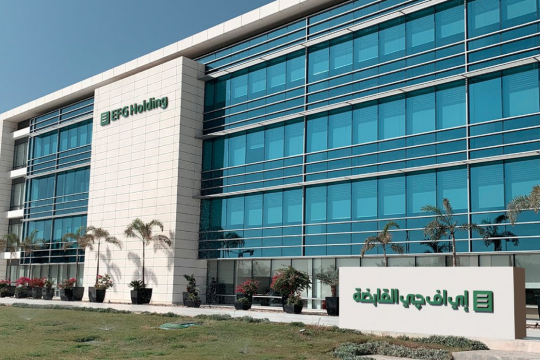
EFG Hermes acquires stake in Kenzi Wealth: Our friends at EFG Hermes have acquired an undisclosed minority stake in the Danish digital wealth manager Kenzi Wealth, marking a “significant milestone in EFG Hermes' digitalization vision that promises to usher in a new era of investment opportunities for clients,” according to a joint statement (pdf).

That’s not all: EFG Hermes will leverage Kenzi’s AI tools to streamline the management of investment portfolios and give investors a more personalized experience under an MoU inked between the two sides.

New features coming to EFG platforms? Under the partnership, EFG Hermes will roll out new services to its customers, such as advanced investment risk analytics, investment selection, portfolio construction, and rebalancing, Kenzi’s CEO Mohamed El Masri said. In addition, Kenzi will help EFG Hermes add new features to its online trading platform EFG Hermes ONE as it seeks to transform it into a one-stop investment platform.

ICYMI: EFG Hermes ONE received the green light last month to kickstart a new feature that will let investment portfolios of up to EGP 5 mn register for accounts digitally to trade on the EGX.

What they said: “This significant move marks EFG Hermes's foray into the realm of personalized investment tools using state-of-the-art technology, thereby expanding our portfolio of products and services,” EFG Hermes Global Head of Brokerage Ahmed Waly said.

3

M&A WATCH

Egypt’s e-Finance snaps stakes in digital payment firms

EGX-listed fintech giant e-Finance has acquired minority stakes in two digital payment companies, Al Ahly Momkn and EasyCash for Digital Payments, the company said in a statement (pdf), without detailing the value of either transaction.

The size of the stakes: E-Finance acquired a 25% stake in Al Ahly Momkn — a subsidiary of the National Bank of Egypt’s investment arm Al Ahly Capital Holding — with the NBE holding the remaining 75%. Meanwhile, e-Finance acquired a 13% stake in state-owned EasyCash.

We saw this coming: An Enterprise source in November told us that e-Finance is in talks to acquire two unnamed retail-focused digital payments.

The rationale: The acquisitions will facilitate e-Finance’s entry into the retail payments market, our source said in November, while also expanding the company’s reach to new customer bases, the statement added. Subsidiary e-Khales currently operates in the market as a bill payment aggregator but does not yet operate its own point-of-sale machines. The retail market is projected to grow in size to EGP 1.5 tn by 2027-2028.

What’s next? The transactions will be implemented in the OTC market on the EGX this month through Al Ahly Pharos Securities Brokerage, added Asharq Business, citing unnamed sources it said are close to the acquisitions.

4

MONETARY POLICY

HSBC’s Simon WIlliams on what we can expect next from the economy and decision makers

Is there a chance the Central Bank of Egypt could begin cutting interest rates when its monetary policy committee meets tomorrow? Possible, but unlikely, says Simon Williams, HSBC’s chief economist for Central and Eastern Europe, the Middle East, and Africa, arguing that a cut at this point “would be premature … given the stress placed on restoring monetary policy credibility in the March IMF program and the importance of anchoring the new FX regime.”

Headline inflation came in at 32.5% last month compared to April 2023 — and was up just 1.1% month-on-month. A second month of muted m-o-m inflation “gives comfort that the pass through from FX weakness (in the parallel FX market in the first weeks of the year and then in the official rate in March) is now complete and that price expectations have started to stabilize,” Williams wrote in a note to clients. “These signs of stability suggest the CBE may soon consider starting to reverse the 800bps of hikes delivered in the first quarter of the year. But if this cycle is going to be different to those that went before, it’s critical they don’t move too soon.”

The business community needs to see rates come down — and so does the state treasury. High rates have ballooned the government’s debt-service burden (it now accounts for north of 60% of revenues) and have caused corporate borrowing to almost entirely dry up.

We caught up with Williams ahead of his visit to Cairo this week to talk rate cuts, what his clients are asking about Egypt, and how he sees things unfolding from here. Below are edited excerpts from our conversation:

ENTERPRISE- How do you feel about Egypt right now?

SIMON WILLIAMS- The acute stress has passed. That's a reflection in large part of the scale of the bilateral and multilateral funding that came through, but also of the policy measures taken by Egyptian officials. You can see that relief in financial markets and in the financial flows. That said, I'm also very conscious that we're still in the early stages of the adjustment process — and that we have to go through a rebalancing before we can start talking about recovery. That’s going to take time, given the substantial remaining structural challenges, particularly in public finances.

We’re seeing signs that price stability is being established and we could see inflation dip below 20% by 1Q 2025. But it’s going to take some time for the new FX regime to bed-in — for onshore and offshore businesses and investors to be comfortable. But this much is clear: Initial policy steps have been positive, and there is now a path forward. Still this is a long process, and we’re very much at the beginning.

E- How long does it take?

SW- It takes a while. If you look at our forecasts, we've got growth starting to pick up next calendar year — though maybe it comes through a little bit earlier. Inflation should fall to the mid-teens level in annual terms once the base effect hits in 1Q. But there's still a lot of work to do to rebalance the economy, and that rebalancing is important to confidence domestically and abroad. This rebalancing of the economy and the broader structural environment are key — it’s not just about the pace of growth that Egypt can generate, but the quality.

E- How do you feel about the FX regime right now?

SW- It’s moving in the right direction. The EGP seems to have found its level somewhere between 45 and 50 to the USD. But we need to see that this new regime has legs — we need to see what a flexible FX regime means in an Egyptian context, and how the currency responds the next time it's stressed.

E- Are you concerned we’ve just re-pegged?

SW- I don’t think so, no. But we need to see how it plays out, and the answer is being closely watched onshore and offshore. Investors need to see that the EGP moves in both directions and to adapt to the notion that the EGP can weaken or strengthen over time in reaction to macro and other developments.

E- What are you watching for now?

SW- Remittances, certainly. They’re much more important to the long-term health of the balance of payments than portfolio flows. Pressure on Suez earnings is clearly going to last and I need a better sense of how far the energy balance may deteriorate.

E- Let’s move to public finances. The Madbouly government has promised to bring all government spending onto the budget over a period of five years. And that’s key — we think there could be more state spending going out (and more revenues flowing into the treasury) off the budget than there is in the budget as it stands. It will be interesting to see what they bring into the budget and when. And what the exceptions might be.

SW- A key part of the IMF program is to consolidate public finances into a single budget, and we look forward like everyone else to seeing what that number looks like.

But clearly the big pressure on public finances is debt service. Compared to 20 or so emerging markets I cover across the Middle East, Africa and Europe the cost of servicing Egypt’s debt right now is exceptionally high. A rising primary surplus and recovering growth should see the debt stock fall, but those large interest payments will slow the pace of adjustment, keep the headline deficit high and leave Egypt vulnerable to any developments that impair access to funding.

E- How closely are you watching the privatization process?

SW- We should see more asset sales over the rest of this year and into 2025. But privatization was supposed to be a tool for driving structural change rather than just generating revenue, and here there has clearly been a shift in emphasis toward controlling off-budget capital spending. I really like this change in focus, but it’s going to be tough to deliver.

Restoring stability, re-establishing confidence in the currency, and renewing policy credibility are pre-requisites for recovery. But these steps have to be coupled with measures that persuade the private sector at home and overseas that there is an environment emerging where they can invest on equal terms with other actors. Start to get that right, and the potential is clear, not just for strong growth, but growth that is FX generative, whether from much higher exports of goods and services, or stronger levels of FDI in everything from oil and gas, to tourism, renewables, manufacturing, and industry.

The bottom line: That needs to take place in an environment in which macro balances are healthy, where we understand how the currency works, in which we understand how public finances work, and where we can have confidence in price stability. That allows an environment in which private capital sees scope for returns and has confidence that they can compete on equal terms. We’ve seen a big drop-off in private-sector capital formation since 2011.

E- What do you make of the price control initiatives officials have been pushing since the float?

SW- I think the market sets prices. Regulation could have an impact in the short term, but it’s about the market, about supply and demand.

E- You’ve talked about merchandise and service exports as being key to high-quality growth. What sectors do you have your eye on?

SW- It’s clear that Egypt has so much room to do more — it has all the competitive advantages. The geographical position, the natural resources, the trade agreements. There are new cost advantages to operating out of Egypt. While I’ve been very happy to see strong tourism numbers, I also think there’s plenty of room to broaden the base of industrial manufacturing.

E- Last we spoke, you said clients had significant interest in Egypt. How is that holding up?

SW- Interest is certainly very strong. I’ve seen a lot of institutional investors in Europe and Asia since the IMF agreement was signed, and just got back from a week in the US. There are a lot of questions, but confidence in the near-term outlook is good and there is conviction that the returns compensate them for the risks they are running. But doubts over the longer-term outlook are still high; investors argue that recent experience means it’s incumbent on Egypt to show things have really changed. No one is taking it on trust.

Foreign investors are perhaps more accustomed to FX volatility than are domestic companies — if you invest in Turkey or South Africa, you’re accustomed to it. But what no foreign investor can risk is the imposition of capital controls.

Obviously, there’s a lot of talk right now about interest rates with portfolio investors looking at local-currency debt assets, but the conversations with corporates and equity investors are at an earlier stage.

E- So what do you see happening next?

SW- We’ve had the relief phase, which has been made possible by large scale financial support and movement on key policy issues, particularly FX. But to turn that into lasting recovery is many ways more challenging and requires long term focus on the imbalances that left Egypt so vulnerable in recent years. That’s partly about addressing the imbalances in the external accounts, in price stability, and on fiscal stability. But it's also about establishing confidence in how policy works and in creating room for the private sector. It’s going to take policy commitment, it's going to take time.

Get it right, and Egypt becomes one of the most compelling emerging market stories out there.

5

Energy

Egypt’s Wepco mulls USD 420 mn expansion of oil storage infrastructure at its Al Hamra Terminal

More crude oil storage for Wepco: The state-owned Western Desert Operating PetroleumCompany (Wepco) is looking to invest some USD 420 mn to expand its Al Hamra termina, Al Arabiya reports, citing an unnamed company source. The first phase of the expansion will see the company setting up and operating four crude oil storage and trading warehouses by August and another four to start operations in 1Q 2025.

Wepco? The state-owned company handles storage and trade operations for crude oil output from Egypt’s Western Desert using its Al Hamra terminal, the sole oil trading port on Egypt’s Mediterranean coast. Crude oil from Al Hamra is transferred to tankers for export, and via pipelines for domestic use.

The details: The first phase of four warehouses will increase capacity by 2.5 mn barrels and will be used to store and facilitate the trade of crude oil to domestic and international buyers in the next fiscal year. The phase is over 90% complete and trial operations are set to begin in June.

Big plans ahead: Wepco is planning to handle 95 mn barrels of oil at its Al Hamra terminal during the upcoming fiscal year — an average of 260k barrels per day.

6

Development finance

EBRD provided NBE with USD 119.5 mn in financing for Egyptian MSMEs

EBRD greenlights NBE loan: The European Bank for Reconstruction and Development (EBRD) will provide the National Bank of Egypt with USD 119.5 mn for on-lending to local micro, small and medium-sized enterprises (MSMEs), the lender said in a statement. The funds will target businesses with a “regional focus that are owned or led by women or young people.”

A two-parter: This funding will be disbursed under an A/B loan structure — a financing arrangement used to provide large loans to borrowers in EMs, the first part of the loan is financed by a development finance institution, while the second is sold to other lenders. While A loan came from the EBRD, B loan has been mobilized by Dutch-based and SDG-focused asset manager ILX Fund.

More to come: The funding is part of a potentially larger financing program that could be delivered over several stages.

Driving the loan: The loan will help “mobilize the private-sector funding necessary for economic development, while diversifying NBE’s funding base and supporting its financial inclusion agenda,” the statement said.

7

EARNINGS WATCH

Egypt’s Orascom Construction’s net income up 28% in 1Q 2024

Orascom Construction saw its net income rise 27.7% y-o-y in 1Q 2024 to USD 46.1 mn, backed by strong operational performance and the company’s efforts to improve financial management, according to the company’s latest earnings release (pdf). The construction giant recorded revenues of USD 766.3 mn — a 4.8% y-o-y decrease — which the company attributed to the float of the EGP seeing as its figures are denominated in USD. Revenues would have seen a y-o-y increase if they were calculated in EGP.

Backlog nears record high: The company’s consolidated backlog grew 33.1% y-o-y to USD 7.3 bn — projects in Egypt accounted for 68.2% of Orascom Construction’s total consolidated backlog. The company’s new awards fell 29% y-o-y to USD 609.5 mn during the quarter.

Looking ahead: “Our backlog ... has provided us with strong visibility for the upcoming period as we continue to focus on project execution, collections, financial management, and ramping up our large-scale contracts signed in 2H 2023,” said CEO Osama Bishai.

8

LAST NIGHT’S TALK SHOWS

A tragic accident leaves 12 dead and 5 missing

It was a grim night on the airwaves, as the nation’s talking heads covered the tragic accident that occurred in Giza yesterday, when a microbus slipped from a Nile ferry into the water killing 12 and leaving five missing. The accident occurred when the driver of the microbus got into a verbal altercation with another driver, as the ferry was crossing the Nile. This led him to leave the microbus without applying the hand brakes, leading the bus to slide into the water.

The story received wide coverage from Kelma Akhira (watch, runtime: 4:44), Ala Masouleety (watch, runtime: 10:20), Al Hayah Al Youm (watch, runtime 6:40) and Yahduth fi Masr (watch, runtime: 6:44).

ALSO ON THE AIRWAVES- Talk shows continued their coverage of the International Criminal Court chief prosecutor’s efforts to charge Israeli and Hamas leaders with war crimes and issue warrants for their arrest. Kelma Akhira (watch, runtime: 6:14), Al Hayah Al Youm (watch, runtime: 3:27), and Yahduth fi Masr (watch, runtime: 11:56 | 8:26) had coverage.

This publication is proudly sponsored by

9

EGYPT IN THE NEWS

A Greek judge dismisses a case against nine Egyptians

Free at last: A Greek judge dismissed a case against nine Egyptian men accused of causing a shipwreck that killed over 500 migrants last year, according to the Associated Press and Reuters. The Egyptians spent 11 months in Greek detention on charges of migrant smuggling and causing the shipwreck.

The Associated Press also took note of an accident that left at least ten Egyptian women and children dead and five missing, after a microbus slid off a ferry and into the Nile in Giza. More on the accident in the news well, above.

10

ALSO ON OUR RADAR

Fresh investments into Egypt’s Masria Digital Payments

INVESTMENT-

Fresh investments into Masria Digital Payments: Local e-payments firm Masria Digital Payments (MDP) is in talks with five local and international investment funds over a USD 80-100 mn investment, CEO Ahmed Nafie told Al Arabiya Business. Talks are expected to wrap up in 2H 2024.

Big things ahead: The capital increase comes as MDP looks to expand its operations in Africa and enter the European and Gulf markets.

REAL ESTATE-

Al Ahly Sabbour is looking to set up a real estate project in Oman and is currently in negotiations over a plot in the country’s Sultan Haitham City, chairman Ahmed Sabbour told Al Borsa. The developer wants to develop an integrated urban project — to house 2k residential units and commercial and administrative spaces — in partnership with an undisclosed Gulf partner, Sabbour added.

DEBT-

Banque Misr is lending Edita EGP 990 mn under an 8-year loan agreement, according to a statement(pdf) from the snackmaker. The loan will be used to finance Edita’s local expansion plans — a chunk of the loan has already been allocated to finance a new bakery line, expected to kick off operations in the second half of the year.

ICYMI: Edita announced that it secured the loan last week without disclosing the name of the lender.

Expansion plans: The snackmaker is planning to invest between EGP 900 mn to 1 bn this year to expand its operations, the company’s IR Menna Shams El Din told Al Borsa. The company wants to add two new production lines to its factories, which will increase its production capacity by more than 10% and help the company meet growing demand.

MANUFACTURING-

Alco Tech planning Saudi aluminum complex: Aluminum manufacturer Alco TechEngineering wants to develop a USD 5 mn industrial complex producing aluminum panels in Riyadh, company chairman told Al Borsa. The complex will be constructed in partnership with a Saudi contractor, with Alco Tech taking a 50% stake in the complex in exchange for providing half the required investment.

11

PLANET FINANCE

Crypto gains on ETF optimism

Ether jumps on exchange-traded funds speculation: ETH approached its biggest two-day gain in nearly two years as traders await US regulators' decision on spot exchange-traded funds (ETFs) for ETH, Reuters reported.

The numbers: The crypto market’s second-largest player was up 7.3% yesterday to sit at USD 3.7k as of midnight. BTC also neared its all-time high on Tuesday, closing at USD 79.7k. BTC has surged 65% in 2024, closely trailed by ETH, which has gained 63%.

Driving the rally: Investors are keeping a close eye on the US Securities and Exchange Commission's (SEC) decision regarding ETH ETFs, expected this week, the Financial Times writes. “The political dynamics around crypto in Washington were shifting, after 18 months of regulatory crackdowns and Democrat-led blocks to regulation,” Bernstein analyst Gautaum Chhugani.

Remember: Investors poured some USD 900 mn into BTC ETFs in the three days after the SEC greenlit the funds.


Also worth knowing about this morning:

  • Blackstone will grant equity to rank-and-file employees of the companies in which it invests in the United States going forward. The private equity giant’s plan is “part of a broader movement in the buyout industry to expand ownership beyond management ranks. (Wall Street Journal)
  • The Tadawul All Share Index is nearly 6% behind the MSCI Emerging Markets gauge this year — Saudi stocks are lagging behind other EM counterparts for the first time since the pandemic. (Bloomberg)

MARKETS THIS MORNING-

Asian markets are largely unchanged in early trading this morning. Alone among major benchmarks, Japan’s Nikkei is down (-0.75%) while the Hang Seng, Kospi, and Shanghai Composite are all holding their ground. European and US futures were also pretty much flat overnight after US shares notched fresh highs again yesterday.

One weird thing: With all of these fresh highs being hit, there are virtually no headlines out there with random pundits called upon to declare that a correction is in the cards. Heck, even the so-called “fear index” — the Vix, or volatility index — is trading at a five-year low.

EGX30

27,225

0.0% (YTD: +9.4%)

USD (CBE)

Buy 46.58

Sell 46.72

USD (CIB)

Buy 46.6

Sell 46.7

Interest rates (CBE)

27.25% deposit

28.25% lending

Tadawul

12,122

0.0% (YTD: +1.3%)

ADX

9,009

-0.3% (YTD: -5.9%)

DFM

4,075

+0.2% (YTD: +0.4%)

S&P 500

5,321

+0.3% (YTD: +11.6%)

FTSE 100

8,416

-0.1% (YTD: +8.8%)

Euro Stoxx 50

5,047

-0.5% (YTD: +11.6%)

Brent crude

USD 82.88

-1.0%

Natural gas (Nymex)

USD 2.66

-0.3%

Gold

USD 2,448

0.0%

BTC

USD 69,658

+0.3% (YTD: +64.8%)

THE CLOSING BELL-

The EGX30 was essentially flat at yesterday’s close on turnover of EGP 5.7 bn (16.8% above the 90-day average). Regional investors were net sellers. The index is up 9.4% YTD.

In the green: Ezz Steel (+7.2%), Mopco (+6.1%), and AMOC (+5.5%).

In the red: Qalaa Holdings (-7.7%), GB Corp (-4.8%), and Sidi Kerir Petrochemicals (-3.0%).

12

HARDHAT

Egypt’s construction sector calls for updated contract standards to keep up with changing industry

The construction industry is changing and outdated legislation isn’t keeping up: Local contracting companies that have historically relied on the government for projects have a difficult few years ahead, with a EGP 1 tn cap on public investments planned for the next fiscal year meaning that they’re going to have to increasingly look elsewhere to find contracts to ink. An uptick of foreign investment and from the domestic private sector — especially following the EGP float and Ras El Hekma agreement — could very well fill the gap, but outdated legislation and regulations for structuring contracts that are not aligned with international standards means that many Egyptian companies are missing out, industry insiders told Enterprise.

We’re going to be seeing a lot less tenders for state projectsThe state’s efforts to promote the private sector and calls from bodies like the IMF to rationalize fiscal policy and slow spending on infrastructure projects has meant that Egypt has been keen to emphasize to international backers and investors its commitment to its new policy objectives for the upcoming fiscal year. In addition to the EGP 1 tn cap on public investment in the next fiscal year, state-funded investments will focus on ongoing national projects that are at least 70% complete and expected to enter the operational phase within a year or two at most. New national projects will also only get funding if they get the go-ahead from the cabinet.

But as one door closes, another opens: Following the float of the national currency and the announcement of the goliath USD 35 bn Ras El Hekma project, foreign and domestic funds have readied for a boom in the country’s real estate sector and construction industry more generally. Developers have been keen to tout their expansion plans for this new economic reality and further foreign-funded projects. After having expanded under state infrastructure plans, many local contractors are now shifting their focus to the foreign companies looking to invest in Egypt, Contractors Union member Mamdouh Morshedy told Enterprise.

However, local — and mostly smaller — contracting companies are missing out on the new projects: Several industry insiders who spoke with Enterprise told us that some foreign investors hire foreign contractors and consultants for their projects here because of a lack of regulation specifying how contracts should be drawn up between local contractors and companies that aren’t owned by the Egyptian government.

This is especially true for projects funded by international lenders: Local contractors are reluctant to submit bids for projects funded by international lenders like the World Bank, European Bank for Reconstruction and Development, and the African Development Bank because they adhere to international standards in contracts that aren’t part of the country’s regulatory framework, Egyptian Federation for Construction and Building Contractors (EFCBC) head Mohamed Sami Saad told Enterprise.

A regulatory framework exists, but only for contracts with the government: The 2018 Public Contracts Act governs government contracts with local contractors, but with the shift away from the government to the private sector — often from the Gulf and elsewhere abroad — regulatory frameworks for contracts with non-state entities need to be developed, Saad told us.

New regulations for construction contracts that align with international standards are badly needed: If the country is to realize its goal of attracting further investment and becoming a construction hub in the region, new standards through contracts that align with the standards laid out by the International Federation of Consulting Engineers (FIDIC) need to be put in place, Saad said.

FIDIC contracts? FIDIC contracts have set out globally recognized international standards for the consulting industry that balance the interests of contracting companies and other stakeholders. FIDIC contracts ensure a balanced relationship, clear rights and obligations for both parties, and include specific guidelines to address project-specific issues without upsetting the risk balance.

It’s already practiced by big players: EFCBC board member Shams El Din Youssef highlighted that some companies in Egypt already operate under FIDIC guidelines, particularly those with sufficient financial solvency to engage in projects funded by international bodies or local projects financed by loans that apply FIDIC contracts. Meanwhile, other companies working on local projects adhere to the current law.

The construction industry is pushing for new legislation that aligns with international practices established by FIDIC: "We proposed a balanced contract to the Finance Ministry that mirrors FIDIC contracts, which ensures best procedural practices in construction and legal methods for resolving disputes related to construction contracts," Saad told Enterprise. Saad expects the Finance Ministry and Housing Ministry to soon study and approve their requests.

But, the regulatory frameworks governing contracts with government authorities also need updating: The 2018 Public Contracts Act favors the assigning authority and the expense of contractors, Morshedy told us, explaining that there is not the same mutual protection offered to both parties as in FIDIC contracts. Contracting companies can also face fines for late delivery and often take out high interest loans to meet timelines. Current standards also lack provisions for dealing with potential risks, including natural disasters and force majeure, Youssef said.

Government acknowledges the problem: Atter Hannoura, director of the Finance Ministry’s PPP unit, told Enterprise that many Egyptian companies do not participate or have their bids rejected due to administrative issues or unclear terms, despite having excellent technical proposals. He emphasized that the government is working with contractors and consultancy firms, to position them as service providers for international bodies with plans to increase their funding in the region based on standards common to most international entities.


Your top infrastructure stories for the week:

  • NTRA joins forces with Huawei to bolster cyber security: Egypt’s National Telecom Regulatory Authority (NTRA) has signed an MoU with Chinese telecom giant Huawei to buff up the country’s national cyber security practices and foster a secure digital ecosystem, Huawei said in a statement (pdf).
  • Linking Egyptian, Italian ports: An affiliate of Egypt-based Pan Marine Group, Medkon Lines Egypt, is considering opening a new line between Alexandria and an unnamed Italian port in order to facilitate trade movement between Egypt and Europe, Pan Marine Executive Director Marwan El Shazly told Al Mal. Shipments between the two ports will occur twice a month, he added, without providing a specific timeline.

2024

MAY

22 May (Wednesday): Egypt will host the annual meetings of Arab financial authorities, at the new capital.

23 May (Thursday): Central Bank of Egypt’s Monetary Policy Committee meeting.

25-27 May (Saturday - Monday): Techne Summit, Cairo International Stadium.

26 May (Sunday): Center of Excellence for Energy’s stakeholder’s meeting on Egypt’s energy transition, Cairo Marriott Hotel, Zamalek.

29 May (Wednesday): Virtual launch of Chicago Booth Executive Program.

JUNE

15-19 June (Saturday-Wednesday): Eid El Adha (TBC) (national holiday).

29-30 June (Saturday-Sunday): EU-Egypt Investment Conference.

30 June (Sunday): June 30 Revolution Day (national holiday).

JULY

7 July (Sunday): National holiday in observance of Islamic New Year (TBC).

18 July (Thursday): Central Bank of Egypt’s Monetary Policy Committee meeting.

23 July (Tuesday): Revolution Day (national holiday).

AUGUST

4-5 August (Monday-Tuesday): Egypt Expat Forum.

SEPTEMBER

2-5 September (Monday-Thursday): Egypt International Airshow, El Alamein International Airport.

5 September (Thursday): Central Bank of Egypt’s Monetary Policy Committee meeting.

15 September (Sunday): National holiday in observance of Prophet Muhammad’s birthday (TBC).

25-26 September (Wednesday - Thursday): The Asian Infrastructure Investment Bank’s (AIIB) 2024 annual meeting, Samarkand, Uzbekistan.

OCTOBER

6 October (Sunday): Armed Forces Day.

17 October (Thursday): Central Bank of Egypt’s Monetary Policy Committee meeting.

21-27 October (Monday-Sunday): The World Bank and IMF annual meetings.

NOVEMBER

21 November (Thursday): Central Bank of Egypt’s Monetary Policy Committee meeting.

DECEMBER

26 December (Thursday): Central Bank of Egypt’s Monetary Policy Committee meeting.

EVENTS WITH NO SET DATE

April 2024: President Abdel Fattah El Sisi will visit Turkey.

1Q 2024: Egyptian-Qatari Joint Supreme Committee.

1Q 2024: Opening of the newly developed Pyramids Plateau in Giza.

1Q 2024: The government is set to finalize the sale of the Gabal El Zeit wind farm.

February-May: The Grand Egyptian Museum could officially open to visitors.

March 2024: The USD 2.7 bn MIDOR Refinery is set to begin full operations.

May 2024: Egypt to receive USD 20 bn of Ras El Hekma funds.

May 2024: Arab Finance Ministers’ meeting at Egypt’s administrative capital.

June 2024: Gov’t expects to finalize sale of Beni Suef combined-cycle power plant.

Mid-year: The fifth Japan-Arab Economic Forum.

1H 2024: Gov’t expects to finalize sale of four water desalination plants.

2H 2024: Gov’t to launch the Cairo Ring Road BRT buses.

3Q 2024: Egyptian-Armenian Joint Committee.

November 2024: Egypt to host the World Urban Forum (WUF12).

End of 2024: The launch of the high-speed train line linking Ain Sokhna with Al Alamein City.

End of 2024: Shalateen Mining Company to launch a gold exploration bid in the Eastern Desert.

2025

EVENTS WITH NO SET DATE

2Q 2025: Safaga Terminal 2 to start operations.

2027

20 January-7 February: Egypt to host the African Games

EVENTS WITH NO SET DATE

End of 2027: Trial operations at the Dabaa nuclear power plant expected to take place.

Now Playing
Now Playing
00:00
00:00