Get EnterpriseAM daily

Available in your choice of English or Arabic

Contraction in Egypt’s non-oil private sector deepens in September

1

What We're Tracking Today

Legislation to check Egypt’s soaring food prices in the cabinet pipeline

Good morning, friends. We hope you’ve had a fantastic week as we prepare to slide into a holiday long weekend here in Omm El Donia.

EnterpriseAM is off tomorrow along with EnterprisePM, but we’ll slide into your inboxes with our Enterprise Weekend Edition at 9am CLT. Enterprise Climate and Enterprise Logistics, which cover regional industries, will also publish tomorrow. We’ll be back to our normal schedule on Sunday.

It’s our last holiday of 2024 — make the most out of it, wonderful people. Also: Happy Thanksgiving (a couple of days early) to all of our Canadian friends.

WATCH THIS SPACE-

Emergency measures to curb food price inflation could be days away: The government will announce next week new measures aimed at putting a lid on the soaring prices of basic goods, cabinet said yesterday. The statement didn’t provide many clues about what rules will be put in place but said they will be coordinated by key ministers, the Central Bank of Egypt, manufacturers and traders. This came following a meeting between Prime Minister Moustafa Madbouly, central bank governor Hassan Abdalla, the supply, finance, trade ministers, and business representatives.

What they’re saying: “We will work together to ensure that there is an abundance of various commodities in the markets, which will contribute to lower prices, especially food commodities…we will participate together in developing solutions that ensure a decrease in the prices of basic commodities,” Madbouly said. Agreements will be made with various commercial chains, Supply Minister Ali El Moselhy added, with “the goal of making the consumer feel a real reduction in prices.”

Flooding the market: Authorities will try to control prices of nine basic commodities from next week, according to Federation of Egyptian Chambers of Commerce secretary-general Alaa Ezz, who gave several interviews on the airwaves last night to discuss the plans. According to Ezz, large quantities of oil, sugar, rice, pasta, beans and dairy will be pumped into supermarkets in a bid to tamp-down prices, he said.

Remember: Food price inflation is soaring at a record rate on the back of a series of currency devaluations, the FX crunch, and a shortage of raw materials. Authorities have in recent days taken action to curb sugar prices, and have banned onion exports until the end of the year.

IT’S A BIG DAY FOR ENERGY NEWS-

#1- Egypt will resume LNG exports this month, Oil Minister Tarek El Molla told Reuters yesterday.

Time + quantity TBA: “We are still arranging and preparing for that, quantities are not yet defined,” he said.

We want to be a regional gas power: Egypt has moved to position itself as one of Europe’s key energy partners — and we’re looking to increase exports of Egyptian and Israeli gas across the Mediterranean.

But this has been hard this year: We have exported hardly any LNG over the summer months due to higher domestic consumption and lower gas production. The seasonal spike in demand, combined with production falling to three-year lows, has put pressure on the electricity grid, forcing the government to introduce rolling blackouts since July.


#2- Some good news on Egypt’s green hydrogen front: Egypt will operate its first green hydrogen facility in 2026, an Electricity Ministry source confirmed to Enterprise Climate yesterday. Trial stages at the unidentified facility are set to begin in mid-2025, our source said. The news was first reported by Youm7.

Aiming big: Egypt aims to produce up to 1.5 mn tons of green hydrogen per year by 2030 through 19 GW of generated energy from solar and wind projects. The country aims to raise production to 5.8 mn tons by 2040 from 72 GW of generated renewable energy. This would allow the export of 3.8 mn tons, which would account for 5% of the global green hydrogen market, according to Youm7’ssource.


#3- OPEC+ meeting today: OPEC+ is expected to maintain oil production cuts during today’s meeting. Saudi Arabia and Russia’s decision to extend oil production cuts until the end of the year pushed oil prices to 10-month highs last month.

The rally in the oil markets has lost some steam over the past couple of days as global markets respond to fears that US interest rates will remain high over the long term. Brent crude has fallen almost 7% over the past four sessions to hit its lowest level in three weeks.

Also moving the energy markets:

  • UAE to ramp-up oil production: Worried about underinvestment in the industry, the COP28 host plans to expand its oil production capacity to 5 mn barrels a day by 2027. (Bloomberg)
  • Russia fuel export ban in place until….? Moscow won’t commit to a timetable to ending its fuel export ban, and will leave it in place until domestic shortages are addressed and prices stabilize. (Reuters)

HAPPENING TODAY-

Senate elections: The upper house will hold committee elections today, with Senate speaker Abdel Wahab Abdel Razeq opening up the door for members wishing to run for leading posts of the chamber’s 14 committees. The results will also be announced later today.

** The House committee election results are in: We have the details on the results in this morning’s news well, below.

MARKET WATCH-

A steep sell-off: Asian markets are firmly in the red again this morning, led by Korea and Japan, mirroring steep declines yesterday in major equity indexes in Europe and the US.

The Dow is now negative YTD: The sell-off left the Dow Jones Industrial Average down 1.3% yesterday, wiping out its 2023 gains. The Nasdaq fell almost 2.0% yesterday while the S&P 500 ended the session 1.4% in the red. The sell-off on Wall Street followed an equally ugly day in Europe and Asia.

Blame turmoil in the bond markets: The rout in global stocks is being fuelled by an accelerating global bond sell-off, triggered by fears that global financial conditions are going to remain tight over the long-term.

Futures point to new waves of selling at the opening bell today in both Europe and North America.

THE BIG STORY ABROAD-

Dominating the foreign news today: McCarthy is out. Dissident Republicans toppled US House Speaker Kevin McCarthy yesterday, in retaliation for his brief alliance with the Democratic side of the House to pass legislation preventing a government shutdown on Saturday. McCarthy, who has held the position for nine months, becomes the first US House speaker to be removed. Rep Patrick McHenry has been named as interim speaker until a successor is chosen. (Associated Press | Reuters | Bloomberg | Financial Times | New York Times | Washington Post | Wall Street Journal)

*** It’s Hardhat day — your weekly briefing of all things infrastructure in Egypt: Enterprise’s industry vertical focuses each Wednesday on infrastructure, covering everything from energy, water, transportation, and urban development, as well as social infrastructure such as health and education.

In today’s issue: Mobile natural gas car filling stations are coming to Egypt.

Together: Three days of music set against the stunning backdrop of Somabay by the Red Sea. From 5-7 October, two events organizers at the forefront of Egyptian nightlife, ByGanz and Nacelle, will bring together world-famous electronic music DJs such as Birds of Mind, Richy Ahmed, Henrik Schwartz, Hunee, and Guti, as well as regional and local artists. Together is a full three-day experience with beach activities from sunset to sunrise.

2

ENTERPRISE FINANCE FORUM

Enterprise Finance Forum: Three industry leaders on the opportunities + challenges in Egypt’s financial sector

Welcome to the hot seat: Egypt’s position in the regional financial industry is at an inflection point. After competing for years with the UAE, we’re now also competing with Saudi Arabia — for resources, talent, capital, and investment appetite — as the kingdom rises as a burgeoning financial hub. And then there is the fallout from the FX crunch, rising interest rates in development markets. And yet there are reasons to be bullish about the industry’s prospects.

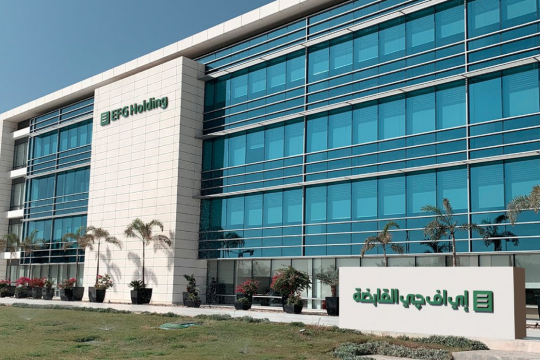
In the opening panel of the Enterprise Finance Forum, we welcomed on stage three leading figures in the financial industry to discuss some of the challenges and opportunities in the sector: HSBC Egypt CEO Todd Wilcox, group CEO of EFG Holding Karim Awad, and Leila Serhan, group country manager and senior vice president for Visa.

We are most certainly competing with KSA and the UAE: Saudi Arabia isn’t just growing, it is backed by plenty of capital to pour into more of the same, Wilcox said. “They’re certainly going to be a difficult neighbor [from a competition for opportunity point of view],” he said. Saudi’s GDP is on an upward trajectory with an annual non-oil growth rate of around 5.5%, said Wilcox, adding that this economic engine will continue to thrive for some time.

Industrialization will help ensure Egypt retains an important position in the regional financial ecosystem : Many of the world’s leading financial centers, including London, New York and Tokyo, developed in countries with strong industrial bases, Wilcox noted. Playing to our strength as a manufacturing hub with with a large real and diversified economy will be key. Finance will follow: “That’s where the country's moving to and that’s where I think the future and the benefits lie,” he said.

We still have comparative advantages to KSA: “Egypt has got natural advantages in terms of location, cost of production, industry and logistics,” Wilcox said. “The Egypt brand plays well in other countries trying to pull in FDI,” he added, pointing to increasing appetite in Asia for Egypt, particularly as manufacturers in China look at a “China +1” strategy.

The war for talent is at least as real as the competition for opportunity: The best and brightest are being attracted to Saudi: Compensation is high, living conditions are becoming more and more attractive, and we’re finding that plenty of younger talent wants to move there, said Awad. This competition is going to make it harder for Egyptian banks and financial institutions to retain talent, making it more important that they offer more competitive packages and promote better work-life balance, he added.

Bringing more women to the table could be a key element in the battle for talent: “We have a shortage of talent, so this is the chance to go and hire more women and help them grow,” Serhan said, emphasizing the importance of having women in leadership positions. Bringing more women into the industry — and reintegrating mothers following maternity leave, for example — “makes business sense because it would be crazy not to encourage half of the workforce.”

BUT- Saudi Arabia isn’t just a direct competitor: It’s also a complementary market for Egyptian firms. With its large population of 30+ mn people and healthy capital flows, Saudi has many of the characteristics of a classical emerging market and should be on the list of potential expansion territories for many Egyptian companies, said Awad. “At EFG we recognized this potential 15 or 16 years ago and we decided to expand there in 2007 because we foresaw it developing into a major hub.”

Plus, it’s not all rainbows and butterflies in Saudi: Serhan and Wilcox agreed that the Saudi regulatory framework can still be difficult to navigate because of issues related to data usage and protection, among others. “Companies would need to make a lot of investments in terms of risk management and other compliance related tools” to be able to effectively operate there, Serhan said.

Egyptian companies have a chance to outsource infrastructure expertise to KSA: There’s a significant opportunity in Saudi for Egyptian infrastructure companies, Wilcox said. “Egypt has done a lot on infrastructure in the last few years, we've got experience that we should be able to take there,” he said.

CHECKLIST FOR ECONOMIC RECOVERY- Inflows + IMF review + robust monetary policy: Wilcox emphasized the need for rapid reform progress if the country is to transition to a more normal economic environment. Accelerating inflows from FDI and asset sales under the state privatization program, completing the delayed reviews of the IMF program, and rethinking monetary policy ideally should all take place before the end of 1Q 2024, he said. These moves should all be communicated in a clear message to the market that the government is making a decisive shift in its approach to the economy, he added.

The answer to those high-yields clogging up bank balance sheets? More lending — when interest rates come down. High-interest certificates of deposits (CDs) weigh on banks’ long-term profitability because it’s difficult for them to lend at similar rates, Awad said. He stressed that banks should look to increase lending and wait out the current unfavorable situation until rates begin to fall. “A lot of the balance sheets of banks today are dedicated to treasury bills rather than lendingor even overdrafts,” he said. Meanwhile, Wilcox told the conference that HSBC’s asset-to-deposit ratio “isn't where it should be” and that the bank needs to be doing more lending. “We need to see where the yield curve is at. We need to see that inflation is starting to break, and I think we get to a much healthier place.”

And there are some asks for the regulator: Wilcox highlighted the need to amend digital regulations enabling electronic signatures, cloud services, and facilitating data movement. There’s also work that needs to be done on the data privacy and security front, particularly with advances in artificial intelligence: “AI is not going to happen in your backyard data center, but rather in the cloud,” Serhan said. “You don’t want to be in an industry that is behind because of a lack of or restraining regulations.”

And our regulators need to remember that we’re in a global competition: Asked what he would request of the regulator if given one wish, Awad said: “Speed, speed, speed.” Egypt is moving forward, but other countries are racing, Serhan and Wilcox agreed.

One area where we’re not behind: Fintech. “Egypt is obviously standing out in terms of fintech innovation,” said Serhan. Egypt, along with Nigeria, Kenya, and South Africa have not experienced a slowdown in capital inflows, unlike Gulf countries which have experienced a “major slowdown attributed to founders and to equity investors becoming more demanding.”

Expect more consolidation in fintech than in the traditional finance sector, whatever happens with the state asset sale program. Wilcox expects to see consolidation happen in the fintech sector more than in the traditional banking sector. “Fintech startups are built for M&A because they want to build scale and that’s where the money is,” he said.

What will trigger M&A activity in banking? Traditional banks will eventually catch up with the consolidation drive especially if the regulator insists they start to scale and build their capital base, said Wilcox, adding that “banks will need to grow bigger and deeper” if they want to compete regionally and attract foreign investments.

A marriage of banks and fintechs? Awad and Serhan explained that consolidation between traditional banks and fintechs is an effective way for banks to improve their tech offerings and for fintechs to scale. “Larger financial institutions weren’t initially built for tech and that’s why they are looking to acquire smaller fintech companies because they need that marriage,” said Awad. Serhan also highlighted the requisite regulatory licensing changes needed to facilitate this transition for traditional banks.

What are the pressing questions keeping so many of us in the industry awake at night? In brief, it’s about how to future -proof. While Wilcox expressed concerns over future external shocks, Awad said that for EFG it’s all about how to stay ahead of emerging trends, while Serhan contemplated the imminent influx of young people into the financial sector as clients — particularly Gen Z — stressing the necessity of understanding their behavior and serving them better with advanced technology.

3

Economy

Contraction in Egypt’s non-oil private sector deepens in September

Two steps forward, one step back: The contraction in Egypt’s non-oil private sector deepened in September as the impact of successive currency devaluations caused a sharp fall in output, according to S&P Global’s latest PMI figures (pdf) out yesterday. The index slipped to a four-month low of 48.7 from 49.2 in August as soaring inflation and shortages of raw materials caused an “unprecedented” rise in backlogs despite client demand continuing to fall.

A reversal: The depth of contraction had gradually eased over the previous five months, with the waning effects of January’s currency devaluation helping to stabilize the non-oil economy and pushing the PMI to its highest level in almost two years in June. Nonetheless, the reading has remained below the 50.0 threshold that separates growth from contraction for 34 months, taking us close to three years with zero growth.

High prices + supply problems = record backlogs: Businesses faced “unprecedented pressure on their operating capacity in September despite sales continuing to fall,” said David Owen, senior economist at S&P Global Market Intelligence. “Firms frequently reported that the high-inflationary environment and a lack of raw material supply meant they were often unable to fulfill client orders,” he added. This is the sharpest recorded increase in work backlogs since the PMI survey was launched in 2011.

But businesses are hiring: Firms recruited new staff at the fastest rate in more than five years in September, according to the PMI. This is the second month running companies have expanded headcount.

Looking into the crystal ball: September’s report described non-oil businesses as “mildly confident” of an increase in output over the next year. On the confidence front, the report pointed to a slip in confidence from August’s poll that reported only 9% of respondents sharing a positive outlook for the coming year, stating liquidity and price volatility concerns.

FROM THE REGION- Saudi PMI accelerates: The kingdom’s non-oil private sector grew at an accelerated rate last month with their headline PMI rising to 57.2 from 56.6 in August on stronger sales, according to the PMI (pdf). The UAE PMI is due out today at 7:15am CLT.

4

M&A WATCH

DPI joins race for stake in Middle East Glass

The race for Gulf Capital’s stake in Middle East Glass is on: Africa-focused private equity firm Development Partners International (DPI) has joined the race for Gulf Capital’s entire 37% stake (23.1 mn shares) in EGX-listed bottle maker Middle East Glass(MEG), unnamed sources reportedly told A l M a l.

Also in the race: Impact investor Mediterrania Capital Partners and a number of other unnamed bidders are interested in acquiring the minority stake in the company, the newspaper reported in August. Neither DPI nor Mediterrania returned requests for comment yesterday when we reached out.

Where things currently stand: The bidders are currently doing due diligence on MEG, the sources said. Gulf Capital is still receiving offers.

Who owns what? Parent firm MENA Glass Holding holds 53% of MEG, while Gulf Capital’s 37% stake (owned through special purpose vehicle MTM Packaging 2) makes it the second-largest shareholder. ICG Holdings owns 6%.

Advisors: Arqaam Capital is acting as the sell-side advisor.

DPI has been loving Egypt: The London-based private equity outfit has acquired minority stakes in local pharma player Marcyrl and supermarket chain Kazyon.

5

Startup watch

Egyptian startup Intella closes USD 3.4 mn seed round led by Saudi VCs

Saudi VCs like the look of this Egyptian startup: Egyptian deep tech startup Intella has secured USD 3.4 mn in a pre-series A funding round, according to a company statement (pdf). The seed round was led by Saudi VC Hala Ventures and Aramco-owned Wa’ed Ventures, with participation from Sanabil 500 and Insead’s angel investors network.

Intella: Founded in 2021, the startup bills itself as the region’s “first real-time intelligence provider,” and provides a suite of AI-powered services including voice transcription, chat, and market research.

Saudi money for Saudi expansion: The funding is intended to support Intella’s cross-border expansion into Saudi Arabia and accelerate its development of AI. “Saudi Arabia is quickly becoming a hub for technological advances. This move fits perfectly with our plans for expansion,” Intella CEO Nour Taher said. The startup recently announced plans to relocate its headquarters from Cairo to Riyadh.

This isn’t the first time Hala Ventures has pitched in: Intella raised USD 1 mn in seed funding last year in a joint initiative by Hala Ventures, Falak Startups, Egypt Ventures and a number of angel investors.

6

Economy

Intesa Sanpaolo lowers its 2023 growth forecast for Egypt

Another growth downgrade: Italy’s Intesa Sanpaolo has cut its 2023 and 2024 growth forecasts for Egypt due to the country’s ongoing economic crisis, the bank said in a res earch note (pdf) last month. The lender now expects the economy to grow at a 3.4% clip this year, down from its 4.1% forecast in June, and 3.9% in 2024, down from 5.5%.

The rationale: “Projections for 2023 real growth were lowered against June’s scenario given the slowdown in government investments and the negative impacts of a high cost of borrowing and shortages in raw materials in the industrial sector,” analyst Samer Halim wrote in the note.

ALSO-

  • Inflation to rise before it falls: Intesa expects inflation to accelerate to 39.4% by the end of 2023, before falling to 31.3% in 2024. Inflation is not expected to move back to the Central Bank of Egypt’s 7% (± 2 percentage points) target range before 2028.
  • It’s among the lenders expecting a 2023 devaluation: The bank is forecasting the EGP to fall to 38 / USD by the end of 2023 and 40 / USD by the end of next year.

Intesa is the latest to forecast slower growth in Egypt: The European Bank for Reconstruction and Development cut its Egypt growth forecast for 2024 by 0.7 percentage points to 4.5%, citing structural constraints, high inflation, and limited fiscal space. Over the summer, the IMF revised its 2024 growth forecast for Egypt to 4.1%, down from a 5.0% forecast a few months prior, citing the lack of exchange-rate flexibility and the FX crunch, while Morgan Stanley recently lowered its FY 2023-2024 growth forecast to 4.2% from 5.0%.

7

Automotive

Egypt car sales rebound in September following months of decline

Finally: A bounce in the automotive industry. Monthly car sales hit their highest level in almost a year in August, according to figures released yesterday by the Automotive Marketing Information Council (AMIC). Distributors sold more than 8k vehicles in August, up 28% from July and the highest monthly figure since October 2022.

In detail: The increase in sales volumes was driven by passenger car sales, which jumped 26% m-o-m to more than 6.2k, and truck sales, which rose 63% to 1.3k. Sales of buses declined for the fourth consecutive month.

Remember: The industry has faced serious headwinds since the beginning of 2022 amid the country’s economic crisis. Firms have struggled to import vehicles and components due to the FX shortage while soaring inflation has weighed on consumer demand.

This doesn’t mean the crisis in the auto sector has passed: While yesterday’s figures could indicate the start of a recovery in the market, they remain 40% lower than the 13.3k vehicles sold in the same month last year. Sales across the first eight months of the year are 66% lower than in the same period in 2022.

BACKGROUND- These figures don’t reflect activity across the entire market. AMIC reflects data contributed by member distributors, who include most (but not all) industry participants.

8

DEBT WATCH

Egypt’s Contact Financial closes EGP 1.5 bn securitized bond issuance

Contact Financial Holding has closed an EGP 1.5 bn securitized bond issuance for subsidiaries in its consumer finance portfolio, including Contact Credit, the company said in a statement (pdf). The non-banking financial services went to market with a three-tranche issuance backed by an EGP 2.5 bn portfolio rated AA+, AA, and A from the Middle East Ratings & Investors Service (MERIS).

The buyers : The issuance was subscribed to by Banque Misr, AAIB, Ahli United Bank, Al Ahly Pharos, and CI Capital, according to the statement.

This is Contact’s third issuance of the year,bringing the total value of securitized bonds issued by the company in 2023 to EGP 5.2 bn. The issuance is part of a larger EGP 10 bn securitization program that the company kicked off last November to fund its subsidiaries and sister companies.

More to come in 2023? The company said in June that it planned to wrap up the entire program by the end of this year.

ADVISORS- Contact Financial Holding was issuance manager, subscription promoter, and coverage guarantor. Alieldean Weshahi & Partners provided legal counsel, while KPMG served as the auditor for the securitization process.

DATA POINT- Egyptian companies have issued more than EGP 56.7 bn of securitized bonds so far this year, according to data tracked by Enterprise — 25% more than what was taken to market across the whole of 2022.

9

LEGISLATION WATCH

Parliamentary committee results are in

House committee election results are in: The leadership of many committees in the House of Representatives will look much the same in this new legislative cycle as they did in the old, with this week’s elections returning many of the same faces for another term. The pro-government Mostaqbal Watan party dominated proceedings, securing the leadership of many of the chamber’s 25 committees.

Here’s the lineup of who’s running business-relevant committees :

  • Economy: Mohamed Soliman, Mostaqbal Watan MP. (Re-elected)
  • Foreign Affairs: Karim Darwish, Mostaqbal Watan MP. (Re-elected)
  • Defense and National Security: Ahmed El Awadi, Mostaqbal Watan MP. (Re-elected)
  • Planning and Budgeting: Fakhry El Fiqi, Mostaqbal Watan MP, former IMF advisor and CBE board member. (Re-elected)
  • Industry: Mohamed El Sallab, Mostaqbal Watan MP and chairman of ceramics producer El Sallab Group. (Newly-elected)
  • Energy and Environment: Talaat El Sewedy, Mostaqbal Watan MP and chairman of Elsewedy Lighting and Cables. (Newly-elected)
  • Housing and Utilities: Mohamed Attia El Fayoumi, Mostaqbal Watan MP and chair of the Chamber of Commerce and treasurer of the General Federation of Chambers of Commerce. (Newly-elected)
  • Tourism and Civil Aviation: Nora Ali, Mostaqbal Watan MP and former president of the Federation of Tourism Chambers. (Re-elected)
  • SMEs: Mohamed Kamal Marie, Mostaqbal Watan MP. (Re-elected)
  • Transport Committee: Rep. Alaa Abed, Mostaqbal Watan MP. (Re-elected)
  • Health: Ashraf Hatem, Mostaqbal Watan MP and former health minister. (Re-elected)
  • Education: Sami Hashem, Mostaqbal Watan MP. (Re-elected)
  • Agriculture: Hisham El Hosary, Mostaqbal Watan MP. (Re-elected)
  • Constitutional and Legislative Affairs: Ibrahim El Heneidi, independent MP and former legal and parliamentary affairs minister. (Re-elected)
  • Telecoms and IT Committee: Ahmed Badawi, Mostaqbal Watan MP. (Re-elected)

** MPs are back on holiday: The House will now take a 12-day holiday before returning on 15 October.

10

Moves

Khaled Daader is the new M&A, IR head at Rameda

Khaled Daader (LinkedIn) has been appointed head of M&A and investor relations at Rameda Pharma effective 1 October, the company said in a press release ( pdf ) Monday. Daader stepped down from his position as head of investor relations at Juhayna on 30 September. He has a background in banking and investor relations from previous roles at the dairy giant and CI Capital. Daader is set to be approved by the board of directors at its next meeting. Juhayna is yet to name his replacement.

11

LAST NIGHT’S TALK SHOWS

Egypt’s talk shows on inflation-taming price controls and the 2023 election

To pping the coverage on the airwaves last night: The government’s new drive to tamp down the price of basic commodities in cooperation with the private sector had all the talking heads talking. Alaa Ezz, the secretary-general of the Federation of Egyptian Chambers of Commerce appeared everywhere to discuss the government’s plans: Ala Masouleety (watch, runtime: 3:16 | 16:36), Kelma Akhira (watch, runtime: 1:52) and Al Hayah Al Youm (watch, runtime: 7:36). Meanwhile, the cabinet’s new spokesperson, Sameh El Khashin, appeared on Sherif Amer’s Yahduth Fi Masr (watch, runtime: 5:46). Head to this morning’s What We’re Tracking Today for the details.

Th ere was time for more election coverage: Al Hayah Al Youm’s Mohamed Sherdy discussed how political parties plan to increase voter turnout, and was joined by head of the Al Ittihad Party Reda Saqr who said that “there are candidates who are not up to the competition” (watch, runtime: 17:12 | 3:37). Meanwhile, Yahduth Fi Masr’s Sherif Amer said that his program will broadcast consistent election coverage in the run up to the vote (watch, runtime: 8:44).

Remember: President Abdel Fattah El Sisi officially announced that he will seek a third term inoffice in a speech on Monday.

New capital move: Masaa DMC broadcast an interview with Prime Minister Moustafa Madbouly from the new capital, where he discussed the transfer of government agencies, work operations and employees to their new headquarters (watch, runtime: 12:14).

This publication is proudly sponsored by

12

Also on our Radar

Chinese firms to produce wearable tech in the SCZone. PLUS: Orascom Investment exits Brazil, local pharma player finishes factory in Saudi Arabia

MANUFACTURING-

Chinese firms to produce smart tech in the SCZone: Chinese tech firms will produce wearable tech at a new factory inaugurated in the TEDA Industrial Zone yesterday, according to a Suez Canal Economic Zone (SCZone) stateme nt that bills the factory as the first of its kind in the region. The factory will produce up to 9k phone accessories per day, including bluetooth headsets and smart watches, across three production lines.

The local smartphone manufacturing industry has been gaining momentum as of late: Increased government incentives and cheap operation costs have made Egypt an attractive destination for foreign tech companies, with the government aiming to localize the country’s electronics manufacturing industry.

PHARMA-

Global Napi is setting up shop in Saudi: Egypt-based pharma firm Global Napi Pharma has completed the construction of an industrial complex in Saudi Arabia, A l Ma l reports, citing an anonymous official from the company. The company inked an agreement with two unnamed Saudi and Syrian partners in 2021 to set up the industrial complex with a SAR 200 mn investment, according to the media outlet. It is yet to obtain final permits to begin production but has received approval from the country’s pharma regulator for a number of its products.

DIVESTMENT-

OIH completes Brazil exit: Orascom Investment Holding (OIH) has completed the sale of its assets in Brazil for USD 17.9 mn, it said in a statement (pdf). The company reached an agreement to sell its real estate units in São Paulo last month. OIH will use the proceeds to finance new projects in the tourism and renewable energy sectors, it said.

Remember: OIH is planning to invest another EGP 500 mn to develop the Giza Pyramids area, They’re also exploring the Uzbekistan renewables sector as part of a USD 1.2 bn plan.

13

PLANET FINANCE

Middle East enters “golden era” thanks to global volatility, says JPMorgan’s European chief

Middle Eastern firms are experiencing a “golden era”: That’s according to JPMorgan’s European chief, who told Bloomberg this week that volatility in other parts of the world is working out well for Gulf companies. Global headwinds are pushing more money and talent into the region, bringing a “golden era for attracting both attention and investment that is here to stay,” Viswas Raghavan told the news outlet in an interview.

“It really is the moment of the Middle East. We have seen liquidity migrate to the Middle East. You’re seeing a real kind of swagger as countries like Saudi Arabia, UAE, Qatar, all of which are pretty well positioned both for attracting money managers and hedge funds, see their own domestic economies becoming mainstream,” he said.


World Bank downgrades Asia’s economic growth outlook as stresses on the Chinese economy pull the region down: GDP growth in Asia is predicted to dip to 4.5% for the coming year, below the World Bank’s previous 4.8% projection made in April and down on the 2023 projection of 5%, according to World Bank figures (pdf). However, excluding China, the region’s growth is projected to modestly increase to 4.7% in 2024 from 4.6% in 2023 on the back of a recovery in global growth. The crises in China’s property sector coupled with a fall in global demand has taken its toll on China, nudging the World Bank to project a reduced projection of 4.4% for next year, below its April projection of 4.8% and down from the 5.1% expected to be achieved in 2023.

The region’s “next big key to growth”: Turning the region’s economic fortunes around will come from diversifying away from the hitherto prosperous areas of trade and investment in manufacturing, a World Bank economist told the Financial Times. The importance of diversifying beyond manufacturing comes as new US legislation, such as the Inflation Reduction Act and the Chips and Science Act, has boosted US manufacturing and reduced dependence on China. Additionally, weaker global demand has led to lower goods export figures in China and other major Asian economies. After US President Joe Biden introduced these protectionist policies, electronics and machinery exports also fell in Indonesia, Vietnam, Philippines, Malaysia, and Thailand.

EGX30

19,707

-1.0% (YTD: +35.0%)

USD (CBE)

Buy 30.83

Sell 30.96

USD at CIB

Buy 30.85

Sell 30.95

Interest rates CBE

19.25% deposit

20.25% lending

Tadawul

10,952

-0.5% (YTD: +4.5%)

ADX

9,839

+0.5% (YTD: -3.6%)

DFM

4,202

+0.5% (YTD: +26.0%)

S&P 500

4,229

-1.4% (YTD: +10.2%)

FTSE 100

7,470

-0.5% (YTD: +0.3%)

Euro Stoxx 50

4,095

-1.0% (YTD: +8.0%)

Brent crude

USD 91.05

+0.4%

Natural gas (Nymex)

USD 2.94

+3.5%

Gold

USD 1,839.10

-0.4%

BTC

USD 27,391

-1.7% (YTD: +65.5%)

THE CLOSING BELL-

The EGX30 fell 1.0% at yesterday’s close on turnover of EGP 1.6 bn (26.2% below the 90-day average). Local investors were net sellers. The index is up 35.0% YTD.

In the green: EFG Holding (+1.3%), Fawry (+1.1%) and ADIB (+0.9%).

In the red: Alexandria Mineral Oils (-7.9%), Orascom Development (-5.3%) and Ezz Steel (-4.6%).

14

HARDHAT

Gov’t to launch mobile natgas filling stations

Mobile natural gas car fueling stations are coming to Egypt: Egypt has been working to boost natural gas infrastructure across the country as it advances its plans to convert gasoline-fired engines to dual-fuel vehicles that run on both gasoline and natural gas. Plans to bring the scheme to scale have been ongoing since 2021, but progress has been slow amid operational and supply chain-related challenges. Fast forward a few years, and the government has now fleshed out its plans to expand the scheme, including expanding natgas infrastructure across the country and bringing mobile fueling stations to remote areas.

The current state of things: The government is planning to outfit 500k vehicles with dual-fuel engines by the end of the year under the scheme, up from 215k cars in 2022, according to a report from the “Story of a Homeland Conference” seen by Enterprise. To fulfill that target, it has set up some 122 conversion centers for the cars, the report said.

Plans to set up the mobile fueling stations aren’t new: The Oil Ministry has been planning to establish mobile natural gas fueling stations since 2021, with one successful Gastec mobile station currently operating on a trial basis, a ministry source told Enterprise. The target is to establish 221 new natgas fueling stations across the country, to be added to our existing infrastructure of 662 stationary stations, which will cost some EGP 10.4 bn, according to the report, which did not clarify the exact long-term target for mobile stations.

Why mobile stations? Mobile stations offer a cost-effective alternative to expanding natgas infrastructure by building new pipelines,our source said. The stations will primarily target crowded areas in its first phase, before expanding them to tourist hotspots and areas with limited land availability, the source added. They will then be expanded to remote industrial and commercial zones.

The details: The ministry is planning to establish 10 mobile stations in crowded areas in the initial phase, each with a capacity to fuel 500 cars every 12 hours, according to the report. Each station has a capacity for 5k cubic meters of natural gas, our source clarified.

Who is involved? State-owned companies Gastec and Cargas are managing the project, our source said. The ministry is hoping to rope in the private sector for this initiative, the source said. It’s hoping to attract investments of up to EGP 9 bn from the private sector for both stationary and mobile fueling stations, according to the source.

We’re also getting a station locator mobile app: The government plans to release a mobile application that will enable users to locate nearby fueling stations and request fueling services from the mobile stations, according to the report. It will also set up an electronic system to track and manage transported quantities, it added.

One caveat: Natgas output has been falling, while demand is on the rise. Total gas output in Egypt fell by 5% in 2Q 2023 from the previous quarter to 5.88 bn cubic feet per day (cf/d), its lowest since 2Q 2020. Output was down 9% compared with the same period a year before, and nearly 1.2 bn cf/d below the record of 7.07 bn cf/d in 3Q 2021 as output in offshore and onshore fields fell.

But things could improve as soon as this month: The government hopes to increase imports of Israeli gas by more than 30% this October due to falling seasonal demand in Israel. Israeli Energy Minister Israel Katz said in August that Israel will increase gas exports to Egypt from its offshore Tamar field by an additional 38.7 bn cubic meters (bcm) over 11 years. Egypt imported 4.62 bcm of gas from Israel last year.

It couldn’t come sooner: Monthly natural gas sales for vehicles are currently at 62 mn cubic meters and are poised for growth as conversion centers and mobile stations expand, the report said.


Your top infrastructure stories for the week:

  • East Port Said port expansion could get IFC backing: The International Financial Corporation (IFC) could lend USD 175 mn to the Suez Canal Container Terminal (SCCT) to help finance its expansion of the East Port Said port.
  • Telecom Egypt is bringing the Medusa cable to the Red Sea: Telecom Egypt and submarine infrastructure operator Medusa Submarine Cable System have inked an agreement to extend the cross-Mediterranean Medusa cable to the Red Sea.
  • OC, Metito have funds for UAE desal project: Orascom Construction and Metito reached financial close for their planned USD 2.2 bn water treatment project in Abu Dhabi.
  • AIIB completes annual meeting addressing global infrastructure financing gap: The Asian Infrastructure Investment Bank (AIIB) wrapped up its annual meeting in Sharm El Sheikh last week under the theme “sustainable growth in a challenging world.”

OCTOBER

2-5 October (Monday-Thursday): ADIPEC 2023, Abu Dhabi National Exhibition Center.

4 October (Wednesday): OPEC+ meeting.

6 October (Friday): Armed Forces Day.

7 October (Saturday): HHD shareholders to consider NOSI’s offer to acquire Heliopark land.

9 October (Monday): The Narrative PR Summit, Somabay Red Sea.

9-11 October (Monday-Wednesday): Arabs Savings and Financial Literacy Conference, Four Seasons Hotel.

10-12 October (Tuesday-Thursday) Ceramica Expo, Cairo International Convention Center.

12 October (Thursday): Egyptian-Italian Business Forum.

13 October- 20 October (Friday-Friday): The sixth edition of El Gouna Film Festival (GFF).

Late October-14 November: 3Q2023 earnings season.

15 October (Sunday): House to reconvene.

15-17 October (Sunday-Tuesday): Egypt Automotive Aftermarket Exhibition, Cairo International Convention Center.

20 October (Friday): Deadline for applying for Dar Venture’s Dare incubator.

26 October (Thursday): Daylight saving time ends.

27 October (Friday): Deadline for bidding in tender for five solar plants on north coast.

29-31 October (Sunday-Tuesday): Egypt Energy, Egypt International Exhibition Center.

29 October - 2 November (Sunday- Thursday): Cairo Water Week.

30-31 October (Monday-Tuesday): Intelligent Cities Exhibition and Conference, Dusit Thani LakeView, Cairo.

30-31 October (Monday-Tuesday): Global Business School Network (GBSN), American University of Cairo.

31 October - 1 November (Tuesday-Wednesday): Federal Reserve interest rate meeting.

Signposted to happen some time in October:

NOVEMBER

2 November (Thursday): Central Bank of Egypt’s Monetary Policy Committee meeting.

8 November (Wednesday): Turkish-Arab Economic Forum 2023, Istanbul.

9-15 November (Thursday-Wednesday): Intra-African Trade Fair, Cairo.

14-15 November (Tuesday-Wednesday): Destination Africa, Royal Maxim Palace Kempinski Hotel.

15-24 November (Wednesday-Friday): Cairo International Film Festival, Cairo.

19-22 November (Sunday-Wednesday): Cairo ICT, Egypt International Exhibition Center.

22 November (Wednesday): Deadline to apply to FRA for credit rating license.

23 November (Thursday): Worldview Education Fair, Cairo. (Register here)

30 November-12 December (Thursday-Tuesday): COP28, Dubai.

DECEMBER

1-3 December (Friday-Sunday): Egyptian expats vote in the presidential election.

9-15 December (Saturday-Friday) :The Engineering Export Council of Egypt’strade mission to Saudi Arabia.

10-11 December (Sunday-Monday): eGlobe Expo, St. Regis Almasa Hotel, Cairo.

10-12 December (Sunday-Tuesday): Voting in presidential election takes place in Egypt.

12-13 December (Tuesday-Wednesday): Federal Reserve interest rate meeting.

12-14 December (Tuesday-Thursday): Food Africa Expo, Egypt International Exhibition Center.

20 December (Wednesday): End of sugar export ban.

21 December (Thursday): Central Bank of Egypt’s Monetary Policy Committee meeting.

Signposted to happen sometime in December:

  • Gov’t expects to finalize sale of a stake in military-owned bottled drinks company Safi
  • Gov’t expects to finalize sale of Zafarana wind farm

EVENTS WITH NO SET DATE

2023: The inauguration of the Grand Egyptian Museum.

2H 2023: Egyptian government expected to sign agreements with a consultant for the EuroAfrica electricity interconnector.

2H 2023: President Abdel Fattah El Sisi and Turkish President Recep Tayyip Erdogan expected to hold a summit.

3Q 2023: E-Finance to launch in Saudi Arabia.

4Q 2023: EGX to launch its new futures exchange.

4Q 2023: EGX to launch a shariah-compliant index.

End of 2023: A Developments’ first phase of the Lazoghly development completed.

2024: Standard Chartered Bank to open a branch in Egypt.

25 February 2024 (Sunday): Deadline for bidders for oil and gas expansion in the 23 new regions.

June 2024: Gov’t expects to finalize sale of Beni Suef combined-cycle power plant.

1H 2024: Gov’t expects to finalize sale of four water desalination plants.

End of 2024: The launch of the high-speed train line linking Ain Sokhna with Al Alamein City.

November 2024: Egypt to host the 12th session of the World Urban Forum (WUF12).

2Q 2025: Safaga Terminal 2 to start operations.

Now Playing
Now Playing
00:00
00:00