Egypt Edition
  UAE Edition
  Saudi Edition
  MENA <> India Corridor
  Logistics (MENA)
  Climate (MENA)


 Share Issue







Good morning, all. We kick off the work week with a packed issue, led by the central bank’s decision to hold rates, the government’s new debt strategy, and the latest on the Bonyan IPO.
BEFORE WE DIVE IN- The aftermath of the Ramsis Central fire is almost behind us but many questions about our digital infrastructure remain unanswered.
Telecom and internet services are now largely back online, while many have reported that some bank ATMs were still out of action as of yesterday. Flames briefly reignited at the Ramses Central on Thursday before firefighters brought them under control. The National Telecommunications Regulatory Authority has ordered the four telecom operators to compensate ADSL customers with 10 GB and mobile users with 1 GB. The “too-generous” reimbursement revives the perennial question: Why can’t we get unlimited data plans?
The scorching temperatures that sparked multiple fires over the weekend have also revived concerns about whether we can avoid power cuts this summer, after electricity consumption peaked at 37 GW on Thursday. The government vowed last year not to return to the daily outages that plagued the nation for two years before ending ahead of last summer, and it geared up by boosting mazut imports and chartering FSRUs to take LNG cargos. Yet new reports now suggest that new FSRUs may not enter service for a few more weeks. More on this in the news well, below.
HAPPENING TODAY-
Institutional investors have until the end of trading today to subscribe to Bonyan’s IPO, after the subscription window was extended by one day to account for the EGX’s full-day halt last Tuesday following the Ramses data center fire. Retail investors have until Wednesday to subscribe to the issuance.
High demand: So far, the private placement is covered 5.17x and the retail tranche is oversubscribed 3.3x, sources told Asharq Business.
Investor demand for Bonyan’s offering reflects two key trends. First, the market is thirsty for fresh, high-quality paper. Second, retail investors are looking for new, active, and indirect ways to access real estate.
Direct investment in physical property has become increasingly expensive and illiquid. Fractional property investment is still in its early stages, and real estate funds are still waiting for a clear regulatory framework.
REMEMBER- Real estate has helped Egyptians preserve value through repeated currency devaluations in recent years, and real estate shares — most notably TMG — have delivered higher returns compared to most asset classes including physical property.
PSA-
WEATHER- It’s another sunny day in Cairo, with a high of 35°C and a low of 24°C, according to our favorite weather app.
It’s a little cooler in Alexandria, with a high of 30°C and a low of 22°C.

For decades, Sahel has been synonymous with summer's embrace: clear waters, crisp breezes, and vibrant nights. But last year, Ras El-Hekma cast a spotlight on its potential as a regional investment and tourism engine.
In the second issue of our Destination Sahel series, we’re digging deep into the infrastructure needed to support this evolution and whether Sahel has a spot on the global tourism stage..
Look for Destination Sahel, Issue II, in your inbox this Tuesday, 15 July.
Missed the first issue? Tap here to read the full series.
SETTING THE RECORD STRAIGHT-
Gov’t denies land price hike for Emirati investor: The cabinet denied claims by Emirati businessman and CEO of Al Habtoor Group Khalaf Al Habtoor that Prime Minister Moustafa Madbouly intervened to inflate the price of a plot of land in the North Coast that he was looking to buy. Al Habtoor claimed that Madbouly pushed the plot’s price tag to USD 30 mn from USD 10 mn. The cabinet said that the businessman is yet to make an official request to acquire the plot.
And Al Habtoor responds: “This clarification is a positive message that reinforces my confidence that Egypt is a state committed to providing a fair, transparent, and open investment environment,” Al Habtoor wrote in a post on X.
Get Enterprise daily
The roundup of news and trends that move your markets and shape corporate agendas delivered straight to your inbox.
** DID YOU KNOW that we cover Saudi Arabia and the UAE?
** Were you forwarded this email? Tap or click here to get your own copy delivered every weekday before 7am Cairo time — without charge.
DATA POINT-

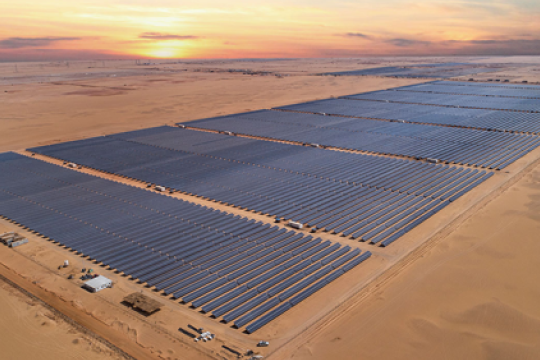
Total installed wind capacity hit 3.03 GW after the Red Sea Wind Energy consortium fully commissioned its 650 MW wind farm in Ras Ghareb, Mees reported. The country now has 5.5 GW of total renewable capacity, with wind and solar power now making up 6.7% of the country’s total power generation.
THE BIG STORY ABROAD-
Trump’s latest tariff threats are once again dominating the foreign front pages: US President Donald Trump is threatening to slap new tariffs on imports from the EU and Mexico, escalating his protectionist drive ahead of the 1 August deadline for sweeping new trade measures. “Starting on 1 August 2025, we will charge the European Union a tariff of only 30% on EU products sent into the US, separate from all sectoral tariffs," Trump said in a letter on his Truth Social media. He also accused Mexico of failing to stop “the Cartels who are trying to turn all of North America into a narco-trafficking playground,” and threatened a similar 30% levy.
All eyes on 1 August: Trump last week sent letters to trade partners warning of new tariffs, with his administration saying the reciprocal measures could take effect as early as 1 August. The sweeping threat includes a 50% levy on copper imports, a potential 200% tariff on pharma products, and a 35% hike on Canadian exports. (Reuters | Bloomberg | FT | New York Times | CNBC | Associated Press)
CLOSER TO HOME- Talks in Doha aimed at brokering a 60-day ceasefire between Israel and Hamas are faltering over Israeli troop withdrawal terms, sources from both sides told Reuters. Hamas has rejected Israeli-proposed maps that would keep 40% of Gaza — Rafah and areas in the north and east — under Israeli control. Israel, for its part, blames Hamas for “stubborn” negotiating. Two Israeli sources told the newswire that Hamas wants Israel instead to withdraw to the lines that it had occupied before resuming their military aggression in March.