Get EnterpriseAM daily

Available in your choice of English or Arabic

Big appetite for our maiden local sukuk issuance

1

WHAT WE’RE TRACKING TODAY

Qatar to finalize USD multi-bn North Coast project agreement within days

Good morning, friends, and a happy Tuesday to you all. It’s another busy morning here in Egypt, with debt leading the news well — our maiden local sukuk issuance was 5x oversubscribed and the Finance Ministry upped its local debt target for the month to over EGP 1 tn.


PSA-

WEATHER- After a few cloudy days, the capital is in for a sunny day, with a high of 29°C and a low of 21°C, according to our favorite weather app.

It’s a little cooler in Alexandria, which is in for a high of 27°C and a low of 20°C.

WATCH THIS SPACE-

Qatar will ink its long-awaited, big ticket North Coast project “in the coming days,” according to a cabinet statement detailing Prime Minister Moustafa Madbouly’s visit to the Gulf nation, which included a meeting with Qatari Prime Minister Sheikh Mohammed bin Abdulrahman Al Thani.

Déjà vu? This isn’t the first time we’ve been told to expect the project to soon be formally unveiled, but it looks like it will happen this time, with the announcement following an agreement between the two prime ministers to activate Qatar’s multi-bn direct investment package.

REMEMBER- The project is part of a wider USD 7.5 bn direct investment package from the Gulf nation, which was first announced during President Abdel Fattah El Sisi’s visit to Qatar in April. Reports later suggested that Qatar was in advanced talks to develop a North Coast tourism project, with expectations of an agreement by year-end.

The Samla and Alam El Roum area of Matrouh was named the location of the project, confirming earlier reports. The cost and details of the project are still not yet out, but the Ras El Hekma-esque project will reportedly cost USD 4 bn and feature both residential areas and tourist accommodation, along with commercial and entertainment centers, a yacht marina, and advanced service facilities.

Madbouly will attend the UN’s Second World Summit on Social Development on day two of his Qatar trip, after attending the leaders summit of the Global Alliance Against Poverty and Hunger yesterday, according to a separate statement from the cabinet.

FROM THE DEBT MARKETS-

CBE’s second EUR t-bills issuance of 2025 oversubscribed: The Central Bank of Egypt auctioned off EUR 627.8 mn worth of one-year, EUR-denominated treasury bills yesterday, exceeding its EUR 600 mn target, according to the lender’s website. The CBE’s second auction of EUR-denominated t-bill this year received EUR 707.8 mn in bids. The bills had an average yield of 2.25%, unchanged from the average yield offered during the first EUR issuance of the year in August, when yields dropped 1.25 percentage points to their lowest level since 2022.

HAPPENING TODAY-

The business community and policymakers are eagerly awaiting non-oil private sector activity figures for October, set to be released by S&P Global later this morning. Last month’s report saw the country’s headline figure contracting to 48.8, taking us further away from the 50.0 threshold that separates growth from contraction.

Eighth time’s the charm? Non-oil private sector activity has been in the red for seven consecutive months and has only entered growth territory two times since November 2020.

** We will have the main takeaway from the report in today’s issue of EnterprisePM and a full rundown in tomorrow’s EnterpriseAM, so stay tuned.

SUKUK WATCH-

Weekly sukuk roundup: The yield to maturity on our sovereign sukuk climbed to 6.64% last Friday, up from 6.32% the week before, according to the Egyptian Financial Company for Sovereign Taskeek’s weekly report (pdf). Egyptian sovereign sukuk prices fell to USD 101.31, compared to USD 101.47 a week earlier.

** DID YOU KNOW that we cover Saudi Arabia and the UAE?

** Were you forwarded this email? Tap or click here to get your own copy delivered every weekday before 7am Cairo time — without charge.

THE BIG STORY ABROAD-

OpenAI’s endless thirst for computing power is dominating headlines this morning. The ChatGPT maker signed a USD 38 bn agreement with cloud arm Amazon Web Services to gain access to its Nvidia GPUs for the next seven years. The processing power — which will be immediately available to OpenAI — will help ChatGPT respond to user prompts and train newer models, with plans to expand capacity in the next few years.

A vote of confidence: Amazon’s share price jumped 4% to close at USD 254 yesterday — an all-time high and a sign of relief for investors who worried Amazon was falling behind the AI race. Chipmaker Nvidia also gained some 4.4%, landing just below USD 209. (Bloomberg | CNBC | Reuters | Financial Times)

ALSO- New York is set for a showdown: The state’s general election will see Democratic nominee — and front-runner with a double-digit lead in the polls — Zohran Mamdani go up against former governor Andrew Cuomo, who landed a late endorsement from Donald Trump. The president lashed out against “Communist” Mamdani and vowed to cut federal assistance to New York under the young progressive candidate. The race — one of the most politically charged in the US in a while — is already seeing unprecedented voter turnout. (New York Times | Fox | Axios | Semafor)

AND- A scandal is rocking Israel: Top military lawyer Yifat Tomer-Yerushalmi is now behind bars facing accusations of breach of trust and obstruction of justice. Tomer-Yerushalmi admitted last week to leaking a controversial surveillance video last year that showed Israeli soldiers severely abusing a Palestinian inmate at the notorious Sde Teiman camp. The prosecutor then disappeared for a few hours on Sunday night leaving behind a cryptic note and her car, sparking uproar, speculation and a nationwide search campaign that retrieved her safely. Prime Minister Netanyahu earlier called the leak “the most severe diplomatic attack Israel has faced.” (Associated Press | Financial Times | Bloomberg)

ALSO WORTH NOTING THIS MORNING-

  • China is increasing energy subsidies to the country’s biggest data centers, cutting bills by up to half to help out tech giants, unnamed sources told the Financial Times.
  • Starbucks is set to relinquish control of China operations to Boyu Capital in a USD 4 bn buyout. (CNN)

*** It’s Going Green day — your weekly briefing of all things green in Egypt: EnterpriseAM’s green economy vertical focuses each Tuesday on the business of renewable energy and sustainable practices in Egypt, everything from solar and wind energy through to water, waste management, sustainable building practices and how you can make your business greener, whatever the sector.

In today’s issue: We look at the government’s used cooking oil collection network to feed its sustainable aviation fuel production push.

The Opening of The Kaktus Hotel marks a new destination in Somabay, inspired by active lifestyle and culinary destination offerings. The Kaktus has finally bloomed on the Red Sea.

#Lovesomalivekaktus

2

DEBT WATCH

Egypt’s maiden local sukuk issuance was 5x oversubscribed

The country’s first-ever local sukuk issuance was almost 5x oversubscribed, attracting an order book of EGP 14.9 bn, upon the closure of the subscription period yesterday, a senior government official told EnterpriseAM. The Finance Ministry received 63 offers from banks participating in the auction, but only accepted ten, covering its EGP 3 bn target.

(Tap or click the headline above to read this story with all of the links to our background as well as external sources.)

The high demand dragged yields down to 21.56% from 28%, our source said, explaining that a competitive pricing mechanism was employed to manage the auction’s yield.

About the issuance: The EGP 3 bn, three-year ijara issuance — a leasing-based Islamic security — is linked to assets owned by the Finance Ministry in the Red Sea’s Ras Shukeir area, a source previously told us. It is scheduled for settlement today.

The issuance is part of a wider sukuk program, which was recently quadrupled on the back of strong demand to EGP 200 bn for the fiscal year, a senior government source told us. The government originally planned to take EGP 25 bn worth of local sukuk to market this fiscal year, before doubling its target amid strong appetite.

The program is part of the Finance Ministry’s strategy to diversify its debt issuances in efforts to decrease the cost and burden associated with servicing the public debt, which consumes 80% of revenues and 50% of general expenditures.

What’s next? The Finance Ministry also plans to extend the maturity of the new sukuk issuances after using the first tranche to establish a pricing framework, with the aim of launching a weekly issuance with maturities ranging between 3, 5, and 7 years, our source previously said.

IN OTHER LOCAL DEBT NEWS-

The Finance Ministry has raised its local debt target for November to EGP 1.08 tn, up from EGP 845 bn in October, a government source told EnterpriseAM. T-bills will make up the larger share of the targeted issuances.

REMEMBER- The Madbouly government is targeting a USD 1-2 bn annual reduction in the Finance Ministry’s external debt and to bring down the debt-to-GDP ratio to 80% by the end of June 2026. This target relies on the domestic market to cover financing needs, our source said.

Local banks are still taking the lion’s share: Demand from Egypt’s banking sector for local debt instruments has grown relative to that of foreign investors in the current period, thanks to shrinking yields within the banking system, improvements in the economic landscape including the USD / EGP exchange rate, the source explained. The higher demand for local debt coverage from banks was driven by a rise in individual investments in debt instruments through their banks, coinciding with the government’s efforts to lengthen the maturity of public debt, the source added.

AND- The return of the seven-year bond? The Finance Ministry is considering issuing seven-year bonds for the first time in years in December, reflecting the growing investor confidence in the Egyptian economy, according to the source. December is also when the ministry plans to launch the public debt strategy, which aims to reduce public debt to below 75% of the GDP within three years, down from 85% in the last fiscal year, while also lowering debt servicing costs to 7% of GDP and extending the debt maturity to five years.

The budget deficit is expected to narrow to 7.3% of GDP this fiscal year, down from an estimated 7.6% last fiscal year. Meanwhile, the financing gap for the current fiscal year is estimated at around EGP 3.6 tn. To that end, the Finance Ministry plans to issue fresh local debt instruments worth EGP 3.2 tn — EGP 2.2 tn in T-bills and around EGP 928.9 bn in T-bonds — according to official figures seen by EnterpriseAM.

This publication is proudly sponsored by

3

INVESTMENT WATCH

Al Mansour Automotive breaks ground on USD 150 mn MG manufacturing plant

Al Mansour Automotive broke ground on its USD 150 mn MG manufacturingplantin Sixth of October, according to a statement from the Industry Ministry. The 55k sqm factory, developed in partnership with China’s SAIC, will manufacture eco-friendly vehicles.

The details: During its first phase, the plant will produce 50k cars a year and create 6k-10k jobs. Annual capacity will reach 100k vehicles within five years of operation.

(Tap or click the headline above to read this story with all of the links to our background as well as external sources.)

REMEMBER- SAIC inked an agreement granting Al Mansour Auto the technical license to produce MG cars in Egypt back in December 2024. The factory is set to begin production in 3Q 2026, producing the MG5 Sedan model. Al Mansour has future plans to begin manufacturing four-wheel drive vehicles and EVs at the plant.

Al Mansour has another auto project up its sleeve: The company is also setting up a USD 10 mn vehicle filter production facility as part of its efforts to localize auto feeder industries.

An auto manufacturing city? The Industry Ministry aims for this new factory to serve as a basis for a future automotive city that will host vehicle production and feeder industries, Industry Minister Kamel El Wazir said. To get there, the Madbouly government needs to introduce legislative amendments and incentives to attract investors, supported by the Supreme Council for Automotive Industry and the Environmentally Friendly Vehicle Industry Financing Fund, El Wazir said. It will also focus on strengthening local and international private-sector partnerships to manufacture automotive components in Egypt.

Incentives are already in place: The revamped seven-year Automotive Industry DevelopmentProgram kicked off in July with the goal of attracting more investments and deepening the localization of the sector. Under the program, makers of vehicles costing no more than EGP 1.25 mn for consumers can receive up to EGP 150k in incentives in the form of tax and customs deductions.

4

ECONOMY

Egypt’s budget deficit widens to 2.5% of GDP in 1Q FY 2025-2026

The country’s budget deficit widened to 2.5% of GDP during the first quarter of the current fiscal year, up from 2.1% during the same period last year, according to a Finance Ministry report seen by EnterpriseAM.

(Tap or click the headline above to read this story with all of the links to our background as well as external sources.)

Primary surplus jumps: The primary surplus — which excludes interest payments — nearly doubled y-o-y to EGP 178 bn, equivalent to 0.9% of GDP. The ministry attributed the improvement to stronger tax revenues and greater fiscal discipline.

REMEMBER- The FY 2025-26 budget pencils in a 4.0% primary surplus, up from 3.5% last fiscal year. The budget also sees the overall deficit narrowing to 7.3% of GDP, from last year’s 7.6%, before falling further to 5.5% in FY 2026-27.

Total revenues rose to EGP 644.9 bn during the quarter, up 37.2% y-o-y, supported by a 37% rise in tax revenues to EGP 556.2 bn amid an improved relationship with the business community, according to the report. The state budget penciled in a 23% y-o-y jump in public revenues to EGP 3.1 tn.

Interest payments remain the biggest burden: Despite the revenue growth outpacing expectations, spending surged 39.1% y-o-y to EGP 1.2 tn during the three-month period. Interest payments accounted for the lion’s share with EGP 695.2 bn. For the entire fiscal year, interest spending is expected to make up over half of total expected spending, at EGP 2.3 tn.

5

A MESSAGE FROM SEKEM

Climate currency: Turning regeneration into economic value through high-integrity carbon credits

The world urgently needs scalable climate solutions, and SEKEM is pioneering a new financial paradigm where regenerating nature becomes a source of prosperity. By monetizing the positive impacts of regenerative biodynamic agriculture, SEKEM demonstrates that restoring ecosystems is in tandem with creating economic opportunity.

This visionary approach is driven by the Carbon Footprint Center (CFC) at HeliopolisUniversity and the Egyptian Biodynamic Association (EBDA), transforming agriculture from an emissions source into a powerful climate mitigation force. Under the Economy of Love (EoL) Standard, the CFC measures the carbon sequestration and reduction achieved by regenerative farmers. Using advanced technology, they quantify reduced greenhouse gas emissions and CO₂ stored in healthy soil where the benefits are issued as carbon credits.

The result is a self-reinforcing, circular economic model. Businesses (within and beyond SEKEM) offset or inset their emissions by purchasing these credits, directly rewarding Egyptian farmers’ ecological stewardship. For farmers, this is a tangible financial incentive; for companies, it’s a trustworthy, measurable way to meet climate targets while investing in genuine, on-the-ground impact.

The momentum is undeniable: over 36k farmers are now part of this initiative, with a target of 40k by the end of 2025. By 2028, SEKEM, EBDA, and the CFC aim to reach a quarter of a million farmers, forming a national movement that will reshape Egypt’s agricultural landscape and contribute to global climate stability.

For companies everywhere, the path to carbon neutrality can start by investing in carbon credits and turning regeneration into your climate strategy. Click here to learn how.

6

Banking

Egypt’s net foreign assets post a strong recovery in September, hitting USD 20.8 bn

Net foreign assets (NFAs) in Egypt’s banking sector rebounded in September, reaching USD 20.8 bn, rising more than 16% (USD 2.9 bn) from August, which saw our NFA shrinking for the first time in three months, according to data from the Central Bank of Egypt. On an annual basis, our banking sector almost doubled its net foreign assets, from USD 10.3 bn in September 2024.

(Tap or click the headline above to read this story with all of the links to our background as well as external sources.)

Why do NFAs matter? Think of NFAs as the banking system’s core financial buffer — the net difference between the foreign currency banks hold (assets like USD and EUR) and what they owe to entities abroad (liabilities). A positive and growing NFA signals health: a strong capacity to cover import bills. In that case, the EGP will generally hold steady or even appreciate. But when NFAs shrink or turn negative, it means we owe more FX than we hold — and that’s when the EGP tends to slide against key foreign currencies.

Data breakdown: Commercial banks’ net foreign assets recorded a surplus of USD 9.8 bn in September, up from the USD 7.3 bn seen in August. Foreign assets in commercial banks increased to USD 41.7 bn, up from around USD 38.7 bn a month earlier, while liabilities marginally increased to USD 31.9 bn during the month.

The central bank recorded a surplus of nearly USD 11.1 bn by the end of September, up from USD 10.7 bn in August. Foreign assets rose to USD 48.6 during the month, slightly up from USD 48.1 bn a month earlier, while liabilities saw a small jump to USD 37.5 bn.

Behind the uptick: “The widening in the banking sector’s NFA was due to a significant hike in banks’ foreign assets,” HC Securities’ Heba Mounir told EnterpriseAM. This expansion was driven by several factors including a remarkable improvement in FX liquidity from tourism, record remittances inflows, and an uptick in FDI inflows, Mounir said.

More FX inflows are keeping the momentum going: “Since mid-year, we’ve been seeing strong cyclical liquidity flows — that’s why the EGP / USD exchange rate fell below 49 per USD and is now around 47. What’s happening now is a very natural reflection of that trend,” Al Ahly Pharos’ Hany Genena told EnterpriseAM.

Also helping: Foreign investors increasing their holdings of treasuries during the month and increased petroleum sector investments also boosted banks’ net foreign assets, she added.

7

ECONOMY

Diving into the CBE’s latest Monetary Policy Report

The Central Bank of Egypt is out with its 3Q Monetary Policy Report (pdf), which highlights main trends in the country’s economic trajectory and offers insights and predictions regarding the country’s economic outlook.

(Tap or click the headline above to read this story with all of the links to our background as well as external sources.)

SETTING THE SCENE- The CBE cut rate by 100 bps last month in its sixth meeting of the year, continuing the easing cycle it resumed in August after a brief pause in July. The decision came as a result of the CBE’s updated outlook on inflation on the back of decelerating annual headline and core inflation.

Annual headline inflation reached an average of 12.5% in 3Q 2025, down from 15.2% in 2Q 2025, “driven mainly by a strong decline in food inflation that reverted to its pre-2022 levels.” Meanwhile, annual core inflation — which excludes volatile items like food and fuel — fell to an average 11.2% during the quarter, down from 11.6% in 2Q 2025.

ICYMI- Annual headline urban inflation fell for the fourth consecutive month in September to 11.7%, down by 0.3 percentage points from August. The dip marked the lowest annual figure since March 2022.

Inflation outlook: The CBE revised its inflation forecast downwards “given the lower-than-expected print in 3Q 2025.” The revised downward its baseline annual headline inflation forecasts from its 2Q 2025 report, now seeing inflation averaging 14% in 2025, and 10.5% in 2026. The figures are well below the 28.3% inflation average of 2024.

“The disinflation path remains constrained by: the impact of planned fiscal consolidation measures across the forecast horizon such as energy , tobacco, and electricity, and the expected persistence of annual non-food inflation,” the report read. Re-escalating geopolitical tensions could also push inflation high. Taking these scenarios into account, annual headline inflation is expected to average 14.5% in 2025 and 11% in 2026.

Medium-term projections remain unchanged: The CBE still sees GDP growth reaching an average of 4.8% this fiscal year and 5.1% in FY 2026-2027.

Our external position remained strong supported by a narrowed current account deficit. Egypt’s current account deficit stood at USD 15.4 bn in FY 2024-2025, down 25.9% y-o-y. The improvement is supported by “a surge in workers’ remittances, alongside higher services revenue, in particular from tourism and transportation.”

Money supply dynamics: M2 growth continued to slow during 3Q 2025, averaging 22.6% compared to an average of 24.2% recorded in 2Q 2025. The real growth of local currency loans to the private sector continued to grow for the eighth consecutive quarter, averaging 14.5% in 3Q 2025 compared to 12.6% in 2Q.

8

EARNINGS WATCH

CIB’s net income nearly doubles in 3Q 2025

CIB saw its net income surging 94% y-o-y in 3Q 2025 to EGP 28.8 bn, according to its latest earnings release (pdf). Revenues came in at EGP 28.8 bn for the quarter, marking a 13% y-o-y increase.

(Tap or click the headline above to read this story with all of the links to our background as well as external sources.)

The bigger picture: Over the first nine months of 2025, CIB’s net income rose 47% y-o-y to EGP 62.1 bn, while revenues increased 16% y-o-y to EGP 83.7 bn. The lender’s gross loan portfolio grew 30% YTD to EGP 519 bn, while deposits rose 8% YTD to EGP 1.04 tn.

What they said: “This quarter came as an explicit testament to the bank’s stable and sound digital foundation, and a pay-off of technology spend,” management said.

9

EARNINGS WATCH

Mashreq reports 3Q earnings

Our friends at Mashreq posted AED 3.2 bn in operating income in 3Q 2025, up 8% y-o-y on the back of increased client activity, robust core operations, and a 20% y-o-y uptick in non-interest income, according to its financials (pdf) and a separate management discussion and analysis report (pdf). Net income after tax rose 2% q-o-q to come in at AED 1.7 bn for 3Q.

(Tap or click the headline above to read this story with all of the links to our background as well as external sources.)

On a nine-month basis, Mashreq saw its operating income reach 9.4 bn, up 3.1% y-o-y, driven by strong performance from its corporate, retail, and international segments. Net income before tax came in at AED 6.1 bn, as income from investment rose 50% y-o-y to AED 311 mn and income from ins., FX, and other income streams increased by 41% to just shy of AED 2 bn. Customer loans and advances grew by 21% compared to 9M 2024 and customer deposits also saw strong performance — up 20% y-o-y.

The bank also logged total assets of more than AED 300 bn for the first time, as lending to customers and banks increased by 24% y-o-y and customer deposits reached AED 187 bn.

The bank is expanding its operations in Asia this year: The lender rolled out commercial operations in Pakistan in September, and is preparing to open its first branch in India’s GIFT City in 4Q 2025. “Our growing presence across key international markets is enabling us to support the flow of capital and commerce along vital global trade corridors connecting Asia, the Middle East, Europe, and the United States,” CEO Ahmed Abdelaal said.

10

ALSO ON OUR RADAR

Talaat Moustafa’s Icon is setting up a luxury tourism project near GEM

HOSPITALITY-

Talaat Moustafa Group’s (TMG) Icon is setting up a USD 788 mn luxury tourism project behind the newly-inaugurated Grand Egyptian Museum, according to a disclosure (pdf) to the EGX. The 42.4-feddan project, implemented in partnership with the New Urban Communities Authority, includes a 495-key, 5-star luxury hotel, restaurants, serviced residences, and a commercial area. The project is expected to generate recurring annual net income of more than USD 82 mn for the company, in addition to c. USD 233 mn in total sales.

(Tap or click the headline above to read this story with all of the links to our background as well as external sources.)

EXPANSION-

Banque Misr steps foot into Djibouti: State-owned lender Banque Misr has officially inaugurated Banque Misr Djibouti, its first subsidiary in East Africa, as part of its regional expansion drive, according to a statement (pdf). The lender’s Djibouti arm aims to serve as a financial bridge between Egypt and the rest of Africa, facilitating trade, investment, and development finance.

ENERGY-

NBE tees up financing for Egypt-Israel gas link: State-owned lender the National Bank of Egypt (NBE) is reportedly arranging a USD 300 mn loan for East Mediterranean Gas Company (EMG) to help finance what Asharq Business reports is a new Egypt-Israel gas pipeline running through Sinai. The funds will start flowing once construction work kicks off on the Egyptian end of the pipeline, which is expected before year-end. NBE declined to comment on the story when we reached out.

The project likely refers to the planned Nitzana pipeline, which is a key onshore connector between the two countries and the main missing technical link needed for Egypt to double gas imports under the USD 35 bn supply agreement it signed with Israel in August. Earlier this week, Israel put the agreement on hold “until [its] interests are secured and a fair domestic price is agreed.”

CAPITAL MARKETS-

BlackRock-linked fund nabs minority stake in Fawry: An investment fund affiliated with BlackRock acquired a 1.8% stake in Fawry in a EGP 876 mn transaction on the EGX, a source close to the matter told EnterpriseAM. The transaction adds to signs of renewed US investor interest in Egypt’s fintech scene, following Amazon’s recent stake in Valu.

Fawry’s numbers do the talking: Fawry’s bottomline doubled y-o-y to EGP 1.3 bn in 1H 2025, its topline was up 63.8% y-o-y to EGP 3.8 bn, while its loan portfolio grew 121% to EGP 3.9 bn. The fintech said it plans to expand its neobanking, BNPL and Shariah-compliant offerings, along with leveraging AI for credit scoring, and fraud detection.

Market Reax: Fawry’s stock shed 1% to EGP 14.3 at yesterday’s close.

11

PLANET FINANCE

America’s top ten richest have seen their wealth rise more than 500% since 2020, but not everyone else has been as fortunate

The collective wealth of the 10 richest Americans has surged by USD 698 bn in the past year alone, and the prospect of the world’s first tn’aire no longer seems as absurd as it once did, with Elon Musk already half way there, according to a report (pdf) from Oxfam America. In only the short few years since 2020, these same 10 individuals have seen their wealth adjusted for inflation rise 526%.

(Tap or click the headline above to read this story with all of the links to our background as well as external sources.)

In America at least, it seems that a rising tide doesn’t necessarily lift all boats, with the USD 8.4 mn gain for households in the top 1% from 1989 to 2022, outpacing the median household gain of only USD 83k for the period. Zooming in on the top 0.1%, that figure picks up again all the way to USD 39.5 mn.

There’s also a stark disparity in terms of race, with average White households seeing their wealth increase 7.2x more than Black households and 6.7x more than Hispanic households. Gender was also a determiner, with male-headed household wealth gains outpacing those headed by women by 4x.

In addition to the concentration of wealth, there’s also a concentration of stocks, with 24% of shares in the stock market owned by just the top 0.1% and 49.9% by the top 1%. In contrast, just 1.1% of the stock market is owned by the bottom 50%, despite the prominent role it plays in many Americans’ retirement plans.

Oxfam sees inequality getting worse in years to come, pointing to the Trump administration’s “massively regressive tax reform, major cuts to the social safety net, and significant rollbacks for worker’s rights.” It estimates that Trump’s One Big Beautiful Bill Act — which we imagine Oxfam would describe rather differently — will cut taxes on the top 0.1% by USD 311k in 2027, while raising taxes for those earning less than USD 15k a year, marking “the single largest transfer of wealth upwards in decades.”

MARKETS THIS MORNING-

Asian markets are mixed in early trading this morning — Japan’s Nikkei and the Hang Seng are both looking at gains, while the Shanghai Composite and Kospi are both in the red, down 0.1% and 1.6%, respectively.

EGX30

4,003

+1.8% (YTD: +29.7%)

USD (CBE)

Buy 47.18

Sell 47.32

USD (CIB)

Buy 47.20

Sell 47.30

Interest rates (CBE)

21.00% deposit

22.00% lending

Tadawul

11,484

-0.5% (YTD: -4.6%)

ADX

10,024

-0.8% (YTD: +6.4%)

DFM

6,019

-0.7% (YTD: +16.7%)

S&P 500

6,852

+0.2% (YTD: +16.5%)

FTSE 100

9,701

-0.2% (YTD: +18.7%)

Euro Stoxx 50

5,679

+0.3% (YTD: +16.0%)

Brent crude

USD 64.89

+0.2%

Natural gas (Nymex)

USD 4.23

-0.8%

Gold

USD 4,008

-0.2%

BTC

USD 106,333

-3.6% (YTD: +13.8%)

S&P Egypt Sovereign Bond Index

954.04

+0.1% (YTD: +22.7%)

S&P MENA Bond & Sukuk

152.05

-0.2% (YTD: +8.7%)

VIX (Volatility Index)

17.17

-1.6% (YTD: -0.8%)

THE CLOSING BELL-

The EGX30 rose 1.4% at yesterday’s close on turnover of EGP 5.9 bn (24.5% above the 90-day average). Local investors were the sole net buyers. The index is up 29.9% YTD.

In the green: Emaar Misr (+5.0%), TMG Holding (+4.8%), and Palm Hills Developments (+4.5%).

In the red: Abu Qir Fertilizers (-2.1%), Mopco (-1.7%), and Fawry (-1.0%).

CORPORATE ACTIONS-

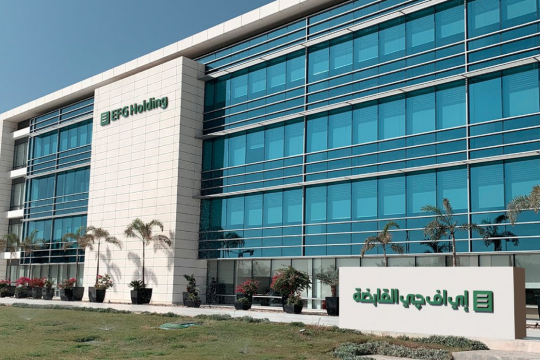
EFG Holding completed a EGP 4.2 bn capital increase for its subsidiary Bank NXT, with full participation from all shareholders, according to a disclosure (pdf) to the EGX. EFG contributed EGP 2.1 bn, maintaining its majority 51% stake in the bank. The move will “reinforce Bank NXT’s balance sheet and support its management’s vision in the execution of its growth plans with greater financial flexibility,” according to the disclosure.

12

Diplomacy

First Egypt-Lebanon Higher Committee in six years ends with a raft of agreements

Prime Minister Moustafa Madbouly and Lebanese Prime Minister Nawaf Salam co-chaired the Egypt-Lebanon Higher Committee meeting in the new capital, aimed at enhancing cooperation between the two countries across trade, energy, and investment, according to a cabinet statement. The meeting marks the first higher-committee between the two sides in six years.

(Tap or click the headline above to read this story with all of the links to our background as well as external sources.)

The two sides inked a series of MoUs and cooperation protocols during the meeting, covering key sectors including energy, economic policy, local development, aviation, social protection, maritime transport, industry, technical education, agriculture, housing, customs, and financial regulations, according to a statement. The two leaders agreed to accelerate the implementation of the agreements, especially on the economic side.

Egypt wants to double the USD 1 bn in bilateral trade between the two countries recorded in 2024 “in light of the strength of economic relations between the two countries, and considering the role of the private sector in driving cooperation and joint investment fields,” Madbouly said during a press conference following the meeting.

Both sides also signed a draft MoU on mutual visa exemptions for diplomatic passport holders and an MoU on consumer protection. Madbouly reaffirmed Egypt’s full support of Lebanon, stressing backing for its political and economic stability and rejecting Israeli presence on Lebanese territories. Meanwhile, Salam praised Egypt’s political and humanitarian efforts in Gaza and invited Egyptian businesses and ministers to an upcoming investment conference in Beirut in the middle of November.

Madbouly emphasized the country’s commitment to rebuilding southern Lebanon, announcing at the presser that “[Egypt] will be keen to fully support the Lebanese government in the reconstruction and development projects needed by southern Lebanon in the coming period.” Madbouly also noted that Egyptian companies are fully prepared to cooperate with the Lebanese side in construction, infrastructure, and more.

13

Going Green

Planned used oil collection system to collect 500k tons by 2030 to fuel SAF production push

The government’s used cooking oil (UCO) collection network to feed a planned USD 530 mn sustainable aviation fuel (SAF) production complex is advancing, with the Environment Ministry launched a comprehensive program last month to regulate the network, a government source told EnterpriseAM. The program establishes clear mechanisms for collecting and directing used oil for industrial purposes.

(Tap or click the headline above to read this story with all of the links to our background as well as external sources.)

REFRESHER– Last July, a government source told us the Environment Ministry was preparing to issue a decree, to be published in the Official Gazette, to launch the used oil collection system. The decree includes regulating the issuance of licenses for activities related to the handling of UCO and implementing an integrated management system for used oils, encompassing collection, transportation, storage, and export, according to our source.

But why UCO? The MENA region produces very little first-generation biofuels, which are derived from commodities like corn and sugar or vegetable oils, according to a report by Fitch Solution’s BMI. The reason why? The region’s climate and land stock is mostly unsuitable to efficient crop production, and the areas that are are in short supply. Even Egypt — with the largest agriculture sector in the region — doesn’t produce enough surplus crops to be used for first-generation biofuel production, leaving UCO as the obvious viable option.

Biofuels also have many applications and advantages beyond SAF, including cutting emissions in the industrial sector by some 85%, Bio Rotterdam CEO Ibrahim Farouk told EnterpriseAM. The feedstock UCO can also be used to manufacture soap, animal feed, some lubricants, and reduces the import bill for petroleum products, another source said. Improper disposal of UCO also raises wastewater treatment costs and complicates recycling as just one kg of oil can contaminate 1k cbm of sewage.

The system aims to collect 500k tons of UCO by 2030 and 730k tons by 2035, compared to the current collection of 100k tons. The system also includes granting licenses to collect oil from residential units, hotels, central kitchens, and restaurants. Household use accounts for 65% of the targeted amount of used oil, compared to 25% from restaurants and hotels, and 10% from food processing plants, according to a study seen by EnterpriseAM.

Our move into SAF has caught the attention of a sovereign wealth fund, with the Abu Dhabi Investment Authority partnering with the Arab Organization for Industrialization to develop the USD 530 mn SAF plant, a senior government source told us. The fund will manage the financing and construction of the project.

Saudi firms are also scaling up operations in Egypt’s biofuel sector, while foreign companies are entering the market through agreements with local factories to lower their carbon footprint by substituting part of their fuel use with biofuel, according to our source. Saudi Arabia’s Al Faleh Company has already opened a biodiesel and cooking oil refining plant in Sixth October and plans to establish another large plant in Alexandria next year for export to Europe as part of its expansion plans in the Middle East, the source added.

And we’re already seeing demand from offtakers at home and abroad. EgyptAir’s SAF targets will drive demand, with the national flag carrier already aiming to have SAF represent a 2% share in its fuel mix this year, which can currently only be achieved through imports. Demand for Egyptian-made SAF may also come from overseas, as the EU’s ReFuelEU aggressively pushes for 2% by 2025, 6% by 2030, 20% by 2025, 42% by 2045, and 70% by 2050 for jet fuel supplied at EU airports.

But Pricing is a challenge. To discourage improper disposal, UCO is collected at EGP 35 per liter, then sold to factories for EGP 48 and processed into biofuel retailing at EGP 75, Farouk said. The price makes it way less competitive locally with subsidized diesel priced at EGP 17. But it’s hoped that scaling up collection, boosting production, and tapping into European export markets could drive demand and lower costs over time.

Securing enough feedstock is also an issue, as many companies export raw UCO to Europe for biofuel production overseas, Farouk added. To get around this, the government should halt exports of UCO, industry insiders told us. Another option could be to impose export fees to incentivise the feedstock being used domestically for the production of biofuel.

Egypt, along with its regional peers, might even need an import-dependent strategy to advance biofuel plans, according to BMI. Imports are also essential to reach industrial scale for the next three to five years, Delta Oil’s CEO Serag Moussa told us. For SAF production, a hybrid model maximizing local UCO recovery while importing certified volumes is essential, Moussa told us.

REMEMBER- The launch of locally made SAF is pencilled in for 2028, with a targeted 160k liters a year under the project’s first phase, according to our source. The government had initially been targeting a 2025 launch as recently as last year.


Your top green economy stories for the week:

  • The Environment Ministry and GIZ are preparing to launch the fourth phase of the National Solid Waste Management Program, with new projects planned in Greater Cairo and Alexandria, along with a strategic master plan starting with Qena. (Statement)
  • Port Said Governorate signed a ten year agreement with Nahdet Misr for Environmental Services to handle waste collection, transport, and street cleaning in Port Said and Port Fouad, with operations starting January 2026. (Statement)
  • The Environment Ministry and the Chamber of Diving and Water Sports signed two cooperation protocols to strengthen marine protection and pollution control. The agreements focus on reducing single-use plastics, improving waste management during marine excursions, and launching underwater cleanup campaigns along Egypt’s coasts. (Statement)

NOVEMBER

4 November (Tuesday): S&P Global to release PMI data for September.

9-11 November (Sunday-Tuesday): The sixth edition of the TransMEA 2025 forum and exhibition, Egypt International Exhibition Center.

10 November (Monday): Capmas expected to release inflation data for October.

16-19 November (Sunday-Wednesday): Cairo ICT 2025, Egypt International Exhibition Center.

16-19 November (Sunday-Wednesday): The 12th edition of the Digital Payments and Financial Inclusion Exhibition and Forum (PAFIX 2025), Egypt International Exhibition Center.

20 November (Thursday): Monetary Policy Committee meeting.

23-25 November (Sunday-Tuesday): NEBU Expo 2025 gold and jewelry exhibition, Egypt International Exhibitions Center, New Cairo.

November: Egypt to join the EU’s Horizon Europe research and innovation program.

November: The Conference on Early Recovery, Reconstruction, and Development in Gaza.

DECEMBER

1-4 December: Egypt Defence Expo (Monday-Thursday), Egypt International Exhibition Center.

4-7 December (Thursday-Sunday): Egy Stitch & Tex Expo 2025, Cairo International Conference Center.

8 December (Monday): Egypt-UK Investment Conference, Cairo.

15 December (Monday): Neo Gen PropTech and Sustainable Smart Cities Conference, The St. Regis Hotel New Capital

25 December: (Thursday): Monetary Policy Committee meeting.

EVENTS WITH NO SET DATE

Mid-2025: EGX launches sustainability index.

December: Germany’s North Rhine-Westphala business delegation to land in Egypt.

3Q 2025: Nasr Automotive begins locally manufacturing passenger cars.

3Q 2025: Polaris Parks to finalize contracts for two new industrial zones in the new capital and Sadat City.

Mid-2025: The Administrative Capital for Urban Developments to roll out the second phase of offering industrial plots to investors

2H 2025: Potential visit by Chinese President Xi Jinping to Egypt

4Q 2025: The beginning of construction works on China’s State Grid two solar projects.

4Q 2025: GB Auto starts assembling one of China’s Great Wall Motor models in 4Q 2025.

4Q 2025-1Q 2026: Kasrawy Group to launch first Avatr EV models in Egypt.

2025: The InterAcademy Partnership assembly.

2025: Nile Basin States Summit, Cairo, Egypt.

2025: Release of the government’s Startup Charter document.

Before 2025-end: The government will launch two ro-ro shipping lines with Saudi Arabia and Turkey.

2026

Early 2026: Passenger operations on the New Administrative Capital–Nasr City monorail scheduled to begin.

1Q 2026: Trial operations for the Ain Sokhna–Sixth of October section of Egypt’s first high-speed rail line scheduled to begin.

1 January: European Union’s Carbon Border Adjustment Mechanism (CBAM) to fully come into effect.

10-12 February (Tuesday-Thursday): Gitex Global’s AI Everything Middle East & Africa Summit

15 March 2026: IMF to hold its seventh review of Egypt’s USD 8 bn EFF arrangement.

30 March – 1 April: Egypt International Energy Conference and Exhibition 2026 (EGYPES)

May 2026: End of extension for developers on 15% interest rates for land installment payments

15 September 2026: IMF to hold its eighth review of Egypt’s USD 8 bn EFF arrangement.

2H 2026: Operations at Deli Glass Co’s new USD 70 mn glassware factory kick off.

2027

20 January-7 February: Egypt to host the African Games.

April 2027: Tenth of Ramadan dry port and logistics hub to begin operations.

EVENTS WITH NO SET DATE

2027: Egypt to host EBRD’s annual meetings for 2027.

2027: Egypt-EU Summit 2027

End of 2027: Trial operations at the Dabaa nuclear power plant expected to take place.

September 2028: First unit of the Dabaa nuclear power plant begins operations.

Now Playing
Now Playing
00:00
00:00