Get EnterpriseAM daily

Available in your choice of English or Arabic

Analysts see the CBE cutting rates this week

1

What We're Tracking Today

Egypt is looking to attract over USD 2 bn in Indian investments

Good morning, all. We kick off the work week with a brisk issue, led by what analysts believe will go down during Thursday’s Monetary Policy Committee meeting, news that the Egyptian Iron and Steel Company could reopen its doors, and an interview with Ezdehar Management’s CEO to learn more about what the firm has in its pipeline.

PSA-

WEATHER- The mercury today will peak at 37°C in Cairo, before falling to a low of 26°C, according to our favorite weather app. While Alexandria will see a high of 33°C and a low of 24°C.


El Hadidi will be back on our screens next month: One of the nation’s most influential talking heads, Lamees El Hadidi will make her comeback to the small screen late September after agreeing to host a talkshow on Al Nahar, the news channel wrote on Facebook. The program will air four days a week.

ICYMI- El Hadidi departed from ON TV in July, marking the end of Kelma Akhira and her five-year run with United Media Services after both sides agreed not to renew their contract.

WATCH THIS SPACE-

#1- The Egyptian General Petroleum Corporation (EGPC) has agreed with refineries to increase their refining capacity by some 13% in 2H 2025, which would boost capacity to 99.6 mn barrels, Al Arabiya reports, citing an unnamed government official.

The move is designed to help offset Egypt’s rising monthly fuel import bill, which climbed to USD 1.4-1.5 bn in 2Q 2025, up from USD 1.2 bn in the same period a year earlier, the source said. The boost in refining capacity is expected to gradually reduce imports by the end of the year, with EGPC sourcing the remaining supply needs through external contracts.


#2- Egypt is looking to attract more than USD 2 bn in Indian investments within the next 18 months, Egyptian-Indian Business Council head Khaled Abou El Makarem told Al Arabiya. Indian investors are showing growing interest in chemicals, fertilizers, pharma, renewables, green hydrogen, IT, outsourcing, textiles, and garments, Abou El Makarem said. He noted that companies are seeking to leverage Egypt’s raw material base, energy resources, and trade agreements with Europe and Africa to use the country as a production and export hub.

More than 55 Indian firms already operate in Egypt with investments exceeding USD 3.7 bn, while India is among Egypt’s top five trading partners. Bilateral trade is expected to climb 10% this year to USD 4.6 bn, with both governments eyeing USD 12 bn in trade “in the coming years.”

SETTING THE TONE-

“There is absolutely no truth to the dispute between the government and oil companies over value-added tax,” the Egyptian Tax Authority said. This came in response to local outlets — including EnterpriseAM — reporting that representatives from four foreign firms raised their concerns with senior officials about a plan to register crude oil suppliers before implementing recent VAT amendments that would see them face a 10% tax. The authority added that the tax on crude oil will not lead to any price increases for petroleum products.

HAPPENING THIS WEEK-

Will the CBE resume its easing cycle this week? The central bank’s Monetary Policy Committee will meet on Thursday to decide whether to cut interest rates. The committee decided to keep rates steady at its last meeting as the market digests the 325 bps of cuts earlier in the year, but the momentary easing pause and lower-than-expected inflation data for July have only emboldened forecasts that the Central Bank of Egypt (CBE) will cut rates at its August meeting.

** Check our customary poll of interest rate predictions from analysts and economics in the news well, below.

** DID YOU KNOW that we cover Saudi Arabia and the UAE?

** Were you forwarded this email? Tap or click here to get your own copy delivered every weekday before 7am Cairo time — without charge.

THE BIG STORY ABROAD-

Famine declared in Gaza: The Integrated Food Security Phase Classification (IPC), the world's leading hunger monitor, has declared that a quarter of the enclave’s population of 2 mn are suffering from famine, accusing Israel of the "systematic obstruction" of food supplies. Deaths from malnutrition have been spiking all around the packed war-torn area, rising to 273 deaths, including 112 children.

“It is a man-made disaster, a moral indictment – and a failure of humanity itself,” UN ChiefAntónio Guterres said, placing the “unequivocal” responsibility of ensuring access to food and medical supplies on Israel “as the occupying power.”

FROM THE FED- Chair Jerome Powell hinted at the resumption of the interest rate easing cycle in September, arguing at the Jackson Hole meeting on Friday that "in the near term, risks to inflation are tilted to the upside, and risks to employment to the downside — a challenging situation."

Nothing set in stone: Despite being under pressure from the Trump administration to move ahead with rate cuts, Powell cautioned that a September rate cut is not a given and that “monetary policy is not on a preset course.” Markets were happy nonetheless, with S&P 500 soaring after the first minutes of the speech and closing 1.5% higher on Friday.

The meeting comes amid more drama surrounding the Fed, with the US government now targeting governor Lisa Cook, urging her removal due to allegations of mortgage fraud that have yet to be confirmed. (Guardian | Bloomberg | Financial Times)

OVER IN TECH- President Trump said on Friday the US snapped up a 10% stake in chipmakerIntel for USD 8.9 bn by converting government grants into equity. The transaction came at a discounted share price, lower by USD 4 than Intel’s closing price on Friday, and was preceded by White House demands for CEO Lip-Bu Tan to resign over his ties to Chinese firms.

ALSO- Meta and Google have struck a USD 10 bn cloud computing agreement that will see the Facebook owner use Google Cloud's servers, storage, networking and other services as it looks to bring online more AI services. (Bloomberg | Reuters | CNBC | The Information)

Whether you’re diving into turquoise waters, catching golden hour from your terrace, or just letting time drift by — Somabay is summer, redefined. Your ultimate escape, every single time.

2

POLL

Most analysts see the CBE cutting rates this week- EnterpriseAM poll

Resuming the easing cycle? Almost all of the analysts surveyed by EnterpriseAM see the Central Bank of Egypt resuming its easing cycle this week when its Monetary Policy Committee (MPC) meets on Thursday. Eleven of the economists and banking experts we spoke to forecast a rate cut between 100-300 bps, while only one analyst sees the CBE holding rates unchanged.

Setting the tone for Abdalla’s new term: The meeting comes a few days after Hassan Abdalla was reappointed as the acting governor of the Central Bank of Egypt for another one-year term.

REMEMBER- The CBE kept interest rates unchanged in its fourth meeting of the year in July. The move marked a halt in the MPC’s easing cycle, after it cut rates by 225 bps in April and 100 bps in May.

Where rates currently stand: The overnight deposit rate currently stands at 24.00%, the overnight lending rate at 25.00%, and the main operation and disc. rates at 24.50%.

A 300 bps rate cut is in the cards: There is a 50% probability that the CBE will cut interest rates by 300 bps during its meeting, Ahly Pharos Head of Research Hany Genena told EnterpriseAM. “While seemingly high in terms of magnitude, a 300 bps cut would keep real rates at an extremely high level of 9.0% and only reverse the jumbo rate hike of 6 March 2024 (+600 bps) when added to cumulative rate cuts of 2Q 2025,” Genena noted.

This forecast is mainly driven by expectations of easing inflation: Genena expects August urban inflation rate to either remain flat or fall 0.2% m-o-m and accordingly the annual rate to decelerate further to 11.5-12.0%.

REFRESHER- Annual headline urban inflation cooled further in July by a whole percentage point, falling to 13.9% from 14.9% in June. The rate of inflation is now at its slowest pace since March 2025.

Among the big cut supporters is Professor of Economics Medhat Nafei, who anticipates an easing of 100 to 300 basis points. ”The committee's decision will ultimately hinge on the available data,” he said, adding that favorable inflation data suggest a big cut, while net outflows of hot money point to a more gradual reduction.

The rationale: “This easing is crucial for lowering the real interest rate on Egyptian debt instruments, which will remain positive even after the expected cut. It will also help reduce financing costs, which is vital for improving the business environment and stimulating investment-led growth” Nafei said.

While the projected reduction in the real interest rate comes at a time of increasing risk appetite for debt instruments in emerging markets, including Egypt, “this trend makes investors more willing to accept a relatively lower real interest rate, as long as it remains positive, even with higher risk,” Nafei added.

“We see room to lower interest rates in the next meeting,” Head of Research at Beltone Holding Ahmed Hafez told us, anticipating a 200-250 bps rate cut. “There will be increases in the prices of gasoline, electricity, and rent, and most likely cigarettes, as well as the annual increase in school tuition. We believe that even with these rises, inflation will be within the [CBE] target range by the end of 2026.”

EGP gains can also play a role: EFG Hermes projects a 100 bps rate cut in the coming meeting sees that a stronger EGP “provides comfort on the inflation outlook; on the other hand, it leaves the CBE to worry less about the impact of a cut in portfolio flows (with foreign holdings rising well above the USD 20 bn mark,” according to a recent research note seen by EnterpriseAM.

Despite the anticipated hike in energy prices, HC sees that there is room for a 200 bps rate cut, citing the recent inflation deceleration and the need to stimulate economic growth and ease the burden on the private sector, HC Securities’ Heba Mounir told EnterpriseAM. “The relative stability in Egypt’s external position, the deflationary effect of the recent EGP appreciation, and the still attractive carry trade” also support a rate cut, she added.

Against the tide: Economist and business advisor at Kent Business College, Ali Metwally, foresees the CBE holding rates steady in Thursday’s meeting. With IMF’s combined fifth and sixth reviews now expected in September or October and fuel and electricity hikes pushed back, “the MPC has space to wait, protect the carry trade, and reassess in October.”

BEYOND THIS WEEK’S MEETING-

The rate path over the year: Capital Economics’ James Swanston sees the CBE delivering a further 400 bps of interest rate cuts before the end of the year, bringing the overnight deposit rate to 19.0%. This projection assumes that headline inflation keeps slowing, reaching around 10% y-o-y, factoring in a possible hike to fuel prices before the year closes. Meanwhile, Hafez forecasts 450 bps in rate cuts for the remainder of the year, including the cut expected in the upcoming meeting.

A different outlook: Metwally sees a cumulative 100-150 bps reduction in interest rates in 4Q 2025. This easing is expected to be “delivered in one or two moves (October, then December if disinflation holds and FX stays orderly).” Meanwhile, EFG Hermes expects the CBE to hold rates during one of the three meetings scheduled for 4Q 2025, likely around the time of the fuel price hike, projecting a 100-200 bps in rate cuts for the remainder of the year, not including the August meeting.

Inflation outlook: Headline inflation is expected to average 13-14% in the second half of the year, before easing to 12-13% by December, assuming no large utility shocks, Metwally said. Meanwhile, EFG Hermes sees inflation slowing down and ending the year at around 13-14%. “Both August and September are likely to be quiet months before action resumes in October, when the government is set to deliver its final fuel price hike, which would take prices to cost-recovery levels,” the note read.

What is next for EGP? “While there does appear momentum toward a stronger EGP, our expectation is that it will gradually weaken over the rest of this year and into 2026,” Swanston told us. However, any depreciation is expected to be moderate and reflecting a rebound in the USD and not weakness of Egypt's external position and currency, he added.

This publication is proudly sponsored by

3

Manufacturing

Industry Ministry studies partial Egyptian Iron and Steel Company reopening

The Egyptian Iron and Steel Company’s dormant factories in Helwan could soon spring back into action, with the government studying a plan to restart some units of the complex more than five years after it was placed into liquidation, according to an Industry Ministry statement. No timeline or figures for the potential cost of rehabilitation were provided.

(Tap or click the headline above to read this story with all of the links to our background as well as external sources.)

The partial reopening will focus on producing steel slabs, which will use locally sourced iron ore. The remaining land could be used to establish a textile factory, among other alternatives, the statement suggested.

If you didn’t know, the Egyptian Iron and Steel Company was once a big player on the EGX30, placing it amongst the most liquid and active companies on the exchange. After its founding by the state two years after the 1952 Revolution, the company grew to become an important part of the country’s manufacturing base before outdated technology, rising costs, and competition led to accumulated losses that numerous initiatives to save the company failed to address. The long-struggling public sector giant was taken out of the benchmark index in January 2020 and then completely exited the bourse after the firm was liquidated the following year.

The Industry Ministry is also keen to restart production at other idle factories, including the Delta Fertilizers Company, which has been inoperative for more than five years and is about to undergo the first phase of a EUR 510 mn rehabilitation plan, an official from the Public Enterprises Ministry previously told EnterpriseAM. The statement also mentioned Samnoud Textiles — which had recently seen its workers go on strike over the company’s refusal to pay the government-mandated minimum wage — as part of the plan.

The state’s push to restart production at idle factories has already seen some progress, with state-owned El Nasr Automotive officially restarting operations in November after a 15-year hiatus and delivering its first batch of electric 49-passenger buses in partnership with China’s Yutong to Transport Ministry-affiliated companies. Operations were also restarted at El Nasr Castings late last year after an agreement was inked between the company and the workers’ union to commit the company to fund operations, material inputs, and employee salaries and incentives from the sale of unused assets.

4

Coffee With

Inside Ezdehar Management and Egypt’s private equity market

What’s in the pipeline for Ezdehar? Private equity firm Ezdehar Management, which currently has USD 300 mn in assets under management (AUM), is closing out its first fund, nearly finished deploying its second, and gearing up to start raising a third by mid-2026, CEO Emad Barsoum (LinkedIn) told EnterpriseAM. We sat down with Barsoum to unpack Ezdehar’s investment playbook, how it chooses and scales portfolio companies, its approach to exits, the hunt for local LPs, and how Egypt’s macro climate is reshaping the private equity scene.

How Ezdehar invests: Ezdehar’s model is built around taking mid-sized Egyptian companies and turning them into market leaders, but unlike most local PE players, it leans heavily on operational involvement. “We’re quite different from many other PE firms,” Barsoum said, adding that Ezdehar often embeds “two or three team members inside the newly-acquired company for three to six months” to overhaul systems, improve governance, and accelerate growth. That approach has already reshaped companies like Zahran Market, where expansion shifted “from opening one store a year to five or seven annually,” and DalyDress, which is preparing to expand into the GCC and Europe through e-commerce.

Control matters: Barsoum says minority stakes rarely work in Egypt because “if you own just 20-30%, the founder still runs the show,” which in some instances will make it harder to execute growth strategies, invest in systems, or hire the right talent. That’s why Ezdehar structured Fund II to secure control wherever possible, taking 100% ownership of Zahran Market, super-majority stakes in DalyDress and Kemet, and voting control at Naturale. Even in transactions where Ezdehar doesn’t hold a majority, it ensures founder alignment through agreements that lock in decision-making rights.

What Ezdehar looks for: The firm focuses on companies where leadership is willing to professionalize, open up to outside talent, and align on long-term strategy. “The founder or management team needs to be open to hiring, criticism, and collaboration,” Barsoum said. Export potential is also now non-negotiable. “Exports are essential today. If a company isn’t earning in FCY, devaluation can kill your investment.” Ezdehar also looks for models that can scale quickly across products or markets to compound growth.

The funds so far: Fund I (USD 85 mn) is fully invested and nearly exited, with stakes in Rich Food, Eagle Chemicals, and Alunile expected to be sold within 6-12 months. Fund II (USD 180 mn, raised in 2021) is 70% deployed across six companies — Zahran Market, DalyDress, Kemet, Naturale, Yes-Pac, and Yodawy — and Ezdehar expects to finish deploying it by mid-2026. As for Fund III, Barsoum said the strategy is still evolving. “We’re debating different approaches. Maybe we’ll go outside Egypt or use different instruments, but we won’t just copy Funds I and II.”

ADOPTING A ROLL-UP STRATEGY-

Consumer brands and DalyDress: Ezdehar is doubling down on a roll-up play in the consumer brands, starting with modest-fashion label DalyDress. “Egypt doesn’t have an institutional player that owns several local brands,” Barsoum said. Barsoum’s vision is to consolidate several of these local brands over the next 3–5 years into a larger, institutionally managed conglomerate, similar in spirit to multinational players like Zara or H&M.

The model is simple: Acquire small, family-run brands and consolidate them into a platform that unlocks economies of scale. The strategy is already drawing interest — “once we bought into DalyDress, three or four other brands called us wanting to talk,” he said. Scale also transforms hiring: “It’s very hard to hire a top CEO for an EGP 1-2 bn company, but at EGP 5-10 bn, the kind of talent you can attract completely changes.”

CHALLENGES FACING FAMILY-RUN BUSINESSES -

Family-run companies struggle to move from legacy to growth: Barsoum discussed the challenges faced by many family-run businesses in Egypt, noting that while they often experience strong growth under the first generation, they tend to plateau and eventually decline. This stagnation, he explained, is largely due to a lack of scalable systems, poor organization, and an inability to attract top talent.

Why the shortage of top talent is in family-run businesses: He pointed out that many professional executives are hesitant to join such companies because there’s typically no clear path for growth or alignment of interests, while corporate leaders seek development and investment, family owners might focus more on personal benefits, like hiring relatives or extracting dividends. Barsoum also acknowledged the ongoing talent drain to the Gulf, where better compensation packages are drawing Egypt’s brightest minds.

There’s a disconnect between valuations perceived by founder-led companies and market realities: Barsoum explained that his team had explored potential acquisitions with several well-known Egyptian retail businesses, including Alfa Market, Gourmet, and Awlad Ragab. However, these efforts did not result in successful transactions, primarily due to significant gaps between the owners’ perceived valuations and the actual market realities. In particular, Alfa Market was in a distressed state, making negotiations especially difficult. This disconnect, he noted, is a common challenge when negotiating with founder-led companies, where emotional attachment or legacy often inflates perceived value.

NAVIGATING EXIT CHALLENGES-

Tough road to exits: Barsoum painted a somber picture of the current exit environment, warning that Egypt’s weak capital markets and macro headwinds are making it harder for private equity firms to cashout. He pointed to low liquidity on the EGX, which constrains PE’s ability to monetize investments. IPOs on the local exchange remain difficult, while taking portfolio companies to the GCC is “not an easy sell” for purely Egyptian companies. “Unless you have a presence there it’s very difficult,” Barsoum said, adding that strategic sales are the more realistic route in the current cycle.

A key bottleneck is the absence of domestic institutional capital. “When we pitch overseas, the first question is: Who is investing from Egypt?” Without buy-in from domestic pension funds, ins. companies, and big local banks, he said, exit options will remain scarce. Ezdehar, he added, is reassessing its strategy ahead of launching its third fund, exploring regional plays and new instruments.

Where are the local LPs? In risk-free T-bills. Ezdehar tried raising an EGP-denominated fund from local institutions but failed to get commitments. Barsoum said the challenge comes down to two factors: “Most institutions have no experience investing in equity funds, and at the same time, they’re earning 25% risk-free on Treasury bills — so PE just doesn’t compete.”

His proposed fix: A sovereign-backed fund-of-funds like the UAE’s to unlock institutional capital. “Maybe the sovereign fund needs to put EGP 10-50 bn into fund-of-funds instruments. That would stimulate PE, VC, and angel funds and bring institutional money into the private market.”

Ezdehar made successful exits from Global Corp, Dsquares, Family Corporation, and a partial exit from Alunile.

The outlook: While macro pressures remain, Barsoum sees potential in exports, consolidation plays, and operationally driven growth strategies that can turn Egypt’s mid-sized businesses into scalable regional leaders.

5

A MESSAGE FROM SEKEM

Hubs of change: Inside Heliopolis University’s engines of innovation, sustainability, and culture

At Heliopolis University (HU), the higher education and research arm of SEKEM, education is fuel for real transformation. Its Community Development Centers are where ideas are tested, scaled, and lived, turning entrepreneurial sparks into businesses, research into community solutions, and ambition into measurable change.

Some centers work at the frontlines of innovation. The Entrepreneurship Center for Social Impact (ECSI) helps green startups and SMEs turn purpose into profit through incubation, mentoring, and investor networks, whereas the Education for Sustainable Development Center (ESDC) blends theory with action, equipping students and faculty staff with the right tools and field experience to lead social change. Deep in Egypt’s villages, the Rural Development Center (RDC) enacts social transformation in marginalized areas by helping communities solve their cultural, economic, ecological, and societal challenges.

Other centers focus on wellbeing and the planet. The Integrative Health Center (IHC) delivers mind, body, and soul care, from women’s and children’s health programs to mobile outreach like Health on Wheels. The Carbon Footprint Center (CFC) is Egypt’s only ISO accredited carbon management hub, which enables organizations to measure, reduce, and offset emissions. The Center of Organic Agriculture in Egypt (COAE) is a Validation and Verification Body (VVB) for carbon credits. It serves as a Certification Body supporting sustainable agriculture at the highest standards.

HU’s commitment to transformation also embraces culture. The Space of Culture strengthens the cultural pillar of sustainable development, bringing artists and audiences together through concerts, exhibitions, theatre, poetry, and talks.

From startups to sustainable farming, holistic health, and climate action, these hubs are reshaping what a university can do for future generations.

To find out more, visit Centers of Impact.

6

Real estate

Misr Italia earmarks EGP 11 bn to ramp up construction

Real estate developer Misr Italia Properties plans to invest EGP 11 bn this year to accelerate construction and executions rates across its all projects under development, CEO Mohamed El Assal said during a presser attended by EnterpriseAM last week. The company has already pumped EGP 5 bn into construction works since the beginning of the year and plans to invest another EGP 6 bn by the end of the year to fast-track project timelines.

The breakdown: The real estate developer earmarked EGP 1.5 bn for its EGP 30 bn North Coast development Solare in Ras El Hekma, El Assal said. The firm plans to begin delivering units to buyers within two years, he added.

The company launched the second phase of Solare — dubbed Olive Oasis — last week, offering villas, townhouses, twinhouses, and villas with direct lagoon access.

Some 10 bn will go towards developing 1k hotel units in Solare. “We paid special attention to the hospitality offering at Solare, which we view as a step toward providing an integrated real estate product that combines upscale residences with world-class hotel services, reinforcing Solare’s position as a major tourism and investment hub in the North Coast and beyond,” El Assal said.

Shifting consumer preferences restructures market demand: About 50% of Solare’s buyers are non-Egyptians, showing a shift in demand patterns for local real estate this year, El Assal said. Over the past three years real estate purchases were mainly for investment and savings, he added, mirroring recent findings from an Aqarmap report on market trends.

7

Diplomacy

Egypt, Saudi to fast-track launch of coordination council

President Abdel Fattah El Sisi met with Saudi Crown Prince Mohammed bin Salman in Neom at the end of last week in Saudi Arabia, where the two leaders agreed to expedite the launch of the Egyptian-Saudi Supreme Coordination Council as the umbrella framework for bilateral ties, according to an Ittihadiya statement. The council will steer new partnerships in industrial integration, tech localization, transport, renewable energy, and urban development. Both sides also stressed the importance of boosting joint investment and trade.

On the sidelines of El Sisi’s state visit, Industry and Transport Minister Kamel El Wazir held talks in Riyadh with the Saudi Secretary-General of the Supreme Coordination Council to advance preparations for the council’s first leaders’ summit, according to a statement. The meetings highlighted the entry into force of the Egypt-Saudi agreement on promoting and protecting mutual investments, which will unlock new Saudi inflows and support cross-investment by Egyptian companies in the kingdom.

AND- The Foreign Ministry warned of “grave consequences” should Israel proceed with a military push to seize Gaza’s cities, calling it a blatant violation of international law and an effort to entrench occupation, according to a statement. The ministry denounced what it described as Israel’s systematic crimes against civilians and attempts to displace Palestinians, and urged the UN Security Council to act immediately to stop the war and ensure humanitarian access. The ministry also voiced “deep concern” over increasing reports of famine in Gaza.

8

Moves

Hala El Said appointed University Counselor at AUC

The American University in Cairo appointed Presidential Economic Advisor Hala El Said (Linkedin) as its new university counselor, the university said in a statement (pdf). El Said currently serves as economic advisor to President Abdel Fattah El Sisi and played a prominent role in the cabinet economic group as the planning minister from 2017 to 2024. Her career also includes stints as chair of the Sovereign Fund of Egypt, a board member of the Central Bank of Egypt, and dean of Cairo University’s Faculty of Economics and Political Science.

What they said: “Universities like AUC play an essential role in shaping leaders who can bridge cultures, drive sustainable development, and transform knowledge into meaningful impact,” El Said said. “I look forward to contributing to AUC’s mission of empowering generations of change makers who will not only excel in their fields but also serve as catalysts for progress across Egypt, the region, and beyond.”

AND- Arabia Holding appointed Islam Khamis (LinkedIn) as CEO of its real estate arm Arabia Developments, the company said in a statement (pdf). Khamis brings to the role over 20 years of experience in the real estate sector, having served as the CEO of several companies, including Modad Properties, Sorouh Developments, Makeplace, and Rajhi Invest.

9

LAST NIGHT’S TALK SHOWS

Last Night’s Talk Shows on the Abu Talat drowning incident

It was a somber night on the airwaves last night, with the nation’s talking heads covering the drowning incident that took place on Alexandria’s Abu Talat Beach yesterday, which resulted in the death of six students and the injury of 28 others, who were on a summer trip to the beach.

(Tap or click the headline above to read this story with all of the links to our background as well as external sources.)

“The trip included around 148 students — most of them young girls. The incident occurred when one girl suddenly decided to go into the water despite the high waves. Then she began to drown and her colleagues rushed in to save her, which led to the drowning of six people and the injury of others,” said Ala Masouleety’s Ahmed Moussa (watch, runtime: 2:32).

“The beach of death,” is how Moussa described Abu Talat Beach — pointing out that drowning accidents occur there every year, caused by high waves and whirlpools. He flagged the absence of rescue teams or officials to prevent students from getting into the water (watch, runtime: 2:24).

The incident also received coverage from Al Hayah Al Youm’s Lobna Assal (watch,runtime: 2:12).

10

Also on our Radar

Bank NXT unveils its new Private segment

BANKING-

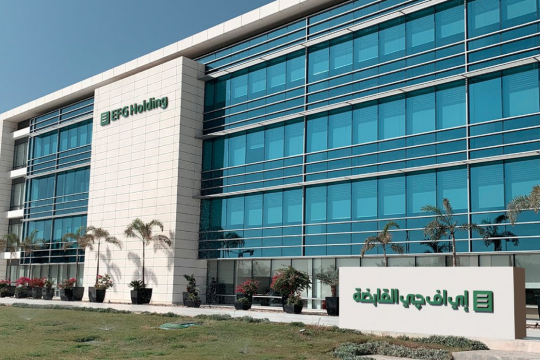
Bank NXT rolled out its new Private segment tailored for high-net-worth individuals with a minimum balance of EGP 20 mn (or the FX equivalent), EFG Holding’s banking arm said in a statement(pdf). The new segment offers exclusive banking and non-banking services, including a dedicated relationship manager, private branch lounges, priority transaction processing, and charge-free account opening and checkbook issuance.

(Tap or click the headline above to read this story with all of the links to our background as well as external sources.)

Clients will also have access to an Infinite Credit Card with a credit limit of up to EGP 1 mn, competitive loan and mortgage financing plans, and tailored wealth solutions. Beyond financial services, the package includes real estate advisory, counsel services, personal assistance for government services, healthcare privileges, travel benefits such as airport meet-and-greet and visa support, and leisure perks like spa access and complimentary hotel stays.

MANUFACTURING-

#1- The Egyptian African Businessmen’s Association (EABA) inked an agreement to launch a large-scale pharma project in Mozambique dubbed Pharma South, with investments reaching USD 300 mn, Association Chairman Yousry El Sharkawy told Al Borsa. The project will be a joint venture between the Egyptian and Mozambican private pharma sectors.


#2- Kemet mulls Egypt, Tanzania plants: Edible oil manufacturer Kemet LogisticsExport Import plans to establish two factories with combined investments of USD 5 mn over the coming two years, one in Egypt and one in Tanzania, Commercial Director Younes Gomaa told Al Borsa. Each of the factories will have a daily production capacity of 200 tons, 30% of which will be earmarked for exports. The plants will produce pure sunflower oil and soybean oil.

11

PLANET FINANCE

India faces the steepest earnings downgrade in Asia as US tariffs weigh on outlook

Forward 12-month earnings estimates for Indian large- and mid-cap firms dropped by 1.2% over the past two weeks — the sharpest fall in Asia, Reuters reports, citing LSEG data. The cuts come as the US’ 50% tariff on India — set to take effect on 27 August — raises growth risks, even with proposed domestic tax cuts looking to soften the blow.

(Tap or click the headline above to read this story with all of the links to our background as well as external sources.)

The downgrades follow another disappointing reporting season, extending a slowdown that began last year. Corporate earnings growth has been stuck in single digits for five straight quarters, down from 15-25% in 2020-2023. “After disappointing earnings growth of only 6% in 2024, the pace of recovery remains sluggish in 2025,” said Société Générale Asia Equity Strategist Rajat Agarwal.

Automobiles, capital goods, F&Bs, and consumer durables all saw earnings forecasts cut by around 1% or more. This comes despite the fact that Nifty 50 firms derive just 9% of their revenues from the US.

Analysts warn stretched valuations could leave Indian equities vulnerable if tariffs persist. “We could potentially see the tariff triggering a broad valuation re-rating downwards and make some of the domestic oriented stocks attractive,” says JP Morgan Asset Management Global Market Strategist Raisah Rasid.

To counter external pressures, Indian Prime Minister Narendra Modi has unveiled sweeping consumption tax cuts, proposing a two-rate structure of 5% and 18% instead of the previous 12% and 28% tax that was imposed on some items. Economists at Standard Chartered expect the reforms to lift GDP growth by 0.35-0.45 percentage points by FY 2027. MUFG, however, expects sustained 50% tariffs to reduce India’s GDP growth by one percentage point, with the textiles sector among the hardest hit.

Despite the policy support, foreign investors are pulling back. Bank of America’s latest fund manager survey shows that India has slid from the most-preferred to the least-preferred Asian equity market in just two months as doubts grow over valuations and the pace of earnings growth.

EGX30

35,622

-0.3% (YTD: +19.8%)

Down

USD (CBE)

Buy 48.44

Sell 48.57

USD (CIB)

Buy 48.45

Sell 48.55

Interest rates (CBE)

24.00% deposit

25.00% lending

Tadawul

10,867

-0.1% (YTD: -9.7%)

ADX

10,209

+0.1% (YTD: +8.4%)

DFM

6,126

0.0%% (YTD: +18.8%)

S&P 500

6,467

+1.5% (YTD: +10.0%)

FTSE 100

9,321

+0.1% (YTD: +14.1%)

Euro Stoxx 50

5,488

+0.5% (YTD: +12.1%)

Brent crude

USD 67.73

+0.1%

Natural gas (Nymex)

USD 2.70

-4.5%

Gold

USD 3,419

+1.1%

BTC

USD 115,275

-1.3% (YTD: +23.2%)

S&P Egypt Sovereign Bond Index

899.17

+0.1% (YTD: +15.6%)

S&P MENA Bond & Sukuk

148.48

+0.3% (YTD: +6.1%)

VIX (Volatility Index)

14.22

-14.3% (YTD: -18.0%)

THE CLOSING BELL-

The EGX30 fell 0.3% at Thursday’s close on turnover of EGP 3.5 bn (32.9% below the 90-day average). Local investors were the sole net buyers. The index is up 19.8% YTD.

In the green: Egypt Kuwait Holding- EGP (+1.2%), GB Corp (+1.2%), and Ibnsina Pharma (+0.9%).

In the red: Misr Cement (-3.5%), Arabian Cement (-2.5%), and Rameda (-1.9%).


AUGUST

28 August (Thursday): Monetary Policy Committee meeting.

Mid-August: Launch of electronic platform to register Old Rent Law tenants.

Tourism Development Authority to waive late payment penalties for land purchases if full installments are paid

Late-August: Deadline for cement factories to restart production.

SEPTEMBER

8-11 September (Monday-Thursday): EFG Hermes London Conference takes place in the British capital.

9-11 September (Tuesday-Thursday): The International Exhibition for Paper, Corrugated Board, Paperboard and Tissue Paper Industries — PAPER-ME — takes place at the Egypt International Exhibition Center.

15 September (Monday): IMF to hold its combined fifth and sixth reviews of Egypt’s USD 8 bn EFF arrangement.

24-27 September (Wednesday-Saturday): Cityscape Egypt 2025, Egypt International Exhibition Center.

30 September (Tuesday): The Egypt-South Korea Economic Cooperation and Partnership Forum.

The Egyptian-Moroccan Business Council to send a delegation of 23 local companies to Rabat.

The Engineering Export Council of Egypt will ship a commercial delegation to Russia to ramp up exports to European markets.

Egypt Education Platform (EEP) to launch two new schools in Alexandria and Somabay.

Egypt Otsuka’s nutritional products factory in Tenth of Ramadan to begin operations, with exports to Gulf countries expected by January 2026.

OCTOBER

1 October (Wednesday): Applications for alternative housing for old rent tenants will open through an online platform or at post offices nationwide.

2 October (Thursday): Monetary Policy Committee’s sixth meeting.

7 October (Tuesday): The 2025 EnterpriseAM Egypt Forum.

7-8 October (Tuesday-Wednesday): HACE-Hotel Expo, Egypt International Exhibitions Center.

7-9 October (Tuesday-Thursday): EgyMedica Exhibition, Cairo International Convention Center.

12-16 October (Sunday-Thursday): Cairo Water Week, Cairo.

19-20 October (Sunday-Monday): Egypt to host the fifth edition of the Aswan Forum.

19-22 October (Sunday-Wednesday): Arab African Investment and International Cooperation Summit.

23-25 October (Thursday-Saturday): Stone Africa Expo, Cairo International Conference Center.

October: The third iteration of the Export Smart Exhibition and Conference.

Mid-October: Capmas to publish the findings of its 2023-2024 income and expenditure survey.

NOVEMBER

16-19 November: Cairo ICT 2025, Egypt International Exhibition Center

20 November (Thursday): Monetary Policy Committee meeting.

November: Egypt to join the EU’s Horizon Europe research and innovation program.

DECEMBER

1-4 December: Egypt Defence Expo (EDEX), Egypt International Exhibition Center.

25 December: (Thursday): Monetary Policy Committee meeting.

EVENTS WITH NO SET DATE

Mid-2025: EGX launches sustainability index.

3Q 2025: Nasr Automotive begins locally manufacturing passenger cars.

3Q 2025: Polaris Parks to finalize contracts for two new industrial zones in the new capital and Sadat City.

Mid-2025: The Administrative Capital for Urban Developments to roll out the second phase of offering industrial plots to investors

2H 2025: Potential visit by Chinese President Xi Jinping to Egypt

4Q 2025: The beginning of construction works on China’s State Grid two solar projects.

4Q 2025: GB Auto starts assembling one of China’s Great Wall Motor models in 4Q 2025.

4Q 2025-1Q 2026: Kasrawy Group to launch first Avatr EV models in Egypt.

2025: The InterAcademy Partnership assembly.

2025: Nile Basin States Summit, Cairo, Egypt.

2025: Release of the government’s Startup Charter document.

Before 2025-end: The government will launch two ro-ro shipping lines with Saudi Arabia and Turkey.

2026

Early 2026: Passenger operations on the New Administrative Capital–Nasr City monorail scheduled to begin.

1Q 2026: Trial operations for the Ain Sokhna–Sixth of October section of Egypt’s first high-speed rail line scheduled to begin.

1 January: European Union’s Carbon Border Adjustment Mechanism (CBAM) to fully come into effect.

10-12 February (Tuesday-Thursday): Gitex Global’s AI Everything Middle East & Africa Summit

15 March 2026: IMF to hold its seventh review of Egypt’s USD 8 bn EFF arrangement.

May 2026: End of extension for developers on 15% interest rates for land installment payments

15 September 2026: IMF to hold its eighth review of Egypt’s USD 8 bn EFF arrangement.

2H 2026: Operations at Deli Glass Co’s new USD 70 mn glassware factory kick off.

2027

20 January-7 February: Egypt to host the African Games.

April 2027: Tenth of Ramadan dry port and logistics hub to begin operations.

EVENTS WITH NO SET DATE

2027: Egypt to host EBRD’s annual meetings for 2027.

End of 2027: Trial operations at the Dabaa nuclear power plant expected to take place.

September 2028: First unit of the Dabaa nuclear power plant begins operations.

Now Playing
Now Playing
00:00
00:00