Get EnterpriseAM daily

Available in your choice of English or Arabic

Alcazar Energy to pay a premium for Gabal El Zeit as state exit program gains steam

1

WHAT WE’RE TRACKING TODAY

House prepares to green light major cabinet shuffle

Good morning, folks. Bring your reading glasses and first hit of caffeine. Today’s issue is a bit of a marathon, from an “extensive” cabinet shake-up on its way to why our dream of a 25% drop in apartment prices might remain just that — a dream.

We also dive into how Egyptian professionals are looking to online education platforms to reskill, and report on Egypt getting ready to tick off the Gabal El Zeit wind farm from its divestment to-do list. Meanwhile, the startup scene is getting a USD 1 bn boost with a new Charter aiming to mint five local unicorns, and we look at how crypto winter fears are returning as the Trump-fueled rally unravels.

***

WISH THIS MORNING’S ISSUE was a podcast? We’ve got you. Tap or click here to listen to Morning Drive, a 10-minute version of today’s issue crafted for you to enjoy with your morning coffee, while getting the kids ready for school, or while stomping around the house wondering where the [redacted] you left your [redacted] reading glasses.***

Watch this space

GOVERNMENT — An “extensive” cabinet reshuffle was approved and will be presented for the House’s green light tomorrow, a senior government official tells EnterpriseAM. The news follows a communique to MPs to attend a plenary session set to take place at 1pm to “consider an important matter.”

We’re told that despite the big changes, Prime Minister Moustafa Madbouly and the cabinet’s economic team will remain in place.

Why this matters: By ring-fencing the economic team, the government is sending a clear message to international creditors and investors that the current reform trajectory is non-negotiable. With the IMF program in a critical phase and the government pushing for increased private-sector participation, a change in the finance or investment portfolios would have triggered unnecessary uncertainty.

What’s next? Once the House approves the changes, the new ministers will be sworn in at Ittihadiya. We’ll be watching closely to see if any ministries are merged — as has happened in previous reshuffles — and looking closely at newly appointed ministers’ resumes to see if we can get insight into what the new cabinet’s priorities will be.


CAPITAL MARKETS — CI CapitalAsset Management opened books yesterday on a new IPO fund targeting newly listed shares on the EGX, alongside two launches focused on quantitative strategies (Quant fund) and high-dividend equities (HD20 fund), according to a statement (pdf) from the company. Subscriptions will be open for two months.

Why it matters: The launch of an IPO-focused fund signals market expectations of increased listing activity, giving investors a dedicated way to access new paper amid limited primary issuance in recent years. The Quant fund comes ahead of the anticipated EGX derivatives rollout, offering a vehicle designed to operate in a more hedged, model-driven trading environment once those tools are in place.


CORPORATE ACTIONS — Saudi sovereign wealth fund PIF is moving closer to securing a seat on Rameda’s board. The local pharma company’s board unanimously approved calling an ordinary general assembly to discuss a request from Seventh Saudi Investment Company, a PIF subsidiary, to nominate a representative to the board, it said in a disclosure to EGX (pdf). The date of the assembly is yet to be determined.

Why it matters: The move signals a potential shift for the Saudi shareholder from a passive investment to deeper involvement. It currently holds 11.1% of the pharma player after more than doubling its stake in 2022. Seventh Saudi Investment Company is currently the second-largest shareholder in the company after Compass’ healthcare investment platform Equinox Pharma, which holds 19.2%, and ahead of Kuwait’s Ekuity Holding, which owns 10.1% and already holds a board seat.


INVESTMENT — The Egyptian-American Enterprise Fund (EAEF) plans to exit two more portfolio companies this year, aiming to raise around USD 75 mn, according to a letter (pdf) to the US Congress. The planned divestments follow a sharp performance turnaround, with the fund posting a net income of USD 54.1 mn last year after a USD 20.3 mn loss in 2024.

Why it matters: EAEF’s renewed appetite for exits signals that Egypt’s private equity market is stirring back to life after years of FX-driven valuation paralysis, with the fund saying its strategy is anchored in what it describes as broader macro recovery and return of investor confidence. The fund is shifting from capital preservation to active harvesting, and its ability to convert assets into liquidity will be closely watched by foreign limited partners and regional PE firms weighing whether now is the time to enter — or re-enter — the market.

The roundup of news and trends that move your markets and shape corporate agendas delivered straight to your inbox.

Subscribe here

** DID YOU KNOW that we cover Saudi Arabia, the UAE, and the MENA-IndiaCorridor?

Happening tomorrow

Gourmet will officially take its place on the EGX tomorrow, with trading in the premium food retailer’s shares set to begin on Tuesday under ticker GOUR.CA at EGP 6.90 per share, according to a bulletin from the bourse seen by EnterpriseAM.

The listing follows the company selling a 47.6% stake in an IPO, whose public tranche was 55.8x oversubscribed and private placement was 12.2x covered. The company raised approximately EGP 1.3 bn in proceeds.


We’re keeping an eye on January’s inflation figures due tomorrow, set to serve as early clues ahead of the Central Bank of Egypt’s meeting to decide on interest rates on Thursday. The country’s December reading showed annual headline urban inflation unchanged at 12.3% despite food and beverages price hikes, supporting forecasts that inflation will continue making relatively adequate progress toward the CBE’s target of 7% (±2%) by the end of 2026.

Data point

USD 52.6 bn — that’s what net foreign reserves rose to at the end of January, climbing USD 1.1 bn from December, according to data (pdf) from the central bank. The increase was driven by a USD 2.6 bn uptick in the value of gold reserves, which helped offset a USD 1.5 bn fall in FX holdings.


PSA-

WEATHER- The warm weather is set to continue in Cairo today, with a high of 28°C and a low of 17°C, according to our favorite weather app.

But it’s cooling down quite a bit in Alexandria, with a high of 23°C and a low of 13°C.

The big story abroad

Global headlines are focused on Asian markets’ broad rally, riding the wave of incumbent Japanese Prime Minister Sanae Takaichi’s landslide victory in snap elections yesterday. In anticipation of Takaichi’s reflationary agenda — more spending and tax cuts — markets responded bullishly, sending Japan’s Nikkei climbing 4.2% to an all-time high.

Gold rebounded on the news: Partially boosted by Takaichi’s victory, gold rose above USD 5kper ounce, jumping as much as 1.7% in early trading and recovering half of the losses it sustained since dropping from a historic high late last month. Helping the recovery is also promising backing from the likes of Deutsche Bank, Goldman Sachs, and the Chinese central bank.

Super Bowl LX is getting plenty of attention this morning after the Seattle Seahawks won the game with 29 points, securing their second-ever title. The defeated Patriots lost their chance at their seventh title.

*** It’s Blackboard day: We have our weekly look at the business of education in Egypt, from pre-K through the highest reaches of higher ed.

In today’s issue: We take a look at how Egyptian professionals are looking towards online education platforms to upskill and prepare for AI shaking up the work place.

A year defined by ambition, energy, and global connection.

From elite performance to community-driven experiences, we continue to shape environments where sport goes beyond competition. Creating moments that inspire, connect, and endure at Somabay.

2

The Big Story Today

Alcazar Energy to pay a premium for Gabal El Zeit as state exit program gains steam

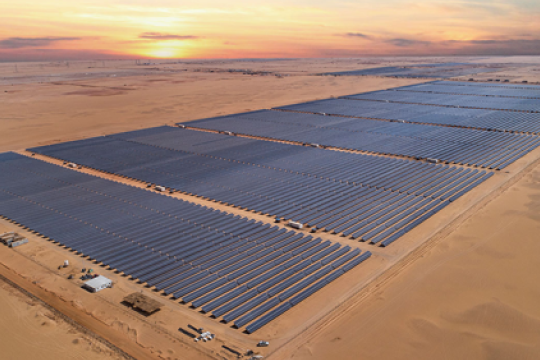
The government is set to announce the completion of the sale of the 580 MW Gabal El Zeit wind power complex to the UAE-based Alcazar Energy within days, a senior government official tells EnterpriseAM. Alcazar did not respond to a request for comment by the time of publication.

The transaction, a cornerstone of Egypt’s state privatization program, is expected to close at a valuation exceeding USD 420 mn — a significant jump from the USD 300–350 mn range previously discussed with the UK-based Actis, our source added.

Why this matters: This isn’t just about ticking off a key target in the government’s privatization program — it’s about the Sovereign Fund of Egypt sticking to its guns when it comes to valuations. By securing a price tag of over USD 420 mn, the government has signaled to the market that it is no longer willing to settle for fire sale prices to meet IMF-driven divestment targets.

Under the agreement, the cost of electricity produced by Alcazar will be denominated in USD but settled in EGP at the prevailing exchange rate, we were told. This structure protects the developer from currency volatility — a major pain point in the past for foreign investors — while ensuring the state does not face an immediate hard currency drain for offtake payments and, maybe, just maybe, presents a scalable template for other PPAs to follow.

What’s next? Following the signing, Alcazar will begin technical upgrades to the aging turbines to restore the plant to its maximum 580 MW capacity, our source said.

This publication is proudly sponsored by

3

Startup watch

Egypt targets five unicorns through USD 1 bn unified financing push

The newly launched Egypt Startup Charter sets out a plan to de-risk the ecosystem and remove bureaucratic growth barriers, targeting USD 5 bn in fresh VC inflows by 2031, the charter document (pdf) showed. The roadmap aims to enable 5k startups and cultivate five unicorns over the next five years, with a long-term goal of supporting startup expansion into international markets.

Encouraging growth and clamping down on risk

The charter involves a USD 1 bn unified financing initiative to achieve the VC inflows target. It operates through five strategic pillars, including expanding venture capital via a fund of funds managed by MSMEDA, providing credit backing for venture debt, and establishing matching funds for angel and corporate investors. It also introduces a regulatory framework for SPACs to facilitate stock market listings and promotes regional venture development to support startups nationwide.

The initiative mitigates risk for both founders and investors by broadening the available financing options, accelerating learning from early-stage failures, and establishing clearer pathways to growth and exit, Foundation Ventures Managing Partner Mazen Nadim tells EnterpriseAM.

The new credit backing for venture debt serves as a critical market signal for institutional allocators, Nadim tells us. While macroeconomic headwinds remain the primary filter for foreign LPs, this backing materially improves the risk profile at the individual transaction level. This shift suggests a move away from ad-hoc government fixes toward a systematic institutionalization of risk reduction.

Zeroing in on regulatory bottlenecks and tax complexity

The charter introduces a tax regime aimed at lowering entry barriers and easing the fiscal burden on early-stage startups. Companies with annual revenues of up to EGP 20 mn are subject to fixed income tax rates of 0.4–1.5% and are exempt from capital gains, dividends, stamp duties, and registration fees. Operational support measures include a fully digitalized company incorporation process completed within one working day, a unified 2% customs tax on imported machinery, and six-month installment plans for production inputs.

Looking ahead, the state is studying an expansion of the regime to companies with revenues of up to EGP 50 mn. For investors, the charter formally recognizes convertible notes and introduces regulatory frameworks for SPACs and GP/LP venture fund structures, aligning Egypt with international private equity standards. The package also includes fast-track licensing and a 90-day liquidation mechanism to enable the efficient redeployment of capital and talent.

Scaling up and making use of government procurement contracts

The state is deploying its balance sheet to anchor the local ecosystem, mandating that startups and SMEs account for 40% of government procurement. This includes a 20% carve-out for smaller firms and a 15% preferential price margin for Egyptian companies in public tenders. Beyond procurement quotas, the charter uses the state supply chain to modernize traditional sectors by requiring state-owned enterprises to integrate startups into their operations.

The charter launched the ScaleUp Champions Program, targeting mature startups with more than USD 10 mn in funding or those older than seven years. The program aims to cultivate unicorns by cutting bureaucratic hurdles, supporting IPO readiness, and facilitating strategic exits.

The Alliance and Development initiative will also invest EGP 150 mn over three years in sector-specific innovation alliances, focusing on AI, agritech, and greentech. This is complemented by non-tax incentives aimed at reducing operating costs, including subsidized technical training, waived intellectual property filing fees, and access to industrial services at prices 30% below market rates.

Expanding globally and hiring locally

The charter supports international expansion through multiple-entry, five-year visas for founders and investors, alongside a dedicated Techplomacy track to help Egyptian startups access African and European markets. The plan also aims to integrate startups into global payroll platforms such as Gusto and Papaya Global, enabling local tech talent to work for international firms while remaining embedded in the Egyptian ecosystem.

The document also launches a strategic push to qualify 1 mn innovators through a new digital platform. To anchor this talent locally, it mandates decent work standards and introduces tax incentives for inclusive hiring, including a 50% increase in the income tax exemption threshold for each employee with a disability. Meanwhile, the government will relaunch the EgyptInnovate platform this month as a central hub for investor matching and market data, aiming to reduce information asymmetry.

Why it matters

The charter’s enforcement would mean the end of regulatory ambiguity, Nadim tells us. By formally recognizing startups as a distinct category, the government eliminates major friction around registration, taxation, and compliance. That clarity boosts confidence and fundamentally changes how investors deploy capital, enabling earlier, faster, and more conviction-driven investments in a predictable operating environment.

It’s a strategic approach to competing with the massive subsidies offered by Riyadh and Dubai, Nadim tells us. Rather than relying on cashbased incentives, it positions Egypt’s advantages at the forefront: a large domestic market, cost efficiencies, and a deep talent pool. The emphasis is on building real, sustainable businesses with solid fundamentals, rather than chasing short-term, incentive-driven gains.

Looking ahead five years, the charter’s success will be measured by how efficiently capital circulates within the ecosystem, Nadim said. If the charter enables founders to launch fast, exit realistically and immediately redeploy that capital into the next generation of Egyptian ventures, it will have achieved its objective.

4

A MESSAGE FROM SEKEM

From the desert to the Amazon: SEKEM’s vision for a regenerative future from COP30

BELÉM — Standing at the edge of the Amazon for COP30, the atmosphere was a world away from the sterile negotiation rooms of past summits. In Belém, the proximity of the rainforest served as a visceral reminder that climate policy is not an abstract debate; it is a matter of survival for the communities that tend our earth. For those of us representing SEKEM and Heliopolis University, the mission was clear: to demonstrate that whether one is reclaiming the Egyptian desert or protecting the Brazilian rainforest, the solution lies in placing agriculture at the heart of climate action, with a focus on the Just Transition mechanism that prioritizes the smallholder farmer.

The Just Transition mechanism reinforces the commitment to ensure that the shift to a green economy does not impose financial or social burdens on the world’s most vulnerable populations. In agriculture, this means we cannot expect a farmer to abandon conventional methods for regenerative ones without protecting their immediate livelihood.

The economic barrier and the “magic tool”

The primary obstacle to making regenerative agriculture a global standard is not a lack of will, but the cost of the transition. At COP30, I emphasized Payment for Ecosystem Services (PES) as the “magic tool” for global ecosystem restoration. By rewarding farmers with high-integrity carbon credits, we create a transparent financing system that facilitates the transition to regenerative agriculture and encourages the adoption of solar energy and sustainable water management. This is the core of our work in Egypt: ensuring the entire ecosystem advances in unison, while advocating for smallholder farmers’ livelihoods.

Education as the catalyst for change

At Heliopolis University, we believe that consciousness development is the ultimate driver of progress. We do not aim to produce graduates who are merely climate aware; we prepare them to be climate active. By dedicating a faculty for organic agriculture and integrating students in real-world sustainability practices through Community-Based Learning, we are unlocking the potential of a generation that views regenerative practices as a professional standard rather than a niche alternative.

Global policy and climate finance are essential, but they remain stagnant without the human element. As the discussions in Belém made clear, when we center the community and empower the individual, we transform climate policy into measurable, cooling action for the planet.

Heliopolis University Vice President for Community Development & Partnerships Dr. Ahmed Elshazly

5

Real estate

Why you shouldn't hold your breath for a twenty-five percent drop in property prices

The debate continues in the real estate market over supply and demand dynamics heading into 2026, split between major developers who have so far been able to sustain strong sales and protect their margins and a secondary market where property owners are finding it difficult to exit.

An interesting discussion unfolded recently at the American Chamber of Commerce’s annual real estate conference around the concept of a “correction” currently taking place in the market. The session brought together SODIC Managing Director Ayman Amer, Orascom Development’s O West, Makadi Heights, and Byoum CEO Hazem Helal, and Misr Italia co-CEO Ahmed Fathy. Abu Soma Touristic Development Company CEO Ibrahim El Messiri moderated the panel.

“We’ve been talking about a crisis in the real estate market for years, but it’s not a crisis, it’s a cycle,” Amer said. We go up, the cycle adjusts, then we make more moves. Before 2006, prices were very low in the Egyptian market, then started peaking from 2006 until today, and never stopped, he added.

But here is the catch: “it’s not anymore a two to three-year [cycle], it’s five to seven,” Amer argued. Liquidity still exists, but the holding period has lengthened. And a five-to-seven-year window means that you’re going to put your money in the right property, he added. Large pools of capital, meanwhile, have limited places to go. Precious metals cannot realistically absorb EGP 10 bn tickets, Ayman said, leaving real estate as one of the few assets capable of taking capital at scale.

“What is happening in the market is a filtration, a correction,” Helal said. 2025 was a correction, and starting in 2026, growth will move in a different way, he added.

Integrated development will be a key factor in that filtration, Helal argued. Livability is partly residential — “If I’m going to live in a place, I need medical services, education services, places to play sports, and my shopping needs,” he explained.

Prices did go a little bit above affordability, especially for people living in Egypt whose income is in EGP and where price increases were higher, Helal admitted.

Meanwhile, the real estate sector attracts the highest amount of foreign currency coming from Egyptians working abroad, which jumped 42.5% y-o-y to USD 37.5 bn in 11M 2025, far outstripping revenues from the Suez Canal or even tourism, Helal said. The growth seen in the industry today is partly driven by the percentage of sales coming from Egyptians working abroad, he noted.

The correction will not happen in prices — instead, some companies will not be there, and mergers will happen because of that, Fathy expects. The market was not in this position 20 years ago, but today players across residential, commercial, administrative, and other mixed usages are operating in a far more competitive environment, Fathy added.

“Correction also means having the right product in terms of space, functionality, payment plans, and definitely price,” Fathy noted. At the end of the day, it’s a complicated equation, and you have to get so many variables right to succeed. “There is strong affordability for ultra-luxury products if you give people the right product. 70% of Sodic sales are ultra-luxury products,” Amer added. These buyers are very picky, their benchmarks are extremely high, and they travel everywhere in the world, so you have to deliver exactly what they are looking for.

“When we asked Gen Z and young buyers directly, ‘Do you want to live in a very small apartment?’ The answer was no,” Amer noted at the AmCham event. Not more rooms — fewer rooms, but spacious rooms and generous areas. They don’t like living in London-style apartments. Our culture is different: We are a warm country with warm people. You have to address the right thing, he added.

“On behalf of all developers, I want to say that the recent rumors that prices could fall by 25-30% will not happen. We cannot do it, it is mathematically impossible,” Helal said.

Land prices are not falling, construction costs are not falling, financing remains expensive, salaries do not decline, and marketing and brokerage costs persist. Without cost compression, headline prices cannot collapse.

Margins, in fact, have already been thin. Projects sold between 2018 and early 2022 often generated little to no income, Helal said, noting that developers who achieved single-digit margins were “very lucky.” The solution is not cheaper square meters but smarter design. Large villas and inefficient layouts no longer work — the focus must be on making the total value proposition attractive and affordable without cutting meter prices.

Affordability concerns, meanwhile, look different when viewed in USD. Pricing real estate in EGP creates a distorted narrative, Amer said, arguing that Egypt’s top-tier assets average around USD 1k per sqm. Comparable assets in the GCC start at USD 6–7k, while premium European markets reach USD 10k. By those benchmarks, Egypt remains underpriced, not expensive.

But foreign participation remains minimal. Only about 3% of total real estate sales go to foreigners out of an estimated USD 34 bn market, Amer said, compared with roughly 15% in countries like Portugal. The problem is not product quality but marketing reach. Egypt does not market itself aggressively abroad, and developers often act in isolation rather than pushing destination-level narratives, Amer explained.

Hospitality-linked real estate is emerging as the most natural export channel. Demand is already strong in Cairo, Sahel, and the Red Sea, Fathy said, with rising interest from Gulf buyers and expats. Sahel, in particular, is increasingly compared internationally rather than locally. Development pipelines are expanding accordingly, including around 16 hotels planned over the next four to five years, alongside branded and serviced residences designed to make ownership frictionless for foreign buyers.

6

LAST NIGHT’S TALK SHOWS

Everyone has something to say about the incoming cabinet reshuffle

The nation’s talking heads were focused on the anticipated cabinet reshuffle, which our sources tell us will entail “extensive changes” but have Prime Minister Moustafa Madbouly and the economic team retain their roles.

El Sora’s Lamees El Hadidi said that the changes initially sought a comprehensive cabinet reshuffle, but were later pared down to an extensive shuffle — before narrowing further into a moderate shift involving eight to ten ministerial portfolios (watch, runtime: 06:51).

The decision heads to the House tomorrow for a vote, where MPs will either vote for or against the shuffle as a whole, MP Mostafa Bakry told Ala Masouleety’s Ahmed Moussa, explaining that MPs can’t approve one minister and reject another. The new lineup will feature several surprises, including the creation of new ministries and the appointment of new ministers, Bakry said (watch, runtime: 7:21).

^^ We have more on what we can expect from the cabinet reshuffle in the news well, above.

7

ALSO ON OUR RADAR

EEP steps into the world of higher education with Noor City university

TMG’s Noor City is getting a university, courtesy of EEP

TMG, EEP pave the way for a university in Noor City: Talaat Moustafa Group (TMG) signed an agreement with the Egypt Education Platform (EEP) to establish a private university in its Noor City project in East Cairo, according to a joint press release (pdf) and another disclosure (pdf) from TMG. The total investment for the university is estimated at EGP 8 bn. The project marks EEP’s first venture into higher education.

The details: TMG is providing a 216k sqm land plot for the institution in return for an equity stake in the project and a long-term share of its recurring revenue. Phase one is slated to launch by 2029.

That’s not all: EEP will manage two new Noor City schools and handle operations under a management agreement, while TMG is providing the land and capital for construction.

ADVISORS: Our friends at EFG Hermes acted as the sole financial advisor for the partnership.

Madinet Masr moves to diversify its business model with new real estate investment fund

Madinet Masr’s Safe Real Estate Investment Fund received final approval from the Financial Regulatory Authority to begin operations, the real estate player said in a disclosure (pdf). The move shows Madinet Masr is pushing to diversify its business model, with the decades-old developer leaning into alternative investment structures like fractional real estate.

SODIC sees revenues more than double in 2025

SODIC’s net income rose 77% y-o-y to EGP 4.5 bn in 2025, driven by a 118% y-o-y jump in revenues to EGP 21.3 bn, the developer said in its latest earnings release (pdf). The company recorded contracted sales of EGP 48.4 bn for the year.

Helping drive the growth was customer loyalty — with 44% of buyers being repeat customers — land bank expansion, and long-term scaling, Group General Manager Ayman Amer said at a presser yesterday attended by EnterpriseAM.

SODIC sold 1,788 units last year, up from 1,270 units the year before. The value of contracted sales moved in the opposite direction, falling to EGP 48.4 bn from EGP 50.3 bn in 2024. The slight decline in contracted sales came despite price increases of 10–30% across the company’s projects, Amer said. While the bulk of 2024 sales came from the Ogami project on the North Coast, where fewer but larger units were sold at a higher price, he explained that the bulk of 2025 sales came from the Eastvale project in East Cairo, which saw more but smaller units sold at a lower price point.

Looking ahead: “With units delivered nearly doubling y-o-y and strong progress across construction, we remain focused on creating sustainable value for our customers, partners, and shareholders. We continue to execute our strategic growth plans with the same diligence and customer-centric approach that sets SODIC apart,” Amer said.

8

PLANET FINANCE

Trump-era crypto optimism unwinds

Retail crypto traders were back on uneasy ground last week after a sharp sell-off briefly dragged BTC below its post-election levels, reigniting fears of a fresh “crypto winter,” Bloomberg reports. BTC sank 13% in a single session last Thursday to around USD 60k — its steepest daily drop since the 2022 FTX collapse — before clawing back above USD 70k a day later. Even with the rebound, the cryptocurrency still ended the week down roughly 30%, unsettling investors who had assumed political backing and Wall Street adoption had made the market more resilient.

The immediate trigger was US President Donald Trump’s nomination of Kevin Warsh as the next Federal Reserve chair, a move that cooled demand for risk-sensitive assets, including BTC and precious metals, Reuters argued. But analysts say the downturn was already in motion. “This contraction has been underway for several months and remains ongoing,” Kaiko research analyst Thomas Probst said, warning that thinning liquidity is making price swings sharper and more erratic.

The reversal marks a clear break from the Trump-fueled optimism that once pushed BTC past USD 125k, driven by expectations of a more crypto-friendly US administration, strong ETF inflows, and progress on industry-backed legislation. Those hopes have faded. Money has flowed out of crypto funds in recent months, the Trump-linked World Liberty Financial coin has lost much of its value, and key bills remain stalled in the US Senate — despite earlier bank forecasts calling for BTC to hit USD 300k by year-end.

For retail investors, the sell-off has cracked the idea that crypto now has a reliable price floor. With US policymakers ruling out direct intervention and Treasury officials dismissing calls to backstop BTC with public funds, traders are once again exposed to the asset class’s defining risk: volatility driven as much by narrative as fundamentals.

History suggests the pain can spill into the real economy. Prolonged downturns have often triggered layoffs, stalled innovation, and weaker confidence across the sector.

However, veterans argue the pattern is familiar. Every previous crypto winter has eventually given way to a new peak, albeit after long periods of losses and consolidation. “There are several things signifying that we are very close to a bottom, if not having achieved it,” said James Butterfill of CoinShares, signalling that the worst of this slump is over — even as investors brace for a longer chill.

MARKETS THIS MORNING-

Asia-Pacific markets are a sea of green in early trading this morning as investors react to Japanese Prime Minister Sanae Takaichi’s victory, which also sent gold soaring after ending last week in the red. Japan’s Nikkei and South Korea’s Kospi are leading gains.

EGX30

50,035

+0.6% (YTD: +19.6%)

USD (CBE)

Buy 46.89

Sell 47.02

USD (CIB)

Buy 46.91

Sell 47.01

Interest rates (CBE)

20.00% deposit

21.00% lending

Tadawul

11,217

+0.3% (YTD: +6.9%)

ADX

10,563

+0.2% (YTD: +5.7%)

DFM

6,691

+0.2% (YTD: +10.7%)

S&P 500

6,932

+2.0% (YTD: +1.3%)

FTSE 100

10,370

+0.6% (YTD: +4.4%)

Euro Stoxx 50

5,998

+1.2% (YTD: +3.6%)

Brent crude

USD 67.60

-0.7%

Natural gas (Nymex)

USD 3.21

-6.2%

Gold

USD 5,044

+1.3%

BTC

USD 70,386

+1.5% (YTD: -19.7%)

S&P Egypt Sovereign Bond Index

1,017

+0.1% (YTD: +2.4%)

S&P MENA bond & sukuk

151.93

0.0% (YTD: 0.0%)

VIX (Volatility Index)

17.76

-18.4% (YTD: +18.8%)

THE CLOSING BELL-

The EGX30 rose 0.6% at yesterday’s close on turnover of EGP 7.7 bn (31.7% above the 90-day average). Local investors were the sole net buyers. The index is up 19.6% YTD.

In the green: Heliopolis Housing (+8.4%), Valmore Holding- EGP (+8.1%), and Edita (+7.3%).

In the red: GB Corp (-3.5%), Eastern Company (-3.1%), and Qalaa Holdings (-1.7%).

9

BLACKBOARD

Egyptian professionals are outpacing their bosses in the AI race

While corporate boardrooms debate the readiness of the local ecosystem for AI, the workforce is already working to stay ahead of the curve. Mid-career professionals, not just students, are flocking to online education platforms to future-proof themselves against a skills disruption that is no longer theoretical, edtech industry insiders tell EnterpriseAM.

“Learners are preparing ahead of disruption rather than reacting after it happens,” global e-learning platform Coursera’s Middle East, Turkey, and Africa General Manager Kais Zribi tells EnterpriseAM. With over 3.7 mn learners in Egypt — accounting for nearly 30% of the entire MENA market — the country has become a massive “skills kitchen.”

And unlike what you may have expected, the average learner on the platform in Egypt is 31 years old. Coursera’s main demographic to ensure growth is “career switchers and mid-career professionals who are keen to adopt AI, automation, and digitalization,” we were told.

By the numbers: In 2023, an Egyptian learner enrolled in a generative AI course once every 20 minutes, according to Coursera data shared with EnterpriseAM. By 2025, that frequency jumped to one enrollment every nine minutes. The year also saw over 440k STEM enrollments from Egyptian users on the platform.

Learners across other education platforms are also looking ahead to skills needed in the future, with AI pinpointed as the topic gaining the most interest, along with cybersecurity and project management, Egyptian edtech eYouth co-founder and CEO Mustafa Abd Ellatif tells us. Zribi described how the increased interest in STEM “reflects the reality that digital and technical skills now underpin employability.”

Looking ahead, demand is only set to increase, with 48% of on-the-job skills in Egypt expected to change within the next five years, according to the World Economic Forum’s most recent Future of Jobs Report (pdf). This puts Egypt a good way ahead of the global average of 39%. AI and technology are, of course, a big part of this, with the report seeing 45% of tasks handled by technology at the end of the decade, while humans will handle 30%, and 25% will be a collaborative effort.

Egyptian employers also understand the skills gap, with 73% identifying skill gaps as the primary barrier to developing their business, according to the World Economic Forum. Abd Ellatif similarly tells us that 40% of the businesses they speak to cite a lack of skills for why they’re not hiring younger workers, and 40% of demand comes from those directed their via their employers. This is also reflected in youth employment figures in the region, Abd Ellatif tells us in reference to why the edtech chooses to focus on those aged 15-35 years.

There are several reasons why in-person training and learning have taken a back seat, with eYouth, which boasts 4 mn learners, “providing on demand courses that anyone can take anywhere and anytime,” we were told. The edtech also points to its use of AI teachers to customize and improve learning, in addition to its efforts to match graduates with jobs, as what sets it apart from traditional education options and competing edtechs.

The speed with which students can learn skills and complete courses also puts online learning platforms at an advantage, according to Zribi. “People want to learn skills for a specific field within six to nine months, while this is much longer in traditional education with a degree of diploma.”

And what they also provide — unlike the early days of online education — is “credited content with accredited certificates,” Abd Ellatif tells us. But even without the shine of a traditional university degree, “we feel like over the last, let’s say, four to five years, the conversation now started to shift from credentials alone to to job relevant skills,” Zribi tells us.


2026

FEBRUARY

10 February (Tuesday): Capmas expected to release inflation data for January.

11-12 February (Wednesday-Thursday): Gitex Global’s AI Everything Middle East & Africa Summit.

12 February (Thursday): Monetary Policy Committee’s first meeting of 2026.

19 February (Thursday): First day of Ramadan (TBC).

MARCH

15 March (Sunday): IMF to hold its seventh review of Egypt’s USD 8 bn EFF arrangement.

21 March: (Saturday): Eid El Fitr starts (TBC).

30 March – 1 April (Monday-Wednesday): Egypt International Energy Conference and Exhibition 2026 (EGYPES).

APRIL

2 April (Thursday): Monetary Policy Committee’s second meeting of 2026.

12 April (Sunday): Coptic Easter.

25 April (Saturday): Sinai Liberation Day.

MAY

1 May (Friday): Labor Day.

21 May (Thursday): Monetary Policy Committee’s third meeting of 2026.

27-29 May (Wednesday-Friday): Eid El Adha (TBC).

JUNE:

30 June (Tuesday): National holiday in observance of the June 30 Revolution (TBC).

JULY

9 July (Thursday): Monetary Policy Committee’s fourth meeting of 2026.

23 July (Thursday): National holiday in observance of Revolution Day (TBC).

AUGUST

20 August (Thursday): Monetary Policy Committee’s fifth meeting of 2026.

26 August (Wednesday): National holiday in observance of Prophet Muhammad’s birthday (TBC).

SEPTEMBER

15 September (Tuesday): IMF to hold its eighth review of Egypt’s USD 8 bn EFF arrangement.

24 September (Thursday): Monetary Policy Committee’s sixth meeting of 2026.

27-29 September (Sunday-Tuesday): Global Conference on Population, Health and Human Development.

OCTOBER

6 October (Tuesday): Armed Forces Day.

29 October (Thursday): Monetary Policy Committee’s seventh meeting of 2026.

DECEMBER

17 December (Thursday): Monetary Policy Committee’s eighth meeting of 2026.

EVENTS WITH NO SET DATE

Early 2026: Passenger operations on the New Administrative Capital–Nasr City monorail scheduled to begin.

Early 2026: The government will launch the second package of tax breaks.

1Q 2026: Trial operations for the Ain Sokhna–Sixth of October section of Egypt’s first high-speed rail line scheduled to begin.

1Q 2026: Turkish President Tayyip Erdogan to visit Egypt.

May 2026: End of extension for developers on 15% interest rates for land installment payments.

2H 2026: Operations at Deli Glass Co’s new USD 70 mn glassware factory kick off.

2027

20 January-7 February: Egypt to host the African Games.

April 2027: Tenth of Ramadan dry port and logistics hub to begin operations.

EVENTS WITH NO SET DATE

2027: Egypt to host EBRD’s annual meetings.

2027: Egypt-EU Summit 2027.

End of 2027: Trial operations at the Dabaa nuclear power plant expected to take place.

September 2028: First unit of the Dabaa nuclear power plant begins operations.

Now Playing
Now Playing
00:00
00:00