Get EnterpriseAM daily

Available in your choice of English or Arabic

Admaius scores quick exit as PE deal flow picks up, selling Parkville to Adenia Partners

1

WHAT WE’RE TRACKING TODAY

Green energy use might be the thing to get your investment proposal over the line

Good morning friends, we kick off today’s issue with news that 2026 is shaping up to be a big year for private equity, with Admaius Capital Partners selling its stake in cosmeceutical manufacturer Parkville Pharmaceuticals after just two years to Africa-focused private equity firm Adenia Partners.

Also in today’s issue is the Finance Ministry’s plan to lift export support allocations in the new budget, a one-on-one with HP MEA Managing Director Ertug Ayik, Deutsche Bank’s forecasts for the year ahead, Paragon looking to green credentials to unlock cheaper financing, a deep dive into the economic impacts of noise pollution, and much, much more.

***

WISH THIS MORNING’S ISSUE was a podcast? We’ve got you. Tap or click here to listen to Morning Drive, a 10-minute version of today’s issue crafted for you to enjoy with your morning coffee, while getting the kids ready for school, or finally tackling that mountain of laundry that’s been judging you from the “clean” chair since Tuesday.
***

Watch this space

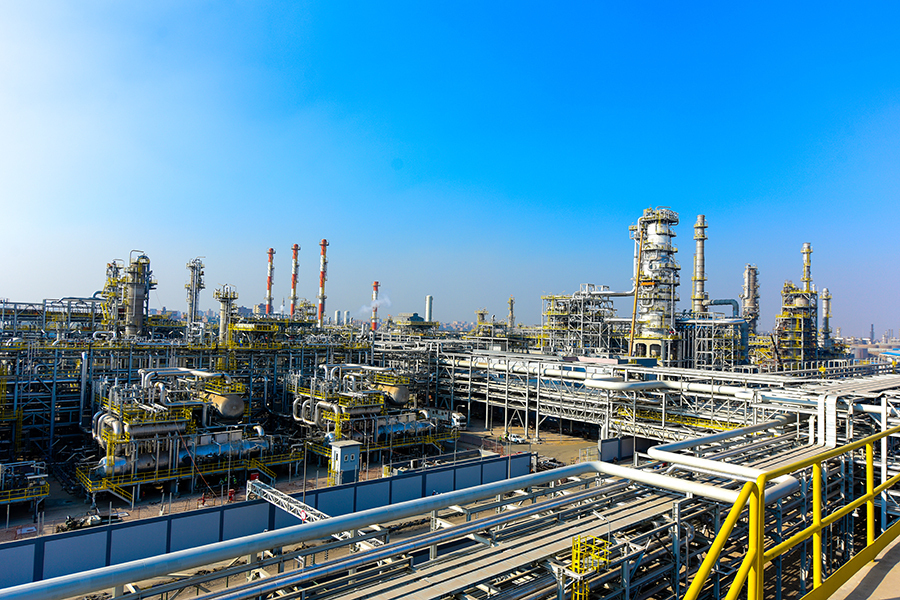
RENEWABLES — Green energy use might be the thing to get your investment proposal over the line. The Industry Ministry gives preferential treatment to factory proposals that use new and renewable energy when choosing between investors for projects, Industry Minister Kamel El Wazir said, according to a ministry statement. The ministry does this to lessen the pressure on the grid, he explained.

The bar is higher for larger factories, especially in energy-intensive industries, with the minister adding that the Supreme Council of Energy’s sign-off is dependent on a large portion of their power being derived from renewable sources.


SHIPPING –– Analysts are on the look out after the Houthis affirmed their commitment to defend Iran in a statement released amid rising US-Iran tensions after the Pentagon said it was deploying naval assets to the region and made threats of airstrikes on Iran due to its violent crackdown on protestors.

Shipping companies are reconsidering their decision to return to the Red Sea, with CMA CGM signaling caution after it said it will reroute vessels on its French-Asia Line 1, French-Asia Line 2, and Mediterranean Club Express back through the Cape of Good Hope.

** DID YOU KNOW that we cover Saudi Arabia, the UAE and the MENA-IndiaCorridor?

** Were you forwarded this email? Tap or click here to get your own copy delivered every weekday before 7am Cairo time — without charge.

Happening today

AmCham’s flagship real estate conference kicks off today at the Nile Ritz Carlton, with registration starting at 8:30am.

Patrick, our editor-in-chief, is moderating a panel on the market for real estate as an investment, with appearances by our friend Ibrahim El Missiri from Somabay, alongside Hazem Badran from Palm Hills Developments, and Tamer Nasser of City Edge Developments. Tap or click here to check out the full agenda orvisit this link to register.

Staying on target

Customs clearance times and costs fell by some 65% in just a year, Investment Minister Hassan El Khatib said in a pitch to the Swiss business community yesterday, according to a ministry statement. El Khatib’s remarks, which follow similar comments from the minister and others highlighting trade reform progress, place the savings from the new customs efficiencies at USD 1.5 bn.

Data point

USD 11.5 bn — that’s how much fresh and processed food exports brought in 2025, accounting for 24% of the country’s total export revenues, the Agriculture Ministry said in a statement.

PSA-

WEATHER- The mercury is once again set to fall in Cairo today, with a high of 20°C and a low of 12°C, according to our favorite weather app.

It’s a little cooler in Alexandria, with a high of 19°C and a low of 11°C.


The big story abroad

It’s a mixed bag in the foreign business press this morning, with the USD’s slide, gas prices, and Trump’s latest tariff announcement all making headlines.

#1- Trump to hike tariffs on Seoul: US President Donald Trump announced he is hiking tariffs on South Korean autos, lumber, and pharma from 15% to 25%, blaming the country’s legislature for not implementing a trade agreement reached last November. The move strains Washington’s relationship with a major trade partner, as South Korea ranks among the top 10 sources of imports to the US, with over USD 150 bn worth of Korean goods heading to the US every year.

#2- The USD dipped to its lowest point since 2022 amid speculation about joint US-Japan efforts to boost the JPY, which jumped to a two-month high. Adding to pressure on the greenback are worries of another government shutdown and geopolitical tension pushing investors away from the currency and into safe haven assets.

#3- Musk’s X is in hot water with the EU: The European Union is investigating Elon Musk’s X following the generation of explicit images of women and children by its in-app AI chatbot Grok. The probe will ascertain whether or not the company properly mitigated risks of its chatbot’s functionalities in the bloc.

#4- US natural gas prices have soared to a three-year high after a major winter storm disrupted production across the country.

*** It’s Going Green day — your weekly briefing of all things green in Egypt: EnterpriseAM’s green economy vertical focuses each Tuesday on the business of renewable energy and sustainable practices in Egypt, everything from solar and wind energy through to water, waste management, sustainable building practices and how you can make your business greener, whatever the sector.

In today’s issue: We take a look at why noise is legally classed a pollutant in Egypt and how tackling it would be a boost to the economy.

From world-class tennis with the ATP Challenger 75, to the kickoff of upcoming football camps and hosted experiences, Somabay brings together premium hospitality, natural surroundings, and world-class sports infrastructure, creating an environment where focus, movement, and recovery happen seamlessly.

It is a destination designed for athletes, teams, and partners, where sport, lifestyle, and community align, and where sport lives beyond the game.

2

The Big Story Today

Admaius Capital Partners exits Parkville Pharmaceuticals to Adenia Partners in rare two-year hold

It’s only January, but we have yet another sign that 2026 could shape up as a good year for private equity: Admaius Capital Partners is exiting its stake in cosmeceutical manufacturer Parkville Pharmaceuticals after just two years, selling to Africa-focused private equity firm Adenia Partners in a transaction that underscores a broader revival in Egypt’s private equity and M&A markets.

The transaction: Admaius, along with Parkville founders Sherif Bassiouny and Mahmoud Farrag, inked agreements to sell a majority stake to Adenia, the two PE outfits said in statements (here and here, both pdf). The two firms declined yesterday to talk with us about financials, but Admaius Managing Partner Marlon Chigwende noted that “the USD returns to our investors are very attractive.”

Why we’re cheering the transaction: These are two no-BS investors in Egypt — and a two-year exit with positive USD returns is rare in emerging markets PE, where funds typically hold assets for five to seven years and often struggle to find buyers willing to cough up the asking price.

What’s Parkville? Founded in 2008, the Cairo-based company makes and distributes lines of skincare, haircare, wellness, and therapeutic pharma products. Its brands — including StarVille, StrongVille, Bobai, Glamy Lab, and Seropipe — have made it a leading player in the nation’s fast-growing cosmeceutical segment.

Exports are a growing part of Parkville’s sales mix. The company has a plant in Alexandria and now sells into Libya, Saudi Arabia, Kuwait, the UAE, and Iraq. Its products are also now available on Noon and Amazon in Saudi, according to its website.

What Admaius did: The pan-African PE firm invested in November 2023. “Together with the management team, we focused on strengthening operations, governance, and scalability while navigating a challenging macroeconomic environment,” Managing Director Ahmed Rady said in the statement.

The transaction is a big one for Adenia: The transaction is the firm’s first investment here and its largest to date. It entered Egypt in late 2024 when it tapped veteran investment professional Heba Hakky to head its Egypt office. Adenia has raised over USD 1 bn across five funds and co-investments since its founding in 2002, with 35 investments and 21 exits to its name. Its latest vehicle, Fund V, closed at USD 540 mn.

SOUND SMART- Adenia is also raising a smaller-ticket fund focused on entrepreneurs — the EU-Africa Adenia Entrepreneurial Growth Fund — which landed a EUR 32.5 mn commitment from the European Investment Bank last October.

What they said: “This investment reflects our conviction in Egypt’s long-term fundamentals and in the strength of locally built champions,” Hakky said in the statement. “We look forward to working closely with Parkville’s founders and management team in the next phase of its growth.” Adenia plans to support Parkville’s product portfolio enhancement, digital and e-commerce acceleration, and regional market expansion.

PE (and M&A) are having a moment

The Parkville exit isn’t a one-off: There’s been a sustained pickup in private equity and M&A activity after spending the better part of 2023 and 2024 in the deep-freeze. Egypt saw 120 M&As in 2024, up 24% y-o-y, the highest growth rate in the Middle East, according to PwC. Dealmaking picked up in the first half of last year, with 86 transactions nearly doubling the 1H 2024 tally and putting Egypt second only to the UAE (95 transactions) in regional volume.

Why exits were hard: 2022-2024 was punishing for PE outfits with Egyptian assets. The FX crisis and subsequent devaluation saw a classic buyer-seller mismatch on pricing after it left PE firms underwater in USD terms — prompting risk-averse buyers to demand bargain-basement prices.

What’s changed? Buyers — both regional and international — are back in the market, and there’s fresh capital flowing into private equity firms. You all know the song by now: the Madbouly government’s economic team has stabilized the economy, and the central bank has stayed the course.

PE activity really picked up in the last 12 months: Morpho Investments closed investments in two agricultural firms after a USD 55 mn first close of its inaugural fund. London-based healthcare PE firm Alta Semper is raising a USD 150 mn fund focused primarily on Egypt and Morocco, having already taken a majority stake in Nature’s Rule this month. The EIB and IFC committed a combined USD 138 mn to RMBV and Alta Semper earlier in January, and AfricInvest exited MDP to Lorax last year.

Is Gourmet’s IPO a sign of the times?

Perhaps the clearest evidence that PE exits are back: B Investments is taking premium grocer and food manufacturer Gourmet Egypt public.

By the numbers: Gourmet is looking to raise up to EGP 1.3 bn by offering a 47.6% stake at an indicative price range of EGP 6.20-6.90 per share, giving the company a market cap of as much as EGP 2.8 bn. EFG Hermes Investment Banking will price the offering on Sunday, with trading slated to begin on or around 9 February. Institutional investors will get 80% of the 191 mn shares on offer through Thursday, while retail investors can place orders through 4 February.

Why it matters: A good IPO would prove the EGX is a real alternative to strategic sales for PE outfits facing pressure to return liquidity to their limited partners. B Investments has been patient with Gourmet, and a strong debut would suggest that well-managed portfolio companies can find liquidity domestically.

What’s next?

For the transaction: The usual caveats apply — it still needs clearance from regulators, including the Financial Regulatory Authority.

For Adenia: Egypt is now on the map. The firm, a control investor, is well-positioned to build out its portfolio here.

For Admaius: The firm took a minority stake in Triquera, the majority shareholder of drugmaker Minapharm, last July in a transaction that also brought in the EBRD. The firm is investing in Minapharm’s biotech capabilities and kicking the tires on international acquisitions. Admaius continues to raise capital for its Virunga Africa Fund I after an initial USD 280 mn first close. The firm currently has AUM of USD 320 mn.

For the market: 2025 was about fundraising momentum — capital was available, largely from development finance institutions, even if exits were rare. The Parkville sale and Gourmet IPO suggest the logjam may finally be breaking.

ADVISORS– Zilla Capital acted as the sole financial advisor to the selling shareholders. Matouk Bassiouny provided counsel to the sellers, while Baker McKenzie advised Adenia Partners.

(** Tap or click the headline above to read this story with all of the links to our background as well as external sources.)

This publication is proudly sponsored by

3

5 QUESTIONS

5 questions for HP’s MEA Managing Director Ertug Ayik

EEnterpriseAM sat down with HP Managing Director for the Middle East and Africa Ertug Ayik (LinkedIn) to give us an inside look into the company’s plans for Egypt, the uses of on-device AI, and what they term the “future of work.” Edited excerpts from our conversation:

QUESTION 1 — HP announced it was doubling down on Egypt in 2025. What have you done so far, and why did you decide to make the move?

We’ve already been operating in Egypt for years now. We had HP employees covering Egypt — they just weren’t based here. What we have seen over the last three to five years is that Egypt has improved a lot in terms of stability and the economy — it has taken a lot of steps to create stability and predictability.

Many companies at this point in time are downsizing — they are closing offices, but HP decided to invest and build a footprint in Egypt with the opening of a physical office. As a company, we believe in the future of Egypt. We believe that there is a lot of potential, not only for HP, but for those we can serve as a technology provider.

QUESTION 2 — Digital transformation is a key national priority in Egypt. How is HP looking to support the private and public sectors in this push?

Our core strategy is to be the technology provider for the future of work. What we want to bring as a technology company is to be able to eliminate the digital gap between employees and the entities themselves, because there is a conflict today, and technology can solve that.

We are focusing not just on the pieces of technology themselves, but on the processes and working models connecting these devices — so when you go to work, you are empowered to do what you do best. To give an example, I have a daughter in high school — it’s her last year, so it’s pretty stressful. I was in a parent-teacher conference and saw the teachers there struggling so much as they were spending a large amount of time manually transferring exam grades from one place to another.

And I thought that this brilliant teacher didn’t want to spend so much of her time on these tasks when she decided to get into teaching. Her dream was probably, “I want to go to school, I want to teach kids, I want to inspire them, I want to get them ready for life…etc.” We believe that technology can automate all these mundane tasks for teachers, so they can spend more time on what really matters to them.

And once you get technology to handle those unnecessary tasks, the difference is clear. I used to spend hours preparing presentations, but now it’s easy.

If we, as a technology producer, help employees, they are going to be much more productive and happier — and that’s going to drive better outcomes for the company. This isn’t only for the private sector — it’s also for the public sector. If a government employee is happy at work, they are also going to serve citizens better. Ultimately, that improves the service levels the government provides to its citizens.

QUESTION 3 — Do you see HP’s focus on on-device AI as being particularly suited to certain industries in Egypt?

I think industries handling highly sensitive data — like healthcare, banking, ins., and some government institutions — are going to be much more interested in this. Many government entities don’t even want their data held outside the country — simply because it’s sensitive data and they want to keep it local.

Now, you don’t even need to have that data leave your premises, because you can still do so much with it directly on your device. There are pieces of on-device AI technology that could really help sectors requiring face-to-face interaction. If you are in hospitality, you can have a device that listens to customers’ questions and provides the answers. Whether you’re a nurse in a hospital or a salesperson in a retail store, AI can bring new capabilities to people in these front-line roles.

QUESTION 4 — To the people running large companies across the Middle East, what is the main technological challenge they should be thinking about and addressing in 2026?

I think a lot of companies don’t know where to start with the implementation of AI. They often think, “Okay, I need to make a huge breakthrough, and I need to make a big investment.” But I don’t think that is always necessary.

There are a lot of good use cases for starting small, like a proof of concept, where one starts with a small problem and sees how AI can help solve it without investing huge amounts. And then if it works, one can scale it. This model seems to be working with a lot of corporate and enterprise customers — and I think it can actually be modeled in many companies in Egypt.

You don’t need to start big and boil the ocean. Start small, see the results, and then scale it.

QUESTION 5 — How AI will develop and how it will be used are very hard to predict. If we sat down in a year’s time and had this conversation, do you think we would be talking about AI in a completely different way?

I don’t think so. But I think at some point, it’s going to start to become invisible. Today, electricity is invisible, right? I mean, we don’t even think about electricity, but it’s everywhere, in all the devices.

AI is new, but I think in the future — maybe not in a year’s time — we will start seeing the same thing. It’s going to be everywhere, in every device, in everything. It’s going to be akin to a basic utility that exists everywhere.

I’m very optimistic. There are a lot of AI optimists and a lot of pessimists, but I feel that if the advantages the technology can bring greatly outweigh the potential risks, it’s a good thing. And I think AI is in that segment.

4

TRADE

FinMin to raise export support allocations in new budget

The Finance Ministry is planning to increase allocations for export subsidies and industrial localization programs in the FY 2026-27 budget draft, a senior government official tells EnterpriseAM.

IN CONTEXT- The Madbouly government is aiming for 15% annual growth in exports, targeting USD 75 bn in total exports by the end of 2026, with a focus on the automotive and mobile phone industries, alongside import substitution initiatives. The government has been working on clearing EGP 60 bn in overdue payments to exporters tied to shipments dating back to before 30 June 2024, which will be done through a combination of banknote disbursements and offset arrangements.

Why it matters: Boosting exports is central to narrowing the trade deficit, which remains the primary source of pressure on the treasury and the EGP exchange rate. “We are currently working on developing incentives to boost exports and to align with the plans of other government entities to transform Egypt into an integrated regional logistics hub, while supporting services exports and high-value exports,” the source said.

The strategy: Total subsidy funds are set to grow even as percentage breakdowns remain unchanged through FY 2027-28. Given the projected growth, total allocations are expected to surpass EGP 50 bn, up from EGP 45 bn this year, according to our source. The current program allocates support based on value added (50%), export growth rate (30%), production capacity (10%), and labor force (10%).

Targeting high-value niches: The government is earmarking EGP 7 bn specifically for

complex industries to attract global manufacturers. “We are focusing on globally limited, complex industries to ensure high demand and quick returns,” the source noted.

Reducing red tape: To further boost exports, the government is also working to slash customs clearance times by 75-90% — from an average of eight days currently to just 48 hours— via a new independent export system. “Accelerating the procedures through the upcoming launch of the customs facilitation packages along with the activation of the new export system would save the state USD 2.1 bn in the next fiscal year,” another government source tells EnterpriseAM.

Export council have their say

Chemicals and fertilizers: Achieving a 15% annual growth rate is an “ambitious but achievable goal,” provided supportive policies and international standards are maintained, said Chemical and Fertilizers Export Council Chairman Khaled Abu Al-Makarem.

Engineering industries: “The major shift in government support for export-oriented production has already boosted export volumes across sectors,” said Engineering Export Council Chairman Sherif Al Sayyad. The council is targeting USD 7.5 bn in exports this year.

Our take: Exports are vital for FX inflows and mending the trade balance. However, the speed of implementation for structural reforms, easing investment burdens, and the Investment Ministry’s push forunifying fees by replacing the numerous non-tax financial burdens and fees imposed by state entities with an additional income tax will be what truly keep Egyptian products competitive in a volatile global economy.

5

A MESSAGE FROM VODAFONE EGYPT

Digitizing farmland: how Vodafone Business and Rakhaa build smart agriculture at a national scale

In Egypt’s most remote agricultural zones, where traditional connectivity and infrastructure end, Vodafone Business is proving that innovation begins. Through its partnership with Rakhaa, Vodafone Business is extending digital transformation into some of the country’s most remote agricultural zones. By combining IoT, advanced analytics, and expanded network coverage, the collaboration is helping farmers move from traditional practices to connected, data-driven operations that improve efficiency, sustainability, and long-term yield quality and productivity.

The initiative reflects Vodafone’s broader role as a strategic partner in national development, delivering not only connectivity but also integrated digital ecosystems that support food security, empower rural communities, and enable smarter resource use at scale.

To explore more stories on how Vodafone Business is shaping digital transformation across industries, click here.

6

THE MACRO PICTURE

Central Bank of Egypt has room to cut interest rates 500-600 bps in 2026, says Deutsche Bank

The Central Bank of Egypt (CBE) has room for another 500-600 basis points of rate cuts this year, Deutsche Bank (DB) says in a new research note seen by EnterpriseAM — but, if fiscal reforms pick up pace or global conditions turn sour, the central bank may turn more hawkish.

Why it matters: The call (just) puts DB at the more dovish end of expectations for the CBE’s 2026 trajectory. Some 725 bps of cumulative cuts last year brought the policy rate to 20%, and the bulge bracket bank sees rates falling to the 14-15% range by the end of this year while keeping real rates in positive territory.

Look for the CBE to go for another 100 bps cut at its 12 February meeting, DB economist Samira Kalla writes. The timing matters: The meeting falls before Ramadan begins on 18 February, and seasonal imports are already in stock. That could give the central bank a window to ease before any seasonal price pressures kick in. Inflation was steady at 12.3% y-o-y in December, and the bank forecasts an average of around 11% for 2026 — still above the CBE’s target of 7% (± 2 percentage points) by 4Q, but on a clear downward trend.

Deutsche Bank sees the economy growing at a 5% clip in 2026-27, in line with the CBE’s forecast.

Look for manufacturing to be the star once again: The manufacturing sector grew 15% in the first quarter of last year, Kalla writes. Regular readers of EnterpriseAM will have seen a flood of inbound investment in manufacturing, buoyed by improvements in everything from the macro climate to the customs bureaucracy. Standouts include motor vehicles (+50%), furniture (+34%), pharma (+19%), and ready-made garments (+17%). Outside of manufacturing, ICT added 14.5%, tourism 13.8%, and financial services 10.2%.

Also in the mix: The Suez Canal has finally returned to growth. Meanwhile, hydrocarbons remain a drag, but the decline is slowing as activity resumes and new gas field discoveries come online.

On inflation risks, DB flags potential FX pass-through from capital outflows, pending hikes in electricity and tobacco prices, and food price volatility thanks to (you guessed it) climate change. Lower-than-expected food price increases and any delay in phasing out energy subsidies could help push inflation lower than forecast.

7

EGYPT IN THE NEWS

Egypt’s decision to follow Australia's lead in the war on underage scrolling comes under the spotlight

Countries across the globe are mulling restrictions on children’s social media use — including Egypt. As the global debate on how best to protect minors from potential social media harm intensifies — sparked by Australia’s enforcement of a ban last month — moves in Egypt to follow suit have caught the attention of the international press.

The House announced earlier this week that it will develop legislation to “put an end to the digital chaos our children are facing,” reports the Associated Press. The lawmakers’ decision to convene with government bodies and experts to develop a draft law follows President Abdel Fattah El Sisi urging lawmakers “to restrict mobile phone access for young age groups” in comments made Saturday.

(** Tap or click the headline above to read this story with all of the links to our background as well as external sources.)

8

ALSO ON OUR RADAR

Paragon looks to green credentials to unlock cheaper state bank financing

Paragon leans on green credentials to secure financing

Real estate player Paragon Developments is in “advanced negotiations” with an un-named state bank to secure EGP 400 mn in green financing, according to a company statement(pdf). The move follows Paragon’s Paragon.2 Financial District in the New Capital attaining a LEED Gold certification.

Why it matters: This story isn’t just about sustainability, it’s about the cost of capital. With interest rates still relatively high, companies are using their green credentials to bypass more expensive lending and open up new pools of liquidity. If Paragon manages to secure the funding, it’s a sign that developers that prioritize sustainability and get the necessary certifications can access cheaper debt and access to funds that other developers can’t.

(** Tap or click the headline above to read this story with all of the links to our background as well as external sources.)

EBRD lends Hassan Allam USD 25 mn

Hassan Allam Holding has secured a USD 25 mn loan from the European Bank for Reconstruction and Development, according to the lender’s website. The funds will support Hassan Allam Construction’s capex and investment in new machinery.

9

PLANET FINANCE

Japanese government bond turmoil raises risks for JPY, carry trade, and US Treasuries

Tokyo’s bond market crash may be the end of easy money in Japan. The Japanese government bond (JGB) market, long a pillar of global stability, has entered a new era of unprecedented volatility, Bloomberg reports.

What happened? Last week, yields jumped 25 basis points in a single session — a rate that previously took months — signaling the end of Japan’s decades-long era of ultra-low rates.

Why the market snapped

The selloff was triggered by a relatively small amount of trading. Just USD 280 mn in turnover in ultra-long-dated JGBs sparked a USD 41 bn wipeout across the yield curve. Ultra-long maturities were hit the hardest, with about USD 170 mn traded in 30-year bonds and USD 110 mn in 40-year notes, yet yields jumped more than 25 basis points.

This volatility exposed a hollowed-out market: Years of Bank of Japan (BOJ) intervention have thinned liquidity. With the BOJ and domestic life insurers stepping back, prices are increasingly set by marginal trades rather than deep market demand. “This is not a paradox: it is exactly what you expect in a market where depth is thin, dealer balance sheets are constrained, and prices are set by the marginal trade rather than by volume-weighted averages,” said Shoki Omori, chief desk strategist at Mizuho Securities.

The pressure stems from a perfect storm of rising inflation and Prime Minister Sanae Takaichi’s expansionary fiscal plans, which have shown “disregard toward the yield movements” ahead of the Feb. 8 snap election, according to Shinji Kunibe of Sumitomo Mitsui DS Asset Management. Investors fear higher spending will worsen Japan’s already heavy debt burden of about 230% of GDP, creating a “Truss moment” with the currency down and long-end yields getting “a little out of control,” said Ugo Lancioni of Neuberger Berman.

The global ripple effect

The shock rippled through global markets, already pressuring US Treasuries. Goldman Sachs estimates that every 10 basis points of a Japan-specific bond shock lifts US yields by two to three points.

Why it matters: Rising yields threaten the USD 450 bn JPY-funded carry trade — a “bastion” of the global economy — where investors borrow in low-rate JPY to invest in higher-yielding assets, said Amova Asset Management’s Naomi Fink. If the JPY slides further, Japan may sell its US Treasury reserves to defend the currency — exporting its “Japan problem” to Western markets. Albert Edwards of Société Générale told the Financial Times that Western politicians should “quiver with fear” as Japan turns off the liquidity tap that has suppressed global bond yields for years.

Japan reax

The Bank of Japan’s response has so far been a game of “whack-a-mole.” While the BOJ signaled it may buy bonds to stabilize markets — helping debt rebound — it triggered another sharp selloff in the JPY. Rates were held steady on Friday, though inflation forecasts were raised, suggesting the pressure won’t ease soon. “It’s a new era,” said Masayuki Koguchi of Mitsubishi UFJ Asset Management. “This is just the beginning — there’s a chance that bigger shocks will happen.”

Looking ahead

The long-term concern is the “repatriation” of Japanese capital. Higher domestic yields are prompting Japanese institutions to reconsider their USD 5 tn in overseas investments, risking a move back to JGBs that could drain global liquidity. Sumitomo Mitsui Financial Group has already signaled a shift: “I always loved foreign bond investment, but not anymore. Now it’s JGBs,” said Arihiro Nagata, the group’s global markets head.

Ignoring market signals could worsen dysfunction, investors warn. With overseas investors now accounting for 65% of monthly cashbond trading (up from 12% in 2009), the JGB market is in a “fragile transition phase,” and fast-moving foreign capital is amplifying volatility, James Athey of Marlborough Investment Management and Stefan Rittner of Allianz Global Investors said.

(** Tap or click the headline above to read this story with all of the links to our background as well as external sources.)

MARKETS THIS MORNING-

Optimism appears to be the theme for markets this morning, as the anticipation for a wave of Big Tech earnings out later this week offsets the uncertainty triggered by President Trump announcing higher tariffs on South Korean goods and the imminent announcement of Powell’s replacement. Asia-Pacific markets are mostly in the green, with the Kospi leading gains, reversing earlier losses, which came as an immediate reaction to Trump’s announcement.

EGX30

47,507

+1.4% (YTD: +13.6%)

USD (CBE)

Buy 47.00

Sell 47.14

USD (CIB)

Buy 47.02

Sell 47.12

Interest rates (CBE)

20.00% deposit

21.00% lending

Tadawul

11,271

0.0% (YTD: +7.4%)

ADX

10,264

-0.2% (YTD: +2.7%)

DFM

6,446

-0.6% (YTD: +6.6%)

S&P 500

6,950

+0.5% (YTD: +1.5%)

FTSE 100

10,149

+0.1% (YTD: +2.2%)

Euro Stoxx 50

5,958

+0.2% (YTD: +2.9%)

Brent crude

USD 65.64

-0.4%

Natural gas (Nymex)

USD 6.80

+28.9%

Gold

USD 5,122

+2.1%

BTC

USD 88,198

+1.9% (YTD: +0.6%)

S&P Egypt Sovereign Bond Index

1,006

+0.1% (YTD: +1.3%)

S&P MENA bond & sukuk

151.61

+0.2% (YTD: -0.2%)

VIX (Fear gauge)

16.15

+0.4% (YTD: +7.6%)

THE CLOSING BELL-

The EGX30 rose 1.4% at yesterday’s close on turnover of EGP 7.2 bn (29.5% above the 90-day average). Local investors were the sole net sellers. The index is up 13.6% YTD.

In the green: Fawry (+7.1%), Raya Holding (+6.3%), and GB Corp (+5.3%).

In the red: Beltone Holding (-2.2%), Sidpec (-2.2%), and Palm Hills Developments (-1.6%).

10

Going Green

There’s a good reason why noise is legally classed a pollutant in Egypt

The Madbouly government is steadily expanding its national noise monitoring network, with the Environment Ministry installing a new real-time noise monitoring station in Suez last week and bringing the national count to 44, according to a ministry statement. On paper, it’s a routine administrative update — part of a network expansion that began in 2007 — but in the wider picture it’s part of an important effort to map an invisible pollutant that is currently acting as a massive, silent drain on the Egyptian economy.

The shift is driven by a hard economic truth: noise is a proxy for inefficiency. A loud street is almost always a high-emission street, a loud factory is almost always an energy-wasting factory, and a loud city is a city where healthcare costs are rising and labor productivity is falling.

Noise as a way to track carbon emissions

The most immediate strategic value of the Environmental Noise Observatory isn’t just about peace and quiet — it’s about carbon. “There is a strong link between noise levels and carbon emissions,” a senior government source tells EnterpriseAM.

Because noise data reveals real-time patterns of traffic congestion and industrial activity, it allows the state to identify hotspots where emissions are likely exceeding targets. In Cairo, where stations regularly record levels exceeding 70 decibels during the day and 60 at night, the soundscape is a direct reflection of a city struggling with carbon pollution.

“Analyzing observatory data reflects traffic patterns in an area, revealing whether road expansion or new traffic corridors are needed to improve traffic flow,” the source explains. “Smoother traffic leads to lower noise and reduced emissions.”

The sound of outdated and inefficient machinery

“In industrial areas, high noise levels often indicate outdated machinery and inefficient energy use,” the government source says. Loud machines frequently vibrate more, waste more heat, and consume more fuel.

The observatory’s data is now being pitched as a guide for policy, by identifying zones with high noise levels to provide targeted incentives or financing for equipment modernization. Replacing a loud, old turbine isn’t just about the workers’ ears, it’s about lowering the factory’s carbon footprint and energy bill.

Tackling noise pollution has health benefits — and in turn economic benefits

The economic toll of noise can be seen in the national healthcare budget. While air pollution often understandably takes the spotlight, the World Health Organization considers noise the second largest environmental cause of health problems. Chronic exposure is linked to cardiovascular disease, hypertension, and sleep disorders.

Expanding these monitoring efforts is a fiscal necessity, according to the Environmental Noise Observatory. “Climate change is associated with health issues such as heat stress and high blood pressure,” the source noted, adding that noise acts as a force multiplier for these conditions. The data is now being used to advocate for “green buffers” — strips of vegetation that absorb both sound and carbon — around hospitals to mitigate the effects of urban roar on patient recovery.

This loss of healthy life years across the Egyptian workforce represents a significant leakage in GDP. In a country where the informal sector and high-density workshops are common, noise-induced hearing loss and stress-related fatigue are not just personal tragedies, but drags on national productivity. In short, the louder a factory floor is, the less productive it is.

The impact on the health of the environment is also a concern

High decibel levels mask the acoustic signals animals use for mating, predator avoidance, and navigation. For Egypt’s green tourism sector and general ecosystem — for which everything fundamentally rests upon — excessive noise can have serious detrimental effects.

Noise plays a large part in how our cities are structured

Perhaps no sector has been reshaped by noise more than real estate. The soundscape has become a primary driver of Egypt’s massive internal migration. Extreme noise levels of central Cairo — which can average 90 dB, the equivalent of standing next to a running lawnmower for eight hours a day — are fueling the exodus to suburban compounds outside the core of the city.

While this migration has sparked a construction boom, it comes with a high price tag for the state. This urban flight devalues property in historic city centers and places a massive infrastructure burden on the government to connect sprawling new satellite cities. Silence is now a costly commodity, creating an economic divide where only the middle and upper classes — at least in cities— can afford to live in a low-decibel environment.

(** Tap or click the headline above to read this story with all of the links to our background as well as external sources.)


2026

JANUARY

27 January (Tuesday): AmCham Egypt’s Annual Real Estate Conference

FEBRUARY

3 February (Tuesday): S&P Global to release PMI figures for January.

3 February (Tuesday): Capital Markets Summit

10 February (Tuesday): Capmas expected to release inflation data for January.

10-12 February (Tuesday-Thursday): Gitex Global’s AI Everything Middle East & Africa Summit

12 February (Thursday): Monetary Policy Committee’s first meeting of 2026.

19 February (Thursday): First day of Ramadan (TBC).

MARCH

15 March (Sunday): IMF to hold its seventh review of Egypt’s USD 8 bn EFF arrangement.

21 March: (Saturday): Eid El Fitr starts (TBC).

30 March – 1 April (Monday-Wednesday): Egypt International Energy Conference and Exhibition 2026 (EGYPES)

APRIL

2 April (Thursday): Monetary Policy Committee’s second meeting of 2026.

12 April (Sunday): Coptic Easter.

25 April (Saturday): Sinai Liberation Day.

MAY

1 May (Friday): Labor Day.

21 May (Thursday): Monetary Policy Committee’s third meeting of 2026.

27-29 May (Wednesday-Friday): Eid El Adha (TBC).

JUNE:

30 June (Tuesday): National holiday in observance of June 30 Revolution (TBC).

JULY

9 July (Thursday): Monetary Policy Committee’s fourth meeting of 2026.

23 July (Thursday): National holiday in observance of Revolution Day (TBC).

AUGUST

20 August (Thursday): Monetary Policy Committee’s fifth meeting of 2026.

26 August (Wednesday): National holiday in observance of Prophet Muhammad’s birthday (TBC).

SEPTEMBER

15 September (Tuesday): IMF to hold its eighth review of Egypt’s USD 8 bn EFF arrangement.

24 September (Thursday): Monetary Policy Committee’s sixth meeting of 2026.

27-29 September (Sunday-Tuesday): Global Conference on Population, Health and Human Development.

OCTOBER

6 October (Tuesday): Armed Forces Day.

29 October (Thursday): Monetary Policy Committee’s seventh meeting of 2026.

DECEMBER

17 December (Thursday): Monetary Policy Committee’s eighth meeting of 2026.

EVENTS WITH NO SET DATE

Early 2026: Passenger operations on the New Administrative Capital–Nasr City monorail scheduled to begin.

Early 2026: The government will launch the second package of tax breaks.

1Q 2026: Trial operations for the Ain Sokhna–Sixth of October section of Egypt’s first high-speed rail line scheduled to begin.

1Q 2026: Turkish President Tayyip Erdogan to visit Egypt

May 2026: End of extension for developers on 15% interest rates for land installment payments

2H 2026: Operations at Deli Glass Co’s new USD 70 mn glassware factory kick off.

2027

20 January-7 February: Egypt to host the African Games.

April 2027: Tenth of Ramadan dry port and logistics hub to begin operations.

EVENTS WITH NO SET DATE

2027: Egypt to host EBRD’s annual meetings.

2027: Egypt-EU Summit 2027

End of 2027: Trial operations at the Dabaa nuclear power plant expected to take place.

September 2028: First unit of the Dabaa nuclear power plant begins operations.

Now Playing
Now Playing
00:00
00:00