Get EnterpriseAM daily

Available in your choice of English or Arabic

A very warm welcome to 2023

1

What We're Tracking Today

THIS MORNING: Welcome to 2023, folks

Good morning, wonderful people — and a very warm welcome to a brand new year. We’re kicking off 2023 with plenty of positive news. Since we last indeed in your inboxes, there have been strides forward to solve the issues that dogged imports last year. And there are more fresh leaves being turned over, as the government released the final version of its long-awaited state ownership strategy, and the private-sector minimum wage got a boost.

The key news triggers as we start a new month:

  • December’s Purchasing Managers’ Index for Egypt will land on Wednesday, 4 January.
  • Foreign reserves figures for December should be out later this week.
  • Inflation figures for December will be released on Tuesday, 10 January.
  • The national dialogue will kick off on Saturday, 14 January.
  • The government’s fuel pricing committee will meet this month to decide quarterly fuel prices.
  • Global movers and shakers will descend on Davos for the World Economic Forum’s annual meetings on 16-20 January.
  • The IMF will publish an updated World Economic Outlook towards the end of the month.

WHAT’S HAPPENING TODAY-

The House is back for the first session of 2023: MPs will discuss two draft laws that would allow the government to bring in companies to develop two container terminals at Alexandria’s Dekheila port and the Ain Sokhna port. Hutchison Ports and MSC signed initial agreements with the government to build new container terminals at the Dekheila and Sokhan ports last year.

Green hydro + oil bills up for a vote: The House is also set to vote today on a draft law to greenlight oil exploration by the Egyptian General Petroleum Company and Eni’s local arm in the Western Desert; and a presidential decree approving a EUR 500k grant agreement from the French Development Agency (AFD) to develop our green hydrogen sector.

TOMORROW- El Moselhy in the hot seat: Supply Minister Ali El Moselhy will face questions from MPs on plans to ensure the availability of key commodities including rice amid soaring prices in the lead-up to Ramadan, as well as on bread subsidies and ration cards.

PSA- Ramadan shopping is starting early this year: The government’s Ahlan Ramadan supermarket expo is being rolled out at a minimum of five locations in each governorate as well as supermarkets nationwide as of yesterday, giving shoppers three months to buy discounted essentials before the start of the holy month, Supply Minister Ali El Moselhy said in a statement. Some unspecified commodities will be sold at fixed prices, he added. We’re still waiting to hear more on the suggested price list the government is drawing up for certain essential foods. Ramadan is set to begin toward the end of March.

THIS WEEK-

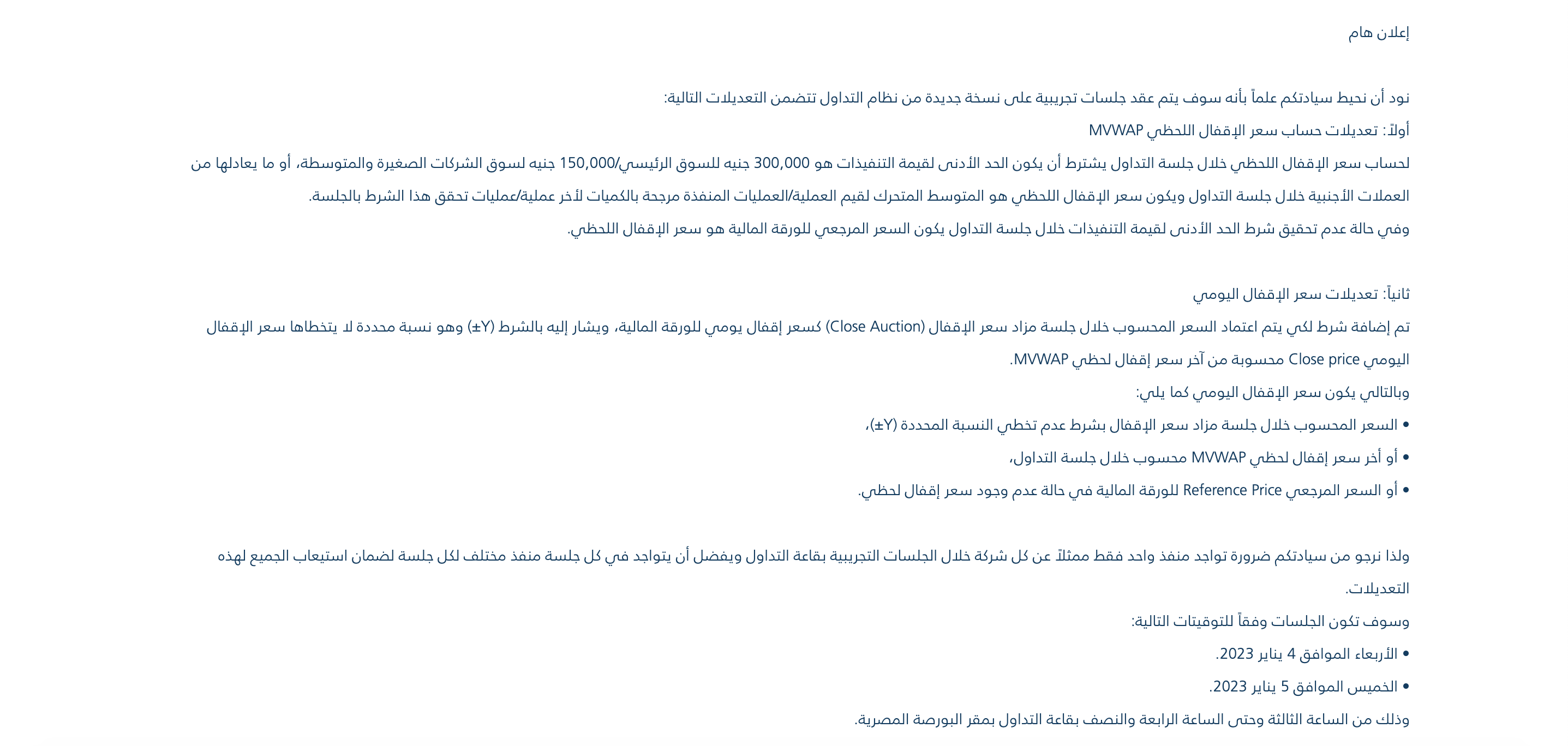
The EGX will be trialing an update (pdf) to its trading platform on Wednesday, 4 January and Thursday, 5 January from 3pm to 4:30pm. The update includes changes to the way stocks’ daily closing price is calculated and approved.

DATA POINT- The value of our natural gas exports jumped 140% y-o-y to reach USD 8.4 bn in 2022, Oil Minister Tarek El Molla said in a statement. The rise in the value of exports from USD 3.5 bn a year earlier came on the back of an increase in global LNG prices, he said. Natural gas exports hit 8 mn tons in 2022, up 14% on the previous year, El Molla added.

REMEMBER- Some 90% of the natural gas we exported last year was directed to Europe, as Egypt looked to capitalize on the supply gap left by the loss of Russian fossil fuels to the bloc. We take a look at the country’s efforts to position itself as a regional hub for energy exports in our year in review on the energy sector.

THE BIG STORY ABROAD- The IMF has a less than rosy outlook on the year ahead: The new year will be “tougher than the year we leave behind” as a third of the world economy is set to fall into recession, IMF Managing Director Kirstalina Georgieva told CBS’ Face the Nation program (watch, runtime: 23:49). We’re already seeing a slowdown in the three big economies — the US, EU and China — with half of the EU expected to fall into recession in 2023, Georgieva said. For emerging markets and developing economies, “the picture is even more dire … because on top of everything else they get hit by high interest rates and by the appreciation of the USD,” Georgieva said, predicting “devastation” for countries with high debt levels.

AND- Brazil swore in new president Luiz Inácio Lula da Silva yesterday, the AP and Reuters report. The third-time president returned to power in a victory for the country’s political left, pledging in his inauguration speech to hold his predecessor Jair Bolsanaro’s administration to account for what he branded as criminal wrongdoing over its handling of the pandemic, among other issues.

RIP-

Former pope Emeritus Benedict XVI died at the Vatican on Saturday at the age of 95. Benedict XVI headed the Catholic church from 2005 until his resignation in 2013, making him the first pontiff to resign in 600 years. (Guardian | Wall Street Journal | Reuters | CNN | BBC)

Brazilian soccer legend Pele died in Sao Paulo on Thursday aged 82 after suffering complications from colon cancer. The only player to be a World Cup victor three times, Pele is widely regarded as the greatest footballer of all time. (Washington Post | CNBC | New York Times | CNN | AP | BBC)

CIRCLE YOUR CALENDAR-

The Egyptian-Qatari Business Forum will launch during 1Q 2023, sources reportedly told Mubasher last month.

This could coincide with new investments from Qatari firms: The Sovereign Fund of Egypt is expecting more investments from the Qatari Investment Authority (QIA) early next year. The wealth fund is currently doing due diligence and finalizing agreements to purchase as much as USD 2.5 bn worth of state-held stakes in unlisted companies.

Check out our full calendar on the web for a comprehensive listing of upcoming news events, national holidays and news triggers.

enterprise

*** It’s Blackboard day: We have our weekly look at the business of education in Egypt, from pre-K through the highest reaches of higher ed.

In today’s issue: It’s set to be another tough year for the education sector, as rising inflation, the EGP devaluation, and the subsequent cost pressures faced by schools continue to dominate administrators' concerns.

enterprise

Somabay brings out the best in majestic natural elements where raw beauty and endless activities reign supreme. Immerse yourself into a picturesque getaway all year long. This is simply Somabay. For more information, call 16390 or visit www.somabay.com.

2

Economy

Importers can now turn the page on L/Cs

Moves on import curbs + privatization: Egyptian authorities removed import restrictions and approved the state ownership policy document on Thursday, helping fulfill pledges made to secure vital funds from the IMF. The government had committed to reducing state involvement in the economy and canceling the requirement for importers to use letters of credit as part of the USD 3 bn loan agreement approved by the Fund last month.

L/C’S ARE HISTORY-

Documentary collection is back: The Central Bank of Egypt (CBE) announcedThursday that it had lifted the requirement to use letters of credit to finance imports in an effort to clear a longstanding backlog of imports. Importers will now be able to use documentary collection to bring goods into the country, the central bank said, reversing a decision taken in February to curb large outflows of foreign currency triggered by the war in Ukraine.

REMEMBER- A shortage of foreign currency has made it difficult for importers to access L/Cs. This left them unable to bring goods and raw materials into the country, resulting in shortages of industrial and consumer goods, economic disruption, and higher inflation.

No surprises here: Egyptian authorities had agreed to fully phase out mandatory L/Cs by the end of the year in tandem with the agreement with the IMF in October, which committed them to adopting a permanently flexible exchange rate. President Abdel Fattah El Sisi said last week that banks would secure the FX needed for outstanding L/Cs before the end of the year.

The current size of the backlog isn’t exactly clear: Prime Minister Moustafa Madbouly said at the weekend that goods worth some USD 1.24 bn were released in the final week of December — bringing the total released last month to more than USD 6 bn — but didn’t disclose how much remains stuck in port. The government last week pegged the value at USD 9.5 bn as of 25 December. The state will prioritize the release of foodstuffs and medical supplies ahead of Ramadan, Madbouly said.

PRIVATIZATION STRATEGY GREENLIT-

President Abdel Fattah El Sisi approved the final draft of the long-awaited state ownership policy, a document which provides a roadmap for how the government intends to reduce its involvement in the economy and boost private investment, cabinet said in a statement Thursday.

REFRESHER- Launched in May, the strategy aims to more than double the private sector’s role in the economy to 65% and attract USD 40 bn in private investment by 2026. The government says it will reduce its involvement in a number of sectors via public share offerings, stake sales to strategic investors, and expanding public-private partnerships. The president’s approval comes after the cabinet in early December approved the final draft, which was produced following weeks of consultations with public- and private-sector stakeholders over the summer and discussions at the Egypt Economic Conference in October. The government has until now been tight-lipped about the strategy.

WHAT WE KNOW NOW-

The state isn’t going to be exiting quite as many industries as we first thought: The government is planning to fully exit 62 sectors, phase out its involvement in 56, and step up its role in 76 others, cabinet said. The initial draft plan envisioned the government withdrawing from 79 sectors and reducing its involvement in 45.

This is now happening over a longer timeframe: The government will fully exit the 62 industries over the next 3-5 years, according to the final document. The initial draft targeted a maximum of three years.

A few notable changes between May and December: The final document doesn’t provide a complete breakdown of how each economic sector will look in five years’ time, but it does illustrate a few of the changes that have taken place since May:

  • The state will now increase its involvement in oil and gas extraction and refining, as well as electricity transmission networks;
  • It now plans to fully exit some financial brokerage activities including commercial ins.
  • Wholesale trade is now among sectors that the government plans to slowly withdraw from
  • There will be more state involvement in establishing dry ports, rather than a complete withdrawal
  • Pre-primary education is among activities in the education sector in which the government plans to increase its role instead of exiting.

The government has committed to a radical shake-up of the economy under the IMF agreement, including undertaking “wide-ranging” structural reforms to level the playing field between state-owned enterprises and private-sector firms, reduce state involvement in the economy, and increase transparency.

The war in Ukraine has focused minds: The economic turmoil triggered by the Russian invasion of Ukraine pushed the government to accelerate its privatization plans. In 2022, it sold upwards of USD 4 bn worth of state-owned shares of companies to Gulf sovereign wealth funds and the Sovereign Fund of Egypt (SFE) is working on a plan to take to market more than 40 projects worth around EGP 140 bn.

What’s next: Madbouly said that a committee will be formed to implement the strategy, including determining the exit mechanism for industries and a timeframe. The committee will be headed by the PM and includes several ministers, as well as the heads of the Egyptian Competition Authority, the General Authority for Investment and Freezones, the SFE, and the cabinet’s Information and Decision Support Center.

Watch this space #1: Ministers have begun discussing plans to host an investment conference this year to drum up international interest, according to a separate cabinetstatement. This follows the Egypt Economic Conference that was held in October.

Watch this space #2: The approval of the state ownership policy could pave the way for more investment in local assets by Gulf sovereign wealth funds, House Budget and Planning Committee Chairman Fakhri El Fiqi said. Abu Dhabi sovereign wealth fund ADQ “is eyeing Banque du Caire,” El Fiqi said. The state-owned bank has repeatedly delayed its long-awaited IPO. Meanwhile, Saudi Arabia’s sovereign fund PIF is expected to acquire United Bank for USD 600 mn, El Fiqi said, in apparent reference to a story reported earlier this month by Bloomberg.

The story is getting attention internationally: Bloomberg | Reuters.

3

Economy

Private-sector minimum wage rises 12.5%

New year, new private-sector minimum wage: The National Council for Wages has raised the minimum wage for private-sector workers by 12.5% amid soaring inflation. In a statement Thursday, the Planning Ministry said that private-sector firms now have to pay their employees at least EGP 2.7k a month, up from EGP 2.4k previously. The new minimum came into effect yesterday with the start of the new year.

The council was aiming for a bigger hike: The council was hoping to raise the minimum wage to EGP 3k — to match the minimum wage for civil servants and employees at state-owned enterprises as of November — following talks with business leaders.

New rules for annual bonuses: As of their 2023 financial years, private-sector companies will have to disburse annual bonuses equal to at least 3% of the employee’s ins. contribution and no less than EGP 100, after the council agreed to set a minimum value for annual bonuses.

The minimum wage hike is the latest in a series of measures carried out by the government to soften the impact of the economic crisis. Two major currency devaluations have helped to push inflation to near five-year highs, putting pressure on low-income households. The government has hiked the public-sector minimum wage to EGP 3k, expanded the Takaful and Karama social security program, and frozen household electricity prices until the end of the fiscal year in June.

The private-sector minimum wage is relatively new in Egypt, having been introduced at thebeginning of FY 2021-2022 at EGP 2.4k a month. The move was met with push back from companies, who complained that they couldn’t afford the higher wage bill.

Tags:
4

Capital markets

The EGX was the Middle East’s best performer in 2022

The EGX dethrones the ADX as the region’s best-performing stock market: The EGX was the best-performing stock market in the Middle East in 2022 thanks to a bull run in 4Q sparked by the IMF agreement that erased losses, Reuters reports. The benchmark EGX 30 index ended 2022 up 22%, beating out the Abu Dhabi Securities Exchange, which gained 20.3% during the year.

The EGX was the eighth best-performing exchange in the world, coming below the likes of the Venezuelan bourse, which surged 225% during the year, and Turkey’s Borsa Istanbul 100, which rose 197% to record highs.

That was quite the turnaround: The announcement of an agreement with the IMF sparked a major reversal in fortunes for Egypt’s benchmark index, which by the middle of the year had been deep in bear territory and trading at its lowest level since November 2016. Since its July low, the EGX 30 has soared 69% to reach highs not seen since January 2019.

Other markets weren’t so lucky: The Saudi Tadawul ended the year 7.1% in the red at an almost 20-month low. This was the exchange’s first annual loss since 2017.

It was a turbulent 2022: Stock markets struggled with inflationary pressures, rising interest rates, and wary investors thanks to the ongoing war in Ukraine, Wael Makarem, senior market strategist financial services provider Exness, told the newswire.

Brace for an equally turbulent 2023: “The fear of an economic slowdown has gripped markets throughout the year and could extend to 2023 as a recession remains possible,” Makarem said.

Read more: We dive into all things EGX in 2022 in our capital markets year in review.

enterprise

5

Cabinet watch

Ministers approve decision to “rationalize spending” in FY 2022-2023

Budget cutbacks in the works? Ministers approved a decision by Prime Minister Moustafa Madbouly to rationalize spending for the remainder of the current fiscal year, cabinet said in a statement Thursday following its weekly meeting. The statement didn’t include any additional information as to how the state may cut down on its spending. The government planned to spend EGP 2.07 tn in its FY 2022-2023 budget.

More green projects in the making: The cabinet also approved a number of decisions to allocate land in Dakahlia, Matrouh, Qena, and Sohag governorates to green projects including unspecified renewable energy, desalination, and green hydrogen facilities.

6

LEGISLATION WATCH

New real estate registry, competition law, and tax amendments are now in effect

El Sisi signs into law real estate registry, competition, and tax law amendments: President Abdel Fattah El Sisi has ratified a number of legislative amendments recently passed by the House of Representatives, according to a decree published in the Official Gazette.

#1- Amendments to the Real Estate Registry Act that streamline the real estate registration process by reducing paperwork, digitizing some of the procedures, and putting a time ceiling on the entire process.

#2- Competition Act amendments that grant the Egyptian Competition Authority (ECA) the power to block M&As that it thinks could harm market competition and promote monopolistic practices.

#3- The controversial amendment to the Unified Tax Procedures Act that allows foreign tax authorities to access individuals and businesses’ financial information.

enterprise

7

LAST NIGHT’S TALK SHOWS

Last Night’s Talk Shows: Getting imports flowing again

Imports led the inaugural talk shows of 2023, after Prime Minister Moustafa Madbouly held a presser at the weekend (watch, runtime: 16:48) on government efforts to clear the backlog of goods at ports. The central bank on Thursday lifted the requirement to use letters of credit to finance imports and rather go back to using documentary collection in an effort to clear the longstanding backlog (more on that in our Economy section, above.)

Efforts to clear the imports backlog send a positive message to investors, economics professor Karim El Omda told Ala Mas’ouleety’s Ahmed Moussa (watch, runtime: 3:22). El Omda also urged the Finance Ministry to look into supporting importers who may now have to pay additional fees for the time their containers spent on hold at ports.

Top priority goes to medical imports: The government is working to clear meds and medical equipment through ports before other goods, Health Minister Khaled Abdel Ghaffar reiterated to Ala Mas’ouleety (watch, runtime: 4:34), reassuring viewers that there have been no delays to patient care and surgeries on the back of the imports jam.

ALSO- Authorities released 27 more pretrial detainees who received pardons from the presidential pardon committee yesterday, MP and committee member Tarek El Khouly told Masaa DMC (watch, runtime: 4:10). The committee granted amnesty to more than 1.2k detainees in total in 2022, MP and committee member Mohamed Abdel Aziz told Al Hayah Al Youm (watch, runtime: 3:33).

This publication is proudly sponsored by

8

EGYPT IN THE NEWS

Three policemen reported dead in Ismailia terror attack

A rare terrorist attack in mainland Egypt is dominating coverage in the foreign press this morning: The attack on a security checkpoint in Ismailia on Friday is believed to have left four people dead, including three policemen, according to local press reports. Authorities have not yet provided an official statement on the attack or its death toll. Daesh has claimed responsibility for the attack. (Reuters | AFP | AP | The National)

Also making headlines:

  • The Financial Times is the latest to examine the impact of the FX crunch: A shift to a fully flexible exchange rate cannot “happen overnight,” EFG Hermes’ head of macro analysis, Mohamed Abu Basha, tells the salmon-colored paper. Authorities need to “ideally first build up a buffer of foreign currency to help clear the backlog of demand” before floating the currency, he is quoted as saying.
  • UAE releases Egypt critic: A US-Egyptian dual national arrested in the UAE and facing extradition to Egypt after criticizing its government has been released and has returned to the US. (Wall Street Journal)
  • The world’s largest floating library docks at Port Said port this week: The MV Logos Hope floating library will open to visitors at the port for 20 days starting 4 January, while its 350 passengers will disembark to see the country’s sights. (Arab News)
9

Also on our Radar

FRA tightens controls on follow-on lending to SMEs

DEBT-

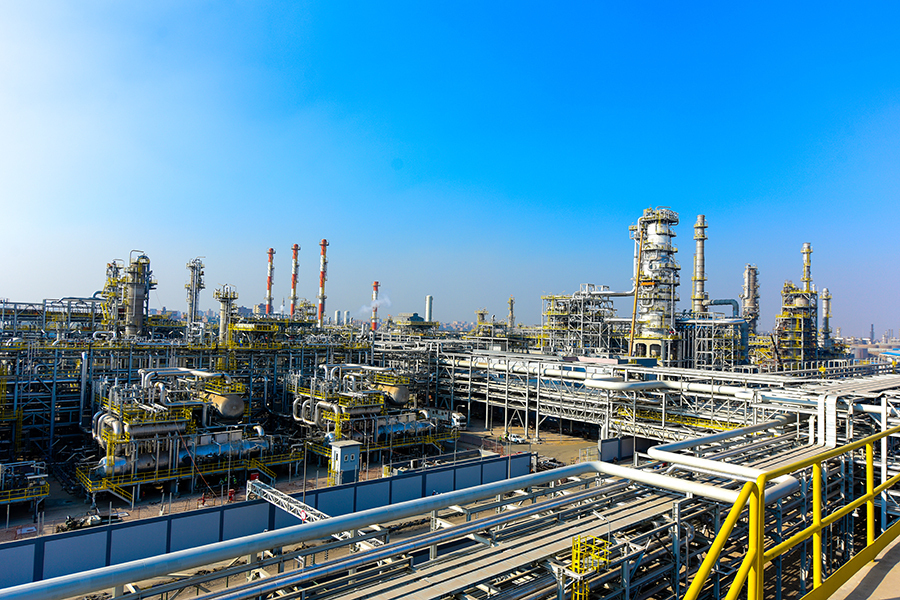
State-owned Assiut National Oil Processing Company (ANOPC) secured a USD 2.9 bn loan to finance its new hydrocracking complex, according to a statement by the National Bank of Egypt, which acted as financial advisor and agent for the transaction. The 12-year loan is being extended by a consortium of international lenders including Credit Agricole, HSBC, Italy’s CDP and UniCredit, Societe Generale, and BNP Paribas. ANOPC was set up to build the mazut hydrocracking facility in partnership with Enppi, Petrojet, and Technip.

REGULATION-

Banks must send their customers account statements at least once every quarter, either in paper form or online, under a new directive (pdf) from the Central Bank of Egypt. The directive also lays out rules for lenders that are meant to ensure online banking services are secure and accessible. Banks have until 28 June to comply with the new rules.

FRA moves to tighten controls on SME follow-on financing: Lenders are no longer able to renew loans extended to small and medium enterprises (SMEs) without first ensuring that original loans have been paid in full, in a move to ensure that companies are not using fresh loans to repay existing ones, according to an FRA statement. SMEs can still take out a loan for a separate project while they are repaying existing loans, provided the type of loan is different and only after lenders have conducted due diligence to make sure borrowers’ financials are solid.

10

Diplomacy

El Sisi congratulates Netanyahu on his return to PM seat

President Abdel Fattah El Sisi called returning Israeli Prime Minister Benjamin Netanyahu yesterday to congratulate him on forming a government, according to an Ittihadiya statement. The pair also discussed bilateral relations and Palestine, among other regional and international issues, the statement reads. Netanyahu on Thursday swore in Israel’s most hardline government ever after forming a coalition with far-right and religious parties.

11

AROUND THE WORLD

Europe throws it back to 2020 with covid travel curbs

Covid travel curbs are back: France, Spain, South Korea, and Israel have followed the US, Japan, Taiwan, and India in reintroducing covid tests for people arriving from China in response to the country’s severe virus outbreak, according to the BBC. Beijing's decision to end its zero-covid policy has resulted in surging cases across the country. With China also poised to relax travel restrictions, other countries are wary of a new spate of cases.

Russian President Vladimir Putin and his Chinese counterpart Xi Jinping are continuing to cozy up, promising to deepen cooperation during talks last week, the Associated Press reports.


JANUARY

January: EGX-listed companies and non-bank lenders will submit ESG reports for the first time.

January: Fuel pricing committee meets to decide quarterly fuel prices.

January: Infinity + Africa Finance Corporation to close acquisition of Lekela Power.

2 January (Monday): House back in session.

7 January (Saturday): Coptic Christmas.

16-20 January (Monday-Friday): Davos 2023.

24 January-6 February: Cairo International Book Fair, Egypt International Exhibition Center

25 January (Wednesday): 25 January revolution anniversary / Police Day.

26 January (Thursday): President El Sisi will visit India as “chief guest” at celebrationsto mark the 74th anniversary of Indian independence.

26 January (Thursday): National holiday in observance of 25 January revolution anniversary / Police Day.

30 January-1 February (Monday-Wednesday): CI Capital’s Annual MENA Investor Conference 2023, Cairo, Egypt.

FEBRUARY

2 February (Thursday): Central Bank of Egypt’s Monetary Policy Committee meeting.

11 February (Saturday): Second semester of 2022-2023 academic year begins for public universities.

13-15 February (Monday-Wednesday): The Egypt Petroleum Show (Egyps), Egypt International Exhibition Center, Cairo.

23-27 February (Thursday-Monday): Annual Business Women of Egypt’s Women for Success conference.

MARCH

March: 4Q2022 earnings season.

23 March (Wednesday): First day of Ramadan (TBC). Maghreb will be at 6:08pm CLT.

30 March (Thursday): Central Bank of Egypt’s Monetary Policy Committee meeting.

APRIL

1 April (Saturday): Deadline for banks to establish sustainability unit.

10-16 April (Monday-Sunday): IMF / World Bank Spring Meetings, Marrakesh, Morocco.

17 April (Monday): Sham El Nessim.

22 April (Saturday): Eid El Fitr (TBC).

25 April (Tuesday): Sinai Liberation Day.

27 April (Thursday): National holiday in observance of Sinai Liberation Day (TBC).

30 April (Sunday): Deadline for self-employed to register for e-invoicing.

30 April (Sunday): End of Mediterranean, Nile Delta oil + gas exploration tender.

Late April – 15 May: 1Q2023 earnings season.

MAY

1 May (Monday): Labor Day.

4 May (Thursday): National holiday in observance of Labor Day (TBC).

4 May (Thursday): IEF-IGU Ministerial Gas Forum, Cairo.

18 May (Thursday): Central Bank of Egypt’s Monetary Policy Committee meeting.

22-26 May (Monday-Friday): Egypt will host the African Development Bank (AfDB) annual meetings in Sharm El Sheikh.

JUNE

10 June (Saturday): Thanaweya Amma examinations begin.

19-21 June (Monday-Wednesday): Egypt Infrastructure and Water Expo debuts at the Egypt International Exhibition Center.

22 June (Thursday): Central Bank of Egypt’s Monetary Policy Committee meeting.

28 June-2 July (Wednesday-Sunday): Eid El Adha (TBC).

30 June (Friday): June 30 Revolution Day.

JULY

18 July (Tuesday): Islamic New Year.

20 July (Thursday): National holiday in observance of Islamic New Year (TBC).

23 July (Sunday): Revolution Day.

27 July (Thursday): National holiday in observance of Revolution Day.

Late July-14 August: 2Q2023 earnings season.

AUGUST

3 August (Thursday): Central Bank of Egypt’s Monetary Policy Committee meeting.

SEPTEMBER

21 September (Thursday): Central Bank of Egypt’s Monetary Policy Committee meeting.

26 September (Tuesday): Prophet Muhammad’s birthday (TBC).

28 September (Thursday): National holiday in observance of Prophet Muhammad’s birthday (TBC).

OCTOBER

6 October (Friday): Armed Forces Day.

Late October-14 November: 3Q2023 earnings season.

NOVEMBER

2 November (Thursday): Central Bank of Egypt’s Monetary Policy Committee meeting.

DECEMBER

21 December (Thursday): Central Bank of Egypt’s Monetary Policy Committee meeting.

EVENTS WITH NO SET DATE

End of December/early January: SFE’s pre-IPO fund to kick off roadshow.

4Q 2022: Electricity Ministry to tender six solar projects in Aswan Governorate.

4Q 2022: Raya Holding subsidiary Aman and Qalaa Holdings’ Taqa Arabia to launch their fintech company.

End of 2022: Decent Life first phase scheduled for completion.

2023: The inauguration of the Grand Egyptian Museum.

2023: Egypt will host the Asian Infrastructure Investment Bank’s Annual Meeting of the Board of Governors in 2023.

1Q 2023: Adnoc Distribution’s acquisition of 50% of TotalEnergies Egypt to close.

1Q 2023: Egypt + Qatar to launch joint business forum.

1Q 2023: FRA to introduce new rules for short selling.

1Q 2023: Internal trade database to launch.

Now Playing
Now Playing
00:00
00:00