Get EnterpriseAM daily

Available in your choice of English or Arabic

A two-year break from the EU’s carbon tax?

1

What We're Tracking Today

Egypt secures cheaper LNG cargoes

Good morning, friends. We have a packed issue for you this morning. And continuing with a months-long pattern, there’s plenty of good news here at home — and some insanity on the global scene.

Heavy industry in Egypt may have just gotten a break, we exclusively report: The Madbouly government appears to won Egyptian exporters a two-year exemption from the European Union’s new carbon tax, which went into effect on 1 January. If it comes through, that’s good news for manufacturers and will give officials here a window in which to enact an Egyptian version of the EU tax.

It’s rare that we cheer a new tax, but this one makes sense — any tax paid here into our coffers would, under EU rules, just about automatically offset the tax prescribed by Brussels’ carbon border adjustment mechanism.

Two other EnterpriseAM exclusives from the Dept. of Smart Policy: We have word this morning that the Ministry of Higher Education is re-opening the door to private investment in post-secondary education — and news that officials are scrapping a proposal to limit car part imports to only authorized dealers.

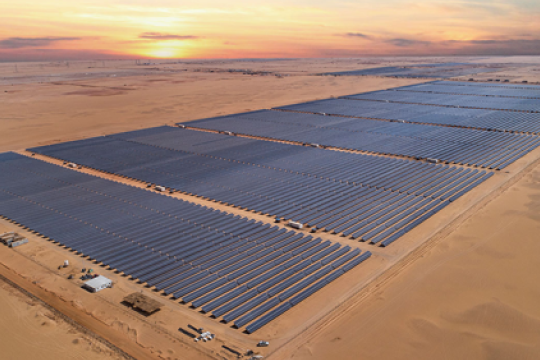
MEANWHILE- It’s just what the economy doctor ordered: Norway’s Scatec will build a new solar energy facility here — and key components for the attached battery energy storage system will be made here in Egypt by China’s Sungrow. The facility will the largest of its kind in Africa.

It’s exactly what we were promised on stage at our EnterpriseAM Climate Forum, which wrapped-up COP27 back in late 2022. There, our friend Amr Allam told us that the vision for Egypt’s big investment in green energy was to see us not just exporting (and using in Egypt) green fuel and green electrons — but making key components of the industry here at home as we build out infrastructure on a global scale.

And from the Dept. of Stupid Policy: US President Donald Trump’s war on the independence of the Federal Reserve just kicked into hyperdrive after prosecutors launched a criminal probe of Fed boss Jay Powell. Powell said the move is retaliation for his refusal to bow to Trump’s demand for lower interest rates.

^^ We have the full story on all of this and more for you, below.

Happening today

The House of Representatives will convene for its first session today, marking the beginning of its third legislative term, according to a statement. The 596-member chamber — now at full capacity following the appointment of 28 members by President Abdel Fattah El Sisi — will begin the term by electing a House speaker and two deputy speakers.

What to watch for: Now that the new House is ready for business, President Abdel Fattah El Sisi will appoint a prime minister and have them form a new cabinet.

What we’re watching for: Regardless of whether Prime Minister Moustafa Madbouly continues in office, we’re hoping for policy continuity in key business-relevant portfolios including investment and foreign trade as well as finance and international cooperation, petroleum, and tourism.

WEATHER- Better keep an umbrella on hand, seeing as there’s a chance of light rain in Cairo this evening. Apart from rainfall, the capital is looking at a high of 19°C and a low of 11°C today, according to our favorite weather app.


Watch this space

ENERGY— We’re paying less for our LNG shipments this year: The Mabdouly government renewed contracts with Shell and TotalEnergies to import 60 LNG cargoes this year, a senior government official tells EnterpriseAM. This time around, each cargo will set us back USD 40-45 mn, around USD 5 mn below the price paid last year thanks to a dip in global prices and ample supply. Deliveries are expected to start early February.

More gas in the pipeline: The Egyptian General Petroleum Corporation plans to launch a spot-market tender by March for 125 additional LNG cargoes, the source said. Supplier interest in Egypt is rising after officials stepped up their effort to pay arrears owed to energy companies and prices are c. USD 2 lower per mn British thermal units compared to last year, we were previously told.

In context: The news comes as an Israeli delegation is reportedly in town to try to work out the kinks in a USD 35 bn agreement to sell us gas. Israel threw a spanner in the woks by sliding inclauses that would allow it to unilaterally cut exports if officials there thought they needed more gas at home.


POLICY— The government now wants to see the private sector account for 72% of total investment by 2030, up from a previous target of 66%. That’s the highlight of the Planning Ministry’s second edition of its National Narrative for Development, which lays out goals from here through 2030 and a roadmap to reach them. It builds on the first edition, which we’ve been tracking since September.

Inflation watch

Annual core inflation — which excludes volatile items like food and fuel — fell to 11.8% y-o-y in December from 12.5% the month before, according to data from the Central Bank of Egypt. On a monthly basis, core inflation came in at 0.2%, compared to the 0.8% recorded in November.

What about annual urban inflation? We dove into December’s annual urban inflation reading and what it could mean for rates in yesterday’s edition of EnterpriseAM Egypt — check out the story here.

The road to becoming an AI hub

The Madbouly government is more prepared than ever before to ride the AI wave, having ranked first in Africa and third in MENA in Oxford Insights’ 2025 Government AI Readiness Index (pdf). Globally, Egypt climbed 14 spots y-o-y to rank 51st. The Madbouly government scored a perfect 100 in the policy capacity pillar, which measures its extent to “design and implement effective AI policies.”

Egypt is in a tight competition to become the premier AI hub for the Middle East and Africa at the same time as the UAE and Saudi commit USD bns to compute. The government’s National Artificial Intelligence Strategy, the second edition of which launched last year, outlines how the state aims to develop the AI sector between 2025 and 2030.

** DID YOU KNOW that we cover Saudi Arabia, the UAE and the MENA-IndiaCorridor?

** Were you forwarded this email? Tap or click here to get your own copy delivered every weekday before 7am Cairo time — without charge.

The big story abroad

Keep a close eye on how markets open this morning: US Federal Reserve Chair Jerome Powell is facing a criminal probe over the renovation of the Fed’s headquarters in Washington, DC, the New York Times reports in an exclusive, citing people it says were briefed on the matter. Investigators are looking into whether he lied about the scope of the renovation, the cost of which hit USD 2.5 bn this year, up from an initial estimate of USD 1.9 bn.

US President Donald Trump has long attacked Powell and pushed him to drive interest rates lower and has frequently complained about the renovations, including in a famous video (watch, runtime: 3:17) last year during his tour of the HQ.

Powell, in a video statement (watch, runtime: 2:55), said the renovation was a “pretext” and that the threat of criminal charges is a “consequence of the Federal Reserve setting interest rates based on our best assessment of what will serve the public, rather than following the preferences of the President,” explaining that they should be seen in the wider context of ongoing threats and pressure from Trump against the Fed over the past months.

IN CONTEXT- This is the sharpest attack on the Fed’s independence in generations. Powell is leaving his post in May, and Trump has said he’s already chosen — but has not announced — the successor, widely expected to be Kevin Hassett, the director of the National Economic Council.

MEANWHILE- Protests in Iran have intensified despite an ongoing crackdown by the police, leading to an estimated 500 deaths, according to a number of estimates. Trump has several times said he was ready to come to the “rescue” of Iranians, prompting Iran’s speaker of parliament, Mohammad Baqer Ghalibaf, to warn the US against any interference, saying: “Let us be clear: in the case of an attack on Iran, the occupied territories [Israel] as well as all US bases and ships will be our legitimate target,” he told parliament.

^^The must-read on the topic: Iranians defy intensifying crackdown as Trump weighs options.

Flights between Iran and the UAE, as well as Iran and Qatar, faced disruptions over the weekend, with around 20 flights between Iran and Dubai facing cancellation, though Emirates and flydubai’s flights seem to have departed on schedule yesterday, the National reports.

PLUS- The US could start easing sanctions on Venezuela as soon as next week as the US looks to begin receiving oil from the country, while India is once again getting into tech firm’s crosshairs due to its proposal to make smartphone makers share their phones’ source code with the government for security testing.

*** It’s Blackboard day: We have our weekly look at the business of education in Egypt, from pre-K through the highest reaches of higher ed.

In today’s issue: We look at how the higher education landscape could change now that the Higher Education Ministry reopened the door to private investment in the sector.

A year defined by ambition, energy, and global connection.

From elite performance to community-driven experiences, we continue to shape environments where sport goes beyond competition. Creating moments that inspire, connect, and endure at Somabay.

2

The Big Story Today

Egypt may have lined lined up a two-year exemption from European Union’s carbon tax

EXCLUSIVE- The European Union looks set to give Egyptian exports an exemption from its carbon tax until the end of 2027. Two Egyptian government officials tell us the preliminarily approved exemption from the Carbon Border Adjustment Mechanism (CBAM) will give energy-intensive manufacturers in Egypt — specifically in the iron, steel, cement, and fertilizer sectors and at a later stage electricity and green hydrogen — a crucial two-year window in which to decarbonize before facing punitive border tariffs. We first exclusively reported last month that officials were pursuing the exemption.

Why this matters: Failure to comply with the carbon border tax or decarbonize at pace would cost local manufacturers an estimated USD 317 mn annually in carbon surcharges, according to Environment Ministry studies seen by EnterpriseAM, negatively impacting the competitiveness of our exports. By pushing the deadline, the Mabdouly government is both protecting the competitiveness of our exports and preventing an inflationary spike that would have hit the local market had producers passed on compliance costs.

This also buys time for officials to launch a domestic carbon tax framework, as under EU rules, any carbon price paid at home is deducted from the bill in Brussels. “This grace period gives us a greater chance to conduct an in-depth study of the short- and long-term repercussions the local tax will have on the competitiveness of Egyptian trade and the future of exports,” one of the sources told us.

The planned domestic carbon tax will now be introduced in a standalone bill instead of being buried in the new Income Tax Law as initially planned, we’re told.

In a bid to push local manufacturers to go green, the state is also mulling legislative amendments to the Environmental Protection Law, which would mandate a phased compliance schedule. To support its implementation, Egypt will also license local and international carbon credit rating agencies to provide binding emissions data verification needed for imposing the carbon tax.

What’s next? Officials are working out the details of the local carbon tax and expect to present it to the House of Representatives for debate and a vote later this year, one of our sources said. But the more important story over the next 24 months could be how proactively Egyptian industry pivots toward green production — because a delay is still just that: a two-year reprieve. We thinks the odds of our getting a second one are vanishingly low.

(** Tap or click the headline above to read this story with all of the links to our background as well as external sources.)

This publication is proudly sponsored by

3

RENEWABLES

Egypt looks to integrate renewables supply chain with around-the-clock solar project, battery manufacturing plant

The Mabdouly government inked agreements backing two integrated clean energy projects worth some USD 1.8 bn — a solar and battery storage facility led by Norway’s Scatec. Critically, that solar facility will be fed by a battery manufacturing plant here in Egypt that’s being set up by China’s Sungrow.

The anchor project: Scatec signed a long-term power purchase agreement (PPA) with the Egyptian Electricity Transmission Company for some 1.95 GW of solar power and 3.9 GWh of battery storage. The 25-year, USD-denominated, pay-as-produced agreement is designed to deliver round-the-clock renewable power, Scatec said in a disclosure. Scatec will also set up two standalone battery projects in a bid to support services and ensure grid stability. (We had previously reported the project figures at 1.7 GW of solar and 4.0 GWh of battery storage.)

The project — called Energy Valley — will be located in Minya, delivering roughly 6 TWh of renewable energy a year, Scatec said. It includes new substations and dedicated transmission lines, with battery storage spread across Minya, Qena, and Alexandria to ease geographic bottlenecks and stabilize the grid.

Africa’s largest: “The combined capacity will be the largest solar and BESS installation in Africa and the largest investment in Scatec’s history,” according to the firm. Energy Valley also marks the region’s first around-the-clock renewables project.

More partners to join? The Norwegian player plans to bring in additional equity partners, but it will remain the lead developer on the projects. Scatec will handle EPC, asset management, and operations and maintenance. It aims to reach financial close in 2H 2026.

The manufacturing hook: Sungrow will build a battery storage systems factory in the Sokhna Industrial Zone, which will feed the Energy Valley project under a contract inked between the two sides. The plant will have an annual production capacity of 10 GWh, with production slated for April 2027.

Why this matters: Battery systems are one of the most expensive and import-heavy components of large renewable projects; producing them locally helps cut the import bill that accompanies battery storage projects.

(** Tap or click the headline above to read this story with all of the links to our background as well as external sources.)

4

Startup watch

Egyptian-led Oasys Health raises USD 4.6 mn to build the data backbone for mental health

Egyptian entrepreneur Hashem Abdou raised USD 4.6 mn in seed and pre-seed funding for his New York-based healthtech startup Oasys Health, according to a statement from the company. The seed round was led by Pathlight Ventures, with participation from Twine Ventures and Better Ventures, while the pre-seed round was backed by 1984 Ventures.

While the funding headline is being read in the Western business press as a good-sized health-AI seed round, the story for our readers is the export of Egyptian tech expertise. Abdou, who worked at Egyptian fintech heavyweights Khazna and Klivvr, is now building what the company describes as “the operating system for modern mental healthcare.”

Abdou credits his years in the Egyptian startup scene with providing him with the resilience necessary to navigate the US healthcare sector. “Building in Egypt forces you to develop a high tolerance for ambiguity, resource constraints, and regulatory complexity early on. You learn to be scrappy, relationship-driven, and resilient,” Abdou tells EnterpriseAM. “Those instincts translated directly to building Oasys in the US (especially in healthcare), where progress is slow, trust is earned, and systems are deeply entrenched.”

Oasys represents a shift away from consumer wellness apps and toward a system that brings clinical rigor to mental health workflows. “For decades, therapy has been a subjective, session-based practice built on intuition and recall rather than measurable evidence. Now, for the first time, we have the tools to change that,” Abdou said in the statement.

“Advances in AI allow us to extract insights from unstructured clinical data … and Oasys has built the connective tissue to tie it all together,” Abdou added. By tying together practice management — billing, scheduling, and documentation — with real-time physiological data from wearables like the Apple Watch and Oura Ring, Oasys says it can save clinicians 10+ hours each week on administrative tasks, reduce burnout and inefficiencies, open up new revenue streams from remote data collection, and provide patients with “more personalized, preventive, and measurable care that extends beyond traditional sessions.”

Unlike healthtech startups that focus on a single niche, Oasys aims to rebuild the core infrastructure for behavioral health. “Legacy systems were never designed for longitudinal, behavioral, and real-world data. In that sense, we’re not trying to be a bolt-on or a thin layer, we’re rebuilding the core infrastructure for this specialty from first principles,” Abdou said.

Looking ahead, the company sees its data backbone applying to a wide range of chronic conditions. “Mental health is where we’re starting, but the underlying problem is broader: chronic conditions require continuous, real-world data and better decision infrastructure,” Abdou said. “Five years from now, I expect Oasys to still be deeply rooted in mental health, but also powering care models wherever behavior, physiology, and long-term outcomes intersect.”

While currently focused on the US, Abdou views the MENA region as a major long-term opportunity. “Mental health in MENA is at an inflection point: there’s growing awareness, a younger generation that’s far more open to care, and a real opportunity to reshape how mental health is understood and delivered,” he said.

What’s next? The company is working now with 25 health clinics supporting thousands of patients and aims to have more than 1k enterprise-scale organizations on its books by the end of 2026. Later this year, the company will also launch an outcomes measurement framework, providing the standardized data necessary to help prove therapy effectiveness to ins. providers.

(** Tap or click the headline above to read this story with all of the links to our background as well as external sources.)

5

Trade

Egypt drops its push for authorized-only auto spare parts imports, keeps Port Said Freezone import licenses

The Mabdouly government abandoned plans to tighten import restrictions in the Port Said Freezone, a senior government official tells EnterpriseAM. Deputy Prime Minister for Industrial Development Kamel El Wazir decided to maintain the existing quota system and allow the general import of auto spare parts to continue, we were told.

What changed? Officials had been weighing a move to restrict the import of automotive spare parts exclusively to authorized service centers — a measure positioned as key to ensuring quality and curbing smuggling. Under the new directive, those restrictions are off the table, and some 70k import licenses in the zone will remain active under the current 3-15% preferential customs brackets.

It’s smart policy: Restricting imports to authorized dealers would have choked-off competition, opened the door to price hikes, curbed economic activity, and set up single points of failure in the supply chain.

(** Tap or click the headline above to read this story with all of the links to our background as well as external sources.)

6

Manufacturing

Egypt inaugurates USD 148 mn worth of Chinese manufacturing facilities

It was a busy day in the Sokhna Industrial Zone yesterday, with USD 156 mn-worth of new projects kicking off operations, the majority of which came from Chinese players.

#1- China’s Elite Solar inaugurated two solar component factories worth a combined USD 116 mn. The facilities include a USD 40 mn solar cells factory, with a 2 GW annual capacity, and a USD 76 mn solar panels and related solar components factory, with an annual production capacity of 3 GW.

Localizing the production of solar cells is part of the Madbouly government’s broader strategy to push the domestic manufacturing of 12 strategic industrial components in a bid not only to reduce the country’s import bill — and resultant strain on FX resources — but also to add to our export base.

#2- Xinjin Textile, Printing, and Dyeing launched its USD 20 mn complex, which has a production capacity of 60 mn meters of fabric and 10k tons of yarn annually. The complex will export 70% of its output.

#3- Vanward inaugurated its USD 12 mn water heater and heat exchangers factory. It will produce 500k water heaters and 2 mn water heater component sets every year. The company will export output to African markets, with plans to expand production to include all types of heaters and ovens.

There’s more where that came from: Last month alone saw Chinese manufacturers pledge USD 1.2 bn in investments in the spinning and weaving, heavy, and advanced sanitary industries.

It wasn’t just Chinese companies that kicked off production at new plants

#4- Local food producer Maxicano Food IndustriesUSD 5 mn cornmeal productionfactory went online, with an annual production capacity of 60k tons, 70% of which will be exported.

#5- CEC inaugurated a USD 3 mn factory for the production of ball bearings, bearing housings, and castings — components which are essential to the mechanical and industrial engineering sectors. The plant will have an annual production capacity of 3.5 mn units and will be the first of its kind in Egypt to produce ball bearings.

(** Tap or click the headline above to read this story with all of the links to our background as well as external sources.)

7

Moves

Amr Hamdy becomes Al Tamimi & Company partner

Our friends at Al Tamimi & Company named Amr Hamdy (LinkedIn) as a partner, according to a statement (pdf). Hamdy has been with the firm since the launch of its Cairo office and has provided “strategic counsel to both domestic and international clients.”

What they said: “Egypt continues to be a dynamic and vital market for the region. I look forward to working with our talented team in Cairo and across our 17 offices to provide our clients with the world-class service and local insight that Al Tamimi is known for,” Hamdy said.

8

Also on our Radar

Al Ahly Tamkeen closes second securitized bond issuance under current program

The National Bank of Egypt’s microfinance arm, Al Ahly Tamkeen, closed a EGP 777 mn securitized bond issuance, according to a statement (pdf) from transaction advisor Al Ahly Pharos. The issuance came in three tranches with tenors between 6 and 21 months, rated between P1 and A- by Meris. This marks the second securitization issuance under Tamkeen’s sixth securitization program.

ADVISORS- Al Ahly Pharos served as financial advisor, lead arranger, and bookrunner, while NBE, Banque du Caire, and Suez Canal Bank acted as underwriters. Matouk Bassiouny & Hennawy provided counsel, while BakerTilly served as auditor.

(** Tap or click the headline above to read this story with all of the links to our background as well as external sources.)

9

PLANET FINANCE

Wall Street gains on resilient labor data and shifting interest rate hopes

Wall Street closed the week at record levels on Friday as investors welcomed labor data that reinforced the broader narrative of a soft landing for 2026, even as it lowered the odds of an immediate interest rate cut in January. Investors rotated into housing, energy, and small-cap stocks, the Associated Press reported on Friday. The S&P 500 rose 0.6%, pushing past the record it set earlier in the week. The Dow Jones Industrial Average added 0.5%, while the Nasdaq Composite outperformed with a 0.8% rise. Smaller companies led the charge, with the Russell 2000 rising 4.6% for the week, outpacing the S&P 500’s 1.6% weekly gain.

The data — marking the first labor report to be issued on-time since the US government shutdown — sent mixed but reassuring signals. Nonfarm payrolls grew by only 50k, falling short of the 73k consensus forecast, yet the unemployment rate unexpectedly improved to 4.4%. The economy is now “slow to hire and slow to fire,” Art Hogan, chief market strategist at B. Riley Wealth, told CNBC, adding that the report carried “more good news than bad” for investors worried about an impending recession.

That resilience in unemployment was enough to cool expectations for near-term Fed easing. The probability of a rate cut at the US Federal Reserve’s January meeting fell to 5% from 11% a day earlier, CME Group data showed. Markets remain more confident about the longer horizon, still pricing in a 32% chance of two quarter-point cuts by the end of 2026.

Inflation keeps the Fed in wait-and-see mode: While lower rates could help sustain growth and support asset prices, they also risk fueling inflation, which remains above the Fed’s 2% target. “Until the data provide a clearer direction, a divided Fed is likely to stay that way,” Morgan Stanley Wealth Management Chief Economic Strategist Ellen Zentner said. “Lower rates are likely coming this year, but the markets may have to be patient,” she added.

Treasury yields reflect a market caught between near-term caution and long-term confidence. The two-year Treasury yield climbed to 3.53% from 3.49%, signalling expectations that the Fed will delay rate cuts amid steady labor conditions. At the same time, the 10-year yield slipped by two basis points to 4.167%, and the 30-year fell by four basis points to 4.814%. This divergence suggests investors believe inflation and growth will cool gradually rather than collapse, reinforcing the soft-landing narrative.

(** Tap or click the headline above to read this story with all of the links to our background as well as external sources.)

MARKETS THIS MORNING-

Last week’s positive close on Wall Street is pushing up Asia-Pacific markets, which are all in the green this morning in early trading. Japan’s Nikkei is closed today for a holiday. Meanwhile, it appears US stock markets will not extend their rally when the opening bell rings later today, with futures for the S&P 500, Dow Jones, and Nasdaq all trading down.

EGX30

42,895

+2.5% (YTD: +2.6%)

USD (CBE)

Buy 47.13

Sell 47.27

USD (CIB)

Buy 47.15

Sell 47.25

Interest rates (CBE)

20.00% deposit

21.00% lending

Tadawul

10,610

+1.3% (YTD: +1.1%)

ADX

10,010

-0.3% (YTD: +0.2%)

DFM

6,226

-0.4% (YTD: +3.0%)

S&P 500

6,966

+0.7% (YTD: +1.8%)

FTSE 100

10,125

+0.8% (YTD: +2.0%)

Euro Stoxx 50

5,997

+1.6% (YTD: +3.6%)

Brent crude

USD 63.24

-0.2%

Natural gas (Nymex)

USD 3.23

+1.9%

Gold

USD 4,589

+2.0%

BTC

USD 91,523

+1.0% (YTD: +3.8%)

S&P Egypt Sovereign Bond Index

997.21

+0.1% (YTD: +0.4%)

S&P MENA Bond & Sukuk

151.71

+0.1% (YTD: -0.1%)

VIX (Volatility Index)

14.49

-6.2% (YTD: +3.1%)

THE CLOSING BELL-

The EGX30 rose 2.5% at yesterday’s close on turnover of EGP 5.8 bn (8.7% above the 90-day average). Local investors were the sole net sellers. The index is up 2.6% YTD.

In the green: Credit Agricole (+8.8%), ADIB (+8.5%), and Palm Hills Developments (+7.2%).

In the red: Eastern Company (-1.8%), Valmore Holding- USD (-0.7%), and GB Corp (-0.5%).

10

BLACKBOARD

The end of the degree factory? Higher Education Ministry introduces new rules for private investor/

The Higher Education Ministry officially reopened the door to private investment in higher education. After a nine-month moratorium on new licenses, the ministry is rolling out a new investment prospectus for private higher institutes. But for the investors who have long viewed these institutes as low-cost, high-margin alternatives to universities, the price of entry just went up.

The government has a simple message for investors — if you build to international standards and secure global partnerships, you get to charge more. If you don’t? Well, then you don’t get a license. The goal, according to Supreme Council of Institute Affairs Secretary Gouda Ghanem, is to solve a chronic mismatch between what the economy needs and what the current 182 private institutes are producing.

The carrot and stick

For years, private institutes were the secondary option — often criticized for poor quality but loved by investors for their high student volumes and low overheads. The new regulations aim to kill the commodity version of this business.

The ministry is now offering “unprecedented operational incentives” to investors, chief among them the right to hike tuition fees. “Whoever seeks an international partnership will have a strong incentive with government approval to increase the value of tuition,” Ghanem told us. That’s music to the private sector’s ears in a market where fees are usually strictly regulated.

Licensing is now a much higher bar to cross, with the minimum size of any institute currently having to be 8.4k sqm, up from an initial mandated 5.0k sqm, Ghanem told us. Every new institute must also now include a vocational training center, a business incubator, and a career center.

Looking outside the capital

If you want to build in Cairo or Giza, you’re probably out of luck. To address regional disparities and the concentration of institutes around the capital, the ministry has mapped out supply gaps across the country. Despite Egypt having some 182 private institutes, some governorates only house one or two, we were told.

Under the national plan, the needs of each region’s labor market are also being addressed, with new licenses in Dakahlia prioritising health and medical services to serve the number of hospitals in the governorate, while priority for licenses in Aswan will go to institutions with tourism and hospitality focuses, and incentives in the Delta will prioritize tech and industry.

To make this work, governors are being tasked with providing the land — effectively acting as the land bank for the ministry’s education strategy. This removes one of the biggest hurdles for private operators: sourcing large plots in prime areas.

Education not for education’s sake, but for the market

Traditionally, a student was committed to four years or left with nothing. Now, students can graduate after two years with a diploma, enter the workforce, and return later to complete their bachelor's degree without gap year penalties, Ghanem said.

Companies in manufacturing and tech need employable technicians today, not just graduates four years from now. By creating an exit ramp at the two-year mark, the ministry is trying to increase supply in the labor market and open up valuable hands-on experience for students.

We’re already seeing the first signs of how this will change the competitive landscape

The investment prospectus was released Sunday, and offers from Egyptian-Arab alliances have already started rolling in, Ghanem added, with them showing a particular interest in establishing institutes covering nursing, tourism, and AI.

(** Tap or click the headline above to read this story with all of the links to our background as well as external sources.)


2026

JANUARY

22 January (Thursday): ESBC SEEING webinar, From Zurich to Cairo: How Global Executive Research Shapes Tomorrow’s Leadership.

25 January (Sunday): Revolution Day / Police Day.

FEBRUARY

3 February (Tuesday): S&P Global to release PMI figures for January.

10 February (Tuesday): Capmas expected to release inflation data for January.

10-12 February (Tuesday-Thursday): Gitex Global’s AI Everything Middle East & Africa Summit

12 February (Thursday): Monetary Policy Committee’s first meeting of 2026.

19 February (Thursday): First day of Ramadan (TBC).

MARCH

15 March (Sunday): IMF to hold its seventh review of Egypt’s USD 8 bn EFF arrangement.

21 March: (Saturday): Eid El Fitr starts (TBC).

30 March - 1 April (Monday-Wednesday): Egypt International Energy Conference and Exhibition 2026 (EGYPES)

APRIL

2 April (Thursday): Monetary Policy Committee’s second meeting of 2026.

12 April (Sunday): Coptic Easter.

25 April (Saturday): Sinai Liberation Day.

MAY

1 May (Friday): Labor Day.

21 May (Thursday): Monetary Policy Committee’s third meeting of 2026.

27-29 May (Wednesday-Friday): Eid El Adha (TBC).

JUNE:

30 June (Tuesday): National holiday in observance of June 30 Revolution (TBC).

JULY

9 July (Thursday): Monetary Policy Committee’s fourth meeting of 2026.

23 July (Thursday): National holiday in observance of Revolution Day (TBC).

AUGUST

20 August (Thursday): Monetary Policy Committee’s fifth meeting of 2026.

26 August (Wednesday): National holiday in observance of Prophet Muhammad’s birthday (TBC).

SEPTEMBER

15 September (Tuesday): IMF to hold its eighth review of Egypt’s USD 8 bn EFF arrangement.

24 September (Thursday): Monetary Policy Committee’s sixth meeting of 2026.

27-29 September (Sunday-Tuesday): Global Conference on Population, Health and Human Development.

OCTOBER

6 October (Tuesday): Armed Forces Day.

29 October (Thursday): Monetary Policy Committee’s seventh meeting of 2026.

DECEMBER

17 December (Thursday): Monetary Policy Committee’s eighth meeting of 2026.

EVENTS WITH NO SET DATE

Early 2026: Passenger operations on the New Administrative Capital–Nasr City monorail scheduled to begin.

Early 2026: The government will launch the second package of tax breaks.

1Q 2026: Trial operations for the Ain Sokhna–Sixth of October section of Egypt’s first high-speed rail line scheduled to begin.

1Q 2026: Turkish President Tayyip Erdogan to visit Egypt

May 2026: End of extension for developers on 15% interest rates for land installment payments

2H 2026: Operations at Deli Glass Co’s new USD 70 mn glassware factory kick off.

2027

20 January-7 February: Egypt to host the African Games.

April 2027: Tenth of Ramadan dry port and logistics hub to begin operations.

EVENTS WITH NO SET DATE

2027: Egypt to host EBRD’s annual meetings.

2027: Egypt-EU Summit 2027

End of 2027: Trial operations at the Dabaa nuclear power plant expected to take place.

September 2028: First unit of the Dabaa nuclear power plant begins operations.

Now Playing
Now Playing
00:00
00:00