Get EnterpriseAM daily

Available in your choice of English or Arabic

A glimpse into the FinMin’s planning for next year’s budget

1

WHAT WE’RE TRACKING TODAY

Trading Places is the ultimate capitalist Christmas Movie says our (non-resident) 18-year-old

Good morning, friends, and a very happy Christmas Eve to all those among you who observe. The traditional news slowdown hasn’t yet taken hold, but things are a bit quieter this morning than on your average Wednesday. Still, we have news of the Finance Ministry’s early thoughts on next year’s state budget and a juicy boardroom drama at Juhayna to keep things interesting as we slide toward the weekend.

Speaking of Christmas: Our traditional holiday-season film marathon has begun following the formerly-resident 18-year-old’s return to Cairo from her freshman year at university (we granted her a temporary residence permit). Said temporarily-resident 18 year-old wishes EnterpriseAM readers to know that the 1983 Dan Ackroyd / Eddie Murphy film Trading Places is the ultimate holiday flick for capitalists like herself.

The plot: Two elderly commodities brokers — the Duke brotehrs — make a USD 1 bet on nature versus nurture. They engineer the downfall of their managing director, Louis Winthorpe III (Dan Aykroyd), framing him for theft and drug possession, while simultaneously plucking street hustler Billy Ray Valentine (Eddie Murphy) from poverty and installing him in Winthorpe’s job. Winthorpe and Valentine soon figure out the plot and team up to bankrupt the Dukes by front-running their scheme to corner the futures market for frozen concentrated orange juice.

The film wraps with a masterclass in commodities fraud and short-selling set on the Comex trading floor — and features cameo appearances from notables including blues great Bo Diddley, comedian and later US Senator Al Franken, comedian James Belushi, and puppeteer and filmmaker Frank Oz as a laconic (and crooked) booking officer.

Why is it a Christmas movie? It’s set at Christmas, features a debauched Santa suit, and ends with the villains destroyed by their own greed — and our heroes (including butler Denholm Elliott) chilling on a Caribbean island. Go catch the trailer (watch, runtime: 2:50).

Watch this space

LABOR — The Labor Ministry is putting a clock (and a clear pecking order) on payments a business must make when shutting down, liquidating, or going bankrupt. The ministry issued a new executive order yesterday spelling out that workers’ wages and entitlements don’t get waved away with a closure notice and that they sit at the front of the line ahead of other claims on the company’s assets, including state dues. Social ins. contributions are explicitly treated as part of workers’ rights, too.

Once a closure or liquidation is formalized, the employer, liquidator, or bankruptcy trustee has 30 days to inventory workers’ dues and pay them in full if funds allow, or pay what’s available and schedule the rest. There’s a hard cap of one year for full settlement. Labor offices are tasked with monthly oversight, can step in to help calculate dues where needed, and can escalate violations to labor courts, with any action that undermines workers’ rights deemed invalid.


CAPITAL MARKETS — London-based healthcare private equity firm Alta Semper plans to launch a USD 150 mn investment fund primarily focused on Egypt and Morocco, alongside East African markets, according to a press report citing remarks by Alta Semper Cofounder and Managing Partner Afshane Jetha. The fund will primarily focus on investing in the healthcare sector and medical tech solutions in emerging markets. It’s expected to reach final close in 3Q 2026, with USD 100 mn already secured so far from global asset managers, family offices, and development finance institutions.

The fund is already deploying capital, having invested in London-based medical equipment manufacturer Allmed, which manufactures dialysis machines in Egypt and has operations in Germany and Brazil.


SUEZ CANAL — A handful of major shipping lines are dipping their toes in the Suez Canal again, but it’s a bit early to say it’s a full comeback, EOS Risk’s Martin Kelly tells EnterpriseAM. While Maersk and CMA CGM are running the gauntlet again, Kelly warns us that the threat profile from the Houthis hasn’t just persisted, it has mutated.

Ins. premiums may have dropped 70%, but the algorithm for being targeted by the Houthis has never been more unpredictable, Kelly says.

** Want the full story? Head to EnterpriseAM Logistics to check out the interview here.


Happening tomorrow

#1- Will the Central Bank of Egypt close 2025 with a cut? The central bank’s Monetary Policy Committee will meet tomorrow to decide whether to push ahead with another interest rate cut on top of the 625 bps delivered so far this year.

We were all confident a cut was incoming — but now it seems like it could be less of a shoe-in. Our poll of the 14 analysts and economists earlier in the week saw 12 of them pencil in a 100-200 bps rate cut, pointing to a larger-than-expected dip in the annual inflation rate for November. But with the IMF noting yesterday that disinflation is “not yet firmly entrenched” in a refreshingly glowing review, the committee may think twice before deciding to cut rates in its last meeting of the year.

Data point

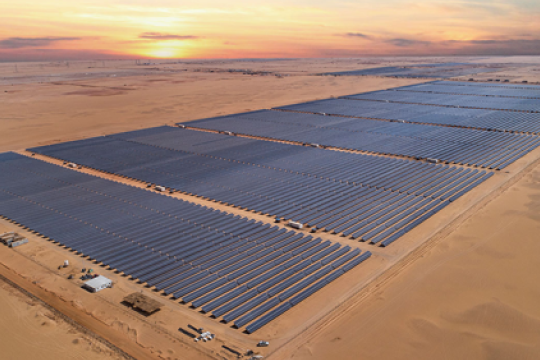
8.9 GW — that’s the amount of currently installed wind, solar, and hydropower capacity in Egypt, Prime Minister Moustafa Madbouly said. In just two years, this is expected to more than double to 18.0 GW, he added.

PSA-

WEATHER- We have more typical winter weather in store for Cairo today, with a high of 23°C and a low of 11°C, according to our favorite weather app. The Egyptian Meteorological Authority is also forecasting intermittent wind during the day.

Meanwhile, Alexandria is in for colder weather, with a high of 21°C and a low of 10°C.

** DID YOU KNOW that we cover Saudi Arabia, the UAE and the MENA-IndiaCorridor?

** Were you forwarded this email? Tap or click here to get your own copy delivered every weekday before 7am Cairo time — without charge.

The big story abroad

It’s a quiet Christmas Eve morning in the global business press and there are few signs that will radically change as the day wears on: Asian stocks are trading sideways on thin volumes and many Western will close early today before taking tomorrow off entirely.

The US economy grew at a brisk 4.3% clip in the third quarter of the year, backed by consumer spending on healthcare and computing. That’s well ahead of the 3.2% pace at which analysts polled by Bloomberg expected the economy to expand. Investment by businesses slowed and exports fell in the same period.

Oil-price watchers, take note: The US has moved special operations forces into the Caribbean, ratcheting up pressure on Venezuela’s government. Washington is already enforcing a blockade of oil tankers moving into and out of the Latin American country.

CLOSER TO HOME- The Libyan Army’s chief of staff died in a plane crash yesterday evening after flying out of Ankara, where he and three other senior military officers were meeting with Turkish officials. The jet carrying the military leaders asked for permission to make an emergency landing shortly before the crash. There’s been no word on the cause of the incident.

Morning must-read

Longtime readers may remember we’ve frequently suggested in the past that women aren’t truly grownups until sometime around age 28 — and that for guys, it’s age 30 or later? That your prefrontal cortex isn’t fully “baked” until your mid-30s? We might have been onto something: New research suggests the brain’s “adolescent” phase runs from about age 9 through 32 — and that your noggin is then pretty stable until age 66, when early aging begins.

Go read: Your brain ages in five distinct stages in the Wall Street Journal or catch abreakdown from Cambridge University, where the research originated, if you’re not a Journal subscriber.

*** It’s Hardhat day — your weekly briefing of all things infrastructure in Egypt: EnterpriseAM’s industry vertical focuses each Wednesday on infrastructure, covering everything from energy, water, transportation, and urban development, as well as social infrastructure such as health and education.

In today’s issue: Planes, trains, and automobiles were the drivers of the logistics sector, as the Suez Canal took a back seat in 2025.

Christmas is just the beginning. At Somabay, the celebrations unfold day by day, night by night, building all the way into the New Year. From rooftop takeovers and beach parties to late-night performances and full-band shows, the season is curated to let you choose your moment and celebrate it your way — right through the final countdown and beyond.

New Year’s and beyond at Somabay.

Celebrate when it feels right: Pick your night. Book your plans.

Discover the full December & NYE calendar here. Welcome the New Year at Somabay.

2

The Big Story Today

The post-IMF blueprint: How the government plans to keep fiscal discipline when the program ends

The Finance Ministry has begun drafting a state budget that marks a definitive end to the current era of economic emergency. The FY 2026-27 budget — set to be presented to Cabinet in preliminary form by late January — is being designed as a structural shift in fiscal policy, a senior government official tells EnterpriseAM.

Why this matters: This will be Egypt’s first budget in years to operate largely independently of the IMF. With the current USD 8 bn program projected to wrap up next November, the new budget is being engineered to prove that the discipline of the last two years was a policy choice, not just a conditionality.

Fiscal discipline 2.0

The budget will aim to lock in the austerity measures that gained the fund’s approval thisweek. The strict ceiling on public investment will remain — and may even be lowered further — to clear the lane for private sector participation, while ministries are again being required to submit three-year budget projections to end the cycle of surprise supplemental appropriations.

Suez is the laboratory for the end of in-kind subsidies

One of the most significant pieces of news in the draft budget is a concrete timeline for the transition from in-kind to cash-based subsidies. The government has selected Suez as the testing ground for a full switch to cash-based subsidies, the source tells us. Residents in the governorate will receive monthly cash-based allowances on smart cards redeemable at Supply Ministry outlets, replacing the current points system for bread and commodities. If the Suez pilot succeeds, the system will be rolled out nationwide over the subsequent two fiscal years.

This is the latest signal yet that the state is moving ahead with dismantling the legacy subsidy system that has historically bled the budget and replacing it with a more targeted (and capped) cash-based model. The Sisi administration has had significant success with the Takafol and Karama programs, which have rolled out conditional cash payments to low-income households with children under the age of 18 as well as to the elderly, orphans, widows, and people with disabilities.

Don’t bank on fixed fuel costs just yet

Readers should also look past the headlines on energy prices. While the government has publicly stated that fuel prices will remain unchanged until October 2026, the budget drafting process suggests a more pragmatic reality. Our source indicates the new budget explicitly does not rule out further price adjustments if global oil markets threaten to widen the deficit again.

Subsidies will be strictly limited to LPG cylinders (better known as the anbooba) and diesel. The goal is to prevent the treasury from ever again bearing the burden of the cost differential between global prices and local pumps.

Trading subsidies for salaries

To cushion low-income earners, the state is preparing a comprehensive social package that includes wage increases and targeted incentives. The government is explicitly redirecting savings from subsidy reform into direct income support, a move that carries significant implications for the private sector. If the public sector hikes wages to match inflation, private operators will likely face renewed pressure to adjust salary bands.

ALSO TO COME- A revised tax policy document is currently being drafted to reflect recent development targets and IMF feedback, with a release window now set between June and September 2026, a second senior government official tells us.

(** Tap or click the headline above to read this story with all of the links to our background as well as external sources.)

3

Companies

Juhayna drops competitor clause after FRA intervention, clearing path for Qatari shareholder’s board push

The boardroom battle to block a Qatari competitor from taking seats on Juhayna’s board shows no sign of ending soon. Shareholders of Juhayna Food Industries, the nation’s largest dairy products company, have reversed course on a bylaw change aimed at blocking Qatari dairy rival Baladna from seeking board representation, removing the competitor clause from the company’s articles of association at an extraordinary general meeting (EGM) last Thursday.

Bylaw tripwire: The unanimous vote to amend Article 22 strips out language approved four months ago that barred from the board anyone representing (or invested in) a competing business. The Financial Regulatory Authority (FRA) in October ruled the change was out of order, signaling it was moving to protect shareholder rights. (See disclosures here and here, both pdfs.)

Why it matters: Baladna bought into Juhayna back in March 2022 by accumulating shares on the open market and now holds a stake we think is in the 16% range. By reversing course on the bylaw tripwire, there’s no bespoke barrier in the EGX-listed company’s articles that would prevent Baladna from nominating someone to the board at Juhayna’s next ordinary general meeting.

Baladna may have tried to make another play at last week’s meeting, but was shot down on procedural grounds — the EGX filings show that the board dismissed an “oral request” made by a Baladna rep on the grounds that the EGM lacked the authority to discuss the request.

JUFO is wrapping itself in the flag: The Juhayna board’s statement following the August vote had emphasized the company’s “commitment to protecting its identity as an Egyptian national entity.” The reversal last week suggests the FRA drew a line on using bylaws to freeze out minority shareholders, even competing ones.

What’s next: The battle for board seats at the Thabet family-controlled giant will likely move to Juhayna’s next OGM, where Baladna can formally nominate candidates. We’d expect the meeting to take place in spring, after Juhayna closes its FY2025 books, to review the company’s financial statements and dividend policy.

4

Agriculture

Farmers aren’t borrowing to survive anymore — they’re investing

Agriculture in Egypt is undergoing a structural shift, where it’s not just growing but changing how it does business. Loans taken on by farmers and other agribusinesses to fuel investment jumped just under 250% y-o-y to EGP 56 bn in FY 2023-24, according to freshly released data from state statistics agency Capmas.

But the composition of that lending tells the real story: Medium-term loans rose more than 1,000% to EGP 22.6 bn, while short-term lending fell more than 20% to EGP 8.6 bn. Similarly, long-term loans to the industry were up nearly 740% to EGP 24.8 bn. This means that farmers are borrowing less to get through the season, and far more to buy equipment and build capacity.

CAPEX is in, cashflow finance is out. The sector now employs more than 27% of Egypt’s workforce and is regaining weight as a contributor to GDP, Egyptian Businessmen’s Association Agriculture and Irrigation Committee Chairman Mostafa El Naggari tells EnterpriseAM. Rising investment reflects growing confidence that agriculture can support longer planning horizons rather than hand-to-mouth survival, El Naggari added.

Export performance is reinforcing that confidence. Egypt’s fruit and vegetable exports have been growing at an annual rate of 15-17% over the past three years, El Naggari said. At the same time, food imports are easing, with Egypt importing 30% less wheat than last year, a decline El Naggari attributes to improved storage systems and the expansion of cultivation into newly reclaimed land.

That expansion includes strategic crops such as wheat, sugar beet, sunflower, and soybeans, helping reduce the import bill and rebalance trade flows. Egypt has now reached sugar self-sufficiency and is preparing to enter export markets — a sharp reversal from its long-standing position as an importer of up to 1 mn tons annually, El Naggari said.

The data suggests subsidized credit is doing much of the heavy lifting. Central bank-backed initiatives — including one with an interest rate of 5% for crop production and smart agriculture systems — are channeling funding primarily through the Agricultural Bank of Egypt, with other lenders joining through similar programs, El Naggari tells us.

For operators, the interest rate gap is decisive. At market rates north of 15%, expansion plans for many would stall under financing costs. But for now, cheap money is doing what decades of reform couldn’t — helping change the business model of Egyptian agriculture.

(** Tap or click the headline above to read this story with all of the links to our background as well as external sources.)

5

Manufacturing

Three new Chinese manufacturing projects are coming to the China-Egypt Teda industrial zone with USD 1.2 bn in investment

The Sokhna Industrial Zone is getting USD 1.2 bn-worth of fresh investment from three Chinese industrial players, according to a cabinet statement. The three projects — which will be set up in the Chinese-operated Teda industrial zone — will serve the spinning and weaving, heavy, and advanced sanitary industries and are expected to create a total of 5.4k jobs.

The project breakdown

Chinese synthetic fiber manufacturer Xin Feng Ming Holding will set up a USD 800 mn integrated industrial complex for polyester fiber and polymer production. The 400k sqm facility will have an annual capacity of 1 mn tons, and will be established over three phases. Construction for the first phase will kick off in May 2026, while production is expected to begin in 4Q 2027, with projected annual sales of around USD 455 mn. The second phase will come online in 2029 and the third phase will follow in 2030. Around 50% of the facility’s output will be earmarked for exports.

The plant marks Xin Feng Ming’s second project in the Teda industrial zone, with the company having launched a USD 800 mn fiberglass and polyester facility in the zone last year. That factory is expected to come online in 2026 and will have an annual capacity of 300k tons in the first phase, which will increase to 1 mn tons when fully operational.

Chaoyang Langma Tire is investing USD 190 mn in a heavy truck and passenger car tire manufacturing facility. It will have annual production capacity of 1 mn heavy truck tires and 4.5 mn passenger car tires. The plant will be built in two phases, with construction on the first set to kick off in April of next year.

Meanwhile, Chinese hygiene products manufacturer Tongling Jieya Biologic Technology is establishing a USD 160 mn sanitary product production plant with an annual output of 10 bn wet wipes, 2 bn baby diapers and 100k tons of nonwoven fabrics. The project is expected to bring in USD 270 mn in annual revenues.

DATA POINT- Total investments in the SCZone reached USD 5.1 bn in 1H FY 2025-2026, — compared USD 4.6 bn during the full FY 2024-2025. The SCZone is looking to house 1k Chinese companies by 2030.

In other manufacturing news

Turkish textile manufacturer Bony Socks plans to establish a USD 70 mn sock manufacturing plant in Egypt, according to a statement from the Investment Ministry. The factory, which is already building-in spare land to expand, will primarily serve European markets, with exports projected at USD 80 mn. Bony will also serve the domestic market and is exploring the whether to export to the United States from here. The statement didn’t provide a timeline for the start of production.

(** Tap or click the headline above to read this story with all of the links to our background as well as external sources.)

6

REGULATION WATCH

El Sisi shuffles central bank board, appointing three new subject-matter experts

The Central Bank of Egypt’s board has three new expert members after President Abdel Fattah El Sisi handed down a decree on the CBE’s 11-member board of directors. The board’s term is retroactive to 27 November 2025 and will run for one year.

CBE Governor Hassan Abdallah chairs the board, as is customary, with deputy governors Rami Aboul Naga and Tarek El Khouly and FRA Chairman Mohamed Farid retaining their seats.

Joining the board: Khaled Ahmed Fouad (banking), Ahmed Gad Radwan (economics), and Amina Helmy Hassan (economics).

Returning members include our friends Sherif Kamel (finance) and Ali Faramawy (technology) as well as Essam Amer (accounting) and Khaled Sakr Ali (economics).

Leaving the board: Banker Mohamed El Deeb and economists Naglaa El Ahwany and Samiha Fawzy.

What’s next: The central bank’s Monetary Policy Committee meets on Thursday for its final rate decision of the year. While our poll of analysts was calling a cut, the IMF has thrown a spanner in the works with its suggestion that disinflation needs more time to take hold.

This publication is proudly sponsored by

7

EGYPT IN THE NEWS

Live restoration of King Khufu’s second solar boat begins at the GEM

The latest archaeological treasure to be put on display at the Grand Egyptian Museum: The second 4.5k-year-old solar boat belonging to King Khufu, the reassembly of which began yesterday in front of visitors, the Associated Press reports. Museum visitors can now watch the 42-meter cedarwood vessel, made of 1.6k pieces, being pieced together in real time — a process expected to take four years.

8

ALSO ON OUR RADAR

Al Amal is investing in crop processing facility — and a takeover bid for Zahraa Maadi gets blocked

Al Amal to pour c. EGP 600 mn into new processing hub

Al Amal Agricultural Crops plans to invest between EGP 500-600 mn to establish a sorting and packaging facility in Beheira, Chairman Ragab Shehata tells EnterpriseAM. The 25k sqm facility is designed to deepen the company’s control over the value chain for its core products — dates, raisins, peanuts, sesame, and beans — replacing reliance on third-party facilities. The company is also exploring contract farming to secure the stable supply needed to feed its target of 30% annual export growth, he added.

Organic funding: The company plans to finance the project entirely from its own balance sheet. This highlights a critical competitive advantage for exporters in the current climate — the ability to fund capex through USD liquidity, bypassing the prohibitive cost of bank borrowing that is currently stifling expansion for purely domestic players.

State shareholders block Zahraa Maadi buyout bid over valuation gap

A consortium led by investors Ahmed Tarek Khalil and Mohamed Farouk Abdel Moneim has hit a wall in their bid to acquire 90% of Zahraa Maadi. The company’s majority shareholders — all of which are state-owned companies — rejected the EGP 6.95 per share mandatory tender offer, Zahraa Maadi said in a disclosure (pdf) to the EGX.

The why: The voting bloc, which together controls 53.9% of the developer, cited a “fundamental and sharp disparity” between the offer price and the company’s fair value.

Why it matters: It’s a reminder that state entities aren’t going to exit real estate positions without a significant premium. The shareholders justified the rejection by pointing to a “rapid growth phase” and the unrecognized value of the company’s land bank and upcoming projects. The Sisi administration has long been clear — going back to the establishment of the Sovereign Fund of Egypt — that while it is willing to dispose of assets, it wants to do so in ways that give it a stake in any upside that a private-sector investor might generate. Think: Sell a small stake now, and monetize the rest later, banking on a better valuation. Institutional politics, including board members looking to preserve sinecures, have also stymied potential transactions.

Titan Cement secures long-term energy hedge with EGP 500 mn waste infrastructure play

Titan Cement is moving upstream into waste management to lock in a stable supply of alternative fuel, signing a 15-year contract with the Sharqia Governorate, according to an Environment Ministry statement. Through its environmental subsidiary, Gaia Titan, the company will invest EGP 500 mn to establish and operate three waste treatment facilities, effectively integrating a key part of its energy supply chain with 200k tons of refuse-derived fuel expected to be produced annually.

This volume represents a significant substitution for imported coal, allowing the manufacturer to simultaneously lower its carbon footprint and reduce its exposure to FX fluctuations — a model other heavy industry players may look to replicate as the state pushes to breathe life into the Waste Management Act.

(** Tap or click the headline above to read this story with all of the links to our background as well as external sources.)

9

PLANET FINANCE

Investors rotate into Chinese AI as bubble fears mount on Wall Street

Spooked by bubble risks in US AI, investors are redirecting capital east. Global funds are piling into Chinese AI and tech stocks as concerns grow over stretched valuations and the “circular” financing dynamics underpinning Wall Street’s AI boom, Reuters reports.

**Missed our primer on why investors are spooked about the self-inforcing loop of AI spending in the US — where Big Tech funds AI startups that then pay the same firms for cloud and compute? You can find it here.

China is emerging as the alternative wager: Foreign investors are leaning into Beijing’s push for AI self-reliance, backed by state funding, faster approvals, and domestic supply chains. Capital is flowing into Chinese chipmakers, cloud firms, and platform companies tied to local AI deployment, the newswire said.

Flows are already shifting: Asset managers including Ruffer told Reuters they have capped exposure to the US “Magnificent Seven” while adding Chinese tech. Chinese AI chipmaker MetaX Integrated Circuits, founded by former AMD executives, soared 700% in its Shanghai market debut last week, while larger rival Moore Threads rose 400% on its debut earlier this month.

Valuations add fuel to the rotation: The Nasdaq trades at roughly 31x earnings, compared with about 24x for Hong Kong’s Hang Seng Tech Index, offering cheaper AI exposure via names such as Alibaba, Tencent, Baidu, and SMIC, the newswire noted.

Structural benefits favoring China also form part of the appeal: “Big Short” investor Michael Burry warned the US risks losing the AI race if it continues to rely on Nvidia’s power-hungry chips, arguing China’s far larger and faster-growing electricity generation gives it a structural edge, Business Insider reports. In his view, the AI arms race is being fought on power infrastructure as much as silicon.

MARKETS THIS MORNING-

Most Asian markets have made marginal gains in early trading this morning, ahead of an early close in light of Christmas Eve. Meanwhile, Wall Street is having a jolly time this holiday season, with the S&P 500 closing at a record high yesterday, though futures are hovering near the flatline.

EGX30

41,419

+0.8% (YTD: +39.3%)

USD (CBE)

Buy 47.47

Sell 47.60

USD (CIB)

Buy 47.48

Sell 47.58

Interest rates (CBE)

21.00% deposit

22.00% lending

Tadawul

10,595

+0.4% (YTD: -11.9%)

ADX

10,057

+0.2% (YTD: +6.8%)

DFM

6,161

+0.1% (YTD: +19.5%)

S&P 500

6,909

+0.5% (YTD: +17.5%)

FTSE 100

9,889

+0.2% (YTD: +21.0%)

Euro Stoxx 50

5,749

+0.1% (YTD: +17.4%)

Brent crude

USD 62.38

+0.5%

Natural gas (Nymex)

USD 4.44

+0.6%

Gold

USD 4,536.30

+0.7%

BTC

USD 87,593.70

-1.1% (YTD: -6.8%)

S&P Egypt Sovereign Bond Index

983.96

+0.2% (YTD: +26.5%)

S&P MENA Bond & Sukuk

151.63

-0.1% (YTD: +8.4%)

VIX (Volatility Index)

14.00

-0.6% (YTD: -20.1%)

THE CLOSING BELL-

The EGX30 rose 0.8% at yesterday’s close on turnover of EGP 5.8 bn (7.0% above the 90-day average). Regional investors were the sole net sellers. The index is up 39.3% YTD.

In the green: Misr Cement (+4.8%), Ibnsina Pharma (+3.3%), and Abu Qir Fertilizers (+2.5%).

In the red: Raya Holding (-3.0%), Qalaa Holdings (-2.9%), and Emaar Misr (-2.0%).

10

HARDHAT

Planes, trains, and automobiles were the drivers of the logistics sector, as the Suez Canal took a back seat in 2025

2025 was a chaotic year for the logistics sector, but it also pushed the sector to pivot from collecting rents from the Suez Canal to sweating the assets of a real logistics network. We entered the year hoping for a rebound in the canal — but rather than waiting, the market adapted, shifting its attention to 2026 to other areas of the sector.

While the canal stalled, the wider port network sprinted

East Port Said emerged as aglobal superstar — ranking third globally in the Container Port Performance Index. That efficiency turned into investment — with new projects, including a USD 500 mn expansion led by Maersk, a USD 159 mn ro-ro terminal, and a USD 65 mn multipurpose terminal.

As for the canal, the fiscal year was a masterclass in subtraction. Revenues fell 45.5% toUSD 3.6 bn in the 12-month period ending June, net tonnage was cut in half and vessel transits fell 38.5%. But between July and early December, the recovery began to take shape. Revenues climbed 17.5% y-o-y to USD 2.0 bn, with traffic ticking up 5.2%.

Why the shift? It’s not just sentiment — it’s the ins. premiums. The dip in war risk ins. covering ships braving the Red Sea is another cause for optimism — with rates falling by some 70% compared to mid-2024 prices. That drop could change the calculus for shipping CFOs, making the Red Sea route financially viable again for the first time in months.

The question everyone is asking — how serious are ships about returning to the Red Sea? Major shipping giants dipped their toes into Red Sea waters this month, with France’s CMA CGM rerouting its India America Express service and a Maersk ship transiting the strait for the first time in two years.

Privatization is finally boarding, and it is more than just a single tender

After years of speculation, the state has moved from theory to execution on airport management. While the immediate news is the Hurghada International Airport tender, the real story is the policy precedent it sets. With the IFC advising on a program that covers 11 airports, the government is effectively building a new asset class for private operators. Local capital is already positioning itself for this shift, evidenced by Naguib Sawiris forming a consortium with Italian partners to bid for Hurghada, with an eye already trained on future tenders in Luxor and Sohag.

Value-add is replacing storage as the dominant logistics model

The launch of new bonded zone models signifies a move away from simple warehousing toward complex distribution. Transcargo International’s establishment of Egypt’s first customs-licensed, port-based distribution center at Adabiya Port is the prototype for this shift, promising to drive a 20% jump in re-exports. This isn't an isolated experiment, with DHL Express plugging EUR 24 mn into its largest in-country distribution center — confirming that multinational players are banking on Egypt functioning as a regional sorting hat, not just a destination market.

The great freight shift is about software, not just hardware

The narrative on rail freight has long been about laying track, but 2025 saw the conversation shift to reliability and service. The government’s push to boost capacity by 63% is being underpinned by a massive hardware upgrade — including the ENR-Salcef JV renovating 300 km of track annually and Progress Rail’s locomotive program.

But the true turning point was the entry of private operators like G3A and Transmar, who launched the first fixed-schedule rail freight service. The industry challenge has now evolved from "can we move it?" to "can we move it on time?" as operators work to break the market's addiction to trucking.

We are seeing the emergence of a truly integrated corridor network

Progress is no longer defined by isolated projects but by the connectivity between them. Of the seven designated logistics corridors, five saw tangible movement this year, linking production centers to export gateways.

This network effect is visible across the board — from Alstom’s investments along the Sokhna-Alexandria and Cairo-Alexandria routes to the Dry Ports Authority allocating land on the Arish-Taba line. Even in the emerging zones, such as Gargoub-Salloum and Safaga-Qena, the simultaneous arrival of terminal investments and private logistics players like Beit Logistics suggests the state is successfully selling the "corridor" concept to investors, even if the Cairo-Aswan and Tanta-Mansoura lines remain the laggards of the system.

The outlook for 2026 is priced for a rebound. The sector is entering the new year with a clear roadmap. The Suez Canal Authority is officially bullish, forecasting revenues to hit USD 8 bn in FY 2026-27, while the release of a comprehensive investment map for all Egyptian ports next year signals a coordinated effort to market these assets globally. The industry consensus is coalescing around 1Q 2026 as the pivot point, where the combination of lower ins. premiums, easing regional tensions, and new capacity will likely trigger the volume recovery everyone has been waiting for.

(** Tap or click the headline above to read this story with all of the links to our background as well as external sources.)


DECEMBER

25 December: (Thursday): Monetary Policy Committee meeting.

2026

JANUARY

1 January (Thursday): European Union’s Carbon Border Adjustment Mechanism (CBAM) to fully come into effect.

7 January (Wednesday): Coptic Christmas.

25 January (Sunday): Revolution Day / Police Day.

FEBRUARY

10-12 February (Tuesday-Thursday): Gitex Global’s AI Everything Middle East & Africa Summit

19 February (Thursday): First day of Ramadan (TBC).

MARCH

15 March (Sunday): IMF to hold its seventh review of Egypt’s USD 8 bn EFF arrangement.

21 March: (Saturday): Eid El Fitr starts (TBC).

30 March - 1 April (Monday-Wednesday): Egypt International Energy Conference and Exhibition 2026 (EGYPES)

APRIL

12 April (Sunday): Coptic Easter.

25 April (Saturday): Sinai Liberation Day.

MAY

1 May (Friday): Labor Day.

27-29 May (Wednesday-Friday): Eid El Adha (TBC).

May: NEBU Egypt’s Gold & Jewelry Exhibition.

JUNE:

30 June (Tuesday): National holiday in observance of June 30 Revolution (TBC).

JULY

23 July (Thursday): National holiday in observance of Revolution Day (TBC).

AUGUST

26 August (Wednesday): National holiday in observance of Prophet Muhammad’s birthday (TBC).

SEPTEMBER

15 September (Tuesday): IMF to hold its eighth review of Egypt’s USD 8 bn EFF arrangement.

27-29 September (Sunday-Tuesday): Global Conference on Population, Health and Human Development.

OCTOBER

6 October (Tuesday): Armed Forces Day.

EVENTS WITH NO SET DATE

Early 2026: Passenger operations on the New Administrative Capital–Nasr City monorail scheduled to begin.

Early 2026: The government will launch the second package of tax facilitation measures.

1Q 2026: Trial operations for the Ain Sokhna–Sixth of October section of Egypt’s first high-speed rail line scheduled to begin.

1Q 2026: Turkish President Tayyip Erdogan to visit Egypt

May 2026: End of extension for developers on 15% interest rates for land installment payments

2H 2026: Operations at Deli Glass Co’s new USD 70 mn glassware factory kick off.

2027

20 January-7 February: Egypt to host the African Games.

April 2027: Tenth of Ramadan dry port and logistics hub to begin operations.

EVENTS WITH NO SET DATE

2027: Egypt to host EBRD’s annual meetings for 2027.

2027: Egypt-EU Summit 2027

End of 2027: Trial operations at the Dabaa nuclear power plant expected to take place.

September 2028: First unit of the Dabaa nuclear power plant begins operations.

Now Playing
Now Playing
00:00
00:00