Get EnterpriseAM daily

Available in your choice of English or Arabic

NBE, BM hike rates on CDs — what does this mean?

1

WHAT WE’RE TRACKING TODAY

Madbouly’s economic address to the House was about policy continuity

Good morning, wonderful people. We’re doing a lot of “reading of coffee grounds” this morning on what is otherwise a fairly milquetoast news day: The economy took center stage as the PM addressed parliament yesterday — and the two biggest banks in the land unexpectedly hiked interest rates on three-year certificates of deposit.

Up first: Prime Minister Mostafa Madbouly addressed the House of Representatives yesterday on the fallout from the conflict in Iran, which continues to weigh on economies across the region.

Madbouly’s message was one part reality check, one part greatest hits, and two parts repackaging: On the reality check side of the house, he signaled that Cabinet is bracing for what could be an “extended crisis,” warning that the economic impact of the war in the Gulf is “likely to persist at least until the end of this year” even if the conflict were to end soon. It’s not what any of us wanted to hear, but it’s refreshing that the views of the private sector and of the state are roughly in sync — with each other, and with reality.

It’s costing a heck of a lot more to generate power, the PM noted, and tourism is taking a hit. The fiscal toll of the war, he said, has been heavy.

The greatest hits, part 1: The PM took something of a quiet victory lap, pointing out that the economy’s resilience in the face of the crisis — the EGP serving as a shock absorber, an inflation-targeting monetary policy, record reserves, etc., etc. — are the result of tough economic reforms on which his government has stayed the course. Expect more of the same, Madbouly suggested.

The greatest hits, part 2: The Oil Ministry’s 18-month-long campaign to re-engage with Big Oil also got a nod, with Madbouly telling MPs that we’ll have fully settled by June the arrears we owe international oil companies. He suggested there will be “more positive news” from the industry soon, signaling that energy security could get a welcome bump as new assets come into production.

The repackaging: The PM framed long-term trends and already-locked-in budget decisions as being key elements of his government’s response to the crisis:

  • The government will buy more wheat this harvest season, he said — that was always the plan. The only ‘new’ bit is that the state will be paying farmers a bit faster.
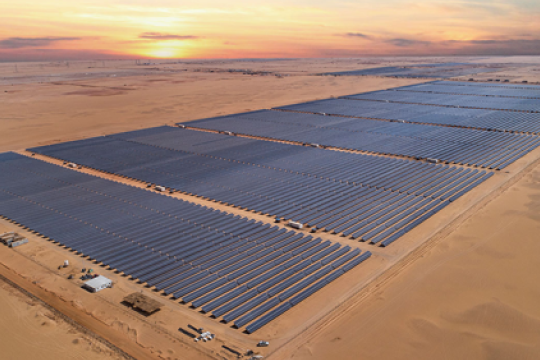
  • Renewable energy will be 45% of our energy mix by 2028 — an existing target toward which private producers and the state have been working for years, including the 2.5 GW of renewables and nearly 1 GW of battery storage that the PM highlighted will come online in 2026.
  • The state is spending more on health and education — these have been policy priorities for years, and the earmarks for 2026-2027 aren’t growing out-of-step with the trend.
  • The state will continue investing in public projects — again, the sums he’s discussing are entirely within trend. There’s no ramp-up in spending, no new counter-cyclical investment cycle kicking off here.

ALSO IN THE HOUSE yesterday: MPs gave preliminary approval to amendments to the Competition Law. If passed, the amendments will give the Egyptian Competition Authority the right to levy penalties directly, without the need to launch traditional criminal proceedings, and will place stricter oversight of mergers and acquisitions, with harsher penalties for violations affecting freedom of competition.

***

WISH THIS MORNING’S ISSUE was a podcast? We’ve got you. Tap or click here to listen to Morning Drive, a 10-minute version of today’s issue crafted for you to enjoy with your morning coffee, while getting the kids ready for school, or while stomping around the house wondering where the [redacted] you left your [redacted] reading glasses.***

Natural gas prices double

Fertilizer producers are now paying nearly double for natural gas compared to their March tab. Producers are being billed USD 9-10 per mm British thermal units (BTu) in the second half of April — up from USD 8.5 in the first half of the month, an industry insider tells EnterpriseAM. This represents a nearly 81% increase compared to USD 5.5 per mmBtu in March prior to the war-linked supply shocks.

“If global prices rise and a company’s export quota increases, that means the gas price supplied to it will also increase,” the source said, referring to the exit of key regional exporters including Saudi Arabia, Qatar, and the UAE from the market, along with China’s suspension of exports to US markets.

IN CONTEXT- The shift follows a pricing mechanism introduced in March tying gas costs directly to global urea prices — effectively wiring domestic input costs to export markets.

The trigger is external: Export urea prices have more than doubled this week to USD 880-890 per ton from some USD 420 before the end of February, driven by war-linked supply shocks tied to disruptions around Hormuz. That is a 110% jump feeding straight into Egypt’s new pricing formula.

Data point

EGP 2.4 tn — that’s the projected level of interest payments in the FY 2026-27 budget, up from EGP 2.29 tn in the current fiscal year, a 5.3% increase, according to the budget document seen by EnterpriseAM.

Meanwhile, debt service is expected to eat up 46% of total expenditures, down from 50% in the current fiscal year, while its share of projected tax revenues is set to decline to 68% from 82%, supported by expected growth in tax revenues to EGP 3.5 tn.

REMEMBER- The Finance Ministry is leaning on its public debt strategy to extend debt maturities to between 2.5-3 years, which should help reduce the overall interest burden on the budget over time.

PSA-

WEATHER- It’s another spring day in Cairo, with the capital looking at a sunny high of 27°C and a cool low of 17°C, according to our favorite weather app.

It’s more or less the same in Alexandria, with a high of 25°C and a low of 15°C.


Meet EnterpriseAM MENA+, our new flagship newsletter covering the flows of capital, people, and ideas across the Middle East — and beyond it.

MENA+ covers AI and tech — and geopolitics, the war for talent, which BSD is on top (and who's gunning for them), the changing energy economy, new corridors to India and China, and much, much more.

What’s with the “+” in MENA+? We think one of the most powerful stories in the region is the *export* of ideas and capital not just to neighboring regions (Asia, the Stans) but to international financial centers. MENA countries are jockeying for position in the new global economy now taking shape, and we're going to shape that conversation.

Tap or click here to get your own copy delivered to your inbox every Monday, Wednesday, and Friday at 12pm UAE | 11am KSA | 10am Egypt.


The big story abroad

The US-Iran ceasefire will continue until “discussions are concluded,” US President Donald Trump said on Truth Social. The move — made hours before the truce was set to expire — was prompted by diplomatic efforts by Pakistan and a lack of a “unified proposal” by Iran’s government, Trump said. Washington’s blockade will continue until an agreement is reached.

In the absence of a response from Tehran’s top leadership, Iran’s Tasnim News Agency stated that Tehran never sought a ceasefire extension and reiterated threats to break the US blockade by force. An adviser to Iran’s lead negotiator dismissed Trump’s announcement as insignificant.

As expected, global oil prices retreated on the news, despite an initial uptick at the opening of Asian trading earlier this morning. Brent crude is currently down 0.4% to USD 98.09 per barrel.

Mixed market response: The MSCI Asia Pacific ex-Japan Index eased 0.14%, dropping from a seven-week high. Japan’s Nikkei gained 0.5%, and South Korea’s Kospi eased around 0.6% in early trading this morning. US stocks are set to open in the green, with futures recording gains across the board.

How did Warsh’s confirmation hearing go? Trump’s Fed chair nominee Kevin Warsh affirmedthe Fed’sindependence during his Senate confirmation hearing, stating that Trump has not attempted to “predetermine, commit, fix or decide on any interest rate decision.” Warsh called for major reforms at the Fed, including a new framework for handling inflation, and took issue with the central bank’s “forward guidance” — the practice of signaling the future trajectory of rates.

And your daily dose of AI news: SpaceX has gained the “right to acquire” AI startup Cursor for USD 60 bn, agreeing to pay USD 10 bn if it does not proceed with the transaction. The potential acquisition of Cursor — which enables users to edit code with AI — is seen as a way for Elon Musk to catch up in the AI race ahead of SpaceX’s IPO.

*** It’s Hardhat day — your weekly briefing on all things infrastructure in Egypt: EnterpriseAM’s industry vertical focuses each Wednesday on infrastructure, covering everything from energy, water, transportation, to urban development, as well as social infrastructure such as health and education.

In today’s issue: We take a deep dive into how the government is adding cybersecurity to our national borders, mandating strict testing on imported hardware and physically isolating the networks that run critical utilities.

From 7–9 May, the Somabay Endurance Festival returns to the Red Sea for Egypt’s leading multi-sport challenge, where swimming, cycling, and running meet one of the region’s most iconic coastal destinations.

This year also introduces a new racing venue and enhanced endurance course experience, elevating the competition and athlete journey even further.

In partnership with The TriFactory, Somabay continues to lead the way in sports tourism, active lifestyle experiences, and world-class events. Register here.

2

The Big Story Today

NBE, Banque Misr just hiked rates on CDs — what does it mean?

NBE, Banque Misr hike rates on CDs: In an unexpected move, the NationalBank of Egypt (NBE) and Banque Misr (BM) raised the interest rates they’re offering on three-year fixed-interest certificates of deposit by 125 bps. Starting today, NBE’s Platinum Certificate and Banque Misr’s Al Qimma Certificate will each offer monthly rates of 17.25%, up from 16%.

We think the timing — and direction of the USD right now — are big factors here: The Central Bank of Egypt’s monetary policy committee will next meet to review interest rates in almost exactly one month — but officials have a chance right now to help lock-in the EGP’s recovery from the hit it took after the US and Israel started bombing Iran.

How we see it: The NBE and Banque Misr are moving to soak up liquidity as the EGP continues to strengthen against the greenback. The war in the Gulf had triggered a wave of anxiety: Retail depositors fled to safety in the form of the USD and gold, sending both to record highs on the domestic market. At the same time, carry trade investors headed for the exits in a global risk-off. The combination sent the EGP to a low below 54 to the greenback, but the tide now appears to be turning after strong FX inflows in the past 10 days or so: Portfolio investment is flowing back in, and remittances haven’t yet taken the hit that some had feared.

Offering higher rates on CDs doesn’t just encourage customers to keep their savings in the banking system — it could prompt more folks to de-dollarize. The EGP was trading in a band of 46-47 to the greenback before the war began, raising the obvious question: With the ceasefire now seemingly extended, was 54 the USD’s high-water mark against the EGP?

REMEMBER: The NBE and Banque Misr are the state-owned giants of the industry and together account for c. 50% of all deposits in the banking system. Policymakers have traditionally used the state-owned banks as instruments of monetary policy. Raising rates independent of central bank action provides stability and keeps savers invested in the EGP without requiring policymakers to hike corridor rates and raise the government’s debt burden, banking expert Hany Abou El Fotouh said.

What happens next?

The nation’s biggest state-owned banks usually set the stage for their local peers. We’ll be watching to see whether big local lenders make similar moves in the days to come. Keep a particular eye on our friends at CIB alongside FAB Misr, QNB Al Ahli, and ADIB. While some, like Banque du Caire, have been pushing into lower-cost current and savings account deposits in a bid to reduce their cost of funds, many of the big private-sector banks will face pressure to raise rates on CDs if they want to avoid bleeding deposits.

It’s premature to scream that this signals a rate hike next month: The contours and impact of the US-Iran war have been pretty dynamic, and the CBE’s next policy meeting isn’t until 22 May.

And the CBE may be hesitant to hike rates: Reversing the easing cycle that began just months ago would mean higher debt-service costs for the state, further straining an already strained budget. Fiscal and monetary policy are largely independent, sure, but neither plays out in a vacuum.

Could the push to raise rates on CDs also help keep inflation in check? The USD easing against the EGP means there’s more LCY sloshing around in the system — liquidity that folks might be tempted to park in long-term CDs.

AND- The IMF will be watching closely. It doesn’t love policymakers using side channels to guide policy. Though some will argue that what Banque Misr and National Bank of Egypt have done here makes a good measure of sense, this is the type of thing for which policymakers have been dinged in past Article IV consultations.

BACKGROUND- The CBE chose to leave rates unchanged at its last meeting as the war-triggered energy crisis reversed the disinflationary path we had been on earlier in the year.

This publication is proudly sponsored by

3

Investment Watch

B Investments joins the rush into higher education

Private equity firm B Investments is entering Egypt’s higher education sector by pouring EGP 560 mn into the European Universities in Egypt (EUE) hub, it said in a filing to the bourse (pdf). The transaction targets the Scientific Research Education And Development Corporation — which operates the EUE brand — through a mix of capital increase and a secondary sale. We are waiting for the transaction to close to know the exact shareholding percentage.

About the hub: EUE hub in the New Capital hosts branches of three British universities — the University of London, University of Central Lancashire, and University of East London.

The rationale: The firm — which has historically maintained a diversified portfolio across healthcare, F&B, payment, and pharma — sees an increasing “growing demand for quality education [in Egypt],” with EUE serving as a critical component hosting high-quality universities from the UK, B Investments’ Head of Investor Relations Omar Altmann tells EnterpriseAM. He pointed out that higher education is “an underserved market with attractive market dynamics.”

B Investments targets a massive demographic deficit. With university enrollments expected to hit 5 mn by 2030, Egypt will need 65 additional universities (or 1.3 mn new seats) to keep up with population growth, according to a report (pdf) by global investment management firm Colliers.

Education has proven highly lucrative, with EGX-listed education stocks recently trading at elevated 20-22x earnings multiples. B Investments joins rivals like Al Ahly CIRA — which is setting up four new international university models in the country — in the race for premium education assets.

4

Education

AUC’s Onsi Sawiris named Africa’s top business school

The Onsi Sawiris School of Business at the American University in Cairo was just named the top business school in Africa for the year by Paris-based global higher education ranking agency Eduniversal, the university said in a statement(pdf). The award places the institution among the top 100 business schools worldwide, granting it the Five Palmes of Excellence Emeritus Award.

Eduniversal pointed to the school’s sustained focus on emerging-market challenges and its role in pushing responsible governance, entrepreneurship, and family firm evolution as the reasons for being a continental benchmark in business education.” The agency also highlighted how the school uses platforms like the AUC Venture Lab to “[operationalize] these concepts into measurable societal outcomes.”

5

Economy

Interest payments to drive 7.6% budget deficit in FY 2025-26 -World Bank

Egypt’s budget deficit is expected to widen to 7.6% of GDP in FY 2025-26 from an estimated 7.1% in the previous fiscal year, according to the World Bank’s latest Macro Poverty Outlook report (pdf). Meanwhile, the current account deficit is expected to remain stuck at 4.2% of GDP through the end of the fiscal year. The report underscores that the government’s reliance on external financing and its constrained fiscal space will continue to dictate the terms of the business environment well into 2026.

Our fiscal space remains severely constrained by interest payments, which consumed about 10.6% of GDP and 87.1% of tax revenues in FY 2024-25, the report indicates. While debt fell to 82.5% of GDP last fiscal year, the Bank warns that contingent liabilities — standing at about 27% of GDP — pose a significant risk to the fiscal outlook. The Bank expects debt to rise to 82.9% of GDP this fiscal year, before shrinking to 79.2% next year and 78% in FY 2027-28.

The World Bank projects that inflation will cool to 13.6% by the end of FY 2025-26, a sharp decline from 20.9% in the previous fiscal year. Even as the country grapples with conflict-induced volatility, this reading comes as more optimistic than BMI’s latest inflation forecast of 14.6%.

IN CONTEXT- The Bank sounds optimistic about Egypt, as we’ve also seen it maintain its FY 2025-26 growth forecast at 4.3% y-o-y — significantly outperforming the projected global growth average of 1.8% as the world grapples with war-induced economic headwinds.

6

Also on our Radar

A15 sells Viral Wave to Reservoir partner PopArabia

A15 marks its ninth exit with Viral Wave sale

A15 sold its portfolio company Viral Wave to PopArabia, the regional partner of Nasdaq-listed Reservoir, for an undisclosed sum, according to a statement (pdf) from the Cairo-based venture capital firm. The firm's complete exit from the UAE-headquartered music digital distribution company marks its ninth exit.

A sign of wartime regional resilience? Although the acquisition was signed at the tail end of last year before the war began, “we were still able to close the [agreement] despite the recent events,” A15 Principal Bassem Raafat tells EnterpriseAM. While investors may be waiting for the “dust to settle before they make any big decisions,” the company “remains very, very bullish on the long-term prospects of the Gulf,” according to Rafaat, who noted that A15’s general partner, Karim Beshara, was “on a flight to Dubai right now as we speak.”

The region has also shown a longer-term resilience to a global slowdown in exits due to its reliance on strategic M&As — rather than public markets, Rafaat explained. “In our part of the world, the vast majority of venture exits are not through IPOs […] the majority are M&A exits,” which has shielded the Middle East from the impacts of a shut IPO window that had a pronounced impact on Western markets.

The key to a successful exit according to A15? “We focus very much on first principles, the basics.” What’s important is to build something customers want, differentiate yourself from others in the market, continue to grow while keeping the company economically sound, and have a plan to become profitable in a reasonable timeline, according to Rafaat. “When you build something that has strategic value, chances are there will be someone who sees value in acquiring such an asset.”

AI-native books platform Sinai.ai raises EGP 75 mn in a pre-seed round

AI-native books platform Sinai.ai raised USD 1.45 mn (c. EGP 75 mn) in a pre-seed funding round led by Kaust Innovation Ventures and DisrupTech Ventures, among others, Sinai.ai said in a press release. The fresh funding will go toward tech development, AI infrastructure, licensing agreements, and user acquisition.

AI-native books? Since its founding in 2024, Sinai.ai has been developing a reading platform centered around its proprietary aiBook™ format, which turns traditional books into interactive, multimodal experiences, combining text, audio, translations, and interactive exploration. The platform allows users to engage with content in real time to generate summaries, quizzes, and visualizations, all while operating on fully licensed, full-text content sourced directly from publishers.

7

Moves

Rania Al Mashat to head the UN’s Escwa

Former International Cooperation and Planning Minister Rania Al Mashat will take over the UN’s economic arm for the Arab world, after Secretary-General António Guterres appointed her as executive secretary of the UN Economic and Social Commission for Western Asia (Escwa), according to a UN statement. We don’t yet know when she will assume office in Beirut, but the current acting executive secretary Mourad Wahba will maintain his post until then.

A return to the global stage: Al Mashat brings 25 years of experience in economic policy and development finance to the UN post. Before her eight-year cabinet run — which concluded in February — she served as sub-governor for monetary policy at the Central Bank of Egypt. She started her career as the youngest economist at the IMF at age 25, later returning as an advisor to its chief economist, and has held board seats across major African and European development banks.

8

PLANET FINANCE

Rising rates squeeze private credit funds

Private credit funds are facing mounting funding pressure as borrowing costs rise and banks tighten lending conditions. Lenders are restricting liquidity to the sector, while investors are demanding higher returns to provide capital, the Financial Times reports.

By the numbers: The premium required to lend to private credit funds rose by 0.34 percentage points in 2026 and 0.83 points since the beginning of last year, according to JPMorgan data cited by the salmon-colored paper.

REMEMBER- The sector has been seeing a rise in redemption requests from wealthy investors. Investors are concerned over weak lending standards in private credit after a series of corporate collapses, including Tricolor, First Brands, and Market Financial Solutions. AI disrupting the business models of tech and software sectors is also a major concern.

Banks tighten new commitments

Rising funding costs coincided with a decline in bond issuance by business development companies (BDCs), which act as flagship private credit vehicles. These firms sold around USD 6.8 bn of bonds in 1Q 2026, down 22% y-o-y and 36% from their performance in 2024. “We are staying away from BDCs,” Loomis, Sayles & Company portfolio manager Brian Kennedy told the Financial Times, arguing that the economics don’t compensate for sector risk.

Banks and traditional lenders that provide large credit facilities are also increasing pricing on new commitments. These facilities are critical to the sector’s financing model, allowing funds to borrow against their loan portfolios and amplify returns.

Shorter-dated maturities are gaining appeal

Issuers are currently using shorter-dated maturities to manage interest costs. Blue Owl private credit fund raised USD 400 mn through a two-year investment-grade bond sold directly to Pimco in a bilateral transaction, rather than through a public syndicated offering. Goldman Sachs Private Credit also secured USD 750 mn at a floating rate of 2.55 percentage points above US Treasuries.

Investor due diligence also intensified: “Now it is three weeks of investors underwriting the sectors and the names […] and if you have a position marked at 92 cents on the USD but someone else has it marked at 86, they want to talk to the [transaction] team,” Beach Point Capital’s portfolio manager Benjamin Hunsaker said.

The alternative

Some managers are turning to structured credit markets, where strong demand from insurers and other investors is helping keep borrowing costs lower, Hunsaker said. Blackstone raised USD 450 mn last month through a collateralized loan obligation for its flagship private credit fund, providing a static structure that prevents the manager from trading the underlying assets to boost investor confidence.

EGX30

51,977

+0.3% (YTD: +24.3%)

USD (CBE)

Buy 51.71

Sell 51.85

USD (CIB)

Buy 51.70

Sell 51.80

Interest rates (CBE)

19.00% deposit

20.00% lending

Tadawul

11,345

-0.2% (YTD: +8.2%)

ADX

9,861

+0.2% (YTD: -1.3%)

DFM

5,878

+0.3% (YTD: -2.8%)

S&P 500

7,064

-0.6% (YTD: +3.0%)

FTSE 100

10,498

-1.1% (YTD: +5.5%)

Euro Stoxx 50

5,930

-0.9% (YTD: +1.4%)

Brent crude

USD 98.09

-0.4%

Natural gas (Nymex)

USD 2.70

0.0%

Gold

USD 4,736

+0.3%

BTC

USD 75,512

-0.6% (YTD: -13.8%)

S&P Egypt Sovereign Bond Index

1,044

+0.4% (YTD: +5.2%)

S&P MENA Bond & Sukuk

151.99

-0.1% (YTD: +0.1%)

VIX (Volatility Index)

19.55

+3.6% (YTD: +34.73%)

THE CLOSING BELL-

The EGX30 rose 0.3% at yesterday’s close on turnover of EGP 11.1 bn (59.9% above the 90-day average). Regional investors were the sole net sellers. The index is up 24.3% YTD.

In the green: Palm Hills Developments (+12.4%), Orascom Development (+8.1%), and Abu Qir Fertilizers (+4.2%).

In the red: Qalaa Holdings (-2.6%), Egypt Aluminum (-2.3%), and AMOC (-2.0%).

9

HARDHAT

Digital sovereignty has an important role to play in the digital transformation

Talks about the country’s digital transformation efforts are no longer just about efficiency, but about sovereignty and resilience too. Digital sovereignty and data sovereignty were highlighted by policymakers and the private sector players EnterpriseAM spoke to as important concepts that go beyond just the building of data centers within the borders of the country.

Digital sovereignty isn’t just about where the data resides — it’s “the ability of an institution or the state to control its technological infrastructure and its own data and information,” former CIT Ministry Legislative Committee head and digital legislation consultant Mohamed Hegazy tells EnterpriseAM. IBM North and East Africa General Manager Marwa Abbas, in comments to EnterpriseAM, similarly described digital sovereignty as “the ability for organizations and nations to operate technology on their own terms — maintaining demonstrable control over data, infrastructure, and operations, regardless of where systems are physically located.”

Why this matters: “Egyptian national security is no longer confined to securing land, sea, and air borders. It has expanded to include virtual borders or what we know as cyberspace,” Supreme Cybersecurity Council consultant Waleed Haggag tells us. While the question of who controls the data may seem like a technicality, it can make private or public institutions “a hostage to foreign suppliers, platforms, or legislation, especially during critical times like wars and crises,” Hegazy tells us.

“Sovereignty helps ensure the uninterrupted operation of vital state facilities,” Haggag tells us, explaining how having data stored locally makes it “difficult for hostile entities to exploit vulnerabilities in international servers to reach us.” “This plays a pivotal role during geopolitical tensions that may lead to internet service cuts or restrictions by foreign powers,” he added.

Digital transformation is no longer defined by speed and efficiency alone — resilience is now a defining metric,” Abbas tells us. “Recent global disruptions, from large-scale outages to geopolitical instability, have demonstrated that digital infrastructure is now part of a nation’s critical fabric. When systems fail, the impact extends beyond IT to economies, public services, and public trust,” she explained.

Digital sovereignty is also about accountability, as having data based physically and statutorily in Egypt “ensures that any breach or leak falls under Egyptian […] jurisdiction” and means we don’t have to rely on “foreign entities that might procrastinate or refuse to cooperate,” Haggag says.

The National Cybersecurity Strategy has already made significant progress onshoring government data, with a host of new data centers — albeit limited in number and size when compared to our regional peers — that now host “all sensitive government databases within Egypt,” according to Haggag. Continuity of services is also a priority with “isolated sandboxes used to ensure that citizen services remain unaffected by outages or breaches in global commercial clouds.”

Vital sectors like water, electricity, and health have additional layers of protection, with the Supreme Cybersecurity Council mandating that the core operational technology networks for critical utilities be “completely isolated from the public internet and administrative networks,” Haggag tells us. Encryption and locally generated and managed keys are also mandated to prevent foreign manufacturers from having a backdoor.

Before anything’s connected, all imported hardware and software follow “strict requirements set for inspecting and testing,” Haggag says. This step is taken before introducing anything to critical infrastructure to ensure that the components are “free of pre-planted malicious code or electronic components that allow remote exploitation.”

But the problem is that “excessive legislative rigor can become an obstacle” to attracting global tech companies to Egypt, while on the flipside, “laxity can turn citizens' data into economic fuel for global companies without any return for the state,” according to Hegazy. Upcoming legislation on the topic “must achieve this balance by adopting and applying international standards rather than reinventing the [regulatory] wheel,” he added.


2026

APRIL

25 April (Saturday): Sinai Liberation Day.

MAY

1 May (Friday): Labor Day.

5 May (Tuesday): S&P Global to release PMI figures for April

7 May (Thursday): CBE expected to release foreign exchange reserve data for April

10 May (Sunday): Capmas expected to release inflation data from April

21 May (Thursday): Monetary Policy Committee’s third meeting of 2026.

27-29 May (Wednesday-Friday): Eid El Adha (TBC).

JUNE

15 June (Monday): Seventh review of the IMF’s Extended Fund Facility

30 June (Tuesday): National holiday in observance of the June 30 Revolution (TBC).

JULY

9 July (Thursday): Monetary Policy Committee’s fourth meeting of 2026.

23 July (Thursday): National holiday in observance of Revolution Day (TBC).

AUGUST

20 August (Thursday): Monetary Policy Committee’s fifth meeting of 2026.

26 August (Wednesday): National holiday in observance of Prophet Muhammad’s birthday (TBC).

SEPTEMBER

15 September (Tuesday): IMF to hold its eighth review of Egypt’s USD 8 bn EFF arrangement.

24 September (Thursday): Monetary Policy Committee’s sixth meeting of 2026.

27-29 September (Sunday-Tuesday): Global Conference on Population, Health, and Human Development.

OCTOBER

6 October (Tuesday): Armed Forces Day.

29 October (Thursday): Monetary Policy Committee’s seventh meeting of 2026.

DECEMBER

17 December (Thursday): Monetary Policy Committee’s eighth meeting of 2026.

EVENTS WITH NO SET DATE

Early 2026: Passenger operations on the New Administrative Capital-Nasr City monorail scheduled to begin.

1Q 2026: Trial operations for the Ain Sokhna-Sixth of October section of Egypt’s first high-speed rail line scheduled to begin.

May 2026: End of extension for developers on 15% interest rates for land installment payments.

July 2026: British Prime Minister Keir Starmer set to visit Egypt.

2H 2026: Operations at Deli Glass Co’s new USD 70 mn glassware factory kick off.

2026: The Egyptian-American Economic Forum.

2027

20 January-7 February: Egypt to host the African Games.

April 2027: Tenth of Ramadan dry port and logistics hub to begin operations.

EVENTS WITH NO SET DATE

2027: Egypt to host EBRD’s annual meetings.

2027: Egypt-EU Summit 2027.

End of 2027: Trial operations at the Dabaa nuclear power plant expected to take place.

September 2028: First unit of the Dabaa nuclear power plant begins operations.

Now Playing
Now Playing
00:00
00:00