Get EnterpriseAM daily

Available in your choice of English or Arabic

Why Omar Nok chose the world over spreadsheets

1

WHAT WE’RE TRACKING TONIGHT

Iran warns of no compromise in US ceasefire talks as Hormuz standoff deepens

👋 Good afternoon, folks, and welcome to the start of a new — and this time, full — workweek. We’ve got a somewhat packed issue for you this afternoon, but one we hope will fly by. We take a look at how regional tensions are impacting Egypt’s fertilizer sector, tune in to a podcast all about investing, and chit-chat with an Egyptian adventurer who actually answered the question we’ve all asked ourselves at some point: “What if I just quit my job and travel the world?”

As far as the news is concerned, it’s a quiet day at home, with the regional war still leading the global newscycle.

THE BIG STORY ABROAD-

🌐 The regional war remains at the top of the news cycle as Iran reasserts control over the Strait of Hormuz amid Washington’s continued naval blockade — which Iran says is a violation of the ceasefire agreement. While Iran indicates that talks with the US are resuming, a final agreement remains elusive amid disputes over the nuclear issue, control of the Strait, and Israel’s ongoing invasion of Lebanon, Reuters reports. US President Donald Trump says the blockade will continue until the US “transaction with Iran” is fully realized. Meanwhile, Tehran’s Supreme National Security Council warns it will offer no compromise during ceasefire talks.


It's official. MENA+ is live.

Our new regional flagship covers the flows of capital, people, and ideas across the Middle East — and beyond it. MENA+ covers AI and tech — and geopolitics, the war for talent, which BSD is on top (and who's gunning for them), the changing energy economy, new corridors to India and China, and much, much more.

What's with the "+" in MENA+? We think one of the most powerful stories in the region is the *export* of ideas and capital not just to neighboring regions (Asia, the Stans) but to international financial centers. MENA countries are jockeying for position in the new global economy now taking shape, and we're going to shape that conversation.

Delivered to your inbox every Monday, Wednesday, and Friday before 12pm UAE.


** CATCH UP QUICK on the top stories from today’s EnterpriseAM:

  • Talaat Moustafa Group announced plans to build an EGP 1.4 tn mixed-use city in New Cairo’s Madinaty, called The Spine. The project is expected to generate some EGP 1.7 tn in sales;
  • Mansour Group’s Mac for Mobility Manufacturing has secured an EGP 2.7 bn loan from Banque Misr to finance a vehicle assembly plant. The 126k sqm facility will begin operations in 1Q 2027, producing up to 50k sedans, SUVs, and microbuses per year in its first phase;
  • Ora Developers is doubling down on expanding its flagship UAE project Bayn to 9.6 mn sqm, acquiring an additional 4.8 mn sqm land plot from UAE’s Modon Holding in the Ghantoot region — a coastal corridor between Abu Dhabi and Dubai.

enterprise

*** It’s Inside Industry day — your weekly Sunday briefing of all things industrial in Egypt. Inside Industry explores what it takes to turn Egypt into a manufacturing and export powerhouse, ranging from initial investment and planning through to product distribution, land allocation, industrial processes, supply chain management, labor, automation and technology, inputs and exports, and regulation and policy.

In today’s issue: We examine how the closure of the Strait of Hormuz is creating a paradox for Egypt, offering lucrative global export prospects while simultaneously straining domestic food security and gas supply chains.

☀️ TOMORROW’S WEATHER- After a particularly warm few days, we’re back to breezy spring weather. Temperatures in the capital are set to peak at just 26°C, with a low of 14°C, according to our favorite weather app.

2

TRAVEL

This Egyptian traveler chose the world over the view from his office

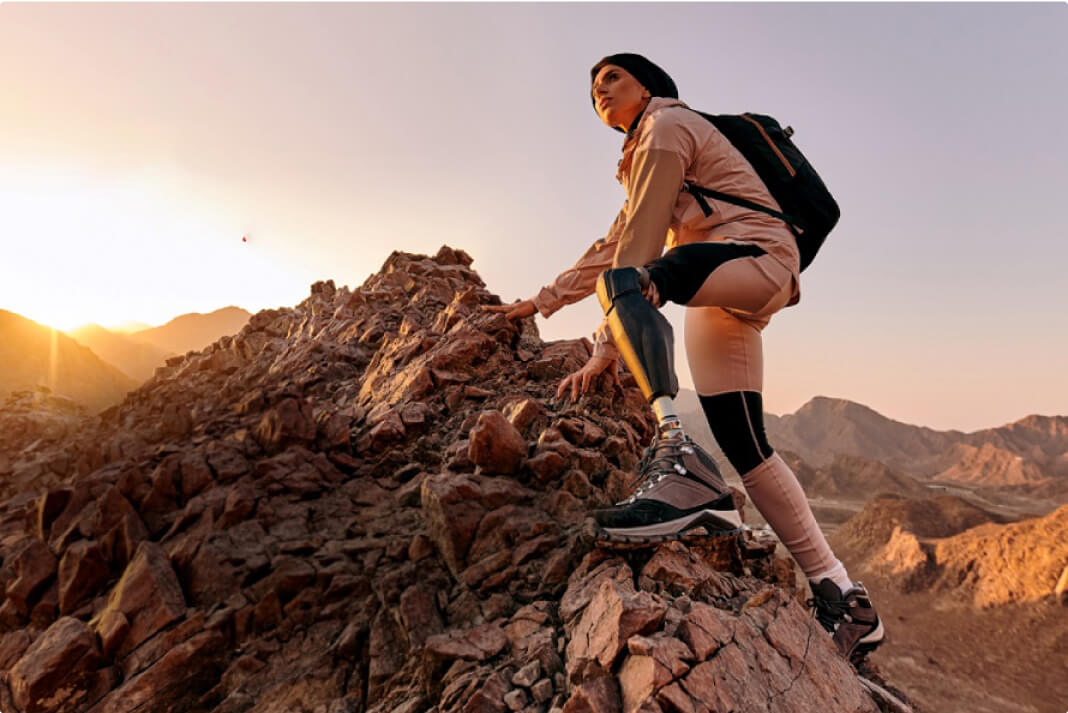
Omar Nok is not your average Egyptian — in fact, he hasn’t been in Egypt for quite some time now, seeing as he’s busy traveling the world on foot, on sailboats, and everything in between — just no flights. In 2024, Nok announced he was headed from Egypt to Japan, a feat that took the internet by storm, earning him fame and over 600k followers on Instagram.

You’d think someone who trekked through Asia on foot would need a break, but Nok simply yearned for a greater adventure. He would go from Egypt… to Egypt — a circular journey around the world, once more without flight. We caught up with Nok just as he safely docked in the Caribbean to ask: How do you do it?

Before taking the world by storm, Nok worked with numbers, until the pandemic showed him that life was too short to be confined to spreadsheets and an office desk — no matter how great the view. If you’ve been looking for a similar escape, and you’re not so sure how you can do it, here’s what Nok has to say…

Edited excerpts from our conversation:


EnterpriseAM: How has this trip been so far? What are some new challenges you’ve faced compared to your Egypt-to-Japan journey?

Omar Nok: The journey has been good; it’s been similar and different in a way. Similar, of course, in style — that I am camping, with my backpack and all, and the spirit of the journey is the same. Different in terms of the things I am facing, because there is a lot of water. This is a new challenge compared to the Egypt-to-Japan journey because that route mostly involved me crossing Asia overland. This challenge involves me crossing two oceans.

So, the challenge was to find a sailboat, find people I click with who would agree to take a crew member they don’t know, and help me with the crossing. The crossing itself was obviously challenging.

E: Could you tell us more about your career prior to traveling the world?

ON: I was a financial analyst. I studied economics and finance, and then I worked at Amazon. I started as an intern, then junior financial analyst, financial analyst, senior financial analyst — five-and-a-half years in total. I also worked in Luxembourg for three-and-a-half years and in Munich for two. I was responsible for the company’s external financial reporting to any external entity — that could be central banks, tax authorities, auditors, EU institutions, statistics offices — in many countries in Europe. That’s the overall big picture.

E: Most professionals see a career gap as a liability. How did you mentally frame this travel sabbatical?

ON: For me, it was a mental reframe. My job was about numbers all day, every day. And I like numbers — I love numbers, and I’m good with numbers. So, I didn't have a problem at all with the job itself, but I wanted to travel. I took a three-month sabbatical first, and after that, I quit. Those three months were like a testing period for me.

I did it first because I wanted to see: Would I miss the routine? Would I get tired after three months? Would I be satisfied and content with three months of travel and then go back? So, I took it step by step. I realized that this is something I want to do longer term, more than three months.

And for me, honestly, there was a bit of — I don’t want to call it burnout. I had just moved to Munich during Covid. I was in a new city, by myself at home for a year and a half or two years, doing nothing but working, and in my spare time, I would stay at home because everything was closed. It took a toll on me. At that time, I needed a break. It all came together. That’s how I looked at it from a career perspective — as something I needed because I felt my energy levels were dropping in terms of work.

E: When you decided to leave, how did you ensure you left on terms that would allow you to return to the corporate world if you ever chose to?

ON: I wasn’t worried because I’m good at what I do. Other than that, I had very good relationships with the people I worked with, because I believe in being friends with the people you spend most of your days with. I thought: Let’s say I take a sabbatical year and want to come back. I didn’t feel there would be any barrier to me potentially returning or making it work somehow.

E: How do you go about budgeting for your travels?

ON: Trial and error. When my trips started getting a bit longer, I would check how much I was spending in total, divided by the number of days, to get the average daily cost on the road.

In terms of budgeting, I have a savings account and a spending account. I can’t spend from the savings account. What I do is that every month — I have a maximum monthly budget — I transfer from savings to spending. I treat it like a salary; it’s an automatic monthly transfer. So, it’s possible that if I spend less than the budget for two or three months, some savings accumulate.

E: How can professionals experience the world without triggering a damaging break from the workforce?

ON: Use the PTO stacking or micro-sabbaticals that are allowed by the company. Of course, every company has its own policy and sabbatical length they allow, if they allow it. This is how you do it without actually quitting work. I don’t think a break from the workforce equals a damaging break, though. I might slightly disagree with that statement.

E: Is it actually possible to maintain a high-pressure corporate job while traveling overland, or does travel require a complete disconnect to be meaningful?

ON: It can be meaningful without being a complete disconnect. I’ve seen many different types of people working different jobs online — digital nomads. Depending on the job and the person, for some people, I see it adds a bit of stress to them, and for some people, they have found the perfect balance.

It comes down to trial and error until someone finds the right balance that works for them. Of course, many things need to be taken into consideration, like where the person is traveling. Sometimes people need to be connected with people in a different time zone, and some people just go about their own thing; they don’t need meetings or calls, so there’s no time zone impact.

E: What is the one insight about the global economy or state of the world you’ve gained from the ground that you never would have seen from an office?

ON: What I learned — this is the mindset that started to develop in me — is that I don’t know anything about a place before I go there. Whatever I hear from the news or from an office, I cannot know how life works there, how people are there, or how their society works.

3

Ears to the Ground

Your audible guide to smarter investment choices

🎧 Do we truly understand the psychology of money? This is the core premise of Money for the Rest of Us, a podcast hosted by investment expert and portfolio manager David Stein, author of the book by the same name.

The show offers conceptual frameworks and practical advice for managing wealth, moving far beyond the hollow promises of getting rich quickly. Across 500 episodes, Stein provides economic analyses that go deeper than standard investment tips, transforming complex economic theories into relatable, everyday contexts.

What a perfect portfolio maketh? In one particular episode, Stein confronts listeners with an idea that might shock those searching for a flawless, timeless investment plan: he critiques our modern obsession with financial perfection. He redefines what a successful investment portfolio actually looks like, asserting that it isn’t about chasing the highest returns on paper. Instead, success is defined by the ability to stick to a plan during personal crises and market volatility.

By dissecting various models — such as target-date funds and the risk-parity strategies used by nations and major financial institutions — Stein proves that simplicity and psychological resilience are the true hallmarks of sustainable financial success.

What we liked: What sets the podcast apart is the fact that it ignores flashy promises of overnight wealth, bringing listeners back to earth with a sober analysis that connects the investor to their decisions. Stein’s strategies blend a critical analysis of modern economic methodologies with a breakdown of contemporary issues, such as the impact of AI on our financial choices.

Our verdict: If you're seeking a smart, long-term approach to saving built on consistency and endurance, we recommend adding this podcast to your rotation as soon as possible.

WHERE TO LISTEN- You can tune in on Apple Podcasts | Spotify | Anghami.

4

Sports

High-stakes showdowns in the Premier League + more footie action on our radar

In the Premier League: All eyes turn to Etihad Stadium in Manchester tonight for a decisive clash between the league leaders and the runners-up, as Manchester City hosts Arsenal in a high-stakes English showdown. The Gunners are looking to extend their lead (70 points), while the Citizens (64 points) aim to close the gap. Kickoff is at 5:30pm, with the match airing on beIN Sports 1.

In the Merseyside Derby, Liverpool travels to face Everton as the struggling Reds look to salvage what they can from this season. That match kicks off at 3pm on beIN Sports 2. At the same time, Nottingham Forest hosts Burnley, and Aston Villa takes on Sunderland.

Other major European league action on our radar:

  • Bayern Munich vs. Stuttgart — Bundesliga, 5:30pm;
  • PSG vs. Lyon — Ligue 1, 8:45pm;
  • Juventus vs. Bologna — Serie A, 8:45pm;


In Africa, Morocco’s Olympic Safi hosts Algeria’s USM Alger in a highly anticipated second leg fixture of the CAF Confederation Cup semi-finals. Kick-off is at 9pm on beIN Sports 3.

The victor of this matchup will face Zamalek in the final. The Egyptian giants secured their spot after a goalless draw against Algeria’s CR Belouizdad at Cairo International Stadium last Friday, advancing on account of their 1-0 first-leg victory.


At home, Nile League action continues with four fixtures:

  • Gouna vs. Ismaily — 5pm;
  • Haras El Hodoud vs. Al Ettihad Al Sakandary — 5pm;
  • Modern Sport vs. Zed — 8pm;
  • Kahraba Ismailia vs. Ghazl El Mahalla — 8pm.

This publication is proudly sponsored by

5

Mark Your Calendar

A can’t-miss night with Angham at El Arena

🎤 Angham is set to take the stage at El Arena, New Cairo on Friday, 15 May. The vocal powerhouse brings a high-production and immersive live experience, led by maestro Hani Farhat. Doors open at 7:30pm — you can book your tickets now through Tazkarti.

6

GO WITH THE FLOW

What the markets are doing on 19 April 2026

The EGX30 rose 1.8% at today’s close on turnover of EGP 10.1 bn (46.7% above the 90-day average). International investors were the sole net sellers. The index is up 25.2% YTD.

In the green: TMG Holding (+7.9%), Palm Hills Developments (+3.9%), and Edita (+3.5%).

In the red: Orascom Investment Holding (-2.5%), Egypt Aluminum (-2.3%), and Arabian Cement (-1.6%).

7

INSIDE INDUSTRY

Egypt’s fertilizer sector is caught between a rock and a hard place

🏭 As geopolitical tensions restrict navigation through the Strait of Hormuz, renewed global supply chain disruptions are threatening food security via the fertilizer sector. While major global powers find themselves in limbo either by energy shortages or a lack of arable land, Egypt — as a natural gas producer and a key player in the global fertilizer market, but also a nation striving for balance in food security — stands at a crossroads.

The crisis is playing out differently across the globe. According to a recent report by the Food and Agriculture Organization (FAO), India — despite being a major food producer — imports over 50% of its natural gas, leaving its food security directly threatened by energy costs and availability. Meanwhile, Gulf nations lead in energy and fertilizer production but face logistical hurdles due to their heavy reliance on food imports. Western Europe maintains high farming yields, but imports the bulk of its energy and fertilizer needs, placing it under severe inflationary pressure.

Egypt’s position in the global fertilizer market

Egypt possesses a robust industrial infrastructure that positions it as a global leader in the fertilizer sector. The country accounts for over 4% of global fertilizer production, totaling approximately 12 mn tons. Egypt currently ranks seventh globally in urea production, with nitrogen-based fertilizers representing about 8 mtpa, Chemical and Fertilizers Export Council Chairman Khaled Abu Al Makarem told EnterpriseAM. 40-50% of this volume is earmarked for export markets.

We also maintain a production volume of nearly 4 mn tons of phosphate fertilizers annually, which makes fertilizers as a whole our second-largest export sector, with a value reaching approximately USD 2.8 bn in 2025, Abu Al Makarem tells us.

Fertilizers vary by industrial inputs and agricultural seasons. Nitrogenous fertilizers (such as urea and ammonia) are essential for winter and spring crops and rely heavily on natural gas as both an energy source and a primary feedstock. In Egypt, gas accounts for roughly 70% of their production costs, making them highly vulnerable to the current shipping and energy crises. Conversely, phosphate and potassium fertilizers are better suited for summer crops and do not face the same risks, as their production is not tied to natural gas.

These raw materials are either available locally or safely imported from neighboring countries like Jordan, shielding them from distant maritime shocks, according to Chairman of the Chamber of Chemical Industries at the Federation of Egyptian Industries Sherif El Gabaly.

The dual crisis of energy and logistics presents a new reality. Local industry is tested by its ability to seize lucrative export windows created by global supply gaps. However, these ambitions are hindered by complex domestic challenges regarding the sustainability and pricing of gas supplies to factories, a local fertilizer company official told EnterpriseAM.

This puts decision-makers in quite the situation: maximizing USD revenues through exports while also securing the domestic market to protect the agricultural sector from inflationary waves that could jeopardize food security.

The state of play

Vessel transit has plummeted by 97% on the Strait of Hormuz due to recent regional conflict, according to an UNCTAD report, which noted that a third of the world’s seaborne fertilizer trade passes through the strait. With navigation restricted in the Strait of Hormuz, war risk ins. has jumped to 1% from 0.02%, and the cost of insuring a single vessel per trip has skyrocketed to USD 1.2 mn from USD 40k. Rerouting and high fuel costs have also extended transit times by several weeks, according to the Arab Fertilizer Association.

The blockade has trapped approximately 4 mn tons of gas-dependent products — like ammonia and urea — forcing major producers in Saudi Arabia, Qatar, and the UAE to declare force majeure, according to a Wood Mackenzie report.

Egyptian fertilizer export prices have surged in tandem with the global market. Urea export prices from the Middle East have climbed 105% y-o-y, reaching USD 835 per ton this month, compared to USD 484 prior to the escalation. Ammonia export prices rose 35.4% y-o-y to USD 670 per ton.

While there is strong international demand to fill the vacuum left by Gulf suppliers, Egypt’s ability to capitalize on this is contingent on steady gas supplies to local plants. North African producers could bridge the gap — the International Trade Centre notes that Egypt has USD 1.6 bn in untapped export potential.

How Egypt is circumnavigating the crisis

The government is moving toward a flexible pricing mechanism, linking the cost of gas supplied to factories to international export prices. This follows a September 2025 move where the government raised industrial gas prices to USD 5.5 per mmBtu from USD 4.5. However, with urea exceeding USD 800 per ton, the effective cost of gas for some producers has crossed USD 9 per mmBtu. CI Capital suggests the government may raise the price floor to narrow the gap between the composite cost and the minimum price.

In 2025, Egypt was a marginal net food exporter, with agricultural exports hitting USD 11.5 bn against imports of USD 10.37 bn — 83% of which were wheat, corn, and soybeans. Domestically, rising input costs are straining the state budget. Agriculture Minister Alaa Farouk stated that fertilizer subsidies for farmers exceed EGP 40 bn annually. Despite these pressures, El Gabaly notes that Egypt remains far from a fertilizer shortage due to sufficient local production and government mandates prioritizing domestic consumption.

With the FAO warning that a prolonged global shortage of inputs could slash productivity and trigger a spike in food prices, Egypt faces a tough test balancing between being a natural gas producer and fertilizer exporter. The fix? Resource management and carefully weighing between directing gas to power stations or industrial plants, exporting to generate hard currency, and securing the domestic market at subsidized prices.

(** Tap or click the headline above to read this story with all of the links to our background as well as external sources.)


🗓️ APRIL

7 April - 8 June (Tuesday-Monday): Beyond Van Gogh: The Immersive Experience at District 5 by Marakez in New Cairo.

16 April - 30 June (Thursday-Tuesday): Early bird registration for The Marakez Pyramids Half Marathon.

21 April (Tuesday): The Beatles tribute night ft. Glass Onion at Boom Room, Madinaty.

23 April (Thursday): Hisham Kharma at Cairo Opera House main hall.

24 April (Friday): Daylight saving time begins.

24 April (Friday): Medhat Saleh at Ewart Memorial Hall, AUC Tahrir Square.

24 April (Friday): Ain Gamal at Al Manara Main Hall.

24 April (Friday): Marwan Pablo at Music Arena in Antoniads, Alexandria.

24-25 April (Friday-Saturday): GEM Family Weekend at the Grand Egyptian Museum.

25 April (Saturday): Sinai Liberation Day.

25 April (Sunday): The Marketers League at The Grand Egyptian Museum.

27 April - 2 May (Monday-Saturday): Alexandria Short Film Festival.

29 April (Wednesday): El Leila El Kebira at Boom Room, Madinaty.

29 April (Wednesday): Massar Egbari at Tenaya, Maadi.

30 April (Thursday): International Jazz Day at Theatro Arkan.

MAY

1 May (Friday): Labor Day.

1 May (Friday): El Hekaya: Amr Diab at AUC Football Field.

1-2 May (Friday-Saturday): Cotzl’s Step Into the Light bazaar at Al Horreya Garden, Zamalek.

7-9 May (Thursday-Saturday): Sandbox Festival in El Gouna.

7-10 May (Thursday-Sunday): ASEEL Egyptian Horse Festival at the Armed Forces Equestrian Club, Nasr City.

9 May (Saturday): Cairo Vintage Souq at Al Zohriya Garden, Zamalek.

15 May (Friday): Angham at El Arena.

15 May (Friday): Amr Selim at Theatro Arkan.

26 May (Tuesday): Arafat’s Day.

26 May (Tuesday): Andrea Bocelli at the City of Arts and Culture in the New Administrative Capital.

27-29 May (Wednesday-Friday): Eid El Adha (TBC).

JUNE

16 June (Tuesday): Islamic New Year.

30 June (Tuesday): June 30th Revolution.

JULY

1 July - 2 November (Wednesday-Monday): General registration for The Marakez Pyramids Half Marathon.

23 July (Thursday): July 23rd Revolution 1952.

24 July (Friday): Adriatique at the North Coast.

AUGUST

21 August (Friday): Black Coffee at Cubix North Coast.

25 August (Thursday): Prophet Muhammad’s Birthday.

OCTOBER

1-4 October (Thursday-Sunday): She Arts festival across Cairo and Alexandria.

6 October (Tuesday): Armed Forces Day.

24 October (Saturday): Blue 25th Anniversary Tour at New Capital.

NOVEMBER

28 November (Saturday): Shakira at the Pyramids of Giza.

DECEMBER

11-12 December (Friday-Saturday): TheMarakezPyramids Half Marathon at the Pyramids of Giza.

Now Playing
Now Playing
00:00
00:00