Get EnterpriseAM daily

Available in your choice of English or Arabic

Car prices fall up to 30% as the auto market corrects after years of overpricing

1

What We're Tracking Today

First EUR-denominated t-bill auction in 2025 sees yields drop 1.25 percentage points

Good morning, friends, and a happy hump day to you all. In today’s issue, we’ve got plenty of welcome news stories for you to perk you up this morning, including — but not limited to — significant reductions in car prices across the market, yields on our first EUR-denominated t-bill issuance of the year dropping 1.25 percentage points, and continued Chinese investor appetite for our textile sector.

BUT FIRST- Does your business have a pre-2020 tax dispute that is yet to be settled? Today is the last chance for companies to submit requests to settle tax disputes dating back to before 2020. And don’t hold out on the belief that the already extended deadline will be extended again, as the Finance Ministry will not extend the deadline any further, a senior government source told EnterpriseAM.

PSA-

WEATHER- Cairenes are in store for another hot and humid day, with a high of 40°C and a low of 28°C, according to our favorite weather app.

It’s going to be almost just as hot in Alexandria, with a high of 39°C and a low of 26°C. While those of us further south in Luxor and Aswan will see temperatures rise to a sweltering 48°C.

** DID YOU KNOW that we now cover Saudi Arabia and the UAE?

** Were you forwarded this email? Tap or click here to get your own copy delivered every weekday before 7am Cairo time — without charge.

FROM THE DEBT MARKETS-

The Central Bank of Egypt’s first auction of EUR-denominated t-bills this year saw yields drop 1.25 percentage points, with yesterday’s auction selling EUR 591.7 mn worth one-year bills at an average yield of 2.25%, according to data from the central bank. The auction outdid its EUR 550 mn target and received some EUR 726.7 mn worth of bids.

The issuance marks the lowest yields for the bills since August 2022, when the bank issued bills with an average yield of 1.70%. The bank’s two issuances in 2024 had average yields of 3.5% and 3.75%, while its two issuances in 2023 both had yields of 4.00%

WATCH THIS SPACE-

The government has given the greenlight to the establishing four new public freezones, which will be situated in Tenth of Ramadan City, New October, New Borg El Arab, and New Alamein, according to an Industry Ministry statement. Under the Ministerial Group for Industrial Development-approved plan, factories in the zones will only be allowed to export their goods, except in cases approved by the ministerial group, and be charged market rates for energy prices without subsidies.

The move follows occupancy rates in existing public freezones hitting 95%, according to the statement.

HAPPENING TODAY-

#1- The results of the Senate elections will be unveiled this evening, with the National Elections Authority set to hold a presser at 6:30pm CLT to tell us who will be heading to the upper house. Egyptians at home and abroad headed to the polls earlier this month to elect the 200 elected members of the 300-member body.


#2- Prime Minister Moustafa Madbouly is in Amman today to co-chair the Egyptian-Jordanian Joint Higher Committee alongside his Jordanian counterpart, according to a cabinet statement. The meetings will be followed by the signing of several cooperation agreements to strengthen bilateral ties, particularly on the economic front.


#3- Will unemployment fall for the third consecutive quarter? Capmas is expected to publish Egypt’s unemployment figures for the second quarter of 2025 today. The previous quarter saw the unemployment rate dropping 0.1 percentage point from 4Q 2024 to 6.3% in 1Q 2025, as 342k more people entered the workforce.

THE BIG STORY ABROAD-

Washington and Beijing’s decision to extend their tariff truce for another day is broadly leading the conversation in the international business press this morning. US President Donald Trump confirmed on Truth Social overnight that he signed an executive order to extend the pause, just hours before the US’ blanket tariffs on Chinese imports were scheduled to come into effect. “All other elements of the agreement will remain the same,” Trump said. The story is getting ink in Axios, Bloomberg, CNBC, and Reuters.

Meanwhile, the White House’s relationship with tech firms is also in the spotlight, after Trump confirmed reaching an agreement with Nvidia and Advanced Micro Devices allowing them to sell chips to China in exchange for a fee on these sales. Nvidia could separately be allowed to sell a version of another next-generation chip to China, Reuters reports. Intel is also getting ink after its CEO met with Trump yesterday, after the president called for Lip-Bu Tan’s “immediate” resignation from the company over his ties to China. (Reuters | CNBC | Financial Times)

*** It’s Going Green day — your weekly briefing of all things green in Egypt: EnterpriseAM’s green economy vertical focuses each Tuesday on the business of renewable energy and sustainable practices in Egypt, everything from solar and wind energy through to water, waste management, sustainable building practices and how you can make your business greener, whatever the sector.

In today’s issue: We take a look at how refuse-derived fuels are becoming a key energy supply for power-intensive industries.

Whether you’re diving into turquoise waters, catching golden hour from your terrace, or just letting time drift by — Somabay is summer, redefined. Your ultimate escape, every single time.

2

Automotive

Car prices in Egypt fall up to 30% as the auto market corrects after years of overpricing

Egypt’s car market is seeing price cuts of 25-30% across many brands, industry sources told EnterpriseAM. The reductions followed a string of local manufacturing announcements that boosted demand for upcoming models and as companies look to clear old inventory.

Customers in the market are seeing significant reductions of popular models, including Chevrolet’s Captiva with EGP 350k knocked off the price tag, Chery Tiggo 7 down by EGP 140k, Tiggo 8 down by EGP 225k, Hyundai Tucson down by EGP 151k, and Geely Star Ray dow by EGP 100k. All Jetour models have been reduced, with reductions up to EGP 224k.

Part of the reason is that recent local auto localization news and competitive pricing are pushing companies and distributors to lower prices, which was also helped by a drop in the USD exchange rate, head of the Egyptian Auto Feeders Association Khaled Saad told EnterpriseAM. The state’s push to localize car production is spurring companies to protect their market share after years of price hikes, he added.

The variety of brands already in the market — and more models on the way — is also pushing companies to accept smaller margins to move cars, member of the auto division Montaser Zaytoun told EnterpriseAM. USD fluctuations are not the main driver, he added, pointing instead to competition for customers. The rise in locally assembled vehicles has also helped push prices down, the auto division’s deputy head Alaa El Sabaa told us.

But overpricing still exists, with models under EGP 800k still subject to the practice due to limited supply and high demand in that segment, which is most attractive to middle-income buyers, Zaytoun said.

The logic of attracting buyers with lower prices doesn’t always work in the automotive market, as big price cuts don’t necessarily boost sales, as buyers often delay purchases in anticipation of further reductions, El Sabaa said.

To address this, automakers are also offering other incentives, including extended warranties of up to seven years or 250k km, free maintenance for certain models, easier payment terms, and expanded after-sales service to attract buyers.

El Sabaa expects that more local manufacturing will improve availability, leading to a market correction and eventual stability. Opening commercial imports alongside agency imports could trigger further — and sharper — price drops, Zaytoun believes, adding that restricting imports keeps pricing unstable.

This publication is proudly sponsored by

3

Investment Watch

Egyptian steelmakers invest in expanding production and boosting exports

Steel manufacturers are rolling out major expansion plans to boost capacity, diversify products, and increase export volumes.

#1- Ayad Group will invest USD 10 mn in 2025 to expand its offerings for the automotive sector, Chairman Wanis Ayad told Al Borsa. The plan targets 50–60 new products for the automotive and related engineering sectors. The company will upgrade its complementary industries factory, adding about 60 specialized machines to boost production. Export-oriented output will include automatic wall-mounted awnings, while domestic production will focus on exhaust systems, radiators, and steering components.

#2- El Gallad Steel will invest EGP 2-3 bn to expand its cold-rolled sheet metal factory, Chairman Ibrahim El Gallad told Masrawy. The company will double its production from 8k tons to 16.5k tons per month within six months, bringing total annual capacity to 200k tons. El Gallad Steel currently exports 25–30% of its surplus production and plans to increase its export share to 40%. Expansion plans also include new galvanizing and colored sheet lines in 2026.

#3- Misr National Steel (Ataqa) applied for a steel billet production license from the General Authority for Industrial Development, according to an EGX disclosure (pdf).

REMEMBER- The government is pursuing a strategy to localize steel manufacturing, which includes issuing new billet production licenses, reallocating surplus supply, and working with industry stakeholders to develop unified policies for the iron and steel sector. We heard in May that thirteen local companies are seeking the steel billet production licenses.

4

Investment Watch

China’s Changzhou Ramada to invest USD 22.6 mn in Qantara West textile plant

Investor appetite from China in our textile industry is keeping up the pace, with Changzhou Ramada becoming the latest Chinese textile company to put its hit in the ring. The Chinese textiles company will invest USD 22.6 mn to build a textile manufacturing facility in the Qantara West Industrial Zone, according to a Suez Canal Economic Zone (SCZone) statement.

The details: The 80k-sqm plant will produce home textiles and garments, with an annual capacity of 5k tons of fabric, 4 mn bed cover sets, and 1 mn car carpet sets. Some 90% of output will be exported. The project will create 1.5k direct jobs once operational.

To get a measure of Chinese interest in the sector, we heard about six new Chinese garment and textile factories heading to the SCZone last month alone. These included contracts inked for two factories from Shandong Sunshell Group totalling USD 37 mn and a USD 28.5 mn factory from Zhejiang Charming for Dyeing and Finishing, along with a USD 20 mn factory from Changzhou East Noah Printing and Dyeing, a USD 24 mn factory from Changzhou Golden Spring Textile, and a USD 8.6 mn factory by Jiangsu Sainty Corporation. During the same month, China’s Bridge Textile International and F-Tex International also kicked off construction on two textile projects, with combined investments exceeding USD 55 mn.

DATA POINT- The Qantara West Industrial Zone secured 32 projects worth over USD 822.2 mn in total investments, expected to create 45.6k direct jobs, SCZone head Walid Gamal El Din said. The authority aims to develop the zone into a fully integrated base for textiles, ready-made garments, and accessories, with strong export orientation.

5

EARNINGS WATCH

Edita, Orascom Development Egypt report 2Q, 1H 2025 earnings

Earnings for the the first half of the year are beginning to roll in, with Edita and Orascom Development Egypt becoming the latest to publish their financials for the period.

EDITA SEES INCOME, REVENUES RISE IN 2Q-

Snackmaker Edita Food Industries saw its net income increase 72.1% y-o-y to EGP 539.0 mn in 2Q 2025, according to its earnings release (pdf). Bottom line growth was supported by higher interest income, cost efficiencies, and revenues increasing 22.2% y-o-y to EGP 5.0 bn on the back off higher price points.

Driving the growth: Revenues were bolstered by a 38.4% y-o-y increase in average price per pack, which outweighed a 11.7% y-o-y decline in packs sold — amounting to some 905 mn for the period. Its main segment cakes — accounting for 53.0% of revenue for the quarter — increased 22.6% y-o-y, while its second largest segment bakery — with a 27.6% share of total revenues — was up 20.9%, helping offset a 17.2% drop in revenues from its frozen segment.

Growth was also supported by its Moroccan arm, with Edita Morocco seeing revenues rise 44.3% y-o-y for the quarter to EGP 153.8 mn. The company’s exports also grew 47.7% y-o-y in the same period to EGP 451.0 mn.

On a six-month basis, net income was up 27.7% y-o-y to EGP 920.0 mn, while revenues increased 15.7% to EGP 9.2 bn during the same period. This was helped by a 41.9% increase in average price per pack, which helped offset a 18.4% drop in units sold.

Looking ahead: “Leveraging our solid brand equity and agility in adapting to new price points, we will continue to expand capacity and pursue strategic investments, positioning ourselves to capture growth opportunities in dynamic markets,” Group Chairman Hani Berzi said in an accompanying statement (pdf).

ORASCOM DEVELOPMENT SEES NET INCOME MORE THAN TRIPLE IN 1H-

Orascom Development Egypt recorded a 222% y-o-y increase in net income to EGP 3.0 bn in 1H 2025, according to the company’s latest earnings release (pdf). Revenues for the period saw a 12.9% y-o-y increase to EGP 11.5 bn.

Driving the growth: Growth was fueled by strong hotel revenues, which rose 45.5% y-o-y to EGP 2.7 bn, and commercial assets revenues were up 42.6% y-o-y to EGP 1.9 bn. Gains from the appreciation of the EGP versus last year’s post-devaluation losses also boosted net income, helping to offset real estate revenues falling 5.5% to EGP 5.4 bn due to strategic delivery scheduling at O West, though higher selling prices and strong international sales supported margins and cashflow.

On a quarterly basis, the company posted a net income of EGP 1.1 bn in 2Q 2025, marking a 45.2% y-o-y decrease. Revenues for the quarter dropped 15.7% y-o-y to reach EGP 5.1 bn. This drop in revenues was largely due to the absence of land sales compared to EGP 1.5 bn in 2Q 2024, according to the release.

What they said: “These achievements illustrate the strong discipline that guides our team in executing strategic plans, the agility with which we respond to market changes and challenges, and the long-term vision that informs our decision-making processes. Together, these elements contribute to a resilient business structure that can sustain progress and achieve future objectives,” the release notes.

6

Also on our Radar

Oil Ministry readies Red Sea exploration tender following exits. PLUS: EFG Foundation, Sodic, Modern Sport FC

ENERGY-

The Oil Ministry will launch a gas exploration tender in the Red Sea this September, Asharq Business, citing an unnamed senior government official. Four major areas will be offered in the tender for international companies to look for gas in the Red Sea. The ministry will also offer bidding companies incentives to encourage the exploration and drilling of unexplored areas, the source said.

REMEMBER- The new tender comes on the heels of oil and gas giant Shell and its partners’ withdrawal from their two Egyptian Red Sea exploration blocks in March of this year, followed by Chevron’s exit in April from its block — the last active exploration block in the Red Sea.

EDUCATION-

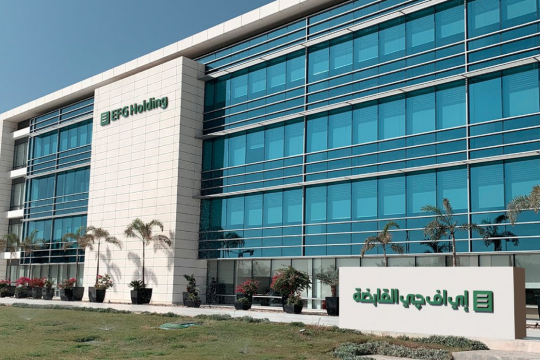
The EFG Foundation for Social Development has launched the EFG Hermes Applied Technology School for Agri-tech in Luxor, marking Egypt’s first applied technology school specializing in climate-smart agriculture, according to a statement (pdf) from the foundation. The school — in partnership with the Education Ministry — aims to graduate 225 students over three years, equipping them for employment and entrepreneurship.

The details: The school will offer a three-year program, starting with 75 students aged 14-18, to train youth in sustainable farming, agri-waste recycling, composting, and smart farming technologies such as AI, IoT, and data analytics. The curriculum, designed with public and private partners using a competency-based education model, focuses on green technical skills, entrepreneurship, and language proficiency.

What they said: “This school reflects our commitment to empowering young people with the capabilities to thrive in a changing world. By investing in applied, future-ready education, we’re laying the groundwork for a generation of climate-conscious agricultural professionals who can lead Egypt’s green transition,” said EFG Foundation CEO Hanaa Helmy.

CAPITAL MARKETS-

Sodic has asked the EGX to halt trading on its shares starting tomorrow until the EGX's securities registration committee approves the listing of shares from a capital increase resulting from a merger with seven other companies, according to a disclosure (pdf). The real estate developer received the green light from the General Authority for Investment and Freezones to proceed with the plan to merge seven of its subsidiaries into the company last May.

The developer submitted documents to the EGX yesterday to increase its issued and paid-up capital from EGP 1.4 bn to EGP 5.15 bn, distributed over 1.28 bn shares at a par value of EGP 4 per share. The company also intends to raise its authorized capital from EGP 2.8 bn to EGP 25 bn and amend the company's purpose as a result of the merger-based restructuring.

INVESTMENT WATCH-

Modern Sport FC plans to build an EGP 800 mn stadium in the current fiscal year, CEO Haytham Orabi told Al Borsa. The club is mulling a 7.1k sqm plot in Sixth of October City for the stadium, which will have a capacity for 16-25k spectators — that can be expanded to 27k in the future. The Sports Ministry will support the construction of the stadium with EGP 250 mn.

7

PLANET FINANCE

KSA once again leads the region’s IPO chart with 13 of the 14 IPOs in 2Q 2025 -EY

IPOs in the region raised some USD 2.5 bn in the second quarter of the year, spread across 14 initial public offerings, according to EY’s latest MENA IPO Eye report (pdf). The marginal 6.2% quarter-on-quarter decrease in proceeds in the face of global economic uncertainty and geopolitical tensions shows that “MENA capital markets demonstrate continued resilience, although marked by caution,” according to EY-Parthenon MENA Leader Brad Watson.

Like the quarter before — and pretty much every quarter before that — Saudi Arabia continued to dominate the regional IPO charts, accounting for 13 of the 14 IPOs in the region over the three-month period. Proceeds from Saudi IPOs accounted for USD 1.9 bn of the total USD 2.5 bn raised across the region. Leading the pack in KSA and the region in terms of amount raised was Flynas ' entrance to the Tadawul that raised USD 1.1 bn — accounting for 44.2% of proceeds for the whole region.

The only other country to witness an offering was the UAE, with the offeringof DubaiResidential REIT on the Dubai Financial Market, which raised USD 584 mn. The 26x oversubscribed IPO was the second largest offering by proceeds in the region, accounting for some 23.6% of all proceeds during the quarter for the region.

Issuers adopted a more cautious trend, favoring shareholder exits over raising new capital. This boosted offerings in the region during the second quarter through secondary listings, whose share rose to 64.3% of total IPOs compared to 35.7% in the first quarter of this year. Meanwhile, the number of primary listings decreased from six in 1Q 2025 to four in 2Q. The region did not witness any direct listings in 2Q.

The quarter was marked by poor first day performance, with 10 of the 14 IPOs finishing their first day trading at below their offer price. The report attributes this to investors taking a cautious approach due to “ongoing global uncertainty driven by trade tensions, tariff shifts, tightening financial conditions, and heightened geopolitical volatility across the MENA region.”

Less than half of the companies were trading above their IPO price by the end of the quarter, as 6 of the 14 companies are in the red following their IPOs. And by sizable margins for some companies, with the share price of Dkhoun National Trading on the Tadawul’s parallel market Nomu down 27% and the United Carton Industries Company on the main market down 25% on their offering prices as of 30 June.

Leading the charts in post-IPO gains is Asas Makeen, with a 36% share price gain for the Nomu-listed stocks from listing until the end of the quarter.

EY sees IPO appetite keeping a pace in 2025 — and staying centred around KSA. Fourteen Companies are planning to list this year, with Saudi Arabia accounting for ten of these. The list also includes planned IPOs in non-GCC nations Egypt, Tunisia, and Morocco, which the reports says points to the growing market depth and diversification in the region.

MARKETS THIS MORNING-

Asian markets are in the green in early trading today, as the markets react to the overnight decision to extend the US-China trade war truce by 90 days. Japan’s Nikkei is up 2.5%, Korea’s is up 0.6%, and the Shanghai Composite is up 0.5%, while Hong Kong’s Hang Seng is flat. Over on Wall Street, futures are muted as investors await US inflation data for July.

EGX30

35,909

-0.6% (YTD: +20.7%)

USD (CBE)

Buy 48.43

Sell 48.56

USD (CIB)

Buy 48.44

Sell 48.54

Interest rates (CBE)

24.00% deposit

25.00% lending

Tadawul

10,792

-1.0% (YTD: -10.3%)

ADX

10,302

-0.1% (YTD: +9.4%)

DFM

6153

+0.1% (YTD: +19.3%)

S&P 500

6373

-0.3% (YTD: +8.4%)

FTSE 100

9130

+0.4% (YTD: +11.7%)

Euro Stoxx 50

5332

-0.3% (YTD: +8.9%)

Brent crude

USD 66.63

+0.1%

Natural gas (Nymex)

USD 2.98

+0.7%

Gold

USD 3,404.70

-2.5%

BTC

USD 119,052.10

+0.3% (YTD: +27.3%)

S&P Egypt Sovereign Bond Index

885.10

+0.1% (YTD: +13.8%)

S&P MENA Bond & Sukuk

147.74

-0.1% (YTD: +5.6%)

VIX (Volatility Index)

16.25

+7.3% (YTD: -6.3%)

THE CLOSING BELL-

The EGX30 fell 0.6% at yesterday’s close on turnover of EGP 5.1 bn (0.1% above the 90-day average). Local investors were the sole net buyers. The index is up 20.7% YTD.

In the green: Ibnsina Pharma (+3.9%), E-finance (+1.9%), and Orascom Construction (+1.5%).

In the red: ADIB (-4.3%), Raya Holding (-2.7%), and Beltone Holding (-2.5%).

8

Going Green

Waste fuels are helping energy-intensive industries meet emission reduction goals

Refuse-derived fuels (RDF) are becoming a key energy supply for power-intensive industries, a government source in the environment sector told EnterpriseAM. Higher demand and regulatory frameworks amid the rising prices of other energy sources have led to an expansion in the number of companies producing and using alternative fuels.

Alternative fuels are taking a growing share of the cement industry’s energy mix — but scaling up will require the state to do more to curb landfilling and better regulate the waste value chain, Geocycle’s Marketing Communications Manager Alaa Basyouni told EnterpriseAM. Geocycle — Lafarge’s waste management sister company — has pushed refuse-derived fuel (RDF) to over 30% of Lafarge’s fuel mix. The company handles some 500k tons of RDF annually, avoiding an estimated 250k tons of CO2 emissions per year.

Cement producers are well past the government’s mandate for alternative fuels, with some now targeting 30-40% of RDF in the energy mix, BioEnergy for Alternative Fuels’ CEO Mahmoud Galal told EnterpriseAM. BioEnergy sources feedstock through its Giza concession, operating a waste facility in Shabramant in coordination with the governorate and integrating with the informal sector — now largely formalized through licensed companies.

Steel and petrochemical plants have joined cement factories in using alternative fuel as an energy source, according to our source. The mandatory share of clean fuel was revised from 10% to 15%, and some cement factories are exceeding this percentage due to rising energy prices. Glass, metal industries, and aluminum companies will also soon join the system.

The informal sector plays a role in the RDF value chain. Other than acting as an unofficial filtration system, some landfill owners operate under usufruct rights from governorates, creating a semi-formal link between public authorities and informal markets. This trade — where all waste types carry monetary value — makes the RDF market part regulated, part unregulated, Basyouni noted. The Environment Ministry has 2k registered, licensed garbage collectors from the informal economy in its database, which will be integrated into specialized companies across different areas, our source said.

Alternative fuel production rose to 1.4 mn tons by the end of last year, compared with 850k tons at the end of 2023, according to our source. The number of companies producing it increased to 22 private sector plants after the tariff was revised to make it attractive to the private sector and after the waste collection and manufacturing system took over the process, resolving problems that had previously limited companies’ appetite for such projects, the source added.

RDF prices fluctuate monthly on the back of several moving parts, Basyouni told us. Demand from cement producers is the primary driver — when production ramps up, so does competition for the limited supply. Diesel prices feed directly into transport costs, making logistics a major factor. Seasonal spikes in truck demand can also cause shortages that push up prices. Add to that the open-market nature — part regulated, part informal — and you have a pricing environment where shifts in supply, demand, or fuel costs can quickly ripple through to the final tonnage price.

Short-term contracts are the norm amid volatile prices. BioEnergy previously inked long-term offtake agreements with cement producers, but volatile pricing has pushed the market toward short-term agreements. “Today you are in a market where you don’t know the prices, so you can’t repeat long-term agreements like before,” Galal told us. Strong demand from cement companies under decarbonization mandates is pushing prices higher. “There’s no oversupply — if anything, demand keeps growing,” Basyouni said.

On the feedstock side, garbage is abundant but dispersed, and the cost of imported shredders and other tech — though now easier to bring under improving import rules — adds to capex needs. In markets where landfill is heavily taxed or restricted, RDF becomes the clear economic choice for waste producers. Waste quality also varies, with high-income areas having “richer” waste streams due to high-calorific materials like plastics and cardboard, while low-income areas see more pre-sorting and recycling at the household level, leaving mostly organic waste.

Informal waste pickers often remove high-value materials before waste reaches RDF sites. Egypt’s RDF typically has a calorific value of 11-12 gigajoules, compared with 15 gigajoules in other countries. Water content is also a concern — some loads require drying — and contamination, particularly with medical waste, results in immediate rejection.

Landfill fees remain nominal, intended to encourage waste delivery to official sites, but too low to make RDF more competitive. In Europe, high landfill costs effectively killed the dumping model, pushing investment into sustainable waste management.

It’s an investment-heavy business. Geocycle invested around CHF 10 mn to set up the Sokhna platform, including USD 2 mn for two mobile shredders, and plans a further USD 5 mn to boost capacity and improve calorific value.

Private sector investments in waste-to-energy projects to produce alternative fuel currently range between EGP 4–5 bn, our source said. The government aims to double this figure by the end of the current fiscal year through expanding partnerships with the private sector to manage solid waste and produce alternative fuel.

Egypt collects 100 mn tons of waste annually, according to the source, but recycling rates currently stand at 37%. The goal is to gradually raise this to 60% by 2027 through greater private sector participation, in line with the global shift towards environmentally friendly energy sources.

Egypt could take a page from the European model, increasing landfill fees and enforcing penalties for improper disposal to discourage and push waste into formal channels. “As long as it’s easy to throw waste on the street, people will choose the easy option,” Basyouni noted. The Local Development Ministry has begun allocating cement companies waste management stations in some governorates — a step in the right direction, Lafarge’s External Communications Manager Ahmed Assem told EnterpriseAM.


AUGUST

12 August (Tuesday): Egyptian Tax Authority deadline for pre-2020 tax dispute settlement requests.

12 August (Tuesday): Capmas expected to release unemployment data for 2Q 2025.

12 August (Tuesday): National Election Authority to announce Senate election results.

28 August (Thursday): Monetary Policy Committee meeting.

Mid-August: Launch of electronic platform to register Old Rent Law tenants.

Tourism Development Authority to waive late payment penalties for land purchases if full installments are paid

Late-August: Deadline for cement factories to restart production.

SEPTEMBER

8-11 September (Monday-Thursday): EFG Hermes London Conference takes place in the British capital.

9-11 September (Tuesday-Thursday): The International Exhibition for Paper, Corrugated Board, Paperboard and Tissue Paper Industries — PAPER-ME — takes place at the Egypt International Exhibition Center.

15 September (Monday): IMF to hold its combined fifth and sixth reviews of Egypt’s USD 8 bn EFF arrangement.

24-27 September (Wednesday-Saturday): Cityscape Egypt 2025, Egypt International Exhibition Center.

The Egyptian-Moroccan Business Council to send a delegation of 23 local companies to Rabat.

The Engineering Export Council of Egypt will ship a commercial delegation to Russia to ramp up exports to European markets.

Egypt Education Platform (EEP) to launch two new schools in Alexandria and Somabay.

Egypt Otsuka’s nutritional products factory in Tenth of Ramadan to begin operations, with exports to Gulf countries expected by January 2026.

OCTOBER

2 October (Thursday): Monetary Policy Committee’s sixth meeting.

7 October (Tuesday): The 2025 EnterpriseAM Egypt Forum.

12-16 October (Sunday-Thursday): Cairo Water Week, Cairo.

19-22 October (Sunday-Wednesday): Arab African Investment and International Cooperation Summit.

23-25 October (Thursday-Saturday): Stone Africa Expo, Cairo International Conference Center.

October: The third iteration of the Export Smart Exhibition and Conference.

Mid-October: Capmas to publish the findings of its 2023-2024 income and expenditure survey.

NOVEMBER

16-19 November: Cairo ICT 2025, Egypt International Exhibition Center

20 November (Thursday): Monetary Policy Committee meeting.

November: Egypt to join the EU’s Horizon Europe research and innovation program.

DECEMBER

1-4 December: Egypt Defence Expo (EDEX), Egypt International Exhibition Center.

25 December: (Thursday): Monetary Policy Committee meeting.

EVENTS WITH NO SET DATE

Mid-2025: EGX launches sustainability index.

3Q 2025: Nasr Automotive begins locally manufacturing passenger cars.

3Q 2025: Polaris Parks to finalize contracts for two new industrial zones in the new capital and Sadat City.

Mid-2025: The Administrative Capital for Urban Developments to roll out the second phase of offering industrial plots to investors

2H 2025: Potential visit by Chinese President Xi Jinping to Egypt

4Q 2025: The beginning of construction works on China’s State Grid two solar projects.

4Q 2025: GB Auto starts assembling one of China’s Great Wall Motor models in 4Q 2025.

4Q 2025-1Q 2026: Kasrawy Group to launch first Avatr EV models in Egypt.

2025: The InterAcademy Partnership assembly.

2025: Nile Basin States Summit, Cairo, Egypt.

2025: Release of the government’s Startup Charter document.

Before 2025-end: The government will launch two ro-ro shipping lines with Saudi Arabia and Turkey.

2026

Early 2026: Passenger operations on the New Administrative Capital–Nasr City monorail scheduled to begin.

1Q 2026: Trial operations for the Ain Sokhna–Sixth of October section of Egypt’s first high-speed rail line scheduled to begin.

1 January: European Union’s Carbon Border Adjustment Mechanism (CBAM) to fully come into effect.

15 March 2026: IMF to hold its seventh review of Egypt’s USD 8 bn EFF arrangement.

May 2026: End of extension for developers on 15% interest rates for land installment payments

15 September 2026: IMF to hold its eighth review of Egypt’s USD 8 bn EFF arrangement.

2H 2026: Operations at Deli Glass Co’s new USD 70 mn glassware factory kick off.

2027

20 January-7 February: Egypt to host the African Games.

April 2027: Tenth of Ramadan dry port and logistics hub to begin operations.

EVENTS WITH NO SET DATE

2027: Egypt to host EBRD’s annual meetings for 2027.

End of 2027: Trial operations at the Dabaa nuclear power plant expected to take place.

September 2028: First unit of the Dabaa nuclear power plant begins operations.

Now Playing
Now Playing
00:00
00:00