Gunmen attacked a checkpoint near the St. Catherine’s Monastery in South Sinai Tuesday evening, killing a member of the police service and wounding three others, according to a statement from the Interior Ministry. The gunmen had attacked on a motorcycle and fled the scene after the attack. A manhunt was still on at dispatch time this morning.
Daesh has laid claim to the attack in a statement on its affiliated Amaq site which was picked up Ahram Gate. None of the monks and priests at the monastery were harmed, a spokesperson for the monastery told Al Masry Al Youm, noting that the monastery has been under protection of the Armed Forces and Interior Ministry personnel for some time. The attack came a little over a week after the Palm Sunday terror attacks that 47 killed in churches in Alexandria and Tanta, with a victim reportedly succumbing to his wounds last night, Ahram Gate reported citing a statement from the Coptic Church.
The shooting had twin centers of gravity, targeting both the nation’s Christian community and tourism, with St. Catherine’s being a popular stop on the Sinai tourism map. Sources told Reuters that security had been put on high alert at tourist facilities across southern Sinai after the attack. News of the St Catherine’s attack leads news on Egypt this morning in the international press. See the New York Times, Fox News and Reuters for examples. The latter notes that the St. Catherine’s attack comes “just 10 days before Pope Francis is scheduled to visit Egypt.”
Meanwhile, Al Shorouk is reporting that a person alleged to be involved in the Palm Sunday bombings has turned himself in to the authorities.
Related
A “flood of new issuance is offsetting foreign-investor demand for Egyptian debt, keeping yields among the highest in emerging markets,” Ahmed Namatalla writes for Bloomberg. The Finance Ministry says offshore investors increased their holdings of Egyptian treasuries to EGP 79 bn at the March, Namatalla writes, adding that government borrowing is already 11% higher than target this year and 18% over budget. “High interest rates are a temporary side-effect, without which the [EGP] float wouldn’t have achieved its purpose of attracting foreign capital … they’ve put Egyptian assets back on the investment map. So, for foreigners, it makes sense to rush to get a piece of the pie,” CI Capital economist Hany Farahat says. However, Farahat added that he expects the budget deficit in FY 2016-17 to come at 12%, higher than the government’s projection of 10.7%.
Related
Foreign currency inflows to the banking system have reached USD 19.2 bn since the EGP was floated in November, the central bank announced, according to Reuters. The central bank also said it provided USD 24 bn since the flotation to finance international trade as well as USD 6.34 bn in trade finance for fuel product imports in 2016, according to Al Borsa.
Related
The International Monetary Fund is projecting Egypt’s real GDP growth will reach 3.5% in 2017, and rise to 4.5% in 2018 according to the first chapter (pdf) of the World Economic Outlook April 2017 report which is out now. It attributes this rise to Egypt’s comprehensive reforms. Bloomberg’s Tarek El Tablawy is noting that this represents a drop from its previous growth projection in 2017 of 4.0%, adding that the drop signals the toll the float of the EGP has had on the economy. The report also expects consumer price inflation to average 22% this year, and subsequently fall to 16.9% next year. Unemployment is also expected to drop next year to 11.8% from 12.6% in 2017. As we noted yesterday, the World Bank’s Egypt Economic Outlook April 2017 report puts growth this year at 3.9% rising to 4.6% in 2018, and sees consumer inflation averaging 20.1% in 2017 and dropping to 14.2% in 2018.
The World Economic Outlook anticipates global economic activity will pick up this year and the next, with growth for 2017 projected to jump to 3.5% in 2017, up from 3.1% in 2016 on the back of a long-awaited cyclical recovery in investment, manufacturing, and trade. Global growth is projected to marginally rise to 3.6% in 2018. However, the report sees that binding structural impediments such as low productivity growth and high income inequality will continue to hold back a stronger recovery, and the balance of risks remains tilted to the downside, especially over the medium term. These impediments are basically pushing advanced economies to adopt protectionist policies, warns the report. Chapters two and three of the report covers emerging markets and the downward trend in labor income shares.
Related
Pharos Holding is looking to close four mergers and acquisition agreements this year, Head of Investment Banking Sherif Abdel Aal told Al Mal. The transactions will include advisory on the acquisition of a private university, a school, and two retail players, including Abraaj’s exit from Spinneys, he says. The total value of the transactions could come in at EGP 3-4 bn. He also added that Pharos is working on listing shares of three companies on the EGX worth a combined total of EGP 3 bn. The investment bank closed seven transactions last year, Abdel Aal says. He noted that Pharos had delayed plans to expand to offer micro financing and leasing over currency concerns back in 2016, but did not mention if these plans were back on now.
Related
With tomorrow’s deadline for the Egyptian Mineral Resources Authority (EMRA)’s bid round for gold and associated minerals approaching, Centamin’s Chairman Josef El-Raghy penned an op-ed in Al Shorouk criticizing EMRA’s insistence on maintaining its production sharing agreement model. El-Raghy says the system has proved its failure in expanding exploration efforts and attracting new investors and reiterates the industry’s calls for a move to a tax and royalty system. El-Raghy’s op-ed follows CEO of Aton Resources Mark Campbell’s op-ed published in Enterprise last January. Centamin, Aton Resources, and Thani Stratex, the three largest mining companies in Egypt have all indicated they would not be entering EMRA’s bid round, with EMRA’s head Omar Taima saying there will be interest in the bid round despite their absence.
Related
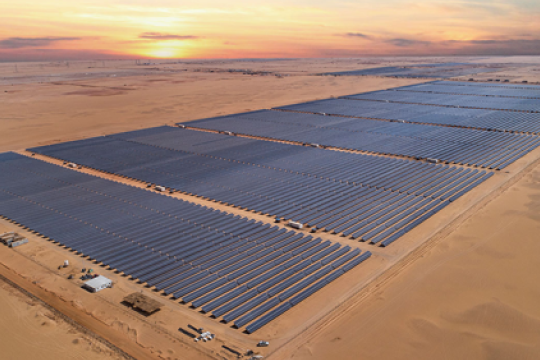
Norway’s Scatec Solar signed a 25-year power purchasing agreement with the Electricity Ministry to supply energy from six solar power plants with a combined production capacity of 400 MW, reNEWS reports. Scatec will provide equity of USD 50-70 mn for the USD 450 mn project. Unnamed local developers and KLP Norfund Investments are also expected to contribute equity, while a consortium of banks led by European Bank for Reconstruction and Development is expected to provide USD 350 mn. We had reported yesterday that Scatec’s regional director Morten Langsholdt said the company is planning on establishing 40 solar power plants to generate 1800 MW by 2018, and would invest USD 500 mn in solar projects in October.
Related
Layoffs, assembly slowdown in auto industry? The auto industry is apparently going through a spate of layoffs, with 10-15% of employees having been let go from January to April, according to Egyptian Automotive Manufacturing Association head Hassan Suleiman. He tells Al Mal that the job cuts have been primarily targeting sales managers and other mid-level positions, pointing to what he said is a 70% drop car sales. This comes as assemblers are reporting planning to slow assembly line operations, according to sources in the industry. Spare part sales have also been significantly hit, falling 60% this year on the back of a 10% increase in prices, said the deputy head of the Spare Parts Division of the Cairo Chambers of Commerce Shalaby Ghaleb. The move is leading to a proliferation of counterfeit parts, he tells the newspaper.
Related
Mubasher gets financial advisory license, seeks status as nominated advisor for Nilex: The Egyptian Financial Supervisory Authority (EFSA) has granted Mubasher Advisory a license to operate to operate as an independent financial advisor, Daily News Egypt reports. The license allows Mubasher “to produce research reports for securities-brokerage companies, as well as offer financial advisory services to its clients.” Mubasher is also “applying to become a nominated advisor on the Nile Stock Exchange (NILEX), which will qualify us to list SMEs on NILEX,” board member Amr Hussein Elalfy added.
Related
BNP Paribas’ Assiut and West Damietta power conversion loan facility won Euromoney Trade Finance’s Transaction of the Year Award. The USD 470 facility was to finance conversion of Assiut and West Damietta power stations into combined-cycle, the bank says, noting that “loan proceeds will be used to part-finance a commercial contract between EEHC and Orascom Construction / General Electric on EPC+Finance basis.” The MoU for the project was inked at the Egypt Economic Development Conference in March 2015. BNP Paribas was global coordinator and sole underwriter for the transaction, underpinning what a bank official said is “our commitment to support Egypt’s strategic national projects.” The project was one of 150 contestants for the award, which took into consideration “innovation, complexity, replicability and attractiveness of deal terms to the borrower.” Euromoney’s story on the project is here (pdf), while BNP Paribas’ slides summarizing the transaction are here (also in PDF).
Related
EARNINGS WATCH- Faisal Islamic Bank of Egypt has announced a bottom line of EGP 439.8 mn compared to EGP 274.8 mn a year ago, and revenues of EGP 1.61 bn versus EGP 1.30 bn for the same period last year, according to a regulatory filing.
Related
Archaeologists have discovered more than 1,000 statues and 10 sarcophagi in an ancient noble's tomb on the west bank of the Nile River in Luxor, the Associated Press reported. The Antiquities Ministry announced that the discovery is of a tomb built for “a judge during the New Kingdom period, from roughly 1,500 to 1,000 B.C.” It comprises of an open courtyard leading to two halls, one containing four ancient coffins and the other including a chamber that houses six along with another chamber containing statues. The head of the mission expects more statues to be found.
Related
If yesterday was relatively quiet in Egypt as the nation shrugged off its long weekend, the same can’t be said of international news. Among the stories worth reading this morning:
The UK is heading into a snap election on 8 June as Prime Minister Theresa May, “clearly anxious that her thin majority in Parliament would weaken her hand in complicated negotiations on the British exit from the European Union,” the New York Times reports. The BBC takes a deep dive into the topic and suggests that May’s Conservatives “go into the election campaign with a commanding lead in the opinion polls.”
Goldman Sachs shocked Wall Street yesterday with a rare earnings miss, sending US markets into a tizzy after posting “lower-than-expected quarterly profit as gains in investment banking were offset by weak trading revenue,” Reuters reports. Earnings per share rose to USD 5.15 from USD 2.68, but analysts had expected USD 5.31 per share. Analysts apparently beat up on Goldman execs during their results call. The Wall Street Journal has more.
The kinder face of The Donald? US Treasury Secretary sat down with the Financial Times for an exclusive interview yesterday ahead of IMF and World Bank’s spring meetings, making the case that Donald Trump is not about to “rip up the global economic order or launch a new round of currency and trade wars.” The FT says that he instead “laid out an agenda that gives credence to the growing view in Washington that, when it comes to economic policy at least, the Trump administration may be turning out to be a variant of mainstream Republicanism rather than the fire-breathing ‘America First’ populism Mr Trump employed to get elected.”
Read that alongside the FT’s “How a Trump presidency poses big questions for IMF andWorld Bank,” which suggests that IMF folks “have hopes that a USD 12 bn bailout for Egypt, a strategically important country, may help the fund make its broader case to the Trump administration.”
Related


 Egypt Edition
  UAE Edition
  Saudi Edition
  MENA <> India Corridors
  Logistics (MENA)
  Climate (MENA)


 Share Issue