El Sisi arrives in Paris, is expected to negotiate purchase of 12 new Rafale jets: President Abdel Fattah El Sisi met with Dassault Aviation CEO Éric Trappier in Paris yesterday reportedly to discuss the purchase of 12 additional Rafale fighters and two new Gowind corvettes from Dassault, French newspaper La Tribune says. Negotiations for the new equipment reportedly began last year, but were stalled over financing issues, as France “does not wish to grant the same guarantees as two years ago.”
Egypt and France had signed a EUR 5.2 bn agreement in 2015 for 24 Rafale jets, a Fremm naval frigate, and MBDA air-to-air missiles. “In 2015, the French industry had extended loans covering 60% of the cumulative value of arms sales to Egypt (with the remaining 40% paid upfront by Egypt from its national funds). These loans were underwritten by the French government,” defense news and analysis website Quwa notes.
El Sisi also discussed strengthening military ties with French Armed Forces MinisterFlorence Parly, according to a statement. The war against terror and regional security headaches in Libya, Syria, and Iraq also featured in the discussion.
Today, the President is set to meet with his French counterpart Emmanuel Macron, with whom he will sign 17 MoUs, Ittihadiya spokesperson Alaa Youssef told the press, according to Al Ahram. In addition to bilateral ties and cooperation, the two leaders are also expected to delve into a discussion on human rights, Youssef also said, adding that there is “increasing international understanding” of Egypt’s position on the issue. France 24 says Macron — who had previously told rights groups his top priority was supporting Egypt’s anti-terror fight — is “unlikely to want to rattle Sisi too much,” despite pressure from human rights groups, since Egypt is important to French financial interests.
El Sisi briefly addressed the human rights question in an interview with France24yesterday, where he confirmed that members of the Ikhwan are being tried fairly and denied that Egypt holds political prisoners. He said a reconciliation with the group, however, would only be possible if demanded by the public. The interview also addressed ongoing economic reform, as well as regional issues, including the situation in Syria and the rift with Qatar.
You can watch the interview in full here (runtime 26:08). The president sat down for a similar interview with French newspaper Le Figaro (paywall).
Egypt’s exports to France have grown 21% so far this year to about EUR 500 mn according to Trade Minister Tarek Kabil, who is accompanying El Sisi.
Related
M&A WATCH- Middle East Glass Manufacturing has signed a non-binding agreement to divest its 74% stake in Medco Plast for Packing and Packaging Systems. The unnamed bidder is starting due diligence, according to a bourse disclosure.
Related
M&A activity in the MENA utility sector hit USD 845 mn in 2Q2017, up 6x q-o-q, according to the EY Power transactions and trends report covered by CPI Financial. “The Middle East and Africa continue to offer opportunities for investors looking to diversify their portfolio. As low-risk, high-value projects dry up in developed countries, investors are starting to move into higher-risk regions where they can expect less competition and higher returns,” David Lloyd, EY’s Middle East Power and Utilities Transactions Leader, said. Egypt and Saudi Arabia are expected to remain hot spots for investments regardless of the region’s political and economic constraints.
Egypt is attracting investments in solar power with USD 500 mn in funding coming in from the EBRD and an agreement with Scatec Solar to build a 400 MW solar power plant. Lloyd says “with sustained [transaction] activity in conventional generation still subdued, P&U transactions are taking on more unpredictable characteristics. Quarterly reports of transactional activity are dominated by the anticipation of asset sales flowing from privatisation related structuring and market reform combined with a steady undercurrent of smaller renewables and new energy [agreements]. The continuing low interest rate environment and a surplus of global capital against available opportunities provide a favourable environment and outlook for P&U assets.”
Related
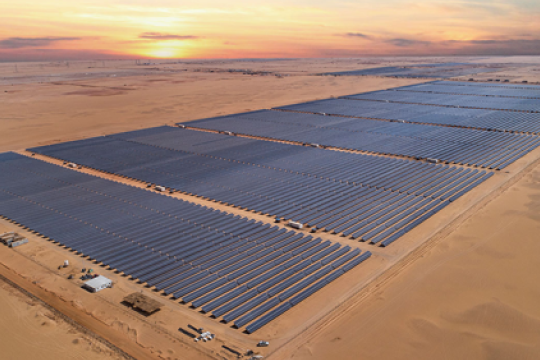
And speaking of investment in solar power: The EBRD has partnered with Green Climate Fund (GCF) and Dutch Development Bank FMO to extend a USD 87 mn syndicated facility to Egypt’s Infinity Solar and Germany’s IB Vogt GmbH to fund two solar power plants, a press release says. The two plants will add a combined 80 MW to the 1.8 GW solar power complex in Benban in Upper Egypt. The EBRD will provide USD 44 mn from its own accounts and USD 14 mn through the GCF, with the FMO contributing USD 29 mn. EBRD is funding 16 other solar power projects under its USD 500 mn renewable energy framework for Egypt. EBRD became the largest investor in Egypt’s renewable energy sector after it approved a USD 73 mn financing package for another three solar power plants in Benban last week.
Related
The name of the game for the food industry: Backward integration and exporting to Africa: The food industry, which has been reeling from lower sales and higher costs of imported production inputs since the float of the EGP, has been forced to invest further up the supply chain, says Prime Holdings’ Omneyah El Hamamy. The most recent evidence of this is cheesemaker Obour Land investing in a EGP 105-115 mn dairy facility to offset the higher costs of imported dairy goods, she tells Al Borsa. Juhayna, meanwhile, had already started diversifying into dairy production. Beyond backward integration, food companies have been eying markets in Africa for exports. These included Domty, which launched a branch and distribution center in Rwanda with plans to expand further into Kenya. Edita, the nation’s largest snackfood maker, has also said that it is eyeing expansion markets after signing an agreement to distribute some of its products in Saudi Arabia.
Related
The European Union has agreed to remove Egyptian grapes from its list of high-risk crops and lower inspection rates to below 20%, Agriculture Products Export Council (APEC) Chairman Ali Issa tells Al Shorouk. The decision, which has yet to be formalized, will pass inspection costs onto the importer and comes at Egypt’s requests to the EU to reassess the quality of its exported produce. The Agriculture Ministry has been developing a strategy to boost the quality of Egyptian exports that appears to be paying dividends. A number of Gulf states lifted earlier this week temporary bans on Egyptian produce including strawberries and peppers.
Related
The central bank will set up a new unit for consumer protection to handle complaints from folks who transact with the banking system, Al Mal reports. The details of the unit and its scope of work are yet to be announced, Sub-Governor for Risk Management and Banking Supervision Tarek El Kholy said. He added that, with only a third of adults having bank accounts in Egypt, the central bank remains committed to promote financial inclusion.
Related
Banque Misr has opened a representative office in Moscow “to facilitate Egyptian investment in Russia,” Chairman Mohamed El Etreby tells Reuters. The bank is looking to open branches and set up a chain of ATMs in major Russian cities to meet demand from the crowds of Egyptian football fans that will visit the country for the World Cup next summer.
Related
Our wheat import policies are becoming schizophrenic: Supply Minister Ali El Moselhy announced that the two Romanian and French wheat cargoes that were held for allegedly containing poppy seeds have been released and will be added to strategic stocks, Reuters reports. The decision, which came as President Abdel Fattah El Sisi sits down with French President Emmanuel Macron, is the latest twist in a mosalsal eerily reminiscent of last year’s ergot flip-flop. We had noted on Sunday reports that the state’s wheat buyer, the General Authority for Supply Commodities (GASC), had taken an “informal decision” to suspend imports of French wheat as a result of the shipment. GASC then denied on Monday it had made any such decision, according to Ahram Gate. Last week, El Moselhy had sat down with France’s ambassador to Cairo Stéphane Romatet on Wednesday, during which the ambassador said his country is keen to continue its participation in Egypt’s wheat tenders. Traders had been accusing Egypt’s wheat inspectors with deliberately holding up wheat shipments out of pettiness for losing their travel privileges under the old wheat inspection system, something inspectors deny. It doesn’t take Freud to see the whole system still needs some fine tuning, if not some Prozac.
On a related note, El Moselhy noted that Egypt has built wheat reserves sufficient to last another four months and sugar reserves for another five and half months.
Separately, El Moselhy also announced that newborns will not be added to supply subsidy rolls before January. The Supply Ministry is expected to complete purging the rolls from subsidy fraud and inconsistencies by January, and only then can the system afford to add newborns, he added according to Youm7.
Related
Egypt, US, Israel to discuss QIZ program next month: Egypt will push to reduce the mandatory Israeli content in goods exported to the US under the Qualified Industrial Zones (QIZ) program to 8% instead of the current 10% during a meeting with US and Israeli officials next month, head of the Trade and Industry Ministry’s QIZ unit Ashraf El Rabie said, Al Mal reports. The ministry also sent a joint letter with Israel appealing to Washington to resolve Egypt’s “crisis” with Disneyland, which banned imports from 28 Egyptian textile manufacturers earlier this year over concerns about labor conditions in Egypt, according to Rabie. Trade and Industry Minister Tarek Kabil had been lobbying since April to bring down the Israeli content quota and to resolve the issue with Disneyland.
Rabie also called on Egyptian businesses to take greater advantage of the QIZ agreement and put aside their personal feelings about Israel, the newspaper reports. As we noted earlier this week, the three countries are currently in talks to expand the program to include tech companies, since ready-made garments and food products account for the lion’s share of industries benefiting from the agreement.
Related
Egypt’s former lobbyist in DC is being investigated, but it seems we’re in the clear: Washington lobbyist Tony Podesta and the Podesta Group are now the subjects of a federal investigation led by Special Counsel Robert Mueller, sources told NBC News. “The sources said the investigation into Podesta and his company began as more of a fact-finding mission about the [European Centre for a Modern Ukraine] and Manafort's role in the campaign, but has now morphed into a criminal inquiry into whether the firm violated the Foreign Agents Registration Act, known as FARA.” The Podesta Group was lobbying for the Egyptian government in Washington from 2007 until 2012.
Related
Mutual fund giant Fidelity Investment is combating a [redacted] harassment problem of its own, Sarah Krouse and Kirsten Grind write for The Wall Street Journal. “The issue of workplace conduct has been simmering within Fidelity’s stockpicking unit in particular for years. A 2015 internal report warned of cultural problems particularly adverse for women, according to interviews with more than a dozen former Fidelity analysts and portfolio managers.
Related
Other international stories worth a quick look this morning:
- General Electric’s “deteriorating outlook” sent its stock price spiraling to itslowest level in six years yesterday,Bloomberg reports. The share price began to tumble when “banks from RBC Capital Markets to UBS Group AG” lowered their valuations for GE after CEO John Flannery announced a cut in the company’s projected revenues for 2017.
- European and German officials raided the offices of Volkswagen and Daimler on Monday as part of an investigation into alleged collusion, Reuters reports. BMW’s offices in Munich were also searched.
Related


 Egypt Edition
  MENA+ Edition
  UAE Edition
  Saudi Edition
  MENA <> India Corridors
  Logistics (MENA)
  Climate (MENA)


 Share Issue