Urban consumer price inflation dropped to 30.8% in October from 31.6% in September on an annual basis. EFG Hermes economist Mohamed Abu Basha explains that, “on a monthly basis, inflation was up 1.1%, largely due to i) 7% M-o-M increase in communication costs, which followed the increase of pre-paid mobile bills; and ii) 20% M-o-M increase in education prices at the start of the new school year. Excluding these two, one-off items, monthly inflation would have been largely flat, with the rest of the constituents of the consumer basket showing very minor price increases in October. Food inflation was up only 0.2% M-o-M, the lowest since January 2016… [EFG Hermes] forecasts an accelerated pace of deceleration starting November’s readings as the base effect of last year’s sharp inflationary pressures sets in; we forecast annual headline inflation at 25% in November and 22-23% in December.” Core also inflation fell to 30.53% in October from 33.26%.
Related
Standard & Poor’s raised Egypt’s outlook to Positive from Stable on the back of rising FX reserves and strengthening economic growth, according to a statement from the S&P (paywall) on Friday. The positive outlook reflects a "potential upgrade over next year" if Egypt continues to carry outs its reforms to support both investment and growth. The S&P expects political stability in Egypt to continue under President Abdel Fattah El Sisi, with the rating agency adding that it does not foresee significant policy changes in the run-up to elections in early 2018. The S&P maintained Egypt’s long-term credit rating at ‘B-', “reflecting wide fiscal and external deficits, high public debt, and low income levels.” "[The upgrade] will contribute in attracting more foreign investment to the country, and reduce the cost of financing to both the state and institutions, as well as the private sector," Finance Minister Amr El Garhy said in a statement following the announcement of the upgrade.
Related
IMF reaches agreement with Egypt to disburse USD 2 bn: The S&P’s announcement came just hours after the IMF announced that it had reached a staff level agreement with the government on disbursing the USD 2 bn tranche of its USD 12 bn Extended Fund Facility. “Egypt’s economy continues to perform strongly, and reforms that have already been implemented are beginning to pay off in terms of macroeconomic stabilization and the return of confidence,” the IMF said in a statement. The agreement reaffirmed the government’s commitment to maintaining the reform agenda. The disbursement, which will still need to be ratified by the IMF’s board, will bring the amount Egypt has received from the IMF under the EEF facility to USD 6 bn, according to Reuters. The announcement from the IMF follows a second review of progress on the reform measures by an IMF team which concluded on Thursday with a visit to the Suez Canal Economic Zone, Vice Minister of Finance Ahmed Kouchouk said, according to Al Masry Al Youm.
Finance Minister Amr El Garhy said last night on a talk show appearance that the USD 2 bn should be disbursed in December.
Related
Fuel subsidy costs rose 68% y-o-y to EGP 23.5 bn in 1Q2017-18, up from EGP 14 bn in the same quarter of the previous fiscal year, Oil Minister Tarek El Molla told reporters yesterday, Reuters reports. The minister reaffirmed that the government would not raise fuel subsidies again during this fiscal year, but said gasoline subsidies will be lifted altogether within five to ten years; some form of subsidy will remain in place for diesel fuel and gas cylinders, according to Ahram Online. The partial lifting of fuel subsidies since November 2016 has trimmed EGP 4 bn off the state’s expenditures this year, El Molla says. As we noted previously, the government is projecting that spending on fuel subsidies this fiscal year will record EGP 110 bn.
Egypt plans to completely halt importing LNG by the end of 2018, particularly as domestic production will be given a further boost once the Zohr field comes online, El Molla said, Ahram Gate reports. The imports will continue through 1H2018 as Egypt is tied to contracts with LNG importers, according to the minister. Ending imports comes as Egypt plans to turn into a regional energy hub by 2018.
El Molla also confirmed that the government is planning to repay another portion of its arrears to international oil companies before the end of December, according to Youm7. Arrears to IOC had dropped to USD 2.3 bn in September.
Separately, El Molla announced that the government is in talks to import more crude from Iraq, buying as much as 24 mn bbl per year at a rate of 2 mn bbl per month, up from 12 mn bbl per year under the current contract. The new agreement is expected to be signed in January 2018.
Related
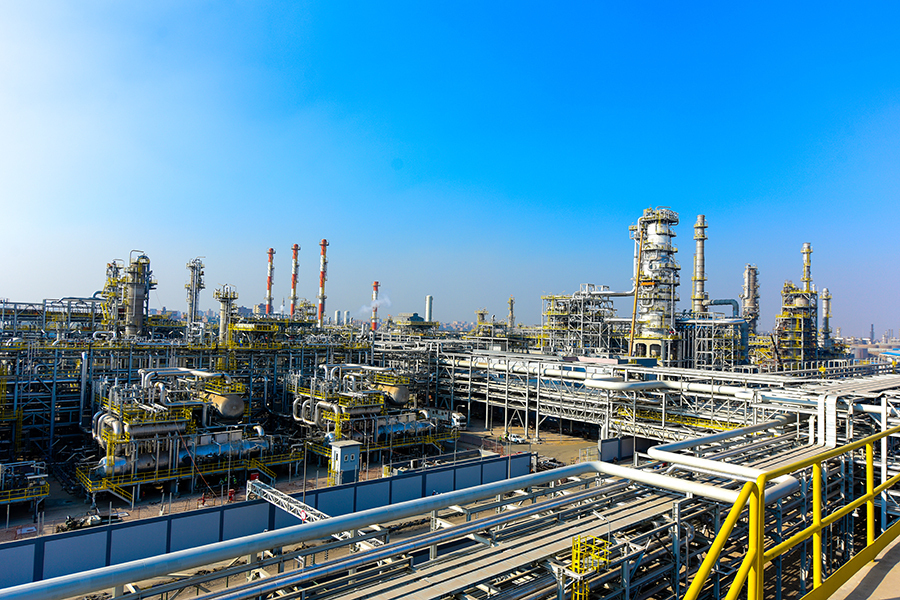
In other energy news, the Egyptian Refining Company (ERC) is expected to begin operations in September 2018, said Ahmed Heikal, chairman of Qalaa Holdings, which has led the development of the megaproject and which holds a 19% stake in the facility. The USD 3.7 bn plant in Mastorod, which hopes to save the government some USD 300 mn in costs associated with fuel imports each year, will be completed in June after a number of delays. Capacity utilization is expected to hit 98% by the end of 2018, Heikal tells Bloomberg. The new plant will satisfy about 14 percent of Egypt’s annual need for liquid oil products, he added.
Related
Sawiris: Please, sir. May I have a bank? Naguib Sawiris has again made it clear that he would really like to open a bank if the authorities would only allow it. “If the Governor of the Central Bank of Egypt gives me a license for a bank, I’ll open it tomorrow,” he reportedly said at the World Youth Forum last week, according to Forbes Middle East. He added that he had tried to get a license in the past but was rejected. He says his main motivation for starting one is to channel funding to entrepreneurs in Egypt, which he says have lacked access to capital from other banks.
Related
M&A WATCH- Global Telecom Holding (GTH) has appointed Pharos Holding as an independent financial advisor to evaluate the mandatory tender offer presented by Veon Holdings to acquire the company. Veon, which already owns 57.7% of GTH, submitted an offer to acquire GTH shares at EGP 7.90 per share last week.
Related
IPO WATCH- Trading on Dice Sport and Casual Wear shares will begin on Tuesday 14 November, with the opening price per share set at EGP 22.60, Al Borsa reports. Dice had announced last week that its domestic offering was 5.96x oversubscribed, while its institutional offering was 3.1x oversubscribed.
Separately, Qalaa Holdings announced on Thursday it has sold its entire 27% stake in Dice for around EGP 300 mn, according to Al Mal. EFG Hermes was the sole global coordinator and bookrunner for the offering and Matouk Bassiouny is local counsel.
Related
The EGX has completed technical tests of a platform which would allow short-selling on the bourse, EGX Chairman Mohamed Farid said, according to Al Masry Al Youm. The move is part of several new financial tools and instruments the exchange plans to launch in the near future. Farid also briefly spoke of plans to introduce a platform futures trading on the bourse in an interview on Bloomberg TV (watch, runtime 1:47).
Related
State-owned Al Ahram published what it says is the current draft of the Universal Healthcare Act on Saturday. From what we can see, the act retains much of the key features first announced by the health and finance ministries back in March, including the formation of three regulators: the Social Health Insurance Authority will be charged with funding the new healthcare system; the Healthcare Authority, which will be in charge of managing healthcare services provided by the system; and a quality-control regulator.
The bill also sets premiums for employers of 4% of each employee’s monthly salary, and it is not clear whether employers who provide private healthcare plans will be forced to participate.
As for the private sector: The bill allows the private sector to provide health care under the system, but those participating will be obliged to offer prices set out by the Social Healthcare Insurance Authority. There appears to be no provisions in the bill which sets a price caps for private sector players not involved in the system. The Health Ministry had been insisting on implementing price caps for the healthcare sector, and will begin drafting a price list for services in early 2018.
Debate on the bill at the divided committee is expected to be contentious. Rep. Haitham Al Hariri, who is part of the populist-leaning 25-30 Coalition, was particularly critical of the government for not guaranteeing that it will not privatize public healthcare. He also spoke out against the state not covering retired pensioners and children under the age of 18 (breadwinners are obliged to pay a premium for their children). Other committee members, including Rep. Abdel Hamid El Sheikh, say that the premiums are too high. The most common criticism, however, appears to be the timeline, as the government plans to fully implement the system by 2032. A draft of the bill appears to have leaked in the domestic press over the weekend, the highlights of which we cover in the Speed Round.
Related
Brexit is responsible for the continuing flight ban from the UK to Sharm El Sheikh, Gerald Lawless, chairman of the World Travel and Tourism Council, told a conference in London, Simon Calder writes for The Independent. Lawless says former Prime Minister David Cameron was “about to end the ban — but his resignation after the EU referendum put paid to the plan” and The Independent got a separate confirmation of this story from a senior travel industry source. Tourism Minister Yehia Rashed says the timing now is “perfect” for British tourists to return to Sharm El Sheikh.
The Tourism Ministry is focused on promoting “alternative” destinations including Marsa Alam and Hurghada as Egypt anticipates the travel ban on Sharm El Sheikh remaining in place for the foreseeable future, Rashed tells The Telegraph. The North Coast is also among the destinations being promoted among British tourists. The minister said that the government has tightened security in all tourist destinations, not just Sharm El Sheikh, and that tourists are safe across the entire country. “I would definitely address the British authorities to look into the [flight ban] decision because it is no longer valid,” Rashed tells the newspaper. “People are in Sharm, hundreds of thousands and [mns], so it’s about time to revisit the decision.”
Separately, travel company TUI announced it plans on investing in hotel and services projects in Hurghada, Marsa Alam, and Sharm El Sheikh, Al Shorouk reports. Some of the projects are expected to be completed next year, TUI representatives told Rashed during a meeting in London on Thursday. No further details were provided on the nature of the projects or the expected investment value.
Related
“I am against war,” President Abdel Fattah El Sisi says after speculation that the Gulf region could be on the cusp of an armed confrontation with Iran and its Lebanese proxy Hezbollah, Ahmed Feteha writes for Bloomberg, reiterating remarks we carried on Thursday. “Our point of view when it comes to new troubles with either Iran or Hezbollah or any other issue is that we have to deal with great care so as not to add to the challenges and troubles of the region … We call for not increasing tensions in the region, but not at the expense of Arab and Gulf national security,” El Sisi said, calling on Iran not to meddle in Arab security. El Sisi also reiterated his support for and confidence in Saudi Arabia’s leadership.
El Sisi also said he wants to find those who are guilty for the death of Giulio Regeni, ANSA reports, adding that he believes the murder was an attempt to derail Italian investments in Egypt. “We are working in a very transparent way with the Italian authorities,” he said.
...US Secretary of State Rex Tillerson echoed El Sisi’s statements on Lebanon on Friday, calling on “all parties both within Lebanon and outside” to back off from actions that could threaten that country’s stability. Senior administration officials said that the call was directed at Saudi Arabia as well as at Iran and Hezbollah, according to the Washington Post. The statements come amid heightened tensions between Saudi Arabia and Lebanon over Hezbollah, which saw Lebanese Prime Minister Saad El Hariri resign in Riyadh. The resignation comes amid speculation by his staff and other in the Lebanese government that he is being held against his will and was forced by the Saudi government, Reuters reports. Lebanon’s President Michel Aoun called for Saudi Arabia to explain why El Hariri is allegedly being prevented from leaving Riyadh, the FT reports.
Related


 Egypt Edition
  MENA+ Edition
  UAE Edition
  Saudi Edition
  MENA <> India Corridors
  Logistics (MENA)
  Climate (MENA)


 Share Issue