Limited cabinet shuffle sees four new ministers appointed: President Abdel Fattah El Sisi swore in four new cabinet ministers yesterday in a very modest shakeup that thankfully left in place the cabinet economic group — the architects of the Ismail government’s economic reform program.
Those joining cabinet are:
- Former Central Bank of Egypt monetary policy sub-governor Rania El Mashat was appointed Tourism Minister, succeeding Yehia Rashed;
- Khaled Badawy was appointed Public Enterprises Minister, succeeding Ashraf El Sharkawy;
- State-statistics agency CAPMAS head Abu Bakr El Gendy succeeds Hesham El Sherif as Local Development Minister;
- Dean of Cairo Conservatory Inas Abdel Daim is now the Culture Minister, succeeding Helmy El Namnam.
Also announced with the shuffle was the appointment of Assem El Gazzar as Deputy Housing Minister and Tarek Tawfik as Deputy Health Minister. The appointments were speedily approved by the House of Representatives, but the decision came straight from Ittihadiya, according to House spokesperson Salah Hassaballah.
Prime Minister Sherif Ismail remains in office, with sources confirming that he will continue to lead the government for the time being. Housing Minister Mostafa Madbouly will continue to serve as interim PM while Ismail recovers from surgery.
Please correct us if we are mistaken, but by our count, the current cabinet has the largest representation of women in Egypt’s history. The story is making international headlines with coverage on Reuters and Bloomberg, among others.
Related
Investors, analysts tell CNBC that all is well with Egypt after reforms: Fresh after a continued wave of positive economic news — most recently being Egypt’s primary budget deficit falling to its lowest level in 10 years in 1H2017-18 and the government raising its growth forecast — investors speaking to CNBC’s Dawn Kissi expressed optimism of continued economic growth and gave their take on where they feel the economy is headed. Fear of an unstable currency appears to have all but faded. “The Egyptian pound has also been stable since the large devaluation in November 2016,” said Anthony Simond, investment manager at Aberdeen Standard Investments, adding the currency was likely to appreciate in the near-term.
“Long-term, Egypt needs better trade relationships and a more stable macro environment,” Peterson Institute for International Economics fellow Jacob Kirkegaard said, citing the need for the country to boost its links with the vast European Union market. He pointed to manufacturing, tourism and logistics as sectors that could make Egypt more competitive and boost foreign investment.
Consumer names staging a comeback? Michael Daoud-Irsaneous, Auerbach Grayson’s VP for CEEMEA Sales, says that consumer goods is where investors need to look in 2018: “In 2017, investors basically positioned themselves in the banks as well as direct plays on weaker currency,” he said. “In 2018, the focus is shifting more towards consumer names that were under pricing pressure last year because of inflation, but now inflation is coming off.”
The biggest fear appears to be the election and the possibility of political instability or (worse) backsliding on the Ismail government’s economic reform agenda to score political points. “While we expect the incumbent President Sisi to extend his term in office, there could be some security concerns in the run up to the election, while also the government may loosen its policy in order to boost its popularity,” Simond added.
A little bit of (unsolicited) advice from Enterprise: We’ve been asked on several occasions lately to come in and speak with senior management at major Egyptian and multinational companies about our outlook on 2018. It’s been rather fun. On the issue of the 2018 presidential elections: The president will run. The president will win. We will be excoriated in the international press throughout the process. And, as usual, populist (read: Egyptian Socialist) murmurings will be made. There will be a return to the status quo antebellum after the poll is done and the swearing-in ceremony held. And this is still the best time in a generation to invest in Egypt if your horizon is medium-term or longer.
Related
IPO WATCH- The National Investment Bank could list as many as 9-11 of its holdings on the EGX, informed sources tell Al Mal. The government committee formed to restructure the bank last May is looking into the bank’s assets and how best to make use of them, Planning Minister Hala El Said told reporters on Saturday, Al Borsa reports. El Said did not disclose any further details, and we’re not exactly certain this qualifies as “news”: One of the reasons for being of NIB subsidiary NI Capital was to look at IPO options within the government’s portfolio, many of which would naturally fall under the NIB itself.
Related
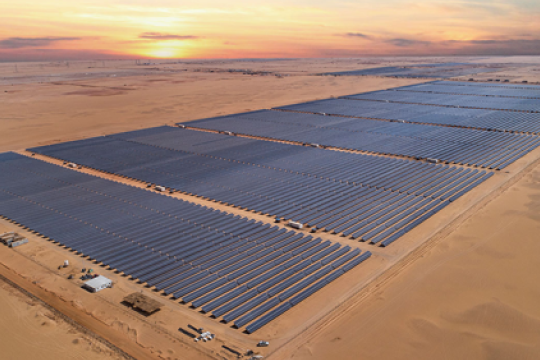
INVESTMENT WATCH- UAE clean energy firm Masdar is eyeing opportunities in “the burgeoning Egyptian wind sector,” CEO Mohamed Al Ramahi tells the National in an exclusive. The company is looking at a collaboration between Egyptian companies and Japan’s Marubeni to develop about 800 MW of wind projects across the country. “Basically we will put our portfolio together and develop bigger projects in Egypt,” said Al Ramahi. He did not name specific projects, but as we noted back in October, the New and Renewable Energy Authority (NREA) was shopping Masdar the rights to develop a EUR 400 mn windfarm under a build-own-operate framework. The move is part of Masdar’s plan to invest AED 4 bn (USD 1 bn) over the next few years in energy projects globally, including in including Argentina, Colombia, India and China, added Al Ramahi.
Related
Meanwhile, negotiations between Siemens and the Electricity Ministry over a 2 GW wind farm have again come to a grinding halt after two months of talks failed to move the project forward, sources close to the matter tell Al Borsa. The project had been put on hold back in May pending further negotiations with Siemens to lower the feed-in tariff (FiT) to around USD 0.04 per kilowatt from a current EUR 0.053 (USD 0.0593), which the company has refused to do, insisting that the tariff should be raised instead. The Electricity Ministry is now considering one of three viable options: Bringing the wind farm’s capacity down to 200 MW from 2 GW and reducing the FiT to match that agreed on with the Toyota consortium for the 250 MW Gulf of Suez wind farm project; postponing the project for now; or canceling it altogether, which is highly unlikely, the sources said.
Related
INVESTMENT WATCH- Saudi Arabia’s Savola Group is planning to increase its investments in Egypt over the coming period to keep up with rising demand for its products, Group CEO Bader Hamad Al Aujan tells Al Shorouk. The company, which says it has about EGP 28 bn in investments in Egypt, will add more production lines and upgrade existing facilities to boost production, Al Aujan adds, without disclosing any details on cost or specific products. Savola’s decision came after a meeting with Egypt’s Supply Ministry, which is looking to fill a gap in the oil and sugar industries, according to Al Aujan.
Related
A number of Egyptian banks are looking to tweak their capital structures to comply with Basel III regulations. Banque Misr, the National Bank of Egypt (NBE), and the Egyptian Arab Land Bank are among a number of institutions feeling pressured by new capital adequacy requirements, especially in light of the November 2016 EGP float. Banque Misr is looking to exit 50% of its investments over the coming three years, including its stake in Incolease and Banque du Misr Amman, while the NBE plans to auction off a significant amount of land in 1H2018, in addition to divesting other smaller, non-core investments. The Egyptian Arab Land Bank is also planning to offload EGP 3 bn-worth of land over the coming year and a half to allocate the additional liquidity to meeting Basel III requirements, as the central bank had advised in 2016.
The struggle is not as profound for international banks operating in Egypt or those with EGX listings, Pharos Holding’s Head of Research Radwa El Swaify tells Al Borsa, explaining that the CBE had instructed state-owned and smaller, mid-cap banks back in 2016 to gradually increase capital by 0.6% a year to reach a ratio of 12.5% by 2019.
Related
We’re coming close to an announcement of El Sisi’s presidential reelection campaign: President Abdel Fattah El Sisi will hold a two-day state-of-the-nation conference from 17-19 January at which he is expected to outline his achievements during his first four-year term in office, according to a statement from Ittihadiya. The conference will also include meetings with representatives from civil society groups and organizations, and El Sisi will take questions from the public through the “Ask the President” initiative. El Sisi has said he would gauge the public’s reaction to this conference before announcing his intention to run for a second term. The president has already garnered endorsements from over 500 MPs in the House of Representatives. As we noted yesterday, human rights lawyer Khaled Ali, former Armed Forces Chief of Staff Sami Anan, and the curse of the Zamalek Football Club, Mortada Mansour, have announced that they will run for office. Former MP and opposition figure Mohamed Anwar Al Sadat will announce today whether he will enter the race.
Related
The Administrative Control Authority (ACA) has arrested Menoufia Governor Hisham Abdel Basset on charges of corruption and graft. According to a statement by the ACA widely picked up by the local press, Abdel Basset had been arrested for allegedly selling state land to two businessmen who were also detained. The investigation had turned up evidence, including wiretaps, of Abdel Basset engaged in the sale with the two businessmen, sources close to the matter said. The arrest was reportedly made merely hours prior to the governor’s scheduled meeting with President Abdel Fattah El Sisi, who was visiting Menoufia to inaugurate development projects there, AMAY reports. Chinese newswire Xinhua is saying the arrest comes as part of a recent and widespread anti-corruption campaign waged by the state ahead of the 2018 elections, which included the arrest of the Deputy Governor of Alexandria late last year.
Related
The Consumer Protection Agency (CPA) has been investigating Lactalis-Halawa, the domestic partner of French dairy group Lactalis, for three weeks amid allegations it has sold contaminated dairy products, CPA head Atef Yacoub said, Al Mal reports. According to Yacoub, the investigation is limited to products that were manufactured using dairy from a specific farm and that went rotten when boiled. The investigation is also not connected to a separate issue Lactalis is facing over salmonella contamination in its baby milk products. The CPA reached an agreement with Lactalis-Halawa to announce that it will recall the faulty products and pinpoint the problem to ensure it is resolved.
Related
Great MbS Purge looks to expand beyond Saudi: Saudi Arabia’s public prosecutor will pursue extradition of corruption suspects living abroad as part of the Great Purge of Crown Prince Mohamed Bin Salman. Evidence is being collected against “fugitives” ahead of indictments against them and requests that foreign governments return them to the kingdom, Prosecutor Saud Al Muajab said, according to Reuters. Meanwhile, Kingdom Holdings Chairman Alwaleed bin Talaal, the most high profile of the princes nabbed, is reportedly in settlement talks with Saudi authorities after a two-month imprisonment, CNBC reports. The cash-for-freedom program (known in some parts of the world as “extortion” given there is no “trial” preceding the payments) hopes to “retrieve” some USD 100 bn.
Related
CORRECTION- Emaar’s contract with Orascom Construction Industries (OCI) for the construction of the Marassi marina basin is worth EGP 800 mn, and not EGP 800 bn as we mistakenly wrote in Thursday, 11 January’s issue. We apologize for the mixup. The entry has been corrected on our website. H/t Mounir S.
Related


 Egypt Edition
  UAE Edition
  Saudi Edition
  MENA <> India Corridors
  Logistics (MENA)
  Climate (MENA)


 Share Issue