Annual headline inflation accelerated for the first time in almost a year to 14.4% in June, up from a low of 11.4% in May, according to data from CAPMAS released by the central bank yesterday. Monthly headline inflation rose to 3.5%, up from 0.2% in May. Meanwhile, annual core inflation — the CBE’s preferred gauge, which strips away volatile items such as food — fell to 10.9% in June, compared to 11.1% in May. Inflation in May had cooled to its lowest level in two years, but recent increases to the cost of fuel and power as well as transportation had widely been expected to push inflation up slightly during the summer months.
The spike, however, was a little too much, too soon, various analysts tell Reuters. “We had expected the 3.5% m-om increase in CPI to hit the July numbers, rather than June, which means that the spike in cost had reflected on prices faster than estimated,” said Pharos’ Head of Research Radwa El Swaify. “Consequently, we expect July monthly inflation to hit 2.5-3.5%, and annual inflation to score 14.5-15.0%, but level off gradually to 13-13.5% by December 2018.”
What does this mean for interest rates? Expectations are for the central bank to maintain key overnight deposit and lending rates until the end of the year, El Swaify and Naeem Brokerages’ Alan Sandeep tell the newswire. The central bank’s Monetary Policy Committee (MPC) had kept overnight deposit and lending rates unchanged at 16.75% and 17.75%, respectively, when it met last month, describing the move as a necessary measure to counter the expected rise in inflation. The CBE had said then that it sees inflation falling to single digits once the “temporary effect of supply shock dissipates.” The MPC next meets on Thursday, 16 August to decide on interest rates. Bloomberg also has the story.
Related
FinMin calls off bond sale, says offer prices were too expensive: The Finance Ministry decided yesterday to cancel two local bond offerings worth a combined EGP 3.5 bnwith three- and eight-year maturities after investors and banks asked for returns as high as 18.5%, Reuters’ Arabic service reports. “The prices offered were not adequate,” the Finance Ministry’s Khaled Abdel Rahman told the newswire. He notes that the government is hoping to see average yields on government borrowing instruments drop to an average 14% in FY2018-19 from highs of 18.5% in the fiscal year just ended. The move comes as the Finance Ministry looks to phase out short and medium term borrowing in favor of less costly, long-term borrowing.
Related
Orange Egypt’s capital increase was the largest in MENA in 2Q2018, M&A activity reached eight-year high: Orange Egypt’s USD 866 mn capital increase was the MENA region’s largest equity capital markets transaction in 1H2018, according to data released yesterday by Thomson Reuters. Total M&A transactions in the region reached an eight-year high during the quarter, growing by 74% y-o-y to USD 33.9 bn, driven largely by energy and power projects, which accounted for 32.8% of total M&As for the quarter. Transactions in the financial sector were the second-largest component with a 30.2% share.
Meanwhile, our friends at EFG Hermes were ranked the region’s top investment bank in terms of equity capital market underwriting fees, with a 24.4% market share. JP Morgan and Goldman Sachs followed in second and third place, respectively.
Debt capital market activity in the region slowed by 2% y-o-y in 1H2018 but remains at its second-highest level ever. Qatar had the largest share of debt issuances with 28.5% of the region’s total, followed by Saudi Arabia with 21.8%. Shariah-compliant transactions were down 44% yo-y in the second quarter of the year to USD 19.3 bn.
Related
IPO WATCH- Sarwa Capital is planning to sell up to 30% of its shares on the EGX sometime in 4Q2018, sources reportedly told Al Mal on Tuesday. Our friends at Sarwa have reportedly hired Beltone Financial to lead the transaction, the newspaper reports, suggesting the offering will have a substantial international component. A financial adviser will be hired sometime this week to begin the fair value report, and Matouk Bassiouny is reportedly on board as legal counsel. Proceeds from the IPO are likely to go towards funding growth, the newspaper said, as the firm looks to launch insurance and factoring operations.
Related
Our friends at Pharos have a pipeline of 15 transactions worth a combined EGP 7 bn on which they’re advising, Pharos’ head of investment banking Noha El Ghazaly said in a wide-ranging interview with Amwal Al Ghad. Most of these are M&A transactions, while three are IPOs or strategic stake sales, El Ghazaly added. The transactions run the gamut from retail and food to health and education, she noted.
Eying privatization program: El Gazaly hopes Pharos, which now has a presence in the GCC through Dubai-based Pharos Gulf, aims to take a share of the state privatization program, which she feels will have a positive impact on financial markets here. Earlier reports had indicated that Pharos was bidding to advise on the 4% stake sale of Eastern Tobacco Company, which is widely expected to pilot the program.
Related
HC Securities & Investment has three M&As worth a combined EGP 2 bn in its pipeline for execution this year, the firm’s head of investment banking, Mahmoud Selim, tells Amwal Al Ghad. HC is also advising on an IPO in the manufacturing sector that Selim says will be worth EGP 800 mn. The firm is also a financial adviser on three transactions in the GCC and Jordan worth a combined USD 200 mn.
Related
LEGISLATION WATCH- A revised Banking Act won’t be ready for public discussion before 4Q2018: The central bank will not be ready to present its long-planned overhaul of the bill to the Madbouly Cabinet until 4Q2018, a source familiar with the matter said. CBE Governor Tarek Amer had said back in May that the law would be ready to present to the government by 1 June. The delay comes as the CBE is still engaged in consultations with international institutions to help shape the law, according to reports in the domestic press. The final draft of the act will be much more expansive than the first draft of the law that came out last year and caused a stir in the banking sector. Industry players objected at the time to term limits for bank MDs, a proposed tithe on industry profits to endow an industry development fund, and provisions that would give the central bank more power to get involved in each bank’s daily affairs.
Related
LEGISLATION WATCH- The House of Representatives’ Budget Committee approved on Tuesday legislation establishing Egypt’s EGP 200 bn sovereign wealth fund, Al Mal reports. The committee will submit its report on the legislation to the House general assembly next week. Planning Minister Hala El Saeedhad said last month that the fund would launch at the end the year, with a roadshow to draw in private investment set to take off in 1H2019. The private sector will be allowed to buy stakes of over 50% in sub-funds and affiliated companies, she had also said.
Meanwhile, President Abdel Fattah El Sisi issued an order outlining the roles and responsibilities of his adviser for national projects, former Prime Minister Sherif Ismail, AMAY reports. Under the new directive, which was published on the Official Gazette, Ismail’s roles include heading up seizure of unlawfully occupied state land, manage development projects in North Sinai, and studying reasons behind failed or underperforming government projects.
Related
Egypt, World Bank ink healthcare loan: Speaking of long-term borrowing, Egypt and the World Bank signed a USD 530 mn loan agreement to support Egypt’s healthcare system on Tuesday, according to a statement from the Madbouly cabinet. The loan will fund a series of ambitious healthcare programs, including the survey and free treatment of Hepatitis C victims, upgrading hospitals in the first phase of the roll out of the new universal healthcare system, and some help with family planning initiatives. The World Bank had pledged the funding earlier this month.
This comes as the government is close to closing USD 2 bn in new financing from the World Bank that Egypt requested during an ongoing visit by a WB team, sources told us earlier this week. While nothing official has been released by the government, state-owned Al Ahram has picked up our story, citing their own sources as saying the funding would run through 2022. They added that some USD 1 bn of he funding would be used for Sinai Development.
Meanwhile, Investment Minister Sahar Nasr sat down with the WB team for follow up talks on a USD 500 mn loan request to fund social housing development, according to a ministry statement. Prime Minister Mostafa Madbouly made the request at a meeting on Monday. The local press is also speculating that Nasr is planning further talks with the IMF on additional assistance at the (rather far away) IMF and World Bank spring meetings. It would surprise us if she wasn’t planning to do so — don’t read to much into this last bit.
Related
The Social Solidarity Ministry wants to fine-tune and expand its cash subsidy programs, sources close to the matter said yesterday. The committee drafting the new measures — which brings together the ministers of social solidarity, finance, supply, and military production — recently expressed willingness to expand the scope of the government’s cash subsidy programs to include more segments of society, in addition to increasing the allowance paid out through the Takaful and Karama initiatives, according to the sources. This will be made possible through the ongoing purge of the subsidy rolls, they add. The move comes as part of government efforts to shore up the social safety net as inflation rises and is a key item on the Madbouly Cabinet’s four-year policy program. Other measures included new income tax breaks as well as raises to the wages and pensions of state bureaucrats and military and police personnel. No details were provided on the expected timeline for the new measures.
Related
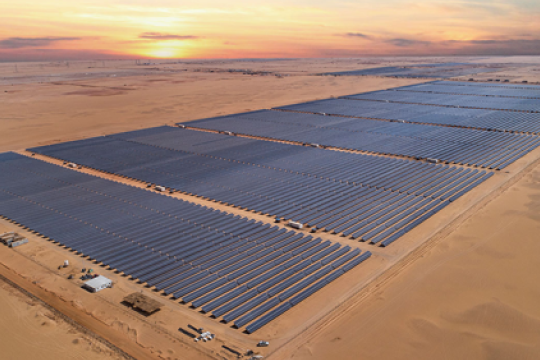
MUST READ for renewable energy folks: IFC, EBRD commitment to renewables in Egypt has attracted investors, funds to the sector -Report: The commitment that lending institutions such as the International Finance Corporation and European Bank for Reconstruction and Development have shown to Egypt’s renewable energy projects has helped attract much needed funds into the sector, according to a report by Arab Petroleum Investments Corporation (APICORP). The report says that a shortage is the reason why “solar projects have been slow to progress in Egypt,” but notes that the pace should pick up with the development of the 1.8 GW solar power complex in Benban, Aswan. APICORP expects international lenders to “continue to support the deployment of renewables in the region as they prioritise green energy in an effort to address climate concerns.” You can read the full report here (pdf).
Related
MOVES- Radisson Hotel Group has appointed Frédéric Feijs (LinkedIn) as its regional director for Africa and Egypt, according to Hospitality Net. Feijs was most recently HNA Hospitality’s Regional General Manager for French Polynesia.
Related


 Egypt Edition
  UAE Edition
  Saudi Edition
  MENA <> India Corridors
  Logistics (MENA)
  Climate (MENA)


 Share Issue