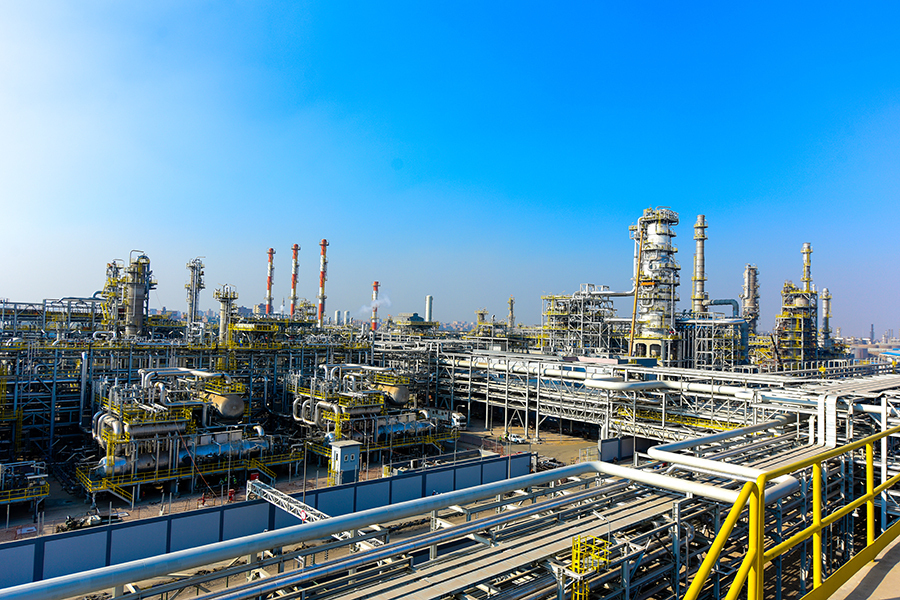
Egypt, Cyprus reach agreement on key gas pipeline: Cairo and Nicosia have reached an agreement to connect the Aphrodite gas field liquefaction plants in Egypt, Cyprus state television CyBC said, according to the Cyprus Mail. The agreement will be inked sometime in the fall, CyBC said, citing diplomatic sources. “The agreement has already been given the green light by the EU and it is being scrutinised for the final touches,” sources added. The pipeline, which is expected to cost between USD 800 mn and USD 1 bn, is a crucial stepping stone towards Egypt’s strategy to become the natural gas export hub for the Eastern Mediterranean as it plans to re-export a portion of the LNG to Europe after satisfying local demand. Egypt is hoping to reach natural gas self-sufficiency before the end of 2018, as more production units from the Zohr gas field come online.
Related
EGX, Oil Ministry officials begin deliberations over setting up natural gas futures exchange: Bourse officials have reportedly started talks with the Oil Ministry to set up a futures exchange for natural gas, banking sources tell Al Mal. Officials met last week to begin discussing their vision for the establishment of energy-oriented futures exchanges, beginning with natural gas, according to the sources, who add that the gas exchange market will be the main platform used for striking gas sale and purchase agreements and determining prices, quantities, and delivery dates. The framework is still in the early drafting stages, the sources said, hinting that we’re still a long way from seeing the market turn into a reality.
Background: The recently-amended Capital Markets Act and its executive regulations included provisions that allow for the establishment of futures exchanges and the introduction of other financial instruments, such as green bonds, sukuk, and margin trading. We had heard in May that Financial Regulatory Authority boss Mohamed Omran had tasked a committee with drafting the rules and regulations that would govern futures exchanges, which are part of a four-year strategyto develop Egypt’s non-banking financial sector. New regulations to govern short-selling are also in the works and expected to be complete by 3Q2018.
Related
LEGISLATION WATCH- Gov’t to allow private sector to own just under 50% of a public-sector holding companies: The Public Enterprises Ministry has finished drafting amendments to the Public Enterprises Act that, if passed, would allow private-sector companies to own stakes of just under 50% in the ministry’s holding companies, according to a copy of the proposed amendments published by Al Mal yesterday. Under the current law, all ministry holding companies must be fully owned by the government. The draft amendments have been sent to the Madbouly Cabinet for review and would only become law after being passed by the House of Representatives and then signed into law by President Abdel Fattah El Sisi.
Is this a prelude to a holding company privatization program? As the government looks set to kick off the state privatization program this fall, the news adds interesting spice to an already much-anticipated program, suggesting the government could widen the scope of its privatization drive to include massive state holding companies.
The amendments also introduce private-sector-friendly board regulations, according to the draft. This would limit government seats on the boards of state holding companies to seven seats at most. It would also set a three-year term limit for the boards.
Related
REGULATION WATCH- Speaking of holding companies, new guidelines would make FRA split regulatory authority over private sector holding companies between GAFI and FRA: The Investment Ministry is reportedly drafting amendments to existing regulations that would transfer jurisdiction over the affairs of some private sector holding companies to the General Authority for Freezone and Investments (GAFI) from the Financial Regulatory Authority (FRA). Under new guidelines, the FRA’s jurisdiction will only extend to holding companies with half or more of their assets invested in the non-banking financial sector, with GAFI assuming regulatory responsibility over the rest, unnamed officials tell Al Mal. The amendments are meant to help the FRA focus its efforts and resources on non-banking financial companies, the officials also said, adding that they expect 70% of all registered holding companies in Egypt to be moved to GAFI’s domain. Expect a significant bureaucratic tussle over this one if the report is true.
Related
Egypt’s foreign debt stood at USD 88.2 bn in 3Q2017-18, up from USD 73.9 bn during the same period last year and up from USD 82.9 bn in December 2017, central bank data showed on Monday (pdf). Despite the 19.3% y-o-y increase, the CBE says the debt-to-GDP ratio is still within safe limits at 36.8%. Debt from international bond issuances rose to USD 12.2 bn in 3Q2017-18, up from USD 8.9 bn in the same period last year, thanks to a USD 4 bn eurobond issuance in February. Total public debt for the period grew EGP 3.5 tn, or 86% of GDP.
CBE data also showed that foreign holdings of Egyptian debt fell in May for the second straight month this year, dropping 17.2% m-o-m to EGP 310.6 bn. We expect this figure to continue to drop for the following month as the CBE continues to record the impact of the emerging markets selloff on Egyptian debt instruments. According to Goldman Sachs the wider EM selloff reached its peak in June. Finance Minister Mohamed Maait said last week that foreign portfolio investors had sold off USD 3-4 bn of Egyptian debt.
On the flipside, debt service costs fell to USD 2.4 bn in 3Q2017-18, down from USD 6.8 bn in December 2017.
This comes as Egypt is expecting to receive around USD 450 mn in new loans from Europe to support the economic reform program, Vice Minister of Finance Ahmed Kouchouk said yesterday, Al Mal reports. We’ll be receiving USD 250 mn from Germany and another USD 200 mn from France, he added, without elaborating. As for the fate of any upcoming eurobond issuance, Maait had told us that the decision will be taken in the fall whether to go ahead with an issuance or seek alternative financing. Turbulence in emerging markets and global political tensions had left any potential issuance to the fate of market conditions.
Egypt will reportedly repay USD 6.3 bn of its foreign debt obligations in 2H2018, includes some USD 850 mn owed to international oil companies, according to previous reports from the newspaper. UAE government reportedly agreed to roll over two deposits at the CBE worth USD 2 bn each, with the CBE working on similar moves from other GCC depositors.
The story is gaining traction in the foreign press, with an Associated Press story now getting traction trying to paint the uptick in debt as a dent in the Sisi administration’s economic reform program.
Related
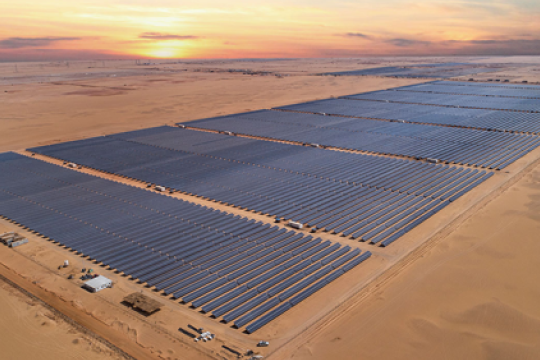
The right kind of debt is a good thing, so we’re going to cheer this: More debt is in the works as World Bank agency plans to increase financing to Egypt’s private sector over the next three years. The World Bank Group’s (WBG) Multilateral Investment Guarantee Agency (MIGA) expects to expand its financing of private sector projects in Egypt over the next three years, Executive Vice President and CEO Keiko Honda told Investment Minister Sahar Nasr in a meeting yesterday. Keiko did not provide details on the size of the funding packages or types of projects the agency would target. MIGA has already provided projects in the Benban solar power complex with some USD 210 mn in funding and extended oil producer Apache around USD 150 mn to support exploration and production activity, according to an Investment Ministry statement.
Nasr also met with International Finance Corporation MEA Vice President Sérgio Pimenta yesterday on the sidelines of the WBG and IMF’s 2018 African Caucus meetings. Pimenta said the IFC, which has pledged USD 2 bn in funding to Egypt’s private sector until 2019, was interested in extending further support to the renewable energy industry. The commitment that lending institutions such as the IFC have shown to Egypt’s renewable energy projects has helped attract much needed funds into the sector.
IMF / World Bank Africa summit issue “Sharm El Sheikh Declaration”: The end of the African Caucus meetings in Sharm El Sheikh yesterday saw officials from the continent issuing the “Sharm El Sheikh declaration” calling for further lending from the World Bank and IMF to support infrastructure development in Africa. They also agreed to increase cooperation in fields including infrastructure development, agriculture, energy, fintech and mobile payments and exports.
For their part, IMF and World Bank officials promised to extend further credit to the continent, according to a statement from the Investment and International Cooperation Ministry. World Bank Vice President of the World Bank for Africa Hafez Ghanem noted that the WB plans to provide USD 18 bn in new financing to African countries in 2018, according to Al Shorouk.
Related
Fitch affirms Egypt’s long-term credit rating at ‘B’ with a positive outlook: Fitch Ratings reaffirmed Egypt’s long-term foreign-currency issuer default rating at ‘B’ and maintained its outlook as positive. The agency said that Egypt’s rating is supported by the implementation of necessary reforms, which have yielded positive results across a range of areas, such as FX reserves rising, inflation levels dropping, and foreign investments picking up. Despite the fiscal deficit and high debt, Fitch sees economic growth accelerating to 5.5% next fiscal year. It notes, however, that “public finances will remain a key weakness of Egypt's credit profile.” Tap or click here for the full report.
Related
EXCLUSIVE- CBE / FinMin committee sets mechanism for selling gov’t bonds on the EGX: A joint central bank-finance ministry committee has decided on a new framework for selling government bonds on the EGX, a government source told Enterprise. This mechanism will allow the select banks and financial institutions who take part in government bond auctions to resell the bonds to companies and private investors on the EGX, the source said. A limit will be set for how many bonds investors can buy, the source noted. The move comes as part of a plan to sell government bonds on the EGX revealed to us exclusively by Finance Minister Maait last month. The committee is currently drafting the policy, said the source, adding that bonds will likely go on sale in the EGX next year.
Related
IPO WATCH- Al-Babtain Power & Telecom taps Premiere Securities to lead IPO: Al-Babtain Power & Telecommunication Co. Egypt reportedly contracted Premiere Securities to lead the company’s planned IPO on the EGX, the company said in a disclosure to Tadawul. Al-Babtain is a subsidiary of Saudi’s Al-Babtain Group, which manufactures power transmission and cellular network broadcast towers. Premiere is expected to finish drawing up plans for the transaction by the beginning of September.
Related


 Egypt Edition
  MENA+ Edition
  UAE Edition
  Saudi Edition
  MENA <> India Corridor
  Logistics (MENA)
  Climate (MENA)


 Share Issue