IIF sees Egypt growth falling to 4% in 2022 unless policymakers go for deeper structural reforms: The Institute of International Finance (IIF) sees growth in Egypt falling to 4% in 2022 from an estimated 5% in the state’s current fiscal year “due to structural bottlenecks and a less favorable global environment, including tighter financial conditions and uncertainty over the global trade system,” it said in a late October country report.
A new reform agenda? To sustain the growth rates of the past two years, policymakers will need to “make the economy more responsive to market forces and empower the private sector … Laws and regulations governing business and investment need to be overhauled and brought in line with best practices in successful emerging economies.” Among the keys: Driving exports, improving the efficiency of land allocation, strengthening competition and public procurement and cutting corruption, the IFF said, adding, “The country needs to create more freedom and space for private-sector initiative, facilitating growth of SMEs.”
No interest rate cuts before 2019: The IIF expects inflation to decline to single digits and the CBE to keep its key interest rates unchanged until it achieves its target of 13% (±3) in 4Q2018. “Once headline inflation declines to below 10% and demand pressures remain contained, the CBE may ease the monetary stance, most likely in 2019,” the report said.
Is US monetary tightening the biggest external risk to Egypt? A “faster-than-expected US monetary tightening … would hit appetite for Egypt’s eurobond issuances,” IIF writes, noting, “External risks have increased in recent months, with a shift to net portfolio capital outflows as global financial conditions have contributed to a pullback from EMs. However, Egypt’s narrowing external and fiscal deficits, falling core inflation, and adequate level of reserves will help the economy cope well with any acceleration in capital outflows.”
Public debt-to-GDP ratio in decline for the first time in a decade: The report highlights that Egypt’s public debt ratio starting to decline for the first time in nearly a decade is definitely a positive sign.It expected the ratio to start declining to “levels consistent with long-term sustainability due to high nominal GDP growth and the authorities’ fiscal consolidation plan” - which includes further reductions in fuel subsidies and more stepping up taxes.
Related
Beltone denies allegations of irregularities in Sarwa IPO: Beltone Financial investment banking chief Sobhy El Sehrawy told Reuters yesterday that the IPO prospectus for structured and consumer finance player Sarwa Capital “contained no irregularities.” His remarks were the firm’s first public statement directly addressing still-hazy allegations of wrongdoing during the IPO. The Financial Regulatory Authority (FRA) last week suspended the investment bank’s IPO unit for six months claiming that irregularities had taken place on the Sarwa IPO, which was managed by Beltone. Sources speaking to the local press had said that the FRA’s investigation had been prompted by complaints from investors and not the drop in Sarwa’s share price on the first day of trading. The FRA suspension came a day after an announcement by Beltone’s parent company, Naguib Sawiris’ Orascom Investment Holding (OIH), of intentions to buy a large stake in Sarwa Capital.
Meanwhile, the rumor mill is still running overtime as the regulator has not yet made the irregularities of which Beltone stands accused.
Related
M&A WATCH- Almarai to launch USD 75 mn bid for Greenland? Saudi dairy product producer Almarai is reportedly looking to acquire Americana Group subsidiary Greenland Group for Food Industries in a transaction worth as much as USD 75 mn, according to a domestic press report citing sources with knowledge of the matter. Almarai has begun due diligence on Greenland. The report claims Greenland had been in the red for seven years but returned to profitability in 2015 and is currently expanding its footprint in Egypt and the region. Almarai had tried back in 2016 to acquire Qalaa Holdings’ Dina Farms’ dairy and fresh milk operation. Almarai owns and operate the Beyti brand in Egypt as part of a joint venture with PepsiCo.
Advisers: Greenland has reportedly hired Sharkawy & Sarhan as its legal adviser, while Baker McKenzie has reportedly been tapped as buyside adviser.
Related
EFG Hermes could land Nigerian investment banking license by early next week: EFG Hermes frontier unit chief Ali Khalpey told Bloomberg that the investment bank is now waiting for regulatory approval and plans to hire five people in Lagos this year. EFG Hermes had announced in July that it had bought Nigerian brokerage and research firm Primera Africa Securities Ltd., which will be rebadged under the EFG brand.
Heading into 2019, EFG Hermes plans to use Nigeria as a regional hub for its operations in Africa. Last year, it obtained a stockbroking license in Kenya. The firm is now focused on consolidating in its African markets as well as recent expansion territories Pakistan and Bangladesh. Khalpey also said the firm remains interested in expansion into Vietnam.
Related
UberEats is accepting cash in Egypt, Saudi Arabia and South Africa as it looks to grow in cash-based economies, Rodrigo Arévalo, head of UberEats in the EMEA region, told Bloomberg as part of a wider-ranging story. Some 94% of Uber’s transactions in Egypt are in cash — compared with 90% through e-payment service iDeal in the Netherlands. The unit plans to triple its EMEA staff to 900 from 300 by next year.
Related
EXCLUSIVE- Gov’t aims to issue green bonds next fiscal year: The Madbouly government is considering its maiden green bond issuance in the coming fiscal year as part of its plan to diversify its base of funding under its still-emerging debt control strategy, a senior government official told Enterprise. Green bonds could make their debut next to other new-to-Egypt instruments including sovereign sukuks, a form of Islamic bond, the official noted, saying the policy framework for green bonds is still on the drafting table.
What’s a green bond? Effectively, a lower-yield form of bond that finances “climate-smart” projects including renewable energy and energy-efficiency projects in emerging markets. The International Finance Corporation and the Financial Regulatory Authority have been discussing since June what guidelines for Egyptian green bonds might look like. You can read more about green bonds here courtesy the IFC, which notes that more than USD 155 bn has been raised via green bonds globally.
Green bonds have not been performing well this year: Green bonds sales fell 18% y-o-y in 3Q2018 amid a decline of interest in the environmental finance market, the Financial Times reports. Issuers sold USD 31.6 bn in 3Q2018 down from USD 38.5 bn in the same period last year. Moody’s had originally forecast that total green bond sales this year would hit USD 250 bn, a considerable increase from last year’s record USD 163 bn total. Moody’s then revised that prediction down to USD 175-200 bn after sales slowed in 2Q2018.
Related
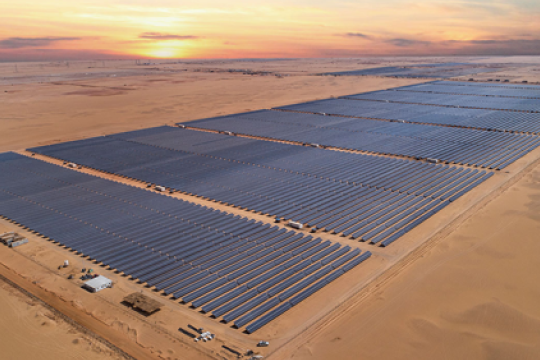
Egypt could attract more than 2x its present investment in solar though 2022 –IRENA boss: Egypt has landed about USD 2 bn in investment in solar energy projects, largely in the world-scale Benban solar park, but could see that figure grow to as high as USD 6 bn by 2022 with a stable policy frameworks and straightforward regulations, said Adnan Z. Amin, the director general of the Abu Dhabi-based International Renewable Energy Agency (IRENA). “Egypt is a very promising market for investments thanks to the political leadership which has adopted an ambitious plan for electricity production from renewable sources, and reduced the reliance on traditional fuel in production plan — a trend that many countries have adopted in order to achieve sustainability,” Amin said.
Related
CBE tells banks to start preparing for ‘Meeza’ national debit card : The central bank has told banks to put in place the technical infrastructure to support a national payments scheme that will roll out by year’s end, an unnamed bank official told Masrawy. The CBE asked banks to ensure that their ATMs and chip-and-pin machines would accept the “Meeza” debit card, the official said. Meeza is the national debit card the central bank is rolling out by year’s end as part of its push on financial inclusion and a cashless society. A CBE official had said that pensioners would be among the first to access state benefits through the cards, which would also be used to electronically deliver payments to civil servants and subsidy recipients.
Related
LEGISLATION WATCH- MPs want pensions on par with those of cabinet members: House Legislation Committee member Rep. Khaled Hanafy is drafting a bill that would grant members of parliament pensions equivalent to those ministers receive, Hanafy tells Al Mal. If passed, MPs would receive pensions ranging between 10-25% of the public sector maximum wage, with payments disbursed on a monthly basis as a “bonus” for their services. Hanafy notes that MPs are required by law to quit day jobs, directorships and other posts to become members of parliament, which means many of them are left without pensions. President Abdel Fattah El Sisi had ratified in July legislation to reduce the pensions of ministers, governors, and their deputies. Under the law, pensions for these positions will be reduced to 25% of their pre-retirement wages, down from an original 80%.
Related
MOVES- Our friend Ahmed Farghal (LinkedIn) has joined Bahaa-Eldin Law Office in cooperation with BonelliErede as a senior associate. The former Sharkawy and Sarhan senior associate has nine years of experience in with a focus on corporate, M&A and capital markets work.
Related


 Egypt Edition
  MENA+ Edition
  UAE Edition
  Saudi Edition
  MENA <> India Corridors
  Logistics (MENA)
  Climate (MENA)


 Share Issue