Get EnterpriseAM daily

Available in your choice of English or Arabic

We’ve secured a whopping EUR 7.4 bn package from the EU

1

What We're Tracking Today

Egypt secures EUR 7.4 bn package from the EU

Good morning, everyone. The big story here at home is the announcement yesterday of an unexpectedly large EUR 7.4 bn assistance and investment package from the European Union that officials say will take Egypt’s relations with the EU “to the level of a strategic and comprehensive partnership.” That’s eurospeak for “We’re now besties.”

The funding includes concessional finance, grants, and new investment. It remains unclear how soon the first tranche of the concessional funding might be unlocked and how much of the package includes money already announced or committed. We’re looking forward to more details in the weeks to come as the measures wend their way through Brussels’ approval process.

^^ We have the full story in the news well, below.

Also this morning: Our friends at EFG Finance are venturing into SME finance, and we’ll be watching closely — and not because they’re our pals. EFG Holding’s launch of what was then known as EFG Hermes Leasing back in 2015 triggered a rush into non-bank financial services by banks and financial services players, who lined up for leasing and factoring licenses while also diversifying into consumer finance (a market pioneered by the folks at Contact).

Most activity in leasing and factoring and other non-bank extensions of corporate credit have focused primarily on big business. We talk constantly about the “missing middle” and worry about where the next generation of big businesses will come from. The answer is simple: They’ll come when the banks and the finance community get serious about providing capital to small and medium-sized businesses that are generally seen by big players as “too risky” or “too expensive” to do business with.

(And, uh, interest rates. Want to see SMEs grow? Offer them affordable finance. Few can afford to take on significant debt when they’re paying credit card interest rates. In this respect, we bluntly disagree with the IMF’s requirement that we take subsidized interest rate programs — for small businesses, climate, women — out of the capable hands of the central bank.)

How is an SME too expensive? Apply the same big-company due diligence screens and procedures (and all of the attendant staff overheads and reviews) to a small business facility, bankers say, and you’ll find that loaning to a tiny company costs too much relative to the NIM the lender will generate.

EFG Finance moving into the market is a signal to other players that banking SMEs could well prove to be a good business. We hope others follow suit. The market may be growing at a torrid pace, as we note in our story this morning (below), but that’s easy to do when the denominator is really, really small.


So, when do we eat? Maghrib prayers are at 6:05pm in the capital city, and you’ll have until 4:33am tomorrow to hydrate and caffeinate ahead of fajr.

The morning’s must read: EnterpriseAM UAE had coffee with Steve Lutes, the US Chamber of Commerce’s vice president for the Middle East, during his recent swing through the Emirates. He talked about where US companies see opportunity (climate, pharma, space), data sovereignty, and why American companies are waking up to the region as a good place to do business. Read the full story here.

WATCH THIS SPACE-

#1- EGAS is expanding to Saudi Arabia. State gas firm EGAS is setting up a new venture in the KSA, dubbed Modern Gas Saudi Arabia, which will be 80% held by units of the state-owned natural gas player, Oil Ministry said in a statement. The Saudi Basira Company will hold a 20% stake in the venture, which looks set to focus on contracting as well as natural gas distribution to industrial, commercial, and residential clients.

#2- Gov’t to give up majority stakes in three real estate players? The Madbouly government reportedly wants to keep no more than 20% of Heliopolis Housing and Development (HHD), Zahraa Maadi Investment & Development (ZMID), and Al Shams Housing and Urbanization by the start of next year, Asharq Business reports, citing an unnamed government official. The government owns a majority stake of the three EGX-listed real estate companies through Holding Company for Construction and Development (HCCD) and other state-owned outfits.

This could potentially bring a whole lot of money into state coffers: HCCD alone owns 72.25% of HHD — which has a total market cap of EGP 14.1 bn currently — in addition to 47.6% of ZMID (current market cap EGP 3.9 bn), and 44.54% of Al Shams (current market cap EGP 1.59 bn).

The caveat: HCCD will not offload another stake in HHD — be it on the EGX to a strategic investor — prior to developing the real estate developer and upping its market cap, the holding company’s Executive Managing Director Hani Soliman told Al Borsa last week.


ICYMI- Missed this week’s Inside Industry? In our weekly vertical exploring all things industry and manufacturing, we looked at why foreign investors — particularly from Turkey — are eyeing fresh investments in Egypt’s spinning, weaving, and readymade garments industry, particularly after the EGP float earlier this month made investments more attractive.You can check out the story here.

THE BIG STORY ABROAD-

It’s another sleepy Monday in the global business press, with geopolitics (Putin just wonreelection, getting six more years in power — he’s now the longest-serving leader since Josef Stalin) and tech (the White House is pushing the Senate to take up without delay a bill that would ban TikTok) taking center stage.

Sign of the Times #1- The US Federal Reserve will have to keep rates high for longer than markets anticipate, according to economists surveyed in the latest Financial Times-Chicago Booth poll. Most respondents think we’ll see a maximum of two cuts this year. When? July or September, they say.

Sign of the TImes #2- So. Much. AI. Anxiety. This time, physical robots take center stage:

Happening today: Super Micro Computer becomes an S&P 500 constituent. The server maker will instantly become the index’s top one-year performer when it does. The Wall Street Journal has the rundown on why. (Hint: Lots to do with the AI revolution.)

*** It’s Blackboard day: We have our weekly look at the business of education in Egypt, from pre-K through the highest reaches of higher ed.

In today’s issue:We take a look at if universities are reconsidering the cost of student exchange programs in the wake of the EGP float.

Escape to Somabay, where the sun-kissed shores await your arrival. Immerse yourself in the warmth of a perfect vacation, starting each day with the radiant embrace of the sun. Unwind, explore, and create unforgettable memories in this paradise by the sea.

2

Economy

EU pledges EUR 7.4 bn aid package for Egypt

EUR 7.4 bn in EU funding: The EU will provide Egypt with a EUR 7.4 bn package of loans, grants, and investments through to 2027, after President Abdel Fattah El Sisi signed a joint strategic and comprehensive partnership with European Commission President Ursula von der Leyen at the Ittihadiya Palace — who was accompanied by the prime ministers of Greece, Italy, Belgium, the chancellor of Austria, and the president of Cyprus — yesterday evening (watch, runtime: 1:03:10).

A paradigm shift: The European officials’ visit to Cairo represents a “very important milestone in the relations between Egypt and the EU,” El Sisi said during a joint presser held after the agreement was signed. The agreement elevates the relationship between the two sides “to the level of a strategic and comprehensive partnership, based on the values of equity and on mutual respect and trust,” according to the joint declaration.

The breakdown of the funding:

  • EUR 5 bn in concessional loans to provide macro-financial assistance, according to a statement (pdf) by the bloc;
  • EUR 1.8 bn of “additional” investments under the Southern Neighborhood Economic and Investment Plan;
  • EUR 600 mn in grants,including EUR 200 mn for migration management.

Almost at USD 20 bn: Finance Minister Mohamed Maait had previously said that thecountry could receive a total of USD 20 bn in foreign support. Our expanded USD 8 bn IMF program and EU package puts us at USD 16.1 bn. Maait said we’re in line for USD 3 bn from the World Bank, a USD 1-1.2 bn from the IMF’s Resilience and Sustainability Facility, in addition to funding from Japan and the UK. This follows the ADQ’s USD 35 bn agreement for the development of Ras El Hekma.

IMF funds disbursed soon? The IMF executive board has yet to put Egypt on its public calendar, which extends through 27 March. We expect the board to meet by month’s end provided the staff-level agreement on our assistant package gets circulated in time to give the board two weeks’ notice of what they will be voting on.

It remains unclear how much of EUR 7.4 bn will be “fresh funds:” Despite the large headline figure touted by the agreement, the breakdown of the funding remains unclear, with some of it being financing that had been deployed some years back. The EUR 35 mn to develop our renewable energy capacities under the government’s Nexus for Food, Water, and Energy initiative (NWFE) listed in the statement accompanying the agreement was originally announced back in 2022, as was the EUR 100 mn from the Food and Resilience and Facility.

The partnership follows six pillars of mutual interest, including political relations, economic stability, investment and trade, migration and mobility, security, and education and research cooperation, von der Leyen said during the presser.

#1- Political relations: Egypt and the bloc of European nations will continue to strengthen political dialogue and “promote democracy, fundamental freedoms, and human rights, gender equality, and equal opportunities.” The presidents of the European Commision and European Council will now meet the president of Egypt every two years for an EU-Egypt summit in addition to yearly meetings of the Association Council.

#2- Economic stability: The agreement entails that the bloc will support the country’s “long-term macro-economic stability and sustainable economic growth” and work towards unlocking private sector inflows. The EU also expressed its willingness to provide financing for “short-term stabilization needs and medium-term economic development needs” under the agreement, and added that debt swaps — to be decided by EU member states — could “enhance the fiscal space needed for essential investment.”

#3- Investment and trade: Green hydrogen, industrial projects, water security, digitization, agriculture, and other areas are expected to bring in up to EUR 5 bn of Egypt-bound investment from Europe guaranteed by the European Fund for Sustainable Development and Economic Investment Plan. Towards this end, the bloc will support an EU-Egypt Investment Conference later this year to encourage private sector inflows into Egypt from Europe.

Renewables cooperation seems to have really caught the interest of the EU: “Egypt has all the resources to become a renewables hub, in particular when it comes to renewable hydrogen,” von der Leyen said. The bloc signaled its intention to invest in our green hydrogen ambitions and projects like GREGY — one of Egypt’s planned electricity linkups with Greece — to enable exports of Egyptian renewable energy into Europe.

#4- Migration and mobility: Financial support should be coming our way to “assist Egypt on migration-related programs,” in tandem with efforts to tackle irregular migration through work programs and other legal pathways. As mentioned by many of the European heads of state at the presser, the bloc recognises the importance of and will continue to support Egypt in hosting the refugees.

#5- Security and law enforcement: The two sides agreed to deepen cooperation to tackle terrorism, cybersecurity threats, and organized crime.

#6- Education and research cooperation: Providing support to develop technical and vocational education and training to develop the country’s workforce was pointed to as the most important pillar of cooperation by von der Leyen during the presser. Egypt is also now eligible to apply to some of the EU’s initiatives to further research and education cooperation with European universities.

Criticism of Israel’s war on Gaza also united the leaders: El Sisi and his European counterparts roundly opposed Israel’s potential ground invasion of Rafah, rejected the forceful displacement of Palestinains, and called for more aid to be let into the enclave that is on the verge of famine.“Current events confirm once again, the vital role that Egypt plays in the security and stability of the region,” von der Leyen said.

More cooperation incoming? El Sisi held one-on-ones with each of the leaders to discuss economic and investment cooperation and the ongoing war in Gaza, an Ittihadiya statement said.

3

Finance

Egypt’s EFG Finance is launching a new subsidiary to finance SMEs

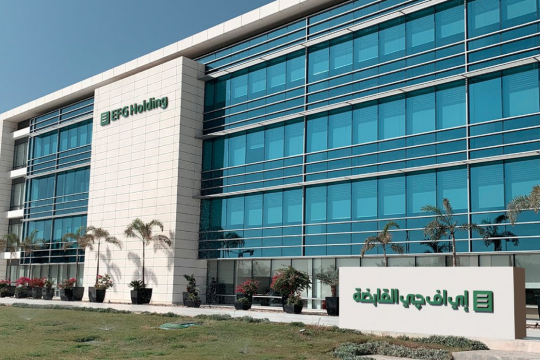
EFG Finance is getting ready to launch a new subsidiary to address a gap in market: EFG Finance, the non-bank financial services arm of EFG Holding, has obtained a license from the Financial Regulatory Authority (FRA) to set up a subsidiary for SME finance, the company said in a statement (pdf). The new company is poised to launch in 2Q 2024.

A red-hot market: SME finance jumped 237% y-o-y in 3Q 2023 to EGP 4.4 bn, according tothe latest data from the FRA (pdf). The number of beneficiaries also increased by about 231% y-o-y to 4.6k by the end of the quarter.

And there is an increasing demand in the market that needs to be addressed. Currently, most financing is split between large loans provided by banks as well as leasing and factoring companies and small loans offered through microfinance firms. Because of this, there is a large still unaddressed gap that the SME-regulated license can help address, Aladdin El Afifi, CEO of EFG Finance, told Enterprise.

Why a new license? The new license is needed to avail credit in different ticket sizes through different distribution channels and processing than those currently in place within the EFG Finance companies, El Afifi explained. With the new venture, EFG Finance, seeks to bridge the gap in its product offering with tailor-made financing products for SMEs, “targeting businesses that fall between the micro and small enterprises supported by Tanmeyah and larger enterprises served by EFG Corp-Solutions,” the statement read.

EFG Finance’s new platform plans to target clients who have minimum digital infrastructure to allow the platform to disburse loans digitally. The new company will acquire its clients directly and through partnerships with existing platforms serving these clients, El Afifi told Enterprise.

4

EGYPT IN THE NEWS

International pages cover Egypt’s EUR 7.4 bn EU package

One story leads the conversation on Egypt in the foreign press this morning: Egypt securing a EUR 7.4 bn package from the EU is receiving wide coverage this morning. Reuters, DW, the Guardian, and the AP all had the story.

It’s a pattern: The bloc has inked similar agreements with Turkey, Tunisia, and Mauritania and is expected to sign one with Morocco, Politico wrote.

^^ We have the ins and outs of the package in the news well, above.

ALSO- Cruise the Nile in style: Yalla Nile made it on to the Financial Times’ list of Five Ways to SetSail in 2024. The boat, designed by local architect Tarek Shammaa, offers travellers an intimate and stylish trip through Egypt’s history through the Nile. Cruises across the Nile offer “the intersection of culture, history and glamour, and the cruises offering a panoply of itineraries and styles, draw aspiring explorers of all types,” the piece read.

Tags:

This publication is proudly sponsored by

5

Also on our Radar

Egypt on the lookout for a firm to take over GREGY prep

INFRASTRUCTURE-

GREGY is coming: The government will soon launch a tender to select an international consulting firm to develop a plan and prepare the necessary studies for an electricity linkup with Greece that will enable exports of Egyptian renewable energy into Europe — dubbed GREGY — CEO of the Egyptian Electricity Transmission Company Sabah Mashaly told Arab World News. It remains unclear how much the project will cost but the EU will fund the project through grants, she added.

POLICY-

The latest on import backlog clearing efforts: The central bank is supplying the necessary FX to speed up the release of goods, CBE governor Hassan Abdalla said during a meeting with Prime Minister Moustafa Madbouly. The meeting centered around the state’s efforts to ease the import backlog. After the float of the EGP and flow of FX brought back FX liquidity into the banking system, the Madbouly government has made easing the backlog one of its top priorities, with some USD 3 bn worth of goods released in the span of a few days, Madbouly said last week.

Madbouly and Abdullah also discussed structural reforms aimed at making the economy more flexible. The PM mentioned the “unprecedented” interest in the industrial sector with the aim of increasing production and exports.

M&A-

Raya IT to acquire outsourcing firm? Raya Holding’s IT arm Raya Information Technology is looking into acquiring an unnamed outsourcing and application development company, it said in an EGX disclosure (pdf). The company will announce the transaction once the decision is approved by its board.

6

PLANET FINANCE

US investors, beware Chinese zombie companies

US investors in Chinese companies are stuck in zombieland: US investors are increasingly unable to repatriate returns in what the New York Times refers to as the Chinese version of “zombie” companies. Like TikTok parent company ByteDance — where some USD 8 bn of capital is stuck — these are Chinese firms, often booming, that are caught in geopolitical crosshairs, preventing investors from receiving returns.

ICYMI- The US House of Representatives last week voted to give ByteDance six months to sell TikTok or face a ban in the US over concerns about the Chinese government’s access to US user data.

It’s much more complicated than it may seem: Export control rules on tech imposed by China in 2022 mean that even if TikTok gets sold, its recommendation algorithm — the app’s most valuable feature — is unlikely to be included in the sale. Buying TikTok without the algorithm would be akin to acquiring Hulu without the rights to its content, said Columbia Business School professor Jonathon Knee. “It’s not completely clear what you’re buying,” he explained.

Chinese companies aren’t as attractive as they once were: China’s regulatory crackdowns, coupled with falling company valuations triggered by the country’s economic slowdown, have made acquisitions less tempting for US buyers. Some 3.2k Chinese companies were acquired last year, half of what was bought in 2019.

And less Chinese companies are IPOing in the US: Chinese companies have grown wary of listing in the US since ride hailing app Didi delisted from the New York Stock Exchange in 2022 due to regulatory pressure by China. Only three Chinese startups listed in the US in 2022, down from 18 per year between 2018 and 2021.

THE MARKET THIS MORNING-

Asian markets are mixed and stock futures little changed in trading early this morning as traders take a breather ahead of fresh economic guidance from the US Federal Reserve this week.

EGX30

31,062

-0.8% (YTD: +24.8%)

USD (CBE)

Buy 47.19

Sell 47.33

USD at CIB

Buy 47.27

Sell 47.37

Interest rates CBE

27.25% deposit

28.25% lending

Tadawul

12,762

+0.3% (YTD: +6.6%)

ADX

9,221

-0.4% (YTD: -3.7%)

DFM

4,262

-0.7% (YTD: +5.0%)

S&P 500

5,117

-0.7% (YTD: -7.3%)

FTSE 100

7,727

-0.2% (YTD: -0.1%)

Euro Stoxx 50

4,986

-0.1% (YTD: +10.3%)

Brent crude

USD 85.37

0.0%

Natural gas (Nymex)

USD 1.70

-2.7%

Gold

USD 2,155

0.0%

BTC

USD 68,766

+3.3% (YTD: +62.0%)

THE CLOSING BELL-

The EGX30 fell 0.8% at yesterday’s close on turnover of EGP 3.4 bn (30.1% below the 90-day average). Local investors were net sellers. The index is up 24.8% YTD.

In the green: Fawry (+6.1%), Egypt Kuwait Holding (+4.4%), and Oriental Weavers (+4.0%).

In the red: E-Finance (-5.6%), Eastern Company (-5.5%), and Qalaa Holdings (-5.0%).

CORPORATE ACTIONS-

Ibn Sina to retain earnings: Ibn Sina Pharma will retain its earnings from last year to “support the expected exceptional growth in revenues,” it said in an EGX disclosure (pdf). The decision came as a result of “the expected stability in production due to the availability of foreign currency to manufacturers,” the firm added.

7

BLACKBOARD

In the wake of the EGP float, are universities reconsidering the cost of student exchange programs?

Studying abroad has become restrictively expensive in recent years: For the past two years, Egypt’s universities and students have faced FX shortages, rising inflation, and a weakening local currency that have made the costs of studying abroad not just unreachable for many students, but also unpredictable with the volatile parallel market often being the only place that you could source FX. Now that the float of the EGP earlier this month seems to have done away with much of the unpredictability of the exchange rate and opened up access to FX through official channels, higher education insiders tell us how universities are looking to adapt — albeit still expensive — study abroad programs to adjust to the rise in prices and the new normal for the EGP.

Study abroad programs? Study abroad programs allow students to spend a semester or more studying at a partner university abroad. University heads we’ve spoken to agree that study abroad programs have been very popular among Egyptian students over the past years and have even prompted the government to implement an internationalization strategy in part designed to bring international universities to Egypt in a bid to stop the FX outflows by persuading Egyptian students to stay put.

Studying abroad is expensive, but it comes with upsides: Despite the high costs, study abroad programs provide students with contact with different cultures, travel, and the chance to learn from academics at institutions abroad, Nahda University President Hossam El Malahi told Enterprise. El Malahi added that he has noticed changes in the thinking of Nahda University students returning from universities abroad.

Some universities have increased support to share rising costs over the last few years:Private institution Nahda University now bears students’ accommodation and studying for two weeks at its partner institution Vienna University as well as at Badya University’s partner Texas University, El Malahi told Enterprise. Students are currently expected to pay USD 650-700 as part of their tuition fees in addition to the costs of their flights, but arrangements may change by the time they finalize upcoming study abroad programs in June, El Malahi added.

And additional support is also given to outstanding students who are unable to afford a study abroad program through the issuing of full scholarships, El Malahi told us.

But the risk of future unpredictability in the exchange rate still worries some universities:Three of the university presidents we spoke to said that study abroad programs are still organized around the understanding that the EGP / USD exchange rate has not stabilized and fees that students pay will be based on the exchange rate at the time of travel. A number of presidents also told us that study abroad programs could be suspended until costs are more consistent.

Shorter study abroad programs? Studying abroad is expensive for those looking to study a full semester at a university abroad, with a semester’s cost reaching up to USD 8k, a source at a private university told Enterprise. Private universities will likely consider introducing separate shorter programs at a lower cost, the source added.

FX inflows from foreign students in Egypt ease some of the pressure: Funding study abroad programs would be a lot more difficult without foreign students studying in Egypt bringing in FX, El Malahi told us. Nahda University has a good number of foreign students who pay their fees in foreign currency, which has been used to support the continuity of study abroad programs, easing pressure on the university, which itself pays for these programs in FX, El Malahi added. Efforts by the Madbouly government have attracted some 25k foreign students to public and private universities, increasing FX inflows into the education sector, the unnamed private university source told us in a separate discussion.

The weaker EGP is also prompting African and Arab students to flock to our universities:The weakening EGP could actually be a boon to our plans to become a hub for international students, and this is already evident through the rise of GCC students’ enrollments in Egyptian universities over the past two years, one university president told us.


Your top education stories for the week:

  • SIR-ranked Egyptian universities and research centers: Some 69 local universities and research centers have made it onto SCImago Institutions 2024 Rankings. (Statement)
  • Next year’s higher edcaution investment plan: The planning and higher education ministries held a meeting to discuss next fiscal year’s higher education investment plan. (Statement)

2024

MARCH

20 March (Wednesday): End of sugar export ban.

28 March (Thursday): Central Bank of Egypt’s Monetary Policy Committee meeting.

28 March (Thursday): Industrial Development Authority to close applications for 1 mn sqm of land in 10 different governorates.

29 March (Friday): Egypt removed from JPMorgan Chase’s Emerging Local Markets Index Plus.

APRIL

1 April (Monday): Deadline to bid for 23 blocks in an international oil and gas tender.

2 April (Tuesday): President Abdel Fattah El Sisi swearing in ceremony, New Administrative Capital.

9 April (Tuesday): Eid El Fitr (TBC) (national holiday).

15-21 April (Monday-Sunday): The IMF / World Bank Spring Meetings.

25 April (Thursday): National holiday in observance of Sinai Liberation Day (TBC) (national holiday).

26 April (Wednesday): Clocks move forward one hour at midnight as daylight saving time starts.

28 April (Sunday): Grace period to ins. brokerage firms to comply with Law 215 for 2023 expires.

28-29 April (Sunday-Monday): Saudi Arabia hosts a World Economic Forum (WEF) meeting on ‘global collaboration, growth, and energy.’

29 April (Monday): The government’s car export scheme expires.

MAY

1 May (Wednesday): National holiday in observance of Labor Day (TBC) (national holiday).

2-5 May (Thursday-Sunday): Townhall Expo in Riyadh.

5 May (Sunday): Coptic Easter.

6 May (Monday): Sham El Nessim (national holiday).

20 May (Monday): Malaysian Palm Oil Forum in Cairo, with attendance from Malaysian Plantation and Commodities Minister Johari Abdul Ghani.

23 May (Thursday): Central Bank of Egypt’s Monetary Policy Committee meeting.

29 May (Wednesday): Virtual launch of Chicago Booth Executive Program.

JUNE

15-19 June (Saturday-Wednesday): Eid El Adha (TBC) (national holiday).

30 June (Sunday): June 30 Revolution Day (national holiday).

JULY

7 July (Sunday): National holiday in observance of Islamic New Year (TBC).

18 July (Thursday): Central Bank of Egypt’s Monetary Policy Committee meeting.

23 July (Tuesday): Revolution Day (national holiday).

SEPTEMBER

2-5 September (Monday-Thursday): Egypt International Airshow, El Alamein International Airport.

5 September (Thursday): Central Bank of Egypt’s Monetary Policy Committee meeting.

15 September (Sunday): National holiday in observance of Prophet Muhammad’s birthday (TBC).

25-26 September (Wednesday - Thursday): The Asian Infrastructure Investment Bank’s (AIIB) 2024 annual meeting, Samarkand, Uzbekistan.

OCTOBER

6 October (Sunday): Armed Forces Day.

17 October (Thursday): Central Bank of Egypt’s Monetary Policy Committee meeting.

21-27 October (Monday-Sunday): The World Bank and IMF annual meetings.

NOVEMBER

21 November (Thursday): Central Bank of Egypt’s Monetary Policy Committee meeting.

DECEMBER

26 December (Thursday): Central Bank of Egypt’s Monetary Policy Committee meeting.

EVENTS WITH NO SET DATE

January 2024: The Red Sea Ports Authority is set to finalize an agreement with the Abu Dhabi Ports Group for the operation and maintenance of the tourist passenger terminal in the Sharm El Sheikh Sea Port.

February 2024: Egypt will sign a USD 1.5 bn financing agreement with the International Islamic Trade Finance Corporation (ITFC).

February 2024: Funds from the Islamic Development Bank for the high speed electric railway will get the sign off.

April 2024: President Abdel Fattah El Sisi will visit Turkey.

1Q 2024: Egyptian-Qatari Joint Supreme Committee.

1Q 2024: Opening of the newly developed Pyramids Plateau in Giza.

1Q 2024: The government is set to finalize the sale of the Gabal El Zeit wind farm.

February-May: The Grand Egyptian Museum could officially open to visitors.

March 2024: The USD 2.7 bn MIDOR Refinery is set to begin full operations.

May 2024: Arab Finance Ministers’ meeting at Egypt’s administrative capital.

June 2024: Gov’t expects to finalize sale of Beni Suef combined-cycle power plant.

1H 2024: Gov’t expects to finalize sale of four water desalination plants.

1H 2024: The European Union is set to hold an investment conference in Egypt during spring.

2H 2024: Gov’t to launch the Cairo Ring Road BRT buses.

November 2024: Egypt to host the World Urban Forum (WUF12).

End of 2024: The launch of the high-speed train line linking Ain Sokhna with Al Alamein City.

2025

EVENTS WITH NO SET DATE

2Q 2025: Safaga Terminal 2 to start operations.

2027

20 January-7 February: Egypt to host the African Games

EVENTS WITH NO SET DATE

End of 2027: Trial operations at the Dabaa nuclear power plant expected to take place.

Now Playing
Now Playing
00:00
00:00