Get EnterpriseAM daily

Available in your choice of English or Arabic

UAE looks to Botswana with USD 1.9 bn deal + potential financing for Botswana’s De Beers takeover

1

WHAT WE’RE TRACKING TODAY

THIS MORNING: Botswana in talks with UAE, Oman over diamond producer takeover + Barakah nuclear plants could be in for more protection

Good morning, everyone. It’s a quieter start to the week, save for our Big Story Today of a UAE-backed USD 1.9 bn urban development in Botswana, complete with a world trade center, in what is set to be one of the biggest FDI projects in the country to date.

In other UAE-Botswana news, reports are rolling in of Botswana holding talks with the Emirates (as well as Oman) to secure backing for a takeover of diamond producer De Beers.

Closer to home, the IAEA and UAE are looking into more protection for nuclear plants against wartime disruption, while Lunate is expanding its ETF platform again.

WEATHER- It’s going to be very hot today, with a high of 42°C in Abu Dhabi and 41°C in Dubai, before it cools down to 30°C in Dubai and 31°C in the capital.

Oman vs. UAE for De Beers?

Botswana is in talks with Oman and the UAE to acquire a stake in the world’s biggest diamond producer: London-based mining multinational Anglo American is shortlisting buyers for its 85% stake in diamond producer De Beers, with the UAE and Oman both in the running to help Botswana secure a “strategic stake” in the firm, Bloomberg reports, citing Botswana's President Duma Boko.

BACKGROUND- While Botswana already owns 15% of De Beers, acquiring a larger stake would give the country more control over how its diamonds are priced and marketed. As the world’s largest rough diamond producer, accounting for around 80% of exports and a quarter of GDP, Botswana is already struggling with a downturn in diamond prices amid competition from cheaper lab-grown options and weaker demand from China, as well as a credit rating downgrade and strained state coffers.

A sovereign wealth fund from MENA would help fund the acquisition, Boko said, flagging the UAE and Oman as “trusted partners” in the diamond business and other sectors. He added that Botswana was also talking with Namibia and Angola.

IN CONTEXT- The UAE is fast emerging as a global growth engine for fine jewelry, with the wider GCC market seeing a surge in demand as luxury appetite cools in the US and China. The trend is set to persist over the next few years, rendering a foothold in the diamond sector of one of the world’s largest diamond-producing nations highly valuable for Abu Dhabi.

More protections for Barakah?

The UAE’s nuclear plants could be getting stronger protection against wartime disruption. Bloomberg reports that the International Atomic Energy Agency (IAEA) is working with Emirati authorities to assess whether the external power systems that feed Barakah’s reactors need extra safeguards — specifically, stronger protection for offsite electricity lines, backup connections, and other systems needed to keep power flowing to the plant if the grid is disrupted.

Why this matters: Barakah was targeted by a drone last month, sparking a fire near an electrical generator. Radiation levels remained normal, but the incident highlighted a critical nuclear safety risk, according to IAEA Director General Rafael Grossi: The attack showed how easily a conflict-related strike could threaten the power supply, backup power resilience, and overall emergency preparedness needed to keep reactors safe.

With conflict risk now a more central concern, Grossi said utilities and regulators need to focus more on hardening external power infrastructure, reinforcing backup systems, and planning for wartime-style disruptions.

Etihad remains bullish

Etihad is already looking beyond the war disruption and back toward growth. The Abu Dhabi carrier is placing a double-digit order for more widebody aircraft and expects to be flying about 8% more than it was a year ago by mid-June, CEO Antonoaldo Neves told Reuters. The airline has spent the past few months rebuilding its network after scaling back operations during the regional conflict, but Neves made no comment on the carrier’s postponed IPO, which was pushed back to this year.

Etihad’s current available seat kilometers is at 90% of its pre-war levels, with that set to move above 100% by mid-June, Neves told the Financial Times. Demand has rebounded strongly across key markets, particularly the US, India, and Southeast Asia.

No reduced prices for now: Etihad’s aircraft are currently around 84% full, while average fares have returned to January and February levels despite jet fuel prices doubling during the conflict. Neves dismissed suggestions that Gulf carriers would need to cut prices to lure travellers back after the ceasefire.

Jumping the jet order queue: Etihad is securing earlier delivery slots for new Airbus and Boeing aircraft by taking positions relinquished by other airlines, according to Neves. “We’re ordering planes right now to be delivered between 2028 and 2032 and we’re getting [the] position of airlines that are giving up,” he said.

ICYMI- Last month, analysts told us that the aviation sector has historically bounced back quickly from shocks, penciling in a strong recovery for 3Q and 4Q in particular. Despite this, Dubai Airports CEO Paul Griffiths had pushed back Dubai International Airport’s aim of reaching 100 mn passengers a year from 2026 to 2027.

Europe’s turn to probe Paramount

Paramount’s proposed Gulf-backed takeover of Warner Bros. Discovery is running into a new obstacle in Europe, where regulators are examining whether the agreement’s state-linked financing could distort competition — and may push the company to sell off parts of its children’s TV portfolio to get the merger over the line, Bloomberg reports.

What’s happening: The USD 110 bn Paramount-Warner Bros. Discovery takeover is being reviewed under the EU’s Foreign Subsidies Regulation, which gives Brussels the power to investigate whether foreign state support gives companies an unfair advantage in the bloc. According to Bloomberg, officials are weighing whether remedies could include divestments tied to children’s network assets as a condition for approval.

Why it matters: Any forced sale would add pressure on Paramount to line up buyers for those assets on a tight timetable, potentially weakening its negotiating position and complicating the path to closing one of the year’s biggest media tie-ups.

REMEMBER- The agreement is backed by roughly USD 24 bn from Abu Dhabi’s L’Imad, Saudi Arabia’s PIF, and the Qatar Investment Authority. That financing has already drawn political attention in Washington, with democratic senators previously calling for a “rigorous and thorough review” of the foreign investment involved, while FCC commissioner Anna Gomez separately raised concerns about foreign ownership of broadcasting assets.

What's next: Paramount faces an initial EU deadline of 7 July. Regulators can clear the move, accept remedies, or open a deeper probe that could delay one of the year's biggest media mergers by several months.

Data point

AED 5.6 tn — that’s the UAE banking sector’s total assets as of the end of April, up 0.2% m-o-m, Wam reports, citing central bank data. Gross credit expanded 0.9% to AED 2.7 tn, driven by an AED 18.5 bn increase in domestic credit. Lending to the private sector, and to individuals in particular, provided the largest boost, rising AED 6.2 bn on the back of housing and personal consumer loans. Meanwhile, credit to government-related entities increased 2.3%, and lending to the government sector saw 0.1% growth.

Total bank deposits rose 0.7% m-o-m to AED 3.5 tn on the back of growth in resident deposits, which increased to AED 3.2 tn. Non-resident deposits remained largely flat at AED 307.6 bn.

Among resident deposits, private sector balances recorded the strongest increase, rising 1.4% to AED 2.3 tn, while government sector deposits climbed 4.6% to AED 446.8 bn. However, deposits from government-related entities fell 6.6% to AED 339.3 bn, while deposits from other financial corporations declined 6.6% to AED 65.6 bn.

IN CONTEXT- The data reflects another month of credit growth, after the Central Bank of the UAE launched its resilience package to help lenders with liquidity in the wake of the regional war.


You’ve spent decades building wealth, and the question now isn’t how to make money — it’s how to make sure it survives you, works across borders, and doesn’t quietly erode while you’re not looking. The rules have changed. Egyptian real estate, once a near-guaranteed store of value, is competing with markets in Greece, Spain, and Dubai.

Whether it’s art as an asset, crowd-funding, or the tax implications quietly stacking up behind that second passport, the toolkit for serious capital deployment has expanded faster than most conventional advice — or most advisors — have.

In Issue 3 of EnterpriseAM Money Matters, we cover the decisions that matter most when you’re at the stage where capital preservation is just as important as capital growth — and where getting it wrong is no longer something you can simply recover from.

Tap or click here to subscribe to the Egypt edition, delivered to your inbox on Wednesday, June 10.

The big story abroad

Iran's first strike on Israel since the April ceasefire and Israel’s retaliatory salvo are leading today’s news cycle. The Israeli military claims to have intercepted all the missiles and no casualties have been reported. The Islamic Revolutionary Guards Corps called the barrage retaliation for Tel Aviv’s strikes on Lebanon, claiming the Israeli attacks violated ceasefire terms, and vowed to continue strikes if hostilities resume. Israel fired back by targeting western and central Iran.

Israel must accept a truce, Trump says: US President Donald Trump said that Israeli Prime Minister Benjamin Netanyahu “won’t have any choice” but to accept any resolution Washington closes with Tehran. In a phone call with Netanyahu, Trump pressed the Israeli leader not to retaliate. “Israel had its strike, and Iran had its strike. We don't need another one,” Trump was quoted as saying.

Speaking of which: Trump has publicly urged Federal Reserve Chair Kevin Warsh to cut interest rates, escalating tensions just before Warsh’s inaugural policy meeting. Trump’s demands run counter to current market expectations, which are inclined toward higher borrowing costs following a surge in US employment numbers.

A new and improved ChatGPT: OpenAI’s biggest revamp since its launch of ChatGPT will involve repositioning the chatbot into a “superapp,” which will merge coding tools and AI agents. The changes come as part of a broader evolution at the AI startup, whereby it will shift resources to secure lucrative customers and compete more aggressively with rival Anthropic.

Meanwhile, a high stakes battle unfolds in Italy’s banking sector: Italian banking giants Intesa Sanpaolo and BPER Banca teamed up to structure a joint counter-proposal to take over Monte dei Paschi di Siena (MPS) — considered to be the world’s oldest bank. The move came hours after Banco BPM floated an EUR 50 bn tie-up with MPS.

***

You’re reading EnterpriseAM UAE, your essential daily roundup of business, economics, and must-read news about the UAE, delivered straight to your inbox. We’re out Monday through Friday by 7am UAE time.

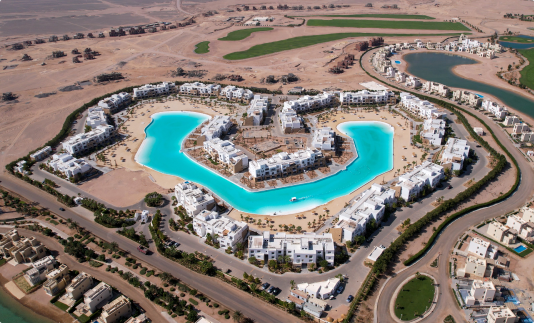
EnterpriseAM UAE is available without charge thanks to the generous support of our friends at Mashreq and Hassan Allam Properties.

Were you forwarded this email? Tap or click here to get your own copy of EnterpriseAM UAE.

Want to send us a story idea, request coverage, ask for a correction, or otherwise get in touch? Reach out to us on [email protected] .

DID YOU KNOW that we also cover Egypt, Saudi Arabia, and the MENA logistics industry?

***

Circle your calendar

Check out our full calendar on the web for a comprehensive listing of upcoming news events, national holidays and news triggers.
This publication is proudly sponsored by

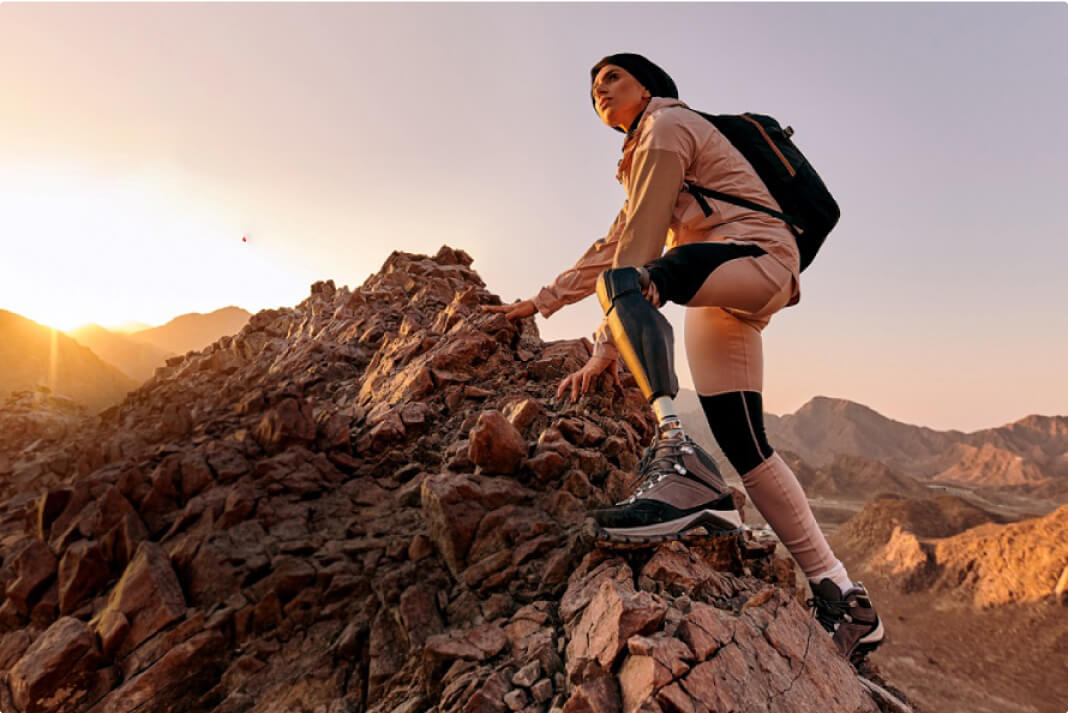
Rise every day
From OUR FAMILY to YOURS
2

THE BIG STORY TODAY

The UAE looks to Botswana

Botswana is the UAE’s latest investment destination in Africa. Dubai-based construction solutions firm Albaddad is planning to build a USD 1.9 bn urban project in Botswana, Bloomberg quoted state-owned Botswana Development Corp (BDC) as saying.

The project is set to become one of the biggest foreign direct investment (FDI) projects in Botswana — with Albaddad providing all the capital for the project, BDC’s managing director Oteng Keabetswe said. BDC is providing the land for the build, and will have a 5% holding for now, which it hopes to increase to 26% over time, Keabetswe added.

The details: The 124k sqm multi-use New Botswana City development will be made up of a trade and exhibition center, office spaces, as well as retail facilities, and residential developments, and five hotels. Work on the Botswana World Trade Center is already underway, Botswana’s President Duma Boko said.

Behind the move: Botswana is looking “to use other people’s capital to advance [its] growth mandate […] as our current capital is drying [up],” Keabetswe said. He flagged that his country was “a safe haven” for foreign investors, and that it “provides the security [and] no exchange controls [...] that are important to global capital.”

IN CONTEXT- While the UAE doesn’t currently have a significant footprint in Botswana, it is active elsewhere in Africa, primarily in the mining and logistics sectors, and is now the biggest state investor in Africa. Emirates-based players have footholds in the mining sector in Ethiopia, Mali, Ghana, and Zambia, while state-backed logistics players including DP World and AD Ports are active in the DRC, Cameroon, the Republic of the Congo, among other countries, as the UAE looks to lock in access to critical minerals as well as the supply chain links to move them.

ALSO- The Emirates is similarly active in the urban development sector abroad. Emaar founder Mohamed Alabbar recently announced plans to invest USD 10-11 bn in real estate developments in and around Damascus, with his international development-focused firm, Eagle Hills, weighing up some USD 50 bn in developments in Syria. Other Emirati overseas development plays include the USD 35 bn Ras El Hekma project in Egypt, and the AED 12 bn project in London’s Thameside West development.

3

SPOTLIGHT

Could now be the time for CVCs to shine? Mashreq’s NeoVentures CEO thinks so

As some foreign VCs are expected to shy away from regional startups as ongoing headwinds hit sectors across the region, other local investors are ramping up investments. “We are not slowing down in terms of reaching out to the right founders and making the right [wagers] in this time of uncertainty,” CEO of Mashreq’s corporate VC arm NeoVentures and head of wholesale digital banking at Mashreq Amith Rajan tells EnterpriseAM.

“We believe that there are some things that will work and [for] those that will work, the fundamentals have not changed,” he says. “Dubai has a strong track record of navigating periods of stress well, including during the Covid-19 pandemic, so it’s all about how we respond to those crises […] All we need to do is look at the boost the economy got after Covid-19,” Rajan says.

As a bank-backed corporate venture capital arm, NeoVentures is able to deploy capital with a longer-term perspective, without the fund-raising pressures or forced exit timelines typically associated with traditional VC models.

They also follow metrics that are different from those of typical investors — and, in some cases, much more flexible. “We identify as ‘patient capital’ […] we’re not an undisciplined, ‘broad-based’ kind of investor,” Rajan says. He looks at four criteria to decide whether or not to pull the trigger on an investment: a) The business has a technology or solution that could help boost Mashreq’s own revenues; b) it has a technology or solution that could help improve customer experience somehow; c) it improves the bank’s risk management capabilities; and d) it helps improve their operational efficiency.

“When we invest in a business, it’s because it fits into our strategic priorities as a bank […] the strategic alignment allows us to explore synergies outside of just pure returns,” Rajan explains.

The other differentiator is venture building. While there are venture builders in the region, having a venture builder that’s housed within a bank offers some advantages. NeoVentures incubates and validates products within the bank itself prior to market deployment. “That’s where we validate it before we take it to market,” Rajan says.

That gives them confidence when they’re building something that there is a product-market fit. “We’re a commercial bank and we’re using it for ourselves, which provides early validation of value and fit,” he says.

It also gives the startup that is building those solutions scale and resources that are hard to find elsewhere. “We’re building the software in-house alongside our partners, so there’s appreciation for what the founder does and what their challenges are,” Rajan explains. “Because of that and because of the backing of Mashreq, we’re able to give them instant access to capital and to customers, we give them the [chance] to scale up, and very importantly, we give them regulatory and compliance coverage, because they come onto our regulatory and compliance rails, which adds that degree of credibility.”

The venture building side of things operates with a lean team, but the CVC “sits on the shoulders of a giant,” as Rajan puts it. He notes that the Wholesale Digital Studio and NeoVentures are closely integrated, allowing for product transfer and execution across the bank and venture arm. “There is a lot of cross-pollination between the bank and NeoVentures, and that’s the way we would like it to be.”

“One of the things that we are very careful not to do is setting up something that’s a siloed organization that operates completely separate from the bank, and then getting no one to use [the products we build],” he adds.

The investment strategy

NeoVentures always acquires minority stakes in fintechs it’s investing in, Rajan tells us. “We don’t want to run the business; we want to support the founder and help them grow the business.” Ticket sizes are tailored to the startup’s stage of growth.

The VC arm usually goes for seed to series B stage startups, and the strategy is to stay with a startup throughout its journey and invest in future funding rounds as well, Rajan says.

NeoVentures is looking for “category-defining fintechs” with the ambition and capability to scale meaningfully, first across the region and, over time, internationally. While it has so far had its eyes only on the region, it’s open to investing globally provided the investment prospects fit into the bank’s priorities.

What Rajan is bullish on

Given NeoVentures’s mandate to stay aligned with the bank’s own strategic objectives, areas of focus right now include payments, cross-border FX, and digital assets, Rajan tells us. “We're also looking at growing our trade business, our SME business, and our wealth business,” he adds.

Since launching in 2024, NeoVentures has made strategic investments in firms like NewBridge Fintech, which owns EMEA-focused loan syndication platform LoanBook, and has commercialized bank-integrated products such as Traydstream, a digital platform enabling secondary market sales of trade finance assets.

Right now, it’s building its largest product yet — an end-to-end credit platform that it’s getting ready to take to market soon, Rajan tells us.

4

A MESSAGE FROM MASHREQ

The SME reality check: cashflow vs. funding

SMEs don’t typically stall because they lack funding, but because they lack visibility over their financial position. 80% of SMEs in the UAE report the need for better cashflow management tools, according to Ken Research — an indication that access to timely financial information remains a key constraint.

The impact becomes visible in day-to-day operations. Without a clear view of receivables and payables, decisions are made reactively rather than in real time. Additional capital may extend runway, but it does not resolve the underlying visibility gaps.

Three principles separate resilient SMEs from fragile ones:

#1 Know their position daily, not monthly. Decisions based on outdated numbers limit the ability to respond in real time.

#2 Separate operational cash from growth capital. Founders who conflate the two tend to underestimate burn and overestimate runway.

#3 Treat the banking platform as infrastructure, not administration. Without real-time visibility, workflow control, and forecasting, it becomes a source of inefficiency rather than support.

Mashreq Biz is built around this need. Launched in February 2025 and built on NeoBiz — the UAE's first digital banking proposition for SMEs — the platform offers an integrated dashboard, foreign-currency account openings, bulk payments, and workflow approvals, giving founders and CFOs greater visibility and control. That digital experience appears to be resonating with users, with Mashreq Biz holding a 4.9/5 rating on the Apple App Store.

The UAE government projects the number of SMEs in the country will reach one million by 2030, according to the UAE government's official SME platform. The businesses that reach that scale will be defined as much by access to information as by access to capital.

5

MOVES

New director-general at the UAE’s nuclear regulator

President Mohamed bin Zayed issued a federal decree appointing Hamad Al Kaabi (LinkedIn) as director-general of the Federal Authority for Nuclear Regulation, with the rank of undersecretary, state news agency Wam reports. Al Kaabi has served as the UAE’s permanent representative to the International Atomic Energy Agency since 2008, is a board member of the Nuclear Threat Initiative, and was previously the UAE’s ambassador to Austria, Slovenia, and Slovakia.

6

ALSO ON OUR RADAR

HashKey pilots stablecoin payments, Lunate expands ETFs, another tokenization play emerges

HashKey MENA launches stablecoin payments pilot

A Dubai-regulated crypto exchange wants to make moving money between the Gulf and Africa a lot easier. HashKey MENA has teamed up with blockchain player Aptos Foundation and African payments platform Daya to pilot a stablecoin-based payment corridor aimed at cross-border business transactions between the Middle East and Africa, according to a press release.

The plan: The rollout will begin with multinational companies funding payments across borders by converting local currency into stablecoins at one end of the corridor and back into local currency at the other, and will later expand to B2B players. The corridor is expected to support African currencies, with on- and off-ramps linking local fiat currencies to digital assets.

Who is doing what? HashKey MENA will provide regulated fiat-to-stablecoin conversion services from the UAE side, Daya will handle local payment infrastructure and liquidity across African markets, and the Aptos Foundation will support execution on the blockchain network.

Lunate is expanding its ETF platform again

Abu Dhabi-based investment firm Lunate will launch what it says is the first shariah-compliant GCC dividend ETF, with the fund set to list on ADX on 23 June, according to a statement. The ETF will track dividend-paying, shariah-compliant companies across GCC markets including the UAE, Saudi Arabia, and Qatar.

SOUND SMART- Exchange-traded funds are baskets of assets that trade like stocks. Instead of buying individual shares, investors buy a single fund that tracks an index, sector, theme, or strategy — making ETFs a popular way to gain diversified exposure through a single trade.

The launch builds on Lunate’s broader ETF push: Earlier this year, it became the first Abu Dhabi-based asset manager to launch UCITS ETFs in Europe, taking its AI and power-focused fund to the Deutsche Börse Xetra. The latest product will also mark Lunate’s 20th ETF listing on ADX, where ETF trading volumes more than tripled y-o-y to AED 155 mn in 1Q 2026.

Another player is entering the tokenized real estate space

The UAE and US are drawing fresh investment into real estate tokenization infrastructure. Belgium-based digital asset infrastructure provider SettleMint has partnered with real estate AI and blockchain firm Integra to develop systems supporting tokenized property assets across the Emirati and US markets, according to a statement.

What they're building: The agreement will integrate the two firms’ platforms to support on-chain representations of real estate assets, including issuance, administration, and compliance functions. Financial terms and project details were not disclosed.

Real estate tokenization is gaining traction in the UAE:

  • The Dubai Land Department launched the first phase of its tokenization initiative last year, focused on tokenized title deeds, and has since moved into a second phase allowing secondary-market trading of tokenized property interests;
  • Authorities have also signaled plans to eventually expand the model to non-resident investors, off-plan assets, and digital-currency payments;
  • Stake, meanwhile, is moving toward regulated real estate tokenization after securing in-principle approval from Vara.
7

PLANET FINANCE

Digital gold loses its shine

BTC’s digital-gold moment never arrived. BTC briefly fell below USD 60k this week for the first time since October 2024, extending a selloff that has now erased more than half its value from the USD 126k peak reached last year, CNBC and Bloomberg report. ETH sank to its lowest level since last April, while other major tokens including XRP, SOL, and Dogecoin also fell sharply, Bloomberg reports separately.

The awkward part: This should have been BTC’s moment. Geopolitical tensions remain elevated, inflation concerns are resurfacing, and investors are once again debating whether interest rates will stay higher for longer. Yet gold has attracted more defensive flows while BTC has struggled, prompting investors to question both its “digital gold” credentials and its reputation as a high-beta tech trade.

What’s driving the rout? A record streak of ETF outflows, concerns about future demand after Strategy (the world’s largest BTC treasury company) disclosed a rare BTC sale, and a growing sense that crypto is losing its place at the center of the speculative universe. Net assets across BTC ETFs have fallen to USD 80.4 bn from USD 107.8 bn in mid-May, according to CNBC.

Crypto’s bigger problem may be that it is no longer the market’s favorite wager. AI has largely replaced digital assets as the dominant growth trade, while investors now have an expanding menu of alternatives ranging from leveraged ETFs and prediction markets, to stablecoins and perpetual futures.

And there’s another contender waiting in the wings: SpaceX. The potentially record-breaking IPO is shaping up as one of the clearest tests yet of where speculative capital flows next, Bloomberg reports. The listing is banking on the firm’s retail following, allocating 30% of listed shares to retail investors.

The result is a growing fight for retail capital. More than 600 ETFs have launched in the US over the past six months alone, while more than 20 SpaceX-linked ETFs have already been filed ahead of the listing. The takeaway? Investors are still chasing the next big story; BTC just isn’t the only one anymore.

MARKETS THIS MORNING-

Asia-Pacific markets are starting the week in the red as the AI rally seen over the past few weeks reverses course and oil prices surge after Iran attacked Israel. South Korea’s Kospi is down 7.3%, while Japan’s Nikkei is down 4.4%. “The move looks more like a positioning and momentum unwind than ⁠a reassessment of the long-term AI story,” Lucerne Asset Management’s Marc Velan said.

ADX

9,614

+0.3% (YTD: -3.8%)

DFM

5,768

+0.9% (YTD: -4.6%)

Nasdaq Dubai UAE20

4,443

+0.5% (YTD: -9.1%)

USD : AED CBUAE

Buy 3.67

Sell 3.67

EIBOR

3.5% o/n

4.1% 1 yr

TASI

10,929

-0.6% (YTD: +4.2%)

EGX30

52,165

-0.9% (YTD: +24.7%)

S&P 500

7,384

-2.6% (YTD: +7.9%)

FTSE 100

10,368

+0.1% (YTD: +4.4%)

Euro Stoxx 50

6,062

-0.7% (YTD: +4.6%)

Brent crude

USD 96.35

+3.5%

Natural gas (Nymex)

USD 3.23

-3.2%

Gold

USD 4,365

-3.1%

BTC

USD 61,670

+1.5% (YTD: -29.6%)

Chimera JP Morgan UAE Bond UCITS ETF

AED 3.68

0.0% (YTD: -1.9%)

S&P MENA Bond & Sukuk

151.48

-0.3% (YTD: -0.3%)

VIX (Volatility Index)

21.51

+39.7% (YTD: +43.9%)

THE CLOSING BELL-

The ADX rose 0.3% on Friday on turnover of AED 762.7 mn. The index is down 3.8% YTD.

In the green: Abu Dhabi National Energy Company (+6.2%), Gulf Medical Projects Company (+4.8%), and Agility Global (+1.8%).

In the red: Gulf Cement Co. (-4.6%), Invest Bank (-3.1%), and Apex Investments (-2.6%).

Over on the DFM, the index rose 0.9% on turnover of AED 709.2 mn. Meanwhile, Nasdaq Dubai was up 0.5%.


JUNE

1-12 June (Monday-Friday): Subscription period for Emirates NBD’s mandatory open offer for 26% of India’s RBL Bank.

15 June-15 September (Monday-Thursday): Dubai Mallathon, Dubai.

17 June (Wednesday): Investopia Global Talks, Tashkent, Uzbekistan.

22-24 June (Monday-Wednesday): The International Glass Manufacturing Show, Dubai.

SEPTEMBER

1-3 September (Tuesday-Thursday: Middle East Energy, Dubai World Trade Center, Dubai.

7-9 September (Monday-Wednesday): AIM Congress, Dubai World Trade Center.

7-9 September (Monday-Wednesday): International Property Show, Dubai World Trade Center, Dubai.

12-13 September (Saturday-Sunday): Emirates International Congress on AI & Visionary Leadership in Transforming Healthcare, Adnec Center Abu Dhabi.

14-17 September (Monday-Thursday): Arabian Travel Market, Dubai World Trade Center, Dubai.

29-30 September (Tuesday-Wednesday): AFCM Annual Conference, Abu Dhabi.

OCTOBER

4-10 October (Sunday-Saturday): World Space Week, Abu Dhabi.

5-7 October (Monday-Wednesday): AI Everything Global, Adnec Center, Abu Dhabi.

12-14 October (Monday-Wednesday: Airport Show, Dubai World Trade Center, Dubai.

20-22 October (Tuesday-Thursday): Future Health Summit, Adnec Center Abu Dhabi.

27-28 October (Tuesday-Wednesday): Arab Competition Forum, Dubai.

30 October (Friday): Large businesses achieving annual revenues equal to or above AED 50 mn must appoint an accredited service provider for e-invoicing implementation.

Signposted to happen sometime in October 2026:

  • Abu Dhabi Space Week, Abu Dhabi.

NOVEMBER

2-6 November (Monday-Friday): Dubai Future Finance Week, Dubai.

4 November (Wednesday): Digital Transformation Summit, Sofitel, Abu Dhabi.

9-10 November (Monday-Tuesday): Annual government meetings, Abu Dhabi.

10-12 November (Tuesday-Thursday): Dubai International Electric Vehicle Exhibition & Conference, Dubai World Trade Center.

16-18 November (Monday-Wednesday): World Police Summit, Dubai World Trade Center, Dubai.

DECEMBER

2-4 December (Wednesday-Friday): UN Water Conference, UAE.

4-6 December (Friday-Sunday): Formula 1 Abu Dhabi Grand Prix, Abu Dhabi.

8-9 December (Tuesday-Wednesday): Capital Market Summit, Madinat Jumeirah, Dubai.

Signposted to happen sometime in 2027:

  • 1 January: Deadline for large businesses to implement e-invoicing;
  • 1Q 2027: Completion of the first phase of Hassyan seawater desalination project;
  • 1-3 February (Monday-Wednesday): World Governments Summit;
  • 31 March: Small businesses with annual revenues of less than AED 50 mn are obliged to contract with an accredited service provider for e-invoicing implementation;
  • 31 March: Government entities are required to appoint an accredited service provider for e-invoicing implementation;
  • 21-22 April (Wednesday-Thursday): Token2049, Dubai;
  • 1 July: Deadline for small businesses to implement e-invoicing;
  • 1 October: Deadline for governments to implement e-invoicing;
  • Abu Dhabi’s solar and battery energy facility, combining 5.2 GW of solar capacity and 19 GWh of battery storage, is set for commissioning.

Signposted to happen sometime in 2028:

Signposted to happen sometime in 2029:

  • Sibos 2029 organized by the Society for Worldwide Interbank Financial Telecommunication (SWIFT), Dubai;
  • Annual Meetings of the World Bank Group and the International Monetary Fund, Abu Dhabi;
  • The commissioning of the seventh phase of Mohammed bin Rashid Al Maktoum Solar Park.
Now Playing
Now Playing
00:00
00:00