Time is up on CBUAE’s wartime deferral shield for lenders

1

WHAT WE’RE TRACKING TODAY

THIS MORNING: Masdar exits hydrogen project with OMV + Adia offloads more of Lenskart

Good morning, everyone. We begin with some sad news: Dubai begins 10 days of mourning for Sheikh Ahmed bin Rashid Al Maktoum, brother of Dubai Ruler Sheikh Mohammed bin Rashid and deputy chairman of Dubai Police, group chairman of ARM Holding, and president of Al Wasl Sports Club.

In business news, the wartime financial cushion for UAE banks is likely to start coming off as the AED 13.5 bn in loan deferrals the Central Bank of the UAE (CBUAE) granted at the start of the regional conflict starts coming due this month, presenting the first real test of UAE bank asset quality without regulatory support.

Meanwhile, UAE developers continue to look abroad, with Eagle Hills signing on for a USD 12 bn mixed-use waterfront project in the Maldives in what would be one of the largest single foreign investment commitments the country has landed, as well as the latest stop in Mohamed Alabbar’s quickly expanding overseas pipeline.

Elsewhere, Masdar walked away from its planned 49% stake in OMV’s 140 MW electrolysis project in Austria, with the two firms saying they’ll keep exploring other ways to collaborate, and Adia has once again trimmed its stake in Indian eyewear retailer Lenskart.

With the EnterpriseAM Egypt Forum two weeks away, here's what's shaping up on the agenda:

  • Where does AI fit on the list of topics keeping CEOs awake at night as they plan their strategies for 2027 and beyond?
  • Is there really an AI opportunity for Egypt?
  • An industry insider warns that your company is about to get attacked.
  • What does AI mean for your company, your team, and your job?
  • What does AI mean for your family — from what your kids should be studying to how to protect aging parents from scams and disinformation

Join us on 5 October in Cairo. Attendance is by invitation only, and seats are filling up quickly.

Request your invitation here.

BlueFive has more in the pipeline

BlueFive’s USD 3 bn defense fund, first flagged back in April, is now “ready to launch,” founder Hazem Ben-Gacem told Semafor. He also confirmed a Jakarta office is coming, aimed at chasing shariah-compliant demand across Southeast Asia off the back of last year’s Sidra Capital buy. In addition, he said he’s eyeing an agreement with one of the region’s stock exchanges to convert it into a venue for digital assets.

Why it matters: BlueFive has been one of the region’s most active dealmakers this year, war notwithstanding — its USD 3 bn Onyx tech fund closed just before the war started, on top of a 30% stake in Bugatti and backing for an Islamic digital bank. At USD 15 bn AUM and counting royal families across the Gulf (bar Qatar) as founding LPs, this is a firm that moves fast once it starts talking.

Adia offloads from Lenskart again

Adia offloads more of Lenskart: Abu Dhabi Investment Authority’s (Adia) investment vehicle Platinum Jasmine A 2018 Trust may have offloaded a 1.7% stake in India’s Lenskart Solutions through a block transaction worth INR 20.4 bn (USD 213.8 mn), CNBC-TV18 reports, citing people it says are in the know.

IN CONTEXT- As of 30 June, the trust held a 9.77% stake in the Indian eyewear retailer, according to NDTVProfit. The transaction follows another block transaction in June this year, when Platinum Jasmine sold 2.3% of Lenskart, or 40 mn shares, at INR 490 apiece for around INR 19.6 bn (USD 205 mn).

Lenskart’s latest results give the sell-down some context. Net income jumped 270% y-o-y to INR 2.2 bn (USD 22.9 mn) in 1Q FY 2027, while revenue climbed 43% to INR 27.1 bn (USD 282.6 mn). The stock is up 64.5% YTD. That means the Gulf sovereign allocator is likely banking gains on an early tech-retail bet while keeping the bulk of its stake intact.

BACKGROUND- Adia first built its position back in March 2023, when Platinum Jasmine put in USD 500 mn for a 10% stake — one of its earliest bets on India’s consumer-tech boom, as we noted when Lenskart went public last November.

IHC clarifies who sits at the top

International Holding Company (IHC) confirmed Fount Trust as its ultimate parent following a restructuring above Royal Group, according to an ADX disclosure (pdf). The trust is intended to preserve ownership continuity across generations, without changing who ultimately controls the Abu Dhabi investment group or affecting its operations and strategy.

The ownership chain explained: Pal Group remains IHC’s majority shareholder, Royal Group controls Pal Group, and Fount Trust sits at the top. Sheikh Tahnoon bin Zayed, IHC’s chairman, is the trust’s ultimate beneficial owner, The National reports. IHC’s existing governance and ADX disclosure obligations remain unchanged.

Not an entirely new arrangement: Fount Trust became IHC’s parent in 2025 and has already appeared as the ultimate parent in financial statements from other group companies, including 2PointZero Group, Palms Sports, and Emirates Stallions Group, according to The National.

Air returns to markets — this time for debt

Dubai shisha maker Air is heading back to capital markets just four months after its Nasdaq debut, this time with a planned USD 400 mn debt offering, Zawya reports. Air has launched a USD-denominated Regulation S offering of senior unsecured notes backed by Nasdaq-listed parent Air Global. Proceeds will repay outstanding term loans and revolving credit facilities, including related costs, with any remainder going toward general corporate purposes. Moody’s assigned the proposed notes a Ba3 rating.

From equity to debt: Air Global, the parent of shisha brand Al Fakher, began trading under ticker AIIR in May following a SPAC merger. We reported in April that the transaction targeted a USD 1.75 bn valuation despite regional volatility and higher logistics costs from Hormuz disruptions.

The post-listing buildout continues: Air is also planning a Romanian manufacturing facility for 1Q 2027, with annual capacity exceeding 4k tons of flavored shisha molasses.

Masdar walks away from Austrian hydrogen wager

Masdar pulled out of a planned EUR 600 mn green hydrogen project in Austria, reversing an agreement that would have given it a 49% stake alongside Austrian energy group OMV, Reuters reports, citing Austrian newspaper Salzburger Nachrichten. Masdar had been expected to invest several hundred mn EUR in the venture, which was announced last November. OMV attributed the withdrawal to “strategic changes in Abu Dhabi” without elaborating.

The plant is going ahead without Masdar: OMV says the departure will not affect the 140 MW project, which is expected to produce up to 23k tons of green hydrogen annually starting end-2027. The European Investment Bank has committed a EUR 450 mn loan, while Austria has indicated it will provide public funding, leaving the project largely financed.

The bigger picture: The Austrian exit follows other pullbacks from green hydrogen for Masdar. We reported last month that the company scrapped a planned 100 MW hydrogen plant for Emsteel, after previously pushing its 1 mn-ton annual hydrogen target beyond 2030 amid cost and demand headwinds. Masdar has also redirected solar capacity once earmarked for green ammonia toward AI data centers.

A settlement of Paramount importance

Paramount has settled the US antitrust lawsuit threatening its USD 110 bn Warner Bros. Discovery takeover, clearing the way for the Gulf-backed merger, Bloomberg reports. The media giant agreed to commit to an annual 30-film requirement, spend an extra USD 1.5 bn on US production over the next five years, and enter distribution agreements for its cable arms. These are among several terms agreed upon with the California-led group of US states.

L’imad clinches US media foothold: The merger is backed by nearly USD 24 bn in commitments from Abu Dhabi’s L’imad, Saudi Arabia’s Public Investment Fund, and the Qatar Investment Authority. The Gulf funds are set to hold minority, non-voting stakes in the combined company.

PSA

Abu Dhabi is putting the verification rules behind its carbon reporting program into place, with the Environment Agency - Abu Dhabi (EAD) issuing a resolution setting out how companies must have their greenhouse gas emissions independently checked, according to an Abu Dhabi Media Office statement. Facilities in targeted sectors that meet specified emissions thresholds must submit reports for review by EAD-accredited verifiers.

What changes for businesses? EAD will register and accredit independent verifiers, paving the way for environmental consultancies and carbon-accounting specialists to participate. The agency will also establish a digital database to collect, verify, and store emissions reports, helping inform future emissions policies.

BACKGROUND- Abu Dhabi announced its carbon reporting program in December 2024, requiring major industrial and energy emitters to begin submitting independently verified data in 2026 ahead of a planned domestic carbon pricing mechanism. That followed an earlier decree requiring EAD-licensed businesses to report energy use, water consumption, and emissions annually.

WEATHER- Temperatures will be hitting highs of 39°C today in Dubai and 40°C in Abu Dhabi, with lows of 30°C in both emirates, according to our favorite weather app.

The big story abroad

In the absence of a single story dominating the international press, several developments have taken the spotlight. Here are the most pressing updates making the rounds this morning.

JP Morgan Asset Management has signed an agreement with the Qatar Investment Authority (QIA) to establish a USD 20 bn multi-asset strategic partnership, which will span public and private equities and credit. The effort includes a USD 15 bn long-term public equities mandate for QIA and a USD 5 bn private markets initiative targeting established US middle-market companies.

US bases on Greenland? The Trump administration is reportedly looking to open two military bases in Greenland as per a trilateral agreement expected to be signed with Denmark and the Greenlandic government today. The locations include a former Cold War-era base in southern Greenland and a facility on the east coast.

AI will reshape credit ratings + ins., S&P says: Variations in how quickly financial institutions adopt AI, manage governance, and prepare operationally mean the technology will play a growing role in either bolstering or eroding their credit standing in the coming years, S&P Ratings said in a report. Ins. players are also expected to be swept up in the new AI-powered status quo, with many of the largest multiline insurers and reinsurers already transitioning to formal AI integration.

***

You’re reading EnterpriseAM UAE, your essential daily roundup of business, economics, and must-read news about the UAE, delivered straight to your inbox. We’re out Monday through Friday by 7am UAE time.

EnterpriseAM UAE is available without charge thanks to the generous support of our friends at Mashreq and Hassan Allam Properties.

Were you forwarded this email? Tap or click here to get your own copy of EnterpriseAM UAE.

Want to send us a story idea, request coverage, ask for a correction, or otherwise get in touch? Reach out to us on [email protected].

DID YOU KNOW that we also cover Egypt, Saudi Arabia, and the MENA logistics industry?

***

This publication is proudly sponsored by

Rise every day
From OUR FAMILY to YOURS
2

THE BIG STORY TODAY

CBUAE’s wartime deferral shield starts coming off UAE bank balance sheets this month

The AED 13.5 bn in loan repayments the Central Bank of the UAE (CBUAE) let banks defer at the start of the regional conflict starts coming due this month and next — the first read on UAE bank asset quality that regulators haven’t cushioned. The deferrals, granted under the central bank’s March resilience package without triggering a default classification, cover more than 135k customers and more than doubled in size between May and July. The six-month clock on the earliest cohort runs out now.

Why it matters: Every set of UAE bank results since the war began has been reported with that regulatory support firmly in place. Most recently, the sector’s ten largest listed banks posted AED 24.7 bn in net income for 2Q 2026, up 2.7% q-o-q, according to Alvarez & Marsal’s (A&M) latest UAE Banking Pulse report (pdf). Impairment charges fell 35.3% q-o-q in 2Q, more than offsetting a 1.2% q-o-q dip in operating income. Net interest margins compressed to 2.34% from 2.37% as funding costs outpaced yields, while trading-sensitive income fell sharply — leading A&M to describe the quarter’s return-on-equity gains as “primarily provision-led.”

A&M’s Sam Gidoomal, who advises Gulf banks on distressed and non-performing loans, isn’t calling this a credit-quality problem yet. “I wouldn’t say loan book quality is deteriorating,” he told our MENA+ desk. “The structural risk sits in the medium term, particularly in credit quality for businesses reliant on global supply chains, imported inputs, or foreign capital,” he says, adding that “pressure tends to build gradually and becomes clearer as support measures unwind.”

The numbers back that up: The aggregate non-performing loan (NPL) ratio stayed flat at a historic low of 2.3%. Stage 3 (impaired) loans grew just 0.7% q-o-q — slower than the book overall, so their share slipped to 2.5% from 2.6%. Cost of risk fell to 0.35% from 0.56%, a 21-bps improvement, largely on recoveries led by Mashreq, Dubai Islamic Bank, and Emirates NBD.

Cost of risk is not too accurate a signal, though: Ranya Gnaba, an equity banking analyst at AlphaMena, thinks that the cost of risk figure “has been artificially suppressed so far, largely thanks to significant impairment recoveries and collections” — a tailwind she expects to fade if the conflict drags on. Her sharpest flag is Emirates NBD: a very low reported cost of risk paired with a very high return on equity, which she reads as the widest gap in her coverage between what’s booked now and what normalized provisioning would eventually cost.

SOUND SMART- Banks sort loans into three risk “stages” under an accounting rule called IFRS 9: Stage 1 is performing normally; Stage 2 means risk has risen even though the borrower is still paying; Stage 3 means the loan is actually impaired. Restructuring a loan — deferring its payments, for instance — is normally what triggers a bank to bump it out of Stage 1. The UAE’s wartime deferrals let banks skip that step. The 2020 pandemic package went further and froze banks’ obligation to ever revisit that classification; this one didn’t. So as the deferrals expire now, banks have to actually go back and reclassify each loan.

Bloomberg Intelligence’s Edmond Christou puts the lag at six to 12 months and flags Dubai Islamic Bank, National Bank of Fujairah, Commercial Bank International, and Commercial Bank of Dubai as carrying heavier real estate and services exposure on thinner buffers — against Emirates NBD, FAB, and ADCB, which cut that exposure earlier and provisioned harder. Working in the sector’s favor: Gulf banks have spent years cutting tourism, hospitality, services, and real-estate exposure from the mid-to-high 20s as a share of the balance sheet down to roughly 11-12%, some closer to 10%.

3

INVESTMENT WATCH

Eagle Hills inks USD 12 bn Maldives waterfront agreement, its largest Indian Ocean investment

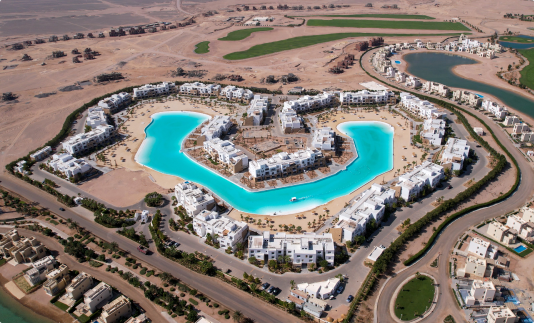
Abu Dhabi-based developer Eagle Hills signed an agreement with the Maldives government to build the Maldives Waterfront and Marina, a mixed-use district in Ras Malé — the government’s flagship land-reclamation city at Fushi Dhiggaru Lagoon, about 17 minutes from Malé by speedboat, according to a press release. Eagle Hills says the project is envisioned to draw as much as USD 12 bn in investment across its phases, though the construction timeline has yet to be disclosed.

What Eagle Hills is actually proposing: The project comprises an integrated district of hotels, branded residences, a marina, and retail and leisure space, along with schools and clinics — the same mix as most of its other projects. Eagle Hills says it won’t dredge further, since the land is already reclaimed under the Maldives’ own Ras Malé program, and will bring in independent marine monitoring during construction.

Why it matters: This would be one of the largest foreign investment commitments the Maldives has landed — the Maldives’ entire FDI stock, accumulated over decades, is estimated at around USD 9.1 bn. Eagle Hills’ investment is still envisioned capital, not committed capital — but even directionally, this is a different order of magnitude for Maldivian FDI. It also comes at a moment when Abu Dhabi and Dubai developers — flush with cash from a multi-year property boom — are looking outside a home market where demand has cooled since the Iran war began.

Eagle Hills’ Georgian, Syrian, and now Maldivian pushes are variations on the same theme. Gulf capital and construction expertise, deployed into markets that need both. Chairman Mohamed Alabbar has said Dubai-listed Emaar Properties, which he also chairs, could join the project.

BACKGROUND- Eagle Hills’ overseas pipeline has grown fast. Since founding Eagle Hills in 2014, Alabbar has taken the Emaar playbook — master-planned, mixed-use, marina-anchored developments — into Georgia (a USD 6 bn commitment), Iraq (a USD 1.5 bn Baghdad golf course), Italy (restoring Venice’s Grand Hôtel des Bains with Coima), and most recently Syria, where he is planning a USD 18 bn reconstruction-linked fund. Not every push has landed cleanly: the Belgrade project with Jared Kushner has drawn scrutiny, Montenegro needed a parliamentary ratification fight to survive local controversy, and Budapest killed Eagle Hills’ “mini-Dubai” project outright after community pushback.

The Maldives — a market the UAE already knows well — is a comparatively lower-risk wager by that standard. UAE investors have been active in the country’s tourism sector for years. Dubai-based MBS Global Investments agreed with the Maldives government in May 2025 to build a USD 8.8 bn financial center in Malé; the Abu Dhabi Fund for Development backed the expansion of Velana International Airport, which reopened last year; and Dubai developer Dar partnered with a Trump-linked developer to build and tokenize a Maldives hotel just months ago.

4

STARTUP WATCH

Mubadala, EBRD back Egypt’s Paymob

Mubadala and EBRD back Paymob in pre-Series C round: Cairo-born fintech Paymob landed a USD 35 mn pre-Series C round co-led by Mubadala and the European Bank for Reconstruction and Development (EBRD), according to a joint statement (pdf). The UK government’s British International Investment (BII), Dubai-based Global Ventures, and DPI Ventures also chipped in. No valuation, stake, or comparison against Paymob’s last priced equity raise was disclosed.

The money is earmarked for expansion across the region, the release read, both in the core payments acceptance business and in new products aimed at SME merchants and agentic commerce (an approach to buying and selling in which AI agents act on behalf of consumers or businesses to research, negotiate, and complete purchases).

A growth-stage funding gap is what brought the sovereigns in: “I think we have a gap in the region in growth, VC capital,” co-founder and CEO of Paymob Islam Shawky told CNBC (watch, runtime: 4:13). “We’re happy that international investors and sovereigns are actually taking part in filling this gap when it comes to providing growth capital to companies like Paymob.” Mubadala’s check followed the UAE build-out specifically, he said, with the country now serving as the company’s hub in the Gulf.

The latest round takes Paymob’s total disclosed funding to roughly USD 125.5 mn, by our math. The fintech opened its Series A with USD 3.5 mn in August 2020 and closed it at USD 18.5 mn in 2021. This was followed by a USD 50 mn Series B in May 2022 led by Kora Capital, PayPal Ventures, and Clay Point, with Helios Digital Ventures, BII, and Nclude joining the round. The EBRD first backed the company in September 2024, leading a USD 22 mn extension alongside Endeavor Catalyst, taking the Series B to USD 72 mn and total funding past USD 90 mn.

IN CONTEXT- This isn’t Mubadala’s first look at an Egyptian startup this year. The Abu Dhabi fund backed Egyptian grocery delivery startup Breadfast in a USD 50 mn round in February, also labeled a pre-Series C, with Saudi and Japanese money alongside it. Mubadala’s Egypt exposure has otherwise run through energy: portfolio company Mubadala Energy holds 10% of the Shorouk concession containing the Zohr gas field, 20% of the Nour North Sinai offshore concession, and a position in the Sumed pipeline, according to its website. Two venture checks in seven months put a different kind of Egyptian asset on the books.

Close to half of Paymob’s revenues are now coming from the GCC, and more specifically the UAE, Shawky told CNBC. The company’s Gulf top line rose sevenfold over the past 18 months against a tripling of the consolidated revenue across its four MENA markets — namely Egypt, UAE, Saudi Arabia, and Oman — the statement read. The company has also operated in Pakistan since 2022, where it opened its first office outside Egypt.

About Paymob: Founded in 2015, Paymob runs an omnichannel payments platform — a gateway, POS terminals, SoftPOS, and payment links — that lets merchants take money online and in person, with more than 60 payment methods behind a single contract. It says it now serves more than 390k merchants.

ICYMI- Paymob became the first fintech to hold the Central Bank of Egypt’s payments facilitator licence in 2018. It launched in the UAE in 2022, picked up Saudi Payments’ payment technical service provider certification in May 2023, and became the first international fintech to win Oman’s payment service provider licence that December. The Central Bank of the UAE granted it a retail payment services licence early last year, covering merchant acquiring, payment aggregation, and domestic fund transfers.

5

MOVES

Newly launched Dubai family office Stonegate Capital brings in investment veteran Peter Warnes as CIO

Newly launched Dubai family office Stonegate Capital named Peter Warnes (LinkedIn) as chief investment officer, according to a statement. This marks the office’s second leadership appointment in just over a week, after naming Faisal Ahmad as CEO on 11 September. Stonegate launched earlier this month as an “AI-native” platform, built from the ground up to manage the global financial and investment interests of an undisclosed UK family.

Warnes joined JPMorgan Asset Management in Hong Kong and London before Manulife Investment Management hired him in 2014 to help lead its asset allocation practice. He later served as CIO and interim CEO of BOS Wealth Management Malaysia. At Stonegate, he’ll oversee investment strategy, portfolio construction, and manager selection across public and private markets — with the firm’s AI-integration mandate, central to its entire pitch, now his to deliver.

Mashreq named Braulio Villela (LinkedIn) as global head of management reporting and advisory for its wholesale banking business, according to a LinkedIn post. Villela joins from HSBC, where he served as global head of financial planning and analysis for nearly four years, rounding out a two-decade tenure at the bank. At Mashreq, he will lead strategic planning, financial performance, and governance for the wholesale franchise.

6

ALSO ON OUR RADAR

Nearly 4k new homes coming to Yas Island in AED 6 bn build

Yas Island gets a new AED 6 bn residential project

Yas Island is set to add nearly 4k homes through a new AED 6 bn mixed-use development, with Cosmo Developments — a joint venture between Flag Holding Group and Reportage Group — launching The Wadi, according to a statement. The 140.7k sqm waterfront project along Yas Canal will comprise 3,950 apartments, retail and leisure facilities, and a planned hotel. Reportage will oversee development and long-term management, although no construction or handover timeline was disclosed.

IN CONTEXT- The launch adds to Abu Dhabi’s growing apartment pipeline as the housing market becomes more selective. Apartment prices rose 24.1% y-o-y in 2Q, even as overall transaction value fell 25.1% q-o-q and developers slowed launches. Aldar has also earmarked more Yas Island land for residential and mixed-use projects.

7

PLANET FINANCE

GCC sukuk issuance falls 23% in 1H, but Moody’s sees 2H recovery on the horizon

Gulf sukuk issuers have some lost ground to make up in 2H: GCC issuance fell 23% y-o-y to USD 51.1 bn in 1H 2026, down from USD 66 bn, as the regional conflict disrupted borrowing plans and issuers adjusted the timing of sovereign funding and liability management operations, according to a Moody’s report cited by Arab News. The ratings agency expects a gradual recovery in 2H, provided the ceasefire broadly holds and market conditions remain stable.

Saudi Arabia remained the region’s biggest issuer, but sovereigns and banks pulled back: Saudi Arabia’s sukuk issuance fell 18% to USD 34.2 bn, with sovereign issuance down 29% to USD 18.4 bn and bank issuance falling 30% to USD 6.9 bn. Corporates bucked the trend, ramping up issuance 59% to USD 8.8 bn and partly cushioning the decline elsewhere.

The UAE had a steeper fall, with issuance dropping 67% to USD 4.6 bn from USD 13.9 bn a year earlier as sovereigns, banks, and corporates all scaled back activity. Sovereign issuance alone fell to USD 1 bn from USD 3.9 bn, partly because Sharjah did not tap the sukuk market during the period. Kuwait’s issuance also fell to USD 1 bn from USD 4.5 bn, largely on lower bank activity, while Bahrain slipped to USD 2.9 bn from USD 3.8 bn.

Oman bucked the trend, with issuance rising to around USD 1.2 bn from a low base, driven largely by Energy Development Oman’s USD 850 mn offering.

BACKGROUND- The Gulf’s borrowing window effectively slammed shut in March. We reported at the time that new USD bond and sukuk sales had largely frozen after the conflict with Iran broke out. We reported in August that USD sukuk issuance was down 48% in 1H, according to Fitch, which pointed to sukuk’s more complex structuring and longer time-to-market relative to conventional bonds as borrowers rushed to secure funding during limited issuance windows.

Saudi Arabia is already testing the reopening: Saudi returned to international debt markets earlier this month with a USD 3.25 bn, two-tranche sukuk issuance that drew more than USD 16.5 bn in orders, despite signaling in May that it had largely completed its borrowing for the year. The Kingdom had reserved the option to return to international markets when conditions became favorable.

Liquidity is recovering too — but it isn’t back to pre-war levels: More than 75% of Fitch-rated sukuk had a liquidity score above 50 as of 4 August, up from 64% in March but still below January’s 81%. The median score rose to 64 from a March trough of 55, against a pre-war level of 68. The improvement points to a gradual recovery in secondary-market trading conditions, even as new issuance remains uneven.

Globally, the Gulf’s retreat was offset elsewhere: Sukuk issuance rose 2% y-o-y to around USD 130 bn in 1H, supported by a sharp increase in short-term issuance and stronger corporate activity. Southeast Asia led the market, with issuance jumping 26% to USD 61.9 bn. Malaysia alone accounted for USD 49.2 bn, up 39%, as local-currency markets became an increasingly important source of supply.

Green sukuk took a much bigger hit: Global green and sustainable sukuk issuance dipped 53% to USD 2.4 bn in 1H from USD 5.1 bn a year earlier. Saudi Arabia accounted for USD 2.1 bn and Indonesia for another USD 300 mn, while the UAE recorded no issuance after contributing USD 1.7 bn in 1H 2025. Moody’s attributed the decline largely to the market’s concentration in Saudi Arabia and the UAE, where conflict-related uncertainty and weaker international investor participation weighed on activity.

The outlook: Moody’s expects global sukuk issuance of USD 140-150 bn in 2H, bringing the full-year total to around USD 280 bn — broadly in line with 2025. Sovereign financing needs tied to economic diversification, banks’ efforts to broaden their funding sources, and growing demand for shariah-compliant products are expected to support issuance.

MARKETS THIS MORNING-

Asian markets opened higher earlier today, with South Korea’s Kospi gaining around 1.6% and Japan’s Nikkei rising 1.4%. The gains tracked broad surges across Wall Street equities, with Nasdaq rising to a record high lifted by boosts from AI heavyweights.

ADX

10,106

-1.6% (YTD: +1.1%)

DFM

5,960

+0.1% (YTD: -1.4%)

Nasdaq Dubai UAE20

4,916

+0.2% (YTD: +0.6%)

USD : AED CBUAE

Buy 3.67

Sell 3.67

EIBOR

3.6% o/n

4.9% 1 yr

TASI

10,682

-0.6% (YTD: +1.8%)

EGX30

54,994

-0.7% (YTD: +31.4%)

S&P 500

7,765

+1.5% (YTD: +13.3%)

FTSE 100

10,739

+0.8% (YTD: +8.1%)

Euro Stoxx 50

6,318

+1.3% (YTD: +9.0%)

Brent crude

USD 100.34

-3.4%

Natural gas (Nymex)

USD 2.83

-0.2%

Gold

USD 4,405

+0.5%

BTC

USD 86,499

+6.7% (YTD: -1.2%)

Lunate JP Morgan UAE Bond UCITS ETF

AED 3.59

+0.3% (YTD: -0.1%)

S&P MENA Bond & Sukuk

149.31

+0.2% (YTD: -1.7%)

VIX (Volatility Index)

14.87

+0.4% (YTD: -0.5%)

THE CLOSING BELL-

The DFM rose 0.1% yesterday on turnover of AED 529 mn. The index is down 1.4% YTD.

In the green: Agility The Public Warehousing Company (+7.8%), International Financial Advisors Holding Company (+4.6%), and National General Ins. Company (+4.0%).

In the red: Al Mazaya Holding Company (-5.0%), Dubai Islamic Ins. and Reinsurance Co. (-4.9%), and Al Salam Sudan (-4.8%).

Over on the ADX, the index fell 1.6% on turnover of AED 831.5 mn. Meanwhile, Nasdaq Dubai was up 0.2%.

Corporate actions

Al Khazna’s shareholders approved a capital raise of up to AED 3 bn that would bring in Abu Dhabi National Company for Building Materials (Bildco) as a strategic partner — and voted to turn the insurer into a holding company, according to an ADX disclosure (pdf). The General Assembly, held 18 September, signed off on the Bildco partnership, a rename from Al Khazna Ins. to Al Khazna Al Alamiya Holding, and amendments to the company's objectives that let it hold stakes in other joint-stock and limited-liability companies and extend loans, guarantees, and financing to subsidiaries.

The board met the same day and installed new leadership to match — Khazna Ins. Chairman Rasheed Ali Rasheed Alomaira as chairman, Asmaa Abdullah Alhosani as vice chairman, and Khaled Ali Rasheed Al Amira as managing director — according to another ADX filing (pdf).

Why it matters: Al Khazna hasn’t been able to legally underwrite ins. in the UAE since the CBUAE pulled its license last year over compliance failures. The move also gives Bildco a holding-company platform, the latest stop in a shopping spree that’s already picked up a tourist-camp operator, a Dubai food trader, and a stake in an engineering consultancy.

What’s next: Bildco's actual stake size, share count, and issue price still hinge on a formal valuation and regulatory approvals — after which the proposal goes back to the General Assembly for final sign-off. Also, watch this space: With Al Khazna now structured to hold stakes and finance subsidiaries, this looks less like a one-off capital injection and more like Bildco building itself a listed acquisition vehicle.

REMEMBER- We first flagged the Bildco tie-up in August.


SEPTEMBER

22-23 September (Tuesday-Wednesday): ACT Middle East Treasury Summit, Grand Hyatt, Dubai.

22-24 September (Tuesday-Thursday): Seamless Middle East, Dubai World Trade Center, Dubai.

28-29 September (Monday-Tuesday): Al Ain Future Business Forum, Adnec, Al Ain, Abu Dhabi.

29-30 September (Tuesday-Wednesday): AFCM Annual Conference, Abu Dhabi.

OCTOBER

1-2 October (Thursday-Friday): MEIRA Annual Conference, Atlantis the Royal, Dubai.

4-10 October (Sunday-Saturday): World Space Week, Abu Dhabi.

5-7 October (Monday-Wednesday): AI Everything Global, Adnec Center, Abu Dhabi.

12-14 October (Monday-Wednesday): Airport Show, Dubai World Trade Center, Dubai.

14-15 October (Wednesday-Thursday): Sharjah Investment Forum, Jawaher Reception and Convention Center, Sharjah.

13-15 October (Tuesday-Thursday): Annual Meeting of Global Future Leaders, Dubai.

20-22 October (Tuesday-Thursday): Future Health Summit, Adnec Center Abu Dhabi.

21 October (Wednesday): Reuters NEXT Gulf, St. Regis Saadiyat Island Resort, Abu Dhabi.

27-28 October (Tuesday-Wednesday): Arab Competition Forum, Dubai.

27-28 October (Tuesday-Wednesday): Federal Open Market Committee (FOMC) meeting.

30 October (Friday): Large businesses achieving annual revenues equal to or above AED 50 mn must appoint an accredited service provider for e-invoicing implementation.

Signposted to happen sometime in October 2026:

  • Abu Dhabi Space Week, Abu Dhabi.

NOVEMBER

2-6 November (Monday-Friday): Dubai Future Finance Week, Dubai.

4 November (Wednesday): Digital Transformation Summit, Sofitel, Abu Dhabi.

9-10 November (Monday-Tuesday): Annual government meetings, Abu Dhabi.

9-12 November (Monday-Thursday): EMEA Council on Hotel, Restaurant and Institutional Education Conference, Dubai College of Tourism, Dubai.

9-13 November (Monday-Friday): World Congress of Military Medicine, Adnec Center, Abu Dhabi.

10-12 November (Tuesday-Thursday): Dubai International Electric Vehicle Exhibition & Conference, Dubai World Trade Center.

16-18 November (Monday-Wednesday): World Police Summit, Dubai World Trade Center, Dubai.

18-19 November (Wednesday-Thursday): Touchdown Middle East 2026, Conrad Abu Dhabi Etihad Towers, Abu Dhabi.

25-26 November (Saturday-Sunday): Doers Summit, Dubai Silicon Oasis, Dubai.

DECEMBER

2-4 December (Wednesday-Friday): UN Water Conference, UAE.

4-6 December (Friday-Sunday): Formula 1 Abu Dhabi Grand Prix, Abu Dhabi.

8-9 December (Tuesday-Wednesday): Capital Market Summit, Madinat Jumeirah, Dubai.

8-9 December (Tuesday-Wednesday): Federal Open Market Committee (FOMC) meeting.

7-10 December (Monday-Thursday): Abu Dhabi Finance Week, Al Maryah Island, Abu Dhabi.

8-10 December (Tuesday-Thursday): Abu Dhabi Water & Power Week, Adnec Center, Abu Dhabi.

8-10 December (Tuesday-Thursday) Middle East & North Africa Business Aviation Association Show, DWC, Dubai Airshow Site.

Signposted to happen sometime in 2027:

  • 1 January: Deadline for large businesses to implement e-invoicing;
  • 1Q 2027: Completion of the first phase of Hassyan seawater desalination project;
  • 1-3 February (Monday-Wednesday): World Governments Summit;
  • 31 March: Small businesses with annual revenues of less than AED 50 mn are obliged to contract with an accredited service provider for e-invoicing implementation;
  • 31 March: Government entities are required to appoint an accredited service provider for e-invoicing implementation;
  • 21-22 April (Wednesday-Thursday): Token2049, Dubai;
  • 31 May-2 June (Monday-Wednesday): RailX Dubai, Dubai World Trade Center, Dubai.
  • 1 July: Deadline for small businesses to implement e-invoicing;
  • 1 October: Deadline for governments to implement e-invoicing;
  • Abu Dhabi’s solar and battery energy facility, combining 5.2 GW of solar capacity and 19 GWh of battery storage, is set for commissioning.

Signposted to happen sometime in 2028:

Signposted to happen sometime in 2029:

  • Sibos 2029 organized by the Society for Worldwide Interbank Financial Telecommunication (SWIFT), Dubai;
  • Annual Meetings of the World Bank Group and the International Monetary Fund, Abu Dhabi;
  • The commissioning of the seventh phase of Mohammed bin Rashid Al Maktoum Solar Park.
Now Playing
Now Playing
00:00
00:00