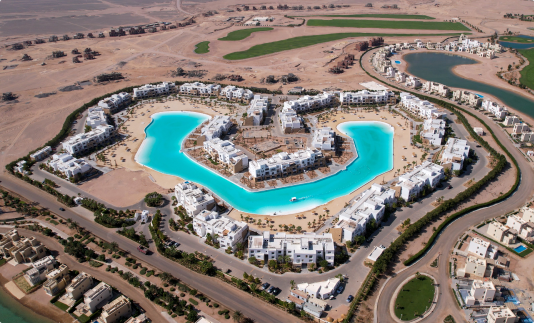
Dubai housing market correction eases in May

1

WHAT WE’RE TRACKING TODAY

THIS MORNING: Oil exports inch back to 85% of pre-war levels + Dubai Holding eyes stake in data center developer Hscale

Good morning, friends. The numbers in this morning’s issue read a lot like a recovery story.

The UAE’s oil exports are at 85% of pre-war levels, according to the International Energy Agency. That’s 4.3 mn bbl / d in early June, up from 1.9 mn bbl / d in March — a more-than-doubling in roughly 10 weeks, before the US-Iran interim agreement even took hold. The infrastructure did what it was built to do — Adcop rerouted crude around Hormuz, the Mandous storage complex kept barrels moving, and Adnoc's own tanker fleet improvised the rest.

Meanwhile, US and UAE ties are stronger than ever: Secretary of State Marco Rubio was in Abu Dhabi yesterday for talks with President Mohamed bin Zayed Al Nahyan, National Security Adviser Sheikh Tahnoon, and Foreign Minister Abdullah bin Zayed, and he left with a clear message — the US won’t trade away Gulf security in exchange for an agreement with Tehran. The 14-point accord still leaves Iran's ballistic-missile program untouched and opens 60 days of harder talks on nuclear issues, so the assurance matters.

Also in recovery mode — Dubai’s housing sector. May’s data shows the pace of correction slowing, and some communities are bucking the trend entirely. Plus: AD Ports has tightened its grip on Global Feeder Shipping, lifting its stake to 81%. We have the numbers on both.

The downside of recovery

The oil supply rebound is hitting prices: Murban was trading at a USD 0.67-per-barrel discount, while Dubai crude slipped to a USD 0.27 discount after commanding a premium of more than USD 60 in March, Reuters reports. Oman’s discount widened to USD 0.96 a barrel.

Why the selloff? Asian refiners are already supplied through August and have “no need for the incremental barrels,” Sparta Commodities’ June Goh told Reuters. Cheaper Gulf crude has instead opened the arbitrage to Europe, with traders sending Murban and Upper Zakum cargoes west.

PLUS- Adnoc has set the selling price of its flagship Murban crude for July at USD 101.48 / bbl, down from USD 104.44 a month earlier, Reuters reports.

Gems plans USD 30 mn India expansion as demand falters slightly at home

Gems Education is making a fresh push into India. The Dubai-headquartered education operator plans to invest up to USD 30 mn in the country over the next three to five years, Economic Times reports. The expansion plans include opening more than 30 Gems-operated schools across India, alongside a network of over 1k partner schools that will carry the Gems brand, targeting a total of over 3 mn students. It’s also planning to launch a teacher-training system and a Category II alternative investment fund targeting school infrastructure and new campus developments in high-demand, low-supply markets.

The rollout is already taking shape. Gems India has lined up 21 school projects, with the first five campuses due to open this academic year, while another 16 campuses are planned over the following two years across eight states.

The move adds to expansion plans here at home, including plans to invest AED 2 bn over the next three years, despite what CEO Dino Varkey described as a slight dip in student registrations this year as fewer families move here from overseas amid geopolitical uncertainty, he told Reuters.

Just a small blip? “It's still very much a growth scenario. Just maybe the velocity has been dialed down a little bit,” Varkey said. “Once we have really clear resolution in relation to the conflict, I actually expect a lot of families to look back on their decisions and frankly choose to move over here,” he added.

From suites to servers

Dubai Holding is considering acquiring a stake in Bain Capital-backed data center developer Hscale as it looks to expand its European portfolio beyond luxury hospitality, Bloomberg reports, citing people it says are familiar with the matter. Hscale designs and builds data centers across Europe, the Middle East, and Africa. Dubai Holding is working with an undisclosed adviser as Bain seeks fresh capital to grow the business, though talks are ongoing and may not lead to an agreement.

IN CONTEXT- The potential investment comes as Dubai Holding’s IPO plans cool. Preparations to list its retail assets have reportedly been paused amid the war’s hit to tourism. It has continued deploying capital elsewhere, becoming Emaar’s largest shareholder last month after lifting its stake to 29.73%.

Adnoc, TotalEnergies, BP to develop Bab Gas Cap

An Adnoc-led concession has been selected to develop and operate the Bab Gas Cap project, Wam reports. The project — billed as the largest gas cap development project in the world — is expected to have a production capacity of 1.5 bn standard cubic feet of natural gas per day. The concession will be operated by Adnoc Onshore.

The concession breakdown: Adnoc will hold a 60% participating stake, with the remaining 40% split between global energy giant TotalEnergies (10%), UK-based BP (10%), China National Petroleum Corporation (8%), and other Japanese, Chinese, and Korean players.

We’re still waiting to hear the final investment decision, which we are expecting sometime this year.

SOUND SMART- Gas cap projects target oil reservoirs where natgas has naturally gathered above the oil layer. As oil is extracted, the trapped gas expands, acting as the primary mechanism for pushing the oil out of the reservoir.

The Paramount-Warner Bros saga continues

The latest in Paramount’s proposed Gulf-backed takeover of Warner Bros. Discovery: Paramount Skydance is reportedly divesting its film distribution JV with Universal Pictures to clear EU antitrust hurdles over its USD 110 bn takeover of Warner Bros Discovery, Reuters reports, citing unnamed sources. The offer will extend the European Commission’s preliminary review deadline to 21 July.

The latest regulatory victory faced by Paramount was an antitrust probe by the US Justice Department, with the institution ruling last week that the transaction wouldn’t harm competition or consumers.

REMEMBER- The transaction — partially funded by a USD 24 bn equity injection from Abu Dhabi’s L’imad Holding, Saudi Arabia's Public Investment Fund, and the Qatar Investment Authority — places CBS-owner Paramount in control of Warner Bros Discovery, the parent company of HBO and CNN.

Not out of the woods yet: Following a green light from Brussels, the merger still faces an EU Foreign Subsidies probe, targeting the Gulf funds — Paramount is expected to secure unconditional approval, Reuters reports. Several US states — including California and New York — are preparing to sue to block the merger, the newswire said.

Data point

10% — that’s how much more pricey it could become to build data centers and hotels in the UAE on the back of rising construction costs, according to a Currie & Brown study picked up by Zawya. Construction costs for data centers are projected to rise by up to 9.9%, while hotel development costs could climb by roughly 9.5%.

What’s driving it? Both project types rely heavily on material-intensive mechanical, electrical, and plumbing systems. Meanwhile, a massive pipeline of data centers, hotels, gigaprojects, and airport expansions is keeping supplies tight. Under a higher-oil-price scenario, steel prices in the UAE and Saudi Arabia could rise by up to 15.9% by September, with aluminium up 10.5% and copper gaining 5.4%.

ICYMI- The pressure was already building before this forecast: UAE material prices rose as much as 71% y-o-y earlier this year as the construction boom collided with shipping bottlenecks and higher freight costs. Several major contracts were also awarded early in 2Q despite a 39.9% y-o-y drop in construction awards in 1Q, keeping materials tight. The US-Iran agreement has eased immediate oil supply and Hormuz concerns, but uncertainty remains over where energy and material prices settle.

PSA

Long weekends all summer long? Dubai is bringing back its flexible summer working hours scheme for the second year, according to a Dubai Media Office statement. The initiative will run from next week through to 10 September.

The new hours: Employees will be divided into two groups — one will work seven-hour days from Monday to Thursday and 4.5 hours on Fridays, while the other will work eight-hour days Monday to Thursday, with Fridays off. Government bodies may implement flexible or remote schedules based on operational needs and staff duties.

WEATHER- The mercury reaches 41°C today in Dubai and Abu Dhabi, before cooling to overnight lows of 30-31°C, according to our favorite weather app.

The big story abroad

Oil dips as ships leave Hormuz: An uneasy wind-down in US-Iran tensions coincided with tankers continuing to exit the Strait of Hormuz, dragging Brent crude futures down around 4.3% to USD 73.74 yesterday — its lowest level since the start of the war.

Speaking of the war: US President Donald Trump asked Congress for USD 88 bn to cover the costs of the four-month conflict. Both the Senate and House separately moved to end the war this month, displaying bipartisan (if largely symbolic) resistance to the campaign.

Micron earnings ease fears of chip-wreck: Extraordinary earnings by Micron — the largest US manufacturer of memory chips — have restored confidence in tech companies following a sharp selloff this week. It posted a 15-fold income jump to USD 28.2 bn in its financial quarter ending in May, surpassing Wall Street expectations by about USD 4 bn.

Another chip player is making moves: SK Hynix — South Korea’s premier chipmaker and most valuable company — is looking to raise USD 29 bn by issuing depositary receipts on the Nasdaq, as it capitalizes on soaring demand for AI.

BTC’s bad year gets worse: Crypto's biggest asset BTC saw its price drop below USD 60k yesterday, reaching its lowest level in 20 months, as an expected Fed rate hike forces investors to flee risky positions for safer assets.

A dry, hot European summer: A heatwave has raised temperatures across Western Europe by as much as 18 °C, resulting in dozens of deaths, disrupted power supplies, and school cancellations. The phenomenon is triggered by a weather pattern known as an Omega block, where heat is trapped for extended periods, keeping cooler temperatures from entering.

Tremor looms over Caracas: A magnitude 7.2 earthquake hit 160 km west of the Venezuelan capital city Caracas, which could lead to as many as 100k casualties, according to the US Geological Survey. The earthquake followed a magnitude 7.5 tremor.

The roundup of news and trends that move your markets and shape corporate agendas delivered straight to your inbox.

Subscribe here

***

You’re reading EnterpriseAM UAE, your essential daily roundup of business, economics, and must-read news about the UAE, delivered straight to your inbox. We’re out Monday through Friday by 7am UAE time.

EnterpriseAM UAE is available without charge thanks to the generous support of our friends at Mashreq and Hassan Allam Properties.

Were you forwarded this email? Tap or click here to get your own copy of EnterpriseAM UAE.

Want to send us a story idea, request coverage, ask for a correction, or otherwise get in touch? Reach out to us on [email protected] .

DID YOU KNOW that we also cover Egypt, Saudi Arabia, and the MENA logistics industry?

***

Circle your calendar

Check out our full calendar on the web for a comprehensive listing of upcoming news events, national holidays and news triggers.


This publication is proudly sponsored by

Rise every day
From OUR FAMILY to YOURS
2

THE BIG STORY TODAY

Dubai’s housing market showed promising signs in May as correction pace eases

Dubai’s housing market correction continued in May — but the pace of decline is easing. Price falls extended into a third straight month, though the correction is slowing, and the market may be nearing a floor, according to the latest ValuStrat Price Index (pdf). The VPI dipped to 222.1 points in May, with citywide residential capital values down 1.2% m-o-m — an improvement on April’s 1.9% decline and well off March’s sharp 5.9% correction. Annual growth remains positive at 2.5%.

The pressure is not evenly spread. Older, supply-constrained villa communities continue to hold up well — older freehold villa prices remain 191% above post-pandemic levels and 78% above the 2014 peak. Apartment-heavy locations are showing more strain, with apartments more broadly seeing values fall 0.9% m-o-m and posting their first annual decline in six years, falling 1.4% y-o-y. Some communities bucked the trend, however — DIFC posted 10.3% annual gains, while Remraam and Dubai Silicon Oasis were also up solidly y-o-y.

The steepest annual declines were at Burj Khalifa (-13.9%) and Jumeirah Beach Residence (-9.9%), pointing to growing pressure in prime apartment stock.

Villas held up slightly better: Villa values fell 1.4% m-o-m but are still up 5% y-o-y, with established communities — Jumeirah Islands, The Meadows, and Emirates Hills — continuing to outperform.

Transactions are cooling sharply — but off-plan remains dominant. Oqood registrations dropped 29.3% m-o-m and were down 41.4% annually, yet off-plan sales still accounted for 77% of all residential transactions in May. The ready market had a rough month, with transaction volumes falling 18.5% m-o-m and shedding 55.1% y-o-y, suggesting buyers are still gravitating toward new launches despite the broader slowdown.

3

M&A WATCH

AD Ports lifts Global Feeder Shipping stake to 81%

AD Ports is doubling down on one of the crown jewels in its shipping portfolio. The Abu Dhabi-listed logistics giant lifted its stake in Dubai-based Global Feeder Shipping (GFS) to 81%, spending AED 1.1 bn to acquire an additional 30% holding and tighten its grip on the business, according to a press release (pdf).

The transaction saw AD Ports exercise a call option secured when it first bought a 51% stake in GFS in early 2024. The additional shares were acquired at the same enterprise valuation agreed upon two years ago, implying a total value of AED 3.67 bn for the feeder operator. The logistics giant is using a mix of debt and asset monetization for the transaction.

Why it matters: GFS has a foothold in the GCC, the Indian subcontinent, Africa, eastern Asia, and Mediterranean regions, and AD Ports says it’s one of its most “strategically significant assets.” It transported 2.8 mn TEUs last year, and since AD Ports acquired its initial stake in 2024, GFS has generated cumulative EBITDA of more than AED 1.8 bn. A higher ownership tightens its grip on a firm that widens AD Ports’ network at a time of heightened trade volatility.

GFS proved its value in the past few months: Beyond its operations across key corridors, AD Ports said the firm “through a sustained period of maritime disruption [...] has maintained and expanded trade connectivity where other operators withdrew, ensuring the uninterrupted flow of cargo for customers across the GCC region, whilst serving the Indian subcontinent, Red Sea, Far East, Mediterranean, and Africa regions — reinforcing AD Ports Group’s role as a reliable enabler of trade through volatility.”

IN CONTEXT- The logistics giant has been steadily expanding its footprint in recent months, helping it hedge against ongoing logistics disruptions. Earlier this month, it expanded into Brazil with a USD 835 mn terminal operator acquisition. It’s also been deepening its footprint within Europe’s logistics network, expanding its presence in Africa, and looking to secure access across the Middle Corridor.

4

ALSO ON OUR RADAR

EGA’s recycling hedge goes live

Emirates Global Aluminium (EGA) completed the UAE’s largest aluminum recycling plant at Al Taweelah, adding 185k tons of annual capacity while its primary smelting operations remain under repair, according to a statement. The facility turns post- and pre-consumer scrap into low-carbon billets and T-bars, bringing onshore material that has largely been exported for processing.

The road to launch was bumpy: Production began in February, but final commissioning was paused after a drone attack damaged EGA’s Al Taweelah smelter in March. Work resumed in April and recycled-metal output restarted in early May, with full capacity expected within six months, subject to scrap availability.

REMEMBER- Recycling has become a more important hedge for EGA following the Al Taweelah disruption, which took out a significant chunk of capacity at its 1.6 mtpa facility, and last year’s Guinea mining dispute. The company has since restored bauxite supplies through a settlement and is aiming to reach 400k tons in total recycling capacity by 2028. It’s also working on expanding its production base through takeovers, with a planned Italian acquisition and a possible takeover of a stake in Oman’s Sohar Aluminium, which produces 400k tons per year.

Etihad Energy moves downstream

Maritime and energy infrastructure player Etihad Energy Holding — formerly Gulf Navigation — will spend USD 300-350 mn developing a 15k bbl / d refinery in Fujairah, marking its first move into refining, according to a DFM disclosure (pdf). The preliminary estimate could change following studies and engineering work.

The details: The project, being developed through its subsidiary Brooge Petroleum and Gas Investment Company with Italy’s PEG and US-based Honeywell UOP, will process naphtha into Euro 5-compliant gasoline and other higher-value products. CEO Saif Al Hazaymeh told CNBC Arabia the output would also include 95-octane gasoline, low-sulfur diesel, lubricating oil, and naphtha.

Zoom out: Al Hazaymeh also said that the refinery sits within a AED 1.5 bn, three-year investment plan covering oil and gas and maritime shipping. The group is targeting around 28% of Fujairah’s storage market.

REMEMBER- The UAE is increasingly viewing Fujairahas critical infrastructure and an asset to hedge against future disruption through the Strait of Hormuz.

5

PLANET FINANCE

The battle for Chinese wealth

Chinese companies and investors moved a record USD 807 bn offshore last year, helping Hong Kong overtake Switzerland as the world’s largest offshore wealth hub, Bloomberg reports. Now, Beijing is tightening its grip on where that money goes to try to stem the USD bns of outflows.

Outflow control: Authorities have imposed roughly USD 330 mn in penalties on three brokerages commonly used for offshore investing, tightened bank controls, and increased scrutiny of overseas trust structures used by wealthy Chinese. The measures amount to China’s biggest cross-border financial clampdown in a decade, according to wealth managers and advisers cited by the business news service.

Why now? Beijing appears to be seeking greater oversight of offshore assets and capital flows after years of record outflows. Or, as Sterlington partner Paul Jebely put it: “Beijing isn’t closing the door — they are installing a doorframe.”

The move has implications for its next-door neighbor. Hong Kong’s family-office count jumped 25% to 3.4k last year as mainland wealth flowed into real estate, financial markets, and luxury spending. The city’s capital markets boom has also been fueled by Chinese money, with listings, placements, and block trades topping USD 76 bn last year — the highest level in four years.

Could the Gulf benefit? Dubai has spent much of the past decade positioning itself as a global wealth hub, attracting family offices, hedge funds, and wealthy migrants seeking political stability, favorable tax treatment, and global connectivity. The city is now home to around 81.2k m’naires, up 102% over the past decade, making it one of the world’s fastest-growing wealth hubs, according to Henley & Partners.

Wealthy Chinese looking to diversify their offshore footprint — rather than concentrate it in Hong Kong — need jurisdictions that offer political neutrality, robust legal frameworks, and distance from Beijing's regulatory reach. Dubai International Financial Centre’s common-law courts, zero personal income tax, and the UAE's studied neutrality on US-China tensions check those boxes in ways that Singapore — a second offshore hub that absorbs a lot of Chinese outflows — increasingly cannot.

There are limits to the window: Much of the money leaving China still flows through Hong Kong and Singapore because of their proximity, language advantages, and established banking infrastructure. But if Beijing’s latest measures encourage wealthy Chinese to diversify their offshore footprint rather than abandon it altogether, Dubai is among the small group of jurisdictions positioned to compete for a share of that capital.

MARKETS THIS MORNING-

Asia-Pacific markets are trading higher in early trading this morning, led by South Korea’s Kospi, which is up over 4.4%. Japan’s Nikkei is looking at more moderate gains. Over on Wall Street, equities are set to open higher, with index futures in the green ahead of key US inflation data due later today.

ADX

9,993

-0.3% (YTD: 0.0%)

DFM

6,112

+0.1% (YTD: +1.1%)

Nasdaq Dubai UAE20

4,853

-0.4% (YTD: -0.7%)

USD : AED CBUAE

Buy 3.67

Sell 3.67

EIBOR

3.4% o/n

4.2% 1 yr

TASI

11,007

-0.3% (YTD: +4.9%)

EGX30

51,711

-0.1% (YTD: +23.6%)

S&P 500

7,358

-0.1% (YTD: +7.5%)

FTSE 100

10,462

+0.3% (YTD: +5.3%)

Euro Stoxx 50

6,215

-0.3% (YTD: +7.2%)

Brent crude

USD 73.74

-4.3%

Natural gas (Nymex)

USD 3.23

+0.2%

Gold

USD 4,015

+0.1%

BTC

USD 60,935

-2.8% (YTD: -30.5%)

Chimera JP Morgan UAE Bond UCITS ETF

AED 3.72

+0.0% (YTD: -0.8%)

S&P MENA Bond & Sukuk

152.48

+0.3% (YTD: +0.4%)

VIX (Volatility Index)

18.63

-4.4% (YTD: +24.6%)

THE CLOSING BELL-

The ADX fell 0.3% yesterday on turnover of AED 1.3 bn. The index is flat YTD.

In the green: Ooredoo (+10.4%), Abu Dhabi National Takaful Co. (+9.0%), and Invest Bank (+3.4%).

In the red: Alef Education Holding (-2.9%), Oman & Emirates Investment Holding Co (-2.3%), and National Corporation for Tourism & Hotels (-2.0%).

Over on the DFM, the index rose 0.1% on turnover of AED 739.8 mn. Meanwhile, Nasdaq Dubai fell 0.4%.


JULY

28-29 July (Tuesday-Wednesday): Federal Open Market Committee (FOMC) meeting.

SEPTEMBER

1-3 September (Tuesday-Thursday: Middle East Energy, Dubai World Trade Center, Dubai.

7-9 September (Monday-Wednesday): AIM Congress, Dubai World Trade Center.

7-9 September (Monday-Wednesday): International Property Show, Dubai World Trade Center, Dubai.

12-13 September (Saturday-Sunday): Emirates International Congress on AI & Visionary Leadership in Transforming Healthcare, Adnec Center Abu Dhabi.

14-17 September (Monday-Thursday): Arabian Travel Market, Dubai World Trade Center, Dubai.

15-16 September (Tuesday-Wednesday): Federal Open Market Committee (FOMC) meeting.

29-30 September (Tuesday-Wednesday): AFCM Annual Conference, Abu Dhabi.

OCTOBER

4-10 October (Sunday-Saturday): World Space Week, Abu Dhabi.

5-7 October (Monday-Wednesday): AI Everything Global, Adnec Center, Abu Dhabi.

12-14 October (Monday-Wednesday: Airport Show, Dubai World Trade Center, Dubai.

20-22 October (Tuesday-Thursday): Future Health Summit, Adnec Center Abu Dhabi.

27-28 October (Tuesday-Wednesday): Arab Competition Forum, Dubai.

27-28 October (Tuesday-Wednesday): Federal Open Market Committee (FOMC) meeting.

30 October (Friday): Large businesses achieving annual revenues equal to or above AED 50 mn must appoint an accredited service provider for e-invoicing implementation.

Signposted to happen sometime in October 2026:

  • Abu Dhabi Space Week, Abu Dhabi.

NOVEMBER

2-6 November (Monday-Friday): Dubai Future Finance Week, Dubai.

4 November (Wednesday): Digital Transformation Summit, Sofitel, Abu Dhabi.

9-10 November (Monday-Tuesday): Annual government meetings, Abu Dhabi.

9-12 November (Monday-Thursday): EMEA Council on Hotel, Restaurant and Institutional Education Conference, Dubai College of Tourism, Dubai.

10-12 November (Tuesday-Thursday): Dubai International Electric Vehicle Exhibition & Conference, Dubai World Trade Center.

16-18 November (Monday-Wednesday): World Police Summit, Dubai World Trade Center, Dubai.

DECEMBER

2-4 December (Wednesday-Friday): UN Water Conference, UAE.

4-6 December (Friday-Sunday): Formula 1 Abu Dhabi Grand Prix, Abu Dhabi.

8-9 December (Tuesday-Wednesday): Capital Market Summit, Madinat Jumeirah, Dubai.

8-9 December (Tuesday-Wednesday): Federal Open Market Committee (FOMC) meeting.

8-10 December (Tuesday-Thursday): Abu Dhabi Water & Power Week, Adnec Center, Abu Dhabi.

Signposted to happen sometime in 2027:

  • 1 January: Deadline for large businesses to implement e-invoicing;
  • 1Q 2027: Completion of the first phase of Hassyan seawater desalination project;
  • 1-3 February (Monday-Wednesday): World Governments Summit;
  • 31 March: Small businesses with annual revenues of less than AED 50 mn are obliged to contract with an accredited service provider for e-invoicing implementation;
  • 31 March: Government entities are required to appoint an accredited service provider for e-invoicing implementation;
  • 21-22 April (Wednesday-Thursday): Token2049, Dubai;
  • 1 July: Deadline for small businesses to implement e-invoicing;
  • 1 October: Deadline for governments to implement e-invoicing;
  • Abu Dhabi’s solar and battery energy facility, combining 5.2 GW of solar capacity and 19 GWh of battery storage, is set for commissioning.

Signposted to happen sometime in 2028:

Signposted to happen sometime in 2029:

  • Sibos 2029 organized by the Society for Worldwide Interbank Financial Telecommunication (SWIFT), Dubai;
  • Annual Meetings of the World Bank Group and the International Monetary Fund, Abu Dhabi;
  • The commissioning of the seventh phase of Mohammed bin Rashid Al Maktoum Solar Park.
Now Playing
Now Playing
00:00
00:00