Get EnterpriseAM daily

Available in your choice of English or Arabic

Debt markets wake up from their slumber + hiring outlook cools as exposed sectors implement pay cuts, hiring freezes

1

WHAT WE’RE TRACKING TODAY

THIS MORNING: MAF is not delaying delivery for Tilal Al Ghaf homes, for now + Edge to set up Edge Europe in Paris

Good morning, everyone, and happy FRIDAY. We have a long weekend ahead of us — the last one for at least a couple of months — and our sendoff to you is a bumper issue, with plenty of big headlines to digest.

**BUT FIRST, A QUICK PROGRAMMING NOTE: We’re also going to be off on Monday for the public holiday, but we’ll be back in your inbox bright and early on Tuesday morning.

AND A CLARIFICATION- In yesterday’s issue, we reported on Abu Dhabi’s USD 2.5 bn bond reopenings without making clear that this was confirmation of an issuance we first covered in April. The two tranches — USD 1.5 bn of 5.0% notes due 2034 and USD 1 bn of 4.875% notes due 2029 — were tapped on 15 April. Yesterday’s piece was based on the Department of Finance notices formally confirming the transaction.

Could we get some good news over the weekend? After attacks on Iran and counterattacks on Bahrain, Kuwait, and Jordan earlier Wednesday night, US President Donald Trump has now flipped the script and said he canceled further airstrikes on Iran and that an agreement is pretty much done. Iran has denied any agreement on a specific text, but Trump insists it’s close.

Another significant development, closer to home: UAE and Iranian senior national security officials have reportedly met face-to-face for the first time since the war began — a stark turnaround for both sides, which sources said reflects a growing acknowledgment of the need to calm bilateral ties. It’s not clear who was at the table when they met, and there has been no official confirmation yet from state news agency Wam or the Foreign Affairs Ministry of a meeting.

Until then, we end your week on a note of cautious optimism. The newswell today is largely positive — Emaar is committing a whopping AED 200 bn to a new Dubai masterplan, debt markets are waking up from their slumber, and Abu Dhabi’s sovereign funds — and renewables firm Masdar — are still busy deploying abroad.

But the backdrop is one where hiring freezes are biting in hospitality and trade, some developers are sending out client notifications about supply chain disruptions, and the Gulf's air traffic is still running well below normal.

WEATHER- We’re looking at another hot day with a high of 40°C in Dubai and a low of 29°C, while Abu Dhabi will see a high of 39°C and a low of 27°C, according to our favorite weather app.

Setting the record straight

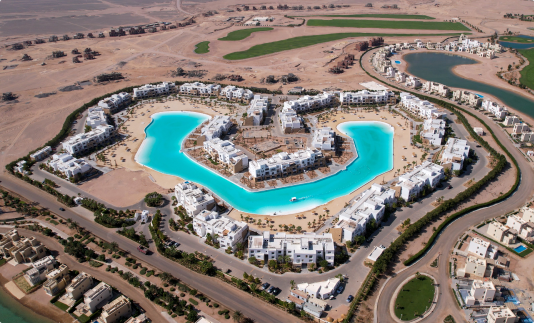
Majid Al Futtaim has disputed a Semafor report published yesterday claiming the conglomerate invoked force majeure clauses in sales contracts at its Tilal Al Ghaf development in Dubai, citing war-related supply chain disruptions. The firm said in a statement to EnterpriseAM UAE it was a false “interpretation” that “does not reflect the facts.”

The firm confirmed that construction across Tilal Al Ghaf continues to progress in line with schedule. It maintains that they had only shared a note with customers notifying them of “broader regional conditions currently affecting the construction industry, including pressures on logistics and material supply chains,” without signaling a change to delivery timelines.

Emirates offers up ins. for travelers

We now know a bit more about the incentives Emirates is offering to attract more flyers amid ongoing geopolitical instability. The airline is working with insurers to launch a dedicated travel ins. product that would ensure a route home for passengers if war disruption returns, even if that means rebooking them on another carrier, Emirates President Tim Clark told the Financial Times.

The proposed coverage is aimed at addressing one of the biggest obstacles facing Gulf airlines since the war began. Passenger traffic through Dubai remains below pre-war levels, with around 40k travellers a day transiting through the airport compared with roughly 100k before the conflict. Clark said demand is nevertheless recovering faster than expected as confidence gradually returns.

Edge sets up European entity

State-owned defense firm Edge is formalizing its presence in Europe under the umbrella of Edge Europe, headquartered in Paris, it said in a press release. The Paris headquarters will anchor government engagement and investment strategy, while an engineering hub in Bordeaux will be its engineering and manufacturing core in France.

BACKGROUND- Edge has been steadily embedding itself deeper in Europe’s defense-industrial supply chain as part of a wider UAE push to expand critical military capabilities. The group has already moved into propulsion through a planned controlling stake in Italy’s CMD, alongside partnerships in chiplet manufacturing with Lockheed Martin, electronics and PCB localization agreements across Europe, and a USD 1.5 bn defense manufacturing pipeline with Spain’s EM&E Group.

DIFC proposes arbitration amendments

Dubai International Financial Center (DIFC) is proposing to significantly expand its arbitration toolkit in changes that would affect how disputes are structured, funded, and resolved for the thousands of companies that use the center's arbitration framework, according to a new consultation paper (pdf) open for feedback until 6 July.

The most consequential proposals: Tribunals would gain the power to award on a summary basis where a claim has no real prospect of success — a meaningful acceleration for cut-and-dried cases. Emergency arbitrators would be able to make preemptive orders. And parties would be required to disclose all third-party funding agreements, closing a gap that has attracted scrutiny in other major arbitration seats.

Also proposed: Extended timelines for proceedings to begin; a mechanism to lift confidentiality when the court deems it appropriate; consolidation and joinder orders by agreement; provisional relief including payment or property; and more flexibility on mediation structure.

For parties involved in arbitration proceedings, the paper proposes more flexibility to choose the type of mediation, appoint more than one mediator if they wish, and conduct proceedings through the DIFC’s mediation centers.

There’s more where that comes from, says ADIC…

Mubadala’s Abu Dhabi Investment Council is planning to build USD 15 bn worth of exposure in global hedge funds, after just recently backing a USD 2 bn capital raise by Michael Gelband’s ExodusPoint Capital Management, Bloomberg reports, citing people familiar with the matter.

The Abu Dhabi fund is working with local banks on a total return swap facility that would let it gain exposure to a basket of hedge funds without directly owning them, sources are quoted as saying. It’s mainly targeting “multistrategy firms” with steady positive returns in recent years, the business news information service says.

In context: ADIC has been pivoting toward a louder, more expansion-focused strategy under the auspices of Saeed Al Mazrouei, who took the reins in 2023. The SWF is targeting minimum returns of 10%, upping its BTC and alternative asset exposure, and pushing into segments like ins. and secondaries. Its deep capital reserves and lack of payout commitments are giving it an edge on competitors, as it looks to deploy upward of USD 10 bn over the next three years.

Data point

9.3% y-o-y — that’s how much Ras Al Khaimah’s residential capital values grew in 1Q 2026, its slowest pace of growth in two years, according to ValuStrat Price Index (pdf). Values were largely unchanged from the previous quarter, inching up 0.2%. That means capital values mostly held up — and even grew — despite a dip in activity due to the conflict.

Both apartments and villas posted the same index reading of 124.1 points. Apartments values rose 10.3% y-o-y, while villa growth slowed to 7.4% — with both segments remaining flat on a quarterly basis. Al Marjan Island remained the standout performer, with apartment prices climbing 13.2% from a year earlier, and it was the only area tracked to see q-o-q growth, albeit of just 1.3%. Al Hamra and Mina Al Arab also continued to record annual gains.

Rental returns held steady despite the moderation in capital appreciation, with gross yields standing at 5.3% for both apartments and villas.

The big story abroad

SpaceX’s historic IPO is the biggest story in the business press right now. Elon Musk’s company made history as the biggest IPO ever, raising USD 75 bn — making it double the size of Aramco’s USD 29.4 bn listing in 2019. Retail investors put in some USD 100 bn worth of orders.

AND- Underwriting banks have been given an over-allotment option to buy an additional 83.3 mn shares at the IPO price, potentially increasing the size of the IPO to USD 86 bn if fully exercised. The firm is now valued at nearly USD 1.8 tn. All eyes are now on its trading debut later today, with analysts expecting at least a 10% pop — or much more considering the hype around the IPO — and many looking towards how performance holds up over the next few weeks.

***

You’re reading EnterpriseAM UAE, your essential daily roundup of business, economics, and must-read news about the UAE, delivered straight to your inbox. We’re out Monday through Friday by 7am UAE time.

EnterpriseAM UAE is available without charge thanks to the generous support of our friends at Mashreq and Hassan Allam Properties.

Were you forwarded this email? Tap or click here to get your own copy of EnterpriseAM UAE.

Want to send us a story idea, request coverage, ask for a correction, or otherwise get in touch? Reach out to us on [email protected] .

DID YOU KNOW that we also cover Egypt, Saudi Arabia, and the MENA logistics industry?

***

Circle your calendar

Check out our full calendar on the web for a comprehensive listing of upcoming news events, national holidays and news triggers.

This publication is proudly sponsored by

Rise every day
From OUR FAMILY to YOURS
2

THE BIG STORY TODAY

Debt activity picked up in the Gulf in May

Two months into the (albeit shaky) ceasefire, Gulf companies and sovereigns are slowly returning to debt markets, with May seeing USD 11.2 bn in issuances across the region, Bank Nizwa’s Senior Head of Treasury and Global Markets Muhammad Ahsan tells EnterpriseAM — but the window hasn’t opened for everyone.

The figure is not too bad when you consider the ongoing geopolitical uncertainties in the region, with multiple instances of the US and Iran exchanging fire, and a week of Eid holidays, Ahsan tells us.

When it comes to spreads, they’ve tightened significantly since the beginning of the war, with investment-grade names seeing spreads at tighter than they were at the start of the war, Amwal Capital Co-Head of Fixed Income Zeina Risk tells us. Banking and real estate firms’ spreads are still wider than pre-war levels, she adds.

The pricing premium, however, is nothing alarming or exceptional given the geopolitical situation, Ahsan explains.

“I believe investors are generally receptive to new issues from across the region as we have seen strong demand for the new [transactions],” Ahsan says. “Spreads are slightly elevated and base yield levels have moved higher, which makes all-in yields attractive,” he adds.

Already, June is starting off strong. Bahrain was the first Gulf sovereign to return to public debt markets since the war, and Dubai Islamic Bank became the latest bank to issue an AT1 sukuk, raising USD 1 bn at almost prewar-level spreads, Ahsan says.

Looking ahead

“We see activity continuing in June before taking a breather in July and August due to the summer lull,” Ahsan says. Rizk also sees activity resuming in June, though she expects issuances to pause ahead of the US Federal Reserve’s FOMC next week, before it resumes depending on market conditions.

Rizk is skeptical that the Fed will move at all. With CPI data coming in largely neutral and payrolls strong, she says arguments exist in both directions, but her base case is that the Fed stays on hold for the rest of the year — absent a significant shift.

Most activity will likely be from corporates, both investment-grade and non-investment-grade, as sovereigns have already raised plenty of funding from private placements, Ahsan points out.

The window is opening up, but not for everyone — Ahsan and Rizk both expect real estate firms to wait out the market. Ahsan says non-investment-grade corporate, especially in the hospitality and real estate sector in the UAE, are likely to stay away from the markets, saying that “levels are prohibitive for them and they don’t face any major refinancing pressures.”

REMEMBER- Abu Dhabi raised USD 2.5 bn in April from private debt placements, while Qatar also raised some funds from private markets — as did several UAE banks including First Abu Dhabi Bank, our friends at Mashreq, and Emirates NBD.

3

BUSINESS

Hiring sentiment cools

UAE hiring plans have cooled sharply heading into 3Q, with employers turning noticeably more cautious amid geopolitical challenges after a strong start to the year, according to the Manpower Group 3Q Employment Outlook Survey (pdf). The survey shows a net employment outlook (NEO) of 17%, down 43 points q-o-q and 31 points y-o-y, with 25% anticipating making cuts and 42% of employers looking to increase headcount.

It’s geopolitics, silly: “Among employers expecting to reduce staff, 49% cite geopolitical challenges as negatively affecting their staffing decision,” compared with 37% who pointed to economic pressures, a spokesperson from ManPower Group tells EnterpriseAM. Expansion confidence has also softened sharply, with the share of employers hiring because of company growth falling to 36% from 54% in 2Q.

It’s not just less hiring — besides the wider hiring freezes, there’s also pay cuts and unpaid leave arrangements across “exposed” industries, the spokesperson says. Those sectors are, unsurprisingly, trade and logistics, which saw the steepest y-o-y decline with outlook falling 71% and remaining negative, and hospitality, which though still positive at +21%, has been “severely impacted relative to its position at the same time last year,” they say, adding that “the departure of tourists and expatriates hit this sector early and hard.”

In context: The war hit at a peak time for the sector, in the final couple of months before the summer lull which usually see tourism traffic increase due to a packed events schedule and good weather.

The construction and real estate, utilities, and professional services sectors also recorded declines in outlook but remained in positive territory amid ongoing megaproject delivery, the spokesperson says.

It’s harder the smaller you are: Among those looking to hire, larger employers were the most confident, with a 35% hiring outlook, while companies with fewer than 10 employees were eyeing expansion with a 29% NEO. Firms with 10-49 employees, however, recorded an outlook of -7%. This suggests smaller businesses are finding it harder to absorb uncertainty than larger corporates, ManPower Group adds.

On the other side of the spectrum, the information sector is still going strong, with a NEO of 31%, in “perhaps the most telling indicator of how UAE employers are reallocating investment and talent priorities under pressure, ManPower Group’s spokesperson says. “The organizations continuing to hire are, broadly, those whose value proposition is digital, knowledge-based, or infrastructure-linked, and whose revenue streams are either insulated from physical supply chain disruption or actively benefiting from accelerated digital adoption,” they explain. “The organisations pulling back are those whose operations depend on physical movement, footfall, or cross-border trade, precisely the activities most directly disrupted by the conflict and its aftermath.” Finance and ins. also held steady on a y-o-y basis.

That’s a trend that’s only been exacerbated, but isn’t entirely new: “UAE employers were progressively moving investment toward capability-intensive functions linked to AI, data, financial services, and healthcare,” we’re told. “The geopolitical shock has accelerated that reallocation rather than reversed it.”

In context

Near the beginning of the regional war, recruitment plans were holding steady as employers saw disruption as contained and temporary, analysts told us. Cooper Fitch’s April Gulf Employment Index contracted 12% in March, the month of peak military activity, before rebounding 13% in April as the ceasefire took hold and projects and hiring pipelines resumed. But experts told us much of the rest of the year’s trajectory would depend on how long the war drags on, with a drawn-out conflict likely to weigh on risk appetite.

Recruiters are also looking increasingly in-country instead of relying on international recruitment as part of a wider reshaping of GCC labor markets. Hiring patterns are diverging across different sectors, with tourism and hospitality being hit the hardest, while real estate continued to post strong growth.

4

M&A WATCH

Masdar makes another play in Spain

Emirati renewables giant Masdar has just made another renewables play in Europe, securing a 49.99% stake in a EUR 849 renewables portfolio, according to a press release (pdf). Masdar agreed on the takeover with Spanish multinational energy player Repsol, and it’s expected to close by year-end, pending regulatory approval.

About the portfolio: The acquisition will see Masdar snap up part of a portfolio which includes 705 MW of capacity from 13 wind farms and six solar parks — all of which are already up and running. The portfolio also includes a 565 MW pipeline with potential for hybridization, enabling the future integration of wind, solar, and battery storage setups.

Behind the move: Masdar sees Spain as “one of Europe’s fastest-growing economies,” where renewable energy is playing a major role, CEO Mohamed Jameel Al Ramahi said. Meanwhile, Repsol is looking to optimize its asset rotation at the moment.

IN CONTEXT- Spain and the wider Iberian Peninsula have long been a focus point of Masdar’s ambitions, with this latest takeover set to bring its total operational capacity in the region up to 4.1 GW, with 1 GW under development. Last year, the company acquired a 234 MW solar project, one of the largest in the region. Prior to that, it completed its EUR 1.2 bn takeover of Spanish renewables firm Saeta Yield and agreed to acquire a 50% stake in Spanish power firm Endesa’s solar power installation subsidiary for AED 3.3 bn. In Portugal, it owns 40% of a nine-wind farm portfolio, set to be upgraded to boost capacity next year.

5

REAL ESTATE

A city within a city

Another sign Dubai’s developers aren’t hitting the brakes: Emaar is preparing to launch what could be one of the largest master-planned developments in the emirate’s history. The developer has unveiled plans for an AED 200 bn mixed-use project designed to house nearly 150k residents, according to a statement.

Think less neighborhood, more city: Emaar says the development will combine residential, commercial, education, retail, hospitality, and civic assets in what it’s calling “a city within a city.” The masterplan will span more than 4.5 mn sqm and be structured across five districts.

Emaar has yet to disclose the location, launch timeline, or number of units, though it says a detailed announcement is “imminent.”

Why it matters

The announcement is the latest sign that major developers are still doubling down on large-scale projects despite regional tensions and signs of a cooling property market. This week alone, AHS Properties acquired the Shangri-La Dubai for AED 1.1 bn and is planning an AED 25 bn mixed-use project, while Beyond Developments launched its AED 4 bn The Yards masterplan. Sharjah’s Alef Group also unveiled an AED 4 bn waterfront development in Al Mamzar.

The pipeline keeps growing: Recent months have seen Majid Al Futtaim unveil an AED 62 bn community in Dubai South, Aldar announce plans for 20 mn sqm of residential and mixed-use developments in Abu Dhabi, and Brookfield and Alshaya unveil plans for a 480k sq ft mixed-use project in Dubai Hills.

It’s also a vote of confidence from Emaar in Dubai

The launch comes as the developer expands across the region with new projects in Saudi Arabia and Egypt and plans to invest up to USD 18 bn in Syria. Against that backdrop, committing AED 200 bn to a new Dubai masterplan points to what founder Mohamed Alabbar described as the company’s “deep confidence in the future of the UAE.”

6

M&A WATCH

AD Ports raises offer for Alexandria Containers

AD Ports is sweetening its takeover bid for Egypt’s biggest container terminal operators, Alexandria Container and Cargo Handling Company, the Arabic press reports, citing a statement from the Egyptian Financial Regulatory Authority.

What’s new? The Abu Dhabi government-owned ports operator, through subsidiary Black Caspian Logistics Holding, submitted a revised mandatory tender offer to acquire up to 90% of the EGX-listed company at EGP 27.47 per share. The new offer is roughly 19.5% higher than the EGP 22.99 per share proposal it tabled late last year, and presents a slight discount of 2.5% to its share price at Wednesday's close.

Why it matters: This MTO is a necessary regulatory step to officially consolidate the indirect holdings of ADQ and its subsidiary AD Ports Group. After initially acquiring a 32% stake in 2022, ADQ secured an indirect 51.3% majority control last November when AD Ports purchased an additional 19.3% stake. Given Egyptian securities law mandates an MTO when a shareholder’s stake exceeds 33%, AD Ports launched a mandatory tender offer in December to increase its direct ownership, which was later extended.

REMEMBER- The Madbouly government, which holds 40%, isn’t selling — it’s in Alex Containers for the long term, waiting for the asset to appreciate before monetizing further, we’re told. The transaction was expected to close in 2Q 2026 if AD Ports gets the green light from the Financial Regulatory Authority, among other agencies.

7

MOVES

Aldar Investment CEO steps down

Aldar Investment CEO Jassem Busaibe is stepping down after more than a decade with the group, capping off a 27-year career that saw him build the firm into one of the region’s better-known real estate investment platforms, according to a disclosure to the ADX (pdf).

Aldar Investment is the income-generating arm of Aldar Properties, managing a portfolio of AED 49 bn in investment-grade real estate. Its footprint spans retail, residential, commercial, logistics, hospitality, and education — including Yas Mall and office towers on Al Maryah Island — as the group diversifies beyond development sales.

A transition period is underway: Busaibe will remain in a support role while Aldar works through succession. The company says it will announce leadership arrangements “in due course.”

8

KUDOS

Emirates tops regional airline rankings

Emirates has taken the top spot as the best overall airline in the Middle East in Apex’s 2026 Airline Awards, according to Dubai Media Office. Its onboard services, especially the ongoing rollout of Starlink satellite internet connectivity, helped it clinch first place, with the carrier also placing first in the entertainment category.

Etihad Airways also featured on the rankings, coming in first in the food and beverage segment, while regional competition came from Saudia, Oman Air, and Qatar Airways, which each topped the list in different segments.

IN CONTEXT- The rankings come as Gulf carriers compete for customers amid a war-driven dip in passenger numbers and an uptick in fuel costs. Emirates CEO Tim Clark recently said the carrier will be offering “incentives” to lock in hesitant travelers, while Etihad said it’s seeing a rebound in demand across key markets.

9

ALSO ON OUR RADAR

Mubadala, Adia continue activity abroad + Aster DM plants its flag east as Hospitality Net heads to Dubai

Mubadala backs Canadian challenger bank

Abu Dhabi sovereign wealth fund Mubadala co-led a CAD 130 mn Series E funding round in Canadian challenger bank Koho alongside Baltimore-based Savano Capital, with Koho valuing out at CAD 1.33 bn, according to a statement.

Koho — which serves 2.5 mn Canadians — is using the raise primarily to meet the capital base requirements for a federal banking license, a process it has been navigating with regulator OSFI since 2021.

IN CONTEXT- The investment marks another step in Mubadala’s build-out across Canadian financial services. The fund completed its CAD 4.7 bn take-private of CI Financial — one of Canada’s largest asset and wealth managers — in August 2025. Koho is a different wager: early-stage, retail-facing, and pre-license.

Adia was also active

The Abu Dhabi Investment Authority (Adia) was among the investors that backed a new fundraise for Digital Asset Holdings, the firm behind the Canton Network — a permissioned blockchain built to let financial institutions tokenize and settle traditional securities while keeping sensitive data private, Coin Telegraph reports. The round, led by a16z crypto, which contributed USD 100 mn, valued Digital Asset at around USD 2 bn and saw participation from Citadel Securities, Optiver, and 7RIDGE.

IN RELATED NEWS- An Adia investment vehicle sold40 mnshares in Lenskart — roughly 2.3% of the company’s outstanding equity — in a block transaction worth around USD 204 mn. Goldman Sachs, Morgan Stanley, and Kotak Mahindra Asset Management were among the buyers. Adia’s stake in the firm fell to 9.78% from 12.08% following the transaction, according to CNBC TV18.

Aster DM plants its flag in Saudi Arabia’s Eastern Province

UAE-headquartered Aster DM Healthcare acquired a majority stake in Saudi’s ProCareHospital through a joint venture with Saleh Al Rahji & Partners Co., marking its entry into the Eastern Province, according to a press release. The healthcare provider’s plans for the facility — which will be rebranded as Aster ProCare Hospital — include expanding capacity to 209 beds and setting up an AI-enabled cardiac catheterization lab.

REMEMBER- Aster DM’s on track with its plans: We reported back in 2024 that Aster was looking to acquire some USD 250 mn worth of healthcare assets to boost its Saudi portfolio. Since then, the healthcare giant has launched an Arabic-voiced digital healthcare app, myAster, and was reportedly eyeing a dual listing on Tadawul and in the UAE. In addition to its latest acquisition, Aster DM owns Aster Sanad Hospital in Riyadh and 16 pharmacies in the Kingdom.

Hospitality Net heads to Dubai

Dubai-based strategic advisory and investment firm In2 Consulting is buying into hospitality media. The firm has acquired a 50% stake in Hospitality Net, one of the hospitality industry’s largest B2B media platforms, which reaches more than 500k monthly users across 200 countries, according to a press release. Financial terms were not disclosed.

What’s the game plan? The agreement is intended to accelerate Hospitality Net’s growth and AI ambitions. The platform will continue to be led by founder and CEO Henri Roelings (LinkedIn) as it establishes a new headquarters in Dubai. Following a recent AI-focused platform overhaul, Hospitality Net plans to launch Hospitality Net Labs later this year as it expands beyond its traditional media and content business.

10

PLANET FINANCE

Some hope for private credit?

Private credit is finally seeing some positive press for a change, with some outlets reporting signs of recovery as investors buy into high-yield bonds offered by business development companies (BDC).

BACKGROUND- It’s been a high-profile struggle for the private credit industry, with fears of a crisis brewing for some time now. The Financial Stability Board warned of risk mispricing and high default levels in the USD 2 tn sector last month, while 1Q saw wealthy investors pull more than USD 10 bn from funds, prompting managers to cap withdrawals. Software firms — a key target for private credit lenders — are also in the firing line from the AI boom.

However, bonds issued by BDCs have seen a wave of interest recently, with issuance hitting nearly USD 8.4 bn since the beginning of 2Q, after just USD 3 bn was issued in March, Bloomberg reports. ARCC’s USD 800 mn sale was 3x oversubscribed, and Blackstone’s flagship BDC’s USD 850 mn offering saw USD 4.3 bn in orders.

Behind the trend: Some are banking on BDCs’ commitment to repayment, with investors seeing the bonds as less risky than previously thought, according to the business news service. The risk premium on BDC bonds over US Treasuries has snapped back to levels last seen in February, with some analysts expecting spreads to tighten further.

Plus: Attractive yields could help give a boost to the sector. Man Group’s Chief Investment Officer Kevin Marchetti told CNBC that a spike in benchmark interest rates in the US on the back of an inflation uptick could lead to more attractive yields, especially for more disciplined lenders.

The bear case hasn't gone away, though. Underlying stressors remain — some BDCs face credit rating downgrades, and a possible mismatch between redemptions and fundraising looms. Heavyweights including Blackstone and Cliffwater are still capping withdrawals amid a wave of redemption requests.

MARKETS THIS MORNING-

Asian markets are overwhelmingly in the green this morning, likely on hopes of a potential US-Iran agreement coming soon.South Korea’s Kospi is leading gains, up 7%, while Japan’s Nikkei rose 3.4%. Meanwhile, Wall Street futures are also up as traders await SpaceX’s historic debut later today.

ADX

9,546

-0.3% (YTD: -4.5%)

DFM

5,734

-0.4% (YTD: -5.2%)

Nasdaq Dubai UAE20

4,404

-0.6% (YTD: -9.9%)

USD : AED CBUAE

Buy 3.67

Sell 3.67

EIBOR

3.4% o/n

4.0% 1 yr

TASI

11,042

+0.3% (YTD: +5.3%)

EGX30

50,819

-0.9% (YTD: +21.5%)

S&P 500

7,394

+1.8% (YTD: +8%)

FTSE 100

10,304

+0.5% (YTD: +3.8%)

Euro Stoxx 50

6,057

+0.8% (YTD: +4.6%)

Brent crude

USD 89.40

-1.1%

Natural gas (Nymex)

USD 3.08

-0.3%

Gold

USD 4,226

+2.4%

BTC

USD 63,398

+2% (YTD: -28.6%)

Chimera JP Morgan UAE Bond UCITS ETF

AED 3.69

-0.5% (YTD: +0.6%)

S&P MENA Bond & Sukuk

151.51

+0.1% (YTD: -0.3%)

VIX (Volatility Index)

19.44

-12.5% (YTD: +30%)

THE CLOSING BELL-

The ADX fell 0.3% yesterday on turnover of AED 1.2 bn. The index is down 4.5% YTD.

In the green: Ins. House (+9.2%), E7 Group Warrants (+5.3%), and Agility Global (+4.8%).

In the red: Rak Co. for White Cement & Construction Materials (-4.9%), Ooredoo (-4.5%), and Abu Dhabi National Energy Company (-3.4%).

Over on the DFM, the index fell 0.4% on turnover of AED 969.9 mn. Meanwhile, Nasdaq Dubai was down 0.6%.

11

MY MORNING ROUTINE

The founder who let AI run his blockchain

For years, Piyush Gupta (LinkedIn) was focused on tokenizing real-world assets through Polytrade, a marketplace for tokenized assets. Then one of the largest US asset managers approached him with a bigger challenge: bringing bns of USD worth of real estate assets on-chain.

That became Integra, a layer-one blockchain purpose-built for real estate. The platform is working with asset managers and developers across the US and the UAE and says it has gathered more than USD 12 bn worth of assets in the pipeline. Its first USD 72 mn US property is expected to come on-chain following the launch of its mainnet later this year.

Each week, My Morning Routine looks at how a successful member of the community starts their day — and then throws in a couple of random business questions just for fun. This week, we spoke with Piyush Gupta (LinkedIn), CEO of Integra, about real estate tokenization, AI agents, why he built a dedicated blockchain for property, and how AI has reshaped his own workday. Edited excerpts from our conversation:

EnterpriseAM: For readers who may not be familiar with Integra, tell us what the company does.

Piyush Gupta (PG): Think of it as creating a supply chain for a single asset class on a single blockchain. I’ve been in the real-world assets space for almost six years now. We built a company called Polytrade, a tokenized marketplace, and last year we were approached by one of the largest asset managers in the US, Niket Capital, which manages around USD 4 bn in assets.

They wanted to tokenize their asset base, but we felt Polytrade as an app wasn’t doing justice to the whole proposition. We sat down with a few council members and asked: Why don’t we launch a layer-one blockchain purpose-built for real estate?

The more we thought about it, the more obvious the problem became. The tokenization space is highly fragmented. People are trying to do too many things on the same blockchain, making it difficult to bring together liquidity, tokenization companies, developers, asset managers, and investors in one place and seamlessly transact with one another.

E: Integra says it has gathered more than USD 12 bn worth of assets across the US and the UAE. How much of that is actually live on-chain today?

PG: The assets will start coming on-chain once we go live on the mainnet. Right now, we’re still on testnet, where we’ve already processed over 9 mn transactions.

We didn’t expect that level of transaction volume, but it’s been a great way to stress-test both the blockchain and the infrastructure behind it. We’re very happy with the results so far and will likely continue running the testnet for another month or so.

In the meantime, our first US asset — a property worth around USD 72 mn — is receiving final lender approvals and should be coming on-chain shortly.

E: How does the investment climate differ between the US and the UAE?

PG: The US assets are more mature. These are existing properties with established investor bases, and the asset manager has been managing them for almost ten years. Bringing them on-chain is about creating secondary liquidity for those existing investors.

The UAE market is a little different. We’re working with a DIFC-based real estate fund managing around USD 300 mn that acquires residential buildings with strong cashflow yields and is looking to tokenize its fund units. We’re also working with a developer whose portfolio is largely off-plan. Those assets require additional regulatory approvals before tokenization can happen, so we’re working with regulators to explore how investors and retail participants can access off-plan real estate through tokenization.

E: A major part of your vision involves AI. How do you see AI agents participating in real estate transactions?

PG:The last four to six months have completely changed the way businesses operate. From a team of almost 25 people, today we are a team of four. AI has literally taken over everything. Our blockchain is being managed and operated by AI with zero human interference. Even our motto has changed. Integra is no longer just a blockchain — it’s an AI-powered blockchain.

We’re now building two businesses. One is asset tokenization, and the other is providing autonomous AI solutions to real estate companies. As we speak, we’re building around 18 AI automation products for a US client. Real estate businesses are operationally heavy, with a lot of manual and repetitive work that can now be automated through AI.

When it comes to AI agents negotiating transactions, I think we’re still too early to give them that level of authority on behalf of users. What they can do is reach a reasonably conclusive outcome before humans intervene. Agents can go out into the market, screen properties, negotiate within predefined limits, and come back with the best available outcome. The human then decides whether to proceed. That’s where the real fun happens.

E: Why do you think real estate tokenization continues to attract so much attention?

PG:I still think we’re far from true adoption. Last year, we were very encouraged when the Dubai Land Department launched its pilot around tokenized title deeds. To my knowledge, no country had attempted something like that before.

What motivates us is the scale of the market potential. Almost 75% of global wealth sits in real estate, yet it’s one of the oldest and slowest-moving asset classes. Why should it remain archaic? If somebody in the US wants to participate in a UAE asset, they should be able to do that seamlessly.

E: Let's talk about your morning routine. What do the first 90 minutes of your day look like?

PG:Life has changed completely over the last four months. Earlier, you’d wake up, chase your team, get updates from marketing and development, ask how many calls were booked, and try to figure out what was happening across the business. We used to start the day stressed.

Today, we don’t do morning calls anymore. There are dashboards giving us live updates on everything happening across the network, so I wake up, look at the dashboards, and decide where I need to focus my energy. If everything is running smoothly, we start building new products. Thanks to AI and the tools available today, products that used to take months can now be built in weeks. The day has become much smoother and much lighter. It allows us to focus on specific areas instead of spreading our energy everywhere.

E: And after work?

PG:Recent geopolitical events have made me realize the value of life and family. Everything else is secondary. From around 5pm or 6pm onward, I try to reduce my calls so I can spend quality time with my kids after they come home from school. I find that more rejuvenating than anything else.

Piyush's favorites

What he’s reading: The Psychology of Money by Morgan Housel. It’s one of my favorite books because it teaches the basics of how money operates.

What he watches: Thrillers. Anything that’s a thriller is my go-to choice.

Best advice he’s received: “Don't try to sell diamonds to somebody who doesn’t understand diamonds.” It came from a conversation about tokenizing diamonds. The lesson was simple: don’t try to sell an asset to people who aren’t your buyers. Instead, bring the entire supply chain on-chain and solve the industry’s core problems.


JUNE

1-12 June (Monday-Friday): Subscription period for Emirates NBD’s mandatory open offer for 26% of India’s RBL Bank.

15 June-15 September (Monday-Thursday): Dubai Mallathon, Dubai.

17 June (Wednesday): Investopia Global Talks, Tashkent, Uzbekistan.

22-24 June (Monday-Wednesday): The International Glass Manufacturing Show, Dubai.

SEPTEMBER

1-3 September (Tuesday-Thursday: Middle East Energy, Dubai World Trade Center, Dubai.

7-9 September (Monday-Wednesday): AIM Congress, Dubai World Trade Center.

7-9 September (Monday-Wednesday): International Property Show, Dubai World Trade Center, Dubai.

12-13 September (Saturday-Sunday): Emirates International Congress on AI & Visionary Leadership in Transforming Healthcare, Adnec Center Abu Dhabi.

14-17 September (Monday-Thursday): Arabian Travel Market, Dubai World Trade Center, Dubai.

29-30 September (Tuesday-Wednesday): AFCM Annual Conference, Abu Dhabi.

OCTOBER

4-10 October (Sunday-Saturday): World Space Week, Abu Dhabi.

5-7 October (Monday-Wednesday): AI Everything Global, Adnec Center, Abu Dhabi.

12-14 October (Monday-Wednesday: Airport Show, Dubai World Trade Center, Dubai.

20-22 October (Tuesday-Thursday): Future Health Summit, Adnec Center Abu Dhabi.

27-28 October (Tuesday-Wednesday): Arab Competition Forum, Dubai.

30 October (Friday): Large businesses achieving annual revenues equal to or above AED 50 mn must appoint an accredited service provider for e-invoicing implementation.

Signposted to happen sometime in October 2026:

  • Abu Dhabi Space Week, Abu Dhabi.

NOVEMBER

2-6 November (Monday-Friday): Dubai Future Finance Week, Dubai.

4 November (Wednesday): Digital Transformation Summit, Sofitel, Abu Dhabi.

9-10 November (Monday-Tuesday): Annual government meetings, Abu Dhabi.

9-12 November (Monday-Thursday): EMEA Council on Hotel, Restaurant and Institutional Education Conference, Dubai College of Tourism, Dubai.

10-12 November (Tuesday-Thursday): Dubai International Electric Vehicle Exhibition & Conference, Dubai World Trade Center.

16-18 November (Monday-Wednesday): World Police Summit, Dubai World Trade Center, Dubai.

DECEMBER

2-4 December (Wednesday-Friday): UN Water Conference, UAE.

4-6 December (Friday-Sunday): Formula 1 Abu Dhabi Grand Prix, Abu Dhabi.

8-9 December (Tuesday-Wednesday): Capital Market Summit, Madinat Jumeirah, Dubai.

Signposted to happen sometime in 2027:

  • 1 January: Deadline for large businesses to implement e-invoicing;
  • 1Q 2027: Completion of the first phase of Hassyan seawater desalination project;
  • 1-3 February (Monday-Wednesday): World Governments Summit;
  • 31 March: Small businesses with annual revenues of less than AED 50 mn are obliged to contract with an accredited service provider for e-invoicing implementation;
  • 31 March: Government entities are required to appoint an accredited service provider for e-invoicing implementation;
  • 21-22 April (Wednesday-Thursday): Token2049, Dubai;
  • 1 July: Deadline for small businesses to implement e-invoicing;
  • 1 October: Deadline for governments to implement e-invoicing;
  • Abu Dhabi’s solar and battery energy facility, combining 5.2 GW of solar capacity and 19 GWh of battery storage, is set for commissioning.

Signposted to happen sometime in 2028:

Signposted to happen sometime in 2029:

  • Sibos 2029 organized by the Society for Worldwide Interbank Financial Telecommunication (SWIFT), Dubai;
  • Annual Meetings of the World Bank Group and the International Monetary Fund, Abu Dhabi;
  • The commissioning of the seventh phase of Mohammed bin Rashid Al Maktoum Solar Park.
Now Playing
Now Playing
00:00
00:00