Get EnterpriseAM daily

Available in your choice of English or Arabic

Abu Dhabi’s Aldar plans massive real estate development

1

WHAT WE’RE TRACKING TODAY

THIS MORNING: IPO plans cool for Dubai Holding and EGA + More UAE, Syria collaboration is on the way

Good morning, friends, and happy hump day. It’s yet another news dump day for you this morning, with a massive new real estate megaproject in Abu Dhabi, a fresh investment from Mubadala in an offshore UK wind farm, and a Sharjah Islamic Bank rights issue.

Plus: We now know that the Habshan Gas Complex will likely not return to full capacity before next year, and exactly how much damage the war has done to Adnoc Gas’ exports in 1Q 2026 — 20%, to be exact.

The war has also left its mark on some of the UAE’s retail giants and manufacturers — namely Lulu Retail and RAK Ceramics — as we report in this morning’s earnings watch. All this and more in the news well, below.


Riyadh to Mumbai. Abu Dhabi to Singapore. Dubai to London. Cairo to Shenzhen.

The most important business stories in MENA aren’t happening inside MENA anymore — they’re happening at the edges, where regional capital meets global ambition.

EnterpriseAM MENA+ is our new flagship newsletter, built to cover the flows of capital, people, and ideas across the Middle East — and beyond it. AI, geopolitics, the war for talent, sovereign wealth strategy, the changing energy economy, and the new corridors reshaping global trade.

Tap or click here to get your own copy delivered to your inbox every Monday, Wednesday, and Friday at 12pm UAE | 11am KSA | 11am Egypt.


PSA

Start planning the getaway: Federal government employees are set for a nine-day Eid Al Adha break after the Federal Authority for Government Human Resources announced on X that public sector entities will be closed from Monday, 25 May, through Friday, 29 May, with official working hours resuming on Monday, 1 June.

We’re still waiting for confirmation on the private sector holiday, though both sectors are typically granted the same number of public holiday days under the UAE’s unified calendar.

Students are getting a similarly lengthy pause: Dubai private schools will close from Monday, 25 May, through Sunday, 31 May, with classes resuming on Monday, 1 June, the Knowledge and Human Development Authority said in a post on X.


WEATHER- It’s going to be slightly cooler in Abu Dhabi today, with a high of 36°C and a low of 25°C, while Dubai will see a high of 38°C and a low of 28°C.

Watch this space

M&A WATCH — Dubai Holding becomes Emaar’s largest shareholder: Dubai Holding completed the acquisition of a 22.27% stake in real estate developer Emaar Properties from the Investment Corporation of Dubai (ICD), according to a press release. The holding firm now has a 29.73% stake, making it the largest shareholder in the developer.

While the financial terms were not disclosed, Bloomberg estimated the transferred stake to be worth roughly AED 23.9 bn (USD 6.5 bn) based on Emaar’s latest closing price. The news comes on the heels of the developer’s strong 1Q earnings, with a 38% y-o-y bottom-line uptick to AED 6.4 bn.

A reshuffle rather than a takeover: The decision is more like “a government-level restructuring rather than a commercial transaction, as the ultimate ownership remains within the Dubai government,” CI Capital’s Marlene Milad told the business information service.

The real estate firm has been aggressively leaning into its real estate, hospitality, and retail verticals, selling its holding in district cooling firm Empower earlier this year to Dewa, while expanding its European luxury hospitality footprint with Jumeirah Mallorca and doubling down on an AED 38 bn residential JV with Aldar.


CAPITAL MARKETS The takeover comes as its wider IPO plans cool, with preparations paused on Dubai Holding’s plans to list its retail assets, people familiar with the matter told the Financial Times. The sources cited the war-induced hit to the tourism industry as behind the pushback. Inbound arrivals could contract by as much as 27% y-o-y this year, despite government efforts to prop up the sector.

ICYMI- We previously reported that the firm was exploring plans to list its commercial and residential property units on the DFM this year, in a plan that would bundle the commercial assets into a separate entity and its residential units into a REIT (which it already floated last year).

Emirates Global Aluminium’s (EGA) much-anticipated IPO has also been pushed back to at least next year, a source familiar with the matter told the FT. EGA had started investor meetings before the war, when one of its smelters suffered severe damage during the conflict. The IPO was expected to be valued at USD 10-15 bn.

REFRESHER- We’ve already reported that the war has put the brakes on dealmaking in the region, from IPOs to M&A, amid a climate of heightened uncertainty. Total equity capital markets proceeds were down 91% y-o-y in 1Q, and only four IPOs made it to market, down from 12 the year before. Local equity markets are still trading below prewar highs, with Dubai down around 9% and Abu Dhabi roughly 7%, the FT reported.

It’s more of a “wait-and-see” than “all [wagers] are off.” However, Kapil Jobanputra, founder of Elaeo Partners, told the FT that processes are “broadly on hold” as investors reassess risk and valuation. Analysts also told us the region’s fundamentals were still intact and had proved its resilience before.


IPO WATCH — Across the pond, however, activity is holding up. Abu Dhabi Investment Authority-backed firm power equipment maker Innio is heading for an IPO on the US’ Nasdaq, Bloomberg reports, citing filings to the US Securities and Exchange Commission. Innio is also backed by US private equity firm Advent.

Advent could seek a valuation of around USD 15 bn for the Munich-based company, people familiar with the matter told the business information service. The company will continue to be controlled by an entity backed by both shareholders after the IPO, the filing shows.

Why now? Despite closing out 1Q USD 7.2 mn in the red, the listing plan points to confidence in continued investor interest in firms linked to the AI boom. Innio manufactures gas engines, and its Jenbacher technology has been used to power data centers in Europe.

ADVISORS- JP Morgan, Morgan Stanley, and Goldman Sachs are joint lead bookrunning managers for the offering. BofA Securities, Barclays, Citigroup, Baird, BNP Paribas, Deutsche Bank Securities, RBC Capital Markets, and UBS Investment Bank are bookrunners. Crédit Agricole, Erste Group, UniCredit, Academy Securities, and Drexel Hamilton are serving as co-managers.


SUPPLY CHAINS — Commodity supply chain investments incoming? DP World and ADQ-backed agribusiness Al Dahra are eyeing fresh investments in port and logistics infrastructure, cold chain and warehousing solutions, and agri-food processing hubs as part of a wider push to support end-to-end food and agricultural commodity supply chains across the GCC, according to a statement. The agreement will also give Al Dahra access to sourcing corridors across Africa, Eastern Europe, Central Asia, and the Americas.

Why it matters: The UAE imports around 85-90% of its food, making resilient sourcing, storage, and distribution capacity a strategic pressure point — especially now, amid ongoing supply chain disruptions, with the Strait of Hormuz still closed. Some 70% of the region’s food imports go through the strait, which has forced logistics players to resort to trucking and air freight to plug the gap.


TRADE — More UAE-Syria cooperation on the way? The UAE and Syria inked dozens of agreements spanning infrastructure, tourism, construction, and logistics during a bilateral investment forum in Damascus, Reuters reports.

UAE-Syria trade hit a record USD 1.4 bn last year, up 132% from the year before, Foreign Trade Minister Thani Al Zeyoudi said. Last year, Al Zeyoudi said the UAE was open to launching comprehensive economic partnership agreement negotiations with Syria. Apart from trade, Emirati players have been steadily getting involved in Syria’s reconstruction efforts.

Next up: The two sides will set out a roadmap to implement the agreements when a Syrian delegation visits the UAE in the coming period.


REGULATION — Smoother infrastructure approvals ahead: The Abu Dhabi Projects and Infrastructure Center (Adpic) unveiled an infrastructure governance framework to streamline approvals and speed up delivery of capital projects, Wam reports. The new system will expedite the issuance of No-Objection Certificates.

Who’s calling the shots? The framework entails establishing a joint committee chaired by Adpic and comprising representatives from 14 government entities with the objective of eliminating approval bottlenecks.

Data point

USD 4.4 tn — that’s the value of assets managed by eight major global financial institutions who unveiled plans to set up shop in Abu Dhabi last month, according to a statement.

The big story abroad

Today’s papers are buzzing with business updates. US inflation hit a three-year high in April, coming in at 3.8% thanks to the war-triggered rise in energy prices.

Wall Street is unsettled by these figures. Investors are wagering on continued inflation growth, expecting average annual inflation to level out at 2.7% over the next five years. Investors are hedging against this risk by trading standard US treasuries alongside treasury inflation-protected securities.

But US stock markets don’t seem rattled by the (seemingly endless) conflict. The S&P 500 has been hitting fresh high after fresh high, most recently crossing the 7.4k mark for the very first time at Monday’s close, even as oil prices stayed elevated. Some suggest the US market remains resilient against the Hormuz blockade due to oil independence and strong tech earnings as key drivers of investor confidence.

Markets will be closely watching the Trump-Xi summit. US President Donald Trump is kicking off his visit to Beijing today, during which he will meet Chinese President Xi Jinping to discuss trade relations and the ongoing crisis in the Strait of Hormuz.

GameStop’s eBay takeover is a no go: Online marketplace eBay turned down GameStop’s USD 56 bn acquisition bid, expressing concerns over financing and leverage, the video game retailer’s governance, and operational risks of the combined entity. GameStop CEO Ryan Cohen has been courting GCC sovereign wealth funds to bridge the equity gap for the transaction.

In the AI world, Anthropic is in early negotiations to raise over USD 30 bn in new funding, paving the way for its largest funding round yet. The round is expected to wrap up by the end of May, one source told Bloomberg.

JPMorgan Chase has pushed further into the crypto world, submitting paperwork to set up its second tokenized money market fund. The entity plans to issue digital tokens on the ETH blockchain to represent shares in its portfolio of treasuries and repurchase agreements.

***

You’re reading EnterpriseAM UAE, your essential daily roundup of business, economics, and must-read news about the UAE, delivered straight to your inbox. We’re out Monday through Friday by 7am UAE time.

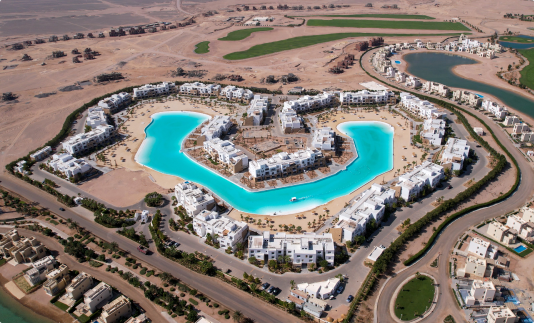
EnterpriseAM UAE is available without charge thanks to the generous support of our friends at Mashreq and Hassan Allam Properties.

Were you forwarded this email? Tap or click here to get your own copy of EnterpriseAM UAE.

Want to send us a story idea, request coverage, ask for a correction, or otherwise get in touch? Reach out to us on UAE@enterpriseAM.com .

DID YOU KNOW that we also cover Egypt, Saudi Arabia, and the MENA logistics industry?

***

Check out our full calendar on the web for a comprehensive listing of upcoming news events, national holidays and news triggers.

This publication is proudly sponsored by

Rise every day
From OUR FAMILY to YOURS
2

THE BIG STORY TODAY

New Abu Dhabi megaproject

Aldar is opening up another massive stretch of land for housing and mixed-use developments, with plans to build 20 mn sqm of residential and mixed-use developments across Abu Dhabi, including on a new, previously “unactivated” island called Al Mihsinah, according to a press release (pdf).

Developments will span residential, retail, educational, and lifestyle components. At Muwaylih, Mussafah, Al Zahiya, and Al Faya, the developments will combine lifestyle-focused residential projects with value housing offerings aimed at different income segments, while Al Mihsinah Island is set to become a new waterfront residential and leisure destination. The agreement assigns land provision to Abu Dhabi’s Department of Municipalities and Transport (DMT) and hands Aldar the master developer role.

Background

The partnership builds on a broader housing push. Aldar has been expanding into Abu Dhabi’s affordable and rental-focused housing segment, including an AED 2.8 bn partnership with DMT announced in late April to deliver 9k rental units across Mohamed Bin Zayed City and Baniyas by 2029. The developer is behind major developments across Saadiyat Island, Yas Island, and Al Raha Beach.

It has the liquidity to support: In April, Aldar secured an AED 5 bn sustainability-linked revolving credit facility, lifting total liquidity to AED 38.2 bn, after earlier tapping debt markets twice this year through separate USD 1 bn transactions.

3

ENERGY

Habshan complex will not be fully operational until next year, as Adnoc Gas reports strain on earnings due to disruptions

Damage to the Habshan gas processing facility from Iranian attacks in April is expected to keep parts of the complex offline into 2027, with the site currently operating at around 60% capacity and Adnoc Gas targeting an 80% restoration rate by year-end, according to the gas firm’s management discussion and analysis report (pdf).

The company’s exports of LNG, LPG, and naptha were disrupted by the closure of the Strait of Hormuz in 1Q 2026, falling 20% y-o-y and weighing on earnings through March. Net income fell 15% y-o-y to USD 1.1 bn, according to its financials (pdf), and revenue declined 18% to USD 5 bn.

REMEMBER- Adnoc Gas was forced to “manage” LNG and liquids output as traffic through Hormuz — which carries roughly a fifth of global oil and gas — slowed sharply amid the conflict. Sale volumes for domestic gas saw a more muted drop of 11% y-o-y.

The fallout is expected to spill into 2Q: Adnoc Gas warned the strait’s closure could shave USD 400-600 mn off net income in the second quarter assuming maritime operations normalize before quarter-end. Even so, management still expects FY 2026 net income of USD 3.5-4 bn, helped by stronger LNG and LPG pricing in 2H if shipping routes reopen.

Full operational recovery could take a while: Once Hormuz reopens, shipments should resume “within a reasonable time frame,” though CFO Peter Van Driel told Bloomberg (watch, runtime: 07:44) “we simply don’t know.”

The company is also ramping up capex: Adnoc Gas raised its FY 2026 capex guidance by around USD 500 mn to USD 4.5-5 bn as regional disruption and supply chain pressures lift project costs. The board also approved a quarterly dividend of USD 941 mn, as part of its policy to grow annual dividends by 5% through 2030.

REMEMBER-A couple of Adnoc tankers have been getting through the Strait of Hormuz despite the closure, after switching off their signals. The company has managed to still “fulfill commitments” by “efficiently managing logistics, inventories, and supply chains to lessen the impact of ongoing export disruptions,” it said in the report.

4

ENERGY

Mubadala invests in UK wind farm

Mubadala is investing USD 325 mn in Danish-based Orsted’s Hornsea 3 offshore wind farm off the UK coast, joining a consortium led by US-based Apollo Global Management alongside USS and La Caisse, according to a statement. The agreement comes after Apollo acquired a 50% stake in the joint venture holding the project, with Orsted retaining the remaining half and operational control. Mubadala’s stake hasn’t been disclosed.

The project is massive by offshore wind standards: The 2.9 GW North Sea project is expected to be the single largest offshore wind farm globally, with complete operations set to commence in 2028.

Why it matters

The backdrop here is a global offshore wind sector that needs deep-pocketed partners. Developers across Europe and the US have spent the past year battling higher borrowing costs, turbine inflation, and supply chain bottlenecks that wrecked project economics and forced companies to rethink how they finance large-scale developments.

For Mubadala, the UK’s offshore wind sector — the largest wind market outside China — offers something Gulf sovereign investors want: regulated frameworks, predictable demand growth, and strategic exposure to electrification trends tied to industrial decarbonization.

The pattern: The transaction also comes as part of a broader renewables investment push from Mubadala, with the sovereign wealth fund investing in Skyborn Renewables (also offshore wind), Tata Power Renewables in India, Eastern and Central Europe-focused renewable energy platform Rezolv, and UK-based battery storage group Zenobē.

5

CAPITAL MARKETS

SIB wraps up AED 2.59 bn rights issue with 3.2x oversubscription

ADX-listed Sharjah Islamic Bank (SIB) closed its AED 2.59 bn rights issue 3.2x oversubscribed, with total demand hitting AED 8.3 bn, according to a press release. While the Sharjah government subscribed in full to its prescribed share of the rights issue, the remaining shares were oversubscribed 4.5x, with foreign investors driving the bulk of appetite, accounting for 55% of overall demand.

Why this matters: This is the UAE’s first major equity capital raise since the beginning of the war — and the oversubscription rate suggests that the “risk-off” sentiment that spooked foreign investors in March is fading as they look past temporary shocks and return to UAE assets. UAE capital markets have seen a confidence rally over the past few weeks after a quieter spell last quarter, somewhat recovering from the USD 120 bn in foreign outflows seen earlier in the conflict — though not completely. The ADX is still down 7% compared to pre-war levels, while the DFM is down around 11%.

The SIB issue fits within a broader pattern of recovering market activity. Emirates NBD opened the regional AT1 market in late April with a USD 750 mn issuance that priced 50 bps tighter than initial guidance and was more than 3x oversubscribed, drawing demand from the Middle East, Asia, Europe, and the UK. First Abu Dhabi Bank followed earlier this week with a USD 700 mn sukuk that priced 30 bps tighter than initial guidance and was 2x covered.

What’s next for SIB? The issuance will lift the bank’s share capital by 33.3%, bringing it to AED 4.31 bn. As we’ve noted previously, the proceeds are earmarked to strengthen capital buffers and support asset growth.

ADVISORS- Emirates NBD Capital acted as lead manager, while Emirates NBD Bank served as lead receiving bank. SIB was the receiving bank.

6

EARNINGS WATCH

1Q results from Lulu, Talabat, ADA, Dewa, RAK Ceramics, Dubai Investments, Agthia, and Alef

Lulu also saw a slowdown on the back of softer activity in March

Lulu Retail’s net income fell 32.8% on a decline in non-food sales in March, reaching USD 47 mn in 1Q 2026 , according to its earnings release. Revenue dropped 2.9% y-o-y to USD 2 bn as non-food sales slowed down in March, offsetting sales growth in January and February.

Revenue performance was supported by new store openings and growth in food and consumer packaged goods, while lifestyle and electrical categories declined, particularly in March. Within the mix, higher-margin private label products increased by nearly 1% to 30.2% of sales, as customers shifted toward value offerings.

E-commerce continued to be a key growth driver, with sales rising 61% y-o-y to USD 150 mn, supported by higher transaction volumes on Lulu’s own platform, which also benefited from a refreshed app and website rollout.

The company opened 11 new stores during the quarter — all in express format across the UAE, Saudi Arabia, Kuwait, and Oman. Lulu reaffirmed its full-year target of 18-20 stores.

Talabat’s net income fell as it ramped up investments

Talabat reported an 18% y-o-y decline in net income to USD 87 mn in 1Q 2026 due to increased investments, with some USD 25 mn deployed to scale its Talabat Mart vertical and strengthen its premium Talabat Pro offering, according to its earnings release (pdf). GMV rose 19% y-o-y to USD 2.7 bn, or 18% on a constant currency basis, while revenue increased 23% y-o-y to USD 1.0 bn.

Performance was supported by strong customer acquisition, improved Ramadan and Eid trading, and higher demand for at-home consumption driven by a shift to “eat-at-home” patterns and distance learning amid regional disruptions. GCC markets remained the largest contributor to GMV, generating USD 2.1 bn, up 12% y-o-y, while non-GCC markets — particularly Egypt, Jordan, and Iraq — recorded faster growth, with GMV rising 52% y-o-y to USD 563 mn during the quarter.

Revenue growth reflected higher contribution from Talabat Mart and broader multi-vertical activity, while lower commission rates and higher customer incentives weighed on margins. Profitability was also impacted by investments related to the company’s “Everyday App” strategy and changes in GMV mix during the quarter.

The company raised its FY 2026 net income guidance to USD 300-330 mn, up c.7% from its prior forecast, while reaffirming guidance for GMV growth of 11-14%, revenue growth of 14-17%, adjusted EBITDA of USD 510-540 mn, and free cashflow of USD 370-400 mn.

RAK Ceramics hit by regional disruption, cushioned by UAE demand

RAK Ceramics came under pressure in 1Q 2026 as regional conflict disrupted exports and supply chains across key markets. Net income after tax fell 21.8% y-o-y to AED 38.2 mn, according to its earnings release (pdf) and earnings presentation (pdf), while revenue slipped 2.0% to AED 760.7 mn. Management pointed to higher freight, energy, and ins. costs, alongside shipment disruptions linked to the closure of the Strait of Hormuz.

Some markets proved more resilient: UAE revenue rose 0.5% y-o-y on continued real estate activity, while Bangladesh revenue climbed 18.8% following political stabilization and stronger domestic demand. The Middle East (excluding the UAE and KSA), however, saw revenue fall 28.5% y-o-y to AED 23 mn. Sector-wise, faucets were a bright spot, with revenue rising 10.2% y-o-y to AED 123.1 mn amid ongoing production shifts from Europe to the UAE.

Looking ahead: Management said constrained imports could support market share gains in the UAE, Saudi Arabia, and wider GCC over the coming quarters, even as regional tensions continue pressuring costs. The company’s greenfield tiles facility in Yanbu, Saudi Arabia also remains on track to come online in 1Q 2027.

ADA posts mixed 1Q earnings

Mixed quarter for ADA: ADX-listed Abu Dhabi Aviation (ADA) saw its net income fall 42.2% y-o-y to AED 124.4 mn in 1Q 2026, according to the firm’s earnings release (pdf). The group’s revenue rose 1.4% y-o-y to AED 2 bn during the quarter, supported mainly by its MRO business and general aviation performance.

Behind the numbers: The bottom-line drop was driven by an AED 58.3 mn fair-value loss on financial assets, compared with an AED 6.1 mn gain a year earlier. ADA’s top line was supported by the MRO segment, which accounted for 88.3% of group revenue on sustained fleet-support demand at GAL and continued OEM partnership development at Ammroc, while General Aviation remained broadly stable on stronger cargo operations at Maximus Air.

Dewa powers into record territory

Dubai Electricity and Water Authority (Dewa) posted its strongest first quarter on record, with net income up nearly 90% y-o-y to 941.1 mn, while revenues climbed 8.2% y-o-y to AED 6.5 bn, according to its financials (pdf) and a separate earnings release (pdf).

The numbers came alongside fresh demand growth across Dubai’s utility network. Dewa generated a record 11.1 TWh of electricity during the quarter, up 5.7% y-o-y, while desalinated water production rose 5.5% to 37.6 bn imperial gallons. Clean energy generation also hit a record 2.1 TWh. During the quarter, Dewa commissioned six substations and a reverse osmosis plant.

The utility also reiterated its dividend plans, after paying AED 3.1 bn to shareholders in April for 2H 2025. Subject to approvals, another AED 3.1 bn dividend is expected in October for 1H 2026.

Steady quarter, familiar formula for Dubai Investments

Dubai Investments reported largely flat 1Q earnings as net income edged up to AED 169 mn from AED 167.2 mn, according to its financials (pdf) and a separate earnings release (pdf). Revenue came in at AED 765.7 mn in 1Q 2026, a decline of 6.9% y-o-y, as inflows from finance income slipped and tax expenses went up. The group pointed to stable recurring income from its ground-rent infrastructure platform and other income-generating assets as a key support for the quarter, alongside steady contributions from its manufacturing and contracting businesses.

Agthia keeps margins moving

Water and food segments keep Agthia buoyant: Stronger margins in Agthia’s water and food business helped offset pressure felt across other segments, helping the Abu Dhabi-listed food and beverage giant kick off 2026 with a 12.5% y-o-y rise in net income to AED 96.9 mn, according to its financials (pdf) and a separate earnings release (pdf). Revenue climbed 3.3% y-o-y to AED 1.3 bn in 1Q 2026.

The quarter’s revenue got a lift from AED 51.4 mn in one-off agri-business sales tied to the UAE’s food security program. Strip that out and underlying revenue was down 0.7% y-o-y.

Water and food remained a key segment, with revenue climbing 14.6% y-o-y to AED 330.5 mn, supported by stronger bottled water demand in the UAE. Agri-business revenues rose 13% y-o-y to AED 382.2 mn, while snacking revenues fell 13% y-o-y to AED 357 mn, despite its Abu Auf brand seeing 27.3% growth.

Alef Education starts 2026 on steady footing

Abu Dhabi-based AI education group Alef Education posted a 2.5% y-o-y rise in net income to AED 118.1 mn in 1Q 2026, according to its latest earnings release (pdf) and separate management discussion and analysis report (pdf). Revenues were broadly flat, up 0.6% y-o-y at AED 180.8 mn, reflecting stable performance in its core contracts and gains from private and B2B/B2G activity.

Behind the results: Management cited a continued cost efficiency drive, alongside savings across software, service, and support expenses, as boosting its bottom line. An uptick in inflows from treasury income also buoyed results.

Dividends: Alef has confirmed a dividend payment of AED 433 mn for 2025, equal to 90% of that year’s net income.

7

PLANET FINANCE

The black box of private credit valuations

A proper turf war is brewing between Pimco and Apollo over a simple question with big implications for the LPs of the world, GCC sovereign wealth funds — is the USD 1.8 tn private credit space essentially marking its own homework? Pimco strategist Lotfi Karoui says yes in a note to clients, arguing that the push toward more frequent marks does little to “address the market’s inherent structural constraints, including a lack of true price discovery.”

Apollo is all for standardizing the opaque: This comes a week after Apollo CEO Marc Rowan committed on a 1Q earnings call (pdf) to provide daily mark-to-market valuations across roughly USD 830 bn of its credit assets by the end of September. “We have never seen a market where enhanced liquidity and enhanced transparency does not result in tremendous growth for the asset class,” Rowan said, framing it as a land grab dressed as reform.

What’s daily marking again? It updates the estimated value of private loans every day rather than quarterly. Because these assets don’t trade, the marks come from internal models, comparable transactions, company performance, and credit spreads — and those valuations flow directly into the portfolio values investors see.

That’s where Pimco says the cracks start to show. Karoui’s point is that if three different managers are holding the exact same loan and arriving at three different valuations — averaging five points apart by year-end 2025 — then the issue isn’t how often you refresh the number. It’s that there’s no real price discovery underneath it in the first place. “They only increase the perception of liquidity without truly improving liquidity,” he wrote, adding that “at best, [daily marks] add marginal transparency and some reputational pressure that may rein in the most extreme mark outliers.”

Why we think Apollo still comes out ahead: Private credit didn’t grow into a USD 1.8 tn market because investors demanded perfect price discovery, it grew because LPs were willing to tolerate imperfect marks in exchange for yield and illiquidity premium. As the asset class grows, daily pricing can start to look less like a transparency exercise and more like the infrastructure layer needed to institutionalize the market — which naturally favors firms like Apollo who have the scale to make daily marks the industry norm, and the consolidation that follows.

Regional SWFs have real skin in the game here. Some of the world’s largest sovereign allocators (think PIF, Mubadala, Adia, QIA, and ADQ) are heavily exposed to the same private credit complex now debating how these assets should actually be valued, making this more than a technical fight between two US asset managers. The methodology Apollo and Pimco are arguing over today will ultimately shape how Gulf LPs measure returns and assess risk tied to some of the largest private credit plays in the market.

REMEMBER- PIF’s revised 2026-2030 strategy cuts international allocations to 20% from 30%, which means Gulf SWFs are simultaneously reducing international exposure and concentrating their remaining exposure into fewer mega-managers — at exactly the moment those managers’ valuation methodology is being publicly contested.

MARKETS THIS MORNING-

Asian stocks opened in the red this morning, mirroring losses on Wall Street after hotter-than-expected US inflation data. Analysts are bracing for a volatile couple of days as the market awaits ceasefire developments and the outcome of US President Donald Trump’s summit with his Chinese counterpart.

ADX

9,699

-0.9% (YTD: -2.9%)

DFM

5,783

-0.6% (YTD: -4.4%)

Nasdaq Dubai UAE20

4,580

-1.6% (YTD: -6.3%)

USD : AED CBUAE

Buy 3.67

Sell 3.67

EIBOR

3.4% o/n

4.0% 1 yr

TASI

11,039

-1.1% (YTD: +5.2%)

EGX30

54,059

-0.8% (YTD: +29.2%)

S&P 500

7,401

-0.2% (YTD: +8.1%)

FTSE 100

10,265

0.0% (YTD: +3.4%)

Euro Stoxx 50

5,808

-1.5% (YTD: +0.2%)

Brent crude

USD 107.27

-0.5%

Natural gas (Nymex)

USD 2.83

-0.5%

Gold

USD 4,724

+0.8%

BTC

USD 80,666

-1.4% (YTD: -7.9%)

Chimera JP Morgan UAE Bond UCITS ETF

AED 3.68

-0.3% (YTD: -1.9%)

S&P MENA Bond & Sukuk

151.19

-0.3% (YTD: -0.5%)

VIX (Volatility Index)

17.99

-2.1% (YTD: +20.3%)

THE CLOSING BELL-

The ADX fell 0.9% yesterday on turnover of AED 1.1 bn. The index is down 2.9% YTD.

In the green: Orascom Construction (+5.6%), Aram Group (+4.2%), and Abu Dhabi Ship Building (+3.9%).

In the red: Al Buhaira National Ins. Company (-5.0%), Gulf Medical Projects Company (-4.8%), and Space42 (-4.6%).

Over on the DFM, the index fell 0.6% on turnover of AED 803.3 mn. Meanwhile, Nasdaq Dubai was down 1.6%.


MAY

12-14 May (Tuesday-Thursday): Abu Dhabi Infrastructure Summit, ICC Hall, Adnec Center, Abu Dhabi.

15-17 May (Friday-Sunday): Art Dubai, Madinat Jumeirah, Dubai.

19-21 May (Tuesday-Thursday): Abu Dhabi Global Sustainable Security Summit, Adnec Center, Abu Dhabi.

19-22 May (Tuesday-Friday): Abu Dhabi Water and Energy Week, Adnec Center, Abu Dhabi.

21 May (Thursday): Economy Middle East Summit, Rosewood, Abu Dhabi.

22 May-7 June (Friday-Sunday): Dubai Esports and Games Festival, Dubai.

JUNE

3-4 June (Wednesday-Thursday): MENA Investor Conference, Ritz-Carlton DIFC, Dubai.

3-4 June (Wednesday-Thursday): MENA Desalination Forum, Conrad Abu Dhabi Etihad Towers, Abu Dhabi.

15 June - 15 September (Monday-Thursday): Dubai Mallathon, Dubai.

17 June (Wednesday): Investopia Global Talks, Tashkent, Uzbekistan.

22-24 June (Monday-Wednesday): The International Glass Manufacturing Show, Dubai.

AUGUST

17-20 August (Monday-Thursday): Arabian Travel Market, Dubai World Trade Center, Dubai.

SEPTEMBER

1-3 September (Tuesday-Thursday: Middle East Energy, Dubai World Trade Center, Dubai.

7-9 September (Monday-Wednesday): AIM Congress, Dubai World Trade Center.

7-9 September (Monday-Wednesday): International Property Show, Dubai World Trade Center, Dubai.

12-13 September (Saturday-Sunday): Emirates International Congress on AI & Visionary Leadership in Transforming Healthcare, Adnec Center Abu Dhabi.

29-30 September (Tuesday-Wednesday): AFCM Annual Conference, Abu Dhabi.

OCTOBER

4-10 October (Sunday-Saturday): World Space Week, Abu Dhabi.

5-7 October (Monday-Wednesday): AI Everything Global, Adnec Center, Abu Dhabi.

12-14 October (Monday-Wednesday: Airport Show, Dubai World Trade Center, Dubai.

20-22 October (Tuesday-Thursday): Future Health Summit, Adnec Center Abu Dhabi.

27-28 October (Tuesday-Wednesday): Arab Competition Forum, Dubai.

30 October (Friday): Large businesses achieving annual revenues equal to or above AED 50 mn must appoint an accredited service provider for e-invoicing implementation.

Signposted to happen sometime in October 2026:

  • Abu Dhabi Space Week, Abu Dhabi.

NOVEMBER

2-6 November (Monday-Friday): Dubai Future Finance Week, Dubai.

4 November (Wednesday): Digital Transformation Summit, Sofitel, Abu Dhabi.

9-10 November (Monday-Tuesday): Annual government meetings, Abu Dhabi.

10-12 November (Tuesday-Thursday): Dubai International Electric Vehicle Exhibition & Conference, Dubai World Trade Center.

16-18 November (Monday-Wednesday): World Police Summit, Dubai World Trade Center, Dubai.

DECEMBER

2-4 December (Wednesday-Friday): UN Water Conference, UAE.

8-9 December (Tuesday-Wednesday): Capital Market Summit, Madinat Jumeirah, Dubai.

Signposted to happen sometime in 2027:

  • 1 January: Deadline for large businesses to implement e-invoicing;
  • 1Q 2027: Completion of the first phase of Hassyan seawater desalination project;
  • 1-3 February (Monday-Wednesday): World Governments Summit;
  • 31 March: Small businesses with annual revenues of less than AED 50 mn are obliged to contract with an accredited service provider for e-invoicing implementation;
  • 31 March: Government entities are required to appoint an accredited service provider for e-invoicing implementation;
  • 21-22 April (Wednesday-Thursday): Token2049, Dubai;
  • 1 July: Deadline for small businesses to implement e-invoicing;
  • 1 October: Deadline for governments to implement e-invoicing;
  • Abu Dhabi’s solar and battery energy facility, combining 5.2 GW of solar capacity and 19 GWh of battery storage, is set for commissioning.

Signposted to happen sometime in 2028:

Signposted to happen sometime in 2029:

  • Sibos 2029 organized by the Society for Worldwide Interbank Financial Telecommunication (SWIFT), Dubai;
  • Annual Meetings of the World Bank Group and the International Monetary Fund, Abu Dhabi;
  • The commissioning of the seventh phase of Mohammed bin Rashid Al Maktoum Solar Park.
Now Playing
Now Playing
00:00
00:00