Abu Dhabi home prices rise as Dubai’s fall

1

WHAT WE’RE TRACKING TODAY

THIS MORNING: Worst tech rout in years reaches Asia + Adipec wraps with USD 67 bn in agreements, an Adnoc financing agreement, and a possible Abu Dhabi “virtual pipeline”

Good morning, lovely people, and a very happy FRIDAY. It’s been quite the week. Abroad, screens are a sea of red as markets face the worst tech rout in years following the Democrats’ sweep in the midterms earlier this week and concerns around the future of the data center buildout. Here at home, Adipec has wrapped with some USD 67 bn in agreements, even as it suffered from the absence of some top executives including from Exxon and Chevron.

Our Big Story Today looks at how Dubai and Abu Dhabi’s property sectors did, pricing-wise, in 3Q 2026. The takeaway: Fewer homes are selling in both emirates, but prices are moving in opposite directions: up 16.8% in the capital and down 4.5% in Dubai. ValuStrat’s Haider Tuaima tells us why.

Earnings season also continues to be in full swing: Fuel hedges kept Emirates in the black through its first full half-year of war costs; IHC’s quarterly income fell as last year’s one-off gain dropped out of the comparison; Emaar’s revenue growth slowed to 2.7%; and Empower got a lift from cheaper debt.

On deck: Next week brings the annual government meetings in Abu Dhabi on Monday and Tuesday, DIP Holding’s expected DFM debut on Wednesday, and Bloomberg Invest in Dubai on Thursday.

Guinea misses first payment in Axis arbitration

DISPUTE WATCH- Guinea missed its first payment in the World Bank arbitration over Axis International’s revoked bauxite permit, the Ras Al Khaimah-based miner said in a statement yesterday. Axis says Guinea failed to pay a USD 200k advance it owed the International Center for Settlement of Investment Disputes (ICSID) for administrative and tribunal expenses, which was due on 1 September, after Axis filed its memorial in August. Axis paid the advance in Guinea’s place and said that Guinea’s failure to pay “raises questions about the Government’s fiscal governance, and the eventual destination of the significant sums previously paid into the State treasury from the same mine and the funds received by Guinea from the mine’s continued operations.”

BACKGROUND- Axis owns 85% of Axis Minerals Resources, which held the rights to a bauxite mine in Guinea’s Boffa region. The company says the mine produced 18 mn tons in 2024, making it Guinea’s second-largest source of bauxite exports. The permit was one of dozens Guinea’s military government revoked in May 2025 as it moved to take tighter state control of the mining sector.

It isn’t the only UAE company caught up in the crackdown: Guinea also seized a bauxite concession held by Emirates Global Aluminium (EGA) unit Guinea Alumina Corporation, which pursued arbitration in August 2025. EGA, however, opted for a negotiated settlement over arbitration in May 2026, securing a lump sum from Guinea for the assets, along with renewed bauxite supply agreements.

Adnoc taps USD 1 bn from credit line

Adnoc has secured c. USD 1 bn in green financing from a group of Japanese-led lenders headed by Japan Bank for International Cooperation (JBIC), the company said on X on the sidelines of Adipec. The money is drawn from a USD 3 bn credit line Adnoc signed in 2024, of which it had already used USD 103 mn last year, IFR reports. That leaves c. USD 1.9 bn still undrawn, by our math. The funds will go toward cutting carbon emissions from LNG production and toward projects linked to solar and nuclear power generation.

The structure: The first USD 905 mn loan was made up of USD 543 mn from Japan Bank for International Cooperation (JBIC), while Mizuho Bank, MUFG, and HSBC Tokyo provided the remaining financing. A second financing package included USD 58 mn from JIBC and USD 39 from HSBC and Mizuho.

IN CONTEXT- Adnoc isn’t the only Gulf borrower turning to Asian lenders. Dubai Aerospace Enterprise and QatarEnergy have also gone to Asian banks for financing in recent months, attracted by larger loan sizes, competitive pricing, and longer repayment periods.

LNG by land or sea

Abu Dhabi wants to truck LNG to the factories its gas grid doesn’t reach. The Department of Energy signed a cooperation framework with H2G Green and its Singaporean subsidiary GasHubUnited, Sergas Group’s Muzn Energy, and CloudEnergi on the sidelines of Adipec to assess supplying liquefied natural gas (LNG) to industrial and commercial facilities that aren’t connected to existing gas networks, state news agency Wam reports.

The plan is to move the LNG by road or sea, an approach the industry calls a “virtual pipeline,” and use it to replace higher-emission fuels. The agreement could unlock up to AED 1 bn in investment. For now, it’s a framework to assess pilot projects, not a commitment to build anything.

PSA

WEATHER- It’s back up to 37°C in Dubai today before cooling to 25°C overnight, while Abu Dhabi will see a high of 35°C and an overnight low of 26°C, according to our favorite weather app.

The big story abroad

The worst US tech rout since 2020 is the one thing dominating business outlets’ front pages this morning. The Nasdaq Composite fell 5.5% yesterday, its worst day since Liberation Day, and is now in correction territory. The selloff followed a Democratic sweep of Congress and wins in the Texas, Georgia, and Ohio governor races by candidates who promised to pause new data center permits. The rout spread to Asia this morning. We have more in Planet Finance, below.

The rout has already triggered a response from officials, investors, and AI firms alike:

  • Trump blamed the Democrats for falling 401(k)s in a Truth Social post;
  • OpenAI is trying to win voters over: It vowed to stop using non-disclosure agreements with public officials in future site talks and will share construction plans with residents;
  • Anthropic could face a delay to its IPO or a lower valuation, with three major investors in the offering telling the Wall Street Journal that the USD 1.5 tn valuation will likely need to come down, one saying closer to USD 1 tn.

***

You’re reading EnterpriseAM UAE, your essential daily roundup of business, economics, and must-read news about the UAE, delivered straight to your inbox. We’re out Monday through Friday by 7am UAE time.

EnterpriseAM UAE is available without charge thanks to the generous support of our friends at Mashreq and Hassan Allam Properties.

Were you forwarded this email? Tap or click here to get your own copy of EnterpriseAM UAE.

Want to send us a story idea, request coverage, ask for a correction, or otherwise get in touch? Reach out to us on [email protected].

DID YOU KNOW that we also cover Egypt, Saudi Arabia, and the MENA logistics industry?

***

Circle your calendar

Check out our full calendar on the web for a comprehensive listing of upcoming news events, national holidays and news triggers.
This publication is proudly sponsored by

Rise every day
From OUR FAMILY to YOURS
2

THE BIG STORY TODAY

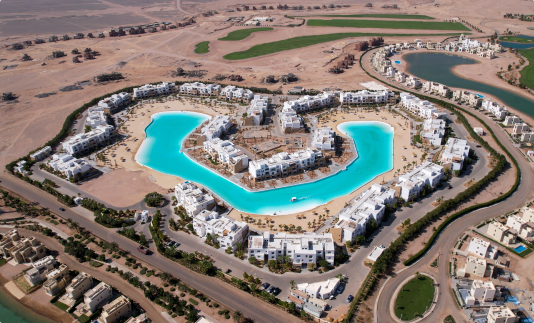
Abu Dhabi property market outpaces Dubai as cycles diverge

Fewer homes are changing hands in both Dubai and Abu Dhabi, but buyers in the capital are paying more while buyers in Dubai pay less. Dubai’s ready freehold residential capital values contracted 4.5% y-o-y in 3Q 2026, while Abu Dhabi recorded a 16.8% annual appreciation over the same period.

The gap comes down to market size, who is buying, how much supply is coming, and where each emirate sits in its property cycle, ValuStrat’s Managing Director and Head of Real Estate Research Haider Tuaima tells EnterpriseAM.

Abu Dhabi’s rally has picked up speed again: Abu Dhabi's residential ValuStrat Price Index advanced 3.1% q-o-q to 155.8 points, up from 2.1% in 2Q, which was the slowest quarterly pace in two years. Apartments led the gains, rising 4.3% q-o-q and 24% y-o-y, while villas rose 2% q-o-q and 10.2% y-o-y. Al Reef apartments posted the biggest annual jump at 36.6%, followed by Al Bandar at 24.7%.

Prices are rising even as fewer homes change hands: Total residential sales fell 17.3% q-o-q to c. 6k transactions. Ready sales dropped 37.4% y-o-y to 1.1k. Off-plan transactions, though, which made up 81% of the total, rose 3.2% y-o-y to 4.8k. Developers are also pitching higher-end projects: the average off-plan ticket size jumped 42.4% y-o-y to AED 5 mn.

Rents haven’t kept up with prices: Abu Dhabi’s rental index rose just 1.6% y-o-y and was flat q-o-q, after the emirate replaced its 5% annual cap on rent increases with a temporary 0% cap from June. With values up 16.8% and rents barely moving, rental yields are shrinking. Buyers are now paying for capital growth, not income.

Dubai is a different market altogether: Dubai’s residential market is at least three times the size of Abu Dhabi’s, and c. 350k homes are expected to enter it by the early 2030s, roughly 10x the capital’s pipeline, Tuaima says. Abu Dhabi’s buyers are mostly domestic owner-occupiers, while Dubai depends more on international investors and cross-border capital, he adds. That shapes how each market reacts when sentiment, affordability, or supply shifts.

The two cycles also started at different times: Dubai’s post-pandemic run began in 2021, driven by Expo 2020, the reopening, and population inflows, and it pushed values in many communities to record highs before the conflict-driven correction. Between 1Q 2023 and its 4Q 2025 peak, Dubai’s VPI rose c. 77%, while Abu Dhabi’s rose c. 24% over the same period, by our math. Abu Dhabi’s appreciation came later and more gradually, supported by tight supply and domestic demand for established communities, Tuaima says.

Dubai’s decline has flattened out: Dubai’s VPI slipped just 0.6% q-o-q, though it remains 10.3% below its pre-conflict level, according to ValuStrat’s Dubai quarterly review (pdf). Ready sales rebounded 18.5% q-o-q to 9.5k, the first quarterly rise since 4Q 2025. Off-plan registrations fell for a fourth straight quarter, down 45.7% y-o-y to 24.4k. Asking rents fell 4.9% q-o-q, and they are now down y-o-y for the first time since the pandemic.

What’s next: Tuaima expects Abu Dhabi values to keep rising over the next 12 months, but more slowly, while Dubai is seen stabilizing and consolidating rather than returning to its post-pandemic pace.

The split is not as apparent in the commercial sector

Offices and warehouses are rising in both emirates: Dubai’s office VPI hit a record 304.6 in 3Q, up 9.7% y-o-y and roughly triple its 1Q 2021 level. Transacted office prices also hit a record AED 2,117 per sq ft, up 20.7% y-o-y. New supply is thin: only 1.45 mn sq ft was delivered in the first nine months, against a stock of c. 104 mn sq ft. Logistics warehouse values rose 19.6% y-o-y, nearly double their 2021 level.

Abu Dhabi’s commercial market is tightening too: Office asking rents in the capital’s main business districts rose 30.4% y-o-y, and occupancy in its central business districts stood at 90.8%. Industrial asking prices rose 6.6% y-o-y, but the market is splitting by quality: rents for top-end facilities rose 7.4%, while lower-end rents fell 10.7%.

3

EARNINGS WATCH

Fuel hedges, cheaper debt, and investment gains carry Emirates, Empower, and IHC through a war-hit quarter

Hedges and cargo carry Emirates through its first full war-hit half

Emirates Group’s net income fell 66% y-o-y to AED 3.6 bn in 1H FY 2026/27, according to Dubai Media Office — a result it views as “remarkable” given last year’s high base, where it delivered record earnings. This also marks the group’s first half-year carrying the full cost of the Gulf conflict, as global jet fuel prices roughly doubled from a year earlier. Group revenue fell 12% to AED 66.2 bn for the April-September period, and EBITDA dropped 41% to AED 12.5 bn.

IN CONTEXT- Emirates trimmed its June schedule by almost 16%, leaving it flying 14% fewer flights than in June 2025. By the end of September, Emirates was running 91% of its pre-disruption network, according to the statement. It also confirmed its employee base dropped by 2% from end-March to 30 September.

The breakdown: Emirates’ airline’s income after tax fell 66% to AED 3.3 bn in 1H FY 2026/27, while its revenue dropped 13% to AED 56.9 bn. Meanwhile, dnata’s income after tax more than halved to AED 309 mn on revenue of AED 11.0 bn (down 7%).

Passenger traffic is the weak spot: Seat capacity (ASKM) fell 17% y-o-y during the six-month period, but passenger traffic (RPKM) fell 25%, pulling the seat factor down to 72.0% from 79.5%. Emirates carried 21.8 mn passengers, down 22%. Management says customer demand “held firm.” Meanwhile, cargo revenue rose 52% despite a 1% decline in tonnage as air freight capacity tightened amid disruptions in the Strait of Hormuz.

The hedges absorbed most of the fuel shock: Emirates burned 12% less fuel than a year earlier, yet its pre-hedging fuel bill rose 60%. AED 7.1 bn in hedging gains brought the net increase down to 13%.

What’s next: Chairman and CEO of Emirates Sheikh Ahmed bin Saeed Al Maktoum expressed “measured optimism” heading into 2H 2026/27 and said the aviation group is “keeping a close watch on costs and geopolitical developments.”

Cheaper finance costs lift Empower’s net income

Empower’s net income attributable to shareholders rose 3.1% y-o-y to AED 292.0 mn in 3Q 2026, while its revenue grew 4.7% to AED 1.2 bn, according to the company’s interim financial statements (pdf). For 9M 2026, attributable net income rose 10.9% y-o-y to AED 755.6 mn, while revenue increased 4.6% to AED 2.7 bn.

The quarter’s income growth was helped by cheaper financing: 3Q operating income slipped 0.3% to AED 355.6 mn, as cost of sales rose 6.5%, faster than revenue. Repairs and maintenance costs alone jumped 45.8%. However, a 23.6% drop in net finance costs to AED 32.1 mn helped offset the jump.

The financial statements also confirm that Empower has now refinanced its AED 5.5 bn in revolving credit facilities with its existing lender, extending maturities to October 2028. Last month, we reported that Empower planned to replace its existing credit lines with new facilities worth up to AED 5.5 bn.

Signed capacity is running ahead of connections: Contracted capacity reached 2.06 mn refrigeration tons (RT) at end-September, while connected capacity stood at 1.74 mn RT. That leaves c. 320k RT signed but not yet billed. Project commitments rose c. 60% since December to AED 1.3 bn as Empower awarded new plant contracts.

Investment gains power IHC’s 9M earnings surge

International Holding Company’s (IHC) net income attributable to shareholders slipped 30% y-o-y to around AED 3.3 bn in 3Q 2026, according to the company’s financial statements (pdf). Meanwhile, revenue jumped 30.8% to AED 35.6 bn, it said in its management discussion and analysis (pdf). The decline was mostly a base effect: The company logged a one-off gain of AED 2.8 bn in 3Q 2025 from selling district cooling company PAL Cooling.

On a 9M basis, net income attributable to shareholders more than doubled to AED 21.2 bn as revenue climbed 33.2% to AED 100.5 bn. Investment and other income more than tripled to AED 24.2 bn — including AED 19.3 bn of fair-value gains — making portfolio returns the main reason earnings grew so much faster than revenue, continuing the investment-gain story visible in 1Q.

Energy and mining supplied the operating growth spurt, with the segment revenue nearly quadrupling to AED 19.3 bn in 9M as minerals, metals, and hydrocarbon trading scaled up, according to a press release (pdf). The segment also swung to a AED 1.7 bn income from a loss a year earlier. Real estate and construction remained IHC’s biggest revenue contributor at AED 33.3 bn, up 12.8%.

The expansion is showing up on the balance sheet too: IHC deployed around AED 25 bn into investments during the period, while total debt rose 26.6% since year-end to AED 106.9 bn and net debt more than tripled to AED 30.4 bn. Recent wagers include Judan’s 50.1% acquisition of Alpha Wave Global and IHC’s move to take 80% of Marlan Holding.

Property development boosts Emaar’s revenues again

Emaar Properties reported a net income of AED 5.96 bn in 3Q 2026, up 3.3% y-o-y, while revenue grew just 2.7% to AED 13.6 bn, according to the company’s financials (pdf). For 9M 2026, revenue increased 13% y-o-y to AED 37.5 bn, while EBITDA rose 19% to AED 19.7 bn, the company said in its earnings release (pdf). The company reported AED 17.1 bn in net income during the first nine months of the year.

Property development remained Emaar’s largest revenue source in 9M 2026, with UAE developments bringing in AED 28.3 bn, up 18% y-o-y, and international developments adding AED 1.6 bn, up 16%. Revenue from shopping malls, retail, and commercial leasing increased 10% y-o-y to AED 5.2 bn, while hospitality, leisure, and entertainment contributed AED 2.4 bn. However, the company said lower international visitor numbers weighed on hospitality and entertainment revenue.

Emaar’s board approved a special dividend of AED 4.4 bn, equivalent to AED 0.5 per share, in addition to the company’s regular annual dividend.

4

ALSO ON OUR RADAR

Arab Bank Switzerland adds a crypto twist to its UAE expansion

Arab Bank Switzerland opened an ADGM office to advise financial institutions, family offices, and wealthy clients on digital assets, according to a company announcement published by ADGM. The new entity secured regulatory approval to advise clients on accessing, holding, managing, and transferring digital asset holdings, with former HSBC Private Bank executive Valérie Noël (LinkedIn) appointed CEO.

The bank is splitting its UAE offering across two financial centers. Its Dubai International Financial Center office, launched in June, focuses on traditional wealth management, while the new ADGM operation will handle digital-asset advisory. The bank has offered cryptocurrency custody and trading in Switzerland since 2019 and manages close to USD 25 bn globally.

It isn’t the only Swiss wealth manager setting up shop in ADGM: Swiss private bank Maerki Baumann opened its first overseas office in ADGM earlier this year, targeting blockchain and Web3 businesses.

5

PLANET FINANCE

The Nasdaq has its worst day since Liberation Day as the Democrats’ midterm sweep puts the AI buildout in doubt

The AI trade took its biggest hit in 18 months yesterday. The Nasdaq Composite fell 5.5%, its deepest one-day drop since “Liberation Day” in April 2025, on fears that the Democrats’ midterm sweep will slow the US data center buildout, Reuters reports. The index is now in correction territory, down nearly 12% from its 6 October record. The Nasdaq 100 fell 6.4%, wiping out USD 2.5 tn in market value.

Chipmakers and data center builders fell hardest: The Philadelphia Semiconductor Index dropped 12% to a six-month low. Nvidia fell 9% and AMD 17%. Neocloud firms CoreWeave and Nebius, which rent out AI computing capacity, fell 10% and 15%. CoreWeave’s five-year credit default swap spreads, a measure of how likely investors think a default is, widened to a record. UBS estimates that c. 30% of the data center capacity expected to come online in the US in 2028 could be at risk from construction pauses, as local opposition over power and water use grows.

The Gulf is heavily exposed: Gulf sovereign funds hold stakes at every layer of AI, from the frontier labs to the data centers. Global SWF estimates Mubadala’s identifiable AI exposure at USD 24.3 bn, or 6.3% of its assets, and PIF’s at USD 12 bn, or 1.3%, the firm’s head of research Daniel Brett tells EnterpriseAM. MGX holds stakes in OpenAI, Anthropic, and xAI, and QIA has backed three straight Anthropic funding rounds. The funds’ long investment horizons let them ride out volatility, Brett says. The bigger risks are project delays and tighter chip access: from January, Democratic-led congressional committees can investigate the agreements behind the Gulf’s chip access, as we reported last week.

Oil and Gulf stocks took the election differently: Brent fell 8.7% to USD 94.62 on Wednesday and steadied near USD 98 yesterday, on expectations the result brings the US-Iran war closer to an end. Gulf bourses rose on Wednesday for the same reason, led by Qatar’s 1.8% gain. AI-linked names fell, though: Presight AI closed down 3.1%.

Two other sectors that benefited from Republican control and are in for a possible reckoning:

  • Private credit: Tighter oversight is likely now that direct lending has reached almost USD 2 tn, and proposals to ease capital buffer requirements will face more scrutiny, Bloomberg reports.
  • Crypto: President Donald Trump’s World Liberty Financial tokens fell 6% and his memecoin c. 19% as conflict-of-interest investigations become more likely, Bloomberg reports.

What we’re looking out for: The rout could also affect the timing of Anthropic’s IPO, which was expected this month. Investors say they might need a more attractive valuation, with the recently discussed USD 1.5 tn near the high end of expectations.

MARKETS THIS MORNING-

The rout hit stocks in Asia, with South Korea’s Kospi falling so fast at the open that trading was halted for 20 minutes, and it was still down 5.4% after trading resumed, below the 5k mark. Japan fell into a technical bear market, and Taiwan’s Taiex fell as much as 9% before paring losses to 6.7%, after the government said it could deploy its national stabilization fund. SoftBank, which has more than USD 60 bn riding on OpenAI, fell as much as 16%. Chinese stocks are doing better: Hong Kong’s Hang Seng fell as much as 1.6%.

US futures suggest some relief later today: US stock futures have turned higher after falling sharply at the Asian open. The next test is today’s October jobs report.

ADX

9,520

+0.6% (YTD: -4.7%)

DFM

6,043

+0.0% (YTD: -0.1%)

Nasdaq Dubai UAE20

4,911

+3.9% (YTD: +0.5%)

USD : AED CBUAE

Buy 3.67

Sell 3.67

EIBOR

3.6% o/n

5.0% 1 yr

TASI

10,095

+0.6% (YTD: -3.8%)

EGX30

51,153

+1% (YTD: +22.3%)

S&P 500

7,354

-4.4% (YTD: +7.4%)

FTSE 100

10,783

-0.4% (YTD: +8.6%)

Euro Stoxx 50

6,232

-0.6% (YTD: +7.6%)

Brent crude

USD 98.29

+3.9%

Natural gas (Nymex)

USD 2.94

-0.1%

Gold

USD 4,108

-0.1%

BTC

USD 75,900

-5.6% (YTD: -14.5%)

Lunate JP Morgan UAE Bond UCITS ETF

AED 3.57

0.0% (YTD: -0.4%)

S&P MENA Bond & Sukuk

149.27

+0.2% (YTD: -1.7)

VIX (Volatility Index)

28.18

+69.7% (YTD: +88.5%)

THE CLOSING BELL-

The ADX rose 0.6% yesterday on turnover of AED 1.9 bn. The index is down 4.7% YTD.

In the green: Burjeel Holdings (+14.5%), ADIB Rights Issue 2026 (+9.8%), and Alpha Data (+4.5%).

In the red: Ooredoo (-4.9%), Investcorp Capital (-4.6%), and United Arab Bank (-4.0%).

Over on the DFM, the index remained flat on turnover of AED 1.3 bn. Meanwhile, Nasdaq Dubai was up 3.9%.

6

MY MORNING ROUTINE

Seidor’s Angel Fernández Sánchez says AI is “two or three steps ahead” of UAE businesses

Angel Fernández Sánchez (LinkedIn) is one of many executives in Dubai helping guide other companies with their AI transition. His main worry? That the technology is moving too fast for businesses to keep up. Fernández Sánchez runs Spanish tech consultancy Seidor, which sells and implements SAP software alongside cybersecurity and hosting services, and he admits that clients face challenges in deploying AI to achieve business-wide gains while still keeping their data secure.

Each week, My Morning Routine looks at how a successful member of the community starts their day — and then throws in a couple of random business questions just for fun. This week, we spoke with Fernández Sánchez to ask how UAE businesses are keeping pace with AI, how he uses AI in his own work, and how he prefers to manage his workday and team.

Edited excerpts from our conversation:

EnterpriseAM: How did you get into technology, and what brought you to Seidor?

Angel Fernández Sánchez (AFS): I’ve been curious about technology since I was a kid. I got my first computer when I was 14 and decided to study computer science and business administration. I ended up focusing more on the business side, but my life has always revolved around technology.

I started working for a technology company in Spain in 1998. When I joined Seidor in 2013, I was looking for something different that was outside my home country. They had an opportunity in Colombia, and I took it.

The company was acquiring businesses in different regions. After Colombia, they asked me to move to South Africa to run the business there. Once that was established, they acquired another business in the Middle East and asked me to move here. By then, I had a family, so I thought perhaps it was time to settle in one place and stop moving quite so much, so I ended up bringing them here and moving to Dubai in 2019.

E: What does Seidor do, and what does your role involve?

AFS: Our main focus is selling and implementing SAP to improve business processes for companies ranging from small businesses to large enterprises. That represents around 80% of our business globally. We also offer services such as cybersecurity and hosting, and we advise customers on how to apply AI to their business processes.

As managing director, my main goal is to grow the business in the Middle East and find prospects across the region. I oversee the whole operation, from sales to delivery.

E: Where are UAE businesses getting value from AI — and what’s proving harder?

AFS: Expectations are high — sometimes too high. Employees have been able to improve their own productivity because there are many things they can do much faster and more efficiently with AI. The challenge now is how companies apply those capabilities to their business processes.

AI is two or three steps ahead of us, and we’re trying to catch up. That’s one of the biggest challenges across the industry. We need to be smart about how we guide that transition, because the technology keeps moving.

E: Is that challenge different for a startup than for a large company?

AFS: In small businesses and startups, the benefits can come faster. AI can help them do things that would otherwise require spending money they don’t have.

For large corporations, the focus is on compliance and good governance, particularly how AI affects security and how to prevent information leaks. They’re approaching adoption from a different starting point.

E: Beyond AI adoption, have regional tensions changed how UAE businesses approach cybersecurity?

AFS: Yes, but it didn’t happen overnight. Over the past few years, businesses have realized they need to take cybersecurity seriously. We had customers who didn’t take action and learned the hard way.

AI is shaking up the cybersecurity environment as well. Threats are increasing and evolving faster, so we need to strengthen our security. I think most businesses are conscious of that now.

E: Walk us through your morning. How does your day begin?

AFS: I wake up at 6am, take my son to the school bus, and go straight to the gym. That helps me de-stress and feel ready for the day. It’s what works best for me.

When I get to the office, I check my emails, especially those I couldn’t reply to the previous day. Then I focus on the day’s tasks and the decisions that need to be made. I also spend an hour or so reading market updates, particularly about the region. With so much going on, we need to stay informed so we can act quickly.

E: How do you keep up with developments in technology?

AFS: I get information from magazines and online, but nowadays, to be honest, I use AI quite a lot. I have alerts about technology topics and companies such as SAP, Google, and Microsoft. I used to go directly to specific sources; now, I increasingly use summaries to get straight to the point.

E: What’s one approach to running a business that you’ve become more convinced of over time?

AFS: I like to be kept informed of major issues, but I think having a lot of meetings is a waste of time. We should have the meetings that are necessary and add value. Often, an email is more than enough. Be concise: explain the problem and the possible solutions, make a decision, and move forward.

The most important thing is to make decisions on time. Of course, you want to get as many right as possible, but if you make a mistake, you learn. The worst decision is not making a decision. I make a lot of them every day. Sometimes they’re right, sometimes they’re wrong, but you have to decide.

E: What does life look like when the working day is over?

AFS: I like to get home and spend time with my family. I have routines with my son, and at night I’ll watch a movie with my wife or read when I have time.

Weekends are usually for family and sometimes friends. We go out for lunch or dinner, or meet other families so my son can spend time with his friends.

Angel’s favorites

What he reads and watches: To relax, I like thrillers, both books and movies. I look for something completely different from my daily routine so I can stop thinking about business. I also read business books to learn about sales and entrepreneurship.

Advice he works by: Your success comes from the success of your team. Having traveled a lot and managed businesses in different countries, I’ve learned that you need a strong team you can trust. With that in place, decisions and daily work become easier.


NOVEMBER

2-6 November (Monday-Friday): Dubai Future Finance Week, Dubai.

4-16 November (Wednesday-Monday): ADIB rights trading period.

9-10 November (Monday-Tuesday): Annual government meetings, Abu Dhabi.

9-12 November (Monday-Thursday): EMEA Council on Hotel, Restaurant and Institutional Education Conference, Dubai College of Tourism, Dubai.

9-13 November (Monday-Friday): World Congress of Military Med, Adnec Center, Abu Dhabi.

10-12 November (Tuesday-Thursday): Dubai International Electric Vehicle Exhibition & Conference, Dubai World Trade Center.

10-24 November (Tuesday-Tuesday): ADIB rights issue subscription period.

11 November (Wednesday): DIP Holding expected to begin trading on the DFM.

11-12 November (Wednesday-Thursday): Ras Al Khaimah Investment and Business Summit, Ras Al Khaimah Exhibition Center, Ras Al Khaimah.

12 November (Thursday): Bloomberg Invest, One&Only Royal Mirage, Dubai.

16-17 November (Monday-Tuesday): The Mining Show, Dubai World Trade Center, Dubai.

16-18 November (Monday-Wednesday): World Police Summit, Dubai World Trade Center, Dubai.

17-18 November (Tuesday-Wednesday): Data Center World Middle East, Dusit Thani Hotel, Abu Dhabi.

18-19 November (Wednesday-Thursday): Touchdown Middle East 2026, Conrad Abu Dhabi Etihad Towers, Abu Dhabi.

19 November (Thursday): Middle East Defense Conference, Rabdan Academy Headquarters, Abu Dhabi.

23-26 November (Monday-Sunday): Big 5 Global, Dubai World Trade Center, Dubai.

25-26 November (Saturday-Sunday): Doers Summit, Dubai Silicon Oasis, Dubai.

DECEMBER

2-4 December (Wednesday-Friday): UN Water Conference, UAE.

4-6 December (Friday-Sunday): Formula 1 Abu Dhabi Grand Prix, Abu Dhabi.

8-9 December (Tuesday-Wednesday): Capital Market Summit, Madinat Jumeirah, Dubai.

8-9 December (Tuesday-Wednesday): Federal Open Market Committee (FOMC) meeting.

7-10 December (Monday-Thursday): Abu Dhabi Finance Week, Al Maryah Island, Abu Dhabi.

8-10 December (Tuesday-Thursday): Abu Dhabi Water & Power Week, Adnec Center, Abu Dhabi.

8-10 December (Tuesday-Thursday): Middle East & North Africa Business Aviation Association Show, DWC, Dubai Airshow Site.

Signposted to happen sometime in 2027:

  • 1 January: Deadline for large businesses to implement e-invoicing;
  • 14-17 January (Thursday-Sunday): MOC27 Motor, Outdoor & Camping Festival, Dubai Sevens Stadium, Dubai.
  • 1Q 2027: Completion of the first phase of Hassyan seawater desalination project;
  • 1-3 February (Monday-Wednesday): World Governments Summit;
  • 31 March: Small businesses with annual revenues of less than AED 50 mn are obliged to contract with an accredited service provider for e-invoicing implementation;
  • 31 March: Government entities are required to appoint an accredited service provider for e-invoicing implementation;
  • 21-22 April (Wednesday-Thursday): Token2049, Dubai;
  • 11-13 May (Tuesday-Thursday): Middle East Energy, Expo City, Dubai.
  • 31 May-2 June (Monday-Wednesday): RailX Dubai, Dubai World Trade Center, Dubai.
  • 1 July: Deadline for small businesses to implement e-invoicing;
  • 1 October: Deadline for governments to implement e-invoicing;
  • November: HR Tech, Abu Dhabi.
  • Abu Dhabi’s solar and battery energy facility, combining 5.2 GW of solar capacity and 19 GWh of battery storage, is set for commissioning.

Signposted to happen sometime in 2028:

Signposted to happen sometime in 2029:

  • Sibos 2029 organized by the Society for Worldwide Interbank Financial Telecommunication (SWIFT), Dubai;
  • Annual Meetings of the World Bank Group and the International Monetary Fund, Abu Dhabi;
  • The commissioning of the seventh phase of Mohammed bin Rashid Al Maktoum Solar Park.
Now Playing
Now Playing
00:00
00:00