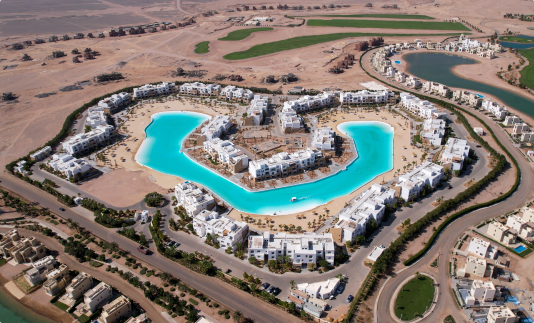
Scale and flexibility got Dubai's holiday-home operators through conflict.

1

WHAT WE’RE TRACKING TODAY

THIS MORNING: Adnoc eyes stakes in refineries in Africa and Thailand + Goldman Sachs sees room for oil to climb higher still

Good morning, everyone. Our Big Story Today takes a look at Dubai’s short-term rental market and the hit it took due to the conflict, though industry insiders tell us that longer-stay demand helped offset the dip. The question is: Can the market recover even as Dubai’s Flexi Rent kicks in and hikes competition for those seeking a place for a shorter stay in Dubai?

Also on deck: Adnoc is in talks to take stakes in refineries in Thailand and Nigeria in a shift in strategy that would put it on more even footing with Aramco's overseas refining footprint. AND- Harry Potter-themed lands are coming to Warner Bros. World Abu Dhabi as the emirate continues its wager on leisure and entertainment as a pillar of the emirate's post-oil economy.

But first: Presidential advisor Anwar Gargash has said that ties with Iran could potentially recover, but rebuilding trust could take decades, Reuters reports. The UAE’s energy exports and trade and economic activity “will not be held hostage,” he said at the Hili Forum in Abu Dhabi, which is currently on its second and final day.

The EnterpriseAM Egypt Forum is back — and we’re devoting the full day to the singular set of questions on everyone’s mind: What does AI actually mean for your company, your people, your economy, your own job — and your kids’ future?

Every session on stage answers one question: “So, what do I actually do about it?”

Join us on 5 October in Cairo. Seats are limited and attendance is by invitation only.

Request your invitation here.

Adnoc eyes stakes in refineries in Thailand, Africa

Adnoc is in talks to take stakes in refineries run by units of Thailand's PTT and Nigeria's Dangote Group, Bloomberg reports, citing people familiar with the discussions. The Thai agreement would pair the stake with crude-supply contracts while giving Adnoc access to fuels from the facilities that it would sell to other buyers, with an agreement possible later this year. The talks with Dangote cover its Nigerian operations, a planned East Africa refinery, and possibly a stake in the pipeline linking it to Kenyan oilfields.

A change in strategy: Adnoc has historically relied on its Ruwais complex at home to supply fuel globally, rather than buying into refineries abroad. The move follows a run of overseas acquisitions, including gas assets via XRG, Covestro, and the Shell Downstream South Africa purchase. It would put Adnoc on more even footing with Aramco, which holds stakes in several overseas refineries. Ruwais itself, which processes more than 922k bbl / d and ranks among the world's four largest single-site refineries, was knocked offline for four months this year after an Iranian drone strike in March, returning to full capacity only in late July.

Why it matters: Refinery stakes give Adnoc assured buyers for its own crude and for barrels it trades from elsewhere, while the fuels it gets back build out its trading arm. Dangote's timing matters too: the refinery is about a week from an IPO targeting roughly USD 1.6 bn at a near-USD 49 bn valuation. Nigeria's NNPC has been the refinery's largest outside shareholder to date, but only holds 7.2% — well short of the 20% stake it originally agreed to buy, after it failed to pay the remaining balance. A meaningful stake for Adnoc could make it the biggest outside equity holder in Africa's largest refinery.

A new no-pass zone for Hormuz

Iran is drawing a new line around Hormuz. Tehran plans to announce a new restricted maritime zone outside Hormuz in the coming days, beginning at the line of the US naval blockade and extending into parts of the Gulf, Reuters reports, citing Iran’s Supreme National Security Council Secretary Mohsen Rezaei. Any vessel entering the zone would be added to Iran’s sanctions list.

The new restrictions would land on an already-thinning route: An average of just 10 commodity vessels a day crossed Hormuz over the past 10 days — the lowest since May — after another round of US-Iran strikes on vessels. US forces struck three Iranian oil carriers over the weekend, while Tehran says it targeted three tankers using “unauthorized routes” through Hormuz — with data from Kpler showing Saturday’s crossings falling into the single digits.

The shipping lanes themselves could also be redrawn. Iran and Oman have agreed on coordinates for a new international corridor through their waters in the Strait of Hormuz, under a joint framework in which Iran would have a management role. Tehran says it will only commit to keeping the strait open once US attacks and threats against Iran stop.

Goldman looks past crude

Goldman Sachs sees room for oil to climb to USD 120 / bbl if attacks on regional shipping broaden, Bloomberg quotes co-head of Global Commodities Research Daan Struyven as saying during an interview. The bank is recommending long positions in global natural gas and products such as diesel, where gains have been higher due to bigger supply shocks.

A normalization of regional exports could alternatively pull oil prices toward USD 80 / bbl. Brent was trading near USD 97 after climbing to its highest level since July, as the US-Iran standoff around Hormuz spills into tanker attacks, port blockades, and new Iranian restrictions outside the strait.

Dubai sets 9 October deadline for Gold Line prequalifications

Dubai's Roads and Transport Authority (RTA) has pushed the prequalification deadline for contractors on the new Metro Gold Line to 9 October, Meed reports. It's the second extension on the window: RTA originally set 17 August when it issued the request for qualification in June, pushed that to 7 September, and has now moved it again to 9 October.

What contractors are bidding for: The Gold Line is a fully underground, 42-km, 18-station extension expected to cost around AED 34 bn, connecting Al Ghubaiba in Bur Dubai to Jumeirah Golf Estates and linking into the existing Red and Green lines as well as the Etihad Rail passenger network. The awarded contractor will handle design and build for all civil works, electromechanical systems, rolling stock, and rail systems, plus a three-year stint on maintenance and operations once it's running. US firm Aecom has been on the project as consultant since October 2025, taking it through five stages from concept design to defects and liability. The RTA is targeting a September 2032 completion.

The bigger picture: Dubai is also mid-build on the AED 20.5 bn Blue Line and a 17-km Boring Company-built Dubai Loop, both landing around the same 2029 window — a sign City Hall is doubling down on transport infrastructure even as the broader region pulls back.

What we're watching: Which contractors clear prequalification and whether Dubai holds the line on a September 2032 completion, given how compressed the pipeline already looks alongside the Blue Line and Dubai Loop.

Britain’s Gulf trade push picks up speed

Britain wants to get its long-awaited GCC trade agreement over the line within weeks. The UK’s new Trade Minister Anas Sarwar told The National that London is ready to sign the Gulf agreement, while discussions with Abu Dhabi over what comes next are also underway. His message: “We’re not going to wait. Those conversations have already begun.”

The GCC leg is nearly there: The agreement, which the two sides wrapped up in May after almost four years of negotiations, is now awaiting signature and domestic approval. The UK estimates it could lift trade with the bloc by 19.8% in the long run and eliminate USD 784 mn in annual tariffs on British exports at current trade levels — USD 486 mn from day one.

Riyadh and Abu Dhabi are getting extra attention: Sarwar chose Saudi Arabia and the UAE for his first trip outside Europe as the Iran war pushes energy and supply-chain security higher up London’s agenda. “It’s not a coincidence that we’re here in the Gulf,” he said. Talks covered investment in energy, AI data centers, ports, aviation, and defense, with Sarwar looking for capital to flow both ways — more Gulf money into the UK and more UK investment into the region.

REMEMBER- The UAE had already been angling for more. We reported last month that the UAE was pushing for a bilateral CEPA beyond the GCC agreement, with the UK government telling us it had launched a consultation on deepening ties. A separate track has plenty to work with: UK-UAE trade reached GBP 25 bn in 2025 — almost half the GBP 53 bn traded between Britain and the GCC as a whole — while the UAE-UK Sovereign Investment Partnership has delivered more than GBP 30 bn of investment commitments into Britain since 2021.

A merger at risk?

Dutch investment company Value8 is asking the courts to freeze Cairo-born contractor Orascom Construction’s proposed merger with Dutch-listed OCI Global — both backed by Egyptian bn’aire Nassef Sawiris — according to a statement (pdf). The petition, filed with the Enterprise Chamber of the Amsterdam Court of Appeal, includes keeping the transaction off the ballot at any OCI shareholders’ meeting and seeks an investigation into how OCI has been run. A ruling in Value8’s favor could hold up or sink the transaction, along with some related plays.

OCI thinks the petition has no merit, saying it mostly recycles arguments already in front of the same court. Value8, for its part, wants a look at how Nassef Sawiris has gone about taking OCI off the Amsterdam market via a merger with a company he also controls, Dutch outlet De Aandeelhouder reported, citing ABM Financial News, a Dutch financial newswire. REFRESHER- The Enterprise Chamber froze the OCI-side vote in January over Sawiris’ conflict on both sides of the table and installed two independent directors to police the process. Those directors only consented to convening an EGM on 1 July, the same day the board (excluding Nassef and Nadia Sawiris) backed the arm of the Sawiris family office NNS Holding’s EUR 4.10-a-share take-private. Value8 is asking for that consent to be undone.

What this means for the backers: Shareholders of Orascom Construction, which is listed on both the ADX and EGX, already approved the merger on 22 January at an unchanged 0.4634 exchange ratio. Orascom said in July it expects OCI to finish its side in 4Q 2026, with a final deadline of 30 December to get the agreement done. That leaves under four months of runway for a court fight to run through.

Data point

1.7% — that’s how much Dubai’s average residential sales price fell y-o-y in August, marking the first annual decline since February 2021, according to new Cavendish Maxwell data. Prices also saw a dip, down 1.3% over the past three months and averaging AED 1.6k per sq ft. Transaction values across the first eight months of the year fell 24% y-o-y to nearly AED 270 bn.

The cooling has been building: We reported in July that record handovers were already pressuring supply-heavy communities, as Dubai transactions fell 19% q-o-q in 2Q. Around 55.6k homes are expected to land this year — potentially the most since 2008 — while Cavendish Maxwell says softer buyer activity and fewer launches will continue to shape near-term pricing. Mohamed Alabbar, Emaar founder, also sees a further 5-10% market adjustment amid war uncertainty and incoming supply, telling The National that he expects the market to reach a “nice balance” in 2027.

But not every segment is taking the same hit: Branded residences averaged AED 3.7k per sq ft in 1H — a 56% premium to comparable non-branded homes, and up from the 40% premium we flagged a year earlier, according to Morgan’s International Realty’s latest 1H 2026 Dubai Branded Residences Report (pdf). But they’re not immune: transaction volumes fell 21% y-o-y, while around two-thirds of the segment’s 64.7k units remain under construction, putting that premium to a bigger test as more stock reaches the ready market.

PSA

WEATHER- Temperatures will hit 42°C in Dubai today with an overnight low of 33°C, and 44°C in Abu Dhabi before cooling to 32°C overnight, according to our favorite weather app.

Happening this week

India’s Odisha state is coming back to the UAE this week looking to turn one blockbuster Emirati investment into a broader pipeline. Chief Minister Mohan Charan Majhi will lead a delegation to Abu Dhabi and Dubai from tomorrow until Friday, targeting sovereign and institutional investors, fund houses, and industry players for capital and partnerships across export-oriented manufacturing and infrastructure, Zawya reports, citing a Government of Odisha press release.

The pitch goes beyond metals: Odisha is putting downstream manufacturing, port-based industrial and logistics parks, shipbuilding, rare-earth corridors, and chemicals on the table as it looks to move further up the value chain. Abu Dhabi meetings will lean toward long-term capital, while Dubai will focus more on metals, logistics, and infrastructure players.

Odisha lies on India’s east coast and is a key mineral-producing state, accounting for nearly 38% of India’s overall mineral production value, and it is its largest producer of steel and aluminum.

REMEMBER- UAE capital has already made a big entrance: In July, IHC’s mining arm International Resources Holding and Adani Enterprises signed an MoU with Odisha for a USD 11.5 bn integrated aluminum complex — billed as India’s largest foreign investment in metals.

UAE President Sheikh Mohamed bin Zayed Al Nahyan is arriving in Germany tomorrow as part of a state visit that will see him meet with German Chancellor Friedrich Merz and German President Frank-Walter Steinmeier, state news agency Wam reports. Options to increase economic and development cooperation will be under discussion during the visit.

The big story abroad

Africa’s biggest IPO yet is on the horizon. Nigeria’s Dangote Petroleum Refinery and Petrochemicals aims to list 4.1 bn shares at USD 0.4 a pop on the country’s stock exchange, launching what would be the continent’s largest-ever IPO. The company — led by Aliko Dangote, Africa’s richest man — is looking to raise at least USD 1.6 bn from retail investors across the continent, offering them two shares without charge provided they are held for a specified period.

Chinese memory maker to list in Hong Kong: China Shenzhen Longsys Electronics — one of the world’s largest independent memory module manufacturers — is set to start trading in Hong Kong today, after raising USD 903 mn in an upsized share sale. The Chinese firm's debut will test investor confidence in the AI infrastructure expansion and volatile memory prices, which have surged this year due to tight supply.

***

You’re reading EnterpriseAM UAE, your essential daily roundup of business, economics, and must-read news about the UAE, delivered straight to your inbox. We’re out Monday through Friday by 7am UAE time.

EnterpriseAM UAE is available without charge thanks to the generous support of our friends at Mashreq and Hassan Allam Properties.

Were you forwarded this email? Tap or click here to get your own copy of EnterpriseAM UAE.

Want to send us a story idea, request coverage, ask for a correction, or otherwise get in touch? Reach out to us on [email protected].

DID YOU KNOW that we also cover Egypt, Saudi Arabia, and the MENA logistics industry?

***
This publication is proudly sponsored by

Rise every day
From OUR FAMILY to YOURS
2

THE BIG STORY TODAY

Scale and flexibility got Dubai's holiday-home operators through the war. A recovery — and a rent reform — are both testing what comes next

The regional conflict has gutted short-stay leisure bookings across the city, but short-term rental operators who'd already built out monthly-stay inventory came through largely unscathed, as demand held among those seeking flexible stays. Now, just as that flexibility has proven itself, Dubai's own rental reforms are angling for some of the same tenants.

Short leisure bookings fell sharply after the mid-March escalation, co-founder and managing director of rental property manager First Class Property Management Luis Santos tells EnterpriseAM, while demand for monthly stays proved more resilient, driven by new arrivals searching for permanent homes, residents awaiting handovers, business travelers on longer projects, and guests seeking flexibility without a year-long commitment.

Relocating professionals, project workers, residents waiting for handovers, and people unwilling to immediately sign a 12-month tenancy have become an important source of demand, Zacky Sajjad, director of business development and client relations at Cavendish Maxwell, also tells us.

The result: Operators solely relying on tourists felt the disruption more acutely than those catering to longer stays.

By the numbers: Market occupancy fell to 47.7% in 2Q 2026, while average daily rates (ADR) dropped 17.9% to AED 373, as per First Class’ Short-Term Rental Index. First Class’ own portfolio, however, saw 87.1% occupancy on the back of longer stays, with nearly 69.4% booked nights and an average stay of 21.3 nights, compared with a market median of six. Active listings stood at 33.7k at the end of 2Q, up 10.2% y-o-y but down from a January peak of 36.5k, with the number falling further to around 30.9k in September, as some operators exited the market and booking platforms removed unlicensed properties, Santos says.

(Quick sidebar: First Class works with 464 active owners, with 95% of its inventory in Dubai. The company has grown from three units at launch in 2020 to 588 units by August.)

For context: Professional operators already control most of Dubai's short-term rental market, and the city's licensing regime is raising the cost of staying in casually. “Dubai's short-term rental market has become considerably more professional” over the past two to three years, Sajjad tells us. What began as a market of individual owners listing directly has shifted toward professional operators running dynamic pricing, centralized housekeeping, revenue management, and dedicated guest services, he says — and while no single dataset gives a definitive citywide split, commercial data supports the view that professional operators now hold the majority of supply.

SOUND SMART- The regulatory line runs straight through that split. Individual homeowners can register up to eight holiday-home units before they need a Vacation Homes Rental trade license and have to meet Dubai Economy and Tourism's full operational requirements. Above that threshold, casual hosting isn't really an option anymore.

“Licensing has professionalized the market. The permit regime sets a real bar, with operator registration, per-unit permits, safety and quality standards, and Tourism AED reporting,” helping push the industry out of its informal phase, Sajjad says. This has in turn raised the cost of entry and removed unlicensed listings, gradually favoring larger, compliant operators over casual hosts, he says.

Scale has its privileges: Furnishing, cleaning, maintenance, ins., tech, licensing, and guest support are expensive — larger portfolios can spread those costs and negotiate better procurement agreements, Sajjad explains. “The hurdle rate has unquestionably increased. For a professional operator running 100 units, many of those costs can be shared. For somebody running one apartment, they cannot.”

A revival is already starting

“We started September at 45% occupancy and we’re looking at closing the month at 80-85%, which is a strong September,” Vinayak Mahtani, founder and CEO of Bnbme Holiday Homes, told DubaiEye 103.8. The firm saw bookings plunge 70-80% in March and April before recovering to last year’s levels by July and August.

This tracks with what’s happening at hotels: Average displayed room rates jumped 86% across 15 hotels near Dubai World Trade Center on busy September dates due to a busy events calendar, as we reported earlier this week.

The revival also had a government-funded tailwind: As part of the AED 1 bn stimulus package, effective from April, Dubai rolled out targeted three-month fee deferrals for hotels, hotel apartments, and holiday homes, later suspending the Tourism AED and hotel sales fees, while postponing trade license, municipal and other administrative charges, giving operators some breathing room.

When annual rents bend the rules

Dubai's recently launched Flexi Rent initiative is likely to intensify competition most in the medium-stay market — particularly for the segment sitting between a tourist stay and a conventional annual tenancy, Sajjad says. “Historically, one reason some residents have paid a premium for furnished short-term accommodation has been flexibility, avoiding large rental cheques, deposits, and long commitments. If conventional landlords increasingly offer monthly payments, part of that financial flexibility premium disappears,” he explains.

REMEMBER- The Dubai Land Department has a ‘rent now and pay later’ scheme in the works, set to kick off in September, where tenants can spread annual payments over up to 12 months at zero interest.

Santos isn’t concerned: “The operators most exposed are those whose only mid-term offer is a discounted nightly rate on a basic unit,” Santos says. “The guests taking our monthly stays are paying for something different, a furnished and serviced home they can book for one month and then extend or leave.”

Santos also argues that short-term demand will return: “We do not see the future of this industry as mid-term living. As tourism recovers, short stays will be the largest share again, with monthly stays keeping a bigger share than before because the habit has now been created,” he says.

Where is the next check-in

The Dubai market is not structurally oversupplied yet, but pockets of excess inventory could emerge where supply outpaces demand, warns Sajjad. The signs: falling occupancy and ADR, weaker RevPAR, longer booking lead times, heavier discounting, and more properties returning to the annual rental market.

That risk isn't spread evenly. The fastest supply growth is concentrated in lower-entry-price areas — JVC, Dubai Creek Harbour, Meydan/MBR City, and Dubai Hills — where investors are chasing a better ratio between acquisition cost and achievable rental income, Sajjad says. Established neighborhoods look more insulated: Downtown Dubai, Dubai Marina, JBR, and Palm Jumeirah have enduring demand drivers — beaches, landmarks, restaurants, walkability — and supply there is largely built out. “The reason to stay there does not change... it will not move much either,” Sajjad says.

3

Entertainment

Abu Dhabi to add Harry Potter to its growing entertainment lineup

Miral is expanding Warner Bros. World Abu Dhabi, the region's largest indoor theme park, to include three new Harry Potter-themed lands, the latest in a string of moves that have turned Yas Island into Abu Dhabi's flagship wager on leisure and entertainment as a pillar of the emirate's post-oil economy. The new lands — Diagon Alley, Hogwarts, and the Forbidden Forest — will span roughly 63k sqm with construction targeted for completion in 2029.

It's part of a bigger build-out: The Harry Potter lands join two previously announced DC attractions — Kryptonite Collider and Superman Up and Away — in a combined expansion that will grow Warner Bros. World's footprint by more than 50%, adding some 70k sqm of new theme park space to a park that currently has six immersive lands.

The bigger picture: The Harry Potter-themed “lands” will be the first in the Middle East — another regional first to layer onto the upcoming Disneyland Abu Dhabi, which is set to take at least six years to build. It’s the same playbook Miral ran with Disney just over a year ago — fund, build, and operate the real estate while a global IP owner supplies the franchise and storytelling and takes a cut of the upside. Yas Island's existing roster — Ferrari World, SeaWorld Abu Dhabi, Yas Waterworld, Warner Bros. World, and now Topgolf Yas Island — are all part of a strategy to make Abu Dhabi a leisure and entertainment hub and boost its tourist draw.

4

INVESTMENT WATCH

Creative Investments Holding targets heritage food brand after USD 20 mn first close

The first target of the newly born Creative Investments Holding is potentially a heritage food brand. “A brand with history, an authentic DNA, and a story that reflects our culture — you can then scale it, optimize it, institutionalize it, and expand it regionally and globally,” Founder and Leo Equities CEO Mohamed Talaat Khalifa (LinkedIn) tells EnterpriseAM, without disclosing further details on the brand. The ADGM-based vehicle just closed a USD 20 mn founding round en route to a USD 50 mn target, with an IPO in sight, according to a statement (pdf) out yesterday. The commitments are still subject to definitive agreements.

The full targets: The platform is eyeing “controlling and strategic” stakes in food, hospitality, fashion, and lifestyle businesses primarily in Egypt and the broader MENA region. Properties are also being evaluated for the platform’s first boutique hotel concept Casa Leo, where Khalifa, a former Managing Director of EGX-listed Concrete Fashion Group, says the focus is the experience rather than the asset.

Who is behind it: The platform is being set up through Leo Equities, the investment arm of Khalifa which has DAFZA and Milan presence. Leo Equities describes itself as a “House of Brands and Experiences” across creative and niche industries with a presence in Abu Dhabi and Cairo alongside Italy. Khalifa is running the platform with Heba Makhlouf (LinkedIn), former CIO of EGX-listed developer Sodic.

The pitch: “Money will always be funding, culture is the real capital,” Khalifa tells EnterpriseAM. For him, what the region has lacked is a patient institutional owner willing to take authentic regional businesses and turn them into international champions.

Who sits on the cap table: Founding investors include Onsi Naguib Sawiris, Ali Abubakr, and the Egypt’s Micro, Small and Medium Enterprises Development Agency (MSMEDA). A government SME agency co-investing alongside private money in a vehicle whose stated ambition is luxury and lifestyle brands is not a combination we see often. Having an institution alongside individual investors and family offices helps with governance and institutionalizing the company, Khalifa tells us.

The split across investors stays confidential until the definitive agreements are signed, Khalifa said, and the platform will go after a wider group of investors in subsequent rounds on a timeline that hasn’t been set yet. The number of acquisitions the first USD 20 mn will cover is also open, and the investment strategy and how concentrated the portfolio will be are still being worked out, he tells us.

On picking a home for the IPO: Creative Investments Holding is eyeing Abu Dhabi, Riyadh, or London as potential listing venues within five to seven years, according to the release. The platform is regional rather than Egyptian, Khalifa says, pointing to businesses worth buying in Saudi Arabia, the Levant, and the UAE alongside Egypt. Where it ultimately lists will come down to where capital and investor access make the most sense at the time, he adds.

5

MOVES

BlackRock appoints Dubai-based lead for digital assets

BlackRock has tapped Dixit Joshi (LinkedIn) to lead its Middle East Technology and Advisory Solutions, and Digital Assets team as managing director, according to a press release. Joshi will be based in Dubai in the new role and focus on expanding BlackRock’s capital markets, technology, and digital assets strategy in the region.

Joshi is a veteran of the financial services industry whose 30+ year career includes tenures as CFO at Credit Suisse, as Group Treasurer at Deutsche Bank, and managing director at Barclays Capital. He’s also held board positions at the likes of Nedbank and Man Group.

6

ALSO ON OUR RADAR

Mirae Asset opens DIFC office, Sav banks USD 3.5 mn for Saudi push, Investment Ministry helps Sunstone + EGA’s aluminum ambitions

Another global manager lands in DIFC

South Korea’s Mirae Asset — which oversees more than USD 400 bn globally — has opened an office in the Dubai International Financial Center (DIFC), according to a Dubai Media Office statement. The asset manager also secured a Category 3C license from the Dubai Financial Services Authority, allowing it to manage and distribute funds to institutional and professional investors across the GCC. From Dubai, Mirae plans to target institutional investors, family offices, and the region’s Indian diaspora, while using its India operations to offer more India-focused and global strategies to Middle East clients.

BACKGROUND- Mirae joins a steady stream of global managers setting up in the hub to get closer to regional capital, just days after French asset manager Carmignac opened its first Middle East office there. DIFC now hosts 592 wealth and asset management firms among more than 10k registered companies.

Sav banks USD 3.5 mn for Saudi push

UAE fintech Sav has raised USD 3.5 mn in a pre-Series A round led by Abu Dhabi’s Phoenix Venture Partners, according to a statement. The raise takes Sav’s total funding to around USD 6 mn. The company will use the funding mainly to enter Saudi Arabia, while also expanding product development, AI infrastructure, and user acquisition across the GCC.

What Sav is building: Founded in 2022 by Purvi Munot and Mithil Ajmera, the platform brings savings, investments, credit, gold, payments, and commerce into one place, with its SavCore system automating parts of users’ financial decision-making. Sav currently operates in the UAE under a Dubai Financial Services Authority Category 4 license.

The UAE is helping EGA bring another piece of its aluminum supply chain home

The UAE is helping push a USD 300 mn anode plant toward execution. The Investment Ministry signed an MoU with Chinese anode maker Sunstone Development to support the facility it is developing with Emirates Global Aluminium (EGA), state news agency Wam reports. The ministry will help with licensing and links to industrial zones, ports, customs authorities, and other government bodies, while a joint working group will oversee delivery.

REFRESHER- In May 2025, EGA and Sunstone unveiled plans for a 300k-ton-a-year plant in Kezad, with construction slated for 2026 and production from 2028. The facility is backed by a USD 300 mn investment and, once operational, it is expected to replace most of EGA’s current anode imports. EGA said at the time it could eventually make the UAE only the second country after China to export anodes.

Sahl heads to Dubai

Digital bill-payment platform Sahl is preparing to launch operations in the Dubai International Financial Center (DIFC) to serve Egyptian expatriates in the UAE, following talks between Egyptian Planning and Economic Development Minister Ahmed Rostom and DIFC Governor Essa Kazim, according to a statement. The planned expansion aims to allow Egyptians living in the UAE to directly pay utilities, municipal fees, and financial obligations for their families back home.

IN CONTEXT- The DIFC expansion marks the primary operational step in executing a broader state-backed initiative launched last month. In August, Delta Egypt Payments — the app’s fintech firm, in which the state-backed National Investment Bank holds a stake — signed a cooperation protocol with the Foreign Affairs Ministry, International Cooperation, and Egyptian Expatriates to roll out digital bill-payment solutions for citizens residing abroad. Beyond fintech, discussions between Rostom and Kazim — who also serves as chairman of DP World — touched on expanding logistics operations and container handling investments across the Suez Canal Economic Zone to draw on Egypt’s port infrastructure and enhance regional trade corridors.

7

PLANET FINANCE

BTC’s rally shows signs of running out of steam

BTC's had a rough couple of weeks, and analysts are split on whether a recent rally is here to stay. Recent weeks had seen it rise by 30% to around USD 82.8k, before later dropping back down below the 80k mark. The rally had legs from Fed Governor Christopher Waller signaling he could support leaving interest rates unchanged this month, plus a weaker USD — but a hot jobs report reversed both almost overnight.

BTC dropped 2.8% to USD 79.2k the moment the jobs data landed, as the USD strengthened and two-year Treasury yields climbed, according to Bloomberg. US payrolls rose 162k in August — well above forecasts — reviving wagers on a September rate hike, which would tighten liquidity and dent risk appetite for an asset like BTC in one move. The Fed's next decision, at its 15-16 September meeting, is now the thing the whole market is waiting on.

For now, the bulls still have room to work with. BTC stays in bullish territory as long as it holds above roughly USD 71.8k — the midpoint of last month's rally, per Reuters' technical read. But the case for caution is building too. “A clear rebound doesn't settle the debate, it arms the hawks,” Sygnum Bank's Fabian Dori told Bloomberg.

The quality of the demand behind the rally is the bigger question mark. US-listed BTC ETFs booked two days of sizable outflows in the past week, Bloomberg reported separately. The seven-day average of the Coinbase premium — which tracks whether US buyers are paying above the global price — has stayed negative for more than four months, and even last month's rally wasn't enough to flip it positive. Translation: the American buying that usually powers BTC's bigger runs hasn't shown up for this one.

MEANWHILE- A USD 320 mn incident at a Bitcoin sidechain is the wildcard. Self-described white-hat hackers exploited a software bug in Liquid Network's Elements code to withdraw roughly 4k of the 4.2k BTC held in its Liquid Federation wallet, Liquid said in an X post. Blockstream, which built the sidechain, says no keys were compromised, and unlike most crypto hacks, the funds haven't moved since, and the parties involved are negotiating an on-chain return once the bug is patched. That's a different animal from Bybit's USD 1.5 bn theft last year, which triggered a selloff that dropped BTC by as much as 28.2% — but a market that's already jumpy on ETF demand doesn't need another crypto-security headline right now, whatever the eventual outcome.

MARKETS THIS MORNING-

Asia-Pacific markets surged in early trading, with South Korea’s Kospi up 1.4% and Japan’s Nikkei up 0.5%. Meanwhile, Wall Street equities were broadly in the red, weighed down by the Middle East conflict and escalating US-Canada trade tensions.

ADX

9,976

+0.0% (YTD: -0.2%)

DFM

5,931

+0.8% (YTD: -1.9%)

Nasdaq Dubai UAE20

4,830

+0.8% (YTD: -1.2%)

USD : AED CBUAE

Buy 3.67

Sell 3.67

EIBOR

3.5% o/n

4.3% 1 yr

TASI

11,025

-0.4% (YTD: +5.1%)

EGX30

56,628

-0.1% (YTD: +35.4%)

S&P 500

7,719

-0.4% (YTD: +12.8%)

FTSE 100

10,822

-0.1% (YTD: +9.0%)

Euro Stoxx 50

6,404

+0.2% (YTD: +10.5%)

Brent crude

USD 97.00

+0.8%

Natural gas (Nymex)

USD 2.97

-0.3%

Gold

USD 4,452

-0.6%

BTC

USD 79,237

-0.9% (YTD: -9.6%)

Lunate JP Morgan UAE Bond UCITS ETF

AED 3.64

+0.6% (YTD: -2.9%)

S&P MENA Bond & Sukuk

150.68

-0.1% (YTD: -0.8%)

VIX (Volatility Index)

15.30

+5.3% (YTD: +2.3%)

THE CLOSING BELL-

The DFM rose 0.8% yesterday on turnover of AED 760.9 mn. The index is down 1.9% YTD.

In the green: Shuaa Capital (+12.2%), Islamic Arab Ins. Company (+8.8%), and Al Firdous Holdings (+5.6%).

In the red: United Foods Company (-4.9%), National Cement Company (-4.4%), and Al Mal Capital REIT (-1.9%).

Over on the ADX, the index remained flat on turnover of AED 898.9 mn. Meanwhile, Nasdaq Dubai was up 0.8%.


SEPTEMBER

7-8 September (Monday-Tuesday): Hili Forum, The St. Regis Saadiyat Island Resort, Abu Dhabi.

7-9 September (Monday-Wednesday): AIM Congress, Dubai World Trade Center.

7-9 September (Monday-Wednesday): International Property Show, Dubai World Trade Center, Dubai.

12-13 September (Saturday-Sunday): Emirates International Congress on AI & Visionary Leadership in Transforming Healthcare, Adnec Center Abu Dhabi.

14-17 September (Monday-Thursday): Arabian Travel Market, Dubai World Trade Center, Dubai.

15-16 September (Tuesday-Wednesday): Federal Open Market Committee (FOMC) meeting.

16 September (Wednesday) Altinvest, St. Regis, Downtown Dubai, Dubai.

17-19 September (Thursday-Saturday): International Real Estate & Investment Show (IREIS), Adnec, Abu Dhabi.

18-19 September (Friday-Saturday): EuroLeague Basketball SuperCup, Etihad Arena, Yas Island, Abu Dhabi.

28-29 September (Monday-Tuesday): Al Ain Future Business Forum, Adnec, Al Ain, Abu Dhabi.

29-30 September (Tuesday-Wednesday): AFCM Annual Conference, Abu Dhabi.

OCTOBER

1-2 October (Thursday-Friday): MEIRA Annual Conference, Atlantis the Royal, Dubai.

4-10 October (Sunday-Saturday): World Space Week, Abu Dhabi.

5-7 October (Monday-Wednesday): AI Everything Global, Adnec Center, Abu Dhabi.

12-14 October (Monday-Wednesday): Airport Show, Dubai World Trade Center, Dubai.

14-15 October (Wednesday-Thursday): Sharjah Investment Forum, Jawaher Reception and Convention Center, Sharjah.

13-15 October (Tuesday-Thursday): Annual Meeting of Global Future Leaders, Dubai.

20-22 October (Tuesday-Thursday): Future Health Summit, Adnec Center Abu Dhabi.

21 October (Wednesday): Reuters NEXT Gulf, St. Regis Saadiyat Island Resort, Abu Dhabi.

27-28 October (Tuesday-Wednesday): Arab Competition Forum, Dubai.

27-28 October (Tuesday-Wednesday): Federal Open Market Committee (FOMC) meeting.

30 October (Friday): Large businesses achieving annual revenues equal to or above AED 50 mn must appoint an accredited service provider for e-invoicing implementation.

Signposted to happen sometime in October 2026:

  • Abu Dhabi Space Week, Abu Dhabi.

NOVEMBER

2-6 November (Monday-Friday): Dubai Future Finance Week, Dubai.

4 November (Wednesday): Digital Transformation Summit, Sofitel, Abu Dhabi.

9-10 November (Monday-Tuesday): Annual government meetings, Abu Dhabi.

9-12 November (Monday-Thursday): EMEA Council on Hotel, Restaurant and Institutional Education Conference, Dubai College of Tourism, Dubai.

9-13 November (Monday-Friday): World Congress of Military Medicine, Adnec Center, Abu Dhabi.

10-12 November (Tuesday-Thursday): Dubai International Electric Vehicle Exhibition & Conference, Dubai World Trade Center.

16-18 November (Monday-Wednesday): World Police Summit, Dubai World Trade Center, Dubai.

18-19 November (Wednesday-Thursday): Touchdown Middle East 2026, Conrad Abu Dhabi Etihad Towers, Abu Dhabi.

25-26 November (Saturday-Sunday): Doers Summit, Dubai Silicon Oasis, Dubai.

DECEMBER

2-4 December (Wednesday-Friday): UN Water Conference, UAE.

4-6 December (Friday-Sunday): Formula 1 Abu Dhabi Grand Prix, Abu Dhabi.

8-9 December (Tuesday-Wednesday): Capital Market Summit, Madinat Jumeirah, Dubai.

8-9 December (Tuesday-Wednesday): Federal Open Market Committee (FOMC) meeting.

7-10 December (Monday-Thursday): Abu Dhabi Finance Week, Al Maryah Island, Abu Dhabi.

8-10 December (Tuesday-Thursday): Abu Dhabi Water & Power Week, Adnec Center, Abu Dhabi.

8-10 December (Tuesday-Thursday) Middle East & North Africa Business Aviation Association Show, DWC, Dubai Airshow Site.

Signposted to happen sometime in 2027:

  • 1 January: Deadline for large businesses to implement e-invoicing;
  • 1Q 2027: Completion of the first phase of Hassyan seawater desalination project;
  • 1-3 February (Monday-Wednesday): World Governments Summit;
  • 31 March: Small businesses with annual revenues of less than AED 50 mn are obliged to contract with an accredited service provider for e-invoicing implementation;
  • 31 March: Government entities are required to appoint an accredited service provider for e-invoicing implementation;
  • 21-22 April (Wednesday-Thursday): Token2049, Dubai;
  • 1 July: Deadline for small businesses to implement e-invoicing;
  • 1 October: Deadline for governments to implement e-invoicing;
  • Abu Dhabi’s solar and battery energy facility, combining 5.2 GW of solar capacity and 19 GWh of battery storage, is set for commissioning.

Signposted to happen sometime in 2028:

Signposted to happen sometime in 2029:

  • Sibos 2029 organized by the Society for Worldwide Interbank Financial Telecommunication (SWIFT), Dubai;
  • Annual Meetings of the World Bank Group and the International Monetary Fund, Abu Dhabi;
  • The commissioning of the seventh phase of Mohammed bin Rashid Al Maktoum Solar Park.
Now Playing
Now Playing
00:00
00:00