Northern Emirates’ property markets cool off + Sidara locks in USD 1.35 bn in firepower

1

WHAT WE’RE TRACKING TODAY

THIS MORNING: UAE eyes Japan’s largest data center + UK regulators wave through Paramount’s WBD takeover after assurances

Good morning, everyone. Property markets across the northern emirates are showing some fatigue, but capital is still flowing into everything from tokenized film IPs to Japanese data centers.

Geopolitical uncertainty’s impact on real estate is spilling into the northern emirates with momentum cooling q-o-q in both Sharjah and Ras Al Khaimah.

Film-tech platform CineNow is looking to turn Indian cinema IP into a tokenized asset class from the UAE, with an eye to expand into further sectors in the future, and Sidara has locked in USD 1.35 bn in five-year financing, with an accordion clause that could push total commitments to USD 3.1 bn.

On the AI front, UAE could invest as much as USD 6.3 bn in what would become Japan's largest AI data center, with Mubadala expected to lead. Meanwhile, UK regulators have just cleared Paramount’s L’imad-backed takeover of Warner Bros. Discovery (+ assurances) as the takeover faces delays elsewhere.


The EnterpriseAM Egypt Forum is back —— and we’re devoting the full day to the singular set of questions on everyone’s mind: What does AI actually mean for your company, your people, your economy, your own job — and your kids’ future?

Every session on stage answers one question: “So, what do I actually do about it?”

Join us on 5 October in Cairo. Seats are limited and attendance is by invitation only.

Request your invitation here.

UAE eyes Japan’s AI infrastructure

The UAE is eyeing Japan’s largest data center: The UAE could invest as much as JPY 1 tn (c. USD 6.3 bn) in a 500 MW AI data center planned for Akita in northern Japan, with Mubadala expected to lead the investment, Bloomberg reports, citing people with knowledge of the matter. Suppliers and other companies setting up around the site could lift the total project cost to as much as JPY 2 tn, enough to make it Japan's largest data center.

Why it matters: The move would fit a wider pattern of Gulf capital chasing AI infrastructure in markets positioned as a hedge against US-China tech tensions. It also lines up with Japan’s own push, which has folded data centers into its strategic-sector planning and earmarked JPY 32.7 tn through 2035 to pull investment like this outside Tokyo and Osaka. Japanese companies are expected to handle construction and supporting infrastructure.

The bigger play: Akita would extend a UAE data center push that is already moving beyond the UAE. In Vietnam, G42 is leading a USD 1 bn buildout of three data centers. MGX, which raised nearly USD 50 bn in June to accelerate its global investment push, closed a USD 40 bn takeover of Aligned Data Centers alongside BlackRock’s Global Infrastructure Partners.

UAE oil finds a way

The UAE turns Hormuz risk into a market edge: Adnoc sold more than 130 mn barrels of crude across seven tenders since the start of June, equivalent to more than a month of Japanese crude demand, as the UAE moved more oil to global buyers than any other Gulf producer despite the strait's risk, Bloomberg reports. Vortexa estimates the UAE was the only Middle Eastern producer to restore seaborne exports to pre-war levels over June and July, with most cargoes heading to Asian refiners.

The workaround runs on two tracks: Adnoc charters tankers at elevated rates to shuttle crude through Hormuz with their transponders switched off, then transfers the cargo to another vessel in the Gulf of Oman for the longer haul to buyers – a tactic previously flagged as a possible bigger trend. On land, the existing Habshan-Fujairah pipeline carries up to 1.8 mn bbl / d to Fujairah without the crude ever entering the strait.

Why it matters: The UAE’s workaround is helping stabilize supplies to Asia, where refiners can't easily replace the medium-sour crude the Middle East typically produces. With Saudi Arabia's Red Sea bypass now facing its own disruption from Houthi attacks, our take is that Asian buyers could become even more reliant on UAE crude.

And that’s not all: A second USD 3 bn pipeline linking Ruwais to Fujairah is due online in 2027, adding 1.5 mn bbl / d and lifting the UAE's total bypass capacity to 3.3 mn bbl / d.

UK regs wave through Warner Bros. takeover

UK regulators gave the all-clear to Paramount’s L’imad-backed USD 110 bn buyout of Warner Bros. Discovery, according to a statement (pdf) from the UK’s Competition and Markets Authority.

Paramount has offered to turn assurances into “binding commitments,” after the UK Culture Secretary flagged concerns that the merger would affect media competition in the UK, according to a UK government correspondence.

The commitments, per the agreement (pdf): distinct editorial identities across channels and services, no merging of UK streaming platforms (despite Paramount's separate plan to fold HBO Max into Paramount+), continued editorial independence for Channel 5 as a public service broadcaster, and a firewall between cost-cutting and content commissioning.

BACKGROUND- The merger is facing a delay in other jurisdictions. The overall deadline for the merger has been pushed to June 2027 after a federal judge in Oakland approved a delay tied to a lawsuit filed by California and several other states seeking to block the agreement. However, the EU gave it the green light on the condition that Paramount end its distribution tie-up with Universal in Europe within 13 months of closing.

Data point

98% — that’s the UAE and KSA’s share of the total value of sustainable bond issuance in 1H 2026 in the Middle East, and 73% of total volumes, according to an S&P Global report picked up by Al Bayan. The UAE was also the only country to see growth in both volumes (+17% y-o-y) and values (+30% y-o-y).

For the wider Middle East region, while volumes held steady, values dipped 24% y-o-y, despite the April ceasefire leading to a USD 2 bn boost in issuance in 2Q. Banks accounted for the lion’s share of issuances, at 80% by value and 87% by volume, with issuers increasingly looking to private placements.

The outlook: The ratings agency revised down its total predicted sustainable bond issuances to USD 15-20 bn, down from a previous expectation of USD 20-25 bn, on the back of the continued geopolitical uncertainty and tighter market conditions. Around USD 50 bn of sustainable bonds is set to mature between 2027 and 2030.

However, it cited a positive outlook for the medium term due to energy transition policies, growth in blue and transition bonds, and persistent interest in sustainable sukuk.

PSA

Your electronic smoking device’s liquid is getting pricier: The Finance Ministry has set a minimum excise price of AED 1 per ml on liquids used in e-smoking devices and tools, according to a decision that will enter into force on 1 September. Meanwhile, the already existing minimum excise prices will continue to apply to cigarettes, water pipe tobacco, and ready-to-use tobacco products.

IN CONTEXT- The UAE levies a 100% excise tax rate on all tobacco and e-smoking products under the national excise tax regime. Under the new decision, if an e-liquid product’s retail price falls below the minimum price floor, the 100% tax rate will automatically be calculated based on the new AED 1 per ml minimum baseline rather than the product’s declared market price.

WEATHER- We’re in for a high of 43°C today in Dubai, and 45°C in Abu Dhabi, with lows between 34-35°C, according to our favorite weather app.

The big story abroad

Power struggles over control are playing out at the top of global sport, tech, biology, and US politics all at once. The major headlines in the business news this morning are:

  • European football's governing body, Uefa, is holding its threatened World Cup boycott in place even after FIFA dropped a plan to sell a 20% stake in a new commercial entity to investors — Uefa says it's lost confidence in FIFA president Gianni Infantino and wants binding guarantees private ownership won't return.
  • Google is pulling AI leadership back to Silicon Valley from London, sidelining DeepMind founder Demis Hassabis from day-to-day control as commercial pressure to compete with OpenAI and Anthropic reshapes the unit; Alphabet shares fell 5% on the news.
  • We now have our first AI-born virus: Stanford researchers used AI to design synthetic viruses that don't exist in nature — a world first — creating phages that outperformed a natural virus at killing E. coli in lab tests, a milestone biosecurity experts say existing oversight isn't built to handle.
  • US President Trump signed new executive orders narrowing birthright citizenship, five weeks after the Supreme Court struck down his first attempt — legal experts expect fresh court challenges.

***

You’re reading EnterpriseAM UAE, your essential daily roundup of business, economics, and must-read news about the UAE, delivered straight to your inbox. We’re out Monday through Friday by 7am UAE time.

EnterpriseAM UAE is available without charge thanks to the generous support of our friends at Mashreq and Hassan Allam Properties.

Were you forwarded this email? Tap or click here to get your own copy of EnterpriseAM UAE.

Want to send us a story idea, request coverage, ask for a correction, or otherwise get in touch? Reach out to us on [email protected].

DID YOU KNOW that we also cover Egypt, Saudi Arabia, and the MENA logistics industry?

***

Circle your calendar

Check out our full calendar on the web for a comprehensive listing of upcoming news events, national holidays and news triggers.

This publication is proudly sponsored by

Rise every day
From OUR FAMILY to YOURS
2

THE BIG STORY TODAY

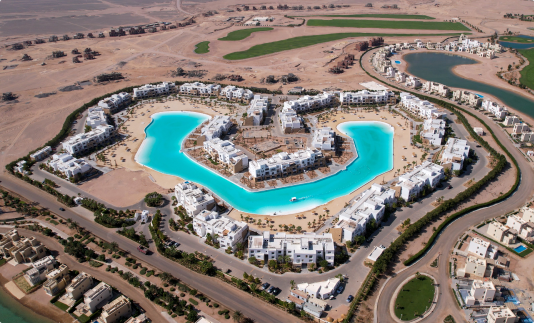
Sharjah and Ras Al Khaimah’s property markets are moderating

The Northern Emirates are — like Dubai and Abu Dhabi — moving further away from the breakneck growth that defined both markets over the past two years. Instead, both are entering distinct phases of maturity. Sharjah, driven by growing end-user demand while Ras Al Khaimah moves from rapid capital appreciation to a steadier, yield-driven growth.

Together, both the emirates are evolving into complementary markets rather than competing ones. Sharjah is cementing itself as the UAE's affordability-led residential hub — more apartments, more mixed-use supply, softer prices. RAK is leaning harder into tourism- and investment-driven growth, where new supply is catching up to demand and slowing the pace of capital gains.

In both markets, the era of headline-grabbing price gains appears to be dismantling and giving way to one that depends less on momentum and more on execution — supply delivery, absorption, and whether occupier demand holds up as more stock lands.

BACKGROUND- The moderation isn't confined to the Northern Emirates. Dubai's residential transactions fell 19% q-o-q in 2Q, with the pullback concentrated in areas where new supply landed hardest. Abu Dhabi's capital values crept up just 2.1% q-o-q — the slowest quarterly pace in two years.

Sharjah sees growth up y-o-y but down q-o-q

Strong demand from homebuyers and investors pushed Sharjah's residential sales up 113% y-o-y to 13k transactions in 1H 2026, according to a Savills report (pdf).

1Q set an unusually high bar: 7.7k transactions, up 79% q-o-q, driven by major project launches, a registration surge after the Acres real estate exhibition, and temporary fee incentives. 2Q's 5.3k transactions — down 30.6% q-o-q — still landed 58.6% higher than the same quarter last year, which is the more useful comparison than the quarter-on-quarter drop alone.

Not a demand problem: Savills attributed the 2Q moderation to those 1Q seasonal factors easing off, not any underlying weakening in demand.

Buyers are leaning harder on financing as supply expands: mortgage registrations climbed 51% q-o-q and 30% y-o-y in 2Q, to 1.6k.

Prices split by asset class: Apartment asking prices fell 2.9% q-o-q and 8.2% y-o-y to around AED 1k per sq ft, as a larger pipeline diluted supply and sharpened competition — particularly in waterfront and mixed-use segments. Villa prices eased a smaller 2% q-o-q but held 5.4% higher y-o-y, supported by demand in communities including Masaar, Al Zahia, Hayyan, and Sharjah Sustainable City. Savills chalked the dip up to a correction after last year's gains. The broader pipeline is also shifting — more of a mix of apartments and mixed-use development, after several villa-heavy years.

RAK residential price growth crawls to two-year low

Ras Al Khaimah's residential market is running out of steam. ValuStrat’s Price Index (pdf). dropped 0.5% q-o-q in 2Q, to 123.5 points — the slowest growth since the index's 1Q 2024 base — though it's still up 5.4% y-o-y, the softest annual pace in two years.

Villas and apartments moved in opposite directions. Villa capital values were flat q-o-q, up 4.6% y-o-y, to AED 872 per sq ft. Apartments outperformed on an annual basis — up 5.8% y-o-y — but slipped 0.8% q-o-q, to just over AED 1k per sq ft. Gross rental yields held steady at 5.3% across both, meaning investor returns are holding even as price appreciation slows.

Al Marjan Island remained the emirate's standout location, posting 9.4% y-o-y apartment price growth, driven by sustained investor interest around the island's expanding hospitality and tourism ecosystem, per ValuStrat. Al Hamra villas came in with 6.2% annual growth, while apartment values in Al Hamra and Mina Al Arab each declined 1.3% q-o-q, pointing to softer short-term pricing across established communities.

Why it matters: Ras Al Khaimah's property rally is entering a more measured phase — the sharp price gains sparked by Al Marjan Island's tourism pipeline are moderating. Future returns are likely to depend on sustained tourism demand and project delivery rather than rapid price inflation — a dynamic that increasingly mirrors Sharjah's own shift from momentum to execution.

3

DEBT WATCH

Sidara locks in USD 1.35 bn in financing — and sets itself up for more down the line

Our friends at Sidara, a Dubai-headquartered planning, design, engineering, and project management giant, locked in USD 1.35 bn in five-year financing — a syndicated multicurrency term loan and revolving credit facility that folds the group’s various borrowing arrangements into a single platform, the Dubai-based engineering and consulting group said in a statement yesterday. The platform is internally named Project Helios and carries an accordion clause that could double total commitments, giving Sidara room to draw more later without renegotiating the entire structure, our friend Nader Aboushadi, Sidara’s group chief treasurer, tells us.

The timing is notable for two reasons. First, the facility lands right after Sidara’s takeover of UK-listed Wood Group in March, in which Sidara assumed roughly USD 1.6 bn of Wood’s debt and funneled USD 450 mn in cash to stabilize a company that had spent years working through liquidity strain. Second, it comes at a time when a shaky ceasefire continues to pose geopolitical risk — and still closed at a “favorable price,” Aboushadi says.

The capital gives Sidara “the financial flexibility and institutional infrastructure to support the successful integration of Wood,” Chairman and CEO of Sidara Talal Shair said. It’s both a “refinancing of existing Sidara debt” and a move that helps it “strongly absorb” the Wood transaction while building long-term capacity, Aboushadi says.

Who’s involved? First Abu Dhabi Bank, Arab Bank, and Abu Dhabi Commercial Bank led the syndicate.

4

INVESTMENT WATCH

CineNow picks the UAE as HQ for a push to tokenize India's film industry

A film-tech platform is betting the UAE is the right place to turn movie rights into a tradable asset. CineNow is looking to tokenize intellectual property from India's cinema industry — which brought in USD 2.1 bn in revenue last year — turning film rights into a structured, investable asset class, according to a press release.

The pitch: Convert Hindi and regional-language film IP into rights that can be bought and sold — spanning theatrical, streaming, satellite, music, dubbing, and franchise rights. CineNow plans to expand the model to Arabic content, real estate, and aviation in the coming months.

It's setting up its HQ in the UAE to run operations, client portfolios, and investor relations — citing the country's position as a capital hub, its reach into multiple markets, and its rules on IP ownership, tokenization, and cross-border investment flows.

BACKGROUND- CineNow's move fits a broader pattern: Abu Dhabi has been courting film-industry money, not just film productions. Ethmar and GB Media launched a multi-mn-USD media fund in the emirate in January — the kind of financing infrastructure a platform like CineNow would plug into.

On the money: CineNow is targeting USD 150 mn for the fund and has secured 60% of that so far, from family offices and ultra-high-net-worth individuals — no further detail on who, specifically. It's aiming for up to USD 720 mn in IP monetization and a long-term portfolio value north of USD 1 bn.

5

EARNINGS WATCH

Earnings are in from Empower, Rak Ceramics, Etihad Energy, Sobha, Aramex, Space42, and Abu Dhabi Aviation

Dubai's continued cooling demand lifts Empower's 1H

Empower’s revenues dipped to AED 888.8 mn in 2Q 2026, down from AED 913.5 mn the year before, according to its financials (pdf). Its bottom line for the period ticked up to AED 259.4 mn, from AED 257.8 mn the year before, on the back of lower finance costs.

Strong demand for district cooling from Dubai's expanding real estate boosted its 1H net income 16.2% y-o-y to AED 467.9 mn, while revenue rose 4.5% to AED 1.5 bn, according to its latest earnings release (pdf).

Operational expansion led bottom-line growth: The Dubai district cooling provider signed 61 new contracts in 1H, adding 73.4k refrigeration tons (RT) and lifting total contracted capacity to over 2 mn. Connected capacity reached 1.7 mn RT after adding more than 51k RT, while the number of buildings served increased to nearly 1.8k, on the back of sustained demand from developers and building owners.

UAE, Bangladesh demand bolsters RAK Ceramics’ 2Q

European export disruptions and freight costs hit revenue and 1H growth momentum for RAK Ceramics. Net income edged up 2.9% y-o-y in 2Q 2026 to AED 68.3 mn, even as revenues slipped 0.5% to AED 822.8 mn, according to its earnings release (pdf) and earnings presentation (pdf). 1H told a bleaker story, as net income fell 7.6% y-o-y to AED 106.5 mn, with revenues sliding 1.2% to AED 1.6 bn.

Behind the dip: The regional war and subsequent logistical disruption and uptick in freight costs led to a dip in export volumes, and a dip in tourism numbers to the UAE led to a slowdown in orders from hospitality players. Going forward, constrained imports still support market share gains in the UAE, even as regional tensions continue pressuring costs.

Some markets proved more resilient: UAE revenue rose 22.7% y-o-y to AED 298.2 mn on sustained real estate and construction activity, while Bangladesh revenue climbed 20.7% y-o-y to AED 59.0 mn on robust domestic demand. However, revenue from Europe was down 35.7% y-o-y.

Dividends: The board proposed an interim dividend distribution of AED 99.4 mn, or 10 fils per share, for 1H.

Etihad Energy’s income skyrockets as storage wagers pay off

Etihad Energy Holding felt the upside of its midstream transformation in 2Q as oil storage integration boosted its top and bottom lines, according to a press release (pdf). Net income jumped 2.6k% y-o-y in 2Q 2026 to AED 19.8 mn, compared to a loss of AED 807k in 2Q 2025, while revenue jumped 63.6% to AED 109.8 mn, according to its earnings financials (pdf). For 1H 2026, net income rose 277.3% y-o-y to AED 30.7 mn, with revenues climbing 47.7% to AED 204.4 mn, as the upside of its Brooge acquisition last year filtered through.

Next plans: Etihad Energy Holding moved into the downstream business in June, planning to spend USD 300-350 mn developing a 15k bbl / d refinery in Fujairah. Management is channeling capital into its Phase III storage expansion for the project — which will add 1.09 mn cbm to double total capacity — while securing long-term binding off-take agreements with lenders and clients.

Abu Dhabi offsets Sobha’s Dubai slowdown in 1H

Market diversification allowed Sobha Realty to offset the effects of a softer UAE property market in 1H with net income down 8% y-o-y to AED 1.8 bn, and revenue slipping 8.9% y-o-y to AED 6.6 bn, according to its latest financials (pdf).

Total sales fell 48.4% y-o-y to AED 8.1 bn in 1H while Dubai primary sales dropped 13% y-o-y to AED 157 mn. However, activity in Abu Dhabi helped to offset the slowdown. Sobha expanded beyond Dubai in 2Q with the launch of Sobha City, its first AED 40 bn master-planned community in Abu Dhabi, with primary residential sales surging 239% y-o-y in the emirate.

The pipeline: The company launched more than 1.9k units across the UAE and delivered over 1.3k during 1H. It expects to hand over another 5.4k units by 2H. Sobha ended the period with a revenue backlog of about AED 29 bn across a pipeline of more than 41.5k units.

Freight forwarding carries Aramex to a record quarter

Record freight forwarding revenue and rerouting pushed Aramex’s 2Q 2026 revenue up 22% y-o-y to AED 1.8 bn — the highest quarterly figure the firm has recorded, according to its earnings release. Meanwhile, its net income swung to AED 47.4 mn from AED 9.3 mn a year prior.

Regional disruption drove the freight forwarding surge: The unit posted its highest-ever quarterly revenue as Aramex rerouted cargo via new Europe-Middle East land routes and added air and sea charter capacity to keep freight moving — while the rest of the network helped balance the business, with domestic express growing and international express volumes stabilizing after several quarters of decline.

The half-year read: 1H revenue rose 12% y-o-y to AED 3.4 bn, while net income reached AED 64.4 mn — up from a reported AED 7.9 mn a year earlier, or a normalized AED 33.4 mn once one-off items are excluded.

Higher costs clip Space42's 1H income

Space42's revenues jumped 29.2% y-o-y to nearly USD 144 mn in 2Q, according to its financials (pdf). Net income attributable to shareholders dipped to USD 13.6 mn, down from USD 15.4 mn the year before on the back of higher finance costs. For 1H, net earnings dropped 51.1% y-o-y to USD 18.3 mn, despite revenue climbing 14.6% to USD 259.5 mn, due to higher costs and operating expenses.

Space Services revenue climbed 15% y-o-y as Thuraya-4 entered commercial operations, while Smart Solutions revenue grew 14% to USD 35 mn on stronger demand for geospatial intelligence and sovereign Earth observation capabilities, according to its latest financial presentation (pdf). Space42's contracted revenue backlog stood at USD 6.3 bn at the end of 1H.

MRO demand powers Abu Dhabi Aviation’s 1H results

Higher MRO activity lifted Abu Dhabi Aviation’s earnings in 1H 2026. The group’s net income rose 6.6% y-o-y to AED 420.6 mn, according to its financial release (pdf). The firm’s revenue also climbed 28.3% y-o-y to AED 4.7 bn.

Behind the numbers: MRO revenue grew 30.6% and accounted for nearly 90% of group revenue, driven by sustained fleet-support demand at GAL and a pickup in AMMROC's contracted programs as they moved into full execution. General Aviation revenue also rose 7.6% to AED 509.9 mn, supported by stronger cargo operations at Maximus Air.

The caveat: Reported earnings included a one-off settlement tied to an AMMROC legacy contract, which contributed AED 364 mn to revenue and AED 102 mn to net income, nearly a quarter of the total. Excluding it, underlying earnings were below the year-earlier period due to a bigger share of contracted MRO work, lower contributions from equity-accounted investees, and higher depreciation following fleet and facility investments.

6

MOVES

Adnoc hires CIO, Bybit names compliance chief, and Gallagher has a new MENA head

Adnoc taps Morgan Stanley energy banker to lead investment push: Abu Dhabi’s Adnoc appointed Michael O’Dwyer (LinkedIn) as chief investment officer as the company steps up its global acquisition strategy across gas, chemicals, and shipping, Reuters reports, citing sources it says are familiar with the matter. O’Dwyer is currently Morgan Stanley’s global co-head of energy and has also previously worked at Lehman Brothers and Eni.

IN CONTEXT- The reported hire comes amid plans from Adnoc to increase its US investments to USD 440 bn over the next decade as its international investment arm XRG lines up tens of bns of USD for a gas push in the US.

) Bybit names new compliance chief to steer global compliance: Dubai-based crypto exchange Bybit appointed Peter Loo (LinkedIn) as chief compliance officer, tasking him with leading the company’s global regulatory strategy as oversight of digital asset platforms continues to tighten, according to a press release.

The new hire: Loo has more than 25 years of experience working with investment banks, law firms, regulators, and digital asset players across different jurisdictions. He joins Bybit from blockchain startup Mantra, where he served as COO. His career also includes a tenure as general counsel and head of sector development at Dubai’s Virtual Assets Regulatory Authority.

Gallagher appoints new Middle East & Africa leader: Global ins. broker Gallagher appointed Andy Winwood (LinkedIn) as senior executive officer for the Middle East and Africa, according to a press release. Winwood will oversee the firm’s regional business and focus on deepening its market footprint. He previously served as Gallagher’s senior executive for strategic client and market engagement.

His previous experience includes a 14-year tenure with Saudi Aramco as a senior ins. and risk management consultant, following earlier roles at Aon Ins. Managers.

7

KUDOS

Emirati CEOs claim nearly a third of Forbes Middle East’s Top 100 CEOs list

Emiratis dominate Forbes Middle East’s Top 100 CEOs list for 2026: Emirati executives led Forbes Middle East’s annual Top 100 CEOs ranking, accounting for 31 of the 102 individuals featured, coming ahead of Egyptians (15) and Saudis (13). The Emirati CEOs span energy, finance, real estate, defense, utilities, and aviation.

Three of our execs were in the top 10: Sultan Al Jaber (LinkedIn), Adnoc Group CEO, claimed second place, Sheikh Ahmed bin Saeed Al Maktoum (LinkedIn), Emirates Airline & Group CEO, secured third place, and International Holdings Company’s CEO and Managing Director Syed Basar Shueb (LinkedIn) took the fifth spot.

8

ALSO ON OUR RADAR

Al Mazrui backs Petrofac HoldCo as strategic investor

Dubai-based holding firm Al Mazrui International sealed off its investment in Petrofac HoldCo, the holding company of Petrofac Emirates, Petrofac said in a statement. The size of the investment wasn’t disclosed, but it makes Al Mazrui a strategic shareholder alongside the engineering group’s existing investors, US investment firm Mason Capital Management, and London-based hedge fund manager Pearlstone Alternative.

IN CONTEXT- UK-based energy services firm Petrofac sold its UAE unit to a consortium led by Mason Capital Management and Pearlstone Alternative in June. The UAE business now operates as a standalone company under new ownership with a clean balance sheet.

9

PLANET FINANCE

Hong Kong and Turkey are both making a play for the wealthy expats London and the Gulf are losing

Two financial centers that spent the last decade playing catch-up are now making a coordinated pitch at the same moment — and for the same reason. Turkey rolled out a package of tax incentives for wealthy expats and investors, and Hong Kong proposed a bill that would effectively eliminate tax on performance-related income for some fund managers. Neither move happened in a vacuum: established hubs — London, Dubai, Abu Dhabi, and Singapore — have all gotten less certain over the past year, and both Turkey and Hong Kong smell an opening.

Turkey’s package: minimal inheritance tax, up to 20 years of taxfree overseas income, and an amnesty for undeclared offshore assets.

The tax terms are only half the pitch: Turkey is also selling geography and lifestyle as hard as it’s selling the tax code — a bridge between Europe and Asia, shorter flights home than from the Gulf, milder summers, and a cost of living well below Dubai or London. The pitch is aimed first at wealthy members of the Turkish diaspora in the UK and Germany.

Yes, but: The Istanbul Financial Center opened in 2023 with ambitions to rival the Gulf and still lags on global indices. Two decades of Erdogan-era currency devaluation and inflation have taught Turkey’s own wealthy to move assets out, not in — and the state’s use of corporate seizures, which has turned the state asset-management fund TMSF into a de facto conglomerate controlling more than 1k companies, is the kind of thing that gives institutional money pause.

Hong Kong’s package is narrower but more targeted at capital allocators specifically. The proposed bill would exempt performance-related income — the carried interest that private equity and hedge fund managers earn on top of management fees — from tax. That’s a direct shot at Singapore, which is now in talks to cut its own taxes to keep funds from decamping to Hong Kong. The move lands alongside an IPO revival, with Hong Kong’s headline listing this year, Zhongji Innolight’s USD 6.8 bn raise, being the market’s biggest first-time share sale in seven years.

This all comes as Dubai and Abu Dhabi’s safe-haven status gets tested by the US-Iran conflict and as London feels the squeeze of losing its non-dom regime. Yet neither challenger can match the scale of what it’s competing with: Turkey lacks the institutional density for a real relocation, while Hong Kong’s rebound leans heavily on mainland Chinese capital and a shrinking pool of non-Mandarin-speaking roles. The pitch is limited, but timing is the leverage they’re betting on.

MARKETS THIS MORNING-

Asian markets are mixed this morning, with Japan’s Nikkei and South Korea’s Kospi opening in the green before swinging to the red. Meanwhile, Wall Street futures gained marginally as it comes off a losing session.

ADX

10,121

+0.1% (YTD: +1.3%)

DFM

5,918

-1.5% (YTD: -2.1%)

Nasdaq Dubai UAE20

4,888

-1.1% (YTD: -0.0%)

USD : AED CBUAE

Buy 3.67

Sell 3.67

EIBOR

3.6% o/n

4.2% 1 yr

TASI

10,812

-0.7% (YTD: +3.1%)

EGX30

54,677

+0.0% (YTD: +30.7%)

S&P 500

7,710

-0.2% (YTD: +12.6%)

FTSE 100

10,868

-0.2% (YTD: +9.4%)

Euro Stoxx 50

6,503

+0.4% (YTD: +12.3%)

Brent crude

USD 83.12

+0.8%

Natural gas (Nymex)

USD 2.62

-0.7%

Gold

USD 4,300.9

+0.0%

BTC

USD 64,411

-0.3% (YTD: -27.4%)

Chimera JP Morgan UAE Bond UCITS ETF

AED 3.62

+1.7% (YTD: +1%)

S&P MENA Bond & Sukuk

150.92

+0.0% (YTD: -0.6%)

VIX (Volatility Index)

15.15

-4.2% (YTD: +1.3%)

THE CLOSING BELL-

The DFM fell 1.5% yesterday on turnover of AED 628.2 mn.The index is down 2.1% YTD.

In the green: Mashreqbank (+0.8%) and Amanat Holdings (+0.7%).

In the red: Sukoon Takaful (-4.4%), Air Arabia (-3.7%), and Emirates Central Cooling Systems Corporation (-3.1%).

Over on the ADX, the index rose 0.1% on turnover of AED 1.1 bn. Meanwhile, Nasdaq Dubai was down 1.1%.

10

MY MORNING ROUTINE

The AI startup founder who runs 130 AI agents to manage his own workday

In roughly 120 countries by Yury Akinin’s (LinkedIn) count, anything touching personal data — a bank record, a patient file, even an email — has to sit on servers physically inside that country. Cloud AI from OpenAI or Anthropic routes data through servers that often aren't. That gap is what sovereign AI startups — including Avelin AI, which recently raised a USD 3.7 mn pre-seed round and now counts Nvidia Inception, AWS Activate, and Dubai Future Foundation among its technology partners — are built to close.

Each week, My Morning Routine looks at how a successful member of the community starts their day — and then throws in a couple of random business questions just for fun. This week, we spoke to Akinin, who founded Avelin AI and previously co-founded life-sciences AI company Quantori at a USD 100 mn valuation, about sovereign AI, managing data regulations, and how AI agents have reshaped his own workday. Edited excerpts from our conversation:

EnterpriseAM: Tell us how Avelin AI came to be.

Yury Akinin (YA): Avelin started in 2022 as an R&D lab. We spent that time researching how modern AI actually works — training models, fine-tuning, working across different architectures. About a year ago, I saw the commercial case had matured, and I moved into the company full-time.

Modern AI is largely controlled by a handful of American and Chinese labs, but the rest of the world needs the same capability — and it needs it to be sovereign and affordable. Avelin's platform is built around efficiency at the model level, wrapped in an inference layer and a full stack that mirrors the APIs enterprises already use from OpenAI and Anthropic.

E: Which sectors are you targeting, and why those?

YA: Financial institutions, governments, and healthcare and pharma. These are sectors where you legally cannot send private data to a cloud provider outside your borders — and pharma and healthcare in particular were already running high-performance computing internally before this AI wave, so they're primed to adopt something like Avelin. Governments are building the physical data centers; what's missing is the software layer to actually run AI inside them. That's the gap we sell into.

E: You mentioned using AI heavily yourself. How does that show up in your day-to-day?

YA: My approach comes down to three things. First, heavy discipline around time management. Second, I try to cut through noise to find the root cause of a market shift rather than reacting to the headline version of it. Third, I run about 130 AI agents that handle my daily routine: email, calendar conflicts, news, VC trend-tracking.

As basic tasks get commoditized through agents, the people on your team matter more, not less. My model is a small, highly competent core team amplified by a large bench of agents — not a large team doing commodity work.

E: What is one non-negotiable constant in your daily routine?

YA: Exercise. My day splits into two distinct shifts, and training is the hinge between them. I take business calls and meetings from around 9am to 4pm. Then I train for an hour to 90 minutes, followed by a protein shake and coffee. After that, the second shift starts as the US wakes up — East Coast calls first, then West Coast, often running past midnight. I'm usually asleep by 1am.

E: How do you approach work-life balance?

YA: I don’t believe in a rigid daily work-life balance where you force yourself to stop even when it doesn’t make sense. Instead, my balance is seasonal — period by period. When market timing is perfect and the demand is high, as it is right now with our startup, it makes sense to put full effort into work. When things slow down or during holiday periods, I shift focus to rest, family, and friends. Trying to enforce a strict daily hard stop often prevents you from achieving major business results or getting actual quality rest.

Yury’s recommendations

What he’s reading: The Goal by Eliyahu Goldratt, Good to Great by Jim Collins, and Blue Ocean Strategy by W. Chan Kim and Renée Mauborgne are business titles he returns to.

Best advice he's received: Manage your ego before you manage your calendar. He argues the bigger threat to founders isn't burnout — it's ego blocking a pivot into a new market when the data says it's time to move.


SEPTEMBER

1-3 September (Tuesday-Thursday): Middle East Energy, Dubai World Trade Center, Dubai.

7-9 September (Monday-Wednesday): AIM Congress, Dubai World Trade Center.

7-9 September (Monday-Wednesday): International Property Show, Dubai World Trade Center, Dubai.

12-13 September (Saturday-Sunday): Emirates International Congress on AI & Visionary Leadership in Transforming Healthcare, Adnec Center Abu Dhabi.

14-17 September (Monday-Thursday): Arabian Travel Market, Dubai World Trade Center, Dubai.

15-16 September (Tuesday-Wednesday): Federal Open Market Committee (FOMC) meeting.

17-19 September (Thursday-Saturday): International Real Estate & Investment Show (IREIS), Adnec, Abu Dhabi.

29-30 September (Tuesday-Wednesday): AFCM Annual Conference, Abu Dhabi.

OCTOBER

4-10 October (Sunday-Saturday): World Space Week, Abu Dhabi.

5-7 October (Monday-Wednesday): AI Everything Global, Adnec Center, Abu Dhabi.

12-14 October (Monday-Wednesday): Airport Show, Dubai World Trade Center, Dubai.

14-15 October (Wednesday-Thursday): Sharjah Investment Forum, Jawaher Reception and Convention Center, Sharjah.

13-15 October (Tuesday-Thursday): Annual Meeting of Global Future Leaders, Dubai.

20-22 October (Tuesday-Thursday): Future Health Summit, Adnec Center Abu Dhabi.

27-28 October (Tuesday-Wednesday): Arab Competition Forum, Dubai.

27-28 October (Tuesday-Wednesday): Federal Open Market Committee (FOMC) meeting.

30 October (Friday): Large businesses achieving annual revenues equal to or above AED 50 mn must appoint an accredited service provider for e-invoicing implementation.

Signposted to happen sometime in October 2026:

  • Abu Dhabi Space Week, Abu Dhabi.

NOVEMBER

2-6 November (Monday-Friday): Dubai Future Finance Week, Dubai.

4 November (Wednesday): Digital Transformation Summit, Sofitel, Abu Dhabi.

9-10 November (Monday-Tuesday): Annual government meetings, Abu Dhabi.

9-12 November (Monday-Thursday): EMEA Council on Hotel, Restaurant and Institutional Education Conference, Dubai College of Tourism, Dubai.

10-12 November (Tuesday-Thursday): Dubai International Electric Vehicle Exhibition & Conference, Dubai World Trade Center.

16-18 November (Monday-Wednesday): World Police Summit, Dubai World Trade Center, Dubai.

18-19 November (Wednesday-Thursday): Touchdown Middle East 2026, Conrad Abu Dhabi Etihad Towers, Abu Dhabi.

25-26 November (Saturday-Sunday): Doers Summit, Dubai Silicon Oasis, Dubai.

DECEMBER

2-4 December (Wednesday-Friday): UN Water Conference, UAE.

4-6 December (Friday-Sunday): Formula 1 Abu Dhabi Grand Prix, Abu Dhabi.

8-9 December (Tuesday-Wednesday): Capital Market Summit, Madinat Jumeirah, Dubai.

8-9 December (Tuesday-Wednesday): Federal Open Market Committee (FOMC) meeting.

7-10 December (Monday-Thursday): Abu Dhabi Finance Week, Al Maryah Island, Abu Dhabi.

8-10 December (Tuesday-Thursday): Abu Dhabi Water & Power Week, Adnec Center, Abu Dhabi.

Signposted to happen sometime in 2027:

  • 1 January: Deadline for large businesses to implement e-invoicing;
  • 1Q 2027: Completion of the first phase of Hassyan seawater desalination project;
  • 1-3 February (Monday-Wednesday): World Governments Summit;
  • 31 March: Small businesses with annual revenues of less than AED 50 mn are obliged to contract with an accredited service provider for e-invoicing implementation;
  • 31 March: Government entities are required to appoint an accredited service provider for e-invoicing implementation;
  • 21-22 April (Wednesday-Thursday): Token2049, Dubai;
  • 1 July: Deadline for small businesses to implement e-invoicing;
  • 1 October: Deadline for governments to implement e-invoicing;
  • Abu Dhabi’s solar and battery energy facility, combining 5.2 GW of solar capacity and 19 GWh of battery storage, is set for commissioning.

Signposted to happen sometime in 2028:

Signposted to happen sometime in 2029:

  • Sibos 2029 organized by the Society for Worldwide Interbank Financial Telecommunication (SWIFT), Dubai;
  • Annual Meetings of the World Bank Group and the International Monetary Fund, Abu Dhabi;
  • The commissioning of the seventh phase of Mohammed bin Rashid Al Maktoum Solar Park.
Now Playing
Now Playing
00:00
00:00