Get EnterpriseAM daily

Available in your choice of English or Arabic

Rerouted to avoid Hormuz, but fell short on volumes

1

WHAT WE’RE TRACKING TODAY

THIS AFTERNOON: Indian government hikes diesel, jet fuel windfall taxes

Good morning, lovely people. The mood shift following the US-Iran interim peace agreement is evident across the MENA-India corridor. Indian equities marked a third consecutive session of gains, with Nifty 50 gaining 3.6% and Sensex up 4% since Monday. The INR also gained to a six-week high of 94.43 to the greenback.

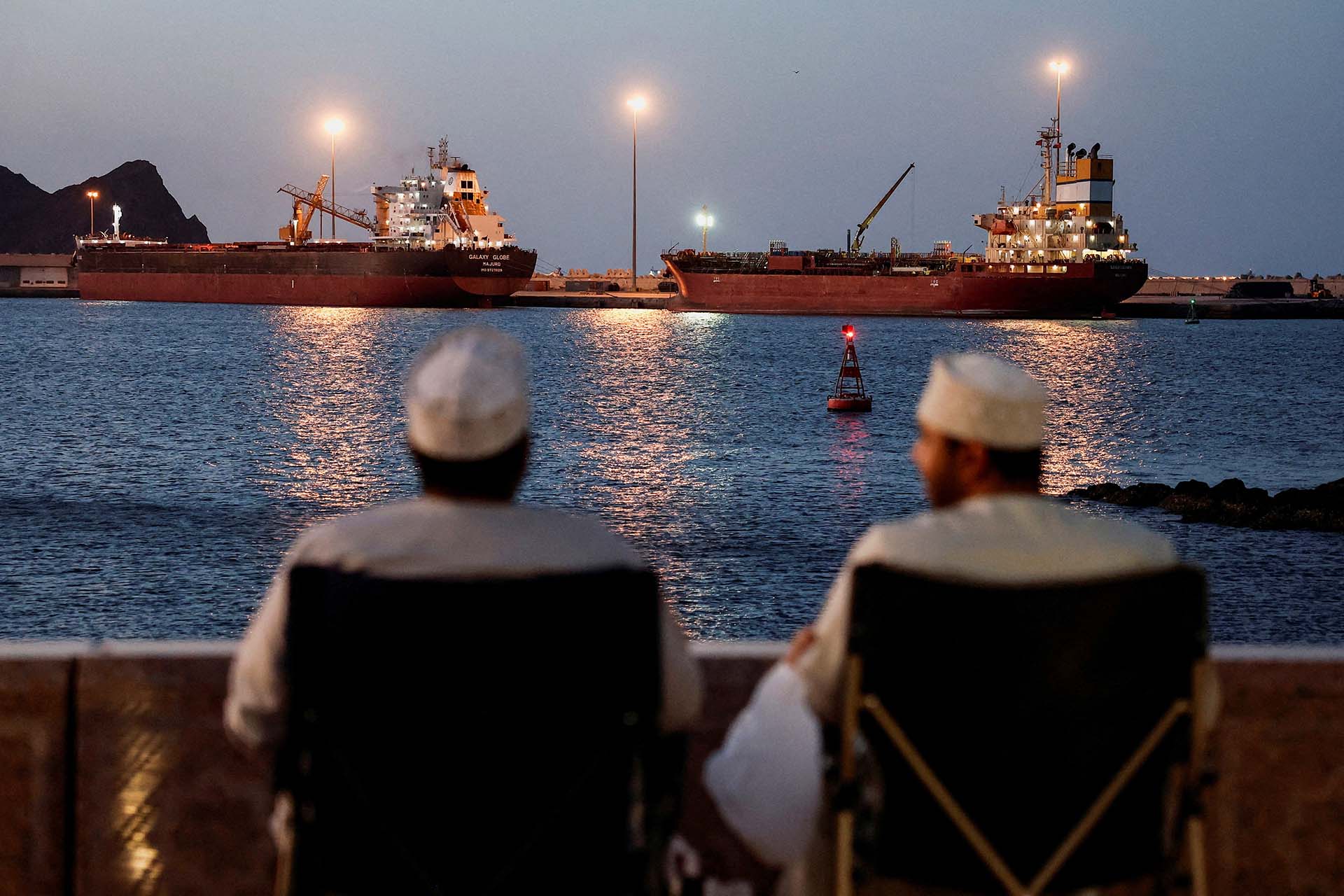
The big story today: Indian refiners actively redrew their supply map during the Iran war, bypassing the Strait of Hormuz in favor of alternative Gulf transit hubs like Yanbu and Fujairah to secure crude oil flows.

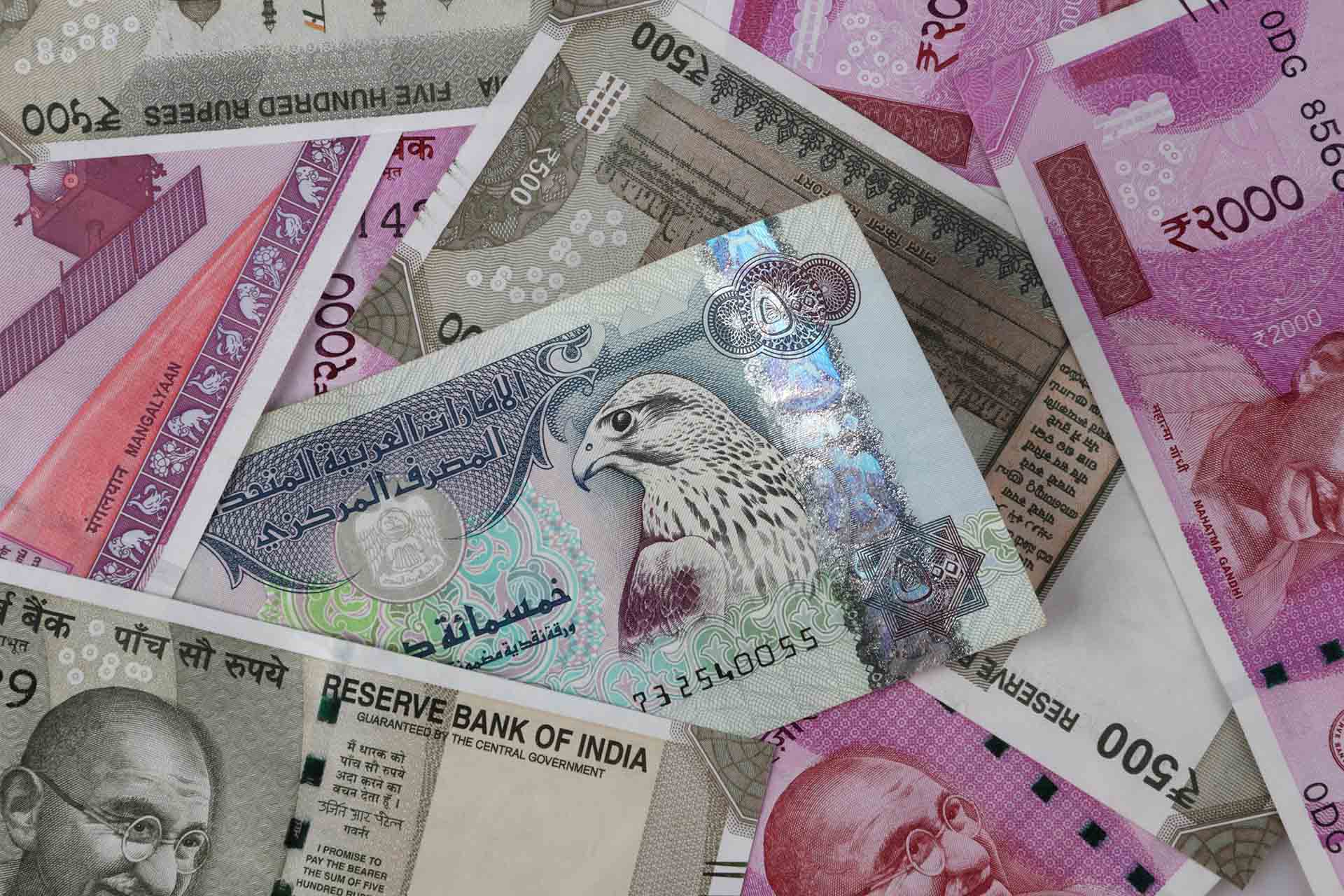
On the India-UAE front: The India-UAE local-currency settlement mechanism has crossed a major milestone, with more than 15% of bilateral trade now successfully bypassing the USD.

Plus: Gulf SWF-backed Reliance Jio is inching towards a USD 4 bn listing, a highly anticipated move that will serve as a barometer for India’s capital markets.

More taxes on fuel exports

The Finance Ministry of India has raised windfall taxes on diesel and aviation turbine fuel (ATF) exports for the fortnight beginning yesterday, while keeping the levy on gasoline exports unchanged, Reuters reports. Excise duties on gasoline and diesel sold in the domestic market will also remain unchanged. The levies are reviewed every fortnight based on global crude and fuel prices.

By the numbers: Export duty on diesel has been raised by 3.7% per liter, and the duty on ATF saw a 31.6% hike.

Why it matters: The latest increase comes on the back of elevated refining margins for diesel and jet fuel, despite recent volatility in global oil markets. India introduced export duties in late March as the Iran war raised concerns over domestic fuel availability. The rolling fortnightly reviews are intended to disincentivize exports and protect local reserves.

India buys 6 mn Adnoc barrels

Adnoc appears to be making up for its lost market share. Indian refiners purchased some 6 mn barrels as the Emirati company sold at least 30 mn barrels of spot crude to Asian refiners and trading houses so far in June, Reuters reports, citing trade sources in the know. Adnoc has been looking to boost its exports during the ceasefire, with more barrels being offered this week. The sales include Das, Upper Zakum, and Umm Lulu crude for June-August loading.

Who’s buying? State-run Indian Oil and Bharat Petroleum were among the buyers. China’s Unipec reportedly bought 6-8 mn barrels of Upper Zakum crude. South Korea’s SK Energy took 7 mn barrels of Umm Lulu crude, while Japan’s Eneos bought 3 mn barrels of Das crude.

IN CONTEXT- The sales come after Adnoc spent much of the conflict finding workarounds for exports from fields inside the Gulf. The company moved cargoes through Hormuz with transponders switched off and relied on ship-to-ship transfers outside the Gulf to reach buyers. Adnoc had also cut exports by more than 1 mn bbl / d from pre-war levels as disruptions hit flows through the strait, Reuters reports separately.

RBI eases investment rules for overseas Indians

The Reserve Bank of India (RBI) is simplifying investment procedures for overseas Indian investors to pull more foreign capital into Indian markets. Under the amended rules, in effect since 13 June, foreign-based individuals can now maintain a single designated repatriable INR account used exclusively for permitted Indian investments. The amendment also clears the regulatory processes for Indian companies listed on international exchanges, allowing subscription proceeds to be remitted directly to bank accounts in India or held in offshore foreign currency accounts.

Why it matters: This significantly lowers onboarding and regulatory compliance for high-net-worth Indian diaspora members living in the Gulf who are looking to invest in capital markets at home. The RBI has eliminated several multi-layered banking frictions and simplified reporting requirements for cross-border investments. For wealth managers, private banks, and fintech platforms operating across the MENA-India corridor, this allows for an easier process — with direct repatriation of sale proceeds from mutual funds, equity instruments, and the National Pension System into these designated accounts.

The big story abroad

The details of the US-Iran agreement are out, headlined by a USD 300 bn development fund designed to jumpstart investment into Iran. The private investment vehicle — aimed to incentivize both sides to work on a final agreement — is already halfway committed, sources tell Reuters, and will focus on energy, logistics, manufacturing, and transport. Under the terms, the US will also release all frozen Iranian funds and assets and lift all sanctions.

The Hormuz outlook: Upon signing the framework agreement this Friday, the US will lift its naval blockade and — alongside Iran — ensure traffic through the Strait of Hormuz reach pre-war level within 30 days.

The Nuclear equation: While Tehran reiterated that it will never produce nuclear weapons, the fate of enriched material and other mutually agreed nuclear issues will be tackled in the final agreement.

What’s next? Once the initial framework is inked, the two sides will have 60 days to reach a final agreement. Bloomberg has the complete text of the 14-point draft agreement here.

And in business news: SpaceX extended its rally during yesterday’s session, dethroning Amazon to become the fifth most valuable company in the world. The company saw its valuation reach almost USD 3 tn during trading, before ending the session at USD 2.7 tn.

Eyes on the Fed: The US Federal Reserve concludes its first policy meeting under new Chair Kevin Warsh today. While markets expect the central bank to hold rates steady, Warsh’s debut post-meeting presser is what we’ll be watching closely for his first substantive comment on inflation and employment.

***YOU’RE READING EnterpriseAM MENA - India, your C-suite briefing on the movement of trade, investment, people, and ideas along one of the world’s most exciting corridors. Every Monday, Wednesday, and Friday at 2:30pm UAE, we dive deep into the business, finance, economy, and policy headlines and trendlines that will move markets and set the tone for your day.

Were you forwarded this briefing? Tap or click here to sign up without charge for your own copy.***

Circle your calendar

Check out our full calendar on the web for a comprehensive listing of upcoming news events, national holidays, and news triggers.
2

THE BIG STORY TODAY

How Indian refiners shifted to alternative Gulf routes to avoid Strait of Hormuz risks

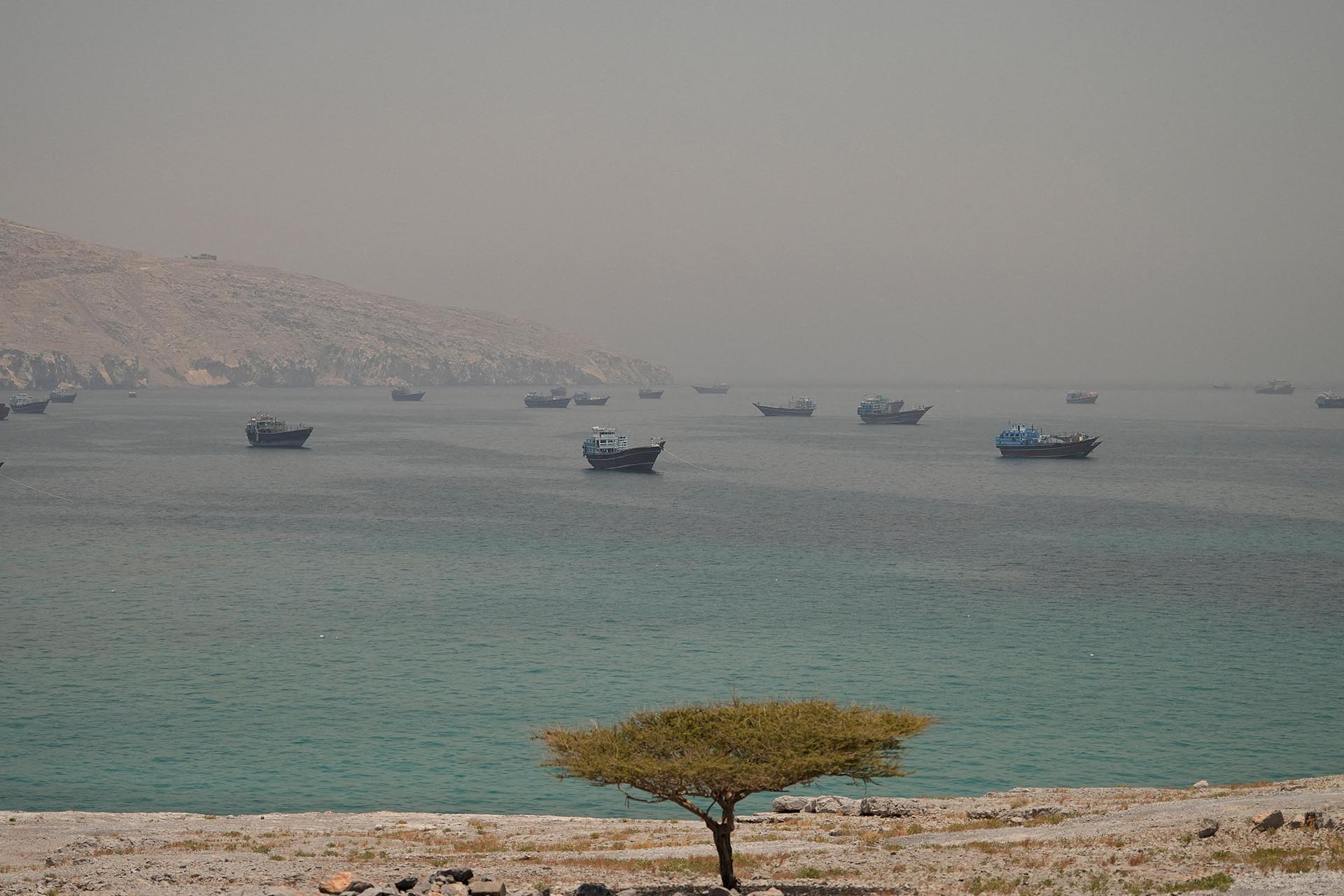
Indian refiners are pulling back on their exposure to the volatile Strait of Hormuz, choosing instead to secure Gulf crude via alternative logistics routes. Local processors are increasingly routing barrels through bypass hubs like Saudi Arabia’s Red Sea port of Yanbu and the UAE’s bunkering center at Fujairah to safeguard supply continuity, data shared by Kpler with EnterpriseAM reveals.

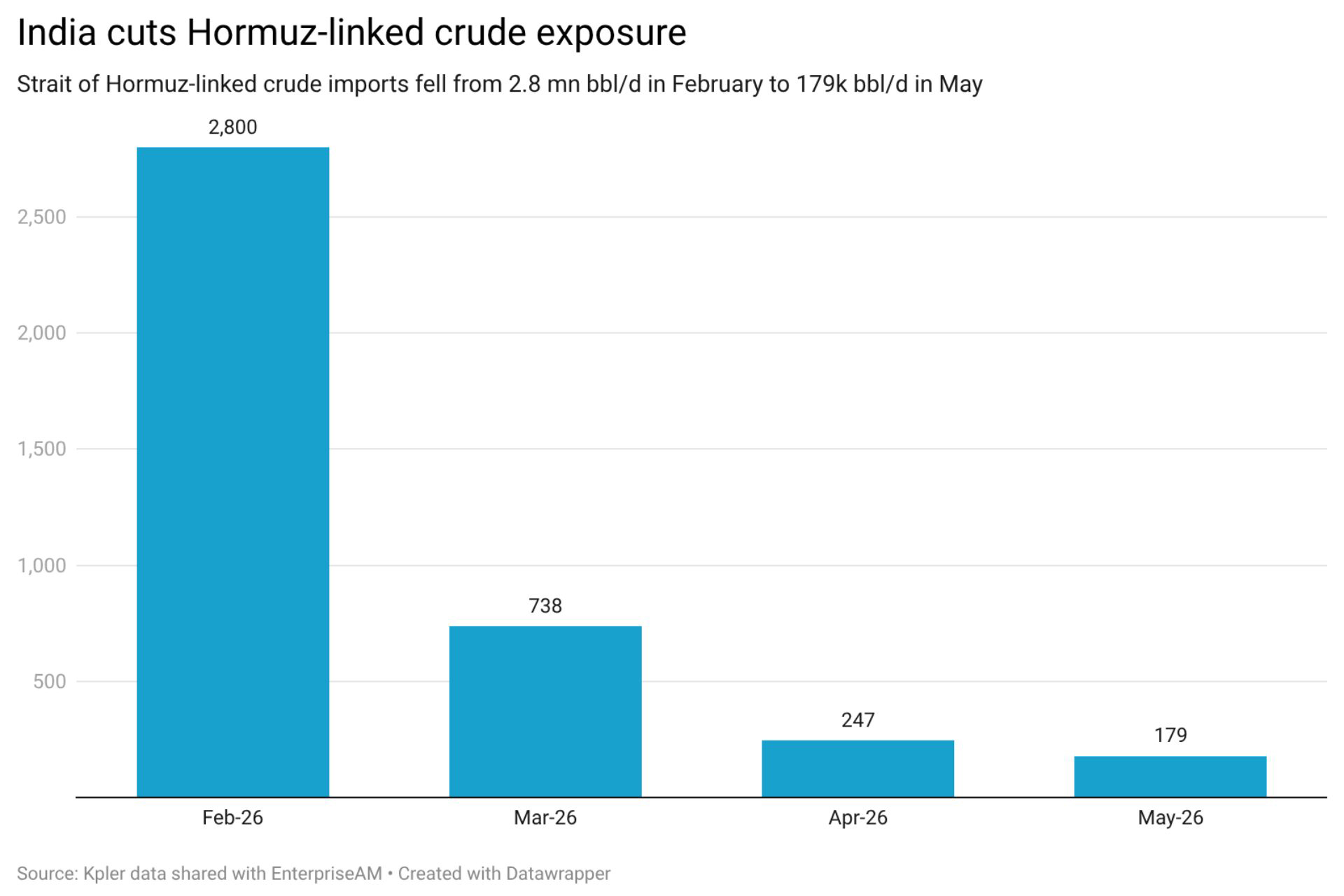
India’s imports linked directly to the Strait of Hormuz fell off a cliff, plummeting from nearly 2.8 mn bbl / d in February to 738k bbl / d in March. The drop-off intensified during the Iran war, with volumes tapering to 247k bbl / d in April and just 179k bbl / d in May.

Concurrently, volumes through other routes — including the bypass hubs of Fujairah in the UAE and Yanbu in Saudi Arabia — surged more than twofold, climbing from 767k bbl / d in March to 1.67 mn bbl / d in May.

Inline Image

Why it matters: India remains critically dependent on Gulf energy supplies, but its refiners are adapting. The data suggests that local processors are not swapping out traditional Gulf crude with standalone suppliers like Oman. Instead, they are leaning into a more diversified blending strategy and flexible maritime routing to maintain access to Gulf supply while steering clear of key maritime chokepoints.

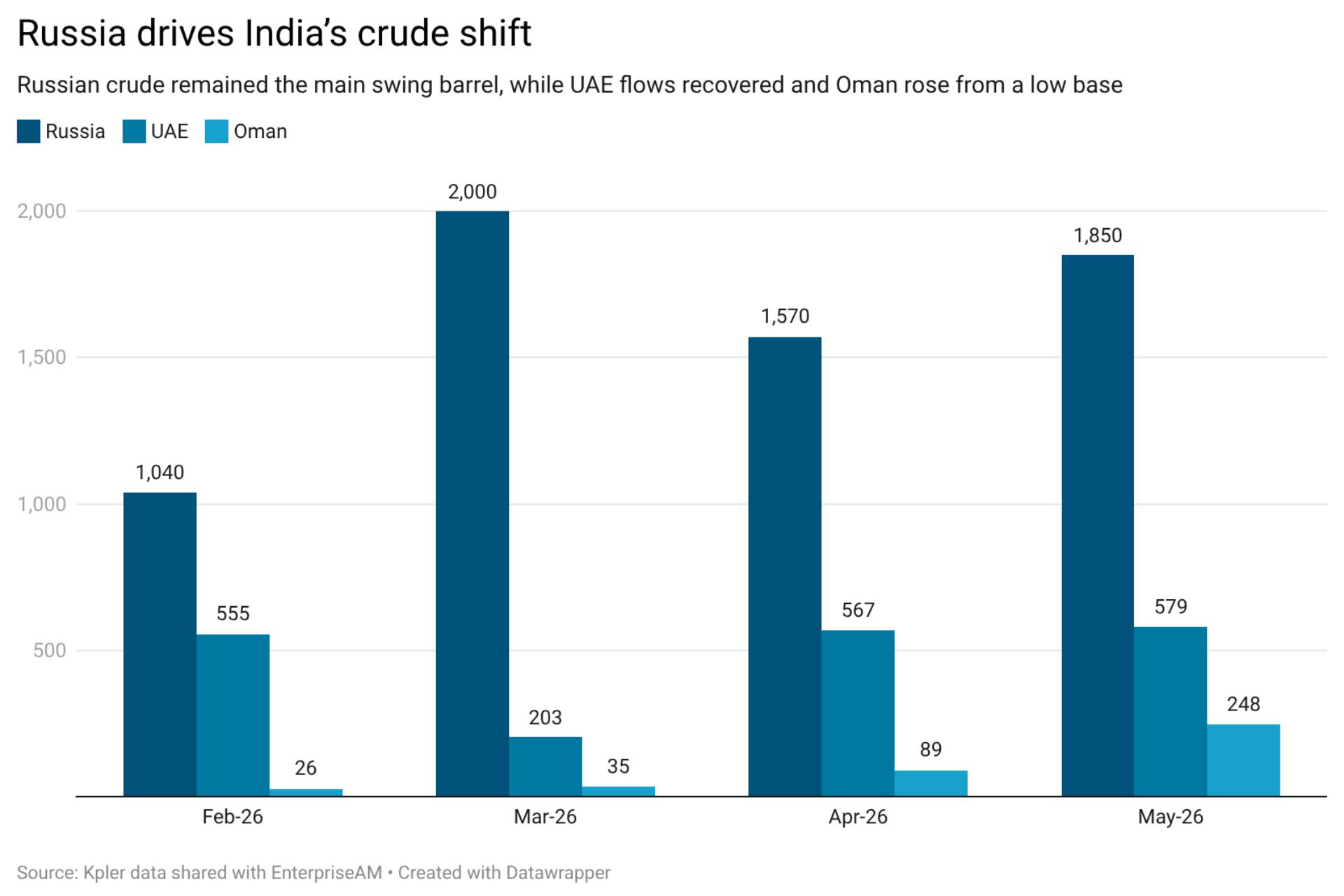
“Russian crude flows remained the dominant swing factor,” Sumit Ritolia, senior manager at Kpler, tells EnterpriseAM. Russian crude imports started at roughly 1.04 mn bbl / d in February (capturing a 20% market share), before ballooning to nearly 2.0 mn bbl / d in March to command 45% of the total basket. Flows moderated to 1.85 mn bbl / d in May, accounting for 38% of India’s inbound crude.

Oman is gaining ground from a low baseline: Oman’s slice of India’s import pie sat at a negligible 0.5-0.8% across February and March, then rose to 2% in April and 5.1% in May (around 248k bbl / d). That makes Oman relevant to India’s Gulf diversification, but its volumes remain too small to be a replacement for larger suppliers.

The UAE may be the stronger Gulf signal: Emirati crude flows recovered well after a brief March lull, outstripping Omani volumes. India snapped around 567k bbl / d of UAE crude in April and 579k bbl / d in May, making the UAE one of India’s largest crude sources, behind Russia. For Indian refiners, some UAE crude can also be linked to Fujairah, the export hub outside the Strait of Hormuz.

Saudi crude volumes were strong in February, at around 1.04 mn bbl / d, but fell to around 350k bbl / d by May. Iraq saw an even sharper contraction: shipments collapsed from nearly 970k bbl / d in February to 235k bbl / d in March, hit zero in April, and recovered to a negligible 32k bbl/ d in May.

“Another notable trend is the steady increase in Venezuelan crude imports,” Ritolia says.

Indian imports of Venezuelan crude were at around 283k bbl / d in April and 266k bbl / d in May, giving refiners another heavy-sour crude option alongside Russian barrels.

Inline Image

The takeaway: The data shows refiners actively insulating themselves from direct Hormuz exposure by leveraging a complex mix of Russian supply, Emirati barrels, alternative transit routes, and tactical spot plays to keep their sourcing dynamic.

What to watch next: With the dataset currently limited to the February-May window, it remains too early to classify this pivot as a permanent, structural realignment. The key indicator to watch over the summer months will be whether Yanbu, Fujairah, and Oman-linked flows hold onto their elevated shares or whether refiners drift back toward traditional Gulf configurations once regional freight, ins., and transit risks level out.

3

IPO WATCH

Gulf SWF-backed Jio inches toward blockbuster IPO filing

Gulf SWF-backed Reliance Jio Infocomm is expected to file for its long-awaited IPO within days, kick-starting India’s closely watched listing this year. The telecom operator is reportedly targeting a USD 4 bn offering and could submit its prospectus ahead of Reliance Industries Chairman Mukesh Ambani’s annual shareholder address this Friday, the Financial Times reports.

Better late than never: Ambani had pledged to list India’s largest telecom operator in 1H 2026. However, the company is set to miss that timeline after a bruising year for parent firm Reliance Industries, which saw its shares slide 15% this year and quarterly income decline 13% amid energy shocks to its refining business caused by the Gulf war.

Why it matters for MENA: Reliance previously abandoned plans for an offer-for-sale structure that would have provided a lucrative exit for its early Gulf backers, including PIF, Adia, and Mubadala, collectively holding a stake worth bns of USD in the telecom giant. The Gulf SWFs are now staring down a forced, long-term hold in a volatile macroeconomic environment.

Why it matters for India: The filing arrives as the Nifty index has shed roughly 8% this year, and India’s IPO market faces one of its weakest stretches on record. This year, total IPO proceeds fell 39% y-o-y to INR 198 bn (USD 2.1 bn). Foreign investors have pulled a record USD 30.7 bn from Indian equities YTD, and the worsening selloff may not fetch an adequate valuation for Jio.

What comes next: A successful, well-priced debut would indicate that the market is beginning to normalize, potentially reopening the door for other high-profile, stalled listings like Walmart-backed PhonePe.

4

TRADE

A growing share of India-UAE trade bypasses the USD

More than 15% of bilateral trade between India and the UAE has successfully bypassed the USD and is invoiced in local currencies since the launch of the INR-AED settlement mechanism in July 2023, India’s Ambassador to the UAE Deepak Mittal told the Economic Times.

Focus on easing trade friction: The two nations are ramping up efforts to expand adoption of the system by onboarding more banks, simplifying procedures, and reducing paperwork for businesses engaged in cross-border trade — while authorities work with commercial banks and industry stakeholders to standardize processes and widen participation.

To what end? While the system was introduced to cut reliance on the USD, the primary objective is said to be lower transaction costs and improved trade efficiency rather than de-dollarization.

Why it matters: The UAE is India’s third-largest trading partner, with bilateral trade exceeding USD 100 bn in each of the past two years. A lion’s share of transactions are still denominated in AED rather than INR, industry sources told the daily. Businesses have cited procedural delays and duplicate documentation as key hurdles — adoption is strictly confined to state-backed oil and precious metals transactions. Depreciation risk also remains a deterrent, particularly for commodity exporters with thin margins.

IN CONTEXT- We previously broke down how economics might decide whether the INR becomes internationally accepted. Local-currency trade is feasible only when counterparties trust the currency as a medium of exchange.

5

DIPLOMACY

India, UAE align on Gulf stability after ceasefire

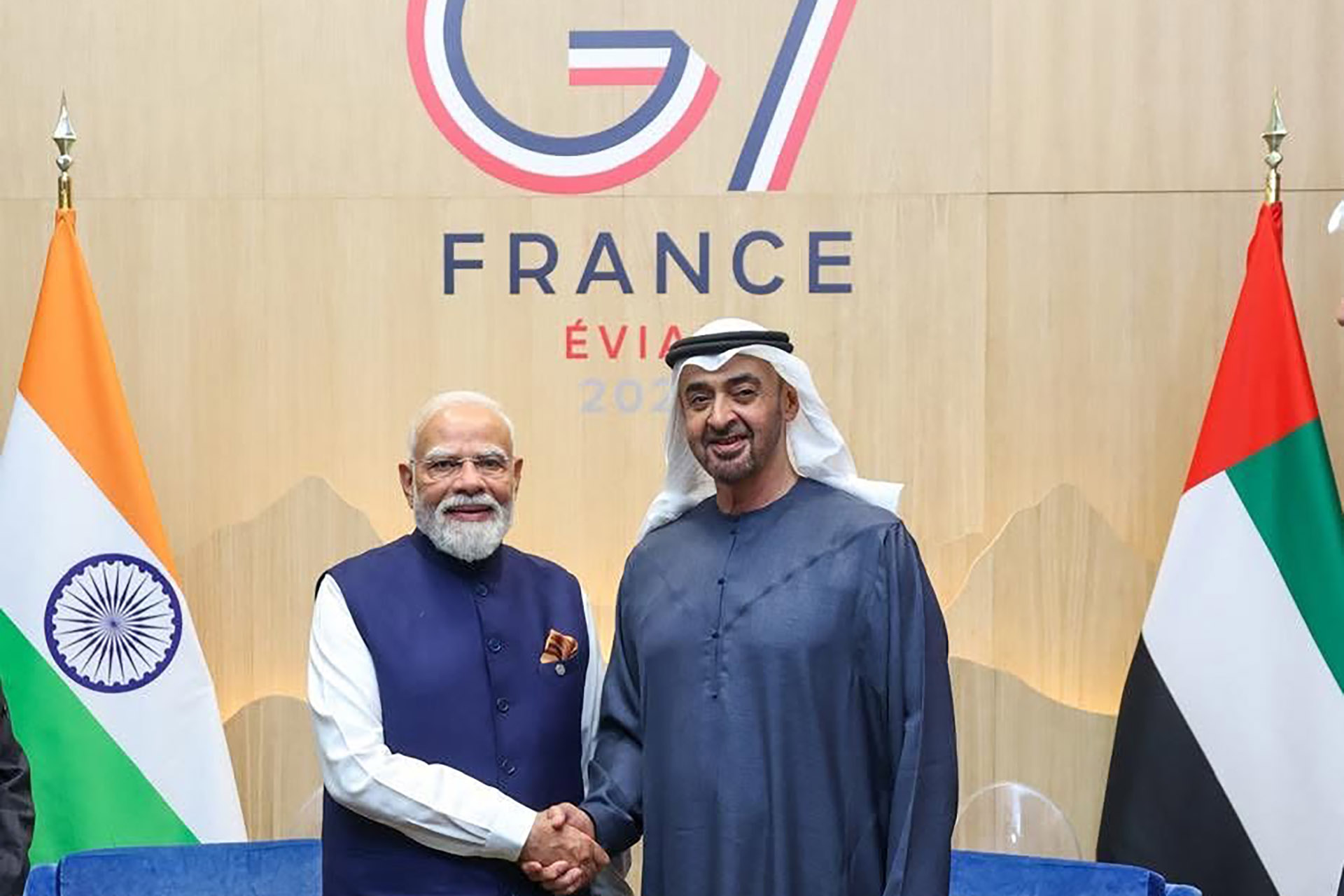
Prime Minister Narendra Modi and UAE President Sheikh Mohamed bin Zayed Al Nahyan (MBZ) reviewed bilateral ties and discussed the security situation in the region during a meeting on the sidelines of the G7 summit in Evian-les-Bains, France, the Hindu Businessline reports.

Modi described the interaction as a “very good meeting,” addressing the importance of dialogue, diplomacy, and respect for international law, sovereignty, and territorial integrity to ensure lasting peace and stability in the GCC. The two also called for continued safe and unimpeded navigation and commerce through the Strait of Hormuz.

Why it matters: This is the third face-to-face meeting between Modi and Al Nahyan in 2026. It came days after Washington and Tehran announced a pact to end the 107-day war that wreaked havoc on Gulf shipping and energy markets. For India and the UAE, ensuring stability in the Hormuz is critical to safeguarding trade, energy security, and defense ties, with bilateral trade exceeding USD 100 bn annually.

6

ALSO ON OUR RADAR

Wipro launches Anthropic AI center in Bengaluru

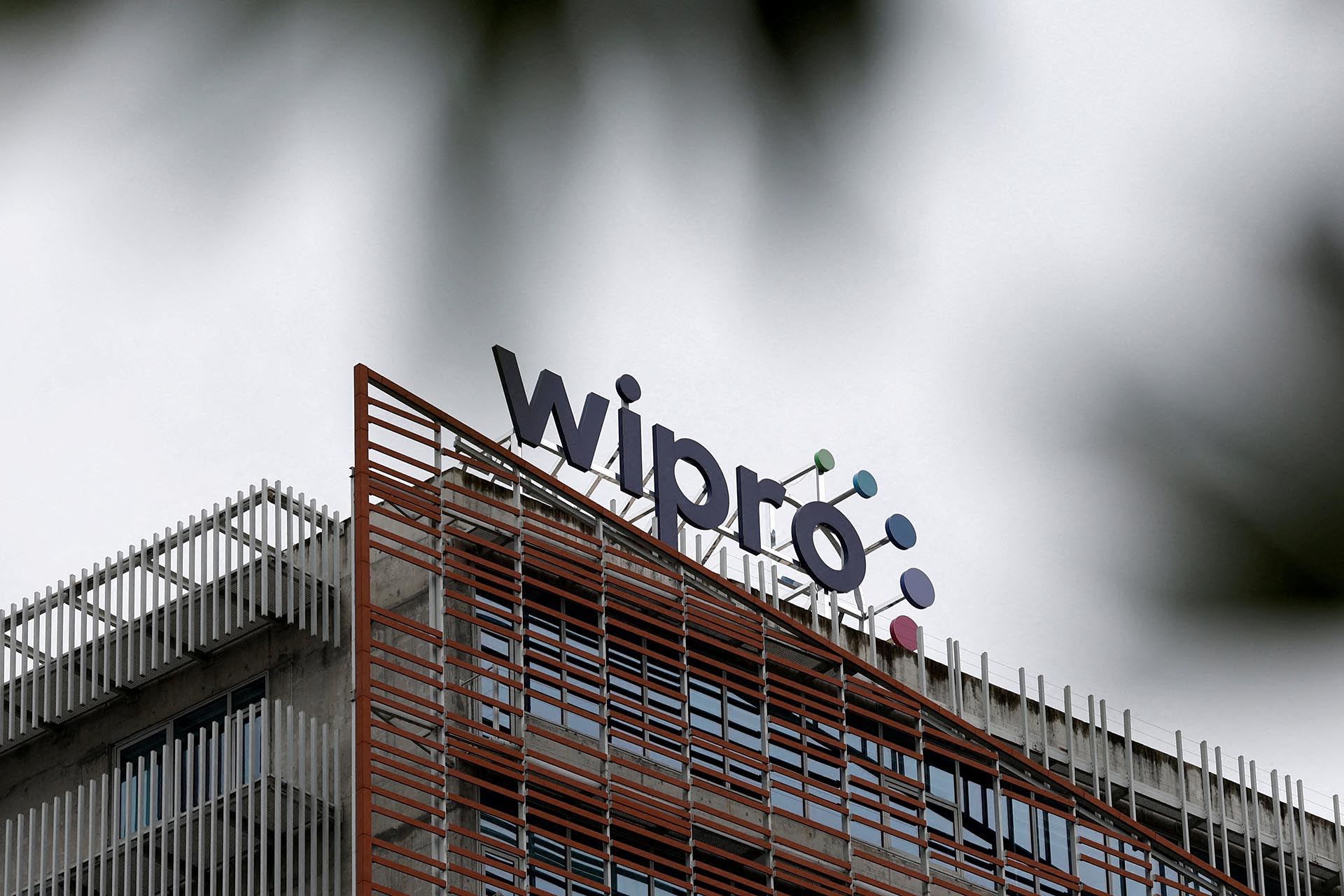
India’s tech sector accelerates efforts to embed generative AI across enterprise operations. Bengaluru-based IT major Wipro has established a specialized unit for applied AI focused on Anthropic’s Claude models at its Bengaluru campus, as per a press release.

The nitty-gritty: The initiative is designed to help Wipro develop AI-powered platforms, industry-specific solutions, and enterprise applications using Anthropic's Claude. The company plans to train 10k employees on Claude models over the next 18 months and to expand AI use across internal functions, including finance, human resources, and sales.

Why it matters: The move comes as AI-driven automation reshapes the global technology services industry and raises concerns over the labor-intensive business model of India’s USD 315 bn IT sector. Earlier this month, Tata Consultancy Services also announced a partnership with Anthropic to help enterprises deploy AI solutions. Indian IT firms are increasingly bullish about partnerships with leading AI model developers to offset slowing services growth and protect market share.

7

PLANET FINANCE

Biotech firms weigh up listings and takeovers amid fierce demand

Biotech firms are sitting on a rare double exit window — IPO markets and major pharma acquirers are both competing for the same assets, JPMorgan EMEA healthcare investment banking co-heads Juha Anjala and Roy Wouters told CNBC.

By the numbers: Biotech dealmaking has already hit USD 106 bn from 21 transactions this year, CNBC reports elsewhere, after 2025 saw seven transactions each worth USD 5-15 bn. That puts it on track for its strongest year since its pre-pandemic peak seven years ago.

Why the frenzy: Pharma firms are racing against a patent cliff — when a blockbuster drug's exclusivity expires, generics flood the market and revenues can collapse by 80-90% almost overnight. A wave of those expirations is coming simultaneously, with analysts estimating a sector-wide revenue hit of up to USD 350 bn by 2032. Buying proven biotech assets is the fastest way to replace that pipeline — around half of the best-performing drugs in recent years were acquired rather than developed in-house, with the most competition clustering around metabolic conditions, infectious diseases, and oncology.

The result: The strongest performers are keeping both options open simultaneously — prepping for an IPO while fielding acquisition conversations. Some are choosing the takeover route outright.

GCC sovereign wealth is also circling. Abu Dhabi’s Mubadala has been expanding its presence in the biotech sector through its pharma unit arm Mubadala Bio with investments in the US’ ElectraTherapeutics and nutri-tech firm L-Nutra, while the Abu Dhabi Investment Authority has been similarly active. Qatar has a sizable biotech investment footprint, with a USD 250 mn play into BridgeBio Pharma and USD 255 mn for Isotope Technologies Munich.

MARKETS THIS MORNING-

Asia-Pacific markets were mixed in early trading this morning as the rally sparked by the US-Iran framework agreement cooled and investors sat tight ahead of today’s Federal Reserve policy decision. Japan’s Nikkei was up 0.7%, while South Korea’s Kospi was down 0.1%. Over on Wall Street, equities are set to open higher, with futures in the green.

Sensex

77,045

+0.3% (YTD: -9.5%)

NIFTY 50

24,037

+0.2% (YTD: -8%)

ADX

9,956

-0.07% (YTD: -0.3%)

DFM

6,073

+0.3% (YTD: +0.4%)

Tadawul

11,106

-0.3% (YTD: 5.8%)

EGX30

52,380

+0.6% (YTD: +25.2%)

Boursa Kuwait

8,788

-0.1% (YTD: +5.8%)

QSE

10,581

+0.2% (YTD: -1.6%)

S&P 500

7,511

-0.5% (YTD: +9.7%)

FTSE 100

10,477

-0.1% (YTD: +5.5%)

Euro Stoxx 50

6,272

+0.2% (YTD: +8.3%)

Brent crude

USD 78.8

-0.1%

Natural gas (Nymex)

USD 3.2

-0.03%

Gold

USD 4,345

-0.1%

BTC

USD 64,870

-2.4%

The values in the table above are listed according to the market position as of 3:30pm IST / 2pm GST.


15-17 June (Monday-Wednesday): Prime Minister Narendra Modi to attend G7 Summit in Evian, France.

18-21 June (Thursday-Sunday): Bharat Buildcon, Yashobhoomi, Dwarka, Delhi.

24-25 June (Wednesday-Thursday): India Homeland Security Expo, Bharat Mandapam, Pragati Maidan, New Delhi.

26 June (Friday): Muharram.

Signposted to happen sometime in 1H 2026:

JULY

1-3 July (Wednesday-Friday): Seafood Expo Bharat, Chennai Trade Centre, Chennai.

3-4 July (Friday-Saturday): Rail & Transit Expo (RailTrans), Bharat Mandapam, New Delhi

3-4 July (Friday-Saturday): SOMS International Exhibition & Conference, Gandhinagar, Gujarat.

8-10 July (Wednesday-Friday): India Energy Storage Week, New Delhi.

14-17 July (Tuesday-Friday): Bharat Tex, New Delhi.

22-24 July (Wednesday-Friday): Rail & Metro Technology Conclave, Bharat Mandapam, New Delhi.

AUGUST

15 August (Saturday): Independence Day.

26 August (Wednesday): Prophet Mohammad’s Birthday.

SEPTEMBER

1-3 September (Tuesday-Thursday): India Energy Week, Dwarka, New Delhi.

1-6 September (Monday-Saturday): Dubai Fashion Week, Dubai Design District.

7 September (Sunday): Opec+ meet to discuss production policy for October.

7-9 September (Monday-Wednesday): iPHEX 2026 International Pharmaceutical Exhibition, Bharat Mandapam, New Delhi.

8-11 September (Tuesday-Friday): Global Fintech Fest, Mumbai.

9 September (Tuesday): Envision 2025, Atlantis, The Royal, Dubai.

17-19 September (Thursday-Saturday): Semicon India Conference, Yashobhoomi, Delhi.

OCTOBER

2 October (Friday): Gandhi Jayanti (Mahatma Gandhi’s Birthday).

20 October (Tuesday): Dussehra.

NOVEMBER

24 November (Tuesday): Guru Nanak Jayanti.

DECEMBER

8-11 December (Tuesday-Thursday): Expand North Star, Dubai.

25 December (Friday): Christmas Day.

Signposted to happen sometime in 2H 2026:

  • Monsoon Session of Parliament is expected to be held in July/August in New Delhi (TBA);
  • Reserve Bank of India’s Monetary Policy Committee meeting for the September cycle (TBA);
  • India Mobile Congress will likely be held in October in New Delhi (TBA).

JANUARY 2027

30 January-3 February (Saturday-Wednesday): Printpack India, India Expo Centre, Greater Noida (Delhi NCR).

Now Playing
Now Playing
00:00
00:00