MENA <> India Corridor
  MENA+ Edition
  Egypt Edition
  UAE Edition
  Saudi Edition
  Logistics (MENA)
  Climate (MENA)
 Share
Share
 Read Full Issue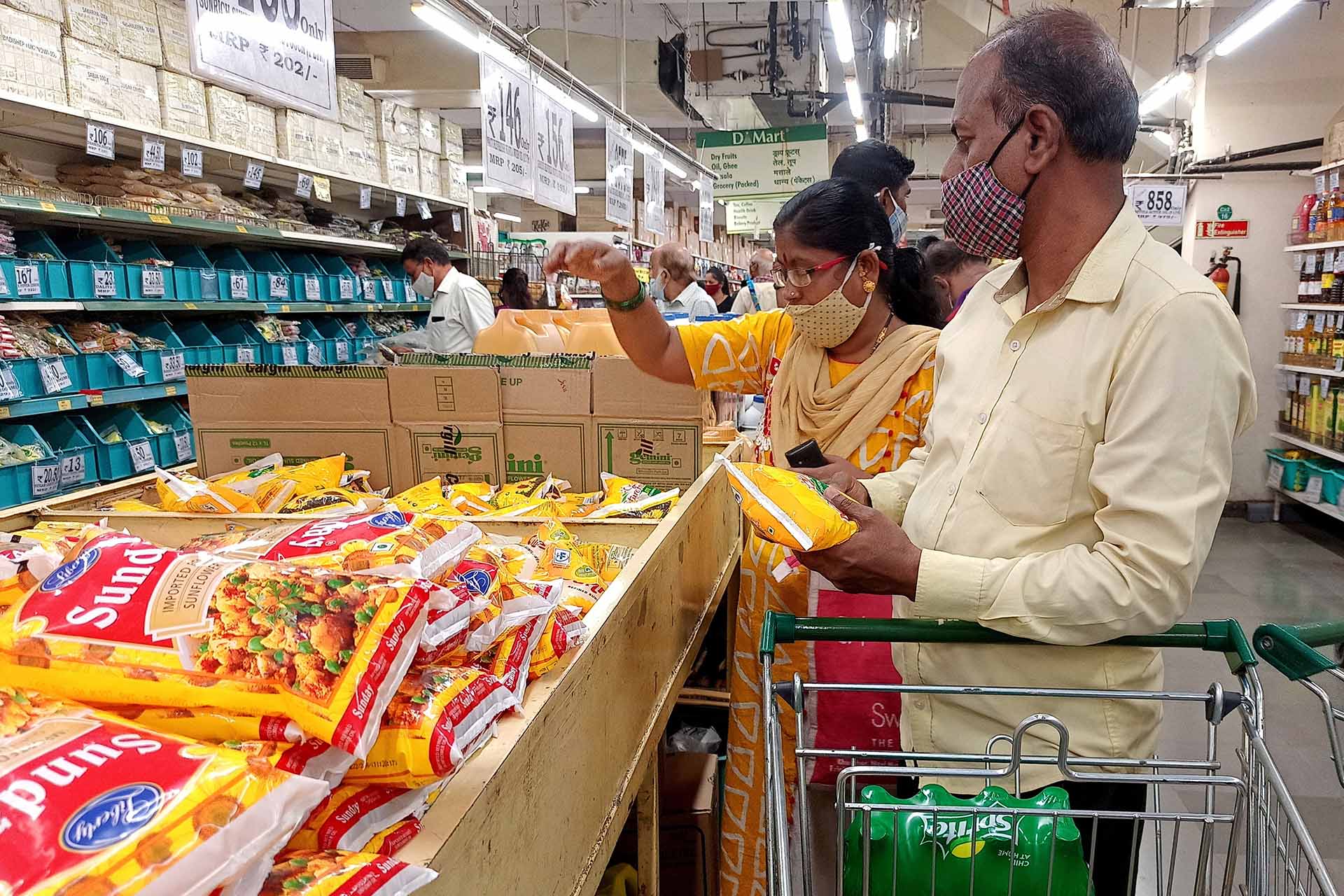
The Indian Finance Ministry flagged “external turbulence” arising from the Iran-Israel-US war as a downside risk to the country’s resilient economic growth, according to its monthly economic review. India’s initial 7.4% GDP forecast for the current fiscal is now under threat, after the economy recorded 7.6% real GDP growth in FY 2026. The optimistic outlook has been altered by macroeconomic instability resulting from the war in Iran and its downside impact.
“A ‘supply shock’ is apparent in the economy. An accompanying demand compression is a serious concern, given high prices, rising inflation, and a reduced pace of economic activity,” the report states, noting that input cost pressures arising from high crude oil prices will have a wide economic impact as a wide range of industries rely on the oil sector.
India’s crude basket has averaged around USD 113-115 / bbl in recent weeks, pushing up wholesale inflation to 3.8% in March, although retail inflation remains at 3.4%. “Rising wholesale prices indicate emerging cost‑push pressures that could transmit to consumer inflation if supply
disruptions persist,” the report reads.
Impact on trade: India’s total exports in March declined by 4.6% while imports were down by 5.7%, highlighting the impact of the war on the trade dynamics. Exports to the UAE fell nearly 62% y-o-y in March, with sharp declines in trade volumes with Saudi Arabia, Iraq, and Qatar.
The GCC remains critical to India’s current account, contributing about 38% of total remittances in FY 2024, with the UAE alone contributing 19.2%. “A prolonged conflict could weigh on labour market conditions in the region and warrant a reassessment of current account projections,” the report warns.
The war has “seriously dented investors’ confidence,” leading to foreign money outflows from equity markets. The INR’s depreciation to a historic low of 95 per USD “reduces [USD]-denominated returns for foreign investors, prompting further outflows, which in turn exacerbates currency pressures.”
What’s next? While the war has altered the macro-outlook, India’s robust domestic demand, strategic policy measures, resilient financial system, and sustained public investment will provide much-needed support to the economy. The finance ministry assesses that repairing damaged oil and gas infrastructure across the Gulf could take months, prolonging the supply crunch. If this coincides with a weak harvest due to below-normal rainfall, the government warns that risks are skewed toward higher inflation and wider fiscal and current account deficits, accompanied by slower growth.