MENA <> India Corridor
  MENA+ Edition
  Egypt Edition
  UAE Edition
  Saudi Edition
  Logistics (MENA)
  Climate (MENA)
 Share
Share
 Read Full Issue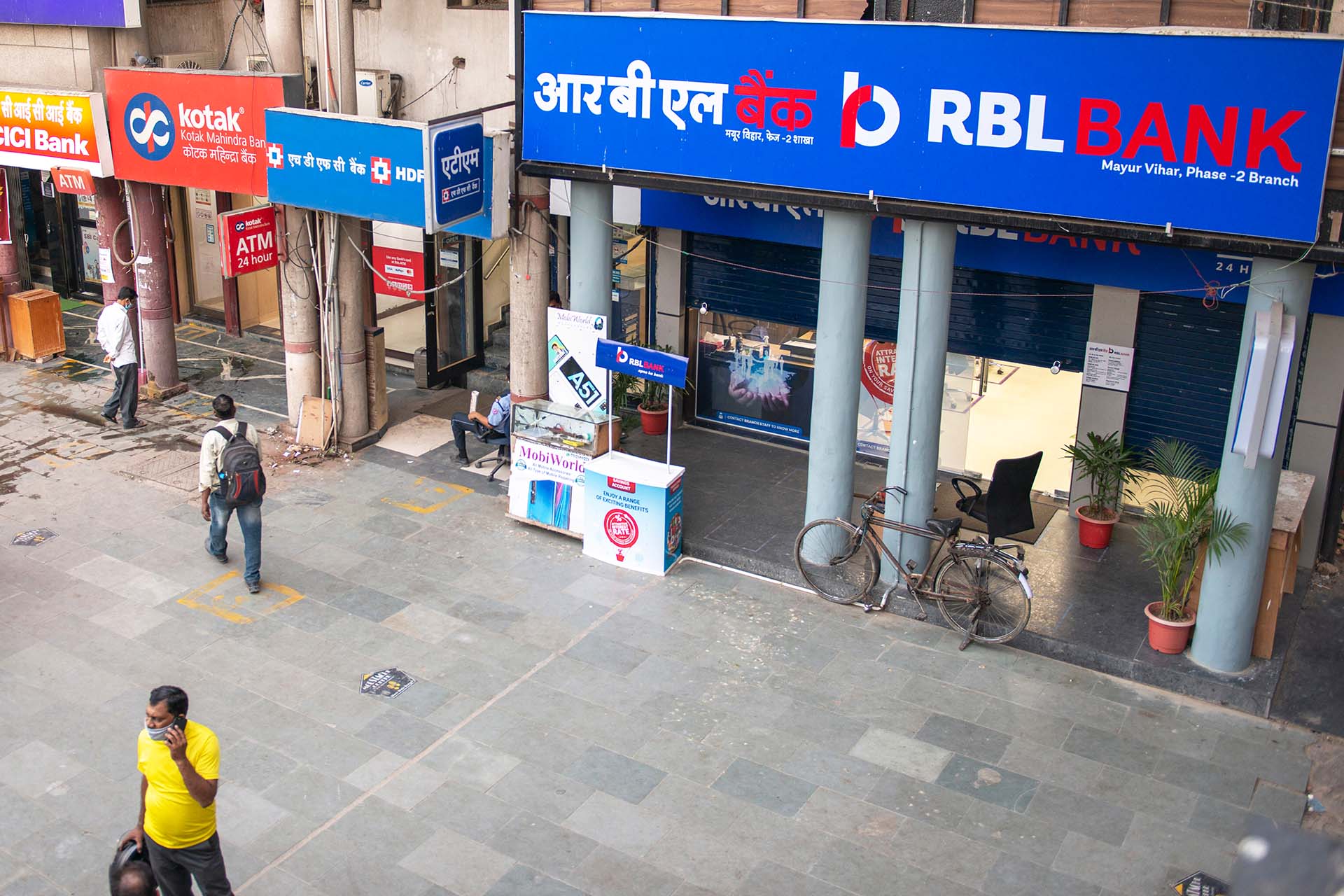
Good afternoon, and happy Friday. We are closing out the week with a light issue.
In our big story today, we examine how UAE’s Opec promises a long-term gain for India's energy security. Also, gulf heavyweights Saudi Arabia and the UAE are already adapting to the regional volatility, successfully leveraging alternative pipelines to bypass the chokepoint and keep India’s critical energy flows running.
That supply continuity will be vital as India's Finance Ministry officially sounds the alarm on a brewing war-led supply shock, warning that high crude prices and trade disruptions threaten the country's 7.4% GDP growth target.
Plus: Dubai’s Emirates NBD has secured a crucial regulatory green light to advance its landmark USD 3 bn bid to take control of Mumbai's RBL Bank.

Riyadh to Mumbai. Abu Dhabi to Singapore. Dubai to London. Cairo to Shenzhen.
The most important business stories in MENA aren’t happening inside MENA anymore — they’re happening at the edges, where regional capital meets global ambition.
EnterpriseAM MENA+ is our new flagship newsletter, built to cover the flows of capital, people, and ideas across the Middle East — and beyond it. AI, geopolitics, the war for talent, sovereign wealth strategy, the changing energy economy, and the new corridors reshaping global trade.
Tap or click here to get your own copy delivered to your inbox every Monday, Wednesday, and Friday at 12 pm UAE | 11 am KSA | 11 am Egypt.
Watch this space
M&A — Dubai-based Emirates NBD (ENBD) is one step closer to finalize its landmark USD 3 bn acquisition of Mumbai-based lender RBL Bank, after securing ‘change of control’ approval from the Securities and Exchange Board of India, as per an exchange filing. The approval from the Indian market regulator, permits a shift in ownership and management control.
A major board rejig is underway at RBL Bank: Shayne Nelson, Group CEO of ENBD, is expected to join as part of the lender’s transition following the proposed acquisition, Moneycontrol reports, citing unnamed sources. His inclusion signals the strategic importance of India within ENBD’s global portfolio.
Greater ENBD representation: ENBD is seeking to secure a two-thirds majority on RBL’s board including executive powers, in line with regulatory requirements, the outlet added. This could translate into 7-9 nominees including other senior ENBD executives with India experience, as the UAE lender builds operational control. A shareholder meeting on Monday will seek approval to reconstitute the governing body and the new board will likely be appointed by early July, if the acquisition is completed in this quarter.
Multi-layered approvals in place: This paves the way for ENBD to finalize the transaction, in one of the country’s largest cross-border banking M&As. The bid has already received clearance from the the Central Bank of the UAE and the Reserve Bank of India — which permits ENBD to acquire as 74% of RBL’s share capital, subject to a minimum 51% holding, while capping voting rights at 26%. India’s competition regulator also approved the transaction earlier this year.
What’s next: ENBD will merge its existing India operations with RBL Bank’s 560 branches, with plans to add 200 new branches this fiscal year. This positions the Emirati lender to compete with domestic lenders while capturing high-value flows across remittances, trade finance and forex within its own network.
SHIPPING — State-run oil and shipping firms in India are planning to add 62 new vessels to the fleet in FY 2027 at an estimated INR 513.8 bn (USD 6.1 bn) to mitigate future disruptions affecting energy supplies, Hindu Businessline reports. Around 2.85 mn gross tonnage will be added including crude oil tankers and gas carriers to address deficiency in domestic fleet capacity.
The push follows recent disruptions to global shipping routes that have highlighted India’s reliance on foreign-flagged vessels to transport fossil fuel products. State-run companies, including Shipping Corporation of India and Oil and Natural Gas Corporation have already issued tenders for 34 with more to come in the coming months. This is part of a broader plan to meet a target of 437 vessels by FY 2042 as India scales its maritime capacity.
Why it matters: India’s fleet expansion is aimed at reducing its exposure to foreign vessels for energy trade. The blockade of Strait of Hormuz has pushed up freight and ins. costs for Indian refiners, strengthening the case for more domestic crude tankers and liquefied petroleum gas (LPG) carriers.
ENERGY — State-run refiner Indian Oil Corporation (IOC) has raised prices of commercial LPG used by industrial consumers and aviation turbine fuel (ATF) sold to foreign airlines from Friday, Reuters reports. IOC raised commercial LPG cylinder prices by 47.8% and ATF for foreign airlines by 5.3%. Prices of household LPG and jet fuel for domestic airlines were kept unchanged.
Separately, the government lowered duty on diesel exports by 58.6% and on ATF exports by 21.4%, while keeping domestic petrol and diesel duties unchanged.
Out take: A hike in domestic LPG and retail fuel prices would likely trigger a public backlash. The government is walking a tightrope by passing higher LPG costs to industrial consumers, who are already grappling with supply constraints. Additionally, by selectively increasing ATF prices for foreign carriers, it provides temporary relief to domestic airlines that have warned they may shut down if jet fuel costs increase. Domestic ATF hikes are currently capped at 25% per month, and retail fuel prices remain unchanged at the refiners' expense. While this policy delays the cost-punch to ordinary consumers by shifting inflated prices to industries, it is unsustainable as crude oil prices remain above USD 100 / bbl.
Market watch
Foreign portfolio investors (FPIs) have pulled more capital from Indian equities in the first four months of 2026 than in all of 2025 combined, withdrawing INR 1.9 tn (USD 20.7 bn), as per National Securities Depository Limited data. FPIs pulled out a record INR 1.1 tn (USD 12.6 bn) in March as the war drove crude prices above USD 100 / bbl.
Valuations and currency pressures: India’s premium valuations, at around 21x price-to-earnings, look stretched on the back of a weakening INR and rising current account risks, with selling seen across financials, autos and metals. Flows may stabilize if crude eases below USD 90, with domestic institutional inflows providing partial support, analyst Vaqar Javed Khan told Business Standard.
Data point
INR 2 tn (USD 22 bn) — that is the value of iPhone exports from India in FY 2026, a record high supported by government incentives for smartphone manufacturers, Business Standard reports.
IN CONTEXT- India’s total smartphone exports reached INR 2.6 tn (USD 29.4 bn) during the year, with iPhone accounting for over 75% of shipments, making it the country’s single largest branded export. Export volumes have expanded rapidly over the past few years, rising from INR 93.5 bn in FY 2022.
PSA
India’s leading carriers — including Air India, Air India Express, and IndiGo — will resume flights to Qatar’s Hamad International Airport starting 1 May, following a nearly two-month suspension due to the war, the Embassy of India in Doha said in a post on X. However, it cautioned that flight schedules remain subject to the region's fragile security situation.
PLUS: Air India Express has restored flights to Bahrain while expanding operations across the Gulf, with the network changes effective since yesterday.
The big story abroad
Aside from the exchange of threats between Iran and the US, all eyes are on equities and earnings. Apple gave a solid sales forecast on the back of what it said was solid demand for its iPhone 17 and MacBook Neo, sending its shares up 4% in afterhours trading. It also announced a USD 100 bn share buyback program, and warned of the potential impacts of ongoing supply chain disruptions leading to MacBook shortages.
On the equities front, Wall Street is coming off of a record month, with stocks closing April at their highest since 2020, the Financial Times reports. Emerging markets also posted their strongest month since 2022. Both rallies were fueled by tech stocks and optimism over AI demand.
Get Enterprise daily
The roundup of news and trends that move your markets and shape corporate agendas delivered straight to your inbox.
***
YOU’RE READING EnterpriseAM MENA <> India, your C-suite briefing on the movement of trade, investment, people, and ideas along one of the world’s most exciting corridors. Every Monday, Wednesday, and Friday at 2:30pm UAE, we dive deep into the business, finance, economy, and policy headlines and trendlines that will move markets and set the tone for your day.
Were you forwarded this briefing? Tap or click here to sign up without charge for your owncopy.
***
Circle your calendar