Get EnterpriseAM daily

Lunate + Blackstone earmark USD 5 bn to ramp up GCC logistics portfolio

1

What we're tracking today

TODAY: Lunate, Blackstone to funnel USD 5 bn investments in GCC logistics

Good morning, nice people. The news cycle has slowed down a bit, leaving us with a brisk read this Monday. Still, we have big investment updates from Egypt and the UAE, with Lunate’s launch of a new GCC-focused logistics platform and fundraising updates from recycled oil startup Tagaddod. Shall we?

HAPPENING THIS WEEK-

The Quantum Maritime Conference 2025 will kick off tomorrow and run until Thursday, 9 October in Abu Dhabi, the UAE. The conference will discuss how quantum tech can be leveraged in the maritime sector to reduce vessel turnaround times, improve fuel efficiency, and enhance overall navigation.

WATCH THIS SPACE-

#1- DAE tests the waters for FCY sukuk: ICD-backed aviation services provider Dubai Aerospace Enterprise (DAE) is sounding out investors for a potential benchmark fixed-rate USD sukuk, with international and regional banks arranging calls ahead of a possible Reg S- and Rule 144A-compliant issuance under its trust certificate program, Zawya reports. The five-year senior unsecured notes are structured as a wakalah/murabaha, with the use of proceeds still under wraps. The sukuk is expected to be rated Baa2 by Moody’s and BBB by Fitch.

REFRESHER- DAE has been steadily boosting liquidity and reshaping its fleet ahead of the planned sukuk. In June, the company secured a USD 300 mn three-year unsecured loan from Bank of China for general corporate purposes. It has also been rebalancing its portfolio, offloading 75 aircraft while purchasing 17 for about USD 1 bn, and recently committed to acquiring 100 new aircraft from Airbus, Boeing, and ATR. It also recently onboarded 10 new Boeing 737-9 aircraft from United Airlines under a purchase-leaseback agreement.

Meet the banks: HSBC, along with Emirates NBD Capital, First Abu Dhabi Bank, and Goldman Sachs International, will act as active bookrunners. Meanwhile, Abu Dhabi Commercial Bank, Ajman Bank, Bank ABC, BNP Paribas, Crédit Agricole CIB, Dubai Islamic Bank, Fifth Third Securities, JP Morgan Securities, Mizuho, Natixis, and Truist Securities are set to serve as passive bookrunners or managers.

#2- ADX-listed Eshraq Investments expands maritime exposure: Eshraq Investments has signed a conditional agreement to acquire Shine SPV 1 Limited from TIL Partners SPV, it said in a statement (pdf). The transaction remains subject to regulatory and third-party approvals. Shine’s subsidiaries are engaged in offshore support vessel operations, shipbuilding and maintenance, and crane operations across the UAE.

#3- Boeing has high hopes for 737 monthly supply: US manufacturer Boeing is notifying suppliers that 737 Max output could potentially hit a 42-jet monthly rate as early as October, sources familiar with its plans told Bloomberg. The manufacturer is preparing to boost its manufacturing pace again in April and once more in late 2026, with hopes of raising production to 53 jets per month by the end of 2026, the sources added. The firm plans to keep its 42-aircraft-per-month rate for nearly six months before approaching the Federal Aviation Administration (FAA) about the next rate hike.

REMEMBER- Boeing’s 737 Max production has been capped by US regulations as the model’s reputation fell under scrutiny amid ongoing safety concerns — following two major fatal crashes on Lion Air in 2018 and Ethiopian Airlines in 2019. It also had a mid-flight incident on an Alaska Air flight in 2024.

DISRUPTION WATCH

Qatar halts night maritime traffic due to GPS issue: Qatar’s Transport Ministry ordered all maritime vessel owners to cease navigation due to a technical error with the GPS, according to a statement published on Saturday. Partial return began yesterday evening, with the ministry saying that morning navigation is allowed but is still banned at night, adding that the technical problem is still ongoing.

MARKET WATCH-

#1- Oil prices continued to go up this morning after Opec+ announced a less-than-expected production hike for November, Reuters reports. Brent crude futures rose by USD 0.23 to USD 65.70 / bbl as of 03.56 GMT, while US West Texas Intermediate (WTI) increased USD 0.21 to trade at USD 61.90 / bbl.

Over in our region, Saudi Arabia kept the price of its main crude grade bound to Asia unchanged for November, maintaining the official selling price (OSP) of Arab Light crude at a premium of USD 2.20 per barrel above the Oman-Dubai benchmark, Bloomberg reports, citing a price list.

Beyond expectations? Saudi was expected to raise November’s OSP for Arab Light to Asia by USD 0.20-0.40 a barrel from October, bringing it to USD 2.40–2.60 above the regional benchmark.

Riyadh is expected to hold back from larger price hikes, as it continues negotiations with buyers over the 2026 term supply. Elevated freight costs are also squeezing margins, limiting the room for Asian refiners to absorb higher crude prices, according to Bloomberg.

#2- Egypt slashes planned LNG shipments for October: The Egyptian Oil Ministry plans to reduce the number of agreed-upon LNG shipments scheduled for shipment this month to six, from an initially planned 19, a government source told EnterpriseAM. Egypt welcomed only 14 LNG shipments last month, marking a dip from initially planned shipments amid falling domestic consumption, the source said. This comes as Local natural gas output has risen to 4.2 bn cubic feet per day, marking an increase of 110 mn cubic feet per day compared to June, according to the source.

Egypt is now expected to import between 20 and 24 shipments during the final quarter of the year, compared to a previous target of 40 shipments, the source said. The reduction in imports comes amid strong indications of growing local output, the source added, pointing to additional volumes being added from newly discovered wells, foreign partners ramping up field development, and injecting significant new investments that will strengthen domestic production.

REMEMBER-Last week, we reported that the country has been left with a queue of LNG vessels looking to unload their supplies and get on their way after energy demand fell. Unnamed sources told Bloomberg at the time that Egypt is “struggling to correctly assess its demand and schedule deliveries.”

#3- Baltic index snaps losing spiral: The Baltic Exchange’s dry bulk sea freight index — which tracks rates for the capesize, panamax, and supramax vessel segments — inched up 31 points to 1,932 on Monday. The capesize gained 104 points to 2,828, while the panamax index shed 8 points to 1,654. The smaller supramax index eased 4 points to 1,443.

DATA POINTS-

#1- Egypt’s nine public freezones have attracted some USD 38.7 bn worth of investments, spread between some 1.2k separate projects, Investment Minister Hassan El Khatib said. The zones have created 228k jobs and contribute around 20% of the country’s entire non-petroleum exports.

#2- Qatar’s Mawani sees port traffic jump in 9M 2025: Qatar Ports Management Company (Mwani Qatar) handled 1.1 mn TEUs in 9M 2025 — recording a 2% y-o-y increase, according to a statement. Qatar’s ports have transported upwards of 1.34 mn tons of general and bulk cargo, more than 91k RoRo units, and 488k tons of building materials.

PSAs-

#1-Turkey extends ban on Iraq’s Sulaymaniyah Airport: Ankara has extended its suspension on flights and airspace access to Iraq’s Sulaymaniyah Airport until 6 January 2026, Shafaq News reports, citing Turkey's civil aviation authority. Turkish officials linked the decision to security concerns related to the Kurdistan Workers’ Party, which Ankara designates as a terrorist organization.

FYI- Iraq’s Sulaymaniyah Airport has officially been renamed Jalal Talabani International Airport — following a request from the Jalal Talabani Foundation, according to a statement.

#2- Hapag-Lloyd rolls out new GRI: Shipping giant Hapag-Lloyd is set to implement a general rate increase (GRI) of USD 1k per 20-ft and 40-ft dry, reefer, and special containers, as well as high cube equipment from the Indian Subcontinent and the Middle East to North America, according to a statement released last week. The GRI will apply to containers coming from the UAE, Qatar, Bahrain, Oman, Kuwait, Iraq, Saudi Arabia, and Jordan, starting 3 November, until further notice.

***YOU’RE READING EnterpriseAM Logistics, the essential MENA publication for senior execs who care about the industry that connects producers and retailers to global markets. We’re out Monday through Thursday by 9:15am in Cairo and Riyadh and 11:15am in the UAE.

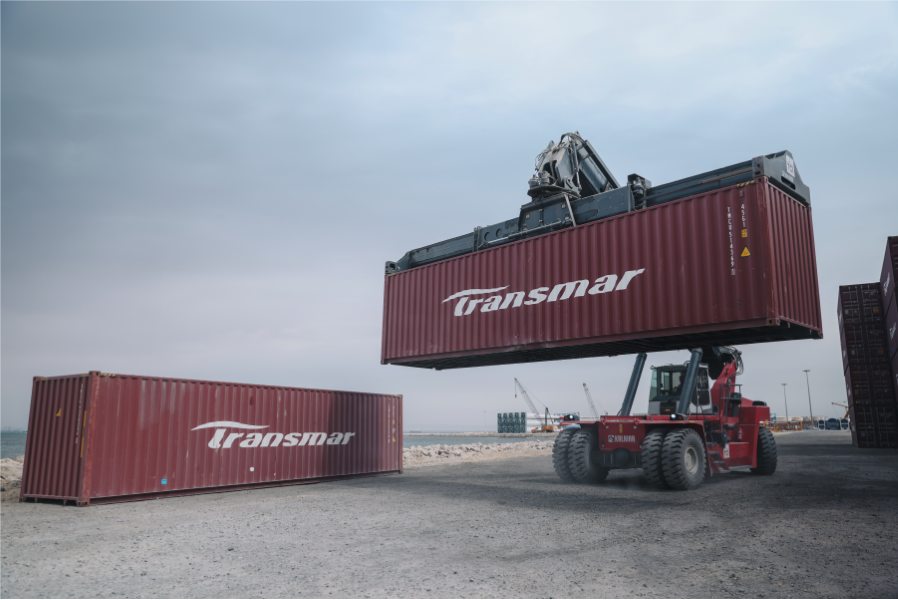
EnterpriseAM Logistics is available without charge thanks to the generous support of our friends at Hassan Allam Utilities, Transmar, and AK-Ships.

Were you forwarded this email? Tap or click here to get your own copy of Enterprise Logistics.

Want to send us a story idea, request coverage, ask for a correction, or otherwise get in touch? Reach out to us on logistics@enterprisemea.com.

DID YOU KNOW that we also cover Egypt, Saudi Arabia, and the UAE ***

CIRCLE YOUR CALENDAR-

The UK will host the Marine Environment Protection Committee Extraordinary Session from Tuesday, 14 October until Friday, 17 October at the International Maritime Organization’s (IMO) HQ in London. The session is set to see the intergovernmental body formally adopt its Net-Zero Framework — rolling out new fuel standards for ships and a global pricing mechanism for emissions.

Belgium will host the AntwerpXL on Tuesday, 14 October until Thursday, 16 October in Antwerp. The expo will host 3.8k project cargo, break bulk, RoRo, heavy lift, and industry experts to expand collaborations. It will co-locate with the Transport and Logistics conference and exhibition.

Iraq will host the Iraq International Transportation & Airports & Logistics Expo & Conference on Wednesday, 15 October until Friday, 17 October in Baghdad. The expo — Iraq’s first platform focused exclusively on transport and logistics services — is expected to feature over 100 exhibitors, including ports, aviation, road, and rail players as well as logistics tech firms.

Morocco will host the International Forum and Expo on Mobility, Transport, and Logistics (Logiterre) on Thursday, 16 October until Saturday, 18 October in Casablanca. Logiterre will host main operators within the industry from West and Central Africa.

The UAE will host the Adipec Maritime and Logistics Exhibition and Conference on Monday, 3 November until Thursday, 6 November in Abu Dhabi. The conference will host over 250k attendees working in government entities, finance, and tech.

The UAE will host the Air Cargo Forum on Tuesday, 4 November until Thursday, 6 November in Abu Dhabi. The forum — hosted by Etihad Cargo — will bring together air freight industry leaders, policymakers, innovators, and stakeholders to discuss industry solutions, tech, strategies, and collaborative initiatives for global air logistics.

Check out our full calendar at the bottom of this email for a comprehensive listing of upcoming news events and news triggers.

This publication is proudly sponsored by

2

Investment Watch

Lunate + Blackstone set up new platform to invest USD 5 bn in GCC logistics

Lunate, Blackstone back GCC logistics endeavors: Abu Dhabi asset manager Lunate formed a strategic partnership with alternative asset manager Blackstone to develop a new platform to build a USD 5 bn portfolio of Grade A logistics assets across the GCC, according to statements here and here. More GCC-based strategic partners could join the platform later down the line to support the build-out, the statements said.

What’s in the cards? The platform, named Gulf Logistics Infrastructure Development Enterprise (Glide), will develop, acquire, and manage USD 5 bn worth of logistics assets across the region, with a focus on greenfield developments. It will also target sale and leaseback transactions with regional firms, it said.

The rationale: The move aims to address the gap in the availability of Grade A logistics facilities in the GCC — a market that has seen a significant rise in manufacturing and e-commerce sectors.

Demand for logistics and industrial assets reached record levels last year in Dubai alone, with demand for 40.6 mn sq ft in industrial and logistics space throughout the year. Supply has been struggling to keep up, with firms having to delay their expansion plans by two to four years. Grade A warehouses in prime locations were nearly fully occupied, with record-high occupancy rates of 90-95%, according to JLL’s Abhishek Mittal.

REMEMBER- Institutional investors are piling into the UAE’s real estate market. Big names like Blackstone, along with Canadian multinational Brookfield Corporation and Singapore’s state-owned investment firm Temasek Holding have been eyeing Dubai’s real estate sector, with all three aiming to deploy funds here in the UAE across mixed-use and commercial assets.

Saudi’s warehousing market at a glance: The Kingdom’s warehouses closed in on 100% occupancy rates in 1H 2025, driven by steady e-commerce growth, boosted investments, and government initiatives, according to data from Knight Frank. Riyadh recorded a 16% y-o-y hike in warehouse rents, averaging SAR 208 per sqm, with an overall occupancy rate of 98%.

3

Startup Watch

Tagaddod raises USD 26.3 mn to support regional expansion

Egypt-based used cooking oil recycler Tagaddod raised USD 26.3 mn in a series A funding round led by The Arab Energy Fund, according to a statement (pdf) from the Cairo-born startup. The round also saw participation from Dutch-entrepreneurial development bank FMO, pan-African VC VKAV, and MENA-based VC A15.

The funding will support Tagaddod’s regional expansion across new markets, including Saudi Arabia, Jordan, and key European markets, as well as specific Asian and African markets, “as part of the first wave of expansion following the funding round,” Chief Business Officer Mahmoud Hossam El Din told EnterpriseAM.

The funding will also go toward enhancing the firm’s AI-powered tech stack to enable reliable sustainable aviation fuel (SAF) supply chain. Tagaddod’s tech platform “uniquely solves the feedstock bottleneck, enabling reliable supply amid rising demand for SAF and renewable diesel,” Hossam El Din said. By leveraging AI to optimize collection, logistics, and forecasting, Tagaddod achieves faster, cheaper, and more reliable feedstock supply than its competitors, he told us.

The startup aims to increase its operational capacity to supply larger volumes of certified renewable feedstocks, such as used cooking oil, acid oils, and animal fats. It will do this by expanding its collection hubs, increasing its storage in key markets, strengthening logistics to handle all feedstock formats, and leveraging tech for real-time optimization. “At the same time, we’re standardizing quality, embedding sustainability, and building strong teams and partnerships to support growth,” Hossam El Din said.

“Egypt and the region are at an inflection point,” Hossam El Din told us. Egypt consumes over 2.2 mn tons of vegetable oil annually and still holds considerable untapped potential for used cooking oil collection, while Saudi Arabia is rapidly progressing in implementing circular economy initiatives, he added. “Together, these markets can become key global supply engines for SAF and biofuels.”

“This is more than just a funding milestone — it's a strategic partnership that empowers us to take bold steps toward building the infrastructure, technology, and supply chains needed to support a cleaner energy future,” CEO Nour El Assal said.

What’s next? “We want Tagaddod to be the partner that solves the renewable feedstock bottleneck in MENA and beyond, scaling structured collection and connecting it seamlessly to global SAF and biofuel demand,” Hossam El Din told us.

4

Purchasing

How Kuwait, Qatar, and Lebanon’s non-oil sectors performed in September

A closer look at Kuwait, Qatar, and Lebanon’s non-oil sectors in September: Purchasing manager indices (PMI) tracking non-energy sectors brought similar growth trends across the three countries. Kuwait and Qatar saw continued improvement in their non-oil sector, but at softer rates, while Lebanon expanded at a record pace.

REMEMBER- The all-important 50.0 mark is the threshold separating contraction from growth. Anything above 50 denotes expansion, while anything below indicates contraction.

KUWAIT-

Non-oil activity in Kuwait continued its expansion in September, albeit at a slower pace, according to S&P Global’s PMI (pdf). The country’s headline PMI slightly fell to 52.2 in September, from 53.0 in the previous month. September reading puts Kuwait’s non-oil private sector above the 50.0 mark for healthy growth for its 13th consecutive month, but it signalled the least pronounced improvement in seven months.

"Although there were further signs of a growth slowdown in Kuwait's non-oil private sector in September, rates of expansion remained solid, so there is little cause for alarm at this stage,” S&P Global’s Andrew Harker wrote in the report.

New orders and output softened to the lowest level in a year during September, yet they remained solid, according to the report. Firms cited promotion efforts, competitive pricing, and advertising as key factors behind growth in output and new orders. Meanwhile, export orders accelerated to a three-month high, buoyed by discounting strategies.

Hiring remained limited due to cost concerns, leading to only a marginal increase in job creation. As a result, outstanding business accumulated for the twelfth month in a row, maintaining the same level as August, according to the report.

Purchasing activity and inventory holdings expanded at the slowest pace in six months in September. The expansion was mainly driven by an increase in new orders and businesses capitalizing on competitive prices to build up their stocks.

Input costs saw a marginal increase in September, yet they remain at the second-lowest level since December 2022, with this slight uptick observed in maintenance, spare parts, stationery, transportation, and utilities, in addition to staff costs. In turn, output inflation accelerated slightly for the seventh month in a row, in a bid from firms to maintain their profitability.

Positive sentiment: Business confidence regarding the upcoming year’s output improved in September, compared to August. “Firms remain confident that their pipeline of work will be sufficient to keep output rising over the coming year,” Harker wrote.

QATAR-

Non-oil activity in Qatar remained in the expansion territory in September, but grew at a softer pace as new orders continued to dip for the fourth straight month, according to the S&P Global PMI (pdf). The country’s headline index fell to 51.5 in September, down from 51.9 in August, marking the 21st consecutive month that the index has remained above the 50.0 no-change threshold.

Driving the growth: “The overall improvement in business conditions was underpinned by growth of employment, output and inventories in September,” S&P Global’s Trevor Balchin noted in the report. Meanwhile, the headline reading was curbed by lower new orders and shorter suppliers' delivery times.

Qatar rounded off the strongest quarter of 2025 so far, with PMI averaging 51.6 over 3Q 2025, marking higher growth than 51.1 in the first quarter and 51.2 in the second, but below the long-run average of 52.2 since 2017.

Job creation softened in September from a record high a month earlier, but remained among the highest in the survey's history, with this hiring being focused on sales, marketing, operations, and management teams. All four monitored sectors reported workforce growth, with manufacturing again at the forefront.

Output across the non-oil private sector posted a modest uptick, marking the fourth expansion in the past six months. Meanwhile, outstanding work grew for the tenth month in a row, signalling ongoing capacity constraints. However, the recent dip in new business led backlogs to rise at the weakest pace in the current sequence, according to the report.

Overall input inflation dips, but output costs pick up: The rate of staff cost inflation remained among the highest on record, as Qatari firms continued to increase wages significantly last month. Meanwhile, average purchase prices accelerated at a four-month high, but overall input costs fell for the second time in a row. Prices charged for goods and services posted their first increase since July of last year, albeit the uptick was modest.

Firms’ sentiment for business activity for the year ahead remained optimistic, but softened from August on the back of a dip in new orders. Companies pointed to real estate expansion, demand from a rising expatriate population, marketing drives, investment, and economic development as the key factors behind this positive prospect. “The year-ahead outlook for activity eased since August but was only slightly below the survey's long-run trend,” Trevor wrote.

The bigger picture: Looking ahead, non-oil sector activity across the Gulf, excluding Saudi Arabia, is forecast to “hold up relatively well over the rest of this year and in 2026. Even if oil prices drop back, budget and current account positions will remain in sizable surpluses, enabling governments to keep fiscal policy supportive,” Capital Economics’ James Swanston wrote in a recent research note seen by EnterpriseAM. In turn, Saudi Arabia’s plans to slash spending by 2% in 2026, with the aim of curbing its fiscal deficit to 3.3% from 5.3% this year, are projected to weigh on the kingdom’s non-oil private sector, he added.

OVER IN LEBANON-

The Lebanese non-oil private sector gained more momentum for the second straight month to hit a record pace in September, boosted by new orders and business activity, according to Blominvest Bank’s Lebanon PMI (pdf). The country’s headline PMI climbed to 51.5 from 50.3 in August, making the fastest improvement in the survey’s history, which began in May 2013.

Business activity and new orders soared at their quickest pace on record in September, encouraging businesses to enhance their purchasing volumes and boost their stocks. This spike in new orders triggered a further and quicker increase in backlogs of work, with the rate of accumulation jumping to a seven-month high, according to the report.

Politics played a key role: “The government’s landmark disarmament plan for Hezbollah — which we hope will remain solid — sent a powerful signal of state authority and will help to bolster confidence and better investment prospects,” Blominvest Bank’s Jana Boumatar wrote in the report.

But input costs surged at their fastest pace in over two years, prompting Boumatar to caution that sustaining this rebound will require more efforts to curb inflationary pressures and advance “credible reforms.” This was primarily driven by higher import prices, along with an increase in shipping and customs costs. In turn, firms raised their charges to the largest level since March 2023.

Firms continued to boost their purchasing activity in September, but at a slower rate from August’s five-month upturn. This expansion pushed companies to build up their inventories during September, despite supply-chain constraints. Stocks of purchases rose for the third consecutive month at the end of 3Q, recording the highest rate since February.

Employment held steady in Lebanon during September, after six months of marginal reductions.
Still, business sentiment remains downbeat, with firms maintaining a negative outlook for the year-ahead, citing security concerns.

5

Moves

Oman’s Sohar appoints Raid Al Rubaiey as Freezone’s CEO

Sohar taps new CEO: Oman’s Sohar Port and Freezone has appointed Raid Al Rubaiey (LinkedIn) as the CEO of the Sohar Freezone and deputy CEO of Sohar Port, effective 1 October 2025, according to a press release published last week. Rubaiey has previous leadership experience, including as managing director at water utility service provider Majis Industrial Services and as CEO of Oman Oilseeds Crushing Company.

6

Also on Our Radar

Updates on all things logistics from UAE, Syria, Oman, and Turkey

TRADE-

DP World + PayPal partner on cross-border payments: Dubai-based port operator DP World signed an MoU with global payments platform PayPal to roll out a digital payments initiative that will streamline and accelerate international trade transactions, according to a statement. The platform will enable faster cross-border settlements — in minutes rather than up to a week — for global merchants, shippers, and exporters.

REMEMBER- PayPal plans to invest USD 100 mn across the Middle East and Africa, targeting fintech, e-commerce, and logistics ventures in high-growth markets. The firm opened its first regional hub in Dubai in April to expand cross-border payment capabilities.

TRUCKING-

Al Sayegh, Triton EV to build electric truck plant in Abu Dhabi: UAE-based conglomerate Al Sayegh Group signed an agreement with US manufacturer Triton EV to establish an electric truck plant in Abu Dhabi, according to an Abu Dhabi Chamber statement. The facility will act as a regional hub for the GCC and African markets and support Abu Dhabi’s push into sustainable mobility and advanced manufacturing.

FREIGHT FORWARDING-

Syria is in the market for a national freight platform: The Syrian Transport Ministry issued a request for information (RFI) for the development and operation of a national platform for managing land freight transport, under a public-private partnership (PPP) model, according to a statement published last week. The proposed platform — which aims to connect all stakeholders in the transportation supply chain — will provide real-time shipment tracking, document management, and other services. The deadline for responding to the RFI is 1 December 2025.

PORTS-

Asyad reviews financials of consultancy tender submissions for Duqm port project: Oman’s Asyad Group has opened submissions for financial bids for a consultancy tender covering the engineering, feasibility studies, and future tendering support for the drydock expansion project at the Port of Duqm, Zawya reports. Bids were submitted by Omani firm AZD Engineering Consultancy, Kuwait’s Engineering Systems Group, NJP Oman, as well as Dubai’s Lloyds Engineering.

We knew this was coming: Technical bids opened in June, with the above players submitting their proposals. This followed a launch for tenders for a feasibility study of the expansion of the Duqm port drydock back in May.

7

Around the World

Budget airlines pump brakes on Airbus A321 XLR orders over range, price issues

Budget carriers have post-A321 XLR purchase panic: Budget carriers — including Wizz Air, JetBlue, and Frontier Airlines — are dialing back on their large orders of Airbus’ new A321 XLR aircraft, reportedly driven by size and price point concerns, Bloomberg reported last week. The trio — which had a combined order of 78 of the new XLR jets — may end up taking only 23 jets in total. JetBlue has confirmed 11 of its 13 jet orders, and Wizz Air has confirmed just 12 of 47 jets, whereas Frontier Airlines and Philippines-based Cebu Air have dropped their orders.

Not everything is as advertised: The aircraft’s range seems smaller than previously advertised — with some people reporting it appears shorter when it’s full of passengers and cargo. The XLR is also more expensive — costing nearly USD 72 mn — making it unsuitable for low-cost carriers, who would need to justify paying more for a jet that may not generate as much return as projected, senior consultant at Cirium Richard Evans noted.


OCTOBER

6-8 October (Monday-Wednesday): Maritime Cyprus Conference, Limassol, Cyprus.

7-8 October (Tuesday-Wednesday): Global EV and Mobility Technology (Gemtech) Forum, Riyadh.

8-9 October (Wednesday-Thursday): Quantum Maritime Conference 2025, Abu Dhabi, UAE.

7-9 October (Wednesday-Thursday): World Aviation Festival, Lisbon, Portugal.

13-17 October (Monday-Friday): The Marine Environment Protection Committee’s second extraordinary session, London, UK.

14-15 October (Tuesday-Wednesday): Investing in Africa Conference and Expo, London, UK.

14-16 October (Tuesday-Thursday): AntwerpXL, Antwerp, Belgium.

15 October (Wednesday): Global Trade Review, Cairo, Egypt.

15-17 October (Wednesday-Friday): Iraq Transport, Logistics & Airports Exhibition & Conference, Baghdad, Iraq

16-18 October (Thursday-Saturday): International Forum and Expo on Mobility, Transport and Logistics (Logiterre), Casablanca, Morocco.

28-30 October (Tuesday-Thursday): Borneo International Maritime Week, Sarawak, Malaysia.

NOVEMBER

3-6 November (Monday-Thursday): Adipec Maritime and Logistics Exhibition and Conference, Abu Dhabi, UAE.

4-6 November (Tuesday-Thursday): Air Cargo Forum, Abu Dhabi, UAE.

9-11 November (Sunday-Tuesday): TransMea Expo, Cairo, Egypt.

11-13 November (Tuesday-Thursday): Freightcamp, Bangkok, Thailand.

17-21 November (Monday-Friday): Dubai Airshow, Dubai, UAE.

18 November (Tuesday): ShipTek International Conference and Awards, Al Khobar, Saudi Arabia.

24-26 November (Monday-Wednesday): World Advanced Manufacturing Logistics Summit and Expo, Riyadh, Saudi Arabia.

DECEMBER

6 December (Saturday): International Procurement Supply Chain Conference, Cairo, Egypt.

9-10 December (Tuesday-Wednesday): Rail Industry Summit, El Jadida, Morocco.

16-17 December (Tuesday-Wednesday): Saudi Airport Exhibition, Riyadh, Saudi Arabia.

JANUARY 2026

19-23 January (Monday-Friday): World Economic Forum Annual Meeting, Davos, Switzerland.

27-28 January (Tuesday-Wednesday): SkyMove Air Cargo MENA, Riyadh, Saudi Arabia.

27-28 January (Tuesday-Wednesday): Middle East ProcureTech Summit, Dubai, UAE.

FEBRUARY 2026

4-5 February (Wednesday-Thursday): Breakbulk Middle East, Dubai, UAE.

4-5 February (Wednesday-Thursday): MRO Middle East, Dubai, UAE.

25-27 February (Wednesday-Friday): Air Cargo Africa, Nairobi, Kenya.

MARCH 2026

10-12 March (Tuesday-Thursday): World Cargo Symposium, Lima, Peru.

Now Playing
Now Playing
00:00
00:00