Get EnterpriseAM daily

Iraq secures USD 900 mn World Bank funding for road corridors

1

WHAT WE’RE TRACKING TODAY

TODAY: World Bank backs Iraq road-corridor upgrades with USD 900 mn

Good morning, nice people. Infrastructure is having its moment in today's issue. We lead with Iraq securing USD 900 mn in World Bank backing for its road corridors, while Oman’s Asyad Group is making a strategic move into Central Asia with a controlling stake in Uzbekistan’s leading logistics platform, placing it on one of Eurasia’s busiest trade routes.


Inline Image

You’ve spent decades building wealth, and the question now isn’t how to make money — it’s how to make sure it survives you, works across borders, and doesn’t quietly erode while you’re not looking. The rules have changed. Egyptian real estate, once a near-guaranteed store of value, is competing with markets in Greece, Spain, and Dubai.

Whether it’s art as an asset, crowd-funding, or the tax implications quietly stacking up behind that second passport, the toolkit for serious capital deployment has expanded faster than most conventional advice — or most advisors — have.

In Issue 3 of EnterpriseAM Money Matters, we cover the decisions that matter most when you’re at the stage where capital preservation is just as important as capital growth — and where getting it wrong is no longer something you can simply recover from.

Tap or click here to subscribe to the Egypt edition, delivered to your inbox on Wednesday, June 10.


A dream delivered

Riyadh Air has received its first two commercial Boeing 787-9 Dreamliners, according to a statement on X. The PIF-owned carrier will use its new commercial aircraft to prepare for its official rollout on 1 July, starting with its route to London Heathrow. This delivery is the first of a planned fleet of 72 Dreamliners.

ALSO- The airline has also teamed up with Air India, signing a strategic MoU that unlocks a web of codeshare and interline arrangements to make international travel feel effortless, according to a joint press release (pdf). The two airlines are set to also collaborate on loyalty programs, cargo services, operations, and digital initiatives to enhance the guest experience.

REMEMBER- This is part of a plan by Riyadh Air to integrate one Boeing 787-9 Dreamliner into its fleet each month and launch two new destinations every two months, reaching 100 cities by 2030.

But the environment has not been cooperative: Regional instability and significant delays have derailed the airline’s launch, and attacks on civilian infrastructure are impacting the aviation industry as the US-Iran conflict remains unresolved. Most recently, an attack on Kuwait’s main airport caused one death, dozens of injuries, and extensive damage.

RAM adds another E190

More lift for Casablanca’s short-haul network: Morocco’s flagship carrier Royal Air Maroc (RAM) is expected to take delivery of another Embraer E190 — expanding its E190 fleet to five aircraft and its total fleet to 66. The aircraft is being added on lease and will be deployed on thinner regional sectors and medium-haul routes where demand does not justify larger narrowbody capacity.

A bridge before the big fleet renewal? The delivery is in line with RAM’s interim leasing push strategy as the airline advances a major fleet acquisition campaign. The airline is evaluating offers from Boeing, Airbus, and Embraer for up to 200 aircraft by 2037, with first deliveries expected in 2028. The carrier also plans to add up to 13 leased aircraft a year.

Market watch

Oil prices surged this morning, driven by renewed Israeli strikes on Lebanon and further boosted by reports of explosions in Iran, Reuters reports. Brent crude futures gained USD 3.20 to trade at USD 96.24 / bbl by 03.33 GMT, while US West Texas Intermediate (WTI) increased USD 2.87 to USD 93.41 / bbl.


The Baltic Index loses a little lift: The Baltic Exchange’s dry bulk index — which tracks rates for the capesize, panamax, and supramax vessel segments — slipped 0.1% to 3,224 points on Friday. The capesize index fell 0.3% to 5,503 points, while the panamax index rose 0.5% to 2,343 points. The smaller supramax index was unchanged at 1,569 points.


The Drewry World Container Index surged 23% to USD 3,433 per 40-ft container last week, according to the latest index readings. The lift came as transpacific and Asia-Europe rates moved higher, with Shanghai-Los Angeles (31%), Shanghai-New York up (20%), Shanghai-Rotterdam (25%), and Shanghai-Genoa (20%). Early peak-season, higher FAK (Freight All Kinds) implementation, front-loaded bookings ahead of potential US tariff changes in July, and World Cup-linked cargo are keeping rates under upward pressure.

*** YOU’RE READING EnterpriseAM Logistics, the essential MENA publication for senior execs who care about the industry that connects producers and retailers to global markets. We’re out Monday through Thursday by 9:15am in Cairo and Riyadh, and 10:15am in the UAE.

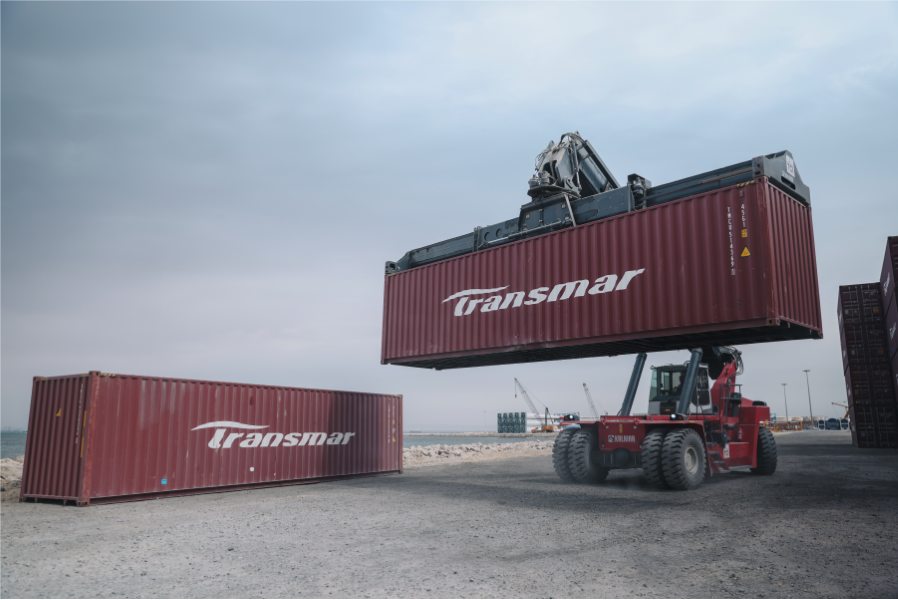
EnterpriseAM Logistics is available without charge thanks to the generous support of our friends at Hassan Allam Utilities and Transmar.

Were you forwarded this email? Tap or click here to get your own copy of EnterpriseAM Logistics.

Want to send us a story idea, request coverage, ask for a correction, or otherwise get in touch? Reach out to us on [email protected].

DID YOU KNOW that we also cover Egypt, Saudi Arabia, and the UAE? ***

This publication is proudly sponsored by

2

The Big Story Today

World Bank approves USD 900 mn for Iraq road corridors

The World Bank has approved a USD 900 mn financing package to upgrade Iraq’s road infrastructure — with the first phase targeting key economic corridors linking Baghdad, the Kurdistan Region, and cross-border routes to Jordan, Syria, and Turkey.

The latest road financing follows the World Bank’s USD 930 mn railway package approved last year — which aims to modernize 1k km of rail between Umm Qasr Port, Baghdad, and Mosul.

Baghdad was stepping up road investments before the World Bank package landed. The Roads and Bridges Department says it has opened more than 41 roads over the past two years, adding roughly 1k km of new roads. Late last year, authorities also launched four road and bridge projects in Wasit and Najaf, worth around USD 285 mn. In the Kurdistan Region, more than 800 road and bridge projects have been completed since 2019.

Where’s the money going? The project is set to fund civil works on priority sections of Iraq’s national road network, including the first 100 km of the Baghdad-Samarra section of Expressway 2, the rehabilitation of an 84 km section of Expressway 1, and 72 km of selected roads in the Kurdistan Region.

The corridor logic checks out: “From a road transport and freight corridor perspective, the priority corridors look appropriate. Iraq’s road network is a central pillar of national transport activity, and the focus on the E1 east-west corridor, the E2 north-south corridor toward Turkey, and selected KRG links appears well aligned with the country’s immediate freight, domestic connectivity, and regional integration needs,” Martin Tillman, transport mobility planning specialist at TMP Consult, tells EnterpriseAM.

The truck routes are doing the work: “The project is targeting the roads that actually shape truck routings and transit times between southern ports, Baghdad, the Kurdish Region, and neighboring countries. Other links — to Grand Faw itself, feeder roads serving logistics parks and industrial zones, and specific border-crossing points — will also matter for end-to-end performance, but those are largely outside Iraq Transport Economic Corridors’s (ITREC) defined scope and would need to be addressed by complementary investments,” Wolfgang Lehmacher, former head of supply chain and transport industries at the World Economic Forum, tells EnterpriseAM.

Roads are doing corridor work

Why this matters: The new upgrades are designed to cut travel times, lower transportation costs, improve freight efficiency, and ease pressure on secondary and urban roads, according to the World Bank project document (pdf).

Roads remain the core of Iraq’s logistics network: More than 90% of the country’s transport activity moves by road, yet much of the network remains underdeveloped and in poor condition. Around 65% of Iraq’s roads are rated as moderate to poor, and a truck journey between Baghdad and Umm Qasr Port can reportedly take up to 24 hours to cover just 580 km.

The long game is where the real value lies: “The wider impact on regional trade and private sector logistics will likely take longer, as it will depend on border efficiency, logistics facilities, customs processes, and investor confidence — not just the road pavement itself,” Tillman argues.

Beyond the pavement: “This road package is important as it helps build the corridor foundations before the full mega-project vision is realized. There is potential for this to act as more than just a north-south route. It has the potential to function as a national logistics system with resilient highway links, access to economic zones, border connectivity, and coordinated road and rail planning,” Tillman says.

The real test starts after construction

Building roads is one thing — but keeping them operating is another. “The biggest execution risks are likely to be institutional and operational rather than just technical. Procurement and contractor capacity will matter, but so will security conditions along corridors, long-term maintenance funding, coordination between the federal government of Iraq and the KRG, land and environmental issues, and the ability to program road investments with rail, ports, border facilities, and private logistics activity,” Tillman tells us.

Inline Image

3

M&A Watch

Asyad secures a strategic foothold in Uzbekistan’s logistics network

Asyad enters Central Asia: Oman’s state-backed logistics player Asyad Group has acquired a controlling stake in Uzbekistan’s key logistics platform — marking its direct entry into Central Asia’s freight market, according to a statement. The transaction — completed with Orient Group and the Uzbek-Oman Investment Company (UzOman) — provides Asyad with inland infrastructure to move cargo between China, Europe, the Middle East, and neighboring Central Asian economies. No investment ticket has been disclosed.

The assets matter because they sit inside the flow: The acquisition gives Asyad ownership of Universal Logistics Services and Highway Logistics Center — both positioned within Tashkent’s freight network. The two platforms handle roughly 25% of Uzbekistan’s railway container traffic and are leaders in premium warehousing.

Why it matters: The move gives Asyad access to rail, road, warehousing, customs clearance, and last-mile capacities from within the market — linking inland terminals in Uzbekistan with Oman’s port and logistics infrastructure.

Why Uzbekistan? The country is emerging as a critical gateway in Central Asia — with AD Ports already building a Central Asia network through acquisitions in Uzbekistan, Kazakhstan, and Georgia.

Inline Image

4

Purchasing

UAE non-oil business activity edges higher in May as demand pressures persist

Operating conditions in the UAE’s non-oil private sector saw a modest recovery in May, though the improvement masked deepening strains from regional geopolitical tensions and the worst supply-chain disruption since the pandemic.

The S&P Global UAE Purchasing Managers’ Index (pdf) rose to 52.6 in May, up from 52.1 in April, remaining comfortably in expansion territory but still running well below its long-run average of 54.3. That’s mostly due to a slight improvement in operating conditions and output growth despite ongoing supply chain disruptions, which weighed on export orders and input delivery times.

MENA economist Hamzeh Al Gaaod thinks the recovery can be attributed to the “positive sentiment on [the US and Iran] reaching an [agreement],” along with the persisting ceasefire.

The persistent issue for non-oil firms is the “cascading effect” of the maritime trade disruptions through the economy and the uncertainty over how long the conflict will last — both of which are suppressing export demand. “The UAE’s non-oil sector has been significantly impacted by the regional tensions and the consequent supply disruptions,” CIO at Century Financial Vijay Valecha tells EnterpriseAM.

Yes, but — could the impact have peaked? “The pace of decline of [export orders] eased notably from April, signaling the worst may be behind us,” he adds.

5

Also on Our Radar

Gafi gives preliminary approval to Sohag freezone + Jeddah Islamic Port gets a new service

Sohag is getting a new public freezone

Egypt’s Sohag is set to house a new public freezone after securing preliminary approval from the General Authority for Investment and Freezones (Gafi), Sohag Investors Association Chairman Mahmoud El Shendweily told Al Borsa. The zone aims to funnel fresh capital into Upper Egypt and scale up industrial exports by leveraging the governorate’s direct access to Red Sea shipping hubs. However, the final rollout hinges on overhauling the area's aging infrastructure to set up dedicated power, water, and natural gas networks.

The cost question is still hanging over investors. Manufacturers are pushing for the return of tax breaks, relief on overdue social ins. payments, and lower industrial land prices, El Shendweily said. He claimed land prices jumped from EGP 200 to EGP 1.1k per sqm — a figure still lower than the EGP 1.9k per sqm we reported last year but enough to echo the broader manufacturer backlash over surging land costs slowing new investment.

IN CONTEXT- The Sohag project aligns with a broader state drive to launch four new public freezones by the end of the year. As Egypt’s nine existing zones hit 95% capacity, Gafi plans to launch four new freezones in 10th of Ramadan, New October, New Borg El Arab, and New Alamein.

Another Red Sea trade lane docks in Jeddah

Mawani adds India to the mix: The Saudi Ports Authority (Mawani) added the new SRS shipping service to Jeddah Islamic Port — operated by the UAE shipping company ESL. The route connects the Red Sea hub with India’s Mundra Port and Djibouti Port, with a capacity of 2.1k TEUs.

The service adds another India-Red Sea-East Africa loop into Jeddah’s network — after launching the RS1 service last month, which links Jeddah with Oman’s Salalah Port and Djibouti Port, with a capacity of 1.7k TEUs.


JUNE

10-11 June (Wednesday-Thursday): Black Sea Ports and Logistics, Istanbul, Turkey.

21-24 June (Sunday-Wednesday): Saudi Smart Logistics, Riyadh, Saudi Arabia.

22-23 June (Monday-Tuesday): Decarbonizing Shipping Forum, Rotterdam, Netherlands.

AUGUST

30 August-1 September (Sunday-Tuesday): Air Cargo Middle East, Riyadh, Saudi Arabia.

30 August-1 September (Sunday-Tuesday): Saudi Warehouse and Logistics Expo, Riyadh, Saudi Arabia.

SEPTEMBER

16-17 September (Wednesday-Thursday): Saudi Maritime & Logistics Congress, Dammam, Saudi Arabia.

22-24 September (Tuesday-Thursday): Seamless Middle East, Dubai, UAE.

28-30 September (Monday-Wednesday): Transport Logistics Middle East, Riyadh, Saudi Arabia.

OCTOBER

12-14 October (Monday-Wednesday): The Airport Show, Dubai, UAE.

21-22 October (Wednesday-Thursday): Global Ports Forum, Singapore.

26-29 (Monday-Thursday): Air Cargo Forum, Miami, US.

27-29 October (Tuesday-Thursday): Routes World, Riyadh, Saudi Arabia.

NOVEMBER

2-5 November (Monday-Thursday): ADIPEC Maritime and Logistics Exhibition and Conference, Abu Dhabi, UAE.

Now Playing
Now Playing
00:00
00:00