Logistics (MENA)
  MENA+ Edition
  Egypt Edition
  UAE Edition
  Saudi Edition
  AI + Innovation (MENA)

 Share Issue





Good morning, nice people, and welcome back. The good news is: the ceasefire is continuing to hold, even after Washington started a blockade of Iranian ports yesterday and said it would seize any vessel at sea that paid a toll to Iran in return for transit through Hormuz.
Also in today’s issue: Egypt’s oil ministry is pushing ahead with its drive to lock in energy supplies, with Gulf production still off the board amid the war. Egyptian gas outfit Egas has inked a preliminary agreement with Cyprus to purchase the entirety of the natural gas produced from the Aphrodite field.
Watch this space
ENERGY — Saudi crude flows to China are being cut in half next month, with the Kingdom set to ship some 20 mn barrels to its biggest buyer in May, down from roughly 40 mn barrels allocated for April, Bloomberg reports, citing traders.
China started leaning on inventories instead of paying up, giving state refiners the green light to tap commercial crude stockpiles, with analysts estimating drawdowns of up to 1 mn bbl / d through April-June.
Meanwhile, the escape hatch is back in business: The East-West pipeline is back to its full 7 mn bbl / d capacity, recovering the 700k bbl / d lost in last week’s strikes on the Kingdom’s energy infrastructure, the Energy Ministry said on X. Output at the Manifa field has also been fully restored, bringing back an additional 300k bbl / d.
Why speed matters: Because it takes a few days for oil to move through the pipeline to Yanbu, this quick fix might have just prevented the global market from feeling the physical pinch of the strikes. With the Strait of Hormuz still blocked, this bypass has been credited with keeping global prices from hitting catastrophic highs.
TRADE — Iraq leans on trucks to move crude through Turkey: Baghdad is shifting crude north via Turkey and trucking barrels through Syria to sustain flows as Hormuz remains uncertain. Iraq has moved nearly 90k barrels from Basra to Kirkuk on more than 400 tankers — with the crude set to be exported through the 970-km Kirkuk-Ceyhan pipeline to Turkey.
REMEMBER- The Kirkuk-Ceyhan pipeline restart could enable Iraq to flow around 250k bbl / d and is meant to rise near 450k bbl / d.
DISRUPTION WATCH — EGA outage escalates: Emirates Global Aluminium (EGA) has invoked force majeure on some contracts after halting operations at its Al Taweelah smelter, knocked out by Iranian strikes earlier this month, Bloomberg reported on Friday, citing documents it has seen.
REMEMBER- Recovery won’t be quick: EGA recently said it could take up to a year to restore full production at its facility following severe damage. The plant produced 1.6 mn tons last year, and sits within a region that accounts for roughly 9% of global aluminum output, leaving supply chains exposed to a prolonged squeeze, with prices already taking a hit.
More FMs on the way? The force majeure may mean the damage is worse than we initially thought, dry bulk shipping consultancy Bharat Maritime told EnterpriseAM. It is also likely that more contract deferrals and cancellations will be on the way, the firm said, adding that the 12-month recovery pipeline points to structural, rather than purely electrical problems, which are harder to fix. EGA’s stock could ease supply in the near term, but continued disruption will likely see the 5-10% surge in aluminum prices on the London Metal Exchange move higher still.
Market watch
Oil prices fell this morning as potential US-Iran talks eased Hormuz supply fears, Reuters reports. Brent crude futures slipped USD 1.86 to trade at USD 97.50 / bbl by 00.03 GMT, while US West Texas Intermediate (WTI) was down USD 2.27 to USD 96.83 / bbl.
Meanwhile, Opec+’s crude output averaged 35.06 mn bbl / d in March — down 7.7 mn bbl / d m-o-m, or nearly 20% — with Iraq and Saudi Arabia seeing the largest declines as flows remain constrained, according to the group’s latest monthly oil report (pdf).
2Q demand trimmed, but 2026 growth outlook holds steady: The group cut its forecast for global oil demand in the second quarter by 500k bbl / d to an average of 105.07 mn bbl / d, while leaving its 2026 demand growth forecast unchanged at 1.38 mn bbl / d.
That leaves the market reading two signals at once — demand expectations are easing on paper while actual supply tightness is being driven by logistics and geopolitics rather than deliberate cuts.
REMEMBER- Opec+ decided earlier this month to boost oil output by 206k bbl / d for May, with Saudi Arabia alone contributing 62k bbl / d. The hike may only take effect on paper, as key nations remain unable to raise production amid the US-Iran conflict.
The Drewry World Container Index increased 1% to USD 2,309 per 40-ft container last week, according to the latest index readings. The rise is driven by an increase across transpacific and Asia-Europe rates, especially Rotterdam-New York (25%), Shanghai-New York (7%), and Shanghai-Los Angeles (7%), with spot rates expected to face fresh upward pressure in the coming weeks as rising bunker costs prompt carriers to roll out fuel surcharges.
Get Enterprise daily
The roundup of news and trends that move your markets and shape corporate agendas delivered straight to your inbox.
***YOU’RE READING EnterpriseAM Logistics, the essential MENA publication for senior execs who care about the industry that connects producers and retailers to global markets. We’re out Monday through Thursday by 9:15am in Cairo, 10:15am in Riyadh, and 11:15am in the UAE.
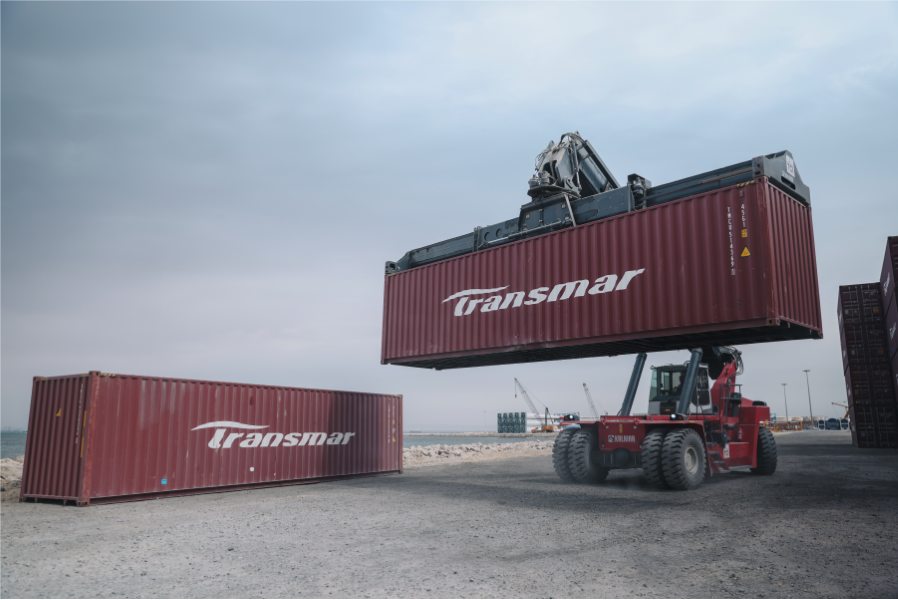
EnterpriseAM Logistics is available without charge thanks to the generous support of our friends at Hassan Allam Utilities and Transmar.
Were you forwarded this email? Tap or click here to get your own copy of EnterpriseAM Logistics.
Want to send us a story idea, request coverage, ask for a correction, or otherwise get in touch? Reach out to us on [email protected].
DID YOU KNOW that we also cover Egypt, Saudi Arabia, and the UAE ? ***