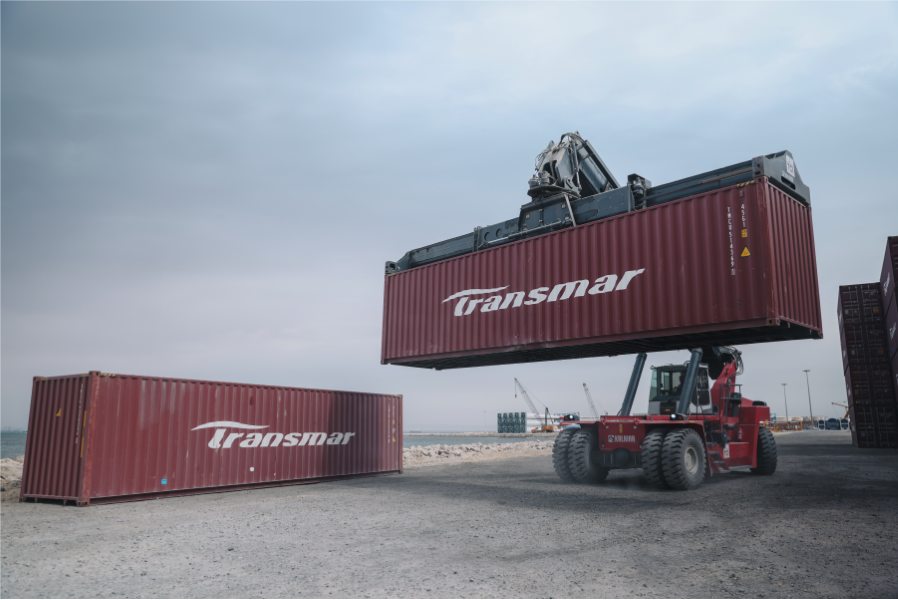
Gulf fertilizer producers face cuts as Hormuz stays closed and buffers run out

1

WHAT WE’RE TRACKING TODAY

TODAY: Can the Gulf avoid another fertilizer crisis, or is it out of options?

Good morning, nice people. Today’s issue puts the lens on the Gulf fertilizer trade — and specifically, on the buffers that got it through the last scare, which turn out to be pretty much spent. Storage is filling up faster than ships can clear it, Saudi Arabia’s Red Sea workaround is running into fresh pressure, and Bahrain, Qatar, and the UAE — unlike Riyadh and Muscat — don’t really have an alternative.


Destination Sahel Issue III drops this week, and we’re diving into how the North Coast is adapting to a changing market.

Developers are recalibrating as buyer behavior shifts, luxury retail is carving out a bigger piece of Sahel’s economy, and the wellness and sports scene has become a summer destination on its own.

In this issue, we get into what’s actually changing on the ground, from how developers are adjusting their pitch to where to shop and how to stay active this season.

Tap or click here to subscribe to the Egypt edition, coming straight to your inbox today.

War watch

A small cargo ship identified by Reuters as Egyptian-owned was attacked by Yemen’s Houthi militants in the Bab Al Mandab strait, according to the Yemeni Coast Guard Authority. Six crewmembers were reportedly killed and 11 injured, BBC reports. The ship’s crew comprised Pakistani and Indonesian nationals, the Yemeni authority said. The Houthis — who declared a naval blockade on Saudi Arabia late last month — have not claimed responsibility for the strike.

Taking back control

Syria will take back management of Tartous Port’s fourth commercial quay from Russia under a new MoU reorganizing Russia’s presence along the Syrian coast, state news agency Sana reports. The agreement, reached after 18 months of negotiations, will gradually transfer civilian facilities used by Russia — including the quay and facilities at Hmeimim Airport — to the Syrian civilian administration.

What the quay brings: The 630-meter berth can accommodate three large vessels at the same time, with loads of up to 55k tonnes. Bringing it under Syrian operation could ease pressure on the port’s other berths and reduce vessel waiting times. Its location beside the port’s RoRo terminal and nearby storage facilities also allows it to handle multiple cargo types — useful as demand for building materials and machinery picks up with Syria’s reconstruction efforts.

But control does not equal competitiveness. The quay will need upgrades before the added capacity translates into higher trade volumes or revenues, economists told the news agency. Tartous would first need lower operating costs, clearer investment contracts, and far better inland connectivity to compete. Syria will also need faster customs procedures and functioning trade finance payment and ins. channels.

Market watch

Oil prices increased this morning as Middle East tensions stoked supply fears, Reuters reports. Brent crude futures increased USD 0.72 to USD 89.63 / bbl by 00.53 GMT, while West Texas Intermediate (WTI) gained USD 0.71 to USD 83.91 / bbl.


The Baltic Index declines further: The Baltic Exchange’s dry bulk index — which tracks rates for the capesize, panamax, and supramax vessel segments — was down 1.2% to 3,046 points on Tuesday. The capesize index declined 2% to 5,001 points, while the panamax inched up by 0.3% to 2,312 points. The smaller supramax slightly eased 0.2% to 1,600.

Data point

3.7 mn tons — that’s how many goods and minerals Saudi Arabia’s railway transported in 2Q 2026. The SAR North Train handled 3.3 mn tons, while the East Train moved 396k tons, with 47k TEUs transported across the rail network, Saudi Gazette reports.

***

YOU’RE READING EnterpriseAM Logistics, the essential MENA publication for senior execs who care about the industry that connects producers and retailers to global markets. We’re out Monday through Thursday by 10:15am in Cairo and Riyadh, and 11:15am in the UAE.

EnterpriseAM Logistics is available without charge thanks to the generous support of our friends at Hassan Allam Utilities and Transmar.

Were you forwarded this email? Tap or click here to get your own copy of EnterpriseAM Logistics.

Want to send us a story idea, request coverage, ask for a correction, or otherwise get in touch? Reach out to us on [email protected].

DID YOU KNOW that we also cover Egypt, Saudi Arabia, and the UAE? ***

This publication is proudly sponsored by

2

The Big Story Today

A second Hormuz shock is hitting Gulf fertilizer producers with empty buffers

The Gulf's fertilizer system is more vulnerable than it was during the first Hormuz shock — because the storage and routing buffers that got it through that shock are now largely spent. That makes the second prolonged closure more likely to force production cuts than simply delay cargoes.

The brief reopening cleared cargoes, but never restored the shipping cycle behind them. “The renewed disruption has largely reset the clock on any return to normalization. In recent weeks, the main improvement had been in outbound movements, while inbound vessel traffic remained limited,” Willis Thomas, head of fertilizer analysis at CRU Group, tells EnterpriseAM.

IN CONTEXT- By mid-July, an estimated 850k tons of urea were stranded across Iran and the Arabian Gulf as most regional shipments ground to a halt, according to the ICIS. The World Trade Organization also said fertilizer shipments through Hormuz remained close to zero, suggesting the disruption had yet to ease, according to a briefing.

The storage clock is ticking

Outbound movements solved only half the problem. A loaded vessel leaving the Gulf clears an old cargo, but an empty vessel entering the Gulf gives a producer somewhere to load newly manufactured fertilizer. Without sustained return of inbound ships, sporadic outbound crossings can make trade data look better while plants keep adding product faster than the shipping system can move it.

Storage will run out before production does: “Given that storage capacity is now much more limited than earlier in the disruption, those producers are at the greatest risk of being forced into output reductions due to a lack of storage rather than any direct production-side constraint,” Thomas argues.

The first closure showed how fast those buffers can run out. CRU estimated in April that 55-60% of Middle Eastern urea output had already been halted during the initial closure, while at least 44 fertilizer vessels were stranded inside the Gulf. The renewed disruption is more dangerous because some of the storage flexibility used during the first shock is no longer available.

Saudi Arabia and Oman have escape routes. Bahrain, Qatar, and the UAE don’t. The latter three are the most exposed because they have limited practical scope to export bulk fertilizer without crossing Hormuz, Thomas notes, while Saudi Arabia can move some volumes west to Yanbu, and Oman’s principal export facilities sit outside the strait.

Rerouting is no longer a durable buffer

If storage was the first buffer, rerouting was the second — and that buffer is becoming less reliable too. Saudi Arabia built the Gulf’s most substantial fertilizer workaround. Ma’aden moved phosphate fertilizer from Ras Al Khair to Yanbu by road after Hormuz closed, eventually deploying some 3.5k trucks across its Gulf-to-Red Sea logistics operation, the Wall Street Journal reported. Sabic followed with urea, using an estimated 1.3k truckloads to move a single 25k-ton cargo from Jubail to Yanbu, Argus reported.

That workaround kept some Saudi supply moving, but at materially lower efficiency than direct bulk exports from Gulf ports. Saudi producers remained cautious about fresh Ras Al Khair loadings even during the previous reopening, while Ma’aden planned to load 120k tons of global diammonium phosphate (DAP) sold to India from Yanbu instead.

The Red Sea stopped being a reliable release valve. Houthi attacks on Saudi facilities and shipping have placed Yanbu and the Bab Al Mandab route under direct pressure. Traffic has recovered from its late-July low but remains volatile, falling to 18 commodity vessels on 2 August from 27 a day earlier and 28 on 31 July. Two tankers carrying Saudi crude crossed with their transponders switched off, while another product tanker abandoned its Red Sea route and rerouted around Africa.

The two-chokepoint exposure is concentrated: Most fertilizer cargoes don’t need to cross both Hormuz and Bab Al Mandab — the exposure is concentrated in Saudi phosphate shipments that leave through Yanbu and potash exports from Jordan and Israel, Thomas explains. That still leaves Saudi phosphate volumes particularly exposed. The Kingdom accounted for around 19% of combined DAP and monoammonium phosphate exports in 2025. Ma’aden says its phosphate operations have 6 mn tons of annual capacity and supply a fifth of the traded phosphate fertilizer market.

What happens if this drags on?

Nitrogen would spike again — but less violently. A one- to three-month closure would likely push urea and ammonia prices sharply higher at first, before values retreat as buyers switch origins, vessels reposition, and trade routes adapt, Thomas says. The rise, and the correction that follows, should be less severe than during the war’s opening phase, because traders, producers, and importers are now better prepared to manage another prolonged disruption.

Sulphur and phosphates would stay higher for longer. A prolonged closure would likely keep sulphur and phosphate prices elevated even after nitrogen begins correcting, “with phosphates in particular retaining meaningful upside risk,” Thomas tells us. Tight sulphur availability, particularly at prices that keep phosphate production commercially viable, has already contributed to temporary production curtailments in parts of Africa and the Americas, Thomas says. A deeper or more prolonged interruption to Middle Eastern sulphur and phosphate exports could tighten availability further and trigger additional production cuts outside the Gulf, he adds.

Delayed buyers and seasonal demand are reinforcing the rebound. Buyers who postponed purchases in anticipation of lower prices are now returning as values rise, Thomas says. That restocking is set to overlap with stronger seasonal demand through August in Brazil and later Europe, followed by the US in September, leaving little room for prices to retreat while Middle Eastern supply stays constrained.

What’s next: A fresh wave of outbound cargoes won’t mean the market has recovered. “Indicators that the market is stabilizing rather than merely clearing a temporary backlog would include a sustained recovery in inbound vessel traffic, a normalization of ins. terms and freight premiums, evidence of renewed inventory rebuilding at origin, and a return to more routine loading patterns rather than sporadic clearance of stranded cargoes,” Thomas adds.

3

Earnings Watch

Adnoc L&S’ earnings surge, Turkish Airlines holds the line

Adnoc L&S hits record 2Q earnings

A surge in tanker earnings turned Adnoc L&S’ 2Q into a blowout quarter. The maritime logistics firm’s net income jumped 303% y-o-y to USD 951 mn, a result the company credits to its support of Adnoc’s energy exports, according to its financial presentation (pdf). Revenues rose 98% y-o-y to USD 2.6 bn.

REMEMBER- The UAE was able to move more oil to global buyers than any other Gulf producer since the start of June, with Adnoc selling more than 130 mn barrels of crude across seven tenders. Adnoc charters tankers at elevated rates to shuttle crude through Hormuz with their transponders switched off, then transfers the cargo to another vessel in the Gulf of Oman for the longer haul to buyers. It did so despite the risk of transiting through the strait, with at least two of its vessels coming under attack last month, resulting in one fatality and several injuries.

The six-month read tells the same story. Adnoc L&S’ net income rose 179% y-o-y to USD 1.2 bn in 1H, while revenue climbed 46% to USD 3.7 bn. The gains came once again from supporting UAE energy exports, higher charter rates and chartering activity, and contributions from four newly delivered LNGCs, two VLECs, and one Ultramax vessel, according to its earnings release (pdf).

War costs outpace Turkish Airlines’ capacity fix

Turkish Airlines saw its net income decline 71% y-o-y to USD 197 mn in 2Q 2026, according to the firm’s interim financial statements (pdf). Meanwhile, revenues increased nearly 21% y-o-y to USD 7.2 bn over the same period.

Behind the numbers: Turkish Airlines says the war’s early fuel price spike hit its books with a lag this quarter as fuel expenses jumped 93% to USD 2.8 bn — even as the carrier shifted capacity toward stronger demand in Asia, Europe, and Africa to cushion the impact, according to a press release. Cargo revenue jumped 58% to USD 1.3 mn, while Middle East passenger and cargo revenue fell to USD 279 mn from USD 453 mn a year earlier.

In half-year terms: Net income fell 35% y-o-y to USD 423 mn in 1H, despite revenue rising 21% y-o-y to USD 13.1 bn.

4

Also on Our Radar

Chinese textile giant Jasan Group breaks ground on USD 117 mn Qantara West complex

China’s Jasan Group broke ground on its USD 117 mn Qantara West textile complex, according to a Suez Canal Economic Zone statement. The investment ticket is higher than the USD 100 mn announced when the group signed the project agreement last December. The megaproject will be developed in three phases, establishing an integrated industrial hub spanning yarn spinning, weaving, seamless sportswear, hosiery, dyeing, and accessories. The complex is highly export-oriented, with 90% of its total output earmarked for global markets.

IN CONTEXT- Qantara West currently hosts 54 projects from nine nationalities worth around USD 1.54 bn, including 43 textile and ready-made garment projects.


AUGUST

30 August-1 September (Sunday-Tuesday): Air Cargo Middle East, Riyadh, Saudi Arabia.

30 August-1 September (Sunday-Tuesday): Saudi Warehouse and Logistics Expo, Riyadh, Saudi Arabia.

SEPTEMBER

16-17 September (Wednesday-Thursday): Saudi Maritime & Logistics Congress, Dammam, Saudi Arabia.

22-23 September (Tuesday-Wednesday): Breakbulk Americas, Houston, US.

22-24 September (Tuesday-Thursday): Seamless Middle East, Dubai, UAE.

28-30 September (Monday-Wednesday): Transport Logistics Middle East, Riyadh, Saudi Arabia.

OCTOBER

12-14 October (Monday-Wednesday): The Airport Show, Dubai, UAE.

20-22 October (Tuesday-Thursday): TOC Americas, Cartagena, Colombia.

21-22 October (Wednesday-Thursday): Global Ports Forum, Singapore.

26-29 (Monday-Thursday): Air Cargo Forum, Miami, US.

27-29 October (Tuesday-Thursday): Routes World, Riyadh, Saudi Arabia.

NOVEMBER

2-5 November (Monday-Thursday): ADIPEC Maritime and Logistics Exhibition and Conference, Abu Dhabi, UAE.

10-11 November (Tuesday-Wednesday): TOC Asia, Singapore.

10-12 November (Tuesday-Thursday): Intermodal Europe, Rotterdam, Netherlands.

11-13 November (Wednesday-Friday): Logitrans, Istanbul, Turkey.

18-19 November (Wednesday-Thursday): Breakbulk Asia, Singapore.

FEBRUARY 2027

10-12 February (Wednesday-Friday): Routes Americas, San Juan, Puerto Rico.

MARCH 2027

16-18 March (Tuesday-Thursday): CMA Shipping, Houston, US.

16-18 March (Tuesday-Thursday): Routes Asia, New Delhi, India.

APRIL 2027

20-22 April (Tuesday-Thursday): Routes Europe, Antalya, Turkey.

26-29 April (Monday-Thursday): Transport logistic and air cargo Europe, Munich, Germany.

26-29 April (Monday-Thursday): Saudi Smart Logistics, Riyadh, Saudi Arabia.

Now Playing
Now Playing
00:00
00:00