EIB commits EUR 365 mn to Morocco's roads and rail

1

WHAT WE’RE TRACKING TODAY

TODAY: EIB doubles down on Morocco + Asyad and CMA CGM team up in Soharr

Good morning, nice people. It's a little quiet out there this morning — and for once, quiet is looking a lot like optimism. No fresh disruption to report on the logistics front, and two decent-sized infrastructure stories to end the week with.

Today's issue leans investment-led: The European Investment Bank is putting EUR 365 mn behind upgrades to Morocco's motorway and rail networks, though we're still waiting on a disbursement timeline or project-level breakdown. And in Oman, CMA CGM and Asyad Group are teaming up on a USD 400 mn multipurpose logistics terminal in Sohar.

The optimism could be coming from things quietly…normalizing. Gulf carriers — Emirates, Qatar Airways, Etihad — are back to roughly 95% of prewar capacity, clawing back the share Lufthansa picked up while they were grounded. And direct cargo shipping between the UAE and Iran has resumed, the same week flights did.

Borrowed capacity, returned with interest

Gulf cargo carriers are clawing back the market share the Iran war handed to Lufthansa. Emirates, Qatar Airways and Etihad are now flying at roughly 95% of prewar capacity, eroding the demand and yield boost the German carrier picked up while regional rivals were disrupted by the conflict, Lufthansa Cargo CEO Ashwin Bhat told Bloomberg. Lufthansa hasn't cut prices to defend share, and Bhat called demand “surprising” for what's usually a soft summer stretch. The cargo unit posted EUR 324 mn (USD 369 mn) in operating net income last year, about 17% of the group's total.

Mounting pressure: The EU is also scrapping its duty-free exemption for low-value e-commerce imports — replacing it with an EUR 3 per-item fee. Bhat says Asian customers are “nervous,” and Lufthansa has already seen goods front-loaded into Europe ahead of the change. E-commerce is under 20% of its cargo business, but a demand drop could trigger aggressive price-cutting that spills into every carrier's margins — Gulf carriers included.

SkyCargo's second life for old jets

Emirates SkyCargo has become the first cargo carrier to fly a converted Boeing 777-300ERSF freighter — with the aircraft entering commercial service on a Hong Kong-Dubai route carrying more than 100 tonnes of cargo, Khaleeji Times reports. The converted jet packs 811 cubic metres of cargo volume — a 25% jump over Boeing's own 777-F production freighter — and fits 47 pallet positions, 10 more than the production model. That extra volumetric capacity is aimed at e-commerce cargo, which already makes up around 20% of global air cargo tonnage and is still growing.

The logic: recycle the fleet you already have. “We are optimizing our fleet assets by converting older Boeing 777-300ER passenger aircraft to meet the growing demand for air cargo capacity,” Emirates SkyCargo Divisional Senior Vice President Badr Abbas said. The converted jet is the sixth new freighter to join the SkyCargo fleet since March 2026, after five Boeing 777-F production freighters.

What's next?What's next: Emirates SkyCargo is set to take delivery of five more 777-Fs and one more converted 777-300ERSF by the end of 2026.

UAE-Iran direct shipping is back on

Direct cargo shipping lines between the UAE and Iran have resumed the same week that flights restarted between the two countries, after months during which bilateral commercial ties had effectively stalled. Iran’s Trade Development Organisation Logistics Director-General Ali Emami confirmed the resumption of shipping activity to Iran’s Mehr News Agency, saying that “trade relations are returning to normal.”

That’s big: The UAE — and Jebel Ali in particular — is the dominant re-export gateway for Iranian imports of intermediate goods, raw materials, and equipment. When that corridor went dark during the conflict, Iranian importers were rerouting through Oman and Turkey at higher costs and longer lead times, and cargo was sitting stranded at Jebel Ali.

Commercial tracks are moving in step with the diplomatic ones. The resumption comes as the US and Iran are scheduled to hold talks in Doha this week — and as the UAE and Iran seem to have agreed their commercial relations are important enough to warrant an attempt to get ties back on track, with recent talks taking place between UAE and Iranian officials, and no attacks on the UAE since May, despite sporadic attacks on Bahrain and Kuwait over the past few weeks.

Cha-ching for Maersk

Tariffs are good for business — if you’re Maersk: Danish shipping firm Maersk has raised its full-year earnings guidance by at least USD 1 bn, citing a surge in Far East demand tied to new US tariffs, according to a statement. The firm now expects 2026 underlying EBITDA of USD 8-10 bn, up from its prior USD 4.5-7 bn range, as US retailers rush to stockpile Chinese goods ahead of fresh tariffs set to hit dozens of countries from late July.

Why it matters: Freight rates are at their highest since the 2024 Red Sea crisis, with the Shanghai containerized freight index just 13% off that peak, the Financial Times reports. Time-charter rates have also hit a post-Covid high — a sign that shippers expect the squeeze to last, not just a short-term tariff scramble.

After the whole chain

CMA CGM has agreed to acquire FedEx Supply Chain for USD 1.4 bn — in an agreement that will nearly triple the North American footprint of Ceva Logistics, CMA CGM's contract-logistics arm, adding FedEx Supply Chain's roughly 150 warehouses, according to a statement. CMA CGM and FedEx also plan multi-year ocean and air-cargo agreements, phased in through 2028, under which CMA CGM becomes a preferred, non-exclusive ocean carrier for FedEx. The contract is expected to close in 2026, subject to regulatory approval.

The move tracks with CMA CGM's push into logistics and air freight: The firm closed a USD 2.4 bn ports JV with Stonepeak in January and is mid-way through a USD 20 bn US buildout across ships, terminals, and air cargo.

FedEx is moving the other way — shedding units to focus on its core air-ground network. The FedEx Supply Chain sale is the company's second major divestiture in weeks, following last month's spin-off of FedEx Freight into a standalone public company, as tariffs and the end of the US de minimis exemption weigh on delivery volumes.

Market watch

Oil prices fell nearly 1% this morning as progress in US-Iran talks eased concerns over disruptions at Hormuz, Reuters reports. Brent crude futures slipped USD 0.77 to USD 70.80 / bbl by 02.56 GMT, while West Texas Intermediate (WTI) was down 0.84 to USD 67.74 / bbl.


The Baltic Index continues to rise: The Baltic Exchange’s dry bulk index — which tracks rates for the capesize, panamax, and supramax vessel segments — was up 2.4% to 2,562 points on Wednesday. The capesize index climbed 4.1% to 3,692 points, while the panamax index gained 1.1% to 2,177 points. The smaller supramax index rose 0.4% at 1,673 points.

*** YOU’RE READING EnterpriseAM Logistics, the essential MENA publication for senior execs who care about the industry that connects producers and retailers to global markets. We’re out Monday through Thursday by 10:15am in Cairo and Riyadh, and 11:15am in the UAE.

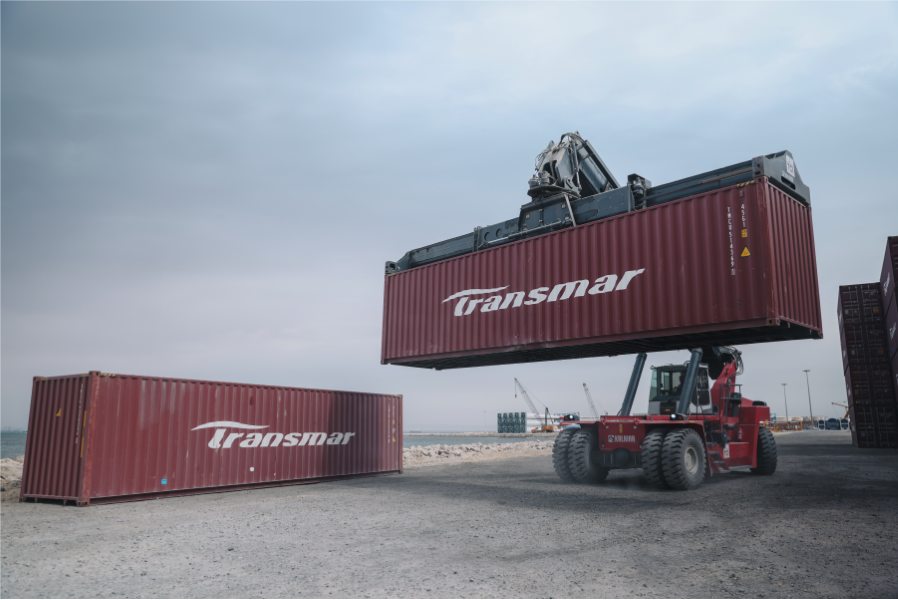
EnterpriseAM Logistics is available without charge thanks to the generous support of our friends at Hassan Allam Utilities and Transmar.

Were you forwarded this email? Tap or click here to get your own copy of EnterpriseAM Logistics.

Want to send us a story idea, request coverage, ask for a correction, or otherwise get in touch? Reach out to us on [email protected].

DID YOU KNOW that we also cover Egypt, Saudi Arabia, and the UAE? ***

This publication is proudly sponsored by

2

Investment Watch

European Investment Bank commits EUR 365 mn to Morocco’s transport

The European Investment Bank (EIB) is set to provide EUR 365 mn to finance transport infrastructure in Morocco, according to a statement. The financing package will support upgrades to the country’s motorway network and national railway system. No disbursement timeline or project-level breakdown has been disclosed.

The rail network will also receive a EUR 15 mn EU grant to fund climate resilience measures. This followed a technical assistance partnership agreement with Morocco’s National Office of Railways (ONCF) back in October 2024 to strengthen climate resilience and develop an adaptation strategy for Morocco’s railway network.

Why it matters: The financing dovetails with Morocco’s broader near-shoring appeal. As manufacturers shift production closer to European markets to reduce supply chain risks, the country has been investing in roads, railways, ports and industrial zones. The transport upgrade also complements private sector investments in Morocco’s logistics sector, with AP Moller Capital — the local arm — recently closing a USD 243 mn transport and logistics fund from Mohammed VI Investment Fund (FM6I).

Also in the pipeline: The EIB is expanding its cooperation with the FM6I to help mobilize private investment into businesses, infrastructure, and venture capital projects.

BACKGROUND- The European bank has financed projects in Morocco since 1979 and says it has mobilized more than EUR 12 bn for infrastructure, economic development, and climate projects over nearly five decades.

3

Ports

CMA CGM, Asyad Group to build a USD 400 mn logistics terminal at Sohar

CMA CGM and Oman’s Asyad Group are putting USD 400 mn into a multipurpose logistics terminal in Sohar, according to a statement. The framework agreement, signed during Sultan Haitham bin Tariq’s state visit to France, has the two companies jointly developing, managing, and operating the facility.

Why it matters: Hormuz transits have picked up since the initial US-Iran peace agreement earlier this month, but they’re far from secure — tit-for-tat strikes have kept the strait’s risk premium alive, and CMA CGM still has 10 ships stuck inside the Gulf, even after its Galapagos vessel made it out on Sunday. Chairman and CEO Rodolphe Saadé said the terminal will give the group reliable inland access to key trade corridors.

The scale on Asyad’s side is real: The group already runs logistics operations across 76 cities in 24 countries, manages a fleet of more than 100 vessels touching over 200 ports, plus a portfolio of ports and freezones it operates directly.

4

Also on Our Radar

BOC leases three more jets to Qatar Airways + DP World cranes up at Tartous + Nesma rebrands as flyplus

BOC Aviation, Qatar Airways ink another widebody agreement

Another widebody deal for BOC Aviation: BOC Aviation has agreed to purchase and lease back three Airbus A350-1000s to Qatar Airways on long-term operating leases, with all three aircraft already delivered, according to a statement. The Rolls-Royce Trent XWB-97-powered jets mark BOC Aviation's first A350-1000 financing for Qatar, an existing customer.

Tartous starts stacking capacity

DP World installs first of three new cranes at Syria's Port of Tartous: DP World has installed the first of three new mobile harbour cranes at the Port of Tartous, marking the first major investment under its 30-year concession agreement with the Syrian government, according to a statement. The cranes are part of DP World's USD 800 mn investment programme at the port, which also includes infrastructure upgrades and digitalization, aimed at supporting Syria's trade and economic recovery.

Nesma adds to its fleet

Another A321 joins Nesma’s fleet: Nesma Airlines has received a new Airbus A321, bringing its fleet to 11 aircraft and four A321s. The delivery follows the arrival of its third A321 in March, when the carrier said its fleet had reached 10 aircraft. Nesma is rebranding as flyplus — not a new airline, but a refreshed identity under which it plans to expand into European and Asian markets.

Flyplus is Nesma's new brand identity, not a separate carrier. The Egyptian airline is keeping its operating certificate and route network while relaunching its market positioning under the new name.

5

Logistics in the News

China’s petrochem exports get a wartime boost

Chinese petrochemical producers are emerging as unexpected beneficiaries from the Iran-US war, using supply disruptions in the Gulf to offload excess production and gain new customers across Asia. Buyers in markets including Vietnam and Indonesia turned to Chinese suppliers as feedstock shortages disrupted Middle Eastern production, helping Chinese producers ease chronic oversupply while establishing new regional supply chains.

Why it matters: We've been saying geopolitical disruptions are reshaping commodity trade around resilience rather than pure cost — and petrochemicals are proving no exception. The war in the Gulf has given Chinese producers an opening to turn years of overcapacity into export market share, while Asian buyers have discovered alternative supply chains that may outlast the conflict.

The conflict disrupted supplies of feedstocks from oil and gas fields in the Gulf. Saudi Arabia, Qatar, and the UAE are major suppliers of polyethylene and other petrochemicals to Asia thanks to their abundant, low-cost oil and gas feedstocks — the Gulf exports nearly 76 mn tonnes of petrochemicals a year to some 90 countries, worth USD 52 bn and accounting for more than half the region's total chemical output.

When the war disrupted Gulf production and shipping (going in-and-out),, buyers were forced to source material elsewhere, opening the door for other exporters. Chinese producers were well-positioned to step in, thanks to large domestic inventories, expanding coal-to-chemicals production — which is less exposed to Middle Eastern hydrocarbons — and rising imports of US ethane feedstock.

The numbers show the size of the shift: China's net polyethylene imports collapsed to almost 35k tonnes in May from nearly 988k tonnes in February. The plunge flipped China from a major net importer to an almost balanced market within three months, as Chinese producers redirected surplus output into regional export markets while Asian buyers sought alternatives to disrupted Middle Eastern supplies. BloombergNEF analyst Philip Geurts described polyethylene as “the biggest story by far,” saying he had never seen such a sharp trade swing.

The shift extended beyond polyethylene: China became a net exporter of olefins for the first time in April and May — a swing equivalent to around 10% of global demand. Olefins are the basic chemical building blocks used to manufacture plastics, synthetic rubber, and textiles, making this one of the sharpest realignments in global petrochem trade since the conflict began.

The bigger picture: China exported a record 6.2 mn tonnes of commodity chemicals and plastics in May, up 6% from April, while shipments over March-May climbed 43% year-on-year. Exports are increasingly reaching not only Southeast Asia but also India, Turkey, Africa, and Latin America.

The new trade flows could prove sticky even if tensions ease. Gulf production is expected to recover, but the war exposed the risk of depending on a single supply-chain chokepoint, giving buyers another reason to diversify sourcing rather than revert entirely to previous suppliers. For Chinese producers, the conflict also arrived at a crucial moment, as the industry grapples with years of capacity expansion that has outpaced domestic demand.

China is expected to increase annual ethylene capacity — the most important olefin — from around 60 mn tonnes last year to some 80 mn tonnes by the end of the decade, adding pressure on Chinese producers to secure export markets and making the customer relationships forged during the conflict increasingly valuable long after tensions fade.

Our take: This is another example of a theme we've been tracking since the start of the conflict: geopolitical disruptions rarely create permanent shortages — they create new trade patterns, with beneficiaries and losers. Just as crude oil, LNG, and shipping routes have adjusted by finding alternative suppliers and paths, petrochemicals are now following the same course.


AUGUST

30 August-1 September (Sunday-Tuesday): Air Cargo Middle East, Riyadh, Saudi Arabia.

30 August-1 September (Sunday-Tuesday): Saudi Warehouse and Logistics Expo, Riyadh, Saudi Arabia.

SEPTEMBER

16-17 September (Wednesday-Thursday): Saudi Maritime & Logistics Congress, Dammam, Saudi Arabia.

22-24 September (Tuesday-Thursday): Seamless Middle East, Dubai, UAE.

28-30 September (Monday-Wednesday): Transport Logistics Middle East, Riyadh, Saudi Arabia.

OCTOBER

12-14 October (Monday-Wednesday): The Airport Show, Dubai, UAE.

21-22 October (Wednesday-Thursday): Global Ports Forum, Singapore.

26-29 (Monday-Thursday): Air Cargo Forum, Miami, US.

27-29 October (Tuesday-Thursday): Routes World, Riyadh, Saudi Arabia.

NOVEMBER

2-5 November (Monday-Thursday): ADIPEC Maritime and Logistics Exhibition and Conference, Abu Dhabi, UAE.

Now Playing
Now Playing
00:00
00:00