Get EnterpriseAM daily

Egypt’s gov’t hikes gas transmission tariff by 33%, looks into liberalizing local market

1

What we're tracking today

TODAY: Gas transmission rates hiked in Egypt + Regulations for Autonomous trucking in Dubai land

Good morning, friends. The news cycle has slightly slowed down today, leaving us with a balanced read led by supply chain and trade updates from Egypt. Today’s news well also features regulatory updates from the UAE as Dubai moves to roll out autonomous trucking. Let’s get the ball rolling.

HAPPENING THIS WEEK-

The Global Freight Summit is on its third day and runs until tomorrow in Istanbul, Turkey. The event hosts independent freight forwarders for an open networking event. The goal is to have over 350 attendees exchange agency recommendations, learn from industry leaders, and build new networks.

The Global Rail Transport Infrastructure Exhibition and Conference kicks off today and will run until Thursday, 2 October in Abu Dhabi, the UAE. The event is hosted by Etihad Rail and is set to welcome over 200 global speakers that include top executives from Dubai Airports, Korea National Railway, Keolis, DHL Global Forwarding, Parsons, Saudi Arabia Railway, and Talgo.

The Saudi Maritime and Logistics Congress will open its doors tomorrow and wrap up on Thursday, 2 October in Dammam, Saudi Arabia. The event will host over 200 registered exhibitors and some 15k attendees from over 90 countries to discuss AI-powered fleet optimization, shifts in global trade, and intelligence-driven infrastructure. Speakers include the Kingdom’s Transport Minister Saleh bin Nasser Al-Jasser, Bahri CEO Ahmed Alsubaey, and King Abdullah Port CEO Jay New.

WATCH THIS SPACE-

#1- The Egyptian government handed US companies a portfolio of 22 potential investments in the transport sector, sources familiar with the matter told Asharq Business. The portfolio includes 10 seaport projects, five logistics and dry port projects, four in the metro and electric traction, and three river ports slated for development in the coming years. The projects on offer are limited to rights of management, operation, and maintenance, without any transfer of asset ownership.

ICYMI- The move comes after a US business delegation toured Egypt’s ports earlier this month to explore potential partnerships in the sector. The delegation included representatives from Bechtel, Cisco, Hill International, TMEIC, OSI/Rapiscan, Aveva, and Alvarez and Marsal Holdings.

ALSO- Egypt is working on an incentives package to promote investments in specific sectors within the country’s freezones, a government source told EnterpriseAM. The package — prepared by the General Authority for Investment and FreeZones — will be included in an upcoming promotional campaign to attract foreign investments, we were informed.

The government has named 31 priority sectors to be promoted in public and private freezones, according to a government document reviewed by EnterpriseAM. Of these, eight sectors are ready to be promoted, while efforts for the other sectors will require more time due to the need for legislative and procedural changes, according to the document. The first group of sectors will include chemicals, textiles, pharma, hotels and resorts, consumer electronics, and healthcare.

DATA POINT- Public and private freezones hosted 1.2k projects with a total capital of USD 14.1 bn as of the end of June 2025.

#2- Both the European Union and the UN have re-imposed sanctions on Iran over its nuclear program, putting the final nail in the coffin of the Obama-era 2015 nuclear agreement with Iran, dubbed officially Joint Comprehensive Plan of Action. The build-up for the “snapback” sanctions in both intergovernmental institutions was led by European powers Germany, France, and the UK — known as the E3 — which have remained committed to the 2015 arrangement despite the US withdrawal in 2018 during President Donald Trump’s first administration.

Some of the EU sanctions will target several aspects of the Iranian logistics sector, including measures to bar Iranian cargo flights from accessing EU airports; a ban on the maintenance or servicing of Iranian cargo aircraft or vessels transporting restricted materials or goods; and a halt to the import and transportation of Iranian crude oil, natural gas, petrochemical, petroleum products, and related services.

There are signs that the snapback sanctions — especially the UN’s — could tighten the screws on Iranian crude trade. For example, several terminal operators in China’s Shandong province are said to be preparing measures to bar old tankers that carry sanctioned Iranian crude from their facilities, according to a notice issued by four terminal operators at Qingdao Port Authority-owned Huangdao Port seen by Reuters on Friday. The measures are set to be imposed starting 1 November.

The criteria: The sanctions will target vessels that are 31 years or older, as well as vessels using fraudulent International Maritime Organization certificates, Bloomberg reports. Other vessels entering ports in Shandong province will be rated on a score based on the risk level — determined by a vessel’s age and pollution liability. If a tanker gets a low score, it will not be able to berth in the province’s ports.

#3- Iraqi roads have seen over 273 road cargo shipments under the Transports Internationaux Routiers (TIR) system since its implementation in June — which included food, industrial products, equipment, machinery, and raw materials distributed through the dry ports of Ibrahim Al-Khalil, Trebil, and Safwan, and Umm Qasr seaport, INA reports.

REFRESHER- Iraq joined the International Road Transport Union (IRU) in March — a move expected to reduce transport times by 80% and cut costs of transporting goods by around 38%. The TIR system aims to pave the way for a transnational trucking route that connects the Arabian Gulf from Iraq’s Umm Qasr port with the Mediterranean through Turkey’s Mersin port. Iraq received three shipments from Turkey under the system in July.

MARKET WATCH-

#1- Oil prices continued their downward trend over concerns of supply surplus driven by news of a possible Opec+ production hike and Iraq’s resumption of oil exports to Turkey, Reuters reports. Brent crude futures for November fell by USD 0.54 to USD 67.43 / bbl, while its December contracts dropped USD 0.53 to USD 66.56 / bbl as of 03.20 GMT. US West Texas Intermediate (WTI) also took a dip, falling by USD 0.50 to trade at USD 62.95 / bbl.

Over in our region, Saudi is forecasted to raise November’s official selling price (OSP) for Arab Light crude to Asia by USD 0.20-0.40 a barrel from October, bringing it to USD 2.40–2.60 above the Oman-Dubai benchmark, Reuters reported yesterday, citing a survey of six refiners. Other Saudi grades — Arab Extra Light, Arab Medium, and Arab Heavy — could also see increases of USD 0.30–0.60 a barrel for November.

REMEMBER- The move would partially reverse last month’s deeper-than-expected USD 1 cut, which set October’s Arab Light OSP at USD 2.20 / bbl — well below market forecasts of USD 2.50-2.80. The kingdom had raised the price in September by USD 1 a barrel to USD 3.20 / bbl above the Oman-Dubai benchmark, marking a second consecutive monthly hike before the sharp rollback.

Riyadh is expected to hold back from larger price hikes as it continues negotiations with buyers over the 2026 term supply, one refiner said. Elevated freight costs are also squeezing margins, limiting the room for Asian refiners to absorb higher crude prices.

#2- Baltic index continues to shed points: The Baltic Exchange’s dry bulk sea freight index — which tracks rates for the capesize, panamax, and supramax vessel segments — was down 39 points to 2,220 on Monday, driven by declining rates across all segments. The capesize fell 103 points to 3,524, while the panamax index eased 14 points to 1,818. The smaller supramax index shed 1 point to 1,47.

PSA-

Maersk revises PSS for reefer containers: Shipping giant Maersk has revised two peak season surcharges (PSS) for reefer containers traveling from the Indian Subcontinent and the Middle East to the US and Canada’s East and Gulf coasts, according to statements published on Saturday here and here.

The details: For cargo coming from the UAE, Oman, Yemen, Bahrain, Kuwait, Jordan, Qatar, Saudi Arabia, and Iraq, a USD 300 PSS applies to all 20-ft reefer and 40-ft high cube reefer containers from 26 September to 24 October. A USD 1.3k PSS will apply to 20-ft reefer and 40-ft high cube reefer containers starting 25 October, with an undisclosed expiry date.

What’s a 40-ft high cube reefer? High cube reef containers offer one more foot of height than traditional 40-ft containers. Similar to other reefers, the high cube containers are readied with insulation and refrigeration systems suitable for perishable items.

***YOU’RE READING EnterpriseAM Logistics, the essential MENA publication for senior execs who care about the industry that connects producers and retailers to global markets. We’re out Monday through Thursday by 9:15am in Cairo and Riyadh and 11:15am in the UAE.

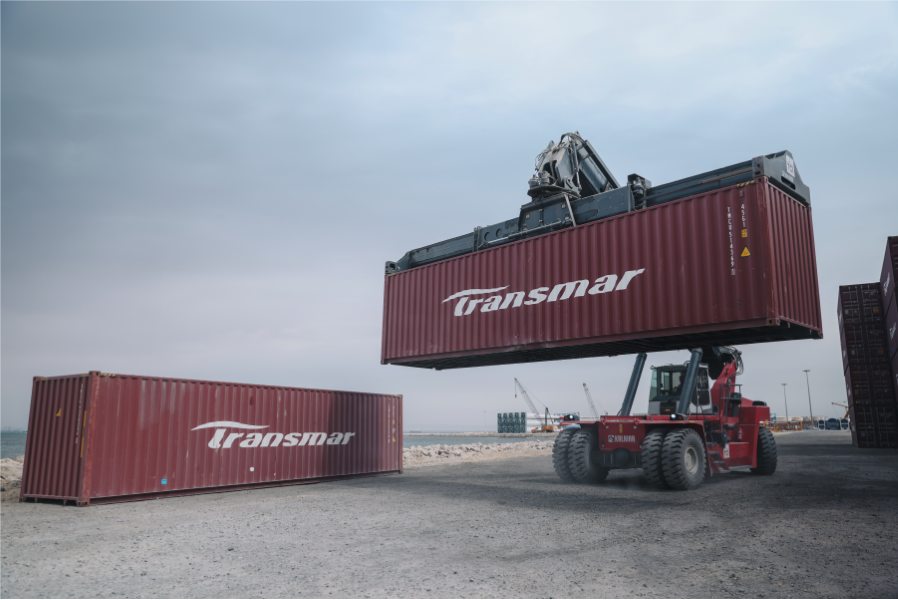
EnterpriseAM Logistics is available without charge thanks to the generous support of our friends at Hassan Allam Utilities, Transmar, and AK-Ships.

Were you forwarded this email? Tap or click here to get your own copy of Enterprise Logistics.

Want to send us a story idea, request coverage, ask for a correction, or otherwise get in touch? Reach out to us on logistics@enterprisemea.com.

DID YOU KNOW that we also cover Egypt, Saudi Arabia, and the UAE ***

CIRCLE YOUR CALENDAR-

The UK will host the Marine Environment Protection Committee Extraordinary Session from Tuesday, 14 October until Friday, 17 October at the International Maritime Organization’s (IMO) HQ in London. The session is set to see the intergovernmental body formally adopt its Net-Zero Framework — rolling out new fuel standards for ships and a global pricing mechanism for emissions.

Belgium will host the AntwerpXL on Tuesday, 14 October until Thursday, 16 October in Antwerp. The expo will host 3.8k project cargo, break bulk, RoRo, heavy lift, and industry experts to expand collaborations. It will co-locate with the Transport & Logistics conference and exhibition.

Morocco will host the International Forum and Expo on Mobility, Transport and Logistics (Logiterre) on Thursday, 16 October until Saturday, 18 October in Casablanca. Logiterre will host main operators within the industry from West and Central Africa.

The UAE will host the Adipec Maritime and Logistics Exhibition and Conference on Monday, 3 November until Thursday, 6 November in Abu Dhabi. The conference will host over 250k attendees working in government entities, finance, and tech.

The UAE will host the Air Cargo Forum on Tuesday, 4 November until Thursday, 6 November in Abu Dhabi. The forum — hosted by Etihad Cargo — will bring together air freight industry leaders, policymakers, innovators, and stakeholders to discuss industry solutions, tech, strategies, and collaborative initiatives for global air logistics.

Check out our full calendar at the bottom of this email for a comprehensive listing of upcoming news events and news triggers.

This publication is proudly sponsored by

2

SUPPLY CHAIN

Egypt’s gov’t hikes gas transmission tariff by 33%

The Egyptian government has raised the tariff for transporting natural gas through the national grid, setting it at USD 0.50 per mn British thermal units (BTU), a one-third increase from 2023’s USD 0.376, a government source in the energy sector told EnterpriseAM. To this end, the country’s 12 gas distribution networks are being restructured to adjust how gas volumes and tariffs are managed, aiming to allow more companies to enter the market, the government source said.

Nine months late: Transmission license holders had continued to pay the 2023 tariff until this decision. Traditionally, the transmission tariff is reviewed annually, taking into account investment costs and operating expenses.

The new rate will reportedly be applied retroactively to all network users, the official said, with the difference between the old and new charges to be collected in installments rather than as a lump sum, Al Mal reported.

Preparations are already underway for the 2025 tariff. Its calculation methodology has been approved and referred to Gasco, the state-owned company licensed to operate, maintain, and develop the national gas network, for review. Gasco is currently calculating the final figure, which will be submitted to the Gas Regulatory Authority for approval and ratification.

REMEMBER- Tariffs are determined using a formula that takes into account several variables, including the USD/EGP exchange rate and the total volume of gas pumped through the grid during the year.

ON A RELATED NOTE- The Egyptian government is looking to liberalize the natural gas market by allowing multiple suppliers to make direct sales to private-sector customers, a government source told EnterpriseAM. The new system would give large industrial players the option to secure their gas needs through direct contracts with suppliers if they can get better prices or terms, we were told.

The move will support Egypt’s efforts to one day become a regional energy hub, the source explained. Establishing a market where private-sector suppliers — both local and foreign — can sell directly to end users will develop the logistical, financial, and bureaucratic networks needed to support the government’s long-planned return to being an energy exporter — and a leading regional hub at that.

REMEMBER- The government raised natural gas prices for factories starting 15 September, according to a statement from the Industry Ministry.

IN OTHER GAS DISTRIBUTION NEWS-

Saudi opens prequalification for natural gas network tenders: The Saudi Energy Ministry launched a pre-qualification process for tenders to license, develop, own, and operate natural gas distribution networks in five industrial cities, it said in a statement. The sites include Sudair City for Industry and Business, Al-Kharj Industrial City, and Jeddah’s First, Second, and Third Industrial Cities.

Interested companies have until 25 October to request prequalification documents, with full applications due by 29 November.

3

Trade

Will Egypt shield ceramic producers from Chinese dumping?

Egypt-based ceramic and porcelain producers are awaiting a decision from the Investment Ministry on whether to impose safeguard tariffs on imports of Chinese origin — even if they enter via Arab countries — after filing a complaint three months ago, head of the ceramics division at the Federation of Egyptian Industries’ Building Materials Chamber and Vice Chairman of El Sallab Group Hossam El Sallab told EnterpriseAM. The case is in its final stages with the authorities, and a decision is expected within a month, which El Sallab believes would protect local industry from dumping practices and restore balance to the market.

The Egyptian local market is going through a slowdown amid weaker demand for building materials, making exports a strategic option for companies to weather the downturn, Al Ezz Ceramics and Porcelain (GEMMA) Investor Relations Director Hatem Shaheen told EnterpriseAM. Exports rose to 17% of the company’s sales in 2Q 2025, up from 9% in 1Q, with expectations for further growth in 3Q. Exporting provides more flexibility in managing rising local costs and helps maintain production capacity, Shaheen said, adding that expanding abroad is a priority for the company in the near future.

Still, boosting local demand requires incentives — foremost among them is easing construction permit issuance, which would benefit all building materials industries, not just ceramics, El Sallab said.

It’s not just Egypt that is struggling with the dumping of Chinese ceramic products. The EU, the UK, GCC nations, and more have anti-dumping measures on imports of Chinese ceramic products.

BY THE NUMBERS- Egypt’s ceramics industry generates some EGP 21 bn in annual revenues, with key players operating 33 factories with a maximum production capacity of 400 mn sqm a year, according to Prime Research. Egyptian ceramic and porcelain exports were valued at USD 47 mn in 1H 2025, down from USD 64 mn in the same period last year.

Tags:
4

Regulation Watch

RTA greenlights framework for autonomous trucking in Dubai

Autonomous trucking coming to Dubai: Dubai’s Roads and Transport Authority (RTA) approved a regulatory framework for autonomous heavy vehicles for logistics transport in Dubai, according to a statement. The framework covers all required procedures for the rollout of autonomous trucking, including licensing, operational trials, vehicle requirements, and safety protocols.

The rollout will occur over two phases — with the first phase trailing safety standards and licensing procedures, according to a statement on X. The second phase will see the launch of five pilot routes, covering Al Maktoum International Airport, Jebel Ali Port and its Rail Freight Terminal, Dubai Investments Park, and Ibn Battuta Mall.

DATA POINT- Dubai’s commercial and land logistics transport sector is made up of a fleet of nearly 61.3k heavy vehicles, varying in weight from 3.5 tons to 65 tons.

The framework aligns with Dubai’s commercial and land transport logistics 2030 strategy — looking to leverage autonomous driving as part of a larger target to cap carbon emissions by 30% and boost operational efficiency by 10%, Gulf News reports. In turn, it looks to raise technology adoption in the sector by 75%, while doubling the sector's direct economic contribution to hit AED 16.8 bn.

REMEMBER- UAE is going all in on autonomous logistics: Abu Dhabi is also making headway in the introduction of autonomous delivery vehicles, with the launch of its first pilot program for autonomous delivery vehicles earlier this month. Abu Dhabi-based drone manufacturer Lodd Autonomous is set to launch unmanned aerial vehicle parcel and cargo deliveries by 2H 2026 — with the first test flight scheduled in November. The emirate has already rolled out self-driving taxis in several areas, including Al Saadiyat and Yas Islands.

Meanwhile, Dubai is also working on piloting autonomous driving, granting permits to Apollo Go, WeRide, and Pony.ai to host autonomous driving trials on Dubai’s roads, according to a statement. Pilot testing is reportedly taking place in Jumeirah and Dubai Silicon Oasis, with the emirate planning an automated transport zone dedicated to testing in order to evaluate how driverless taxis will operate on a large scale. The move is in line with the RTA’s roadmap to launch autonomous taxi services in Dubai and wider plans to convert 25% of all mobility journeys in the emirate into autonomous trips by 2030.

5

Earnings Watch

Kuwait Airways’ capital reduction cancels KWD 300 mn in accumulated losses

Kuwait Airways restructures capital to trim losses: State-owned Kuwait Airways’ shareholders have greenlit the cancellation of KWD 300 mn (c. USD 983 mn) of accumulated losses by way of a capital restructuring, Reuters reports, citing Kuwait’s official gazette.

The details: The airline approved a reduction in its paid-up capital by KWD 294 mn to KWD 683.7 mn and a reduction in its reserves by KWD 6 mn. Kuwait Airways also approved raising its issued capital by KWD 300 mn, with the move materializing according to an issuance schedule set by the Kuwait Investment Authority, which owns 100% of the flagship carrier.

SOUND SMART- A capital reduction is a technical accounting process where a company’s shares are slashed through share buybacks or cancellations, either to eliminate losses or to increase distributable reserves, according to UK-based accounting and advisory firm Gerald Edelman. It is important to note that no physical transfer ofliquid assetsoccurs ; instead, balance sheet reserves are used to offset losses and generate distributable income.

Headwinds: Kuwait Airways has struggled to recover from the pandemic-era financial challenges that hit most of the aviation industry. The flag carrier has also fallen behind on its 2025 goals to expand operations and balance its financials, due to aircraft delivery delays and geopolitical tensions, the airline’s chairman said earlier this year. Kuwait Airways initially planned to expand its fleet to 33 jets by 2024, but industry-wide supply chain disruptions delayed most deliveries — leaving it with a 27-aircraft fleet as of 2025.

That said, Kuwait Airways has seen its operational revenues increase 6% q-o-q to USD 324 mn in 2Q 2025, according to a statement. The airline also posted a 9% q-o-q increase in passengers to more than 1 mn passengers over the same period. The airline did not release financial results for the years 2023 and 2024.

6

Also on Our Radar

Updates on maritime and aviation from Saudi and Qatar

SHIPPING + MARITIME-

The Saudi Ports Authority (Mawani) added Wan Hai Line’s FM1 shipping service to Jeddah Islamic Port, linking it to 10 regional and international ports, it said in a statement yesterday. The new service — with a capacity of 4.5k TEUs — will connect Jeddah with Shanghai, Ningbo, and Shekou in China; Port Klang in Malaysia; Aqaba in Jordan; Sokhna and Alexandria in Egypt; and Izmit and Istanbul in Turkey.

AVIATION-

Qatar + China improve air connectivity: Doha’s Hamad International Airport operator, Qatar Airports Company (Matar), has inked an MoU with China's Shenzhen Bao'an International Airport (SZX) operator Shenzhen Capital Group to improve route planning for cargo and trade between both countries, according to a statement.

This is the second agreement between Matar and a Chinese partner this month, after it signed an MoU last week with the operator of Beijing Daxing International Airport, China’s Beijing International Airport Group, to improve passenger and cargo service design, as well as tech and logistical support at both airports.

7

Around the World

Non-Chinese carriers choose Comac jets in place of Boeing and Airbus

Is China’s Comac making its way to Nigeria? Nigeria’s Civil Aviation Authority (NCAA) is mulling plans to tap Chinese planemaker Comac for its narrow-body C919 jet to power Nigerian carriers’ expansion, NCAA Director General Chris Ona Najomo told Reuters on Sunday. NCAA is currently looking into certifying Comac’s C919 jets, and is already in talks with the Chinese manufacturer for a potential leasing agreement — in which the planemaker has offered maintenance services for any jets operated by Nigerian carriers.

This comes as the Chinese planemaker continues to struggle for a bigger global market share next to the US’ Boeing and European planemaker Airbus — especially amid local and global headwinds facing the Chinese planemaker. For example, Chinese airlines were reported to be planning orders for Boeing and Airbus aircraft, which will reportedly complicate Comac’s sales of its C919 aircraft — a model expected to be on par with Boeing’s 737 and Airbus’s A320 narrowbody models. The US also suspended licenses that allowed US firms to sell parts and tech services to Comac for its C919 jets.

But Comac is slowly building a customer base. Air Cambodia inked an MoU with Comac for an order of 10 C909 Comac jets, with an option to acquire 10 more, Reuters reported earlier this month. The company also secured agreements to deliver new jets catering to domestic flights in Southeast Asia — including for Indonesia, Vietnam’s Vietjet, and Laos’ Lao Airlines.


SEPTEMBER

30 September-2 October (Monday-Thursday): Global Rail Transport Infrastructure Exhibition and Conference, Abu Dhabi, UAE.

OCTOBER

1-2 October (Wednesday-Thursday): Saudi Maritime and Logistics Congress, Dammam, Saudi Arabia.

4 October (Saturday): Syria Recovery and Investment Forum, Abu Dhabi, UAE.

6-8 October (Monday-Wednesday): Maritime Cyprus Conference, Limassol, Cyprus.

7-8 October (Tuesday-Wednesday): Global EV and Mobility Technology (Gemtech) Forum, Riyadh.

7-9 October (Wednesday-Thursday): World Aviation Festival, Lisbon, Portugal.

13-17 October (Monday-Friday): The Marine Environment Protection Committee’s second extraordinary session, London, UK.

14-15 October (Tuesday-Wednesday): Investing in Africa Conference and Expo, London, UK.

14-16 October (Tuesday-Thursday): AntwerpXL, Antwerp, Belgium.

15 October (Wednesday): Global Trade Review, Cairo, Egypt.

16-18 October (Thursday-Saturday): International Forum and Expo on Mobility, Transport and Logistics (Logiterre), Casablanca, Morocco.

28-30 October (Tuesday-Thursday): Borneo International Maritime Week, Sarawak, Malaysia.

NOVEMBER

3-6 November (Monday-Thursday): Adipec Maritime and Logistics Exhibition and Conference, Abu Dhabi, UAE.

4-6 November (Tuesday-Thursday): Air Cargo Forum, Abu Dhabi, UAE.

9-11 November (Sunday-Tuesday): TransMea Expo, Cairo, Egypt.

11-13 November (Tuesday-Thursday): Freightcamp, Bangkok, Thailand.

17-21 November (Monday-Friday): Dubai Airshow, Dubai, UAE.

18 November (Tuesday): ShipTek International Conference and Awards, Al Khobar, Saudi Arabia.

24-26 November (Monday-Wednesday): World Advanced Manufacturing Logistics Summit and Expo, Riyadh, Saudi Arabia.

DECEMBER

9-10 December (Tuesday-Wednesday): Rail Industry Summit, El Jadida, Morocco.

16-17 December (Tuesday-Wednesday): Saudi Airport Exhibition, Riyadh, Saudi Arabia.

JANUARY 2026

19-23 January (Monday-Friday): World Economic Forum Annual Meeting, Davos, Switzerland.

27-28 January (Tuesday-Wednesday): SkyMove Air Cargo MENA, Riyadh, Saudi Arabia.

27-28 January (Tuesday-Wednesday): Middle East ProcureTech Summit, Dubai, UAE.

FEBRUARY 2026

4-5 February (Wednesday-Thursday): Breakbulk Middle East, Dubai, UAE.

4-5 February (Wednesday-Thursday): MRO Middle East, Dubai, UAE.

25-27 February (Wednesday-Friday): Air Cargo Africa, Nairobi, Kenya.

MARCH 2026

10-12 March (Tuesday-Thursday): World Cargo Symposium, Lima, Peru.

Now Playing
Now Playing
00:00
00:00