DP World will develop a 222-hectare economic zone near the Port of Mombasa

1

WHAT WE’RE TRACKING TODAY

TODAY: DP World to build special economic zone in Kenya

Good morning, ladies and gents. Disruptions, diplomacy, earnings, and a construction crew — today's issue has range.

Yemen’s Houthis said on Telegram they hit a “Saudi target” at Najran airport — in response to alleged Saudi drone incursions over Saada and Hijaz, Reuters reports. Regional sources say operations were suspended, though Saudi authorities have not confirmed the attack.

And yet Washington thinks today could be the day this all eases. US Treasury Secretary Scott Bessent said that the US and Iran could reach an agreement to open Hormuz today. The proposed arrangement would allow freedom of movement in the waterway, Bessent said.

One thing isn't ambiguous: Who's benefiting from this war and who's paying for it. Aramco just posted its best quarter since 2022 on higher prices, not more barrels, while Milaha's earnings fell, with its offshore business taking the biggest hit.

Then there's DP World, playing an entirely different game. DP World is putting shovels in the ground on a 222-hectare special economic zone near the Port of Mombasa, with Kenyan firm GulfCap Africa.

Egypt's lifeline

Egypt bought a record 21 US LNG cargoes in July — more than any other destination worldwide — as war-driven disruption through Hormuz rerouted gas toward buyers willing to pay a premium, according to S&P Global Energy CERA data. The record cargo count outpaced major global buyers, including South Korea (15), Italy (14), Japan (12), and India (11).

The volume tells a different story: Egypt's actual July imports fell to 0.63 mn tonnes, down sharply from a record 1.06 mn tonnes in June, Reuters reports — even as it remained one of the largest single buyers of US cargoes.

A fragile defense: We learned last week that port bottlenecks and security threats can disrupt the supply chain in an instant. A drone strike knocked the newly deployed Energos Winter FSRU at Damietta out of service, forcing the country to divert an incoming LNG shipment to Jordan’s Aqaba port and draw backup gas via the Arab Gas Pipeline instead. Also, Egypt has already maxed out pipeline imports from Israel, leaving spot LNG as its main balancing tool.

Behind the scramble: The war is constraining roughly 20% of global LNG volumes that normally transit Hormuz — about 7 mn tonnes a month.

Fewer barrels out

Fujairah has become the UAE's primary oil export route, not just a backup: Crude bypassing the Strait of Hormuz via Fujairah — including through the Habshan-Fujairah pipeline — rose to 2.13 mn bbl / d in July, according to tanker-tracking data pooled by Bloomberg, and to 2.28 mn bbl / d on Kpler’s own count, up from 2.17 mn in June — putting Fujairah's share of total UAE exports at roughly 66%, up from 51% in June.

That shift tracks a sharp deterioration in the strait itself: Crude and condensate exports from the UAE overall fell to 3.4 mn bbl / d in July from 3.77 mn bbl / d in June, per the data. Kpler's separate Hormuz-only count is starker: exports through the strait fell nearly 53% to 950k bbl / d, from 2.01 mn bbl / d in June, the National reports. Daily crossings fell to 18.7 in July from 24.7 in June, with the drop-off steepening as a 17 June US-Iran framework meant to reopen the strait broke down within weeks over a dispute about who controls it.

The numbers likely understate the disruption: Most tankers crossing Hormuz now cut their tracking systems to dodge detection, so Vortexa and Kpler are reconstructing transits from satellite imagery with a lag — meaning real-time crossings often aren't caught until later revisions. Tanker congestion from the strait closures has eased, though, and only about 1 mn bbl of UAE crude is currently stranded.

Market watch

Oil prices edged lower this morning as investors awaited progress on restoring traffic through Hormuz, Reuters reports. Brent crude futures slipped USD 0.92 to USD 28.44 / bbl by 03.30 GMT, while West Texas Intermediate (WTI) declined USD 1.07 to USD 71.40 / bbl.


The Baltic Index nudges upward: The Baltic Exchange’s dry bulk index — which tracks rates for the capesize, panamax, and supramax vessel segments — was up 3.3% to 2,936 points on Tuesday. The capesize index jumped 4.7% to 4,778 points, while the panamax increased 2.4% to 2,187 points. The smaller supramax inched up 0.2% to 1,613 points.

***

YOU’RE READING EnterpriseAM Logistics, the essential MENA publication for senior execs who care about the industry that connects producers and retailers to global markets. We’re out Monday through Thursday by 10:15am in Cairo and Riyadh, and 11:15am in the UAE.

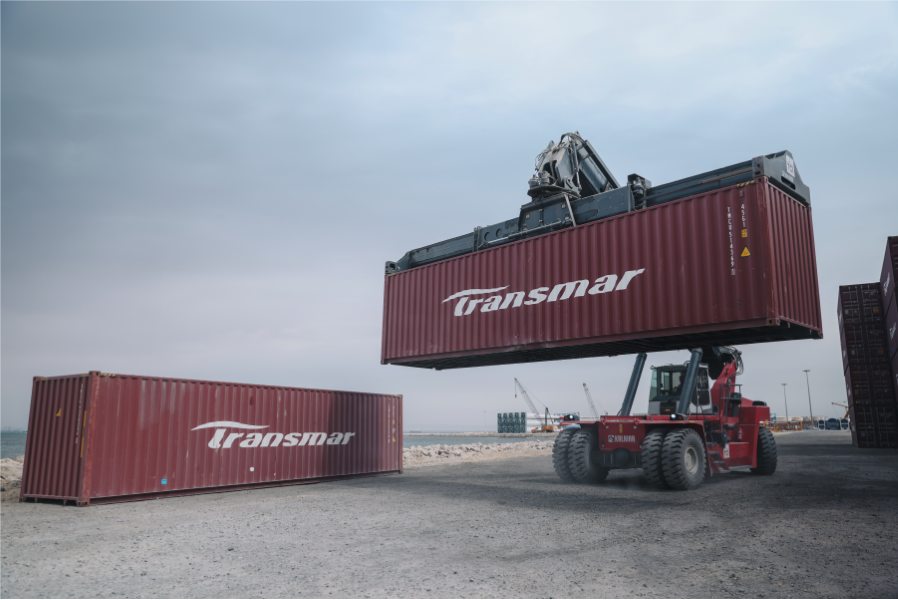
EnterpriseAM Logistics is available without charge thanks to the generous support of our friends at Hassan Allam Utilities and Transmar.

Were you forwarded this email? Tap or click here to get your own copy of EnterpriseAM Logistics.

Want to send us a story idea, request coverage, ask for a correction, or otherwise get in touch? Reach out to us on [email protected].

DID YOU KNOW that we also cover Egypt, Saudi Arabia, and the UAE? ***

This publication is proudly sponsored by

2

The Big Story Today

DP World will build a 222-hectare industrial park next to Mombasa's port

DP World expands East Africa footprint: Port giant DP World agreed with Kenyan investment firm GulfCap Africa to develop a 222-hectare special economic zone (SEZ), called the Mombasa Industrial Park, less than 20 km from the Port of Mombasa, according to a press release. The project will roll out in phases, starting with 40 hectares.

Why now: DP World has spent years trying to get a concession to run berths at the Mombasa port. A 2023 tender would have handed it four berths and a 1 mn-TEU terminal, but a community court action halted the process. The case was settled in 2024, and Kenya revived the concession push in 2025, with Japanese and Chinese financiers circling — but DP World hasn’t publicly re-entered the bid.

This matches DP World’s broader playbook: “DP World’s strategy describes economic zones as part of an integrated ecosystem connecting ports, logistics and end markets,” maritime and ports analyst Nilesh Tiwary tells EnterpriseAM. An industrial park generates revenue beyond cargo handling through “land leases, warehouses, distribution centres, container handling, cargo consolidation, customs-related services, value-added logistics, cold storage, freight forwarding and inland transportation,” he adds.

“The SEZ delivers what DP World needs most, independent of berth control: cargo, logistics revenue, and a grip on regional trade,” former head of supply chain and transport industries at the World Economic Forum Wolfgang Lehmacher tells us. “The industrial park hedges against political risk, not maritime chokepoints [...] a nearby SEZ lets the company capture Mombasa's trade gravity without waiting on an approval process it doesn’t control,” he adds.

Why it matters: Mombasa will become DP World’s ninth active African market, joining existing operations in Algeria, Angola, Egypt, Mozambique, Rwanda, Senegal, Somaliland, and Tanzania. It fits a pattern we’ve flagged before: Gulf port operators are competing on more than quay space, building the freezones and inland logistics networks around ports they don’t necessarily control.

3

Earnings Watch

The Hormuz war is boosting Aramco's earnings and dragging down Milaha's

Aramco's best earnings since 2022 — on fewer barrels

Saudi Arabia’s Aramco posted its strongest quarter since 2022 and beat every analyst on the tape. The company pumped a quarter less oil than a year ago but sold it amid a war that has stripped supply from the market and lifted its average realized crude price to USD 108.1 a barrel.

The headline carries two different numbers. Reported net income for 2Q rose 44% y-o-y to SAR 122.6 bn (USD 32.7 bn), according to Aramco’s press release (pdf). Meanwhile, adjusted net income, the figure Aramco and the sell-side track, rose 33% to USD 33.4 bn, ahead of some USD 31.6 bn consensus. Realized crude averaged USD 108.1 a barrel, up about 62% y-o-y and carrying a record premium of over USD 10 a barrel to Brent. This price surge was enough to more than offset a production decline to 9.5 mn barrels of oil equivalent per day, down from 12.8 mn bbl / d a year earlier.

Why it matters: The windfall is the standout in an otherwise strained fiscal picture. Oil revenue to the government rose 22% in 2Q to nearly USD 50 bn, cutting the quarterly budget deficit to about USD 9.1 bn — the smallest in nearly two years. Aramco is underwriting a budget that its own war premium is helping to rescue, even as the same war shrinks the surrounding economy.

Downstream did the heavy lifting on margins. With Strait of Hormuz traffic down to roughly a tenth of pre-conflict levels, Aramco has leaned on its East-West pipeline to move crude to Yanbu on the Red Sea, sustaining exports it says are running near 5 mn bbl / d. Downstream adjusted EBIT roughly doubled y-o-y to USD 6.2 bn on refining margins the company expects to stay elevated through 2H.

Milaha posts a weaker 1H on regional disruptions

Regional disruptions dragged on Milaha’s earnings despite higher revenues. Qatari Maritime and logistics firm Milaha saw its net income drop 19% y-o-y to QAR 542 mn in 1H 2026, according to its financial release. The firm’s revenues jumped nearly 6% to around 1.7 bn during the same period.

Behind the numbers: The regional conflict reduced container volumes handled by Milaha’s port operations and squeezed its offshore business through lower revenues and higher operating costs. Offshore was the largest drag — with net income falling by QAR 85 mn. Maritime & Logistics recorded a QAR 16 mn decline due to a container-volume hit.

4

Also on Our Radar

MSC links West Africa to Red Sea loop + Dubai targets autonomous logistics rollout

MSC stitches Africa to the Red Sea

MSC ties West Africa to its Red Sea loop: Global shipping firm MSC has merged its West Mediterranean-West Africa and West Mediterranean-Red Sea services into a single rotation — linking Valencia, Barcelona, and Tanger Med with Abidjan, Tema, Logo's Lomé, Ghana's Takoradi, Cameroon's Douala and Kribi, as well as Congo's Pointe-Noire and Matadi before continuing to Jeddah and Aqaba, Al Mal reports. The combined service is designed to improve vessel utilization while retaining direct connections for consumer goods, industrial cargo, and agricultural exports.

The logic is network density: MSC can now pool Europe-Africa and Europe-Red Sea cargo on the same vessels instead of operating two overlapping services from the western Mediterranean. It builds on the Europe-Red Sea-Middle East Express MSC launched in May — which connected European ports directly with Saudi Arabia and Jordan, alongside multimodal links into Gulf markets.

Dubai doubles down on autonomous logistics

Dubai is putting a joint venture behind its autonomous-logistics ambitions. SHIFFT — a new tie-up between the Dubai Future Foundation and UK self-driving firm Oxa — is targeting a first commercial rollout of driverless vehicles across the emirate's ports and airports before the end of 2027, according to a press release.

Autonomous logistics is gaining traction in the UAE: The Abu Dhabi Investment Office inked a raft of commercial deployment agreements for autonomous mobility tech in November 2025, including for logistics plays, while UAE-based autonomous delivery startup CargoX raised USD 250 mn this past June.

5

Logistics in the News

Asia’s oil rebound is running cargoes and Chinese inventories

Asia’s oil rebound is being fueled by ships that got unstuck, not ships returning to normal routes. Asia's crude imports climbed to 22.8 mn bbl/d in July — the highest level since the war began, and almost 22% above April's low of 18.8 mn bbl/d — but arrivals remained 4 mn bbl/d, or 15%, below the 26.9 mn bbl/d average recorded in the three months before the US and Israeli strikes on Iran began on 28 February. Refined fuels are lagging further behind, with imports of light and middle distillates rose to 5.8 mn bbl/d in July, up from a record low of 5.2 mn bbl/d in June, but still 1.3 mn bbl/d (18.5%) below the pre-war average of 7 mn bbl/d, Reuters reports.

The gap is sitting at Hormuz: Asia received 4 mn bbl/d of crude through the strait in July — up from almost 2 mn bbl/d in April, but still 70% below the pre-war average of 13.6 mn bbl/d — meaning Hormuz supplied only around 18% of Asia's total crude imports in July, by our calculation. Refined products through the strait show the same shortfall: 608k bbl/d in July, up from 144k bbl/d in May but still around 60% below the pre-war average of 1.5 mn bbl/d.

Most of that gain is a backlog clearing, not a route reopening. The brief mid-June ceasefire let tankers stranded inside the Gulf by Hormuz's effective closure finally leave, and those shipments reaching their destinations drove much of July's increase — some 200 mn barrels escaped the Gulf during the truce, equivalent to about two days of global consumption. Iran's own sanctions window followed the same pattern — Kpler tracked 34.5 mn barrels crossing Hormuz aboard 21 tankers between mid-June and 10 July, while roughly 63 mn barrels of Iranian crude were still sitting aboard tankers in Gulf and Asian waters in mid-July.

Buyers unwilling to shoulder Hormuz transit risk themselves are gravitating toward delivered Iraqi cargoes — and Beijing is absorbing the rest of the shock. Somo sales leave buyers to arrange vessels and absorb freight and Hormuz transit risk themselves, while TotalEnergies has been chartering VLCCs and offering Basrah Medium and Heavy to Asian refiners on delivered terms. China, meanwhile, is doing the opposite — seaborne crude imports rebounded to nearly 7 mn bbl/d in July from a decade-low in June, but remained 39% below the pre-war average. With at least 1.2 bn barrels in storage, Beijing can keep drawing down inventories and suppressing imports for months — making its eventual return a key test for an already constrained Gulf oil market.

OUR TAKE- Cargoes released during the ceasefire should keep supporting arrivals this month, but that tailwind fades once they clear the system. A durable recovery needs tankers to return to Gulf terminals, load new cargoes, and exit repeatedly — not a one-off unloading of vessels that were already waiting inside the strait when the ceasefire hit.


AUGUST

30 August-1 September (Sunday-Tuesday): Air Cargo Middle East, Riyadh, Saudi Arabia.

30 August-1 September (Sunday-Tuesday): Saudi Warehouse and Logistics Expo, Riyadh, Saudi Arabia.

SEPTEMBER

16-17 September (Wednesday-Thursday): Saudi Maritime & Logistics Congress, Dammam, Saudi Arabia.

22-23 September (Tuesday-Wednesday): Breakbulk Americas, Houston, US.

22-24 September (Tuesday-Thursday): Seamless Middle East, Dubai, UAE.

28-30 September (Monday-Wednesday): Transport Logistics Middle East, Riyadh, Saudi Arabia.

OCTOBER

12-14 October (Monday-Wednesday): The Airport Show, Dubai, UAE.

20-22 October (Tuesday-Thursday): TOC Americas, Cartagena, Colombia.

21-22 October (Wednesday-Thursday): Global Ports Forum, Singapore.

26-29 (Monday-Thursday): Air Cargo Forum, Miami, US.

27-29 October (Tuesday-Thursday): Routes World, Riyadh, Saudi Arabia.

NOVEMBER

2-5 November (Monday-Thursday): ADIPEC Maritime and Logistics Exhibition and Conference, Abu Dhabi, UAE.

10-11 November (Tuesday-Wednesday): TOC Asia, Singapore.

10-12 November (Tuesday-Thursday): Intermodal Europe, Rotterdam, Netherlands.

11-13 November (Wednesday-Friday): Logitrans, Istanbul, Turkey.

18-19 November (Wednesday-Thursday): Breakbulk Asia, Singapore.

FEBRUARY 2027

10-12 February (Wednesday-Friday): Routes Americas, San Juan, Puerto Rico.

MARCH 2027

16-18 March (Tuesday-Thursday): CMA Shipping, Houston, US.

16-18 March (Tuesday-Thursday): Routes Asia, New Delhi, India.

APRIL 2027

20-22 April (Tuesday-Thursday): Routes Europe, Antalya, Turkey.

26-29 April (Monday-Thursday): Transport logistic and air cargo Europe, Munich, Germany.

26-29 April (Monday-Thursday): Saudi Smart Logistics, Riyadh, Saudi Arabia.

Now Playing
Now Playing
00:00
00:00